Key features defining the operation mechanisms of a projectile
Mechanical Feature (10)
Whether a munition is guided or unguided
Guidance (2)
Where the munition is launched from and what it targets
Domain (7)
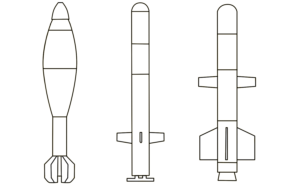
The type of fins visible on the munition
Fins Characteristic (6)
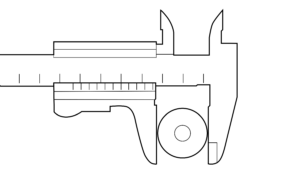
The nominal diameter of a projectile. For most modern munitions, this is expressed in millimetres (e.g. 82 mm mortar projectile), but older artillery gun projectiles may be described in inches.
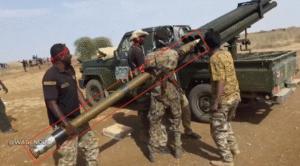
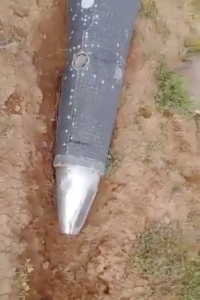
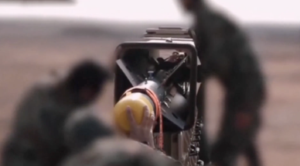
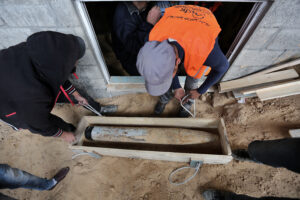
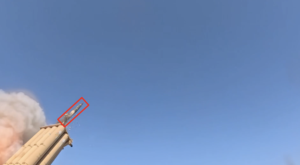
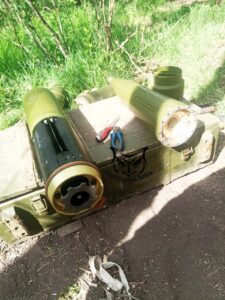
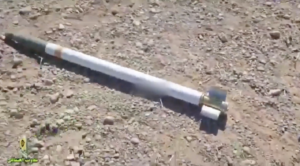
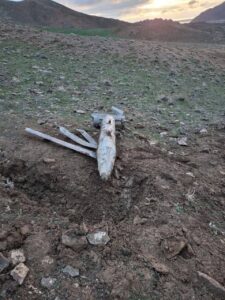
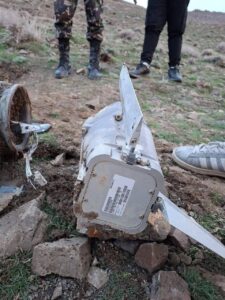
Based on design features and an estimation of the munition’s apparent size relative to the personnel handling it, this image appears to show a 122 mm surface-to-surface rocket fitted with a high explosive fragmentation (HE-FRAG) warhead, although the specific model and country of origin are unclear. In Sudan there have been reports of Russian, Chinese, and domestically produced (Taka-02) 122 mm rockets being used. (ARES)
This image shows a U.S. Area Denial Artillery Munition (ADAM), an anti-personnel scatterable landmine which is dispensed from the rear of M692 and M731 155 mm artillery gun projectiles. Each projectile contains 36 ADAM submunitions. The submunition can deploy up to seven tripwires out to 20 ft (6.1 m). Any movement of a tripwire or movement of the ADAM body will result in a small kill mechanism being ejected to a height of a 6–8 ft (1.8 m–2.4 m) prior to detonating. Each munition contains a small amount of depleted uranium. The ADAM was previously designated as either the M67 or M72, with the only difference being the self-destruct time delay. (ARES)
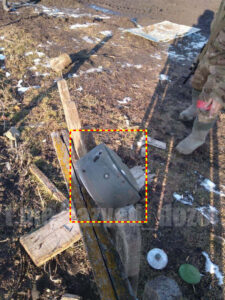
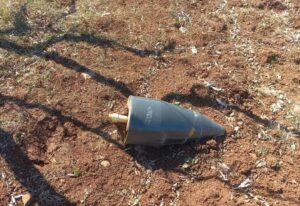
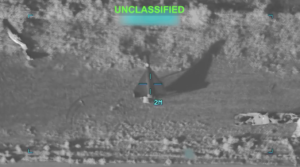
The German DM 1399 (AT2) anti-tank landmine shown here can be dispensed from rockets and ground vehicles. Upon being dispensed, a small parachute is deployed in order to slow the mine’s descent and assist in in landing base down; the parachute is released upon impact by an impact-release connector. Upon impact, from five to 12 (six shown) spring-loaded, metal legs deploy to right the mine; arming is completed anywhere from 15 seconds to five minutes thereafter. The base of the cylindrical body houses the battery and electronics assembly, with the main explosive charge and Misnay–Schardin shaped charge plate immediately above. The body is topped by a dome cover and an S3 sensor wire which extends approximately 600 mm (12 in) above the body of the mine. (ARES)
Shown is a German DM 1399 (AT2) dispensed, anti-tank landmine which is high explosive with a Misznay-Schardin charge to penetrate the bottom of armored vehicles. The DM 1399 reportedly has magnetic and contact fuzing (model S3 fuze), along with an anti-disturbance feature to interfere with clearance operations and a self-destruct time delay of up to four days. The mines are dispensed from rockets (MLRS). Currently the mines are in use by Finland, German, Norway, United Kingdom and Ukraine (donated by Germany and Norway). Italy is a former user which destroyed their ~45,000 mine stockpile in 1997 as part of the Ottawa Treaty, due to the mine’s anti-disturbance feature which can be activated by personnel and not just vehicles. (ARES)
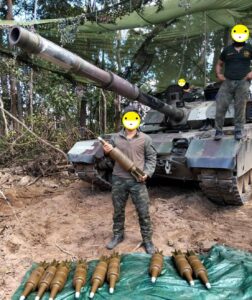
The tank visible in the background of the image appears to be a Chinese VT-4 (MBT-3000) model. The VT-4 is manufactured by Norinco and is intended primarily for export. (ARES)
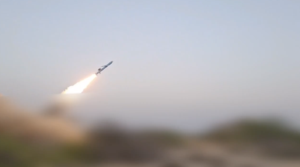
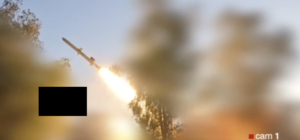
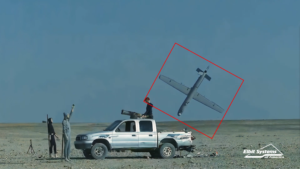
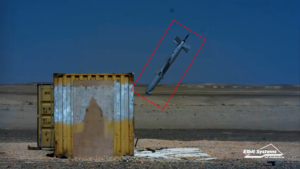
This image shows the launch of an Iranian Paveh surface-to-surface cruise missile in Iraq. The munition was fired by Iranian proxy forces and reportedly targeting Israel. Some sources indicate the Paveh has been renamed the ‘Jamal-10’, whilst others claim it is being locally produced in Iraq by Iranian proxy forces. With an estimated 75% of the missile’s components coming from outside Iran, distributed production is certainly possible. The missile has two large wings located forward of the munition’s midpoint, three smaller fins towards the tail, and four actuated fins around the tail. The initial launch is accomplished with a solid-propellant rocket motor, which gives way to a turbo jet flight motor mounted on top of the missile, towards the tail. (ARES)
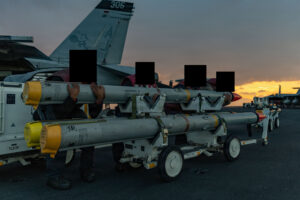
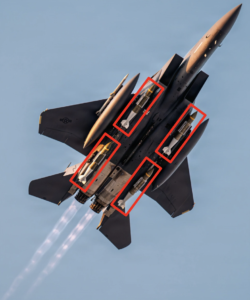
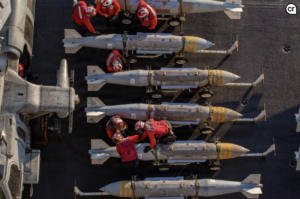
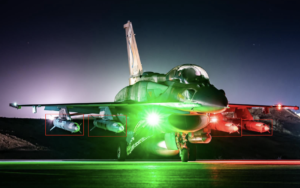
Highlighted are four GBU-31 Joint Direct Attack Munitions (JDAM) guided air-delivered bombs loaded onto the belly of a U.S. F-15E Strike Eagle aircraft. The GBU-31-series consists of a 2,000-pound-class bomb (Mk 84, BLU-109, or BLU-109A/B) and a guidance kit comprising a tail unit with four articulating fins and a guidance control unit with inertial navigation system (INS) and global positioning system (GPS) functions. The GBU-31 munitions seen here are built around the BLU-109, a penetrator munition with a solid nose and a thicker, one-piece body which flares slightly at the base. It has no body welds; the heavy steel base plate is held in place by an equally robust threaded steel closure ring. The BLU-109 is painted olive drab with a single yellow band towards the nose. (ARES)
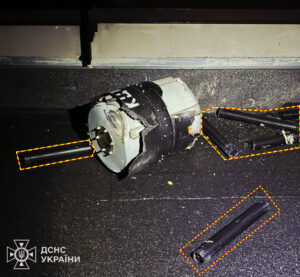
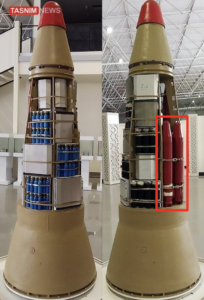
This image shows the ‘manoeuvrable re-entry vehicle’ (MaRV; a detachable, steerable payload section) of an Iranian ballistic missile loaded with submunitions. It appears there are three different models of submunition loaded into the MaRV (black, blue, and red). The black and blue submunitions are most likely anti-personnel designs, whilst the red submunitions (indicated by a red box) are likely designed with penetrating or shaped-charge warheads to target vehicles or structures. Some submunitions may utilise time-delay fuzing, allowing for random detonations over several hours or days to hamper clearance efforts, denying use of the afflicted area. Reports have shown Iran has used ballistic missiles with mixed submunition loads, and suggest that this type of warhead can scatter its payload up to a radius of 8 km. (ARES)
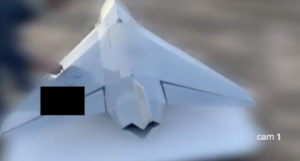
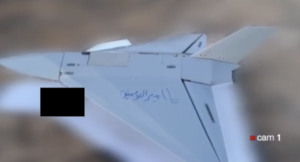
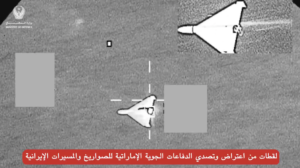
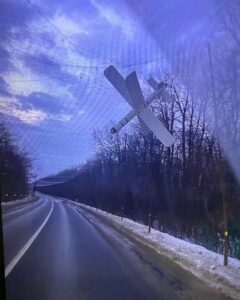
This image shows a screenshot from one of the videos released by the Kuwait Civil Aviation showing a one-way attack (OWA) unmanned aerial vehicle (UAV) striking the Kuwait International Airport. The munition’s distinctive delta-wing configuration and general size, shape, and manner of flight are consistent with the Shahed series of OWA UAVs. The related entry shows a Mado MD550 engine recovered following this strike, a model used to power the Shahed-136 series, enabling a more precise identification. (ARES)
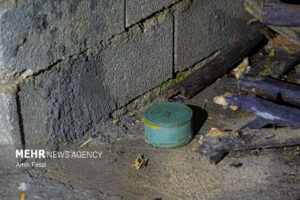
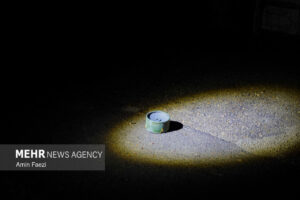
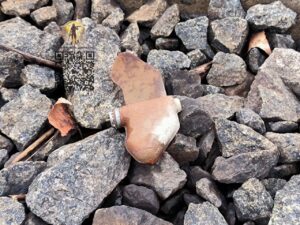
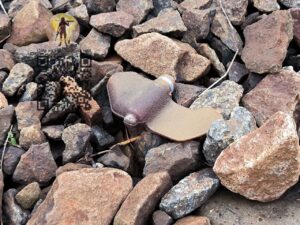
The BLU-91/B pictured here is an aerially dispensed anti-vehicle scatterable landmine that uses a magnetic-influence fuze to function a shaped charge relying on the Misnay–Schardin Effect. The munition is fitted with three self-destruct delay settings. The aeroballistic adaptor is commonly broken off upon impact and the remnants of the adhesive holding it in place can be seen (yellow). One side of the munition has a bore-riding pin which is held in place while in the dispenser. Once dispensed, the bore riding pin is released and starts the arming process. The BLU-91/B is 121 mm (4.75 in) in diameter and 56 mm (2.6 in) in height. (ARES)
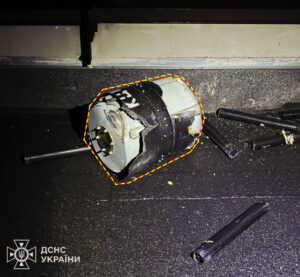
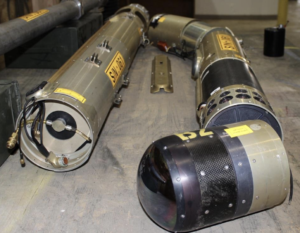
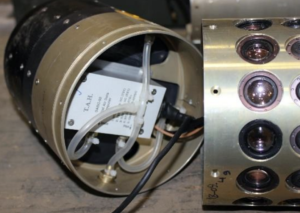
The component pictured here is a small turbofan engine from a Tomahawk missile. Missiles are vertically launched from the Typhon Missile System (named for a monster of Greek mythology), which is also capable of launching the Standard SM-6 guided missile. The Tomahawk missile is ejected from its launch tube under gas pressure, then the solid propellant of the booster motor section (Mk 135 booster produced by L3Harris) propels the missile until the turbofan engine (F107-WR-402 for Block III/IV or F415 for Block IV/V, both produced by Williams International) in the propulsion section is initiated and the booster motor section drops away. The propulsion section also supports the four tail fins, which are released by the two-piece continuity shroud upon launch. (ARES)
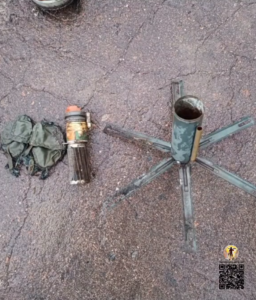
Highlighted is a Russian POM-2 scatterable, high explosive, anti-personnel submunition which deploys six legs for stabilization upon impact and four pressure- and pull-sensitive 9.5m (31.17’) long tripwires which end in a ‘Y’ fashion with plastic weights. Upon deployment, nylon ribbons (seen in the foreground) are deployed to help ensure the submunition lands upright, in addition to the stabilizing legs. Originally designed to be dispensed by rockets and helicopters, the war in Ukraine has seen the POM-2 modified for deployment via drone, hand and even from RPGs. (ARES)
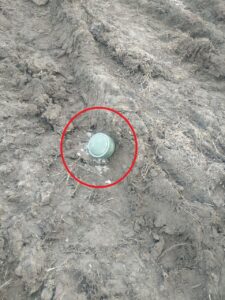
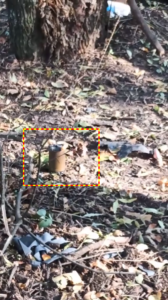
Pictured is a Russian PFM-1 or PFM-1S submunition which are small plastic (low density polythene), liquid high explosive, anti-personnel scatterable landmines with a pressure fuze and may be green, white, sand or brown (shown) in color. The only difference between the models is that the PFM-1S incorporates a nominal self-destruct of 40 hours, though they may remain active for far longer and are known to randomly self-destruct for weeks after deployment. They weigh approximately 70 grams (2.47 oz.) and are typically dispensed from cannisters, but the war in Ukraine has seen them dispensed from drones as well. (ARES)
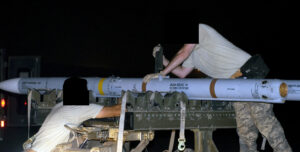
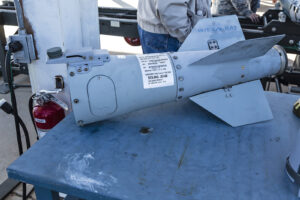
This image shows an AGM-114R2 Hellfire II missile. The AGM-114R2 is an enhanced version of the the AGM-114R multi-role missile, which is designed to engage a wide variety of targets. The Hellfire R-series missile are equipped with a multi-purpose warhead that can engage armoured or unarmoured vehicles on land or sea, as well as personnel in the open or in buildings. Reports indicate that the AGM-114R2 features improvements to its guidance software and tracking to increase accuracy against moving targets, as well as incorporating an adjustable height-of-burst (HOB) capability which allows it to detonate at a pre-determined height above the ground. (ARES)
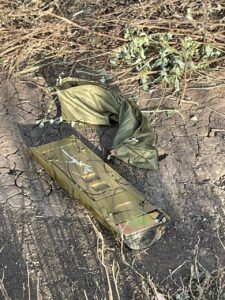
A BLU-91/B GATOR anti-vehicle landmine is seen in this image, with the remains of an aeroballistic adaptor visible. BLU-91/B mines can be deployed from cluster bombs or from vehicle-mounted dispensers, however the presence of the square aeroballistic adaptor here indicates that this example was deployed from an air-delivered cluster bomb. (ARES)
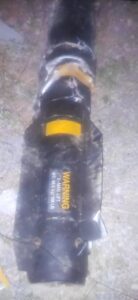
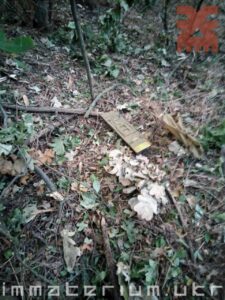
This image depicts what appears to be a WDU-42/B penetrator warhead as used in the AGM-158 JASSM series of missiles. The WDU-42/B is a 1,000-pound-class blast/fragmentation penetrator warhead designed to destroy hardened or reinforced targets. At the rear of the warhead, an FMU-156/B fuze is visible. This fuze is pre-programmed before launch according to the type of intended target. (ARES)
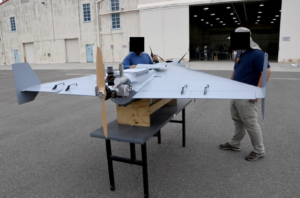
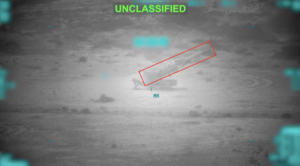
This image shows a Lancet-series one-way attack (OWA) UAV. It strongly resembles the Z-51E made by Zala Aerospace, a Russian manufacturer, although this cannot be confirmed from the available image. The Lancet series of drones can carry a variety of different warheads, including blast, fragmentation, thermobaric, and High Explosive Anti-Tank (HEAT). (ARES)
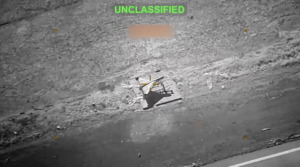
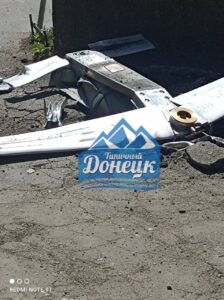
Positive identification of the model of air-delivered bomb to which the UMPK kit is fitted cannot be made from the source imagery. Based on the size of the UMPK and historical use in the area, it is likely an OFAB-250-270 model. (ARES)
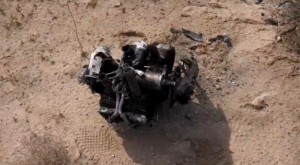
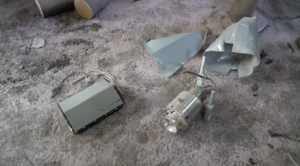
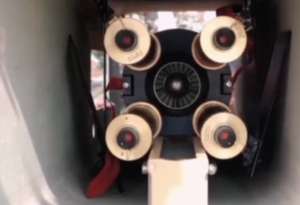
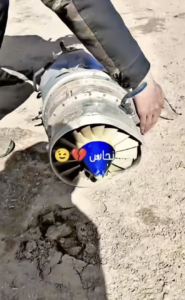
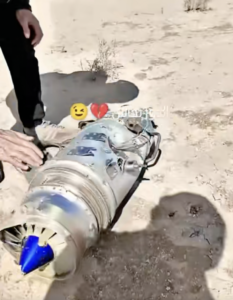
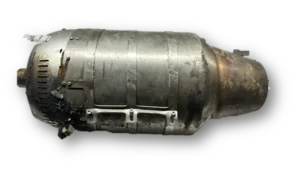
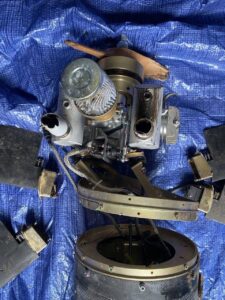
It is reported that this jet engine was recovered from the wreckage of a Geran-5 one-way attack (OWA) UAV. It is most likely a Telefly TF-TJ2000A model, manufactured by Telefly Telecommunications Company in China. It is reported that the TF-TJ2000A engine produces 200 kg of thrust; this is a significant increase in thrust compared to the Telefly JT80 engine used on the Shahed-238 (Geran-3) UAV, which produces approximately 80 kg of thrust. (ARES)
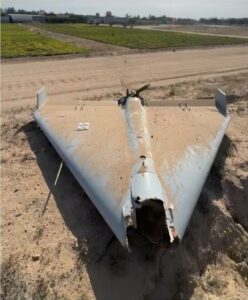
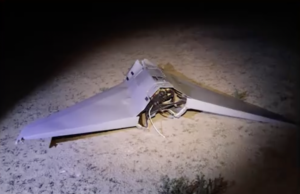
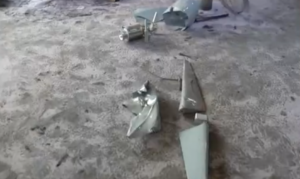
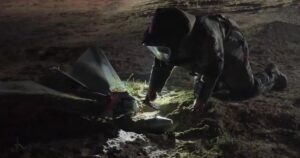
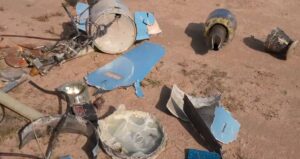
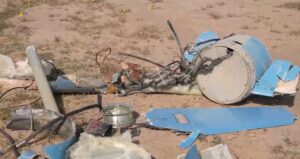
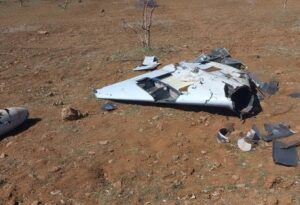
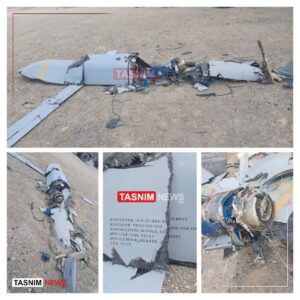
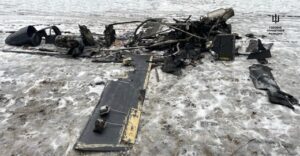
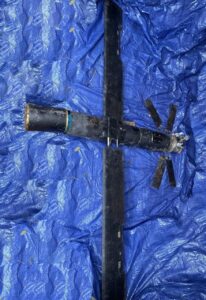
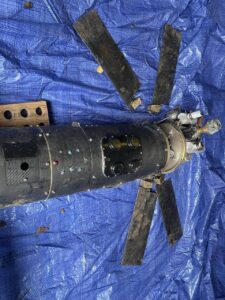
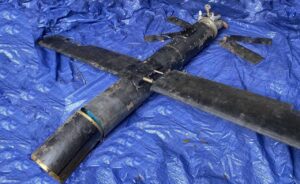
This image shows the remains of a Russian Geran-5 drone. These drones are reported to be roughly 6 meters long and have a wingspan of up to 5.5 meters. They are fitted with a warhead weighing approximately 90 kg and have a range of about 1,000 km. (ARES)
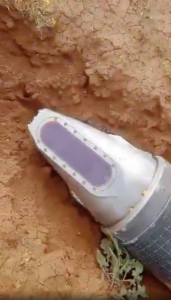
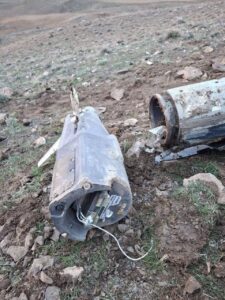
The 3OF39 Krasnopol is a laser-guided, rocket-assisted 152 mm tank gun projectile carrying a high explosive fragmentation (HE-FRAG) warhead. The round is built and shipped with a cover over the optical sensor. This protective cover is fitted with a T-90 mechanical time delay fuze. Once fired, the T-90 fuze will initiate after a pre-selected time and will jettison the protective cover, exposing the optical sensor in the nose. The internal impact fuze, which can be set for immediate or delayed initiation, is then responsible for detonating the projectile. (ARES)
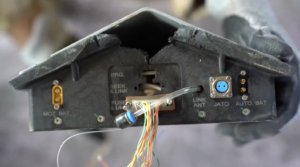
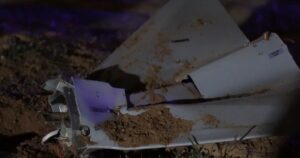
These images show a relatively intact GBU-39/B air-delivered bomb, with the distinctive Diamond Back Wing Assembly still mounted to the bomb body. Whilst the source claims that the U.S. feared this bomb would be exploited for its technology, the GBU-39/B has been in widespread use since its introduction in 2006, including in Gaza, Lebanon, Syria and Yemen. Similar glide bombs have been designed and produced by other nations. (ARES)

 The munition has not operated and the intended effect has not occurred.