

Do not approach munitions
under any circumstances
Country or territory where the image was reported

Reported Location (52)

Year the image is reported to have been taken

Year (21)

Classification groups of key explosive munitions used in conflicts

Munition Category (8)

The impact or effect the munition is intended to have

Functional use (10)

The specific model of munition pictured

Tentative Model (353)

ADAM / M67 / M72

Search

The external organisation that documented the munition

Research Organisation (6)

Colour of the munition pictured

Base Colour (12)

Colour of all, or some, of the markings on the munition

Marking Colour (11)

Language or script of the marking on a munition

Marking Script (10)

Condition of the munition pictured

Condition (6)

Key features defining the operation mechanisms of a projectile

Mechanical Feature (10)

Whether a munition is guided or unguided

Guidance (2)

Where the munition is launched from and what it targets

Domain (7)

The type of fins visible on the munition

Fins Characteristic (6)

The nominal diameter of a projectile. For most modern munitions, this is expressed in millimetres (e.g. 82 mm mortar projectile), but older artillery gun projectiles may be described in inches.

Calibre (76)

Weight class of the aerial bomb pictured

Weight Class (14)

1–1 of 1
OSMP2284
Analyst Note:
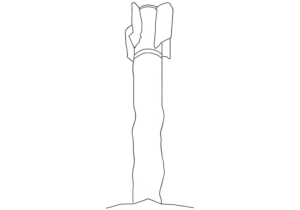
This image shows a U.S. Area Denial Artillery Munition (ADAM), an anti-personnel scatterable landmine which is dispensed from the rear of M692 and M731 155 mm artillery gun projectiles. Each projectile contains 36 ADAM submunitions. The submunition can deploy up to seven tripwires out to 20 ft (6.1 m). Any movement of a tripwire or movement of the ADAM body will result in a small kill mechanism being ejected to a height of a 6–8 ft (1.8 m–2.4 m) prior to detonating. Each munition contains a small amount of depleted uranium. The ADAM was previously designated as either the M67 or M72, with the only difference being the self-destruct time delay. (ARES)