

Do not approach munitions
under any circumstances
Country or territory where the image was reported

Reported Location (52)

Year the image is reported to have been taken

Year (21)

Classification groups of key explosive munitions used in conflicts

Munition Category (8)

Emplaced munitions either activated remotely or by the target or victim.
Mine
The impact or effect the munition is intended to have

Functional use (10)

The specific model of munition pictured

Tentative Model (353)

Search

The external organisation that documented the munition

Research Organisation (6)

Colour of the munition pictured

Base Colour (12)

Colour of all, or some, of the markings on the munition

Marking Colour (11)

Language or script of the marking on a munition

Marking Script (10)

Condition of the munition pictured

Condition (6)

Key features defining the operation mechanisms of a projectile

Mechanical Feature (10)

Whether a munition is guided or unguided

Guidance (2)

Where the munition is launched from and what it targets

Domain (7)

The type of fins visible on the munition

Fins Characteristic (6)

The nominal diameter of a projectile. For most modern munitions, this is expressed in millimetres (e.g. 82 mm mortar projectile), but older artillery gun projectiles may be described in inches.

Calibre (76)

Weight class of the aerial bomb pictured

Weight Class (14)

1–40 of 40

Current Filter

Mine
Emplaced munitions either activated remotely or by the target or victim.
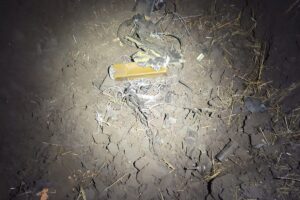
OSMP2271
Analyst Note:
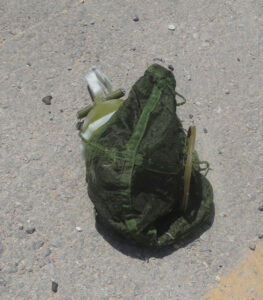
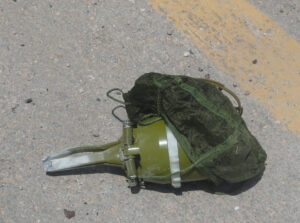
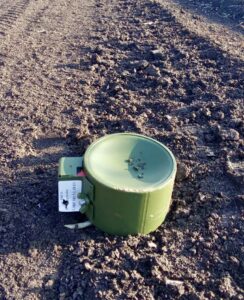
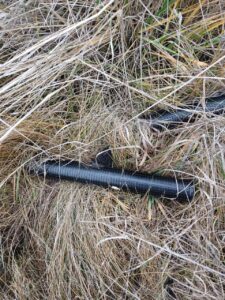
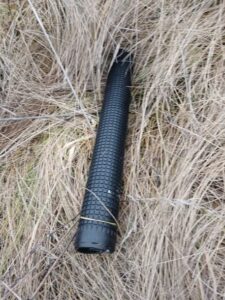
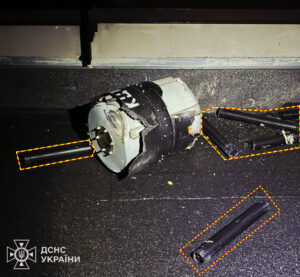
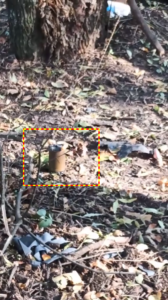
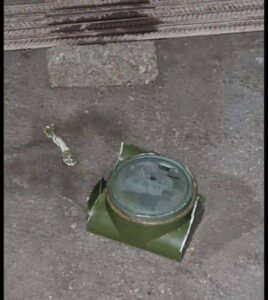
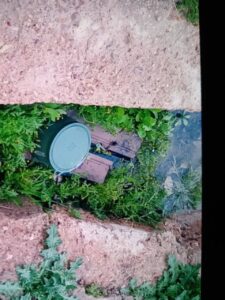
This image shows a PTM-3 scatterable anti-vehicle mine, surrounded by the remnants of an unmanned aerial vehicle (UAV). Russia has been dispensing PTM-3 mines from one-way attack UAVs as they fly towards their primary target. Typically, these OWA UAVs are fitted with KPTM-3 remote mining canisters mounted under the wings, which eject their PTM-3 payload midair. The PTM-3’s fuze features an arming delay which is sufficient to allow the mine to fall to the ground before fully activating. (ARES)
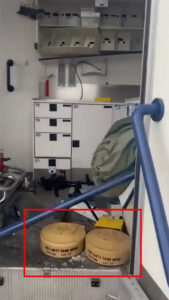
OSMP2456
Analyst Note:
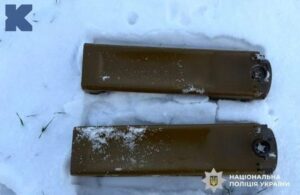
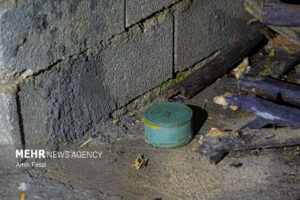
This image shows two anti-vehicle mines produced by Iran, known variously as the ’YM3’, ‘YM-III’, or similar. According to the manufacturer, mass production began in 2002. The mine reportedly has an overall weight of 6.9 kg (15 lb). (ARES)
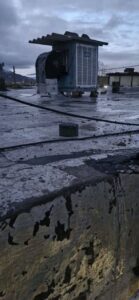
OSMP2455
Analyst Note:
This image shows an Iranian M18A1 anti-personnel landmine, an Iranian copy of the American M18A1 ‘Claymore’ design. Iran has produced their own copy of the M18A1 since at least 2004. According to Iranian sources, it contains 600 spherical, steel pre-formed fragments that are 6 mm in diameter. These mines are designed to propel these steel balls in an arc forward of the munition upon detonation. (ARES)
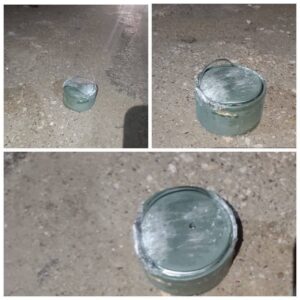
OSMP2284
Analyst Note:
This image shows a U.S. Area Denial Artillery Munition (ADAM), an anti-personnel scatterable landmine which is dispensed from the rear of M692 and M731 155 mm artillery gun projectiles. Each projectile contains 36 ADAM submunitions. The submunition can deploy up to seven tripwires out to 20 ft (6.1 m). Any movement of a tripwire or movement of the ADAM body will result in a small kill mechanism being ejected to a height of a 6–8 ft (1.8 m–2.4 m) prior to detonating. Each munition contains a small amount of depleted uranium. The ADAM was previously designated as either the M67 or M72, with the only difference being the self-destruct time delay. (ARES)
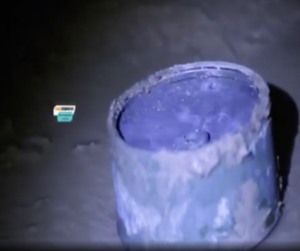
OSMP2283
Analyst Note:
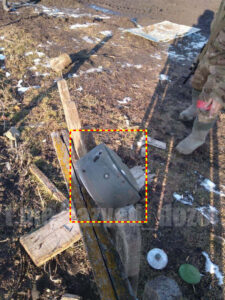
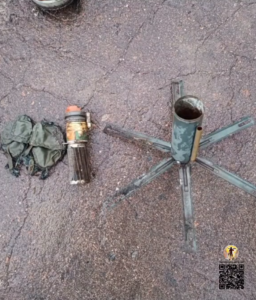
The German DM 1399 (AT2) anti-tank landmine shown here can be dispensed from rockets and ground vehicles. Upon being dispensed, a small parachute is deployed in order to slow the mine’s descent and assist in in landing base down; the parachute is released upon impact by an impact-release connector. Upon impact, from five to 12 (six shown) spring-loaded, metal legs deploy to right the mine; arming is completed anywhere from 15 seconds to five minutes thereafter. The base of the cylindrical body houses the battery and electronics assembly, with the main explosive charge and Misnay–Schardin shaped charge plate immediately above. The body is topped by a dome cover and an S3 sensor wire which extends approximately 600 mm (12 in) above the body of the mine. (ARES)
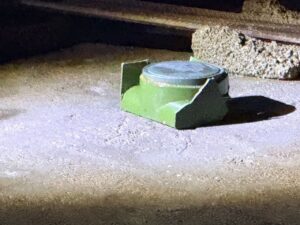
OSMP2282
Analyst Note:
This image shows a German DM 1399 (AT2) dispensed anti-tank (anti-vehicle) landmine. This munition uses a shaped charge that relies on the Misnay–Schardin effect to penetrate the underside of armoured fighting vehicles. The DM 1399 reportedly has magnetic and pressure fuzing, along with an anti-disturbance feature and a self-destruct time delay of up to four days, settable in six different increments. The mines can be dispensed from rockets (MLRS), vehicles (Skorpion 2), and UAVs (Eggbox with 4 mines). Currently the mines are known to be in service with Finland, Germany, Norway, the United Kingdom, and Ukraine (having been donated by Germany). Denmark, Latvia, and Sweden are in the process of having AT2+ mines and Skorpion 2 systems delivered. (ARES)
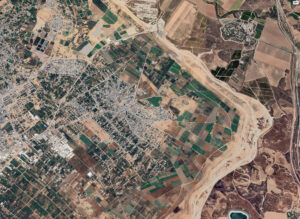
OSMP2302
Analyst Note:
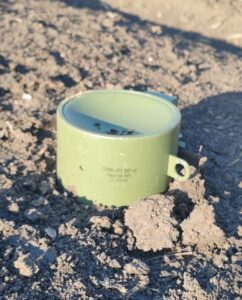
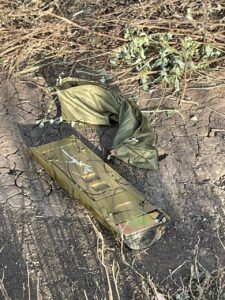
The BLU-91/B pictured here is an aerially dispensed anti-vehicle scatterable landmine that uses a magnetic-influence fuze to function a shaped charge relying on the Misnay–Schardin Effect. The munition is fitted with three self-destruct delay settings. The aeroballistic adaptor is commonly broken off upon impact and the remnants of the adhesive holding it in place can be seen (yellow). One side of the munition has a bore-riding pin which is held in place while in the dispenser. Once dispensed, the bore riding pin is released and starts the arming process. The BLU-91/B is 121 mm (4.75 in) in diameter and 56 mm (2.6 in) in height. (ARES)
OSMP2276
Analyst Note:
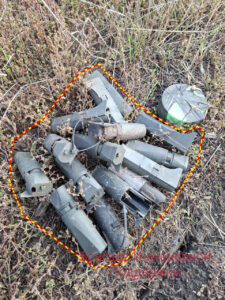
Highlighted is a Russian POM-2 scatterable mine, a bounding, high explosive, anti-personnel munition. Upon impact, the POM-2 deploys six legs for stabilisation and four pressure- and pull-sensitive tripwires of 9.5 m (31.17 ft) in length. These terminate in a ‘Y’-shaped fashion with plastic weights. Upon release, nylon stabiliser ribbons are deployed to help ensure the submunition lands upright, working in conjunction with the stabilising legs. These can be seen in the foreground of this image. Originally designed to be dispensed by rockets, helicopters, and fixed wing aircraft, the war in Ukraine has seen the POM-2 modified for deployment via UAV. (ARES)
OSMP2275
Analyst Note:
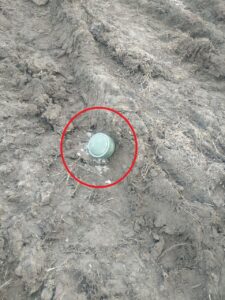
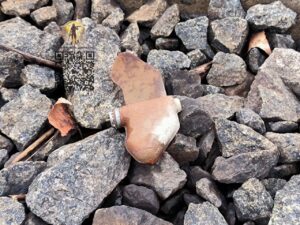
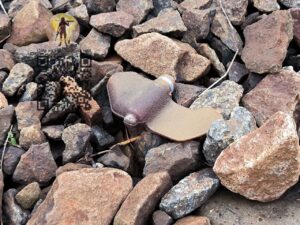
This image depicts a Russian PFM-1 or PFM-1S submunition. These are small anti-personnel scatterable landmines constructed using a plastic (low-density polythene) body and a liquid high explosive fill. They are fitted with a pressure fuze, and may be green, white, sand (tan), or brown (as seen here) in colour. The PFM-1S incorporates a nominal self-destruct with a delay of approximately 40 hours, although they may remain active for far longer and are known to randomly self-destruct weeks after deployment. They weigh approximately 70 g (2.47 oz) and are typically dispensed from 250 kg (551 lb) and 500 kg (1,102 lb) class dispensers by the hundreds. The war in Ukraine has seen them dispensed from UAVs. (ARES)
OSMP2232
Analyst Note:
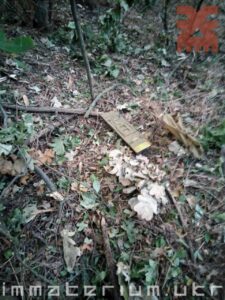
A BLU-91/B GATOR anti-vehicle landmine is seen in this image, with the remains of an aeroballistic adaptor visible. BLU-91/B mines can be deployed from cluster bombs or from vehicle-mounted dispensers, however the presence of the square aeroballistic adaptor here indicates that this example was deployed from an air-delivered cluster bomb. (ARES)

Collection

Ізраїль і Газа 2023 – 2026

7 жовтня 2023 року бойовики ХАМАС прорвали міцно укріплений кордон між Ізраїлем і Сектором Газа, атакувавши численні міста і села. За повідомленнями, в Ізраїлі загинуло понад 1000 осіб, а понад 250 було взято в заручники і перевезено до Гази

View this collection
OSMP1402
Analyst Note:
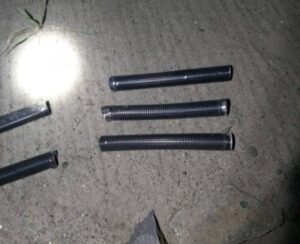
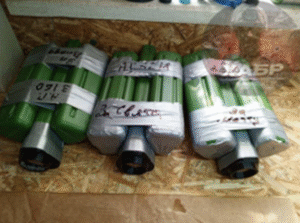
This image shows three sets of three PTM-1 series scatterable anti-vehicle mines taped together. While these mines have likely been repurposed from their original delivery munition to be delivered via UAV, this cannot be confirmed based off this image alone. (ARES)
OSMP1399
Analyst Note:
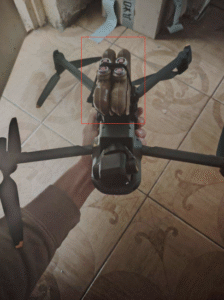
This image shows four PFM-1 series anti-personnel landmines retained by a release mechanism to enable deployment via UAV. Ordinarily, PFM-1 series and other ‘scatterable mines’ are deployed via carrier munitions or dedicated mine-dispensing devices. In Ukraine and other conflicts, these mines have often been removed from their original carrier munitions in order that they may be delivered via UAV. (ARES)

Collection

Israel and Gaza 2023 – 2026

On 7 October 2023, Hamas militants breached the heavily-fortified border separating Israel and the Gaza Strip, attacking numerous towns and villages. More than 1,000 people in Israel were reported killed, with more than 250 taken hostage and moved to Gaza. In response, Israel has launched one of its largest military operations of recent decades, seeking […]

View this collection