





1–18 of 18
Current Filter
[TEMP] ARES-TMID-0011
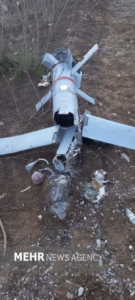
This munition is a missile, but in reports has typically been referred to as a ‘drone’. Based on the turbojet and wings, this munition may act as a one-way attack (OWA) unmanned aerial vehicle (UAV) with a loitering capability. At least two different warhead types have been documented. Heavy warhead construction, consistent with a design intended for penetration, has been observed. While ARES can assess with high confidence that this munition was designed and produced by Israel, a model name or designation is not publicly known, so the temporary munition identifier of ARES-TMID-0011 has been assigned. (ARES July 2026)



Analyst Note
28 April 2026
This munition, believed to be of Israeli origin, has been documented at a number of strike sites in Lebanon, Gaza, and Iran. Although distinctive remnants permit its tentative identification, the lack of a confirmed model name means this munition has been assigned a Temporary Munitions Identifier (TMID) by ARES. This appears in the Tentative Model field of the OSMP so that all records of this munition in the database can be linked under one temporary name. (ARES)







Analyst Note
26 April 2026
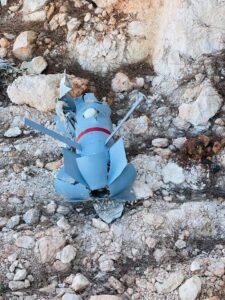
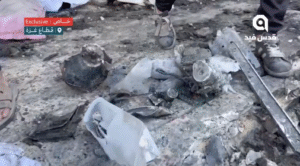
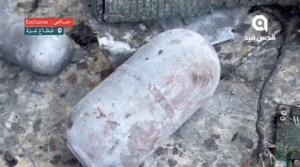
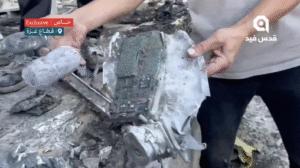
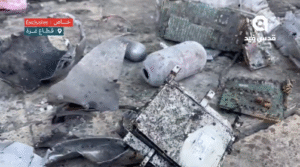
This image shows the remnants of an unknown Israeli munition that was used in a strike on Nasser hospital. Reporting on these strikes often refers to this munition as a ‘drone’. The turbojet engine, along with possible wing remnants, indicate that this could be a one-way-attack (OWA) UAV or ‘loitering munition’ missile, consistent with reporting. This same model of munition has been used multiple times in strikes in Gaza, as well as Lebanon and Syria. There is no publicly acknowledged Israeli munition that closely fits these remnants. Entries 1384, 1385, 1386, and 1389 capture other incidents in which this munition was used. (ARES)

Analyst Note
27 May 2025
This image shows the remnants of an unknown Israeli munition that was used in a strike that hit the Nasser hospital in Gaza. The turbojet engine, along with possible wing remnants indicate that this could be a one-way attack UAV or ‘loitering munition’, consistent with some reporting on the strikes. This same model of munition has been used in multiple strikes in Gaza, as well as in Lebanon and Syria. There is no publicly disclosed Israeli munition that neatly matches these remnants. OSMP entries 1384, 1385, 1386, and 1389 show other incidents in which this munition appears to have been used. (ARES)
Collection
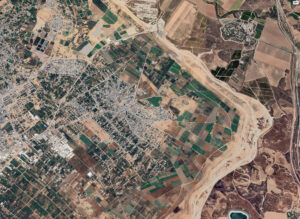
Israel and Gaza 2023 – 2026
On 7 October 2023, Hamas militants breached the heavily-fortified border separating Israel and the Gaza Strip, attacking numerous towns and villages. More than 1,000 people in Israel were reported killed, with more than 250 taken hostage and moved to Gaza. In response, Israel has launched one of its largest military operations of recent decades, seeking […]