


401–500 of 717
Current Filter
Functioned Munition
The munition has either partially or fully operated and the intended effect has occurred. For explosive munitions, this usually means a detonation.




Analyst Note
29 January 2025
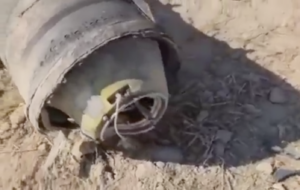
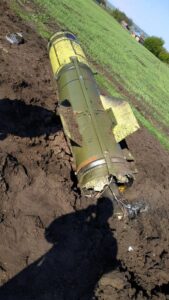
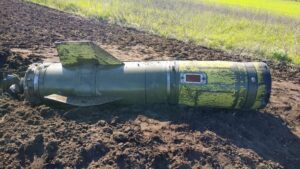
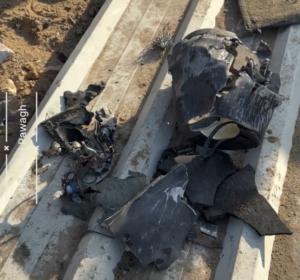
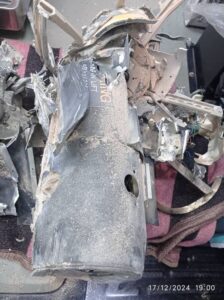
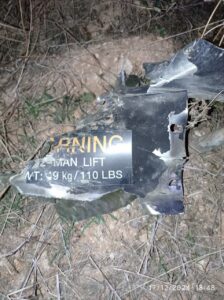
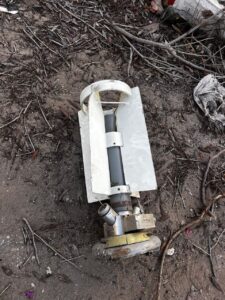
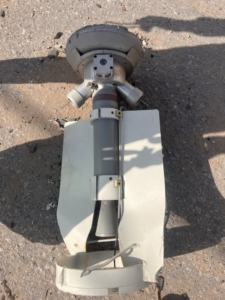
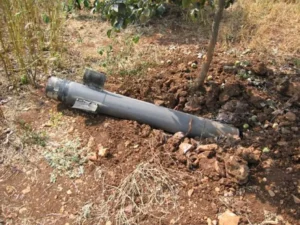
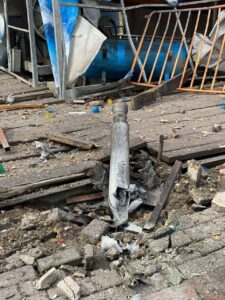
This image shows the functioned rocket motor of an Israeli Carpet rocket. The Carpet uses a fuel-air explosive (FAE) warhead which is designed to function mines and improvised explosive devices (IEDs), clearing a target area for the advance of friendly forces. These rockets are fired from the Carpet rocket launcher, which is loaded with up to 20 rockets and can be fitted to a variety of vehicles. (ARES)
Analyst Note
14 January 2025
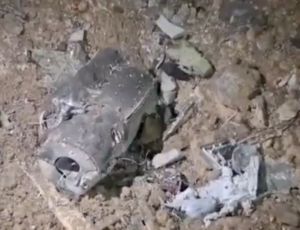
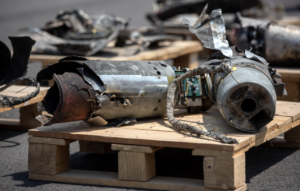
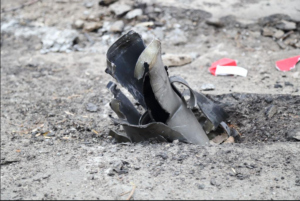
This image shows the rear portions of two different two different Spike Non-Line-of-Sight (NLOS) missiles, which each include the control section and part of the rocket motor.
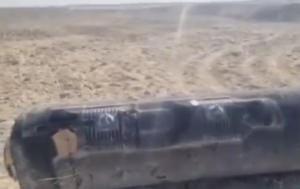
The Spike NLOS has been in service with Israel since 1987, and is currently in its sixth generation, or iteration, which comprises an unknown number of variants. At least three different warhead configurations are reported: high explosive fragmentation (HE-FRAG), high explosive anti-tank (HEAT), and a ‘multipurpose’ or anti-structure variant with a penetrating blast and fragmentation warhead. (ARES)
Analyst Note
9 January 2025
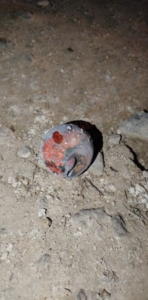
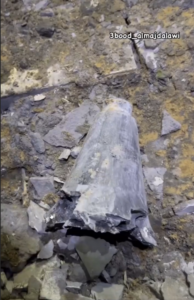
This image shows the pneumatic accumulator, or ‘accumulator bottle’, of the AGM-114R9X missile. The accumulator bottle stores gas that is used to actuate the fins, adjusting the trajectory of the missile in flight. All AGM-114 Hellfire-series missiles have an accumulator bottle. The accumulator bottle is a fragment that often survives intact, even in Hellfire missile variants that carry an explosive payload. (ARES)
Analyst Note
13 March 2025
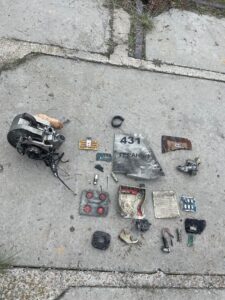
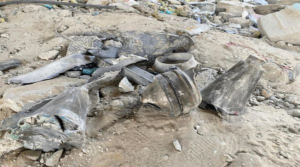
This image shows various munitions remnants, including a fuzewell and two nosecone fragments from GBU-39 Small Diameter Bombs. The presence of two different nosecones indicates that these remnants are from at least two distinct munitions. (ARES)
Analyst Note
5 October 2025
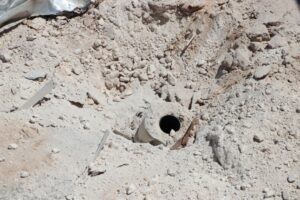
Contextual images of the damage caused by this munition indicate the remnant pictured is from the AGM-114R9X variant of the Hellfire missile, a kinetic munition which does not carry an explosive warhead. This remnant cannot be differentiated from either other AGM-114 or the AGM-179 JAGM variants based off this image alone. (ARES)
Analyst Note
9 January 2025
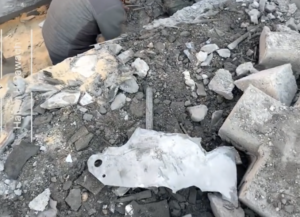
This image shows a wing fragment from a SPICE-1000 bomb guidance kit. While there are no remnants of the bomb body visible, it can be determined that a MK 83-series 1,000-pound bomb or similar was used, as MK-83 series bombs are paired with the SPICE-1000 bomb guidance kit to form a complete munition. (ARES)
Analyst Note
9 January 2025
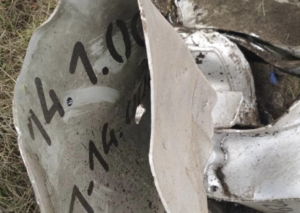
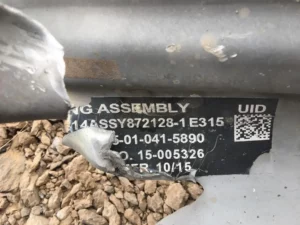
This image shows a fragment of the wing assembly of a Paveway bomb guidance kit. The data plate, though damaged, provides additional information about the munition. A partial Commercial and Government Entity code (CAGE; “ …14”), manufacturing part number (MFG SKU; “872127-1”), National Stock Number (NSN; “...5-01-141-5890”), serial number (Serial NO; 15-005326), and date of manufacture (“…MFR. 10/15”) are visible. This data can be used to look-up the component and determine that this specific fragment is from a Paveway II guidance kit intended for use with a MK 82-series 500-pound-class air-delivered bomb. This bomb and guidance kit combination is referred to as the GBU-12. The CAGE code, although partial, is enough to determine that this specific kit was produced by Raytheon, rather than the other known manufacturer of the Paveway kits, Lockheed Martin. (ARES)
Analyst Note
9 January 2025
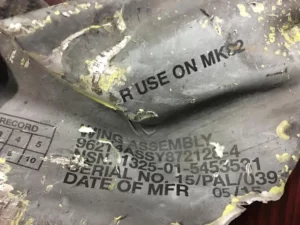
This image shows a fragment of the wing assembly of a Paveway kit, compatible with a MK 82 500-pound-class air-delivered bomb. (“..R USE ON MK82”). The National Stock Number (NSN; “1325-01-5453531”) indicates that this is a Paveway IV bomb guidance kit. There are variants of Paveway guidance kits compatible with all MK 80-series bombs, as well as other bombs such as the 5,000-pound-class BLU-113 penetrator. Paveway bomb guidance kits use laser guidance, and are more precise than JDAM guidance kits. Some variants of the Paveway kit, such as the ‘Enhanced’ series feature GPS and INS guidance in addition to laser guidance. (ARES)
Analyst Note
9 January 2025
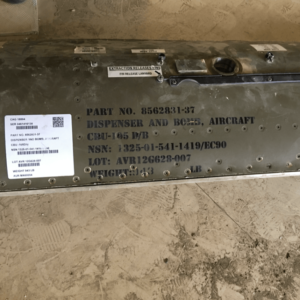
This image shows part of the SUU-66 dispenser (sometimes called a ‘shell’) that forms part of a CBU-105 D/B cluster bomb unit. In U.S. service, a ‘cluster bomb unit’ designation includes both the dispenser or shell, as well as the payload.
The CBU-105 series of cluster munitions consists of CBU-97-series munitions that are modified with a WCMD (Wind Corrected Munitions Dispenser) guidance kit. Both CBU-97 and CBU-105 series munitions are made-up of an SUU-66 dispenser filled with 10 BLU-108 submunitions. Each BLU-108 submunition contains 4 ‘skeet’ warheads that are ejected mid-air and independently seek out targets using an infrared sensor. A single skeet weighs 7.5 lb (3.4 kg) and contains a copper explosively formed penetrator (EFP) for armour penetration that is surrounded by a fragmentation ring offering some anti-personnel effect. (ARES)














Analyst Note
14 November 2024
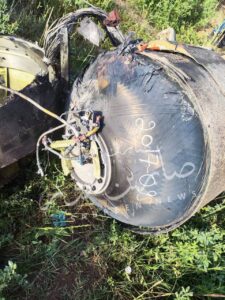
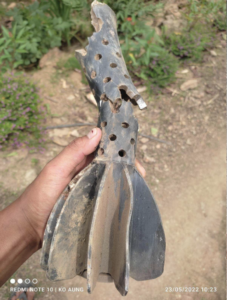
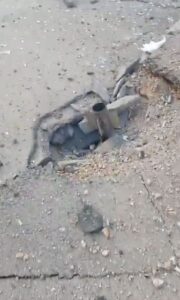
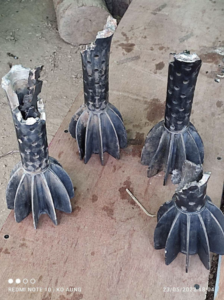
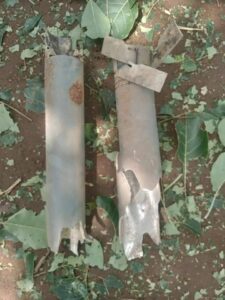
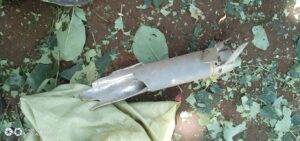
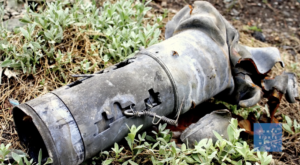
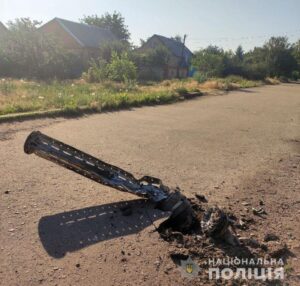
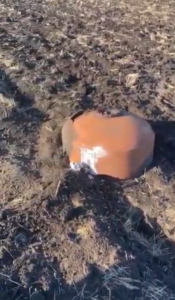
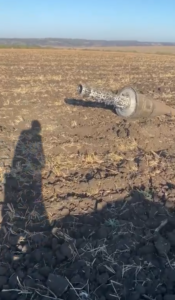
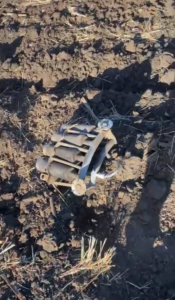
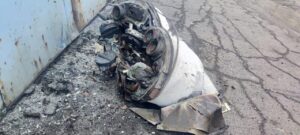
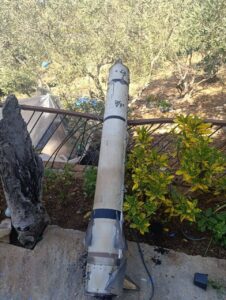
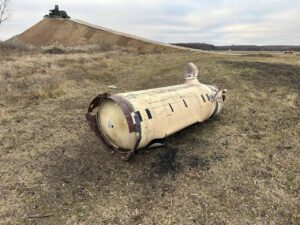
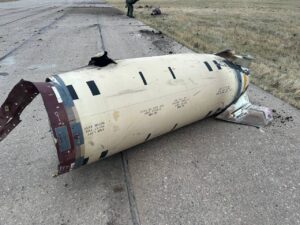
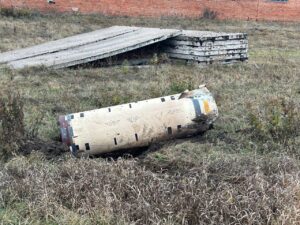
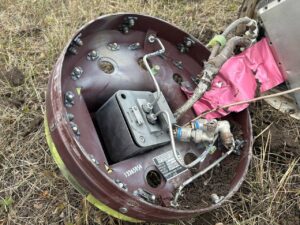
The Stunner surface-to-air missile fired by the David’s Sling air defence system is a two-stage interceptor, meaning that the munition contains two separate rocket motors for launch and propulsion. The first stage, or launch motor, detaches from the munition after a short time, before the second stage, or flight motor, ignites. The second stage motor, visible here, was found relatively intact. (ARES)
Analyst Note
24 January 2025
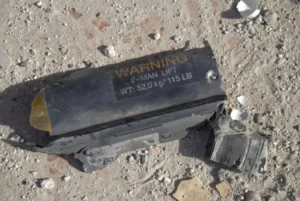
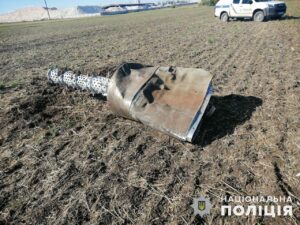
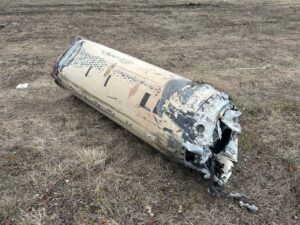
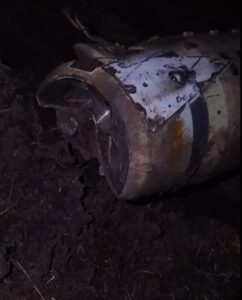
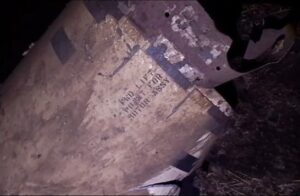
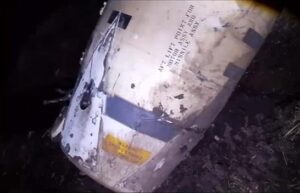
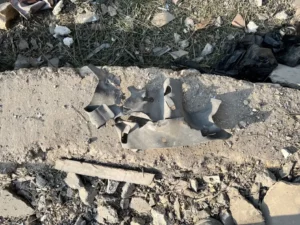
This image shows part of the warhead section of an MGM-140 Army Tactical Missile System (ATACMS) series tactical ballistic missile. This is the top of the warhead section, where it connects to the guidance section. A data plate is visible, giving information about the manufacturer (“Lockheed Martin Vought Systems”) and identifying this specific part (“WARHEAD, GUIDED MISSILE. HIGH EXPLOSIVE”. (ARES)
Analyst Note
25 November 2024
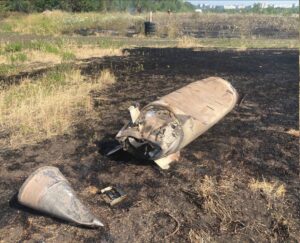
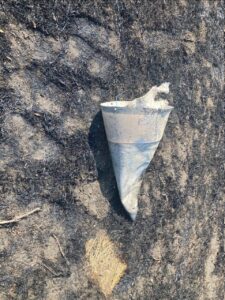
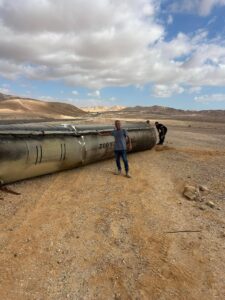
This image shows an aerosurface or ‘strake’ from a Joint Direct Attack Munition (JDAM) bomb guidance kit of the type fitted to MK 82-series 500-pound air-delivered bombs. The JDAM kits compatible with MK 82 bombs have aerosurfaces that are affixed near the nose of the bomb—rather than around the widest part of the bomb body, as seen in JDAM kits that are compatible with the larger MK 83 or MK 84 bombs. (ARES)

Analyst Note
20 November 2024
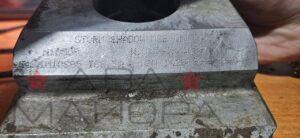
This image shows part of a heavy-duty suspension lug associated with the Storm Shadow air-launched cruise missile. This is made clear from dot-peened markings which include “STORM SHADOW USE ONLY” and identifiers such as a NATO Stock Number (NSN). (ARES)
Analyst Note
20 November 2024
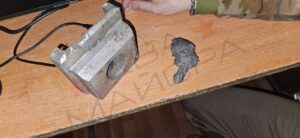
The munitions remnant on the left of this image is part of a suspension lug associated with the Storm Shadow air-launched cruise missile, which is used to attach the munition to an aircraft. This component is of heavy construction, and as such often survives the missile’s functioning intact. This photograph purports to show remnants recovered from a Storm Shadow missile that was fired by Ukrainian forces into Russian territory, but this claim cannot be verified from the image alone. (ARES)

Analyst Note
19 November 2024
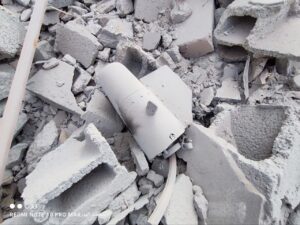
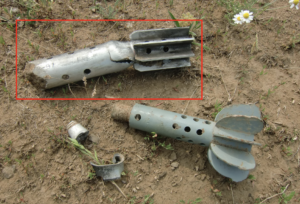
Two of the distinctive, black tailfins used on S8-series air-to-surface rockets are visible to front and left of the remnant material. (ARES)
Analyst Note
18 November 2024
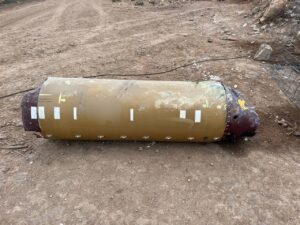
This image shows a rocket motor section from an MGM-140 ATACMS series surface-to-surface ballistic missile. The warhead section of the MGM-140 series missiles separate from the rocket motor before functioning, resulting in the rocket motor often being found relatively intact near the target. The MGM-140 series missiles use the same rocket motor, preventing a positive identification of the variant based off the rocket motor alone, unless the variant markings are visible. (ARES)
Analyst Note
18 November 2024
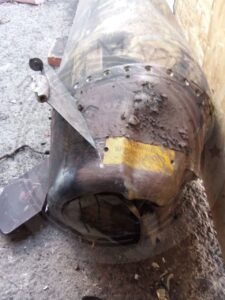
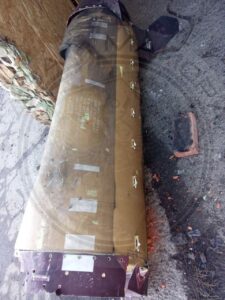
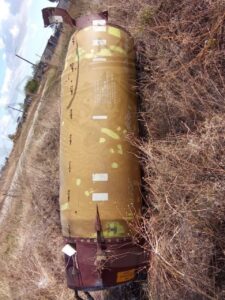
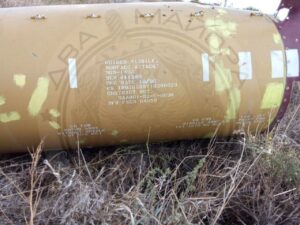
This remnant of an MGM-140 Army Tactical Missile System (ATACMS) surface-to-surface ballistic missile is marked to indicate it is the MGM-140A variant, a cluster munition which carries 950 M74 multi-purpose submunitions. Submunitions of this type are sometimes referred to by the acronym ‘anti-personnel and anti‑materiel (APAM)’. Additional markings indicate a manufacturing date (“10/96”; October 1996), a serial number (“411240”), and other information. (ARES)
Analyst Note
7 November 2024
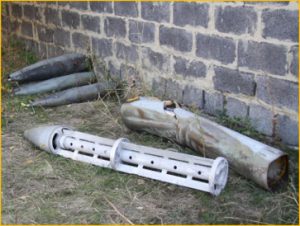
Almost all cluster munitions, including this example, expel their submunitions during flight. The submunitions are often held in an internal frame, such as that visible here, prior to being expelled. Depending on the munition, these internal frames may be diagnostic for identification. They usually do not carry a significant explosive payload in their own right, and therefore often withstand the functioning of the munition relatively intact. (ARES)
Analyst Note
18 November 2024
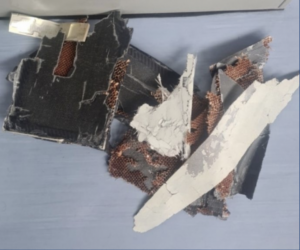
Honeycomb-like internal structures are often used in aerospace applications to provide rigidity with reduced weight, and are sometimes constructed using materials which reduce radar cross-section by absorbing or scattering electromagnetic waves. (ARES)

Analyst Note
24 October 2024
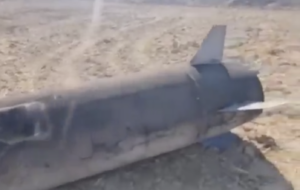
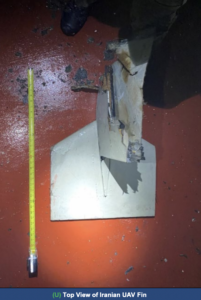
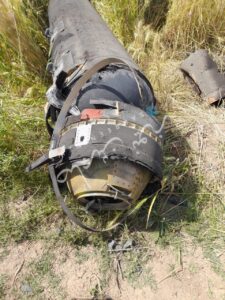
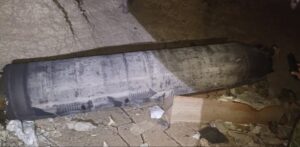
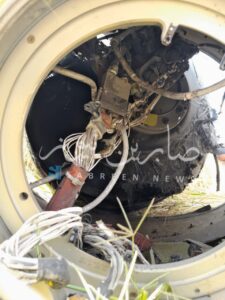
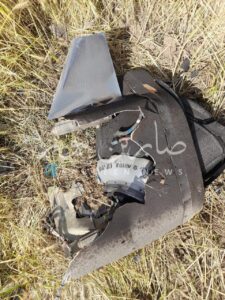
The Blue Sparrow is one of a series of three of air-launched missiles originally designed by Rafael as targets to test ballistic missile defence systems. Blue Sparrow missiles can be fitted with either inert or high explosive (HE) warheads. The recovery of Sparrow-series boosters following a reported Israeli strike on an Iranian air-defence system could suggest that a derivative variant of the Blue Sparrow missile was further developed for engaging surface targets. (ARES)