



1–45 of 45
Current Filter
9M22 Grad series
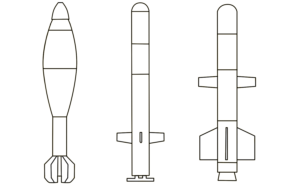
Typically unguided artillery rockets with a diameter of 122 mm, capable of delivering a range of payloads, but most often carrying a HE-FRAG warhead. These indirect-fire munitions are most often launched from multiple-barrel rocket launchers such as the BM-21 Grad, but can also be fired from single- or double-barrel launchers or improvised rails, with the latter often seen in the Middle East. 9M22-series ‘Grad’ rockets have been used in conflicts across the globe, including Syria and Ukraine.

Analyst Note:
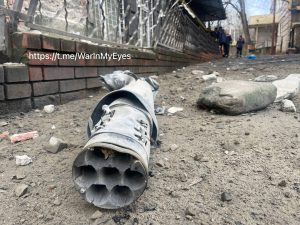
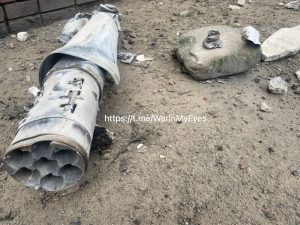
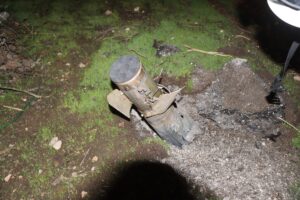
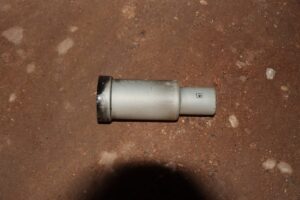
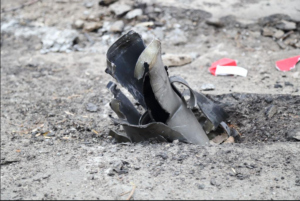
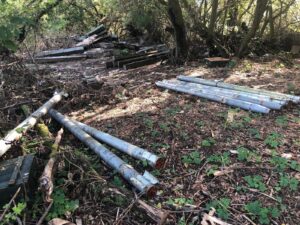
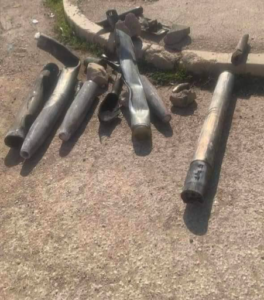
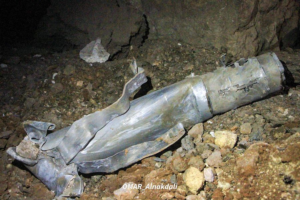
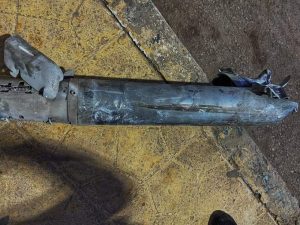
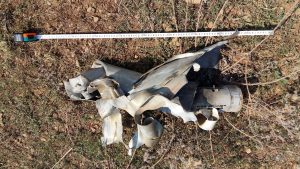
Considered with additional contextual materials, it is assessed that this image shows the rocket motor section from a 122 mm incendiary rocket, specifically the 9M22S or 9M28S models. Both rockets carry the same warhead, but use rocket motors of different lengths; not enough of this motor is visible to positively identify the model. (ARES)
Analyst Note:
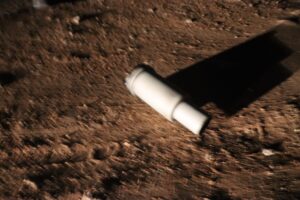
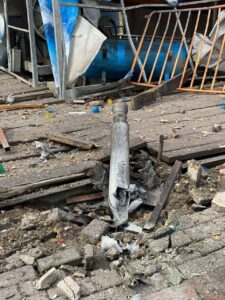
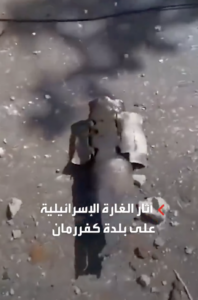
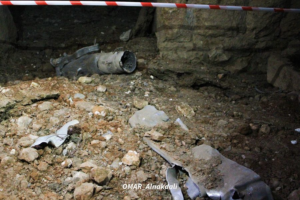
This image shows a stepped component positioned at the front of the warheads carried by 122mm 9M22S and 9M28S incendiary rockets. This structure helps to push the ML-5 incendiary elements out of the rear of warhead once the fuze in the nose functions. It is a relatively distinctive component, and commonly found in the vicinity of where the incendiary elements fall. (ARES)
Analyst Note:
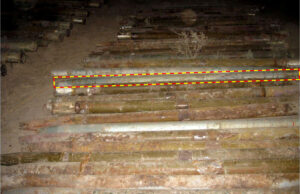
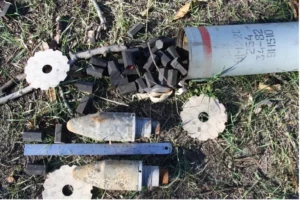
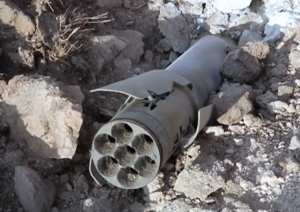
This image shows a 9M22S rocket with some of its unfunctioned payload of 180 ML-5 incendiary elements. Each ML-5 is a hexagonal prism formed from a hollow shell of magnesium that is filled with an incendiary composition. These elements are ignited by the ejection charge of the rocket’s warhead upon functioning. Two fuzes are also visible at the bottom of the image, immediately above and below the ruler. (ARES)
Analyst Note:
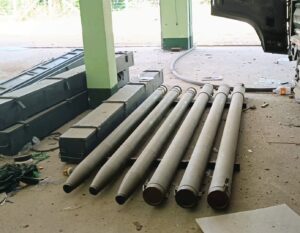
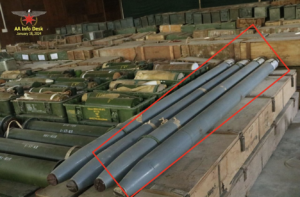
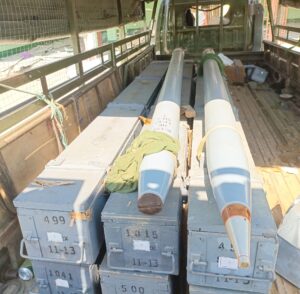
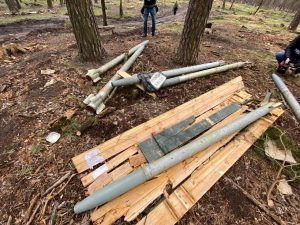
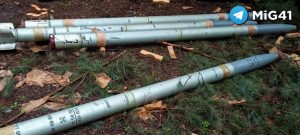
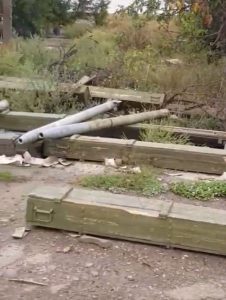
Whilst there are no visible markings explicitly identifying the model of the 122 mm rockets in this image, they are sitting atop a box marked “R-122” and exhibit physical features consistent with North Korean R-122 rockets. It should be noted that rockets marked with the generic “R-122” model name have been observed in both ‘long’ and ‘short’ overall lengths and painted in different colours. (ARES)
Analyst Note:
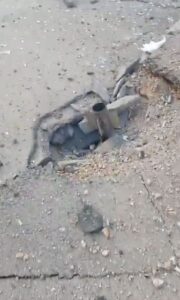
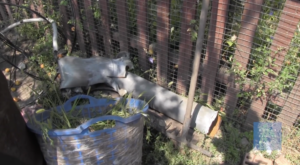
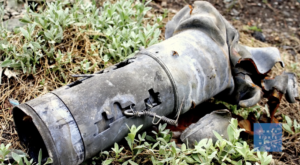
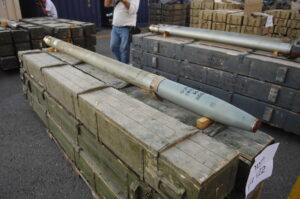
These R-122 ‘Grad’-type 122 mm surface-to-surface rockets were produced in North Korea. The example to the right is fitted with an F-122 impact fuze. Whilst a two-tone colour scheme is more common amongst those North Korean Grad rockets thus far identified in the context of the Ukraine conflict (these typically featuring a black forward section), uniformly coloured examples like this have also been identified previously. (ARES)
Analyst Note:
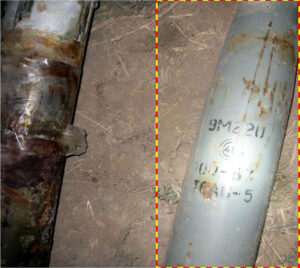
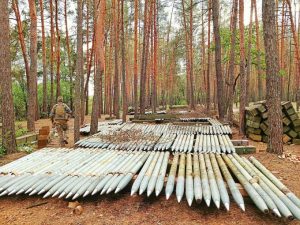
The 9M22S is essentially the ‘full-sized’ version of the shorter 9M28S surface-to-surface rocket previously recorded in the OSMP. Both rockets carry the same 9N510 incendiary warhead, but differ in the length of their rocket motor sections, and thus range. (ARES)

Analyst Note:
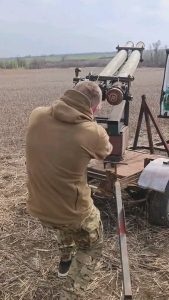
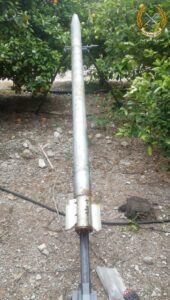
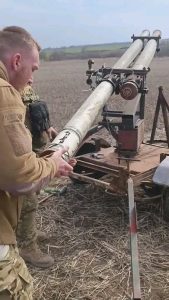
The crude launch arrangement depicted in this photograph shows the ease with which many simple rocket designs can be launched. Weapons such as this are used where precision fire is not a requirement; i.e., where the target might be a whole compound, neighbourhood, or settlement, rather than a specific building or vehicle. (ARES)
Analyst Note:
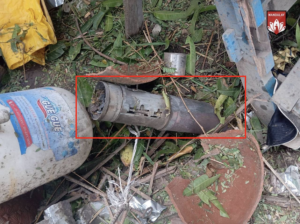
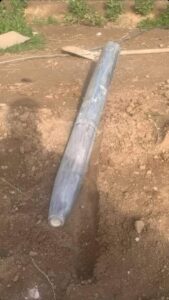
Contextual information suggests that this is likely a 9M22S unguided incendiary rocket (see External Research section), but this cannot be confirmed on the basis of this image alone. (ARES)
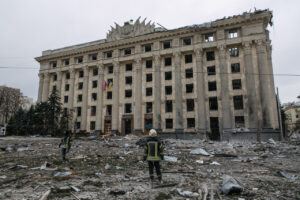
Collection
Ukraine and Russia 2022–2026
On February 24, 2022, Russia launched a full-scale invasion of Ukraine, involving military forces aimed at capturing most major cities, including the capital, Kyiv. It became the largest conflict in Europe since World War II, and about a quarter of Ukraine’s territory came under Russian control. But Russian troops were eventually pushed back from Kyiv. […]
Analyst Note:
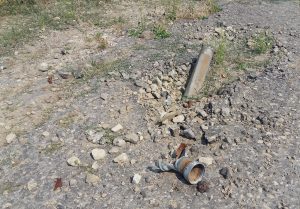
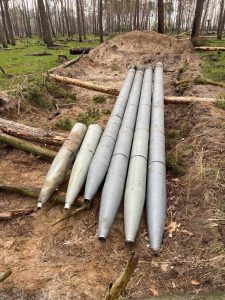
This image features both delivered (the two left-most munitions) and undelivered munitions of the same model.


Analyst Note:
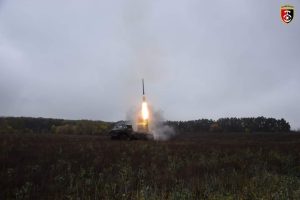
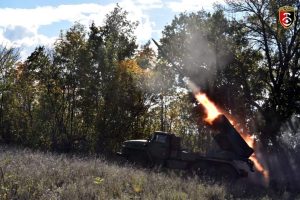
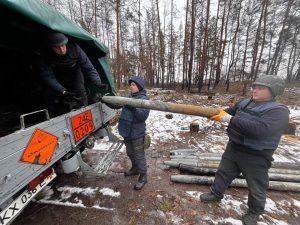
122 mm ‘Grad’ rockets can be fired from a variety of launchers and even in improvised ways. The most common is the BM-21 launcher and its later derivatives, but many other portable or vehicle-mounted launchers have been used around the world. Craft-produced examples—ranging from simple rails to more complex designs comparable to factory made launchers—are also common. In some cases, Grad rockets are even fired whilst supported by a crude arrangement of logs, bricks, or rocks. (ARES)