



1–100 of 717
Current Filter
Functioned Munition
The munition has either partially or fully operated and the intended effect has occurred. For explosive munitions, this usually means a detonation.





Analyst Note
15 August 2026
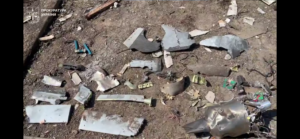
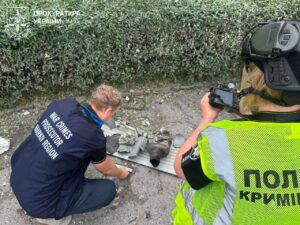
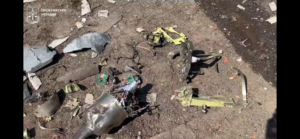
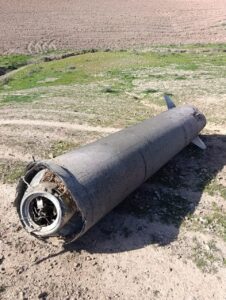
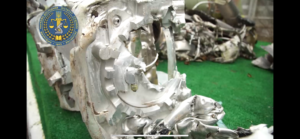
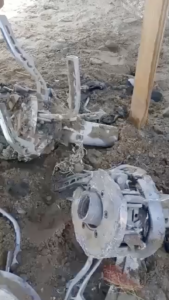
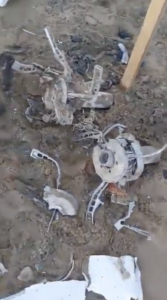
This image shows remnants of a Guided Advanced Tactical Rocket (GATR) alongside the remnants of a Hydra-70 series rocket. Developed and produced by Elbit Systems of Israel, GATR adds advanced capabilities, including guidance, to ‘dumb’ Hydra-70 rockets, in similar fashion to the U.S. APKWS system. GATR replaces the fins typically found in Hydra-70 series rockets with those of a new design. (ARES)
Analyst Note
15 August 2026
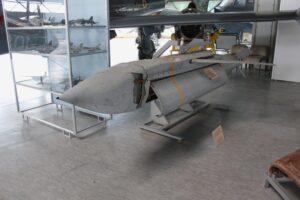
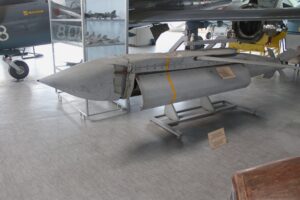
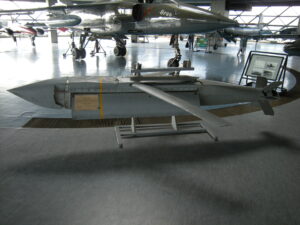
This image shows a functioned AGM-154A Joint Standoff Weapon (JSOW) air-to-surface missile. Upon functioning, a flexible linear shaped charge (FLSC) is used to cut open the munition body, dispensing 145 BLU-97B/B submunitions. The clean-cut edges visible on the bottom hanging section of the JSOW are the hallmark of the functioning of the FLSC. (ARES)



Analyst Note
2 March 2026
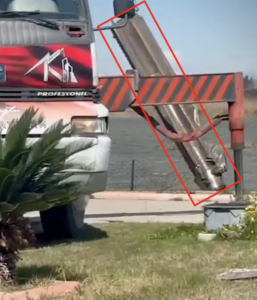
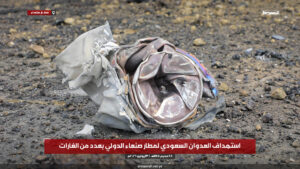
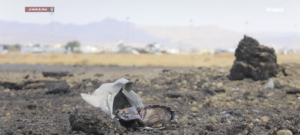
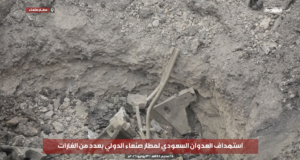
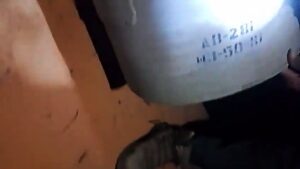
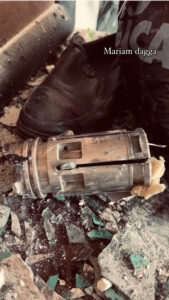
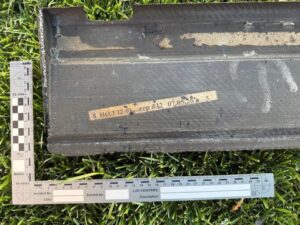
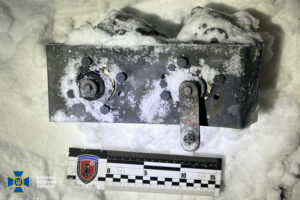
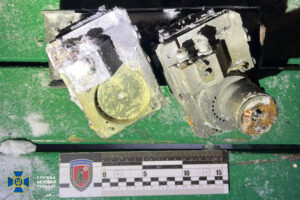
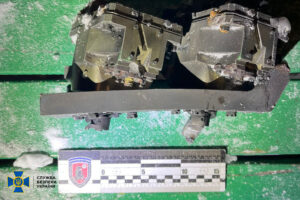
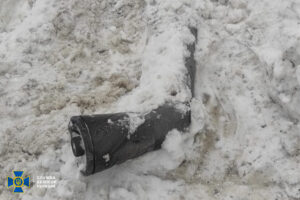
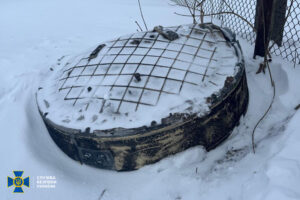
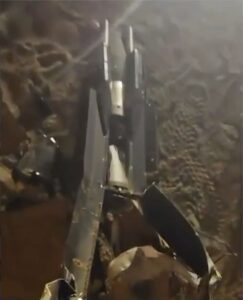
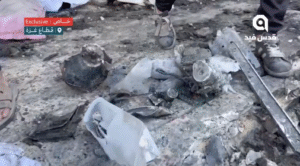
The remnants shown in this image (and in linked OSMP entries) are reported by the Ukrainian government to be from the Russian ‘Oreshnik’ missile. Available information on this munition is very limited at the time of writing. It is reported that the Oreshnik can carry either a nuclear or conventional payload. The Oreshnik is likely capable of carrying up to 6 independently targetable reentry vehicles (MIRVs). It is unclear how many warheads can be carried in each re-entry vehicle. In the case of this strike, there is insufficient imagery to make a determination on which warhead/MIRV was used. (ARES)

Analyst Note
2 March 2026
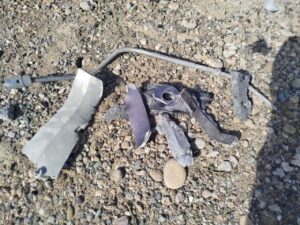
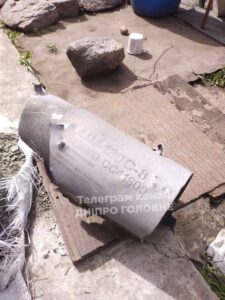
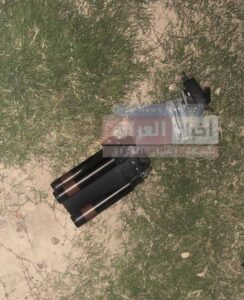
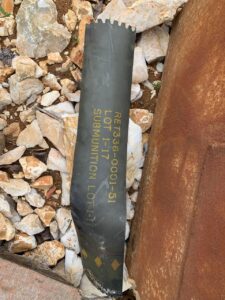
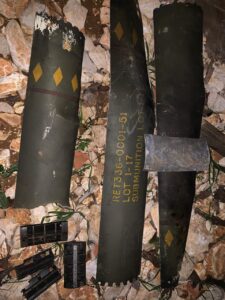
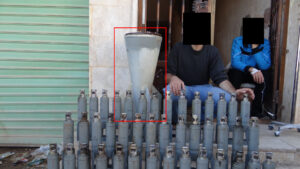
This image shows an external portion of an Israeli Ra'am Eitan missile, a type of cluster munition fired from the Lahav (PULS) mobile rocket launcher. The yellow diamonds marked on the exterior of the munition are used to indicate a cluster munition. Other markings appear to indicate that this example was manufactured in 2017. (ARES)


Analyst Note
28 April 2026
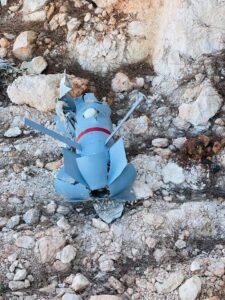
This munition, believed to be of Israeli origin, has been documented at a number of strike sites in Lebanon, Gaza, and Iran. Although distinctive remnants permit its tentative identification, the lack of a confirmed model name means this munition has been assigned a Temporary Munitions Identifier (TMID) by ARES. This appears in the Tentative Model field of the OSMP so that all records of this munition in the database can be linked under one temporary name. (ARES)
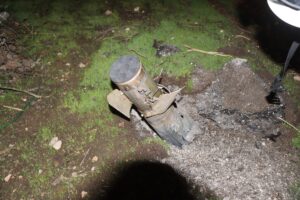
Analyst Note
2 March 2026
Considered with additional contextual materials, it is assessed that this image shows the rocket motor section from a 122 mm incendiary rocket, specifically the 9M22S or 9M28S models. Both rockets carry the same warhead, but use rocket motors of different lengths; not enough of this motor is visible to positively identify the model. (ARES)
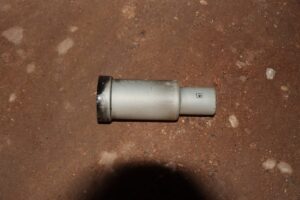
Analyst Note
2 March 2026
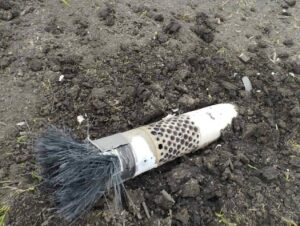
This image shows a stepped component positioned at the front of the warheads carried by 122mm 9M22S and 9M28S incendiary rockets. This structure helps to push the ML-5 incendiary elements out of the rear of warhead once the fuze in the nose functions. It is a relatively distinctive component, and commonly found in the vicinity of where the incendiary elements fall. (ARES)
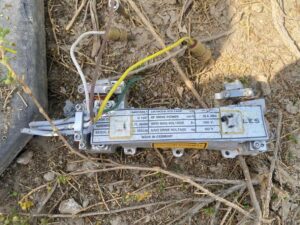


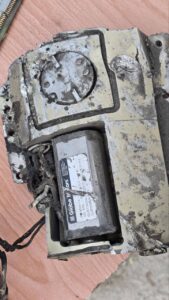
Analyst Note
27 April 2026
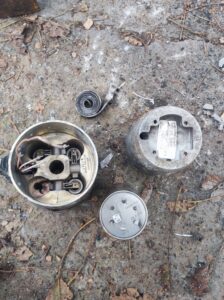
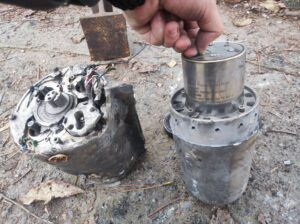
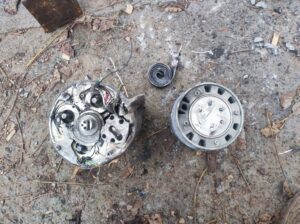
This image shows a DC motor from a Tomahawk missile, manufactured by Globe Motors of Dayton, Ohio, in the United States (part # 471A118 and serial # 7250). Globe Motors was acquired by Allied Motion in August 2013, and has since been renamed Allied Motion at Dayton. This DC motor is used as an actuator to assist in steering the Tomahawk to its target based upon input from the aviation section in the forward body assembly. Such motors often survive detonation and can serve as diagnostic remnants. (ARES)
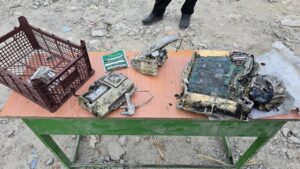
Analyst Note
11 March 2026
Components matching those seen here have been documented at other sites associated with the detonation of RGM-/UGM-109 Tomahawk cruise missiles. See, for example, OSMP 1199, 1218, 1191, 1193, and 1444. (ARES)
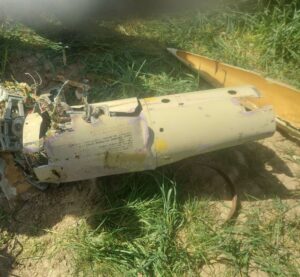
Analyst Note
5 March 2026
The munition remnant pictured here is marked with a Federal Stock Number (FSN; predecessor to the National Stock Number, or NSN, found on more modern munitions) that indicates it is part of a MIM-23B Improved HAWK surface-to-air missile. Other details, including the manufacturer (“Raytheon Company”), are also visible. The FSN was replaced by the NSN in 1974, indicating that this munition must have been manufactured before that time. This is consistent with the recorded U.S. export of the MIM-23B to Iran in 1972. (ARES)
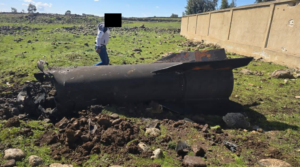
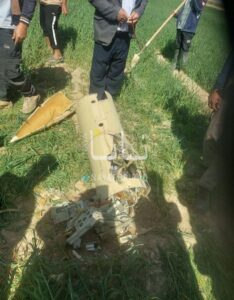
Analyst Note
5 March 2026
This image shows remnants from a MIM-23 Homing All the Way Killer (HAWK) surface-to-air missile. U.S. government documents show that MIM-23B Improved HAWK systems were exported to Iran in 1972. Iran has since manufactured a reverse-engineered version of the system. (ARES)



Analyst Note
2 March 2026
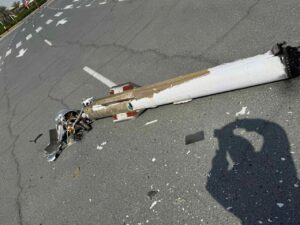
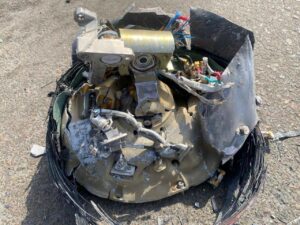
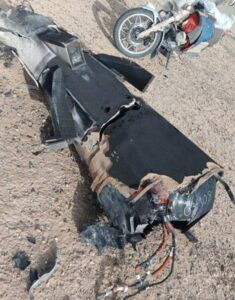
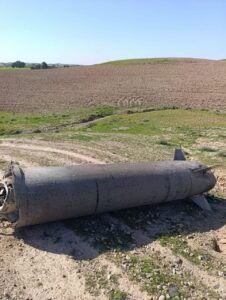
This image shows the remains of the attitude control section of either a PAC-3 CRI or PAC-3 MSE missile. This section contains the attitude control motors, used in combination with control fins to guide and adjust the missiles on its way to the target. It is difficult to determine which of the two models this wreckage belongs to due the similarities of this section in both missiles and the absence of other distinctive components. (ARES)

Analyst Note
2 March 2026
This image shows the remnants of a PAC-3 Cost Reduction Initiative (CRI) missile. The PAC-3 family of missiles are hit-to-kill interceptors that defend against incoming ballistic missiles, cruise missiles, aircraft, and other targets primarily by using kinetic impact. However, it is important to note that these missiles contain a high explosive fragmentation (HE-FRAG) “lethality enhancer” warhead. These warheads are much smaller than what would normally be expected on a surface-to-air missile of this size, but still present a hazard if it fails to function as designed. (ARES)






Analyst Note
9 January 2026
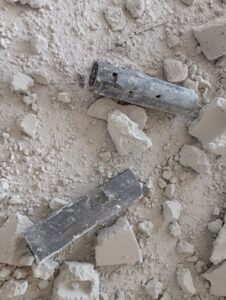
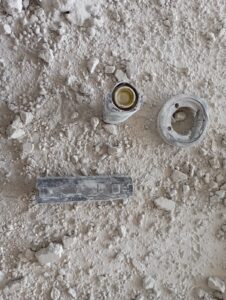
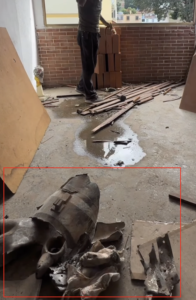
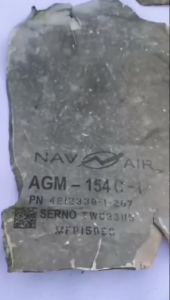
The AGM-154 Joint Standoff Weapon (JSOW) is a guided air-delivered ‘glide bomb’ that allows for long-range strikes using an unpowered munition. The AGM-154C and AGM-154C-1 variants (a remnant of the latter pictured here) carry a Bomb Royal Ordnance Augmented Charge (BROACH) multi-stage warhead which uses a WDU-44 shaped-charge warhead as its first stage, to help penetrate hardened targets, whilst the WDU-45 second stage comprises a conventional high explosive penetrator warhead (also called a ‘follow-through’ warhead). The AGM-154C-1 is described by the U.S. Navy as their “first air-to-ground Network-Enabled Weapon (NEW) capable of attacking stationary land and moving maritime targets. It includes GPS/INS guidance, terminal IR seeker and a Link 16 weapon data link. Integration of the Link-16 weapon data link and updated seeker software algorithms provide a capability against at-sea moving/relocatable targets.” (ARES)


Analyst Note
15 September 2025
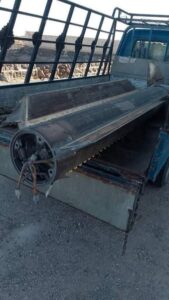
This image shows a Mk 104 Dual Thrust Rocket Motor (DTRM), the second-stage rocket motor for the SM-2, SM-3 Blk I, and SM-6 missiles. Based on the strakes or fins attached to this Mk 104, it can be determined that it was part of an SM-3 Blk I series missile. (ARES)

Analyst Note
15 September 2025
This image provides a close-up view of the bottom of the MK 136 Third Stage Rocket Motor section from a RIM-161 Standard Missile 3 (SM-3) Blk I guided missile. The integral warm gas/cold gas attitude control system, including its four venturis, is visible. (ARES)
Analyst Note
15 September 2025
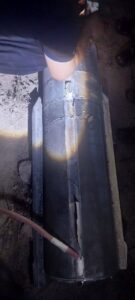
This image shows the MK 136 Third Stage Rocket Motor of a U.S. RIM-161 Standard Missile 3 (SM-3) Blk I interceptor missile. The SM-3 Blk I variants share the same propulsion sections, but have differences in the kill vehicle section. The SM-3 Blk II variants are substantially different, including new, larger-diameter propulsion sections. SM-3 missiles have a booster, dual-thrust rocket motor, third-stage rocket motor, and an altitude control section in the kill vehicle. (ARES)