









Featured Materials
A curated selection of images, terms and collections to help understand modern conflict.

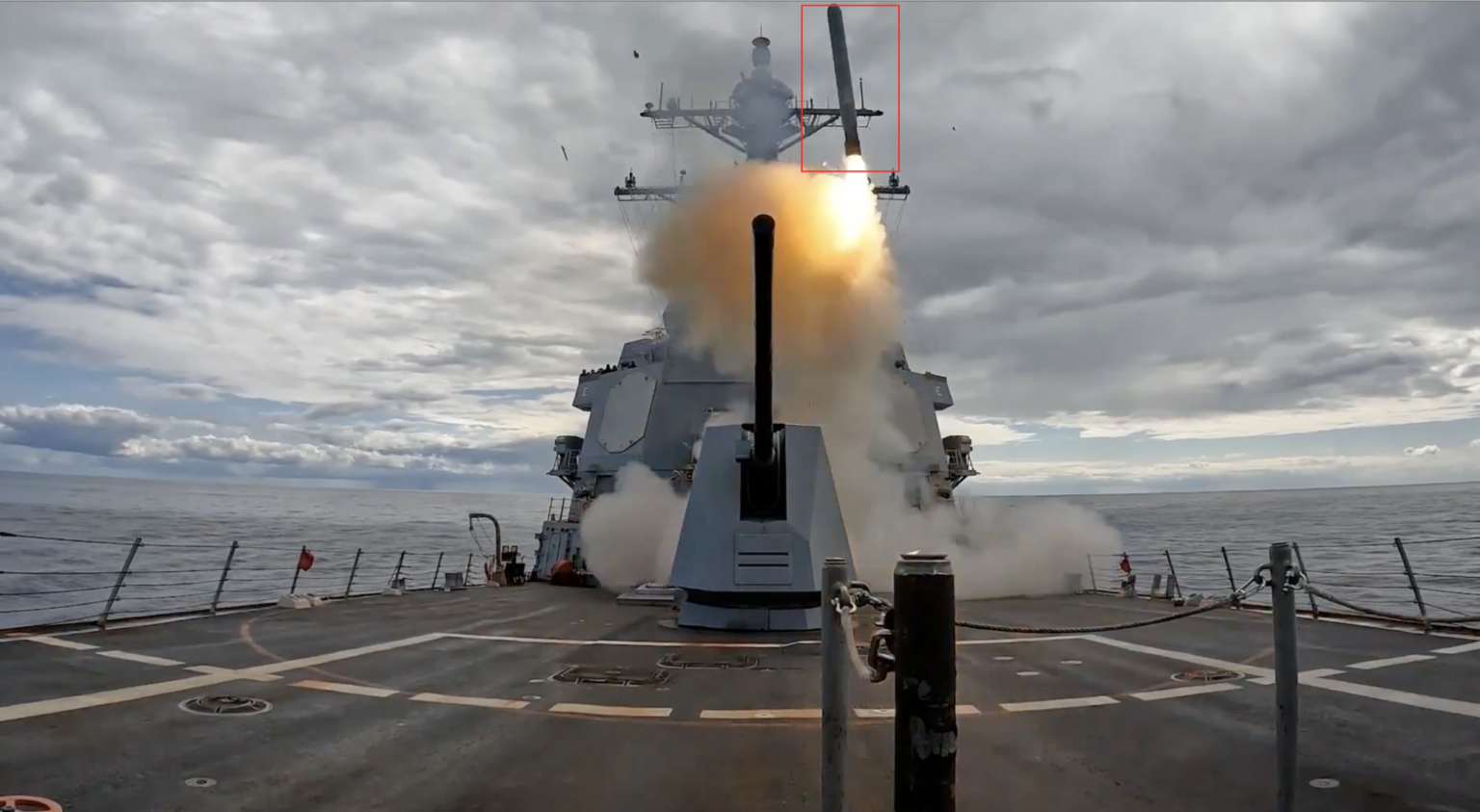
Iran War 2026
Munition images from the ongoing Middle East conflict

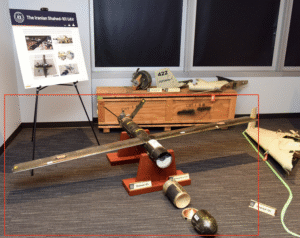
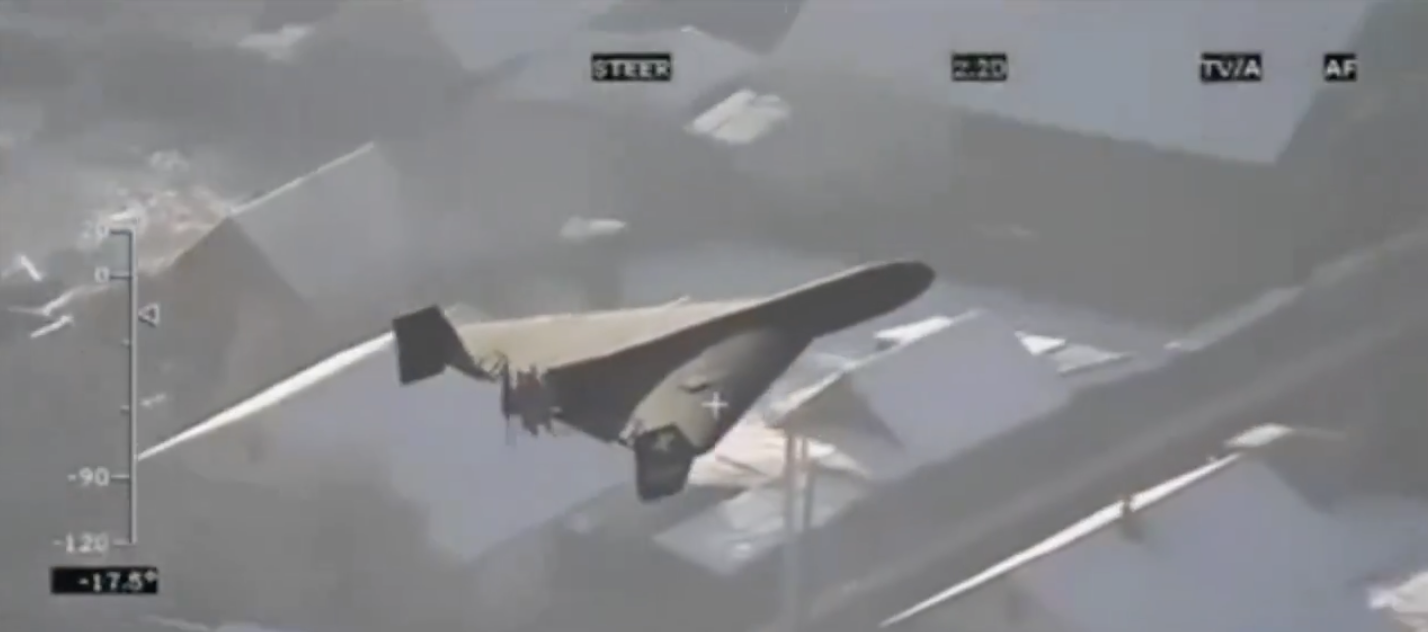
Shahed-131 & -136 UAV
3D models explain the best-known 'kamikaze drones'

Ukrainian language
Our key resource pages now in Ukrainian

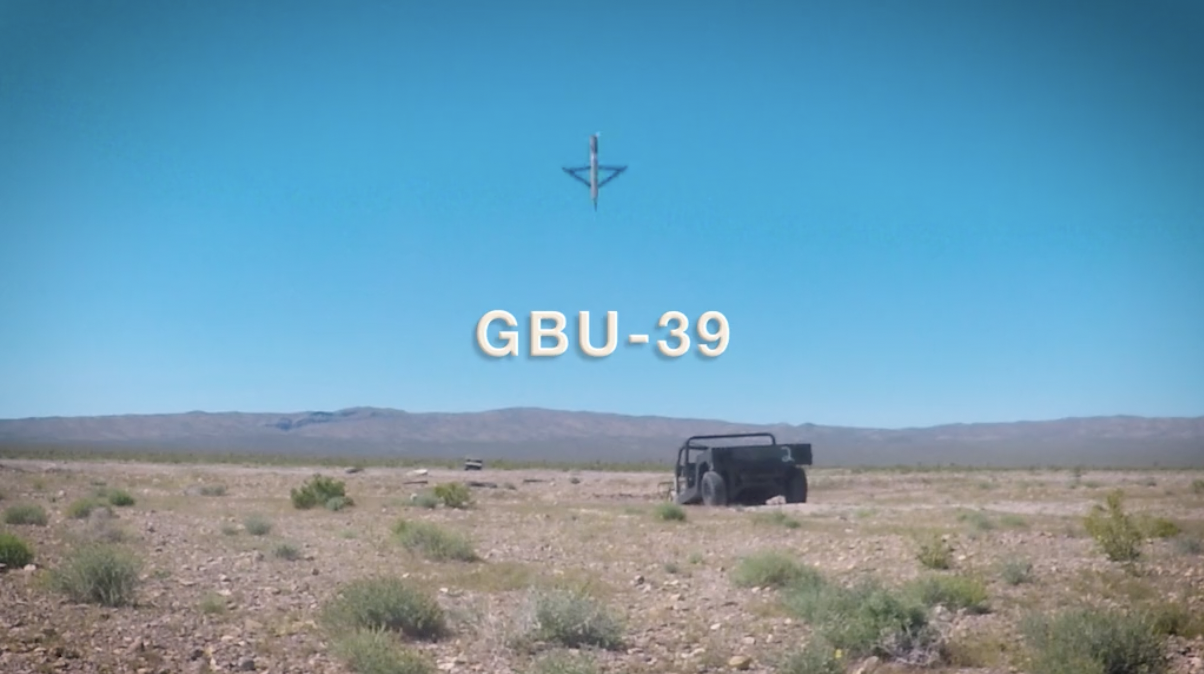
GBU-39 bomb
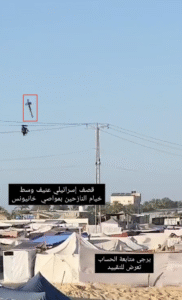
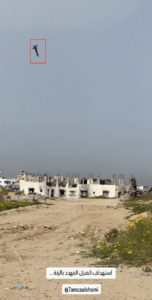
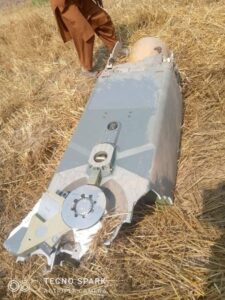
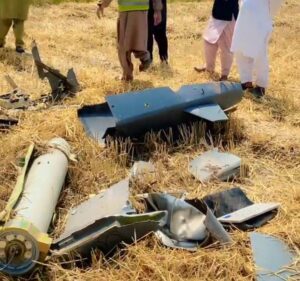
3D model explaining Israel's 'weapon of choice' in Gaza

Research organisation
Images from the Human Rights Watch archives

Collection
Munition images from the Ukraine war

Follow
Keep up to date with newly added munitions

Contribute
Submit images to the OSMP
OSMP referenced in media and research
View all →
BBC uses OSMP to investigate new U.S. missile

NYT uses OSMP to identify Iran school munition

AP highlights images of Iranian submunitions

The Incendiary Bomb Never Seen in Israel Before

UN report highlights OSMP importance

GIJN’s Top Investigative Tools of 2024

How GBU-39 bombs became Israel’s ‘weapon of choice’
701–800 of 1,668
Analyst Note:
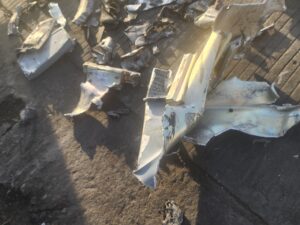
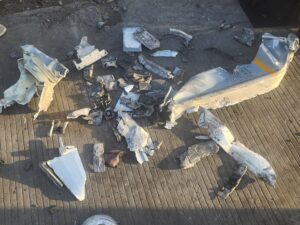
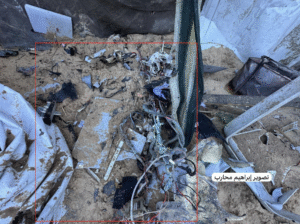
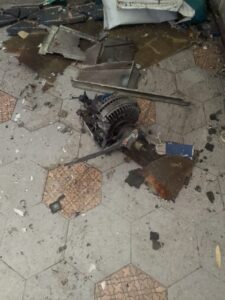
This image shows various remnants from GBU-39 air-delivered bombs, including two fuze wells. Each GBU-39 has only a single fuze well, indicating that this picture shows the remnants of at least two different GBU-39 bombs. (ARES)
Analyst Note:
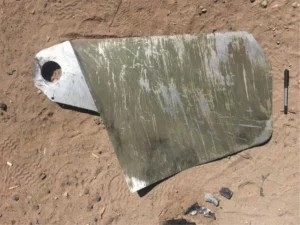
This image and the related entries show fragments of an AGM-84 Standoff Land Attack Missile-Expanded Response (SLAM-ER) series missile. AGM-84 SLAM-ER missiles are AGM-84E Standoff Land Attack Missiles (SLAM) that incorporate certain upgrades, including wings to increase the missile's range. The AGM-84 series include the anti-ship ‘Harpoon’ variants, from which the SLAM and SLAM-ER series are derived. As a result, many remnants will be similar or identical between variants. The wing remnant here is diagnostic, however. (ARES)
Analyst Note:
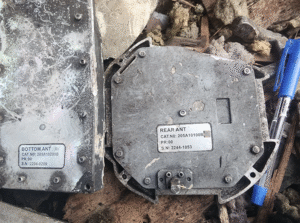
This image shows the rear fin section that is attached to a M-302/Khaibar-1/Fadi series rockets to add guidance capabilities. This rear fin section is installed, along with a forward control section between the warhead and the rocket motor. The guided munition, now classified as a missile, is referred to as a Nasr-1/Nasr-2. A similar, but larger, rear fin section is fitted to Zelzal rockets to convert them to guided munitions. (ARES).
Analyst Note:
This image shows a MXU-735 solid nose plug that can be installed in the nose fuze well of a MK 80-series aerial bomb in place of a fuze. (ARES)
Analyst Note:
This image shows several GBU-53/B bombs photographed from above while on a munitions transport cart. GBU-53/B bombs are transported and loaded onto the aircraft with the wing assembly on the bottom. When the GBU-53/B is released from the aircraft, the bomb rotates, with the wing assembly side orienting as the top as the bomb glides to its target. (ARES)
Analyst Note:
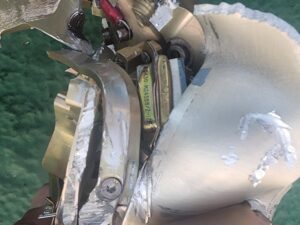
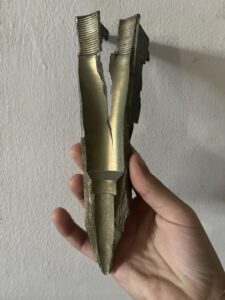
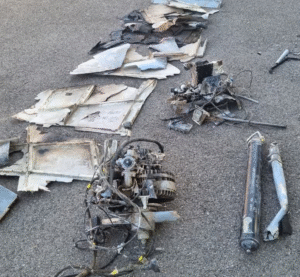
This image shows a fragment of a RGM/UGM-109 Tomahawk Land Attack Missile (TLAM) series missile's WDU-36/B warhead. The WDU-36/B warhead is a penetrator warhead for the TLAM, and is one of several available warhead options for TLAM series missiles. The complete "WDU" designation isn't visible, but the part number (3123AS921) is associated with the WDU-36/B. (ARES)
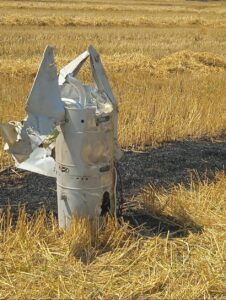
Analyst Note:
This image shows a strake from a Joint Direct Attack Munition (JDAM) guidance kit (KMU-557/558) as fitted to 2,000-pound BLU-109-series penetrator bombs. (ARES)
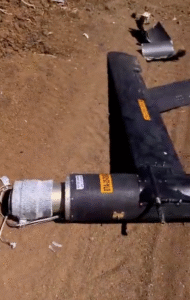
Analyst Note:
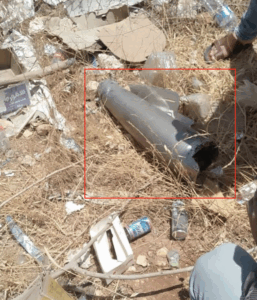
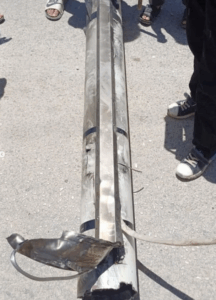
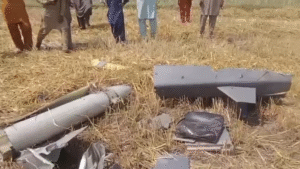
This image shows the rocket motor of a Kheibar Shekan or Fattah-1 medium-range ballistic missile (MRBM). The Fattah-1 was publicly unveiled by Iran in June 2023, with very few images surfacing since that time. Due to the lack of available reference material, differentially identifying the Kheibar Shekan and Fattah-1 is difficult. The missile components displayed at unveilings and public displays are also often different from those used in production models. (ARES).
Analyst Note:
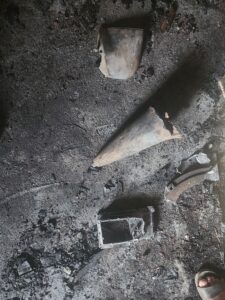
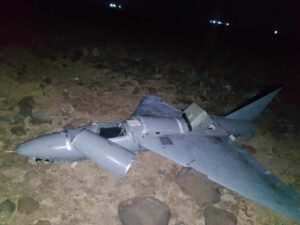
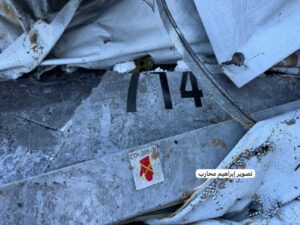
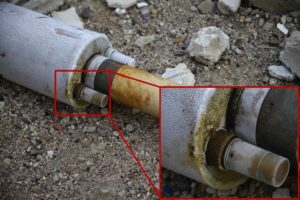
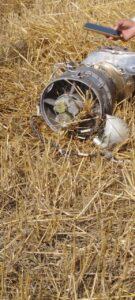
This image shows the copper cone of the shaped charge located at the front of the warhead fitted to a Shahed-131. The Ukrainian armed forces have recorded that the cone measures 111 mm in diameter and 162 mm in depth. The warhead is lined with cubic pre-formed fragments of 7 mm in diameter. The explosive content of the warhead is estimated to be between 10 and 15 kg. (ARES)
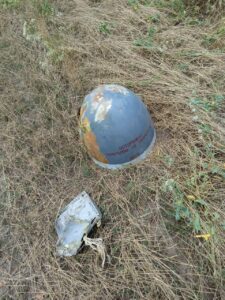
Analyst Note:
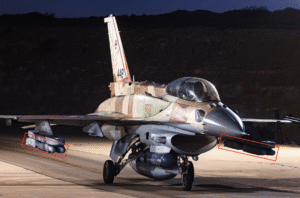
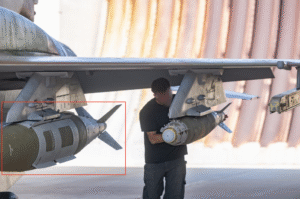
This image shows two MAM-L guided air-delivered bombs affixed to the wing of a Bayraktar TB2 drone. The MAM-L and TB2 are both produced in Türkiye by Roketsan and Baykar respectively. The MAM-L can have one of three different warheads: blast fragmentation, anti-tank, or thermobaric. The warhead section of each MAM-L in this image has “YIPE/BF” visible. ‘YIPE’ is the abbreviation of the warhead type in Turkish: Yüksek Infilaklı Parçacık Etkili (‘high explosive fragmentation’, in English). The ‘BF’ also indicates that these MAM-L munitions are of the blast-fragmentation variant. The warhead of a MAM-L cannot be determined from an external assessment without viewing markings such as these (or a clear view of the data plate, which can be seen on the aft portion of the MAM-L). (ARES)
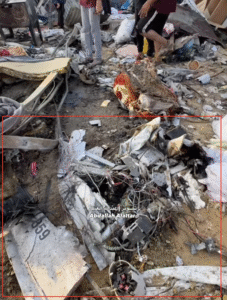
Analyst Note:
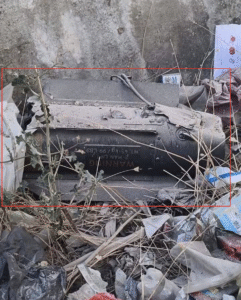
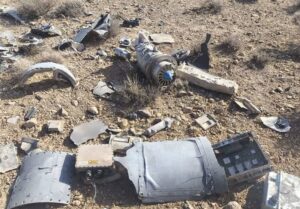
This image shows several remnants of a MAM-L bomb that are typically found after functioning. The actuated fins, as well as the fixed fins, are visible, along with various components of the control section that actuate the fins. The actuated fins attach to the control section, at the rear of the bomb, while the fixed fins attach to the middle of the bomb body. (ARES)
Analyst Note:
This image shows a fragment of an Israeli 120 mm tank gun projectile, with its distinctive obturating band configuration. The additional remnants shown in the related OSMP entry permit distinguishing this projectile from other potential Israeli models, identifying it as the M339 tank gun projectile. (ARES)
Analyst Note:
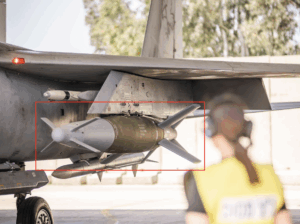
This image shows an American F/A-18 fighter aircraft armed with two AGM-154 Joint Standoff Weapon (JSOW) air-delivered bombs taking off to conduct strikes against Houthi forces in Yemen. The F/A-18 likely has two more AGM-154-series munitions carried on the opposite side of the aircraft, for a total of four bombs. The JSOW has multiple variants which are fitted with different warheads, including a submunition payload (AGM-154A and AGM-154B models), BLU-111 500-pound bomb (AGM-154A-1), and a Bomb Royal Ordnance Augmented Charge (BROACH) multi-stage penetrator warhead (AGM-154C or AGM-154C-1). All variants are externally identical without markings, with the exception that the AGM-154C and C-1 have a small reflective window on the bottom of the nose for the terminal infrared (IR) seeker. The munitions in the image are most likely AGM-154A-1 or AGM-154C-series bombs, due to the lack of reported submunitions following the strikes. (ARES)
Analyst Note:
This image shows an unexploded WDU-45/B, the second stage or penetrator warhead (also called a ‘follow-through’ warhead), of the Bomb Royal Ordnance Augmented Charge (BROACH) multi-stage warhead system used in the AGM-154C variant of the Joint Standoff Weapon (JSOW) air-delivered bomb. The first stage is a shaped-charge warhead designed help the second stage penetrate hardened targets before detonating. The Shadow/SCALP-EG missile also uses a multi-stage BROACH system, but with larger warheads. (ARES)