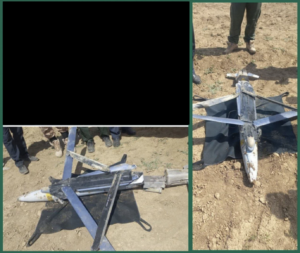
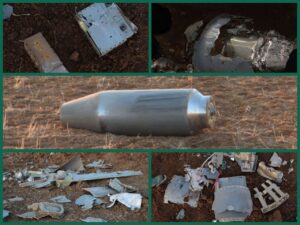
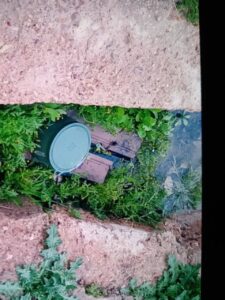
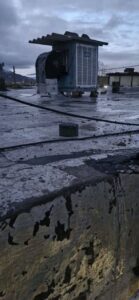
Do not approach munitions
under any circumstances

OSMP Collection

The Iran War 2026

On 28 February 2026, the United States and Israel launched a major military operation against Iran. Among those killed in the first wave of strikes was Iran’s Supreme Leader Ayatollah Ali Khamenei, with hundreds of strikes reported in the first day alone – seemingly damaging military and civilian infrastructure. In response, Iran has fired thousands of ballistic missiles, cruise missiles, and one-way attack UAVs (‘kamikaze drones’) towards Israel and U.S. military assets in the Middle East, as well as population centres in a number of U.S.-allied Gulf Arab nations.

Online there has been a plethora of claims about munitions, much of it either deliberately or accidentally incorrect, as well as an uptick in AI-created or manipulated images.

This page gathers together images of munitions used by all parties to the conflict in the war. It will be updated live – once a relevant image has been reviewed by at least two munitions experts, as per our methodology, it will be published and immediately appear here.

Analyst Note:
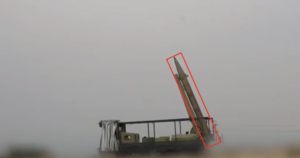
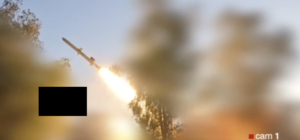
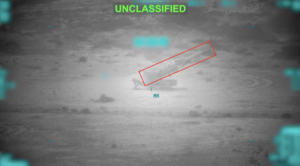
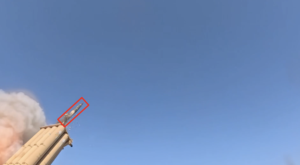
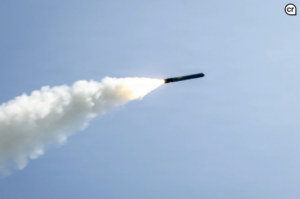
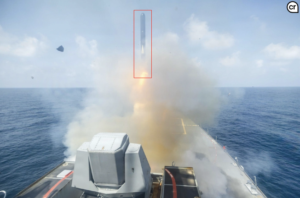
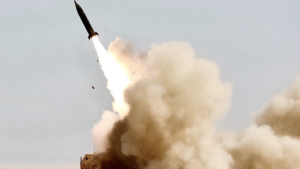
This image shows the launch of an Iranian Paveh surface-to-surface cruise missile in Iraq. The munition was fired by Iranian proxy forces and reportedly targeting Israel. Some sources indicate the Paveh has been renamed the ‘Jamal-10’, whilst others claim it is being locally produced in Iraq by Iranian proxy forces. With an estimated 75% of the missile’s components coming from outside Iran, distributed production is certainly possible. The missile has two large wings located forward of the munition’s midpoint, three smaller fins towards the tail, and four actuated fins around the tail. The initial launch is accomplished with a solid-propellant rocket motor, which gives way to a turbo jet flight motor mounted on top of the missile, towards the tail. (ARES)
Analyst Note:
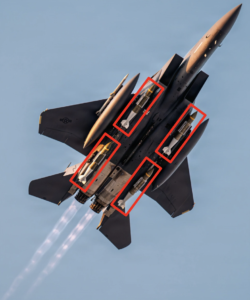
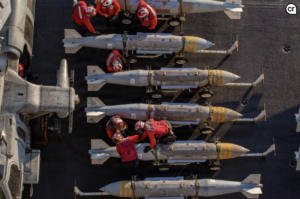
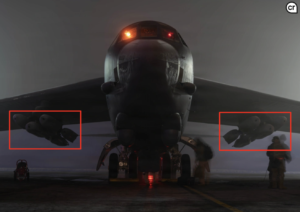
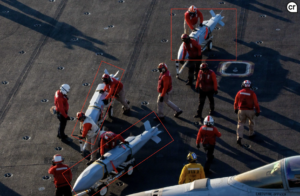
Highlighted are four GBU-31 Joint Direct Attack Munitions (JDAM) guided air-delivered bombs loaded onto the belly of a U.S. F-15E Strike Eagle aircraft. The GBU-31-series consists of a 2,000-pound-class bomb (Mk 84, BLU-109, or BLU-109A/B) and a guidance kit comprising a tail unit with four articulating fins and a guidance control unit with inertial navigation system (INS) and global positioning system (GPS) functions. The GBU-31 munitions seen here are built around the BLU-109, a penetrator munition with a solid nose and a thicker, one-piece body which flares slightly at the base. It has no body welds; the heavy steel base plate is held in place by an equally robust threaded steel closure ring. The BLU-109 is painted olive drab with a single yellow band towards the nose. (ARES)

Analyst Note:
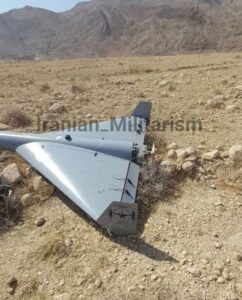
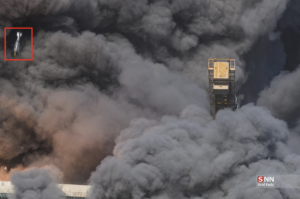
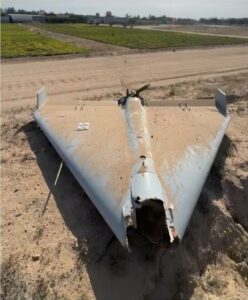
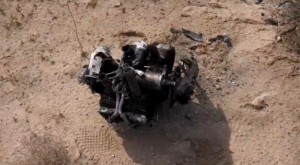
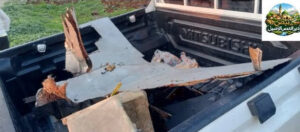
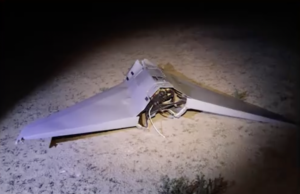
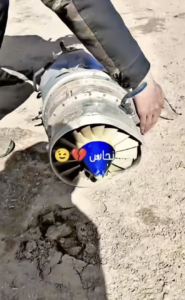
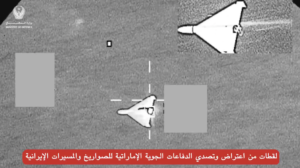
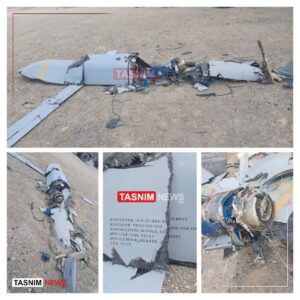
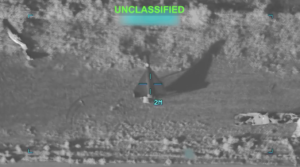
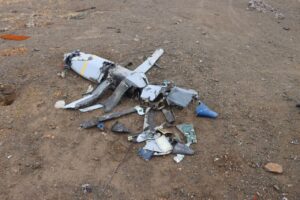
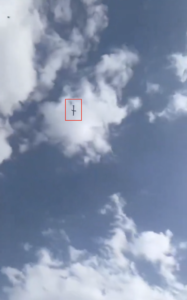
This image shows a screenshot from one of the videos released by the Kuwait Civil Aviation showing a one-way attack (OWA) unmanned aerial vehicle (UAV) striking the Kuwait International Airport. The munition’s distinctive delta-wing configuration and general size, shape, and manner of flight are consistent with the Shahed series of OWA UAVs. The related entry shows a Mado MD550 engine recovered following this strike, a model used to power the Shahed-136 series, enabling a more precise identification. (ARES)
Analyst Note:
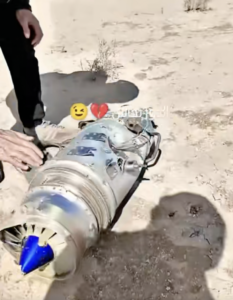
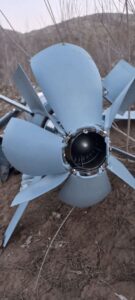
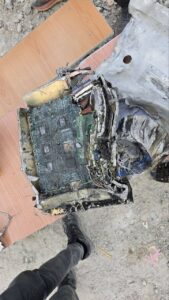
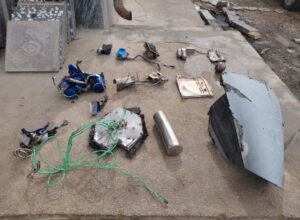
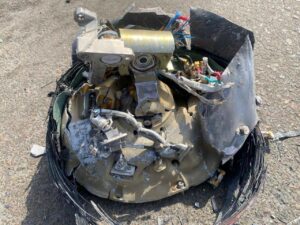
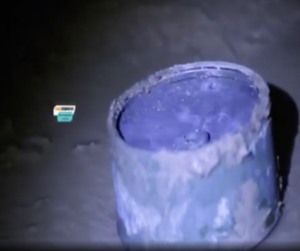
The component pictured here is a small turbofan engine from a Tomahawk missile. Missiles are vertically launched from the Typhon Missile System (named for a monster of Greek mythology), which is also capable of launching the Standard SM-6 guided missile. The Tomahawk missile is ejected from its launch tube under gas pressure, then the solid propellant of the booster motor section (Mk 135 booster produced by L3Harris) propels the missile until the turbofan engine (F107-WR-402 for Block III/IV or F415 for Block IV/V, both produced by Williams International) in the propulsion section is initiated and the booster motor section drops away. The propulsion section also supports the four tail fins, which are released by the two-piece continuity shroud upon launch. (ARES)
Analyst Note:
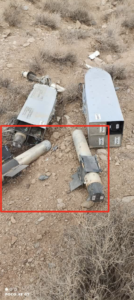
This image shows an AGM-114R2 Hellfire II missile. The AGM-114R2 is an enhanced version of the the AGM-114R multi-role missile, which is designed to engage a wide variety of targets. The Hellfire R-series missile are equipped with a multi-purpose warhead that can engage armoured or unarmoured vehicles on land or sea, as well as personnel in the open or in buildings. Reports indicate that the AGM-114R2 features improvements to its guidance software and tracking to increase accuracy against moving targets, as well as incorporating an adjustable height-of-burst (HOB) capability which allows it to detonate at a pre-determined height above the ground. (ARES)
Analyst Note:
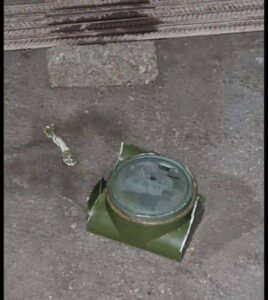
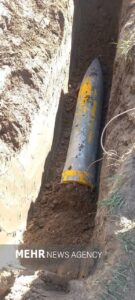
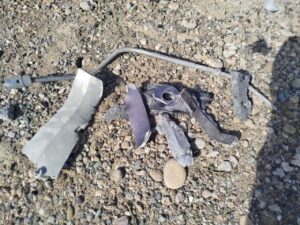
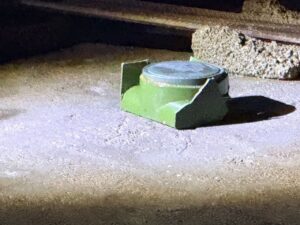
A BLU-91/B GATOR anti-vehicle landmine is seen in this image, with the remains of an aeroballistic adaptor visible. BLU-91/B mines can be deployed from cluster bombs or from vehicle-mounted dispensers, however the presence of the square aeroballistic adaptor here indicates that this example was deployed from an air-delivered cluster bomb. (ARES)
Analyst Note:
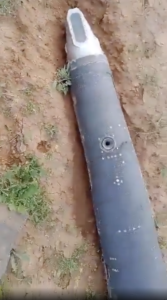
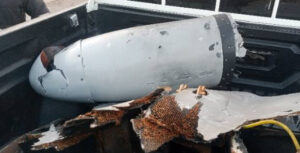
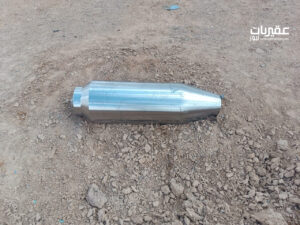
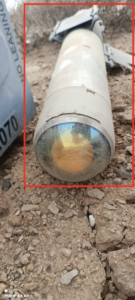
This image depicts what appears to be a WDU-42/B penetrator warhead as used in the AGM-158 JASSM series of missiles. The WDU-42/B is a 1,000-pound-class blast/fragmentation penetrator warhead designed to destroy hardened or reinforced targets. At the rear of the warhead, an FMU-156/B fuze is visible. This fuze is pre-programmed before launch according to the type of intended target. (ARES)
Analyst Note:
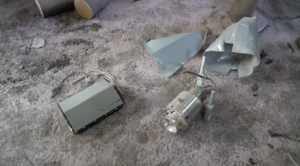
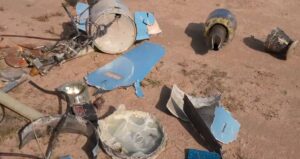
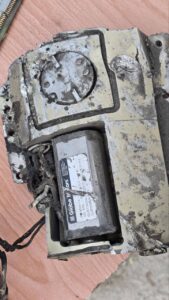
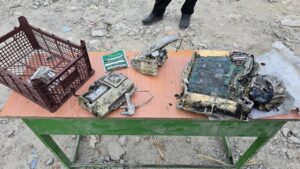
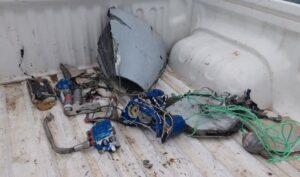
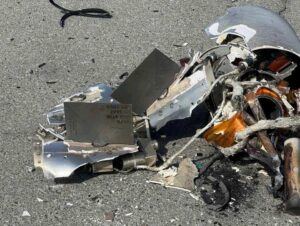
This image shows a DC motor from a Tomahawk missile, manufactured by Globe Motors of Dayton, Ohio, in the United States (part # 471A118 and serial # 7250). Globe Motors was acquired by Allied Motion in August 2013, and has since been renamed Allied Motion at Dayton. This DC motor is used as an actuator to assist in steering the Tomahawk to its target based upon input from the aviation section in the forward body assembly. Such motors often survive detonation and can serve as diagnostic remnants. (ARES)
Analyst Note:
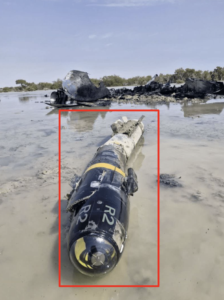
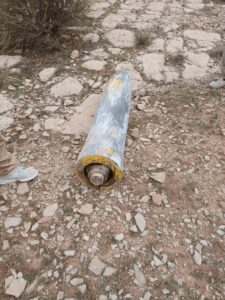
This Tomahawk missile features a distinctive black coating that suggests it is an RGM-109E Block Va variant, also known as the Maritime Strike Tomahawk (MST). A similar coating is seen on the U.S. Navy’s AGM-158C Long-Range Anti-Ship Missile (LRASM). MST incorporates a new multi-mode seeker optimised for the anti-shipping role, but remains capable of striking land-based targets. (ARES)
Analyst Note:
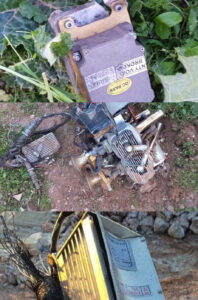
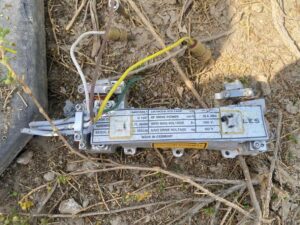
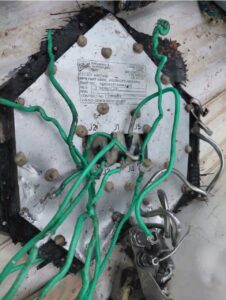
The component shown in this image is a GPS antenna for the AGM-158 Joint Air-to-Surface Standoff Missile (JASSM). It is marked to indicate its manufacturer (“Ball Aerospace & Technologies Corp.”; now operating as BAE Systems’ Space & Mission Systems division) and with other key information, including a part number and contract number. (ARES)
Analyst Note:
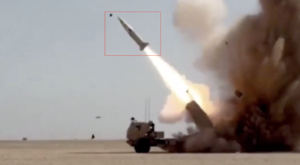
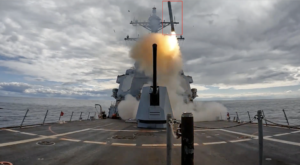
This image shows what is believed to be one of the first combat uses of the Precision Strike Missile (PrSM), following its entry into U.S. Army service in late 2023. PrSM is the successor to the ATACMS short-range ballistic missile that has become well known due to its use in the Russo–Ukrainian War. The Increment One version of PrSM has a range of approximately 500 km. The missile is seen here being fired from an M142 High Mobility Artillery Rocket System (HIMARS). (ARES)
Analyst Note:
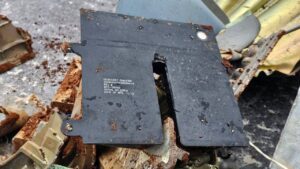
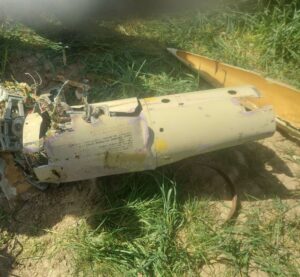
The munition remnant pictured here is marked with a Federal Stock Number (FSN; predecessor to the National Stock Number, or NSN, found on more modern munitions) that indicates it is part of a MIM-23B Improved HAWK surface-to-air missile. Other details, including the manufacturer (“Raytheon Company”), are also visible. The FSN was replaced by the NSN in 1974, indicating that this munition must have been manufactured before that time. This is consistent with the recorded U.S. export of the MIM-23B to Iran in 1972. (ARES)
Analyst Note:
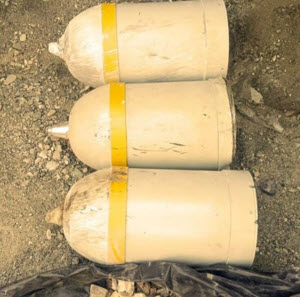
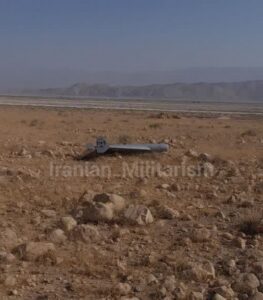
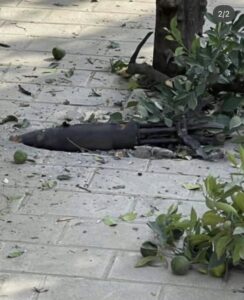
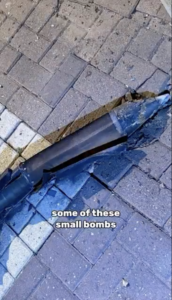
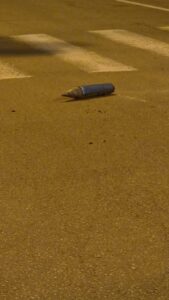
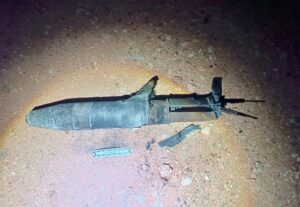
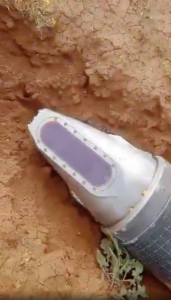
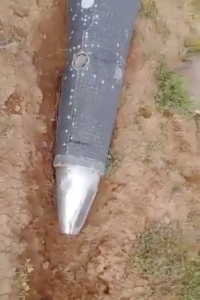
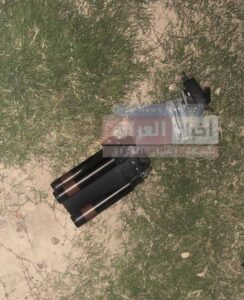
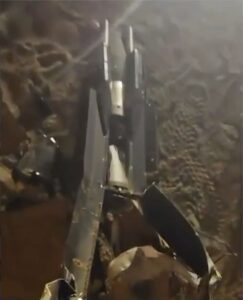
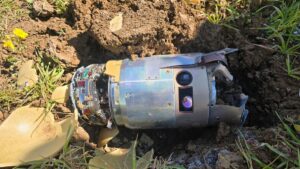
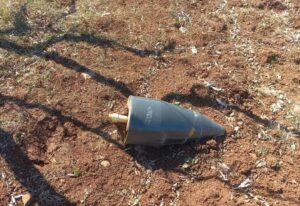
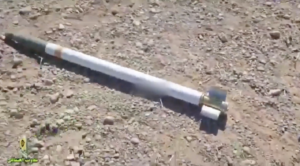
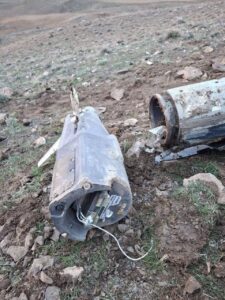
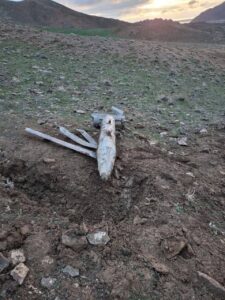
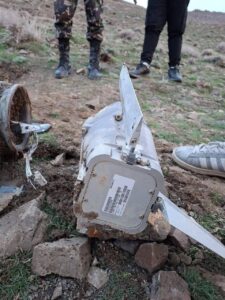
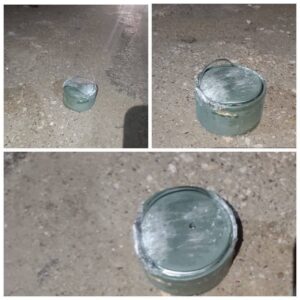
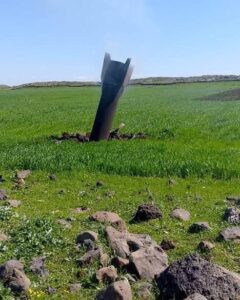
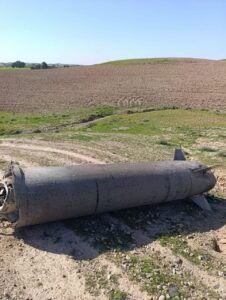
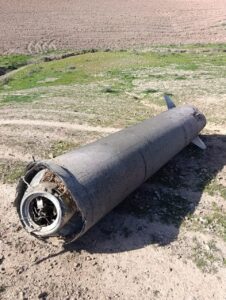
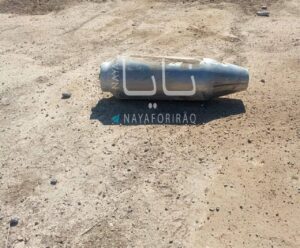
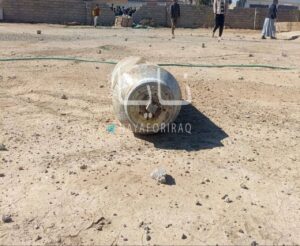
This image shows an unexploded Iranian submunition of unknown designation. Visually similar examples have been documented following Iranian ballistic missile strikes on Israel in June 2025 and March 2026. At least two variants are believed to exist, but publicly available details remain limited at time of review. (ARES)
Analyst Note:
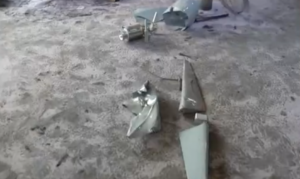
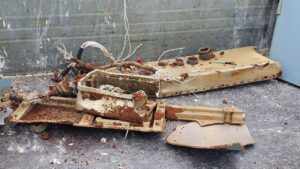
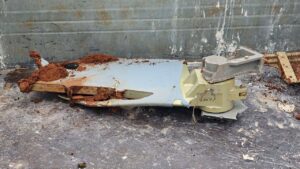
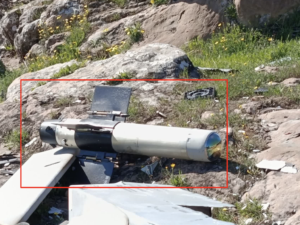
This image shows remnants from a MIM-23 Homing All the Way Killer (HAWK) surface-to-air missile. U.S. government documents show that MIM-23B Improved HAWK systems were exported to Iran in 1972. Iran has since manufactured a reverse-engineered version of the system. (ARES)
Analyst Note:
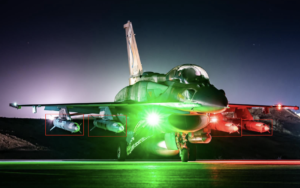
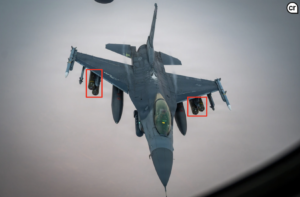
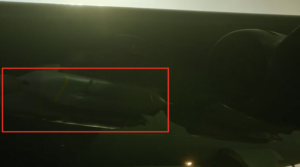
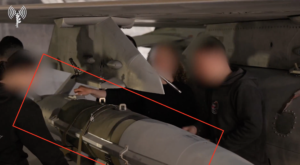
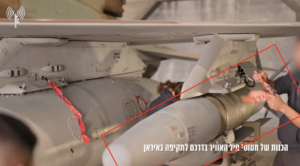
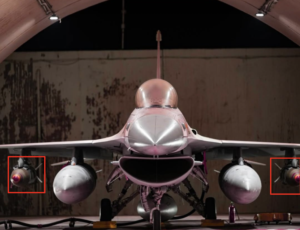
Photos released by the Israeli Air Force show an F-16 aircraft carrying two 2,000-pound-class air-delivered bombs fitted with Joint Direct Attack Munition (JDAM) guidance kits. Whilst the bomb body is visually similar to a MK 84 general-purpose aerial bomb, the marking scheme is distinctly different. The combination of yellow and red bands most likely indicates both a high explosive and incendiary payload. This is consistent with the marking scheme applied to specialised U.S. munitions intended for use against chemical and biological weapons targets. The best known of these is the BLU-119/B CrashPAD ('Prompt Agent Defeat'), which uses a MK 84 bomb body and contains 170 lbs of PBX-109 and 420 lbs of white phosphorus. It is not clear if agent defeat weapons were ever exported to Israel, or if a local analogue was developed. Capabilities of this type often remain classified. (ARES)
Analyst Note:
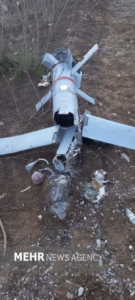
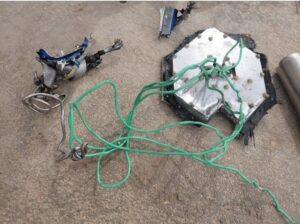
This image shows a Low-Cost Unmanned Combat Attack System (LUCAS). The LUCAS one-way attack UAV is a U.S.-made, cost-effective ‘kamikaze drone’. LUCAS munitions can connect to one another via a mesh network, allowing multiple LUCAS drones to communicate in flight. The white square object connected to the munition by a cable appears to be a Starlink antenna, consistent with reported communication capabilities. Elon Musk has claimed that LUCAS operates only via Starshield, a Starlink-derived satellite network intended for government use. (ARES)