


201–300 of 583
Analyst Note
15 September 2025
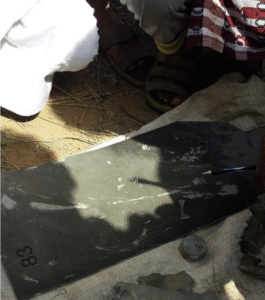
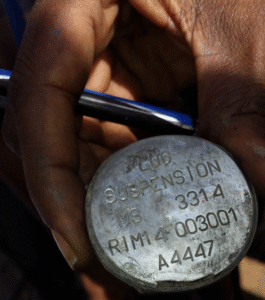
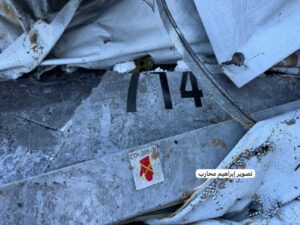
This image shows the bottom of an MS 3314 suspension lug, which is installed on the MK 81 250-pound-class, MK 82 500-pound-class, and MK 83 1,000-pound-class air-delivered bombs. The remnants of the guidance kit in the related entry indicate that, in this case, the lug was fitted to a MK 83 1,000-pound-class bomb. “A4447” is the CAGE code for the manufacturer of the suspension lug, RWM Italia. (ARES)

Analyst Note
15 September 2025
This image shows some of the markings on a MK 84 2000-pound-class air-delivered bomb, including model designation (“BOMB MK 84 MOD 4”), weight class (“2000 LBS”), part number (“PART NO 30…03 923AS105”), and production lot (“LOT NO GDT 17 …00…”). Many countries produce MK 80-series bombs, so markings such as lot numbers can determine the country of production. “GDT 17” in the lot number indicates that this munition was produced by General Dynamics Ordnance and Tactical Systems, an American company, in 2017. The Israeli Air Force announced they carried out the specific strike associated with this image, which indicates that this specific bomb was transferred to the Israeli Air Force. (ARES)
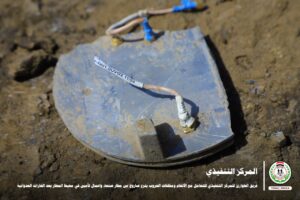
Analyst Note
15 September 2025
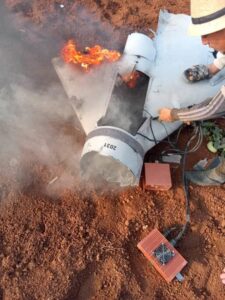
This image shows a remnant of a JDAM tail kit that was paired with a MK 84 2,000-pound-class air-delivered bomb. The CAGE code (“OUVG2”) for Aeroantenna Technology, an American manufacturer of GPS components for guidance systems, is visible on the wiring. (ARES)
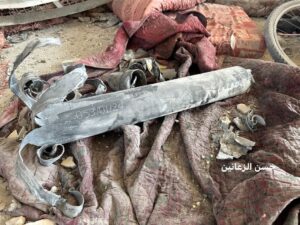
Analyst Note
15 September 2025
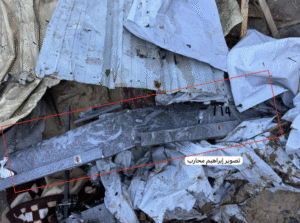
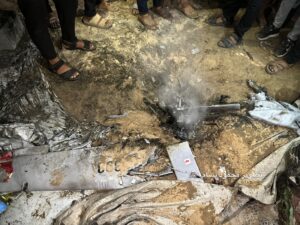
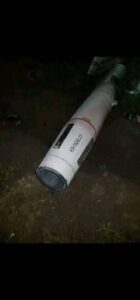
This image shows an Israeli-made 122 mm rocket motor found following a strike on Amr School in Gaza City. Although it is not possible to be definitive from this image alone, it is likely that this rocket motor was part of an Israeli ‘Bar’ missile, a guided munition designed for precision strikes in urban areas that uses a 122 mm rocket motor. (ARES)



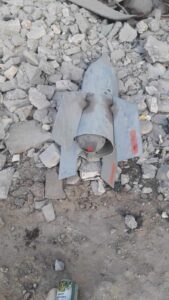
Analyst Note
14 July 2025
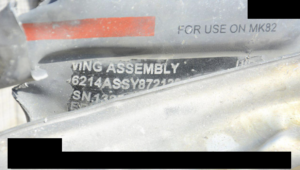
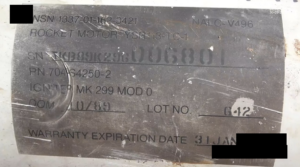
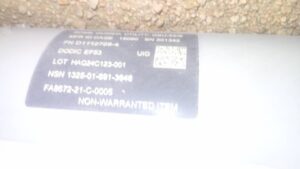
This image shows a remnant of the guidance control unit from a Paveway- or Lizard-series bomb guidance kit. The guidance control fins are marked “FOR USE ON MK82” indicating that this guidance control unit was paired with a MK 82-series 500-pound-class bomb. (ARES)
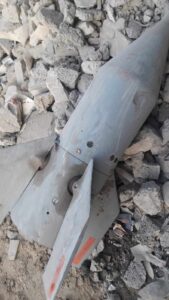
Analyst Note
15 September 2025
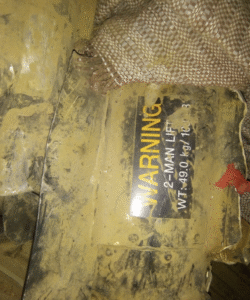
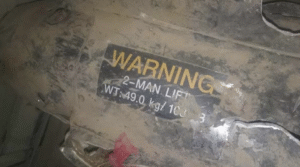
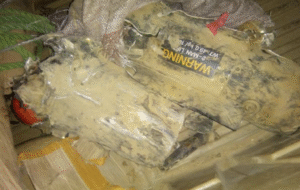
This image shows remnants of two different rocket motors from AGM-114 series Hellfire missiles. While it cannot be determined by these entries alone, images of the damage from the strike associated with this image, gathered by Mwatana, indicate that both of these AGM-114 missiles were the kinetic AGM-114R9X variant. (ARES)
Analyst Note
15 September 2025
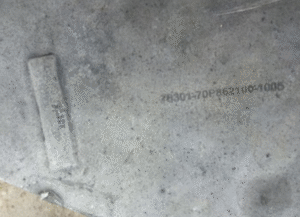
This image shows one of the actuated fins of a Joint Direct Attack Munition (JDAM) tail kit. The manufacturer CAGE code (“76301”) and the part number (“70P862100-1005”) are visible. This CAGE code corresponds to Boeing, the manufacturer of the JDAM guidance kit, while the part number corresponds to a fin of a JDAM kit compatible with MK-84 and BLU-109 2,000-pound-class air-delivered bombs. (ARES).
Analyst Note
12 July 2025
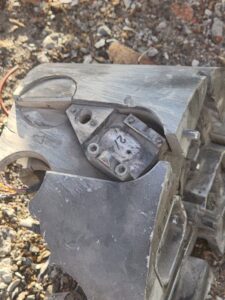
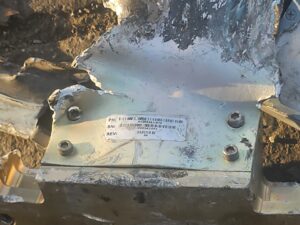
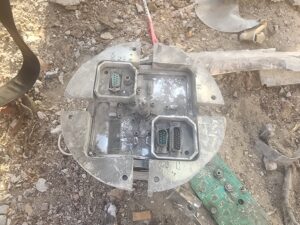
This image shows a remnant of the tail actuation section of a SPICE 250 guided bomb. The control fins are normally attached to this section, and the attachment point for one control fin is visible. (ARES)


Analyst Note
14 July 2025
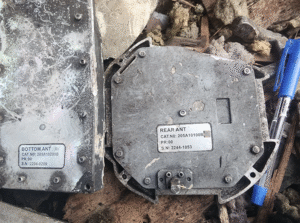
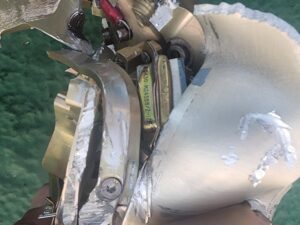
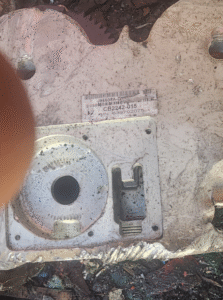
This image shows a variety of remnants from an Israeli SPICE 250 guided bomb. One of the bomb’s four control fins is visible at the bottom-left of the image. (ARES)
Analyst Note
14 July 2025
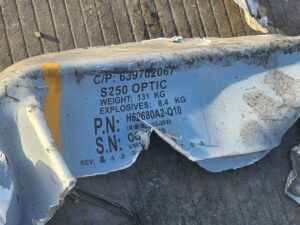
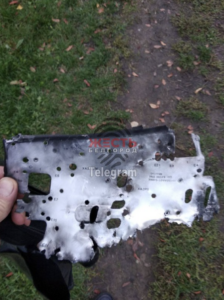
This image shows a remnant of the outer casing of the “S250 OPTIC” or SPICE 250 guided bomb, with the markings relatively intact. The markings on this remnant show that, while classified as a 250-pound bomb, the actual weight of this SPICE 250 variant is 288 pounds (131 kg) with only 18.5 pounds (8.4 kg) of explosive material. (ARES)
Analyst Note
14 July 2025
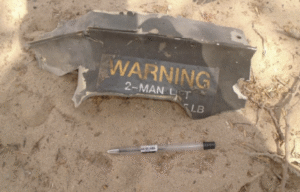
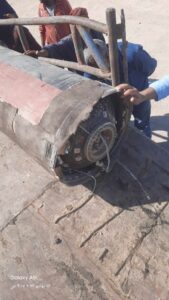
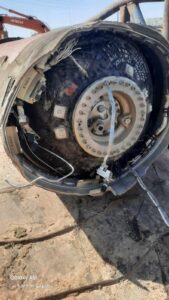
This image shows the top of the booster of an Arrow 3 interceptor missile, where it connects to the kill vehicle. The Arrow 3 was jointly developed by the United States and Israel, and first entered service in 2017. The date of manufacture marking (“DATE OF MFG: 05/2018”) indicates that this booster was produced in the year after the Arrow 3 first entered service. (ARES)
Analyst Note
19 July 2025
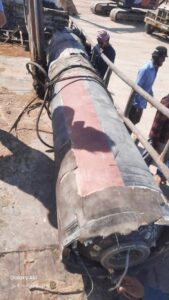
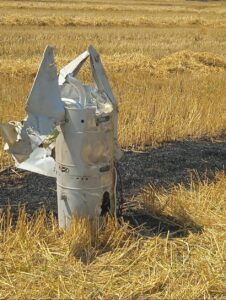
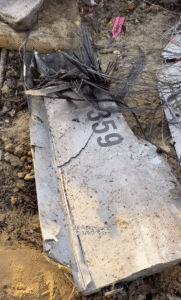
This image shows the booster of an Israeli Arrow 3 interceptor missile. The Arrow 3 is designed to engage ballistic missiles and is capable of exo-atmospheric interceptions. Once the booster is expended, it separates from the ‘kill vehicle’. The kill vehicle has a sustainer motor that propels it towards the incoming ballistic missile, and uses kinetic impact, rather than an explosive warhead, to disable or destroy its target. This is sometimes called the ‘hit-to-kill’ principle. (ARES)
Analyst Note
21 July 2025
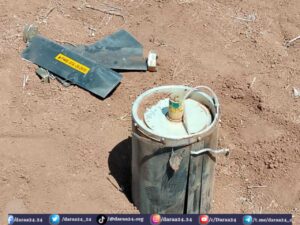
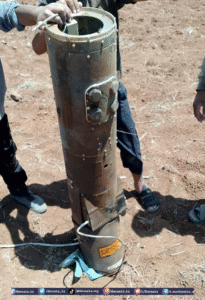
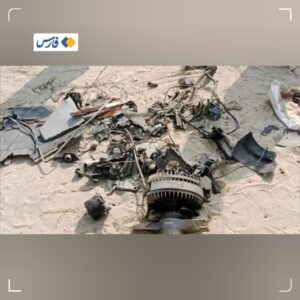
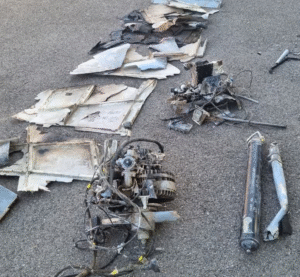
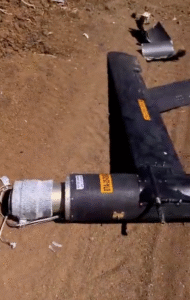
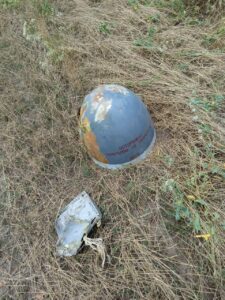
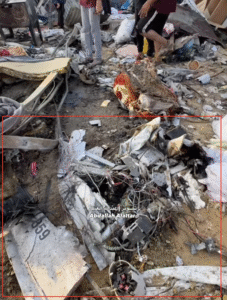
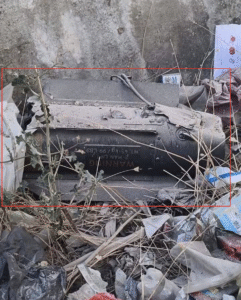
This image shows the rocket motor of an AGM-114 "Hellfire" series guided missile found in Jordan during the 12 day conflict between Israel and Iran. This specific Hellfire missile is likely an air-to-air "C-UAS" variant used to intercept one-way attack drones, such as those launched by Iran towards Israel, rather than the more common air-to-surface Hellfire missile variants. (ARES)
Analyst Note
26 May 2025
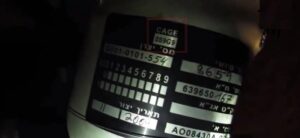
The Commercial and Government Entity (CAGE) code marked on this data plate (“0S9G9”) is a now-obsolete code assigned to Israel Aerospace Industries (IAI), the manufacturer of the Mikholit air-delivered bomb. (ARES)
Analyst Note
26 May 2025
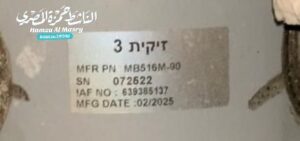
This is the data plate fitted to an Israeli Air Force bomb guidance kit. It reads “3 זִקִית” (‘Zikit 3’, or ‘Chameleon 3’ in English). As of May 2025, there is no public information available about this model of bomb guidance kit, but it appears to be a derivative or variant of the Israeli Lizard series, which are derived from the American Paveway bomb guidance kit. (ARES)

Analyst Note
3 June 2025
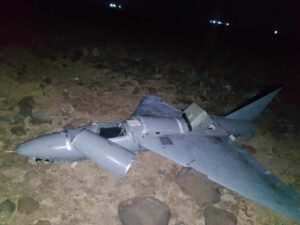
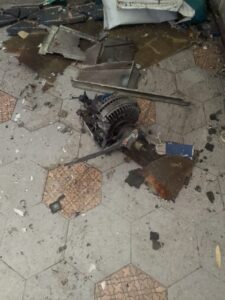
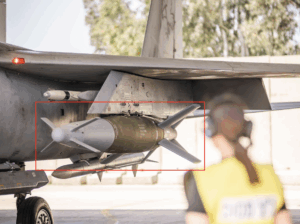
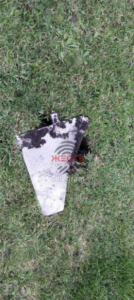
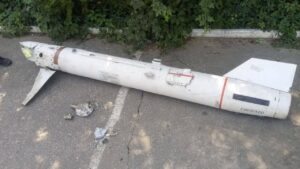
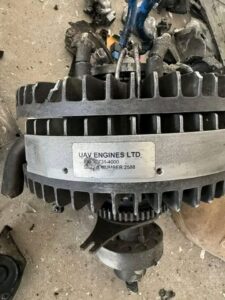
This image shows an AR731-4000 Wankel-type engine produced by UAV Engines Ltd. of the United Kingdom, used in an Israeli Harop munition. Variants of the Harop used in the 2020 Nagorno-Karabakh War featured a similar Wankel engine, but were marked to indicate a different manufacturer and model name: “MBT ENGINE” and “H2251-5100-503”, respectively. (ARES)
Analyst Note
26 May 2025
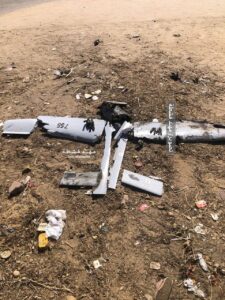
This image shows the remnants of a SkyStriker one-way attack UAV, manufactured by Elbit Systems of Israel. The SkyStriker can be fitted with various warhead options, including dual-purpose warheads weighing 5 or 10 kilograms. While it appears that a reconstruction was attempted with the remnants, the placement of the various components does not accurately represent an intact SkyStriker. (ARES)
Analyst Note
27 May 2025
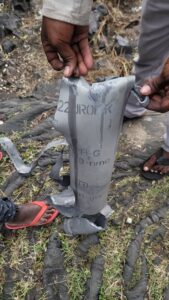
The JROF and JROF-K are Czech derivatives of the Soviet 122 mm ‘Grad’ series of surface-to-surface rockets. The JROF-K is the shorter, reduced-range variant, broadly analogous to the Soviet 9M22M. (ARES)

Analyst Note
30 July 2025
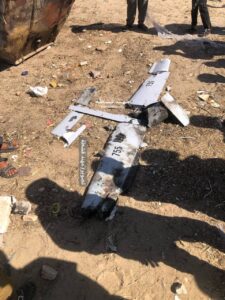
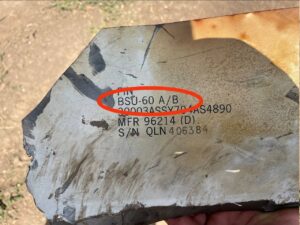
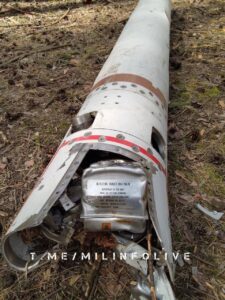
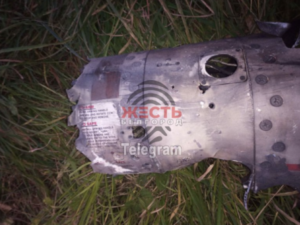
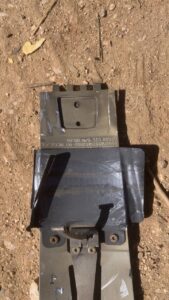
This image shows a remnant of the BSU-60 A/B tail fin. This this model of tail fin is used exclusively with AGM-88 series missiles. (ARES)


Analyst Note
30 April 2025
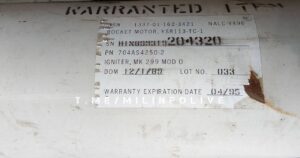
This image shows a fragment of the “inner petal assembly” of a Terminal High Altitude Area Defense (THAAD) system’s ‘Talon’ interceptor missile. The part number for the assembly (“23917ASSY1A62803-101 REV.E / E”), Commercial and Government Entity (CAGE) code (“07554”), manufacturer abbreviation (“CTL”), and serial number (“S/N DDLKD”) are visible. This CAGE code and manufacturer abbreviation are associated with CTL Aerospace Inc, a subcontractor for Lockheed Martin, the manufacturer of the THAAD system. It is not uncommon for complex munitions to be made by several different manufacturers, and thus multiple CAGE codes may be present as a result of the various subcontractors. (ARES)

Analyst Note
11 May 2025
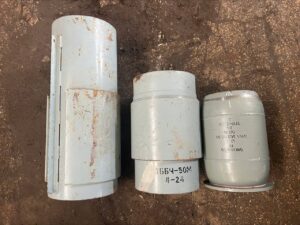
This image shows three different warheads developed by Russia for the Shahed-136/Geran-2 one-way attack (OWA) unmanned aerial vehicle (UAV), each of which differ from the original warhead designed by Iran for the Shahed-136. Left: A thermobaric explosive warhead; Middle: TBBCh-50M, a thermobaric explosive warhead; Right: OFZBCh-50, a high explosive warhead with an incendiary effect. Each of these warheads is also fitted with a fragmentation liner to increase the fragmentation effect generated when the warhead detonates. Some of the fragmentation liners may contain zirconium, a metal which is ignited when the warhead detonates, providing an additional incendiary effect. (ARES)

Analyst Note
31 March 2025
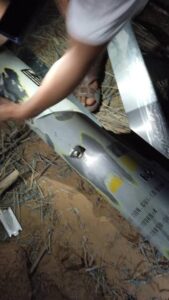
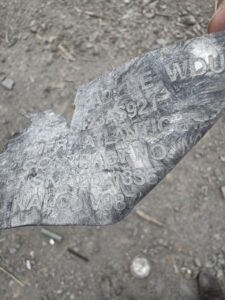
This image shows a fragment of a RGM/UGM-109 Tomahawk Land Attack Missile (TLAM) series missile's WDU-36/B warhead. The WDU-36/B warhead is a penetrator warhead for the TLAM, and is one of several available warhead options for TLAM series missiles. The complete "WDU" designation isn't visible, but the part number (3123AS921) is associated with the WDU-36/B. (ARES)




Analyst Note
27 April 2026
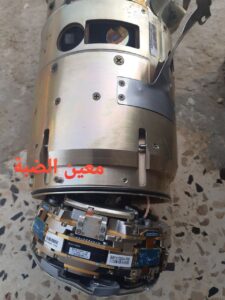
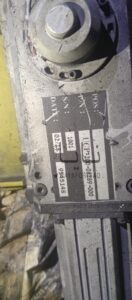
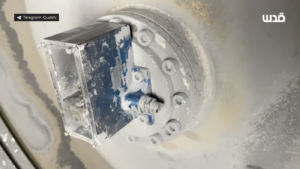
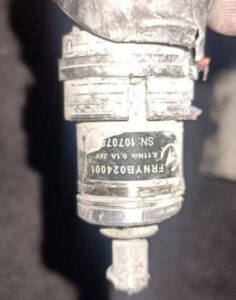
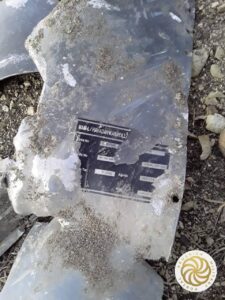
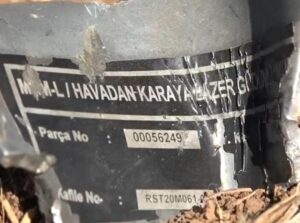
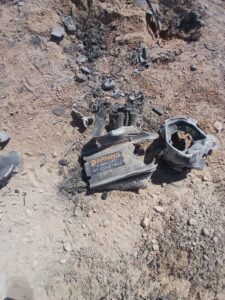
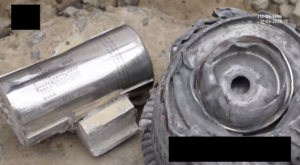
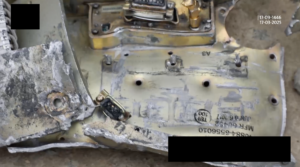
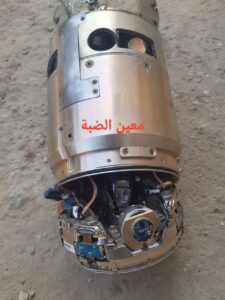
This image shows the section just forward of the Tamir missile’s forward fins and appears to incorporate the base of the active radar seeker (open end) and the laser proximity sensor part of the warhead fuzing system (mirrors/glass & opening in the casing). While the Tamir has been reported to physically impact some targets, the proximity fuze is designed to closely pass by the target, then detonate the high explosive fragmentation warhead thereby destroying the target. ‘Tamir’ is a Hebrew acronym for Til Meyaret, or ‘interceptor missile’. (ARES)