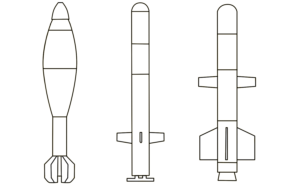
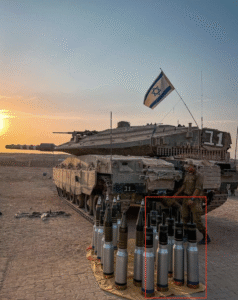
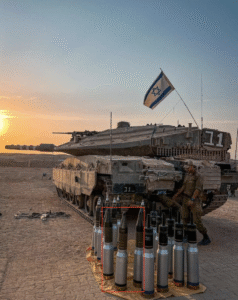
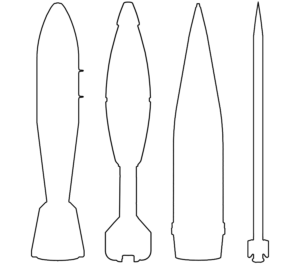
The nominal diameter of a projectile. For most modern munitions, this is expressed in millimetres (e.g. 82 mm mortar projectile), but older artillery gun projectiles may be described in inches.
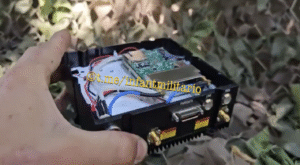
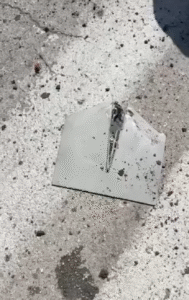
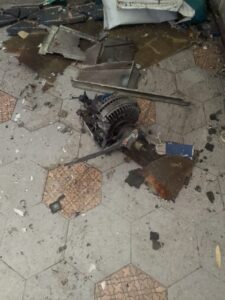
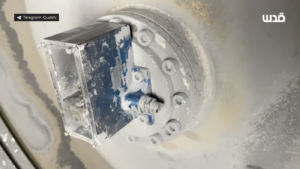
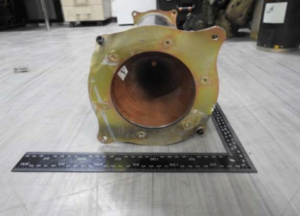
This image shows the front and interior surfaces of a wireless communications module recovered from a downed Gerbera UAV. Although labelled as an HX-50 industrial wireless modem (compatible with WiFi and 5G/4G networks and designed for fixed locations), analysis by Ukrainian military sources indicates that this component is, in fact, an XK-F358 mesh-network module which offers significantly more capabilities. Manufactured and sold by Shenzhen Xingkai Technology Co., Ltd., these modules are designed for, amongst other things, use in robots and unmanned vehicles. Gerbera UAVs have been found operating on a wide variety of frequencies and networks, and this type of module is well-suited to this use. (ARES)
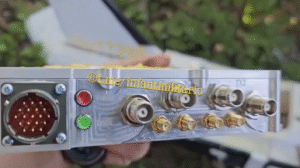
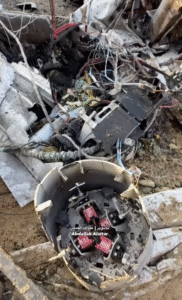
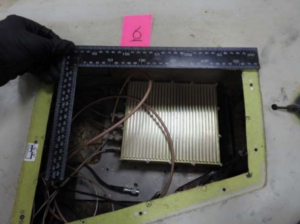
Pictured is a navigation/GPS module recovered from a downed Gerbera UAV. This particular model is used with the 4-antenna CRPA module seen in OSMP1648. The four RX ports on the bottom are normally directly connected to the CRPA (antenna) module, with other connections made to the UAV’s flight controller and power sources. Some Gerberas have been recovered with CRPA modules bearing a different number of antennas; different navigation modules have been observed on these. (ARES)
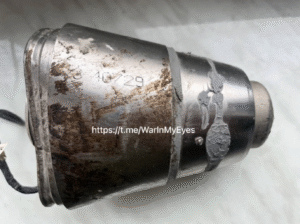
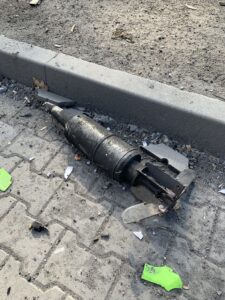
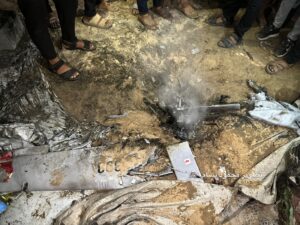
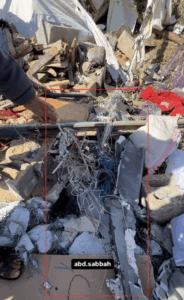
This munition remnant is marked with a manufacturer’s CAGE Code (“MFR CAGE CODE: 62313”) which indicates it was produced by Lockheed Martin. Lockheed Martin is the primary contractor that makes GMLRS missiles. (ARES)
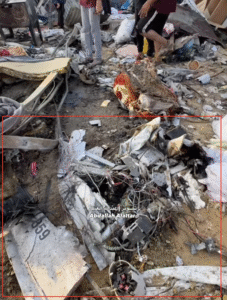
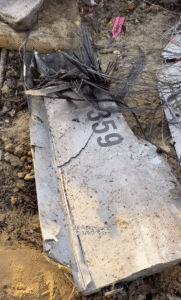
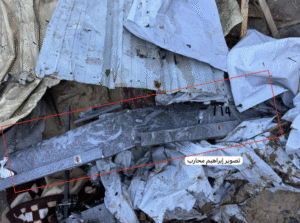
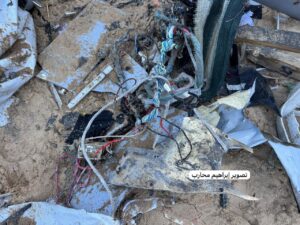
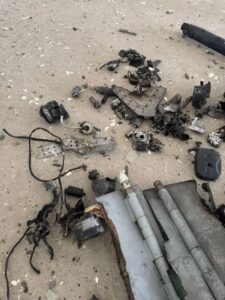
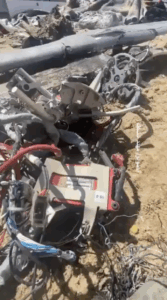
This remnant shows a munition component marked with the CAGE Code for a sub-contractor who produced part of a larger munition. “64344” is the code for Unique Electronics Inc., a known sub-contractor working on Lockheed Martin’s GMLRS contract. One of the parts they make is the “CABLE ASSEMBLY W459“, as seen in this image. (ARES)
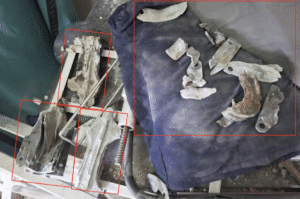
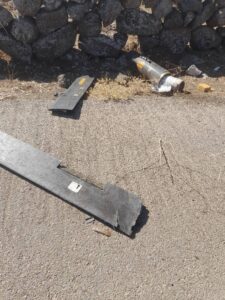
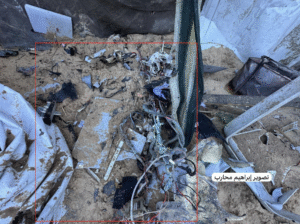
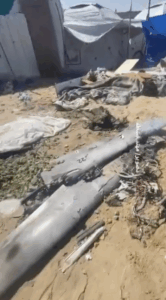
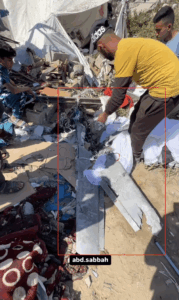
This image shows parts from at least three fin-stabilised tank gun projectiles, including the tail assemblies and several folding fins. These are components that often survive relatively intact following the functioning of such munitions. The specific morphology of the remnants pictured is consistent with Israeli 120 mm tank gun projectiles. Contextual information suggests that the remnants are most likely to be from M339 high explosive ‘multi-purpose’ projectiles. (ARES)
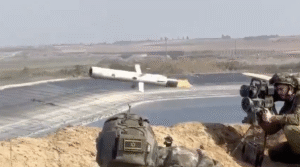
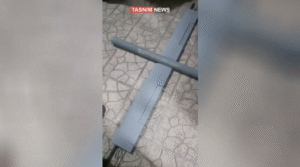
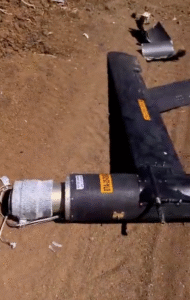
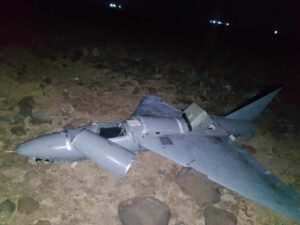
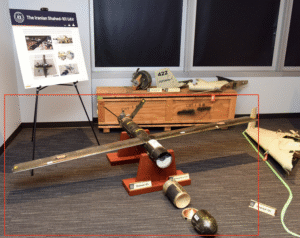
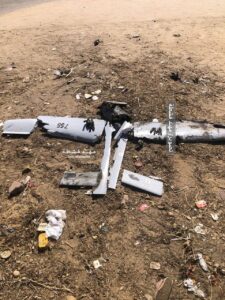
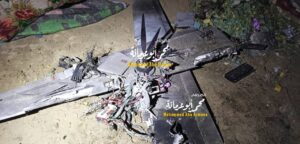
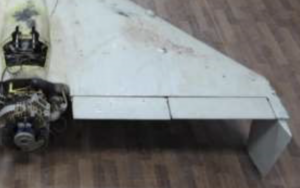
This still taken from a video released by Iranian state media, shows a one-way-attack UAV purportedly manufactured by Israeli forces operating inside Iran. This UAV was found alongside manufacturing equipment, and additional UAV components, strongly suggesting that it was manufactured or assembled inside Iranian borders. (ARES)
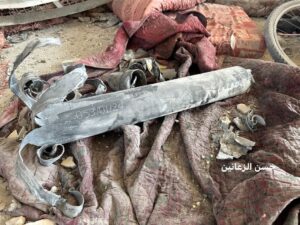
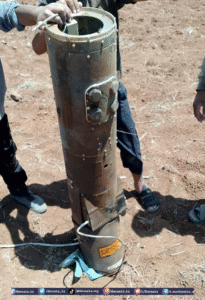
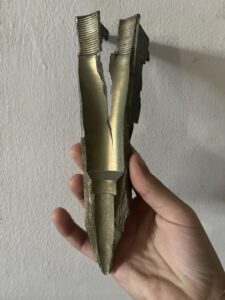
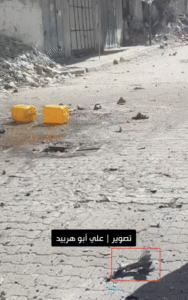
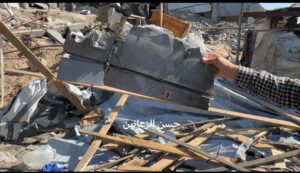
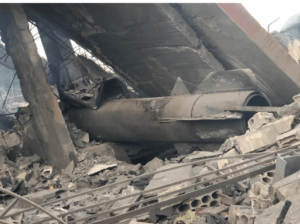
This image shows an Israeli-made 122 mm rocket motor found following a strike on Amr School in Gaza City. Although it is not possible to be definitive from this image alone, it is likely that this rocket motor was part of an Israeli ‘Bar’ missile, a guided munition designed for precision strikes in urban areas that uses a 122 mm rocket motor. (ARES)
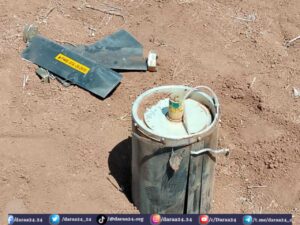
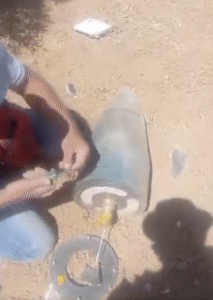
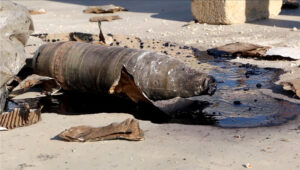
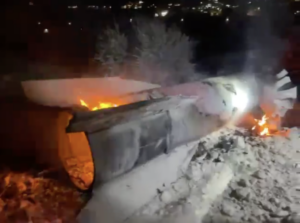
This image shows a improvised rocket-assisted munition (IRAM). This particular munition consists of a 107 mm rocket motor with an industrial gas cylinder fitted in place of the standard warhead. The frost present on the cylinder indicates a pressurised gas was released. The yellow–green residue is consistent with a payload of chlorine gas. (ARES)
This image shows a conventional 122 mm high explosive artillery projectile that has been modified to carry a chemical payload. It is one of several used in an attack by the so-called ‘Islamic State’ on the town of Marea, Syria. The black substance on the ground is suggestive of low-purity sulphur mustard, a chemical warfare agent. (ARES)
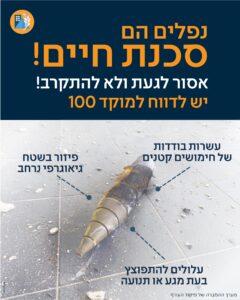
This image shows a unexploded Iranian submunition pictured in an awareness poster made by the Israel Defense Forces (IDF) Home Front Command. The poster warns people to not touch or disturb the submunition. The IDF reported that about 20 of these submunitions were deployed by a single Iranian ballistic missile, spreading over a radius of 8 kilometres. (ARES)
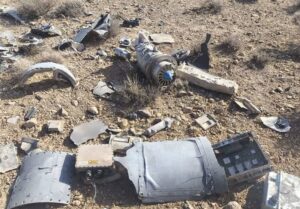
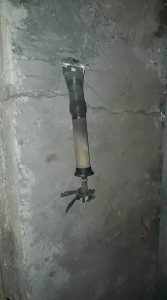
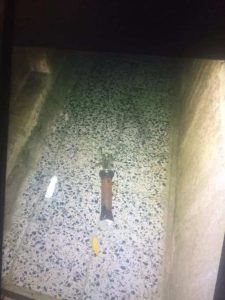
This image shows an unexploded submunition that was deployed by an Iranian medium-range ballistic missile over Israel. Inert variants of these submunitions were previously observed in an Iranian city following a failed missile test. (ARES)
This image shows an AR731-4000 Wankel-type engine produced by UAV Engines Ltd. of the United Kingdom, used in an Israeli Harop munition. Variants of the Harop used in the 2020 Nagorno-Karabakh War featured a similar Wankel engine, but were marked to indicate a different manufacturer and model name: “MBT ENGINE” and “H2251-5100-503”, respectively. (ARES)
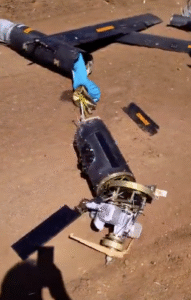
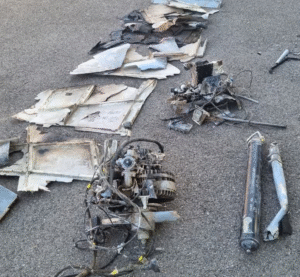
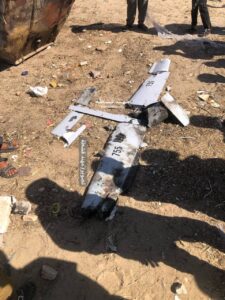
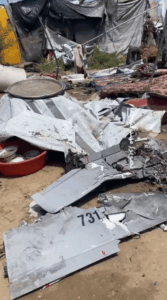
This image shows the remnants of a SkyStriker one-way attack UAV, manufactured by Elbit Systems of Israel. The SkyStriker can be fitted with various warhead options, including dual-purpose warheads weighing 5 or 10 kilograms. While it appears that a reconstruction was attempted with the remnants, the placement of the various components does not accurately represent an intact SkyStriker. (ARES)
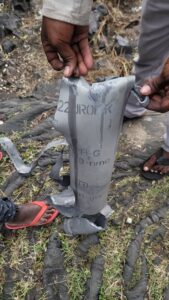
The JROF and JROF-K are Czech derivatives of the Soviet 122 mm ‘Grad’ series of surface-to-surface rockets. The JROF-K is the shorter, reduced-range variant, broadly analogous to the Soviet 9M22M. (ARES)
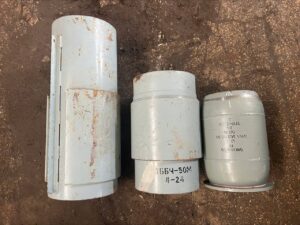
This image shows three different warheads developed by Russia for the Shahed-136/Geran-2 one-way attack (OWA) unmanned aerial vehicle (UAV), each of which differ from the original warhead designed by Iran for the Shahed-136. Left: A thermobaric explosive warhead; Middle: TBBCh-50M, a thermobaric explosive warhead; Right: OFZBCh-50, a high explosive warhead with an incendiary effect. Each of these warheads is also fitted with a fragmentation liner to increase the fragmentation effect generated when the warhead detonates. Some of the fragmentation liners may contain zirconium, a metal which is ignited when the warhead detonates, providing an additional incendiary effect. (ARES)
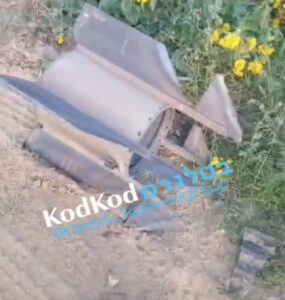
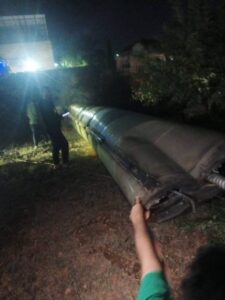
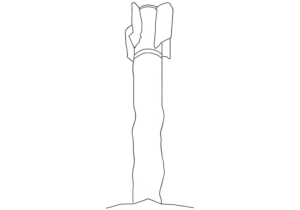
This image shows the rear fin section that is attached to a M-302/Khaibar-1/Fadi series rockets to add guidance capabilities. This rear fin section is installed, along with a forward control section between the warhead and the rocket motor. The guided munition, now classified as a missile, is referred to as a Nasr-1/Nasr-2. A similar, but larger, rear fin section is fitted to Zelzal rockets to convert them to guided munitions. (ARES).
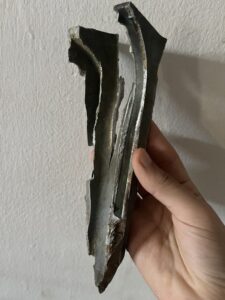
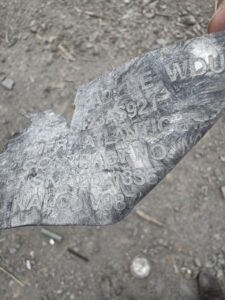
This image shows a fragment of a RGM/UGM-109 Tomahawk Land Attack Missile (TLAM) series missile's WDU-36/B warhead. The WDU-36/B warhead is a penetrator warhead for the TLAM, and is one of several available warhead options for TLAM series missiles. The complete "WDU" designation isn't visible, but the part number (3123AS921) is associated with the WDU-36/B. (ARES)
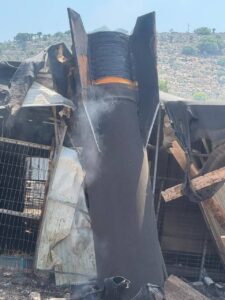
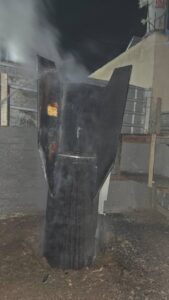
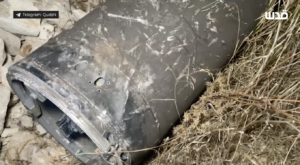
This image shows the rocket motor of a Kheibar Shekan or Fattah-1 medium-range ballistic missile (MRBM). The Fattah-1 was publicly unveiled by Iran in June 2023, with very few images surfacing since that time. Due to the lack of available reference material, differentially identifying the Kheibar Shekan and Fattah-1 is difficult. The missile components displayed at unveilings and public displays are also often different from those used in production models. (ARES).
This image shows the copper cone of the shaped charge located at the front of the warhead fitted to a Shahed-131. The Ukrainian armed forces have recorded that the cone measures 111 mm in diameter and 162 mm in depth. The warhead is lined with cubic pre-formed fragments of 7 mm in diameter. The explosive content of the warhead is estimated to be between 10 and 15 kg. (ARES)




 Launched from a ground-based weapon platform and intended to strike land or sea targets