



501–600 of 933
Current Filter
Surface-to-Surface
Munitions launched from a ground-based weapons platform, whether on land or at sea, and designed to strike other surface targets.




Analyst Note
14 November 2024
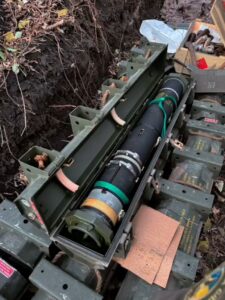
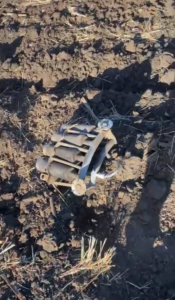
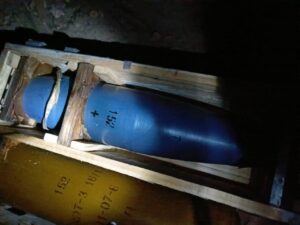
The M712 ‘Copperhead’ is a laser-guided 155 mm artillery gun projectile carrying a high explosive anti-tank (HEAT) warhead designed to engage armoured vehicles. The Copperhead was developed in the United States in the 1970s, and saw limited use during Operation Desert Storm. The M712 is is pictured here inside its shipping container, and the slots for the enclosed, deployable (‘pop-out’) wings and fins are visible. The M712 has two operational modes: a ballistic mode that follows a gun’s ballistic trajectory like a traditional artillery projectile, and a glide mode, which follows a longer and flatter trajectory. The preferred mode is set by the artillery crew before firing. (ARES)



Analyst Note
26 November 2024
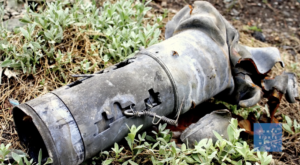
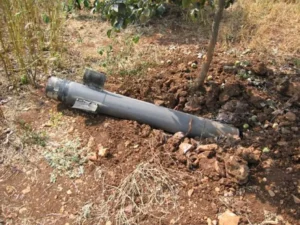
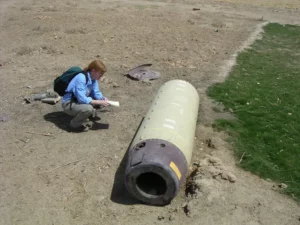
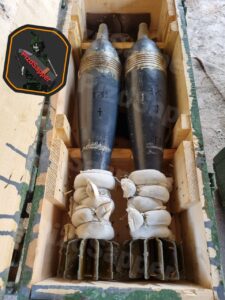
The two North Korean 120 mm high explosive (HE) mortar projectiles in this image are each fitted with five cloth bags affixed above the tailfins. These are incremental propellant charges (sometimes known as augmenting, auxiliary, or supplemental charges), the number of which can be varied along with a mortar’s elevation to adjust the trajectory and range of the munition when fired. (ARES)
Analyst Note
26 November 2024
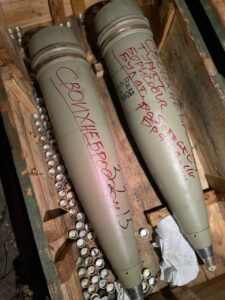
This image shows two Iranian 130 mm high explosive (HE) artillery gun projectiles. Calibre (“130MM”) and functional type (“HE - TNT”) markings are visible on the right-hand example, whilst a lot marking (“LOT:10/202[…]”) is partially obscured. The “TNT” marking indicates that this munition uses a trinitrotoluene composition as its explosive fill. (ARES)




Analyst Note
14 October 2024
This 9M27K-series surface-to-surface cargo rocket is loaded with either 9N210 or 9N235 high explosive fragmentation (HE-FRAG) submunitions. These models are nearly identical in construction, differing primarily in the nature of the pre-formed fragments they carry. (ARES)

Analyst Note
26 November 2024
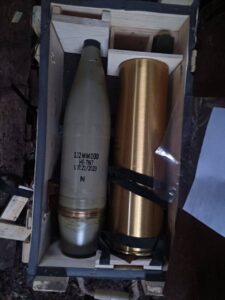
This image shows an Iranian 122 mm high explosive (HE) artillery gun projectile. Like several other munitions, it is described in Iranian sources—and, in this case, on the munition itself—only by reference to the weapon with which it is most often associated: the Soviet-designed 122 mm D-30 howitzer (often rendered ‘D30’, without the hyphen, in Iranian service). This munition is also marked to indicate it was produced in 2023. Interpreting munitions markings in this way, especially where they indicate recent manufacture, may provide evidence of ongoing supply during a conflict. (ARES)


Analyst Note
26 November 2024
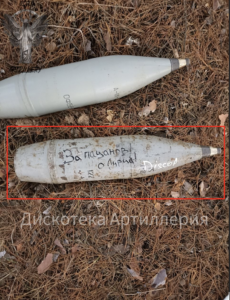
The munition indicated in this image as a 152 mm high explosive (HE) artillery gun projectile manufactured in the Democratic People’s Republic of Korea (DPRK). (ARES)


Analyst Note
24 January 2025
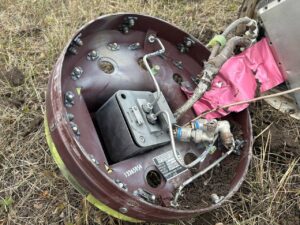
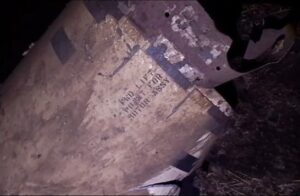
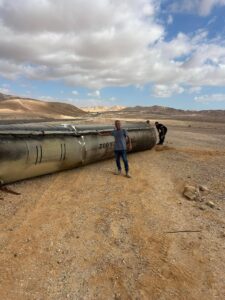
This image shows part of the warhead section of an MGM-140 Army Tactical Missile System (ATACMS) series tactical ballistic missile. This is the top of the warhead section, where it connects to the guidance section. A data plate is visible, giving information about the manufacturer (“Lockheed Martin Vought Systems”) and identifying this specific part (“WARHEAD, GUIDED MISSILE. HIGH EXPLOSIVE”. (ARES)

Analyst Note
20 November 2024
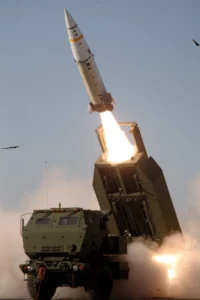
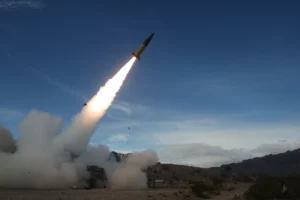
This U.S. Department of Defense file photo shows an M142 High Mobility Artillery Rocket System (HIMARS) launching an MGM-140 Army Tactical Missile System (ATACMS) series tactical ballistic missile. (ARES)


Analyst Note
19 November 2024
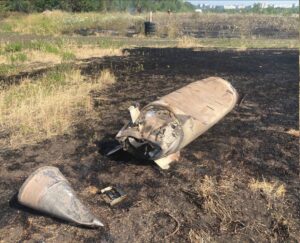
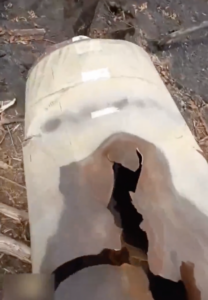
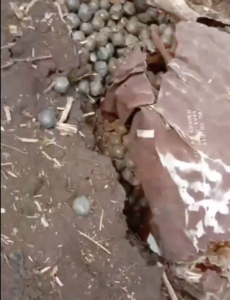
This MGM-140 cluster munition has failed to function as intended, and its payload of M74 submunitions is seen here spilling out of the warhead. (ARES)


Analyst Note
19 November 2024
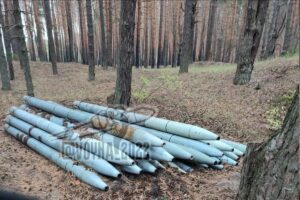
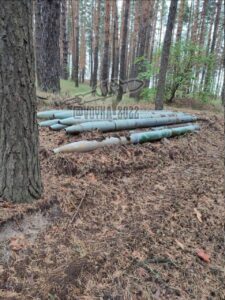
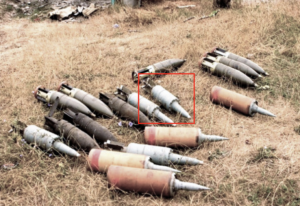
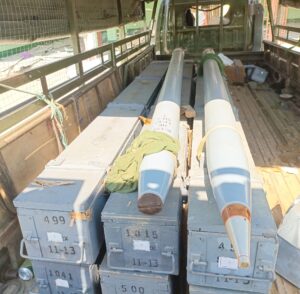
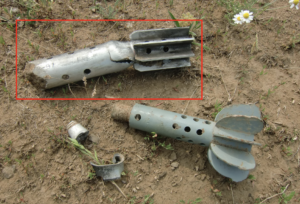
These R-122 ‘Grad’-type 122 mm surface-to-surface rockets were produced in North Korea. The example to the right is fitted with an F-122 impact fuze. Whilst a two-tone colour scheme is more common amongst those North Korean Grad rockets thus far identified in the context of the Ukraine conflict (these typically featuring a black forward section), uniformly coloured examples like this have also been identified previously. (ARES)
Analyst Note
18 November 2024
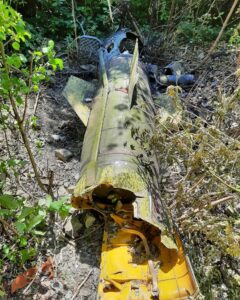
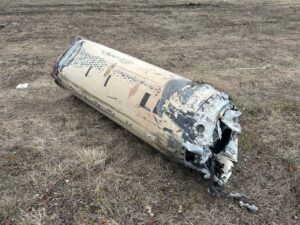
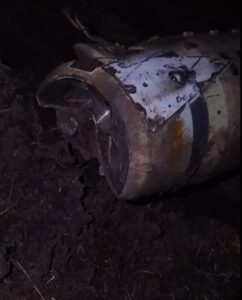
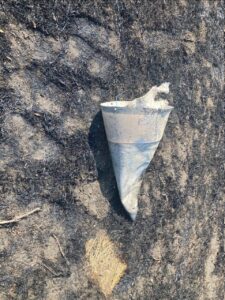
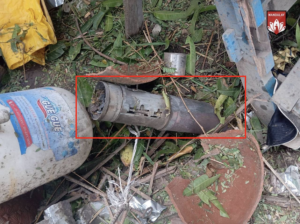
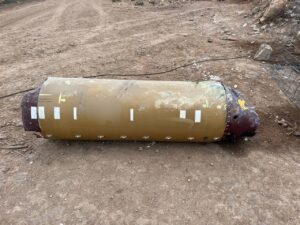
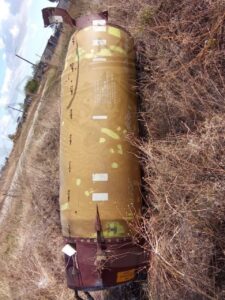
This image shows a rocket motor section from an MGM-140 ATACMS series surface-to-surface ballistic missile. The warhead section of the MGM-140 series missiles separate from the rocket motor before functioning, resulting in the rocket motor often being found relatively intact near the target. The MGM-140 series missiles use the same rocket motor, preventing a positive identification of the variant based off the rocket motor alone, unless the variant markings are visible. (ARES)
Analyst Note
18 November 2024
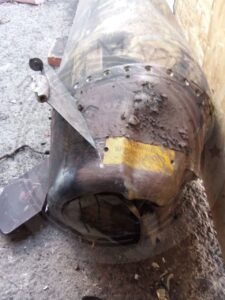
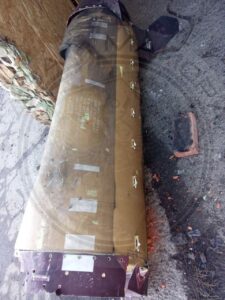
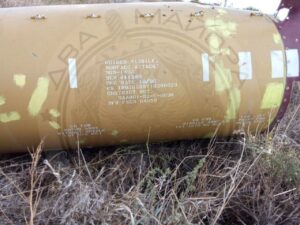
This remnant of an MGM-140 Army Tactical Missile System (ATACMS) surface-to-surface ballistic missile is marked to indicate it is the MGM-140A variant, a cluster munition which carries 950 M74 multi-purpose submunitions. Submunitions of this type are sometimes referred to by the acronym ‘anti-personnel and anti‑materiel (APAM)’. Additional markings indicate a manufacturing date (“10/96”; October 1996), a serial number (“411240”), and other information. (ARES)
Analyst Note
7 November 2024
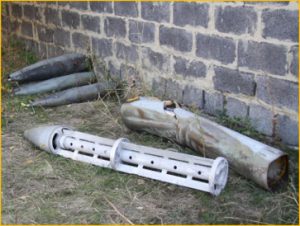
Almost all cluster munitions, including this example, expel their submunitions during flight. The submunitions are often held in an internal frame, such as that visible here, prior to being expelled. Depending on the munition, these internal frames may be diagnostic for identification. They usually do not carry a significant explosive payload in their own right, and therefore often withstand the functioning of the munition relatively intact. (ARES)
Analyst Note
18 November 2024
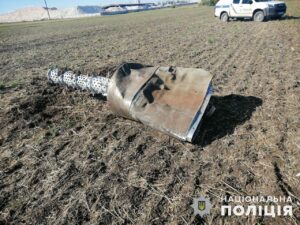
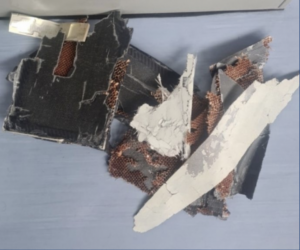
Honeycomb-like internal structures are often used in aerospace applications to provide rigidity with reduced weight, and are sometimes constructed using materials which reduce radar cross-section by absorbing or scattering electromagnetic waves. (ARES)
Analyst Note
14 October 2024
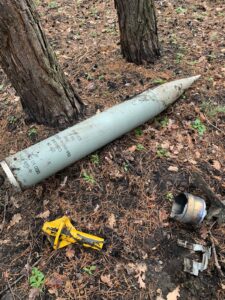
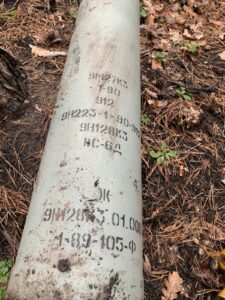
The 9M27K3 surface-to-surface rocket is fitted with the 9N128K3 cargo warhead (seen here). This warhead carries a payload of 312 PFM-1 or PFM-1S scatterable anti-personnel landmines. (ARES)

Analyst Note
14 October 2024
The markings on this 9N128K3 cargo warhead indicate that it was produced in 1989 and fitted to a 9M27K3 rocket in 1990. (ARES)


Analyst Note
11 November 2024
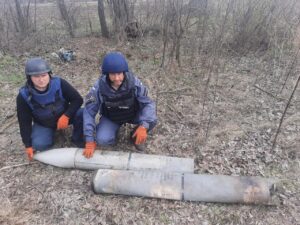
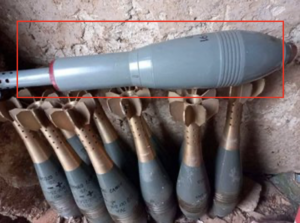
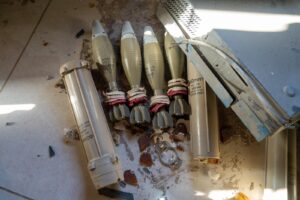
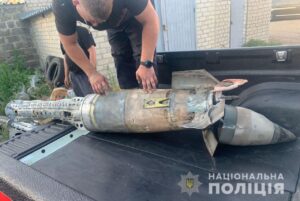
This Iranian 60 mm mortar projectile is of the ‘Long Range’ type described without a specific model name in various Iranian export catalogues and other sources. The designation as marked on projectiles and packaging is variable, with observed formulations including “60mm H.E. L.R.”, “60mm H.E L.R”, and “60mm HE L.R”. Sometimes, as here, “60mm L.R” is followed by “HE / TNT”. (ARES)


Analyst Note
2 November 2024
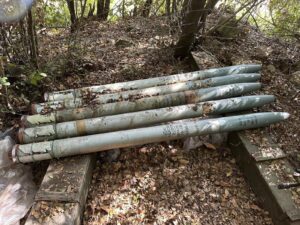
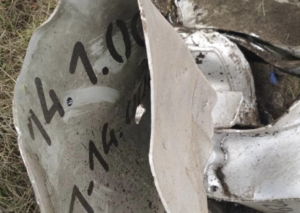
This image shows what is probably just the body of an Israeli 155 mm smoke artillery projectile. Israel predominantly uses two varieties of 155 mm smoke munition: the M825 white phosphorous (WP) series of munitions, and the M150 hexachloroethane/zinc mixture (HC) munition. These munitions are externally near-identical, save for their markings. In this case, the markings are insufficient to determine whether the image shows an M825-series WP munition or an M150 HC munition. (ARES)


Analyst Note
24 October 2024
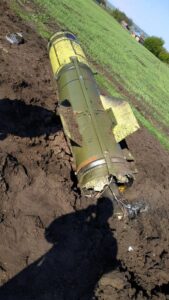
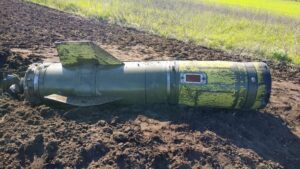
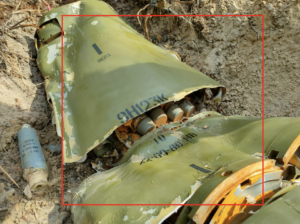
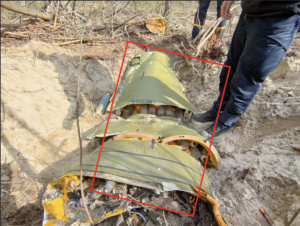
The 9M22S is essentially the ‘full-sized’ version of the shorter 9M28S surface-to-surface rocket previously recorded in the OSMP. Both rockets carry the same 9N510 incendiary warhead, but differ in the length of their rocket motor sections, and thus range. (ARES)

Analyst Note
14 October 2024
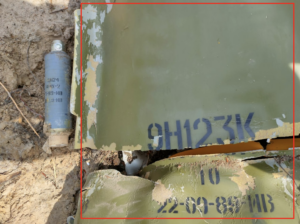
The 9Н123К (9N123K) cargo warhead is delivered by a 9М79К (9M79K) series surface-to-surface guided missile. This cluster munition carries fifty 9Н24 (9N24) high explosive fragmentation (HE-FRAG) submunitions, and is launched from the 9К79 Tochka series of tactical ballistic missile launchers. (ARES)
Analyst Note
14 October 2024
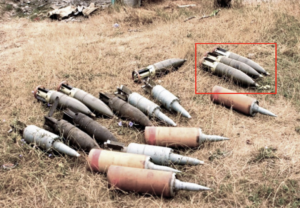
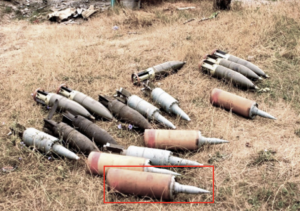
A 9N24 submunition is visible to the left of the 9N123K warhead in this image. This high explosive fragmentation (HE-FRAG) submunition is marked to indicate it was produced in 1989 and filled with A-IX-2 explosive composition. (ARES)


Analyst Note
14 October 2024
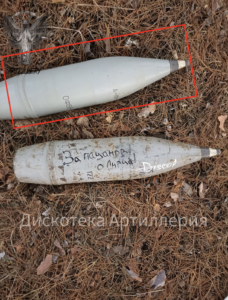
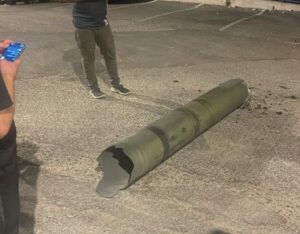
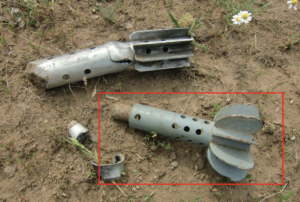
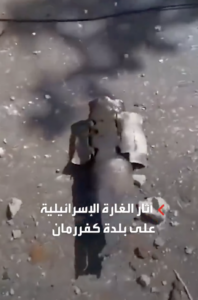
The 9M28S surface-to-surface unguided rocket carries the 9N510 warhead, which disperses burning thermite-type incendiary elements over a wide area upon functioning. This munition is designed to start fires in target areas vulnerable to incendiary attack, including forests, ammunition dumps, and fuel storage sites. (ARES)
Analyst Note
15 October 2024
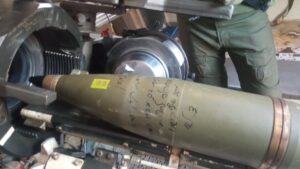
This M107 high explosive (HE) artillery gun projectile is fitted with an RT180 multi-function fuze. The RT180 can be set to operate in point-detonating or proximity modes. The factory setting for the proximity fuze detonates the warheads an average of 9 metres above the target. (ARES)