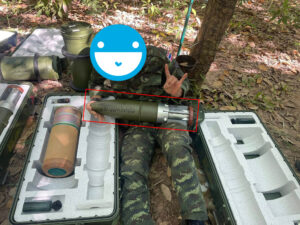
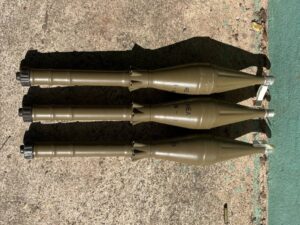
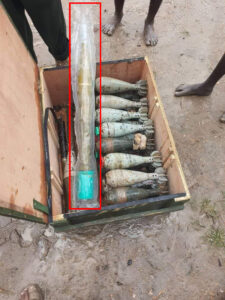
The nominal diameter of a projectile. For most modern munitions, this is expressed in millimetres (e.g. 82 mm mortar projectile), but older artillery gun projectiles may be described in inches.
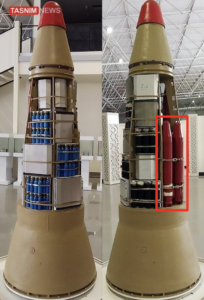
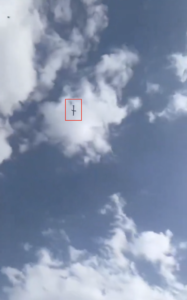
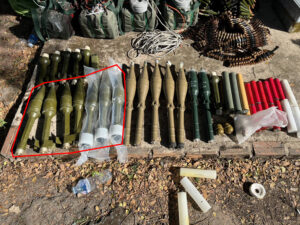
This image shows the ‘manoeuvrable re-entry vehicle’ (MaRV; a detachable, steerable payload section) of an Iranian ballistic missile loaded with submunitions. It appears there are three different models of submunition loaded into the MaRV (black, blue, and red). The black and blue submunitions are most likely anti-personnel designs, whilst the red submunitions (indicated by a red box) are likely designed with penetrating or shaped-charge warheads to target vehicles or structures. Some submunitions may utilise time-delay fuzing, allowing for random detonations over several hours or days to hamper clearance efforts, denying use of the afflicted area. Reports have shown Iran has used ballistic missiles with mixed submunition loads, and suggest that this type of warhead can scatter its payload up to a radius of 8 km. (ARES)
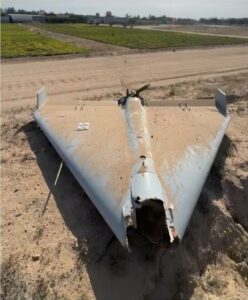
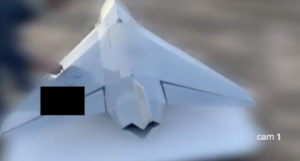
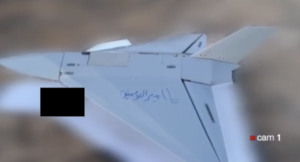
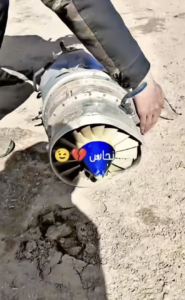
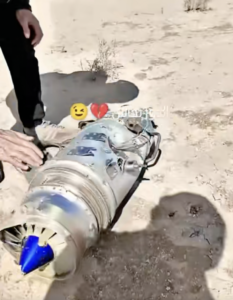
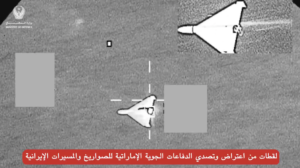
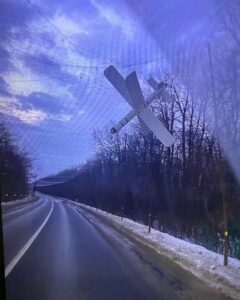
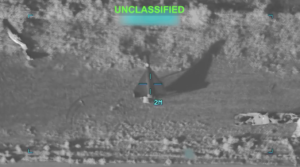
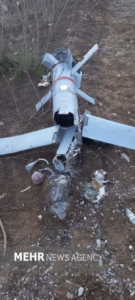
This image shows a screenshot from one of the videos released by the Kuwait Civil Aviation showing a one-way attack (OWA) unmanned aerial vehicle (UAV) striking the Kuwait International Airport. The munition’s distinctive delta-wing configuration and general size, shape, and manner of flight are consistent with the Shahed series of OWA UAVs. The related entry shows a Mado MD550 engine recovered following this strike, a model used to power the Shahed-136 series, enabling a more precise identification. (ARES)
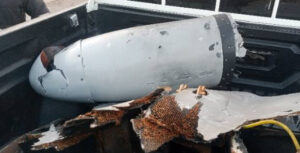
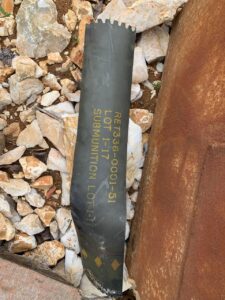
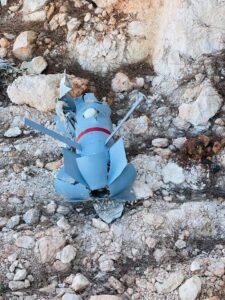
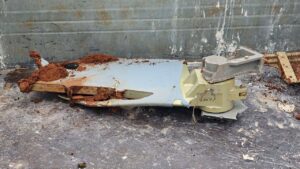
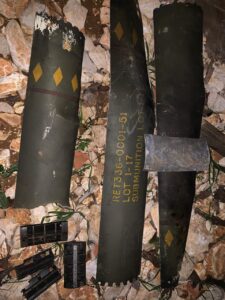
This image shows an external portion of an Israeli Ra'am Eitan missile, a type of cluster munition fired from the Lahav (PULS) mobile rocket launcher. The yellow diamonds marked on the exterior of the munition are used to indicate a cluster munition. Other markings appear to indicate that this example was manufactured in 2017. (ARES)
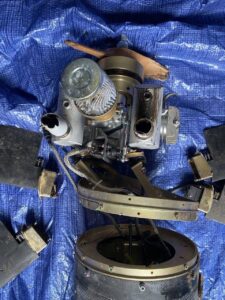
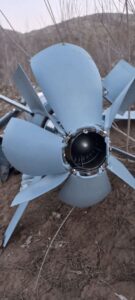
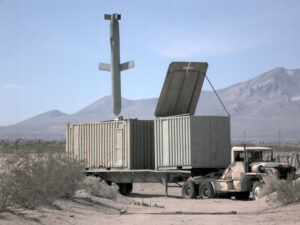
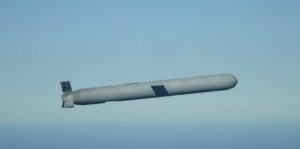
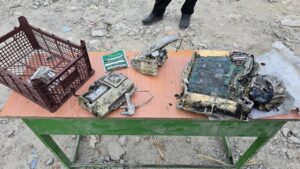
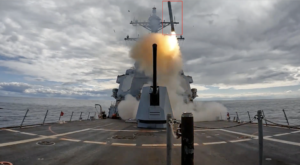
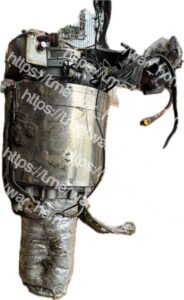
The component pictured here is a small turbofan engine from a Tomahawk missile. Missiles are vertically launched from the Typhon Missile System (named for a monster of Greek mythology), which is also capable of launching the Standard SM-6 guided missile. The Tomahawk missile is ejected from its launch tube under gas pressure, then the solid propellant of the booster motor section (Mk 135 booster produced by L3Harris) propels the missile until the turbofan engine (F107-WR-402 for Block III/IV or F415 for Block IV/V, both produced by Williams International) in the propulsion section is initiated and the booster motor section drops away. The propulsion section also supports the four tail fins, which are released by the two-piece continuity shroud upon launch. (ARES)
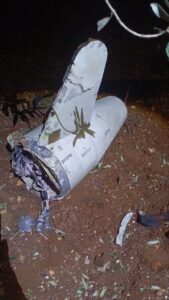
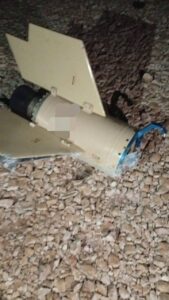
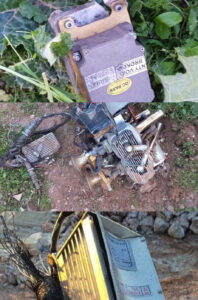
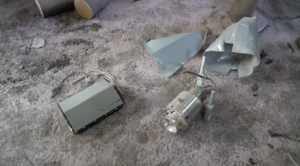
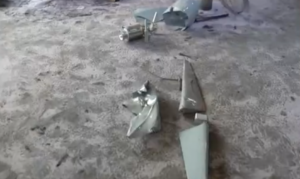
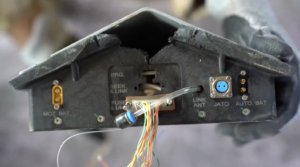
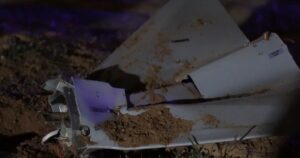
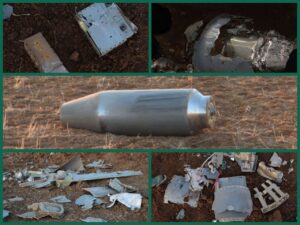
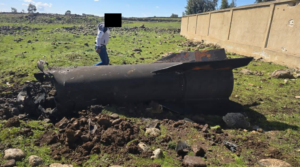
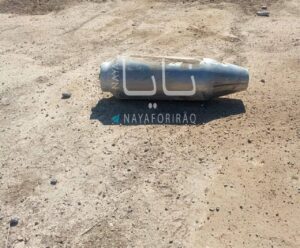
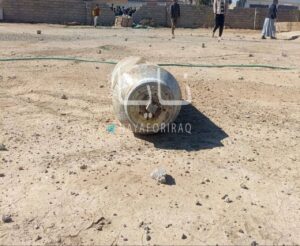
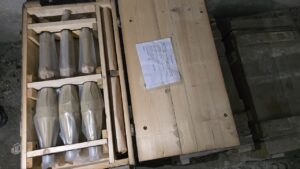
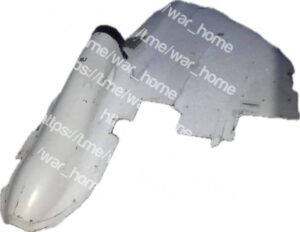
This munition, believed to be of Israeli origin, has been documented at a number of strike sites in Lebanon, Gaza, and Iran. Although distinctive remnants permit its tentative identification, the lack of a confirmed model name means this munition has been assigned a Temporary Munitions Identifier (TMID) by ARES. This appears in the Tentative Model field of the OSMP so that all records of this munition in the database can be linked under one temporary name. (ARES)
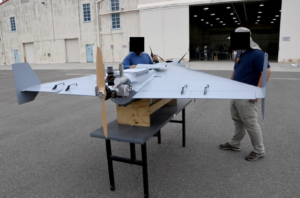
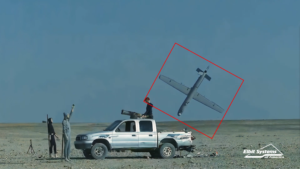
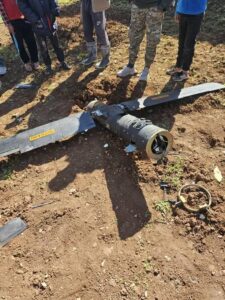
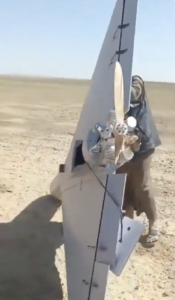
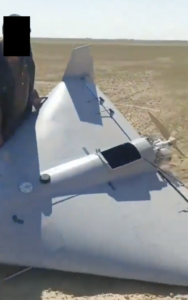
This image shows a Lancet-series one-way attack (OWA) UAV. It strongly resembles the Z-51E made by Zala Aerospace, a Russian manufacturer, although this cannot be confirmed from the available image. The Lancet series of drones can carry a variety of different warheads, including blast, fragmentation, thermobaric, and High Explosive Anti-Tank (HEAT). (ARES)
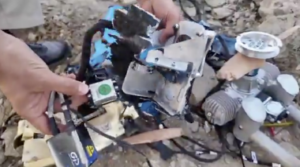
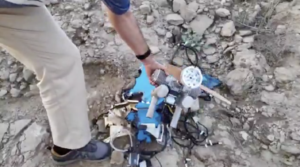
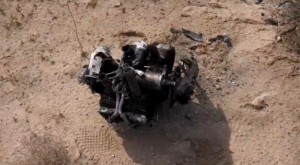
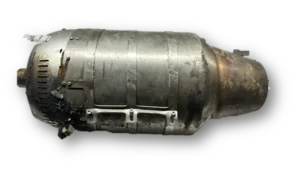
It is reported that this jet engine was recovered from the wreckage of a Geran-5 one-way attack (OWA) UAV. It is most likely a Telefly TF-TJ2000A model, manufactured by Telefly Telecommunications Company in China. It is reported that the TF-TJ2000A engine produces 200 kg of thrust; this is a significant increase in thrust compared to the Telefly JT80 engine used on the Shahed-238 (Geran-3) UAV, which produces approximately 80 kg of thrust. (ARES)
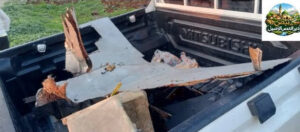
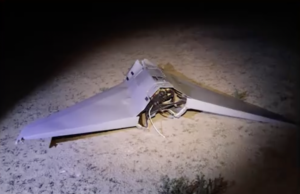
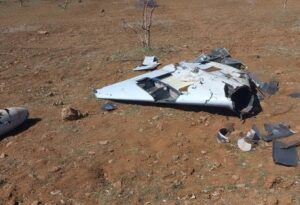
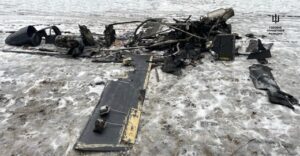
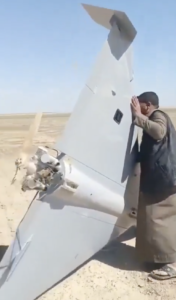
This image shows the remains of a Russian Geran-5 drone. These drones are reported to be roughly 6 meters long and have a wingspan of up to 5.5 meters. They are fitted with a warhead weighing approximately 90 kg and have a range of about 1,000 km. (ARES)
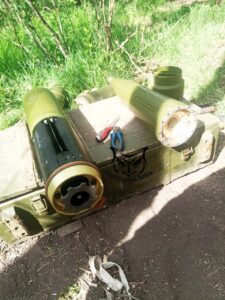
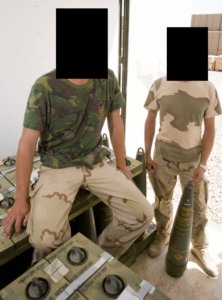
The 3OF39 Krasnopol is a laser-guided, rocket-assisted 152 mm tank gun projectile carrying a high explosive fragmentation (HE-FRAG) warhead. The round is built and shipped with a cover over the optical sensor. This protective cover is fitted with a T-90 mechanical time delay fuze. Once fired, the T-90 fuze will initiate after a pre-selected time and will jettison the protective cover, exposing the optical sensor in the nose. The internal impact fuze, which can be set for immediate or delayed initiation, is then responsible for detonating the projectile. (ARES)
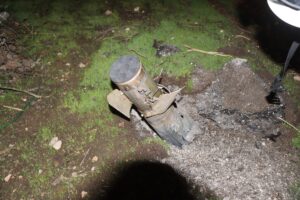
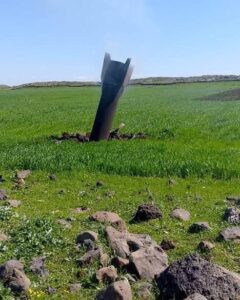
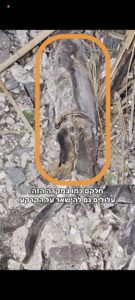
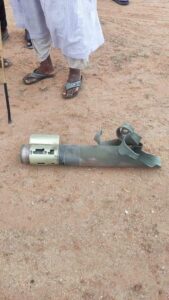
Considered with additional contextual materials, it is assessed that this image shows the rocket motor section from a 122 mm incendiary rocket, specifically the 9M22S or 9M28S models. Both rockets carry the same warhead, but use rocket motors of different lengths; not enough of this motor is visible to positively identify the model. (ARES)
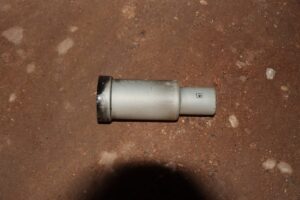
This image shows a stepped component positioned at the front of the warheads carried by 122mm 9M22S and 9M28S incendiary rockets. This structure helps to push the ML-5 incendiary elements out of the rear of warhead once the fuze in the nose functions. It is a relatively distinctive component, and commonly found in the vicinity of where the incendiary elements fall. (ARES)
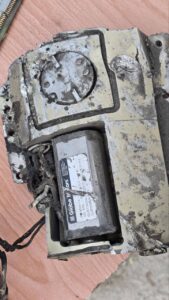
This image shows a DC motor from a Tomahawk missile, manufactured by Globe Motors of Dayton, Ohio, in the United States (part # 471A118 and serial # 7250). Globe Motors was acquired by Allied Motion in August 2013, and has since been renamed Allied Motion at Dayton. This DC motor is used as an actuator to assist in steering the Tomahawk to its target based upon input from the aviation section in the forward body assembly. Such motors often survive detonation and can serve as diagnostic remnants. (ARES)
Components matching those seen here have been documented at other sites associated with the detonation of RGM-/UGM-109 Tomahawk cruise missiles. See, for example, OSMP 1199, 1218, 1191, 1193, and 1444. (ARES)
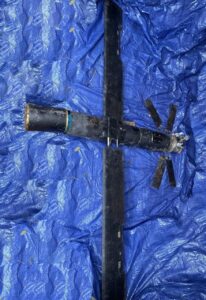
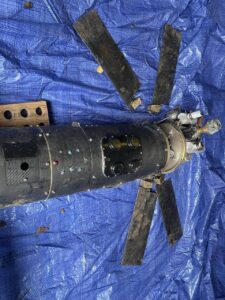
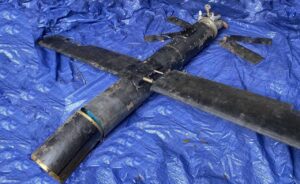
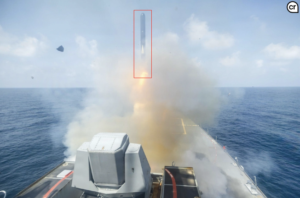
This Tomahawk missile features a distinctive black coating that suggests it is an RGM-109E Block Va variant, also known as the Maritime Strike Tomahawk (MST). A similar coating is seen on the U.S. Navy’s AGM-158C Long-Range Anti-Ship Missile (LRASM). MST incorporates a new multi-mode seeker optimised for the anti-shipping role, but remains capable of striking land-based targets. (ARES)
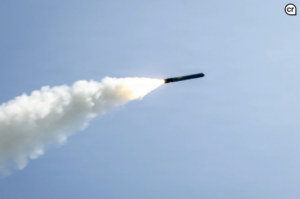
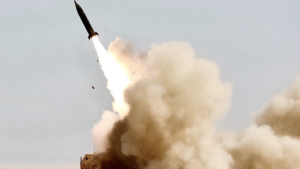
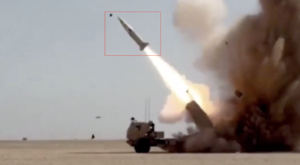
This image shows what is believed to be one of the first combat uses of the Precision Strike Missile (PrSM), following its entry into U.S. Army service in late 2023. PrSM is the successor to the ATACMS short-range ballistic missile that has become well known due to its use in the Russo–Ukrainian War. The Increment One version of PrSM has a range of approximately 500 km. The missile is seen here being fired from an M142 High Mobility Artillery Rocket System (HIMARS). (ARES)
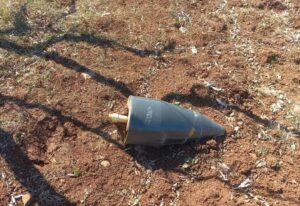
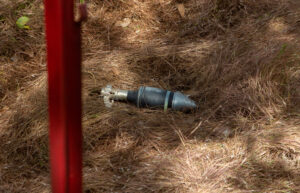
This image shows an unexploded Iranian submunition of unknown designation. Visually similar examples have been documented following Iranian ballistic missile strikes on Israel in June 2025 and March 2026. At least two variants are believed to exist, but publicly available details remain limited at time of review. (ARES)
This image shows a Low-Cost Unmanned Combat Attack System (LUCAS). The LUCAS one-way attack UAV is a U.S.-made, cost-effective ‘kamikaze drone’. LUCAS munitions can connect to one another via a mesh network, allowing multiple LUCAS drones to communicate in flight. The white square object connected to the munition by a cable appears to be a Starlink antenna, consistent with reported communication capabilities. Elon Musk has claimed that LUCAS operates only via Starshield, a Starlink-derived satellite network intended for government use. (ARES)







 Launched from a ground-based weapon platform and intended to strike land or sea targets