




501–600 of 1,194

Analyst Note:
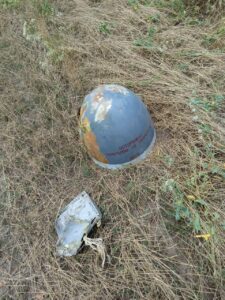
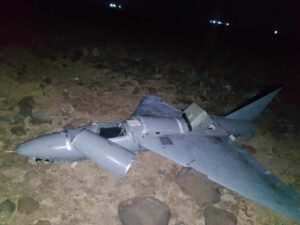
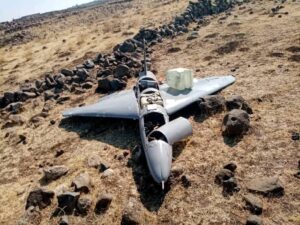
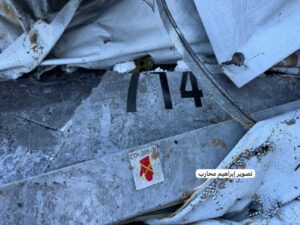
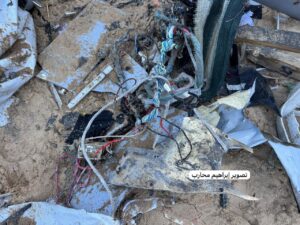
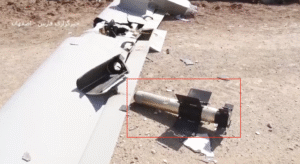
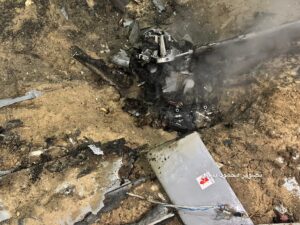
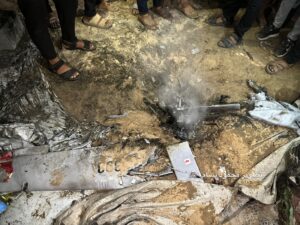
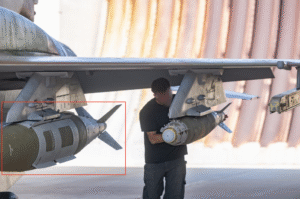
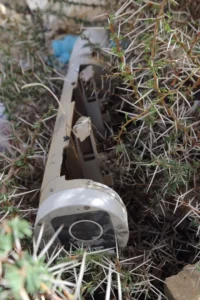
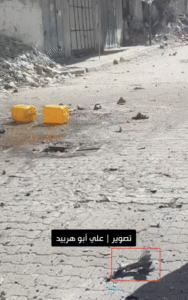
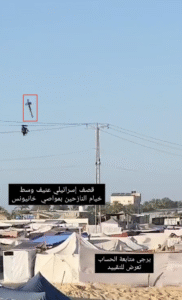
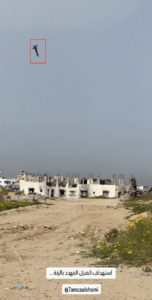
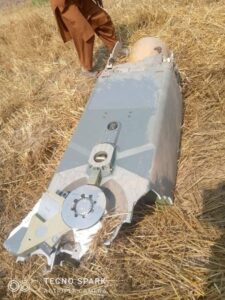
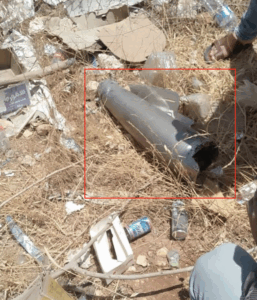
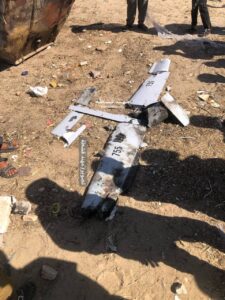
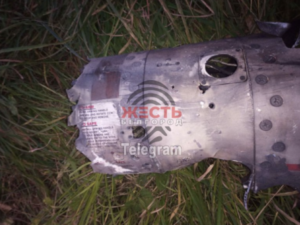
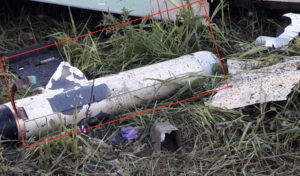
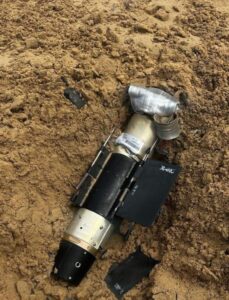
This image shows a Mikholit that was ejected from the weapons pod of an Israeli Hermes 900 drone that was downed in Iran. This Hermes 900 drone had two weapons pod, each capable of carrying 4 Mikholit bombs. (ARES)
Analyst Note:
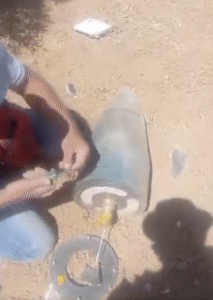
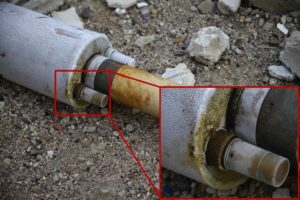
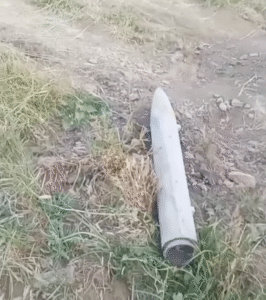
This image shows a improvised rocket-assisted munition (IRAM). This particular munition consists of a 107 mm rocket motor with an industrial gas cylinder fitted in place of the standard warhead. The frost present on the cylinder indicates a pressurised gas was released. The yellow–green residue is consistent with a payload of chlorine gas. (ARES)
Analyst Note:
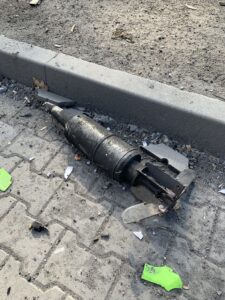
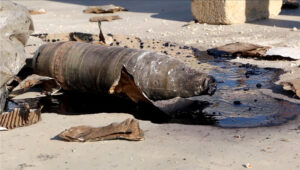
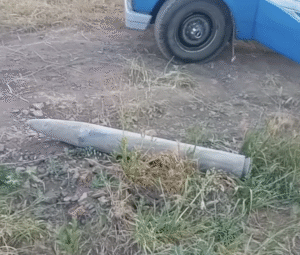
This image shows a conventional 122 mm high explosive artillery projectile that has been modified to carry a chemical payload. It is one of several used in an attack by the so-called ‘Islamic State’ on the town of Marea, Syria. The black substance on the ground is suggestive of low-purity sulphur mustard, a chemical warfare agent. (ARES)
Analyst Note:
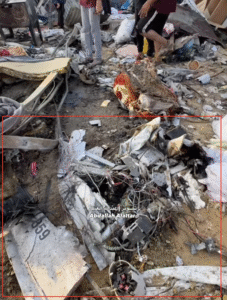
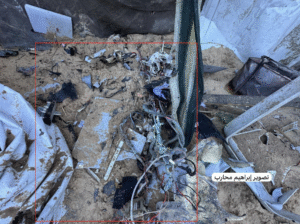
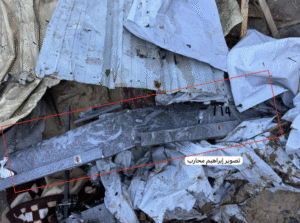
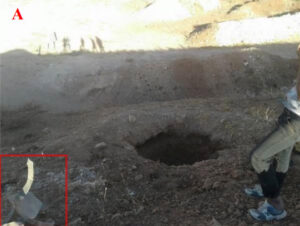
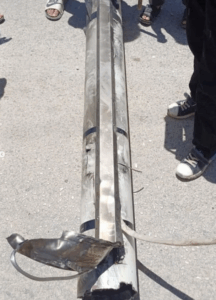
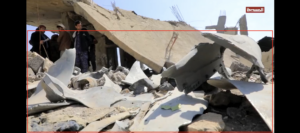
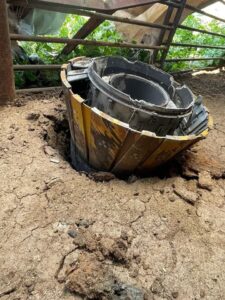
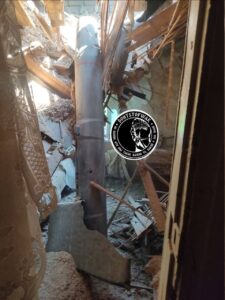
This image shows an impact crater, as well as remnants of the frame or ‘cradle’ (red box) that was fitted to the gas cylinder. Cradles associated with this type of Syrian Government chemical munition typically feature fins to help orient the cylinder as it falls, and features to assist with loading the cylinders into aircraft for deployment, such as wheels and lifting lugs. (ARES)
Analyst Note:
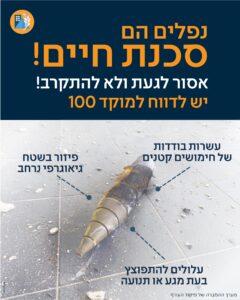
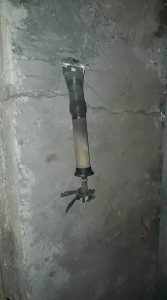
This image shows a unexploded Iranian submunition pictured in an awareness poster made by the Israel Defense Forces (IDF) Home Front Command. The poster warns people to not touch or disturb the submunition. The IDF reported that about 20 of these submunitions were deployed by a single Iranian ballistic missile, spreading over a radius of 8 kilometres. (ARES)
Analyst Note:
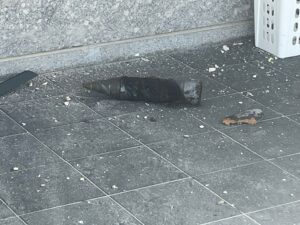
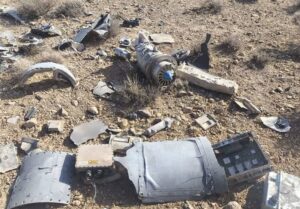
This image shows an unexploded submunition that was deployed by an Iranian medium-range ballistic missile over Israel. Inert variants of these submunitions were previously observed in an Iranian city following a failed missile test. (ARES)
Analyst Note:
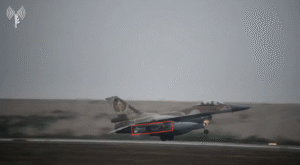
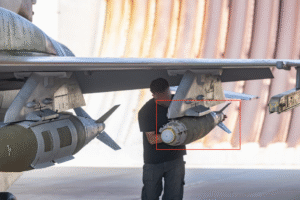
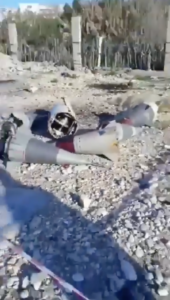
The source for this entry reports that these remnants were left behind after the missiles were “recycled“. Explosive remnants of war (ERW) are often recycled for the value of their scrap metal, or ‘harvested’ by militant groups for the explosive material. These recycling attempts may result in the ERW exploding, potentially killing or injuring people. (ARES)
Analyst Note:
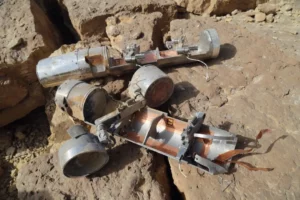
This image shows two BLU-108 submunitions. Each BLU-108 contains 4 smaller submunitions, or ‘skeets’. The BLU-108 at the top has deployed all four skeets, while the bottom example has two skeets still attached. The BLU-108 is fitted with a parachute that is deployed after the submunition separates from its dispenser (e.g., the CBU-97 Sensor Fuzed Weapon) to slow its descent, as well as a rocket motor that is thereafter fired to increase the munition’s altitude before it deploys the skeets. Each skeet is able to independently seek out targets using an infrared sensor. (ARES)


Analyst Note:
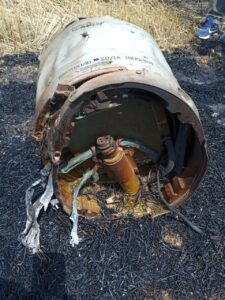
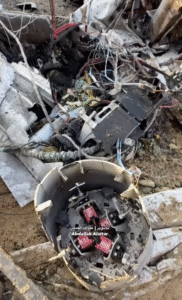
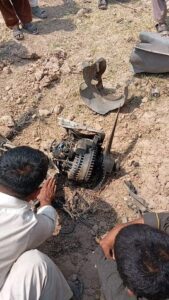
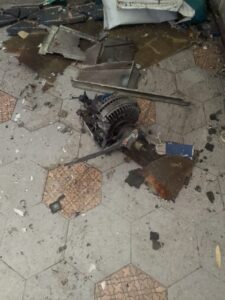
This image shows the largely intact Microturbo TRI-60-30 turbojet engine from a Storm Shadow/SCALP-EG missile. (ARES)
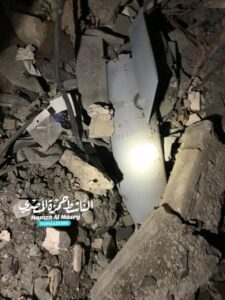
Analyst Note:
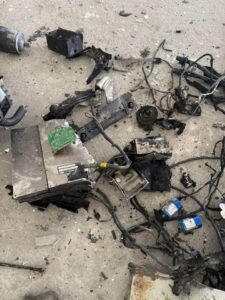
This image shows the guidance control unit from an Israeli 'Chameleon 3’ bomb guidance kit. This kit appears similar to those in the Israeli Lizard series of guidance kits, which are derived from the American-designed Paveway kit series. (ARES).
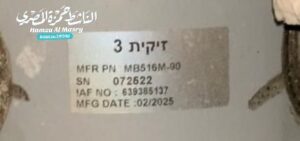
Analyst Note:
This is the data plate fitted to an Israeli Air Force bomb guidance kit. It reads “3 זִקִית” (‘Zikit 3’, or ‘Chameleon 3’ in English). As of May 2025, there is no public information available about this model of bomb guidance kit, but it appears to be a derivative or variant of the Israeli Lizard series, which are derived from the American Paveway bomb guidance kit. (ARES)
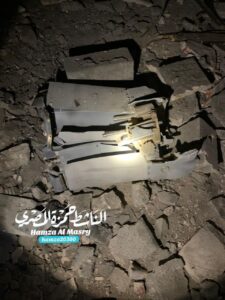
Analyst Note:
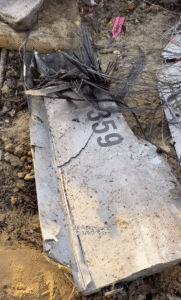
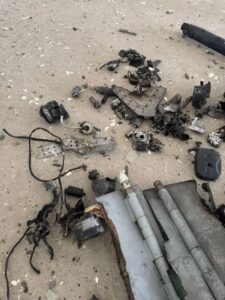
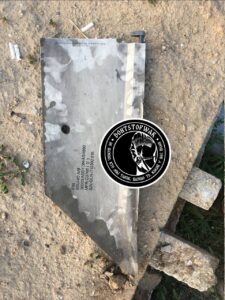
This image shows the damaged aerofoil group, or ‘tail kit’, found with a Chameleon 3 bomb guidance kit. The exact model of aerofoil group is unknown, but in US service similar component groups are given a designation in the ‘MXU-xxx’ range, and are interchangeable with different variants of the Paveway bomb guidance kit (within bomb weight classes). (ARES).
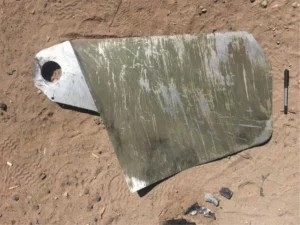
Analyst Note:
Although Human Rights Watch reported that they found manufacturing markings on a guidance fin assembly indicating that this MXU-series aerofoil group was paired with a Paveway III guidance kit, this cannot be determined by this wing remnant from the aerofoil group alone. (ARES)
Analyst Note:
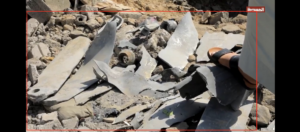
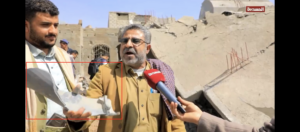
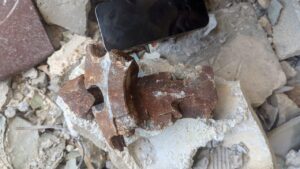
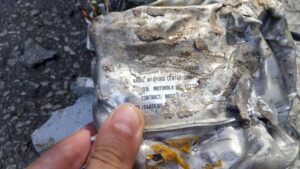
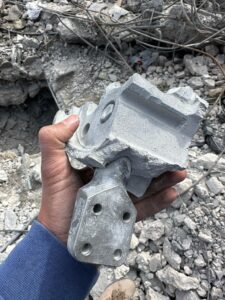
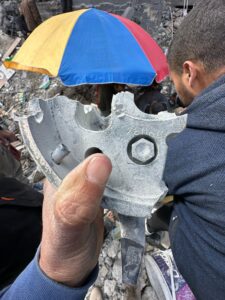
This image shows fragments of a BLU-109C/B 2,000-pound penetrator bomb. The remnant with visible threads is part of the aft closure ring attached to the base of the bomb. This features nine vent holes as an ‘insensitive munition’ (IM) safety feature. Three of the threaded vent holes are visible on this fragment. (ARES)
Analyst Note:
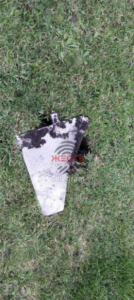
This image shows a remnant of the tail actuator subsystem of a Joint Direct Attack Munition (JDAM) bomb guidance kit. The size of this JDAM kit indicates that it is one of the kits compatible with 2,000-pound-class bombs, either the MK-84 or BLU-109. (ARES)
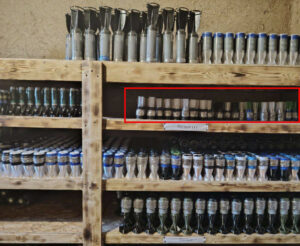
Analyst Note:
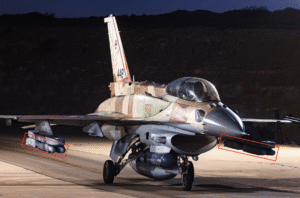
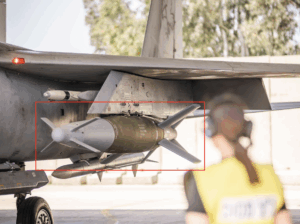
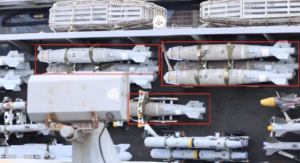
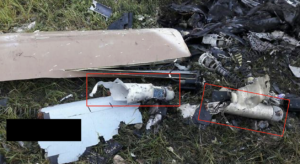
This image shows a variety of small air-delivered munitions that have been developed specifically for deployment via UAV. Some of these appear to be original designs, whilst others have been made by modifying existing munitions. This entry reflects those munitions outlined with the red box, but all of the munitions are generally of similar in size and format, and all have tailfin assemblies intended to orient the munition as it falls, just like more traditional air-delivered bombs. (ARES)
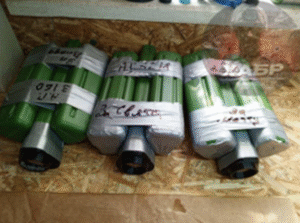
Analyst Note:
This image shows three sets of three PTM-1 series scatterable anti-vehicle mines taped together. While these mines have likely been repurposed from their original delivery munition to be delivered via UAV, this cannot be confirmed based off this image alone. (ARES)
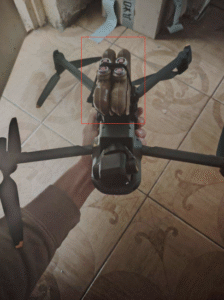
Analyst Note:
This image shows four PFM-1 series anti-personnel landmines retained by a release mechanism to enable deployment via UAV. Ordinarily, PFM-1 series and other ‘scatterable mines’ are deployed via carrier munitions or dedicated mine-dispensing devices. In Ukraine and other conflicts, these mines have often been removed from their original carrier munitions in order that they may be delivered via UAV. (ARES)
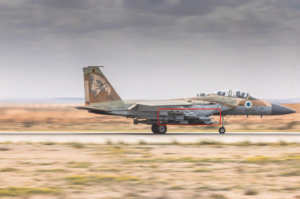
Analyst Note:
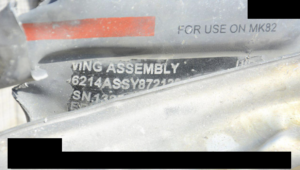
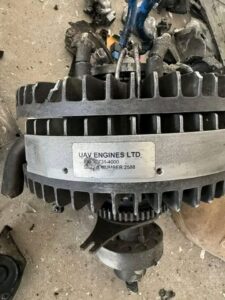
This image shows an AR731-4000 Wankel-type engine produced by UAV Engines Ltd. of the United Kingdom, used in an Israeli Harop munition. Variants of the Harop used in the 2020 Nagorno-Karabakh War featured a similar Wankel engine, but were marked to indicate a different manufacturer and model name: “MBT ENGINE” and “H2251-5100-503”, respectively. (ARES)
Analyst Note:
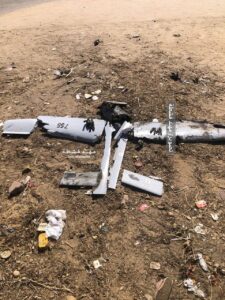
This image shows the remnants of a SkyStriker one-way attack UAV, manufactured by Elbit Systems of Israel. The SkyStriker can be fitted with various warhead options, including dual-purpose warheads weighing 5 or 10 kilograms. While it appears that a reconstruction was attempted with the remnants, the placement of the various components does not accurately represent an intact SkyStriker. (ARES)
Analyst Note:
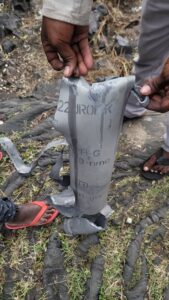
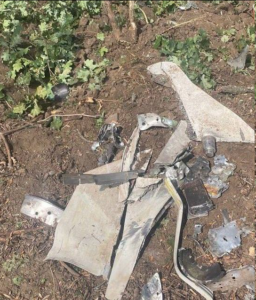
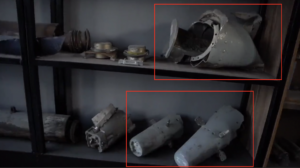
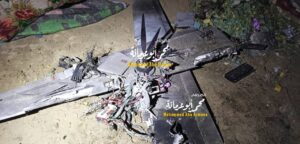
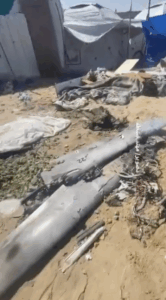
The JROF and JROF-K are Czech derivatives of the Soviet 122 mm ‘Grad’ series of surface-to-surface rockets. The JROF-K is the shorter, reduced-range variant, broadly analogous to the Soviet 9M22M. (ARES)


Analyst Note:
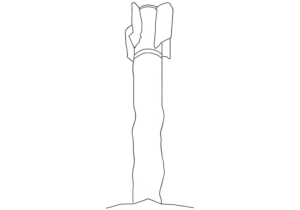
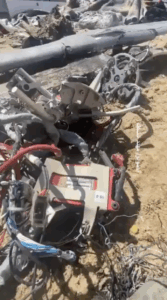
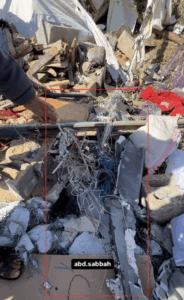
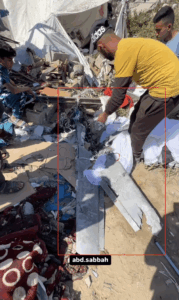
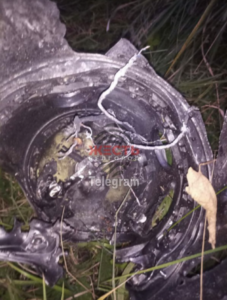
This image shows the flare from a Terminal High Altitude Area Defense (THAAD) system's ‘Talon’ kinetic interceptor missile. The flare is located at the aft end of the missile's booster engine. The ‘petals’ of the flare are initially flush, and are actuated into the deployed position, seen here, as part of the missile‘s functioning. (ARES)
Analyst Note:
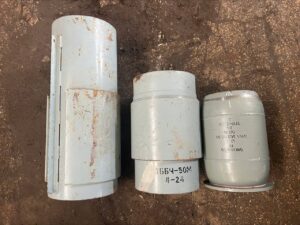
This image shows three different warheads developed by Russia for the Shahed-136/Geran-2 one-way attack (OWA) unmanned aerial vehicle (UAV), each of which differ from the original warhead designed by Iran for the Shahed-136. Left: A thermobaric explosive warhead; Middle: TBBCh-50M, a thermobaric explosive warhead; Right: OFZBCh-50, a high explosive warhead with an incendiary effect. Each of these warheads is also fitted with a fragmentation liner to increase the fragmentation effect generated when the warhead detonates. Some of the fragmentation liners may contain zirconium, a metal which is ignited when the warhead detonates, providing an additional incendiary effect. (ARES)

Analyst Note:
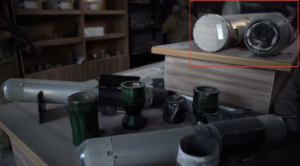
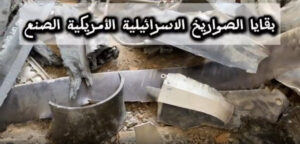
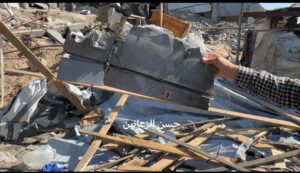
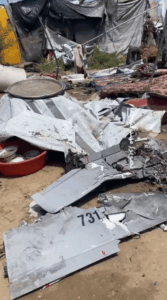
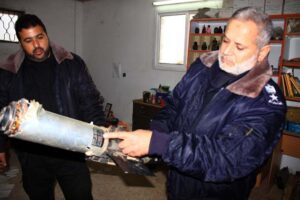
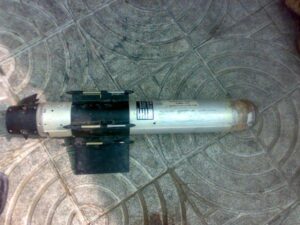
This image shows a Mikholit glide bomb, with its warhead removed (green cylinder on the left side of the box). The fins that spring outward when deploye have been taped down. This Mikholit was reportedly recovered by the Israeli Defense Forces (IDF) from Hamas, who had captured the bomb after it failed to function when originally deployed by the IDF. (ARES)

Analyst Note:
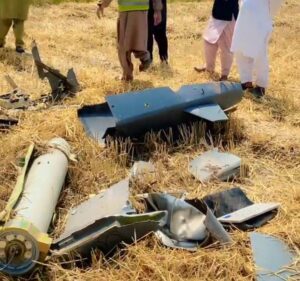
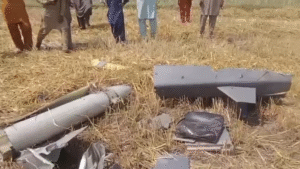
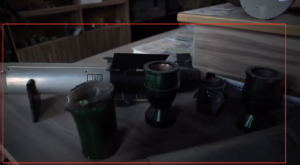
This image shows two Mikholit air-delivered bombs (‘glide bombs’), and four Mikholit warheads. There are at least two different variants of warheads available for the Mikholit glide bomb. The green cylinder on the left is a blast (high explosive) warhead, whilst the other three warheads are shaped charge warheads which incorporate additional fragmentation. Blast warheads of this type have also been seen with red markings, while the shaped charge warheads have been seen with yellow markings. (ARES)