

601–700 of 794
Current Filter
Hydraulic and/or Electronic Components
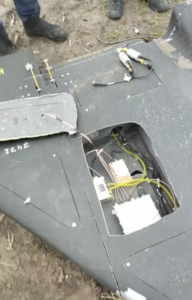
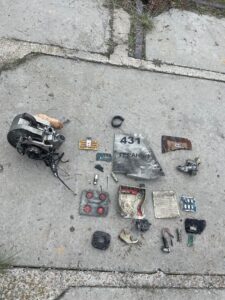
Portions of the munition that make up hydraulic or electrical control sections. In general, more sophisticated munitions, such as guided missiles, will have a greater percentage of these components.




Analyst Note
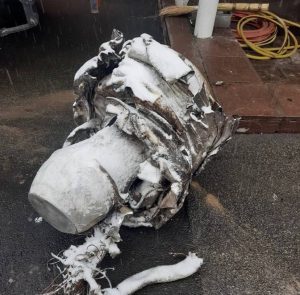
29 January 2025
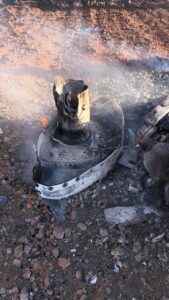
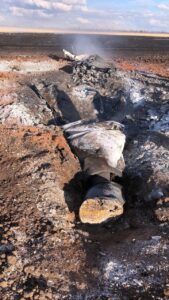
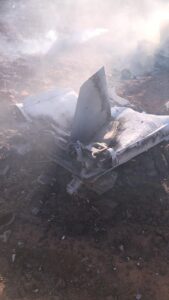
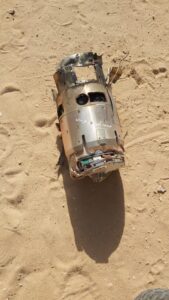
This image shows the functioned rocket motor of an Israeli Carpet rocket. The Carpet uses a fuel-air explosive (FAE) warhead which is designed to function mines and improvised explosive devices (IEDs), clearing a target area for the advance of friendly forces. These rockets are fired from the Carpet rocket launcher, which is loaded with up to 20 rockets and can be fitted to a variety of vehicles. (ARES)
Analyst Note
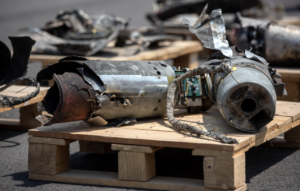
14 January 2025
This image shows the rear portions of two different two different Spike Non-Line-of-Sight (NLOS) missiles, which each include the control section and part of the rocket motor.
The Spike NLOS has been in service with Israel since 1987, and is currently in its sixth generation, or iteration, which comprises an unknown number of variants. At least three different warhead configurations are reported: high explosive fragmentation (HE-FRAG), high explosive anti-tank (HEAT), and a ‘multipurpose’ or anti-structure variant with a penetrating blast and fragmentation warhead. (ARES)

Analyst Note
16 January 2025
This image shows a MK 84 2,000-pound bomb that has had its fuze and baseplate removed in order to access the explosive filler. The fuze, fuze retaining ring, and baseplate can be seen on the white sheet.
The explosive material used to fill the bomb has been removed, possibly to be repurposed in improvised explosive devices or craft-produced munitions. Unexploded ordnance is often ‘harvested’ for these purposes. (ARES)
Analyst Note
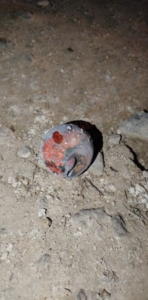
9 January 2025
This image shows the pneumatic accumulator, or ‘accumulator bottle’, of the AGM-114R9X missile. The accumulator bottle stores gas that is used to actuate the fins, adjusting the trajectory of the missile in flight. All AGM-114 Hellfire-series missiles have an accumulator bottle. The accumulator bottle is a fragment that often survives intact, even in Hellfire missile variants that carry an explosive payload. (ARES)
2 Analyst Notes
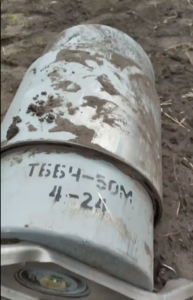
17 December 2024
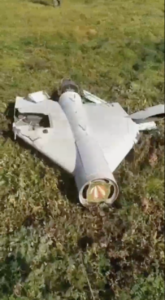
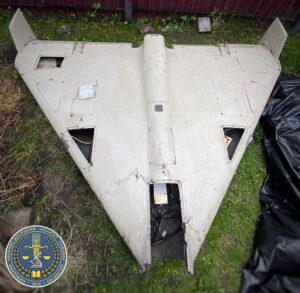
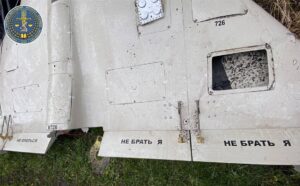
This image shows one of several possible warhead variants that can be carried by the Shahed-136/Geran-2 one-way attack (OWA) UAV. The Shahed-136/Geran-2 (and the smaller Shahed-131/Geran-1) has been documented carrying shaped-charge warheads, penetrator warheads, and multi-function warheads. Due to the various warheads that can be carried by a Shahed/Geran drone, the functional use cannot be determined without the warhead being visible. In this case, the munition was fitted with a TBBCh-50M warhead that contains a thermobaric explosive composition with an additional fragmentation effect. (ARES)
Analyst Note
17 December 2024
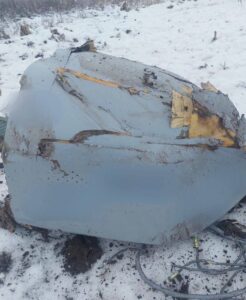
Shahed-131/Geran-1 and Shahed-136/Geran-2 one-way-attack (OWA) UAVs can be fitted with on of a variety of warheads with different functional uses. The specific type carried by each UAV cannot be determined unless the munition has been damaged in such a way as to reveal the warhead, such as in this case. This image shows the cone of the shaped charge, indicating that this Shahed-1/Geran-1 carries a warhead with a penetrating or anti-armour effect. This warhead has been documented with 18 additional liners for enhanced anti-armour effect, and in some cases has been fitted with fragmentation liners for an enhanced anti-personnel effect. (ARES)






Analyst Note
14 October 2024
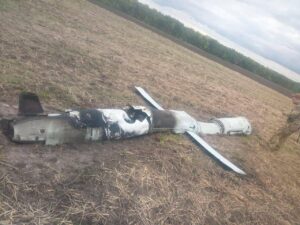
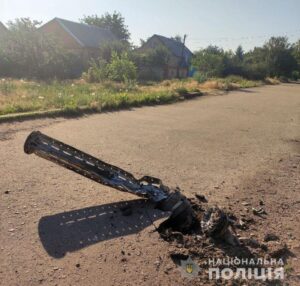
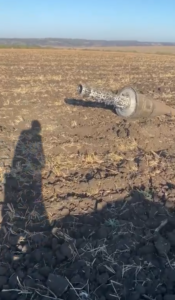
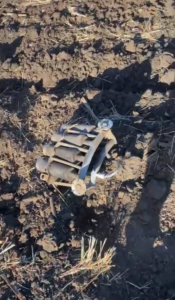
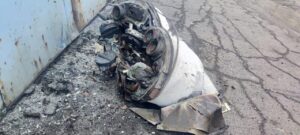
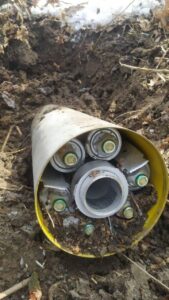
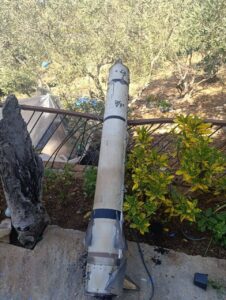
This 9M27K-series surface-to-surface cargo rocket is loaded with either 9N210 or 9N235 high explosive fragmentation (HE-FRAG) submunitions. These models are nearly identical in construction, differing primarily in the nature of the pre-formed fragments they carry. (ARES)
Analyst Note
14 November 2024
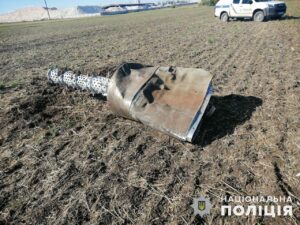
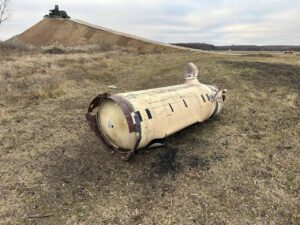
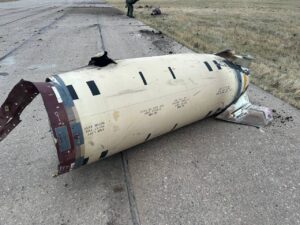
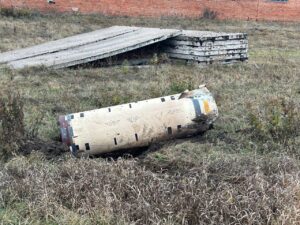
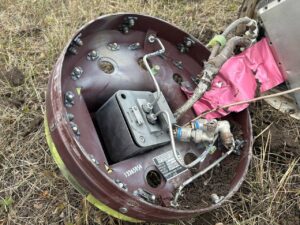
The Stunner surface-to-air missile fired by the David’s Sling air defence system is a two-stage interceptor, meaning that the munition contains two separate rocket motors for launch and propulsion. The first stage, or launch motor, detaches from the munition after a short time, before the second stage, or flight motor, ignites. The second stage motor, visible here, was found relatively intact. (ARES)
Analyst Note
24 January 2025
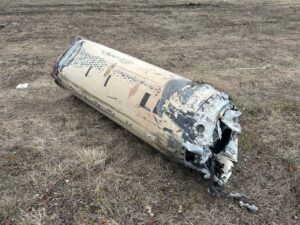
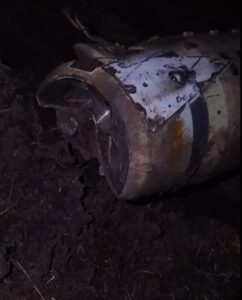
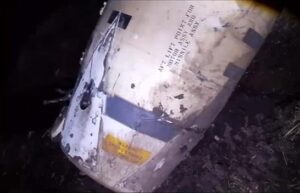
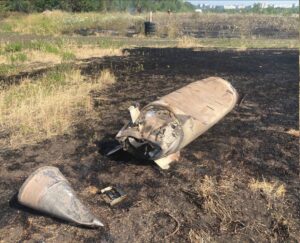
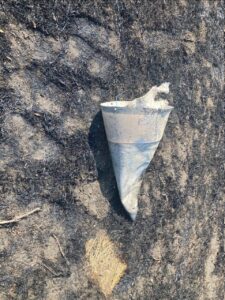
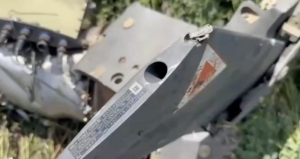
This image shows part of the warhead section of an MGM-140 Army Tactical Missile System (ATACMS) series tactical ballistic missile. This is the top of the warhead section, where it connects to the guidance section. A data plate is visible, giving information about the manufacturer (“Lockheed Martin Vought Systems”) and identifying this specific part (“WARHEAD, GUIDED MISSILE. HIGH EXPLOSIVE”. (ARES)
Analyst Note
25 November 2024
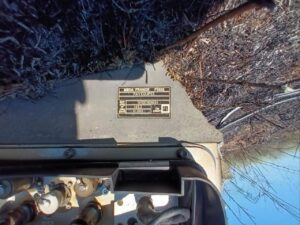
The internal components of large, complex munitions often feature markings to aid in assembly, supply chain oversight, and quality assurance. In this case, a data plate marked with the name of the manufacturer (“MBDA FRANCE”) has been affixed to one of the rear control fins (“EQ, VENTRAL, FIN TIP”) of the missile. The NATO Stock Number (NSN) is also visible. (ARES)

Analyst Note
25 November 2024
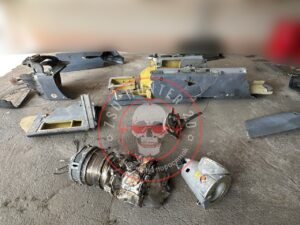
This image shows an actuator from a Storm Shadow-series missile. Actuators are components of guided munitions that are most often used to move control surfaces (e.g., fins and wings), enabling the munition to adjust its course in-flight in response to guidance commands. In this case, the component is fitted with a ‘data plate’ that indicates it was manufactured by MBDA France. (ARES)

Analyst Note
25 November 2024
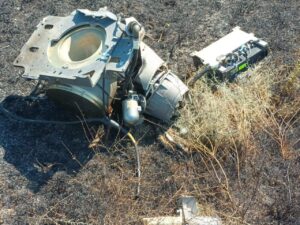
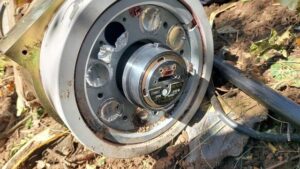
This image shows a Microturbo TRI 60-30 turbojet engine from a Storm Shadow-series air-launched cruise missile. Further remnants of the rear of the missile are also visible, including one of the rear control fins. The Storm Shadow has a range of more than 250 kilometres. (ARES)
Analyst Note
26 November 2024
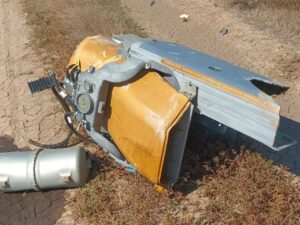
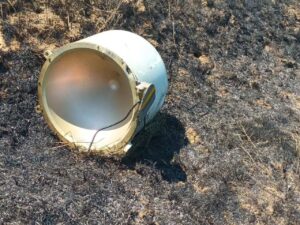
This image shows the rear of the second stage of the penetrator warhead (also called a ‘follow-through’ warhead) of the Bomb Royal Ordnance Augmented Charge (BROACH) multi-stage warhead system present in the Storm Shadow/SCALP-EG missile. The cylindrical object in the centre of the warhead (with a data plate marked “THALES”) is the fuze. (ARES)
Analyst Note
26 November 2024
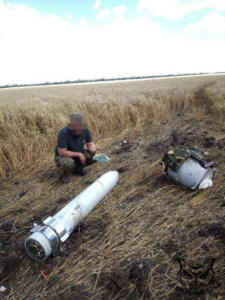
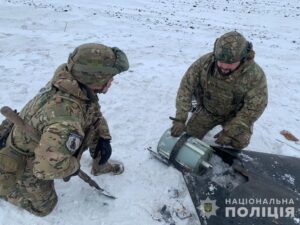
This image shows the first stage of the Bomb Royal Ordnance Augmented Charge (BROACH) multi-stage warhead used by the Storm Shadow/SCALP-EG missile. The BROACH uses a shaped-charge warhead (seen here) as its first stage, to help penetrate hardened targets, whilst the second stage comprises a conventional high explosive penetrator warhead (also called a ‘follow-through’ warhead) (ARES).
Analyst Note
26 November 2024
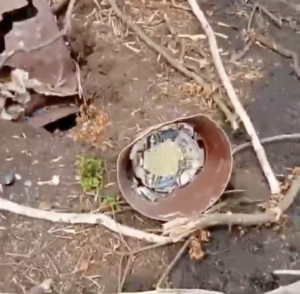
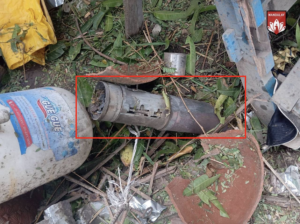
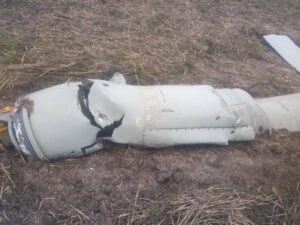
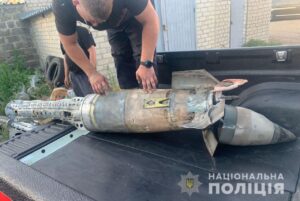
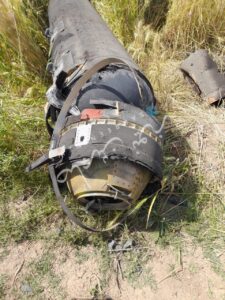
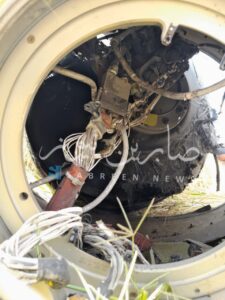
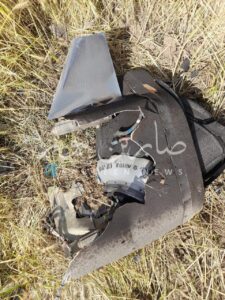
The remnant at left in this image is the second stage, or penetrator warhead, of the Bomb Royal Ordnance Augmented Charge (BROACH) multi-stage warhead as used in the Storm Shadow/SCALP-EG air-launched cruise missile. In this case, it has failed to function as intended. (ARES)




Analyst Note
24 October 2024
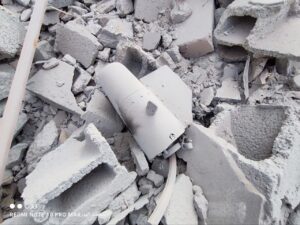
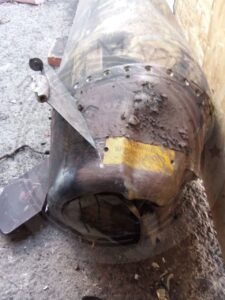
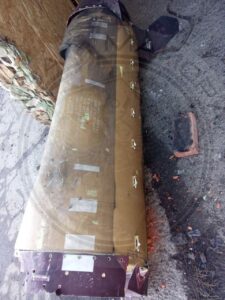
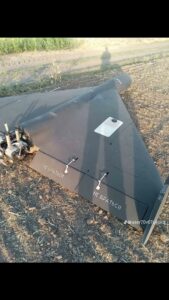
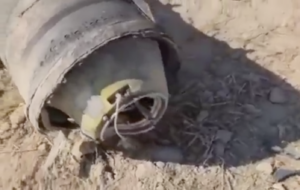
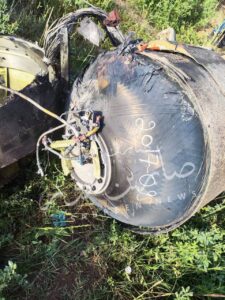
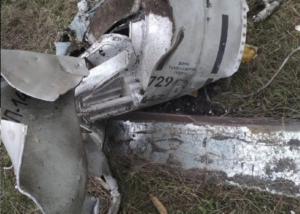
The Blue Sparrow is one of a series of three of air-launched missiles originally designed by Rafael as targets to test ballistic missile defence systems. Blue Sparrow missiles can be fitted with either inert or high explosive (HE) warheads. The recovery of Sparrow-series boosters following a reported Israeli strike on an Iranian air-defence system could suggest that a derivative variant of the Blue Sparrow missile was further developed for engaging surface targets. (ARES)

Analyst Note
14 October 2024
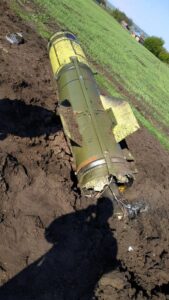
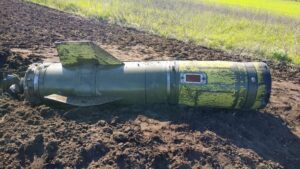
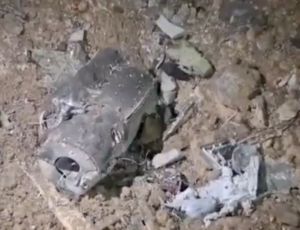
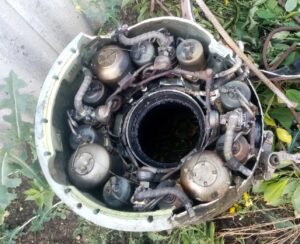
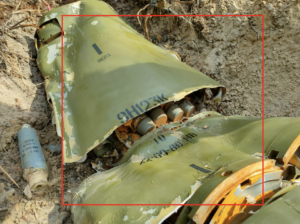
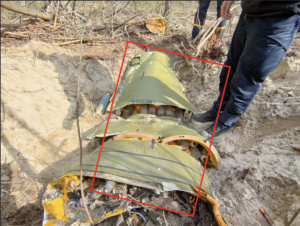
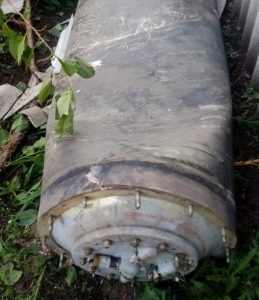
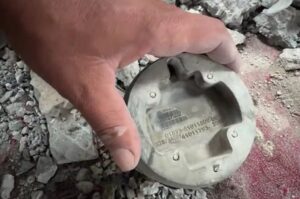
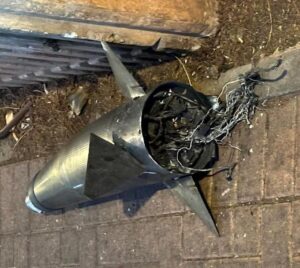
The 9Н123К (9N123K) cargo warhead is delivered by a 9М79К (9M79K) series surface-to-surface guided missile. This cluster munition carries fifty 9Н24 (9N24) high explosive fragmentation (HE-FRAG) submunitions, and is launched from the 9К79 Tochka series of tactical ballistic missile launchers. (ARES)


Analyst Note
21 October 2024
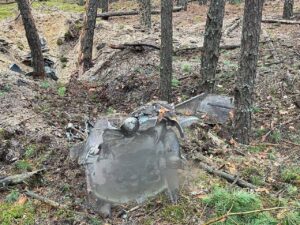
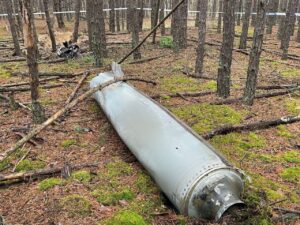
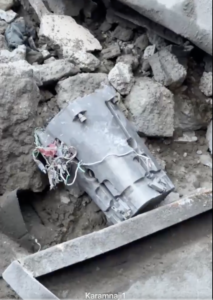
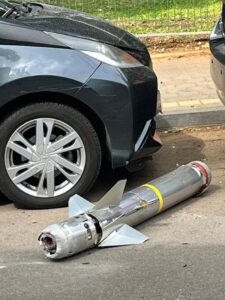
The Stunner missile is the surface-to-air interceptor missile fired by the David’s Sling weapon system to defeat short-range ballistic missiles, cruise missiles, drones, and rockets. The Stunner does not carry an explosive warhead, instead relying on kinetic impact (also called the ‘hit-to-kill’ principle) to intercept ballistic missiles and other targets. (ARES)
Analyst Note
16 October 2024
This image shows most of the forward half of a Tamir surface-to-air missile, including the guidance section and warhead, as fired by launchers in the Iron Dome system. These interceptor missiles are fast and manoeuvrable with a relatively small explosive payload. Their construction and low yield means that remnants are often recovered largely intact. (ARES)
Analyst Note
18 November 2024
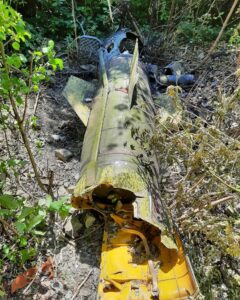
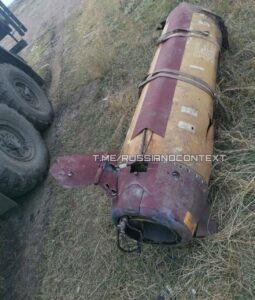
The MGM-140 Army Tactical Missile System (ATACMS) series includes variants with a variety of different payloads, including submunitions and unitary high explosive (HE) warheads. The number of submunitions carried and effective ranges also vary.
Ukraine has reportedly received the MGM-140A and MGM-140B variants, which are externally visually identical and must usually be distinguished by markings. The MGM-140A carries 950 M74 submunitions, with an effective range of 165 km, while the MGM-140B carries only 300 M74 submunitions but has a longer effective range of 300 km. (ARES)