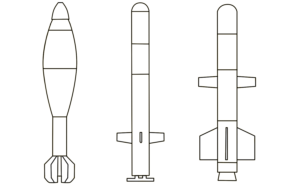
Where the munition is launched from and what it targets
Domain (7)
The type of fins visible on the munition
Fins Characteristic (6)
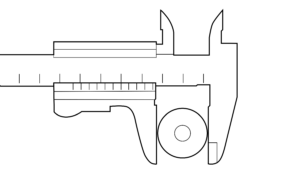
The nominal diameter of a projectile. For most modern munitions, this is expressed in millimetres (e.g. 82 mm mortar projectile), but older artillery gun projectiles may be described in inches.
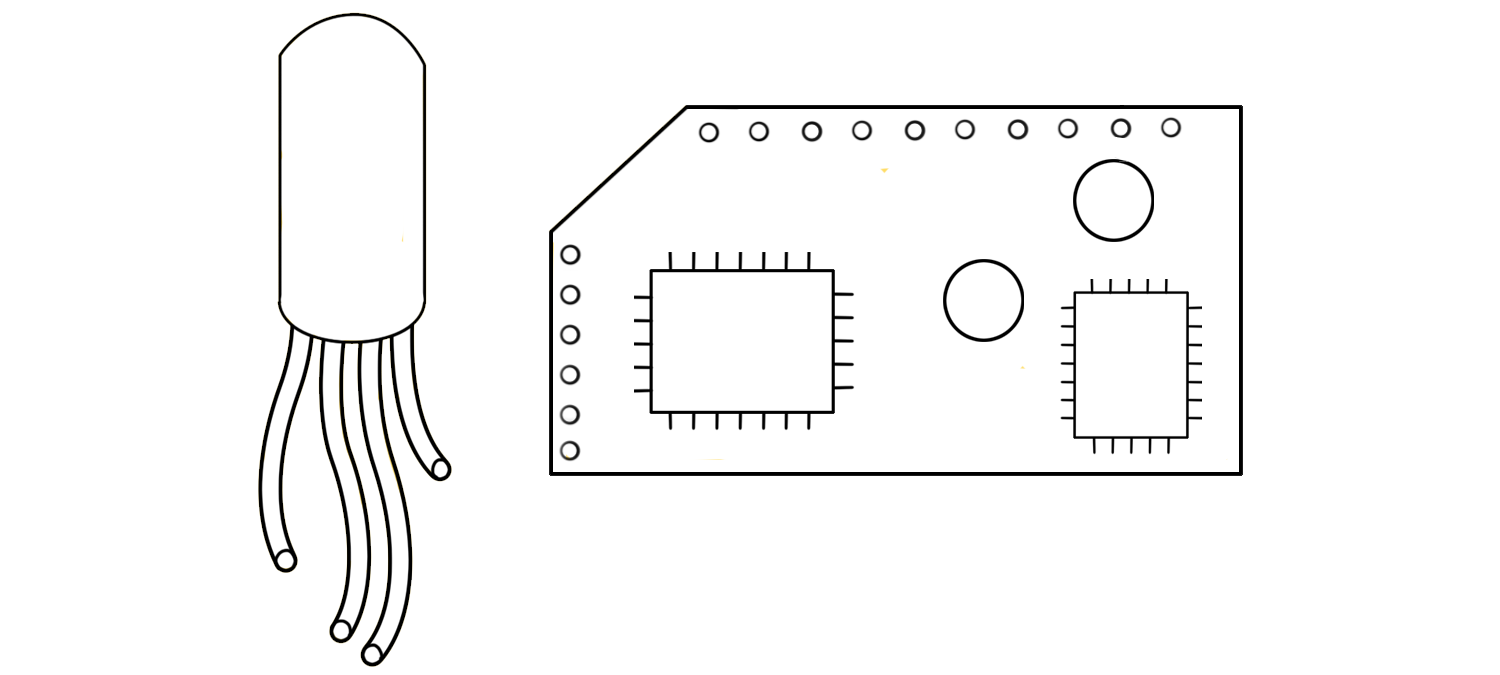
Portions of the munition that make up hydraulic or electrical control sections. In general, more sophisticated munitions, such as guided missiles, will have a greater percentage of these components.
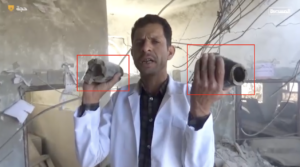
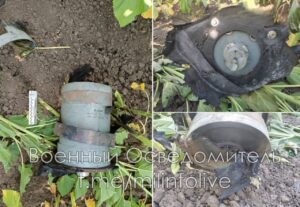
This image shows two Mikholit air-delivered bombs (‘glide bombs’), and four Mikholit warheads. There are at least two different variants of warheads available for the Mikholit glide bomb. The green cylinder on the left is a blast (high explosive) warhead, whilst the other three warheads are shaped charge warheads which incorporate additional fragmentation. Blast warheads of this type have also been seen with red markings, while the shaped charge warheads have been seen with yellow markings. (ARES)
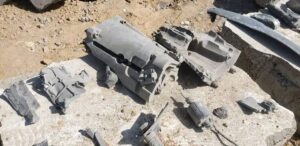
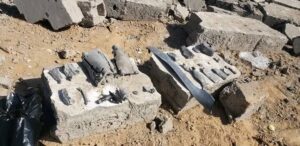
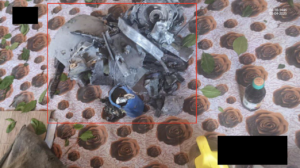
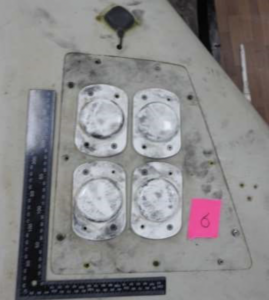
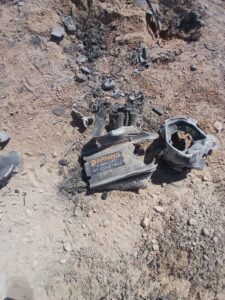
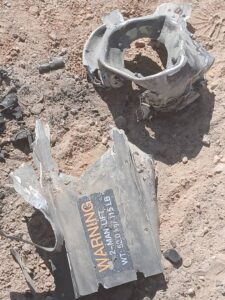
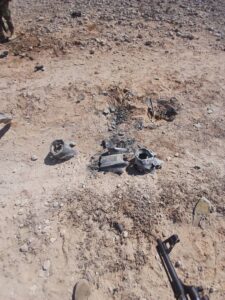
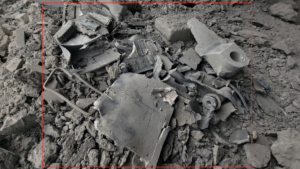
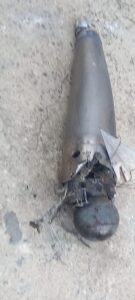
This image shows various remnants from GBU-39 air-delivered bombs, including two fuze wells. Each GBU-39 has only a single fuze well, indicating that this picture shows the remnants of at least two different GBU-39 bombs. (ARES)
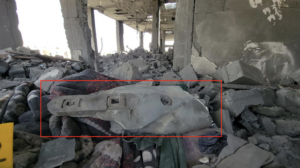
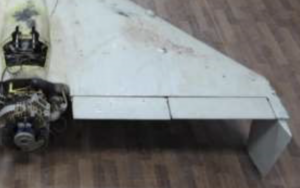
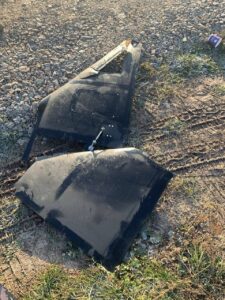
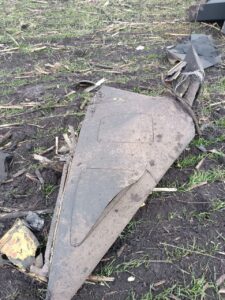
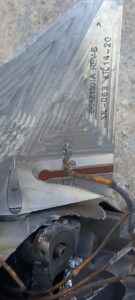
This image and the related entries show fragments of an AGM-84 Standoff Land Attack Missile-Expanded Response (SLAM-ER) series missile. AGM-84 SLAM-ER missiles are AGM-84E Standoff Land Attack Missiles (SLAM) that incorporate certain upgrades, including wings to increase the missile's range. The AGM-84 series include the anti-ship ‘Harpoon’ variants, from which the SLAM and SLAM-ER series are derived. As a result, many remnants will be similar or identical between variants. The wing remnant here is diagnostic, however. (ARES)
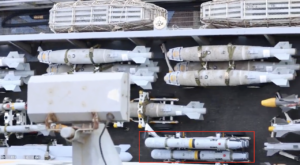
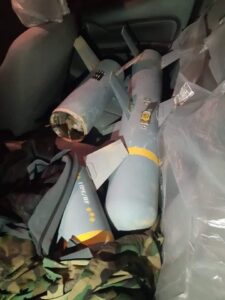
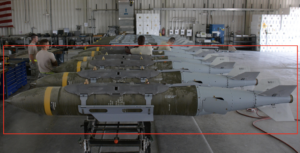
This image shows several GBU-53/B bombs photographed from above while on a munitions transport cart. GBU-53/B bombs are transported and loaded onto the aircraft with the wing assembly on the bottom. When the GBU-53/B is released from the aircraft, the bomb rotates, with the wing assembly side orienting as the top as the bomb glides to its target. (ARES)
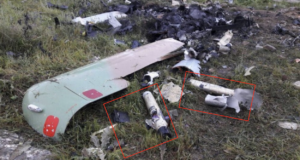
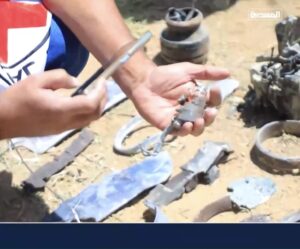
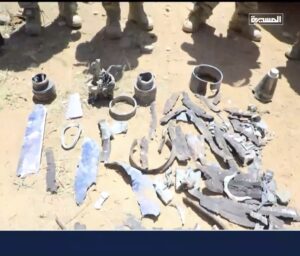
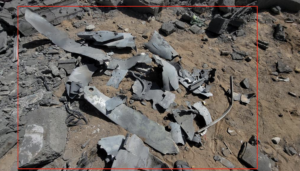
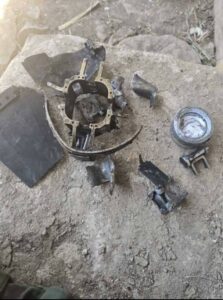
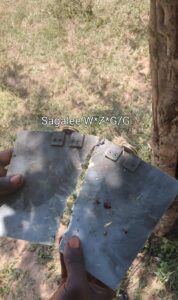
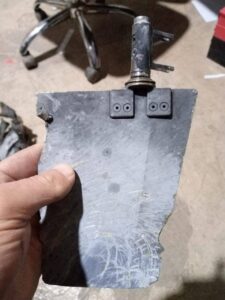
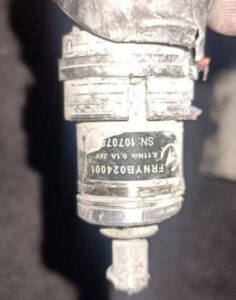
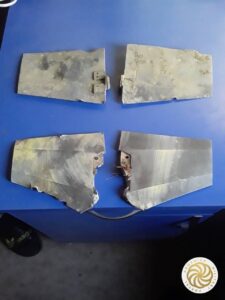
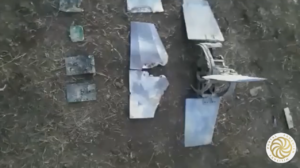
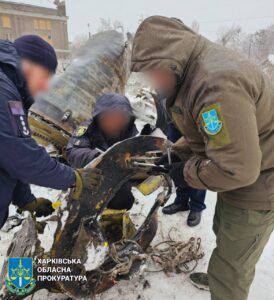
This image shows several remnants of a MAM-L bomb that are typically found after functioning. The actuated fins, as well as the fixed fins, are visible, along with various components of the control section that actuate the fins. The actuated fins attach to the control section, at the rear of the bomb, while the fixed fins attach to the middle of the bomb body. (ARES)
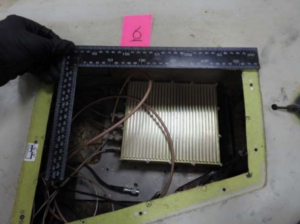
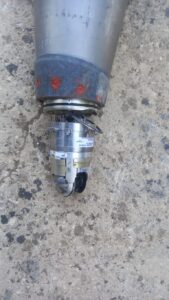
This image shows the section just forward of the Tamir missile’s forward fins and appears to incorporate the base of the active radar seeker (open end) and the laser proximity sensor part of the warhead fuzing system (mirrors/glass & opening in the casing). While the Tamir has been reported to physically impact some targets, the proximity fuze is designed to closely pass by the target, then detonate the high explosive fragmentation warhead thereby destroying the target. ‘Tamir’ is a Hebrew acronym for Til Meyaret, or ‘interceptor missile’. (ARES)
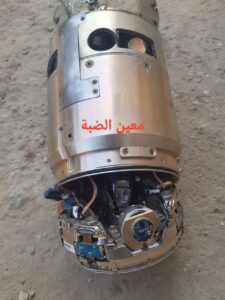
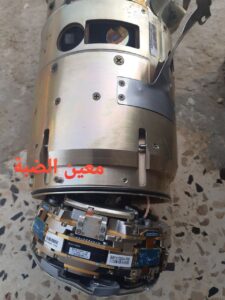
Pictured is the Stunner’s dual electro-optical/infrared nose sensors which, while in flight, identify and avoid decoys; identify the target; and guides the kinetic warhead on the final phase of its journey into the target. The sensors are housed in the unique ‘dolphin head’-shape of the missile, featuring a clear tip. The electro-optical sensor acquires the target during daylight operations, while the infrared sensor acquires the target in low-light conditions. The ground-based Battle Management and Control (BMC) system identifies the target’s flight path, calculates the point of interception, and transmits this information to the Stunner by encrypted datalink. The missiles utilise a vertical launch system to allow for a complete 360° response area. (ARES)
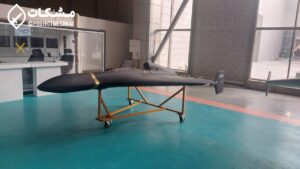
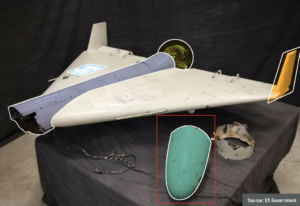
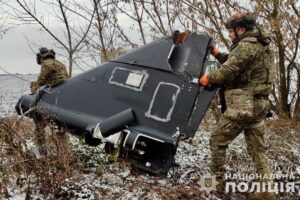
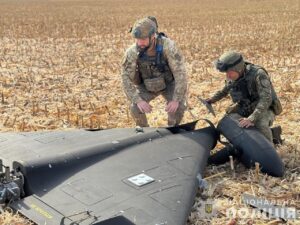
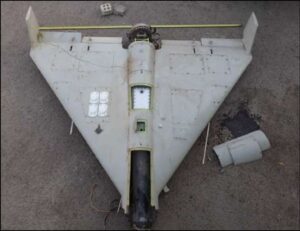
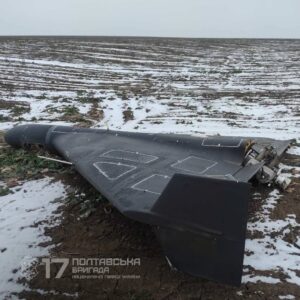
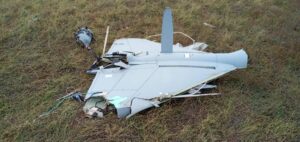
This image shows a relatively intact Shahed-131 one-way-attack (OWA) UAV with various components highlighted, including the GPS antenna array (light blue), fuselage (light purple), engine (yellow), wing stabiliser (orange), and nose cone (cyan, inside the red box). The nose cone attaches to the front of the fuselage and covers the warhead. (ARES)
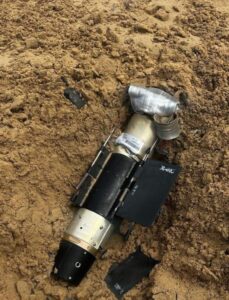
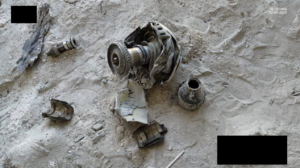
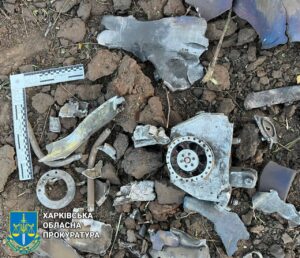
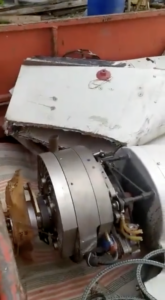
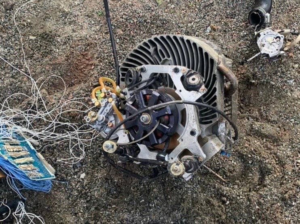
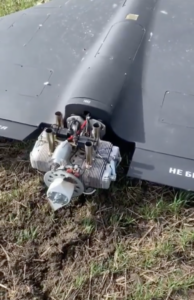
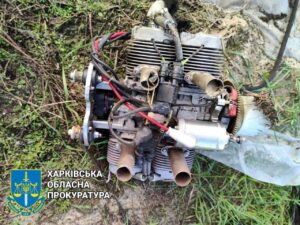
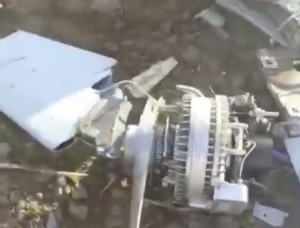
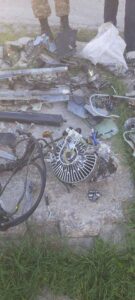
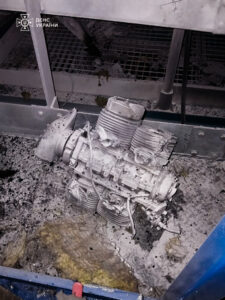
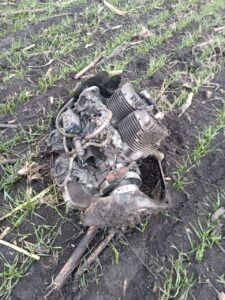
These images show a damaged Serat-01 engine which powers the Shahed-131 drone after its rocket-assisted launch. The Serat-01 is a copy of the MDR 208 engine, and is noticeably smaller than the MD550 which powers the larger Shahed-136. (ARES)
This image shows the BSF-50, one of several warheads developed by Russia for the Shahed-136/Geran-2 to replace the original Shahed-136 warhead designed by Iran. The BSF-50 is a high explosive warhead with a fragmentation effect. (ARES)
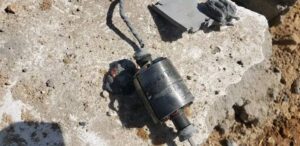
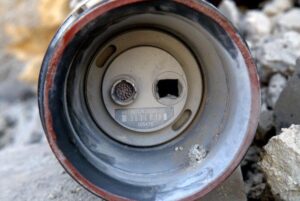
This image shows the fuzewell in the base of the warhead of a GBU-39 air-delivered bomb. The innermost cylinder is the electronic fuze; this is held in place by the closure ring. (ARES)
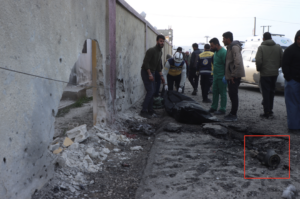
Depicted here is the MD-550 motor of a Shahed-136/Geran-2. This image was presented by Ukrainian President Zelenskyy as a fragment of the drone that reportedly hit the Chernobyl Nuclear Power Plant’s New Safe Confinement shelter. (ARES)