



301–400 of 1,163
Current Filter
Fragmentation Munition
Fragmentation munitions use the detonation of an explosive to propel small fragments of material (‘fragmentation’) from the body of the munition at high velocity. A fragmentation munition typically affects a wider area than a simple blast munition of the same size, and is effective against personnel and unarmoured vehicles. Fragmentation is the primary mechanism of lethality for many common explosive munitions, but these munitions almost invariably also affect their environment through blast and other mechanisms (e.g., a high explosive fragmentation munition).

Analyst Note
9 January 2026
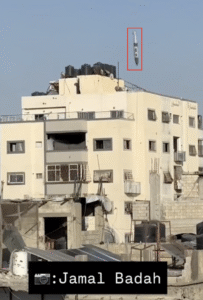
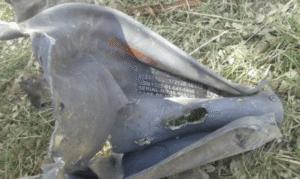
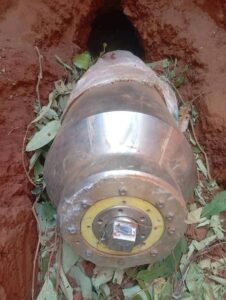
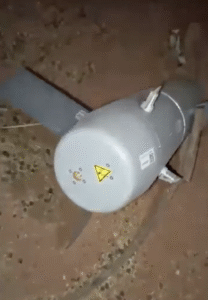
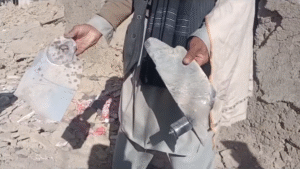
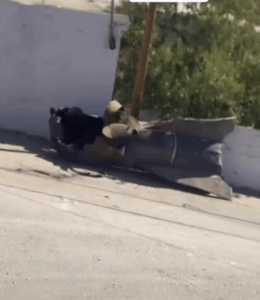
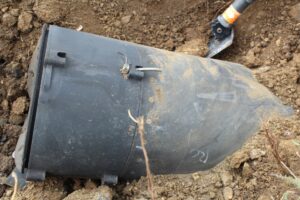
This image shows a WDU-36 series warhead as used in the RGM-/UGM-109 Tomahawk series of cruise missiles. The warhead design suggests this is likely a WDU-36/B from an RGM-/UGM-109E missile. The RGM-/UGM-109E Tomahawk Land Attack Missile (also known as TLAM Block IV) is an improved version of the BGM-109C TLAM-C. In cases where the missile strikes a building but does not function as intended, the dense, comparatively heavy warhead is often projected forwards of the point of impact. (ARES)

Analyst Note
9 January 2026
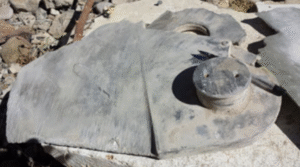
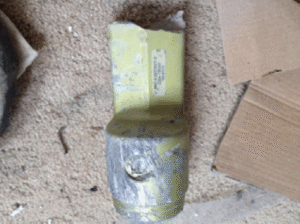
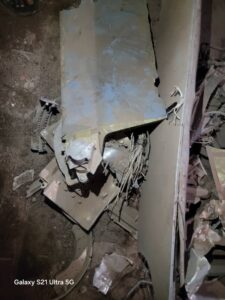
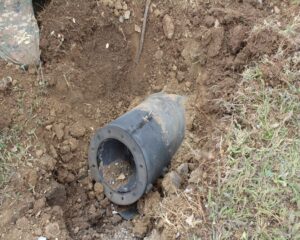
This image shows a WDU-36/B warhead as used in the RGM-/UGM-109 Tomahawk series of missiles. The WDU-36/B is the improved, lighter version of the previous WDU-25/B warhead. It is reported that the titanium-cased WDU-36/B weighs around 310 kg and carries a main charge of approximately 120 kg of PBXN-107 high explosives. (ARES)


Analyst Note
31 December 2025
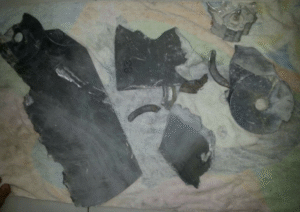
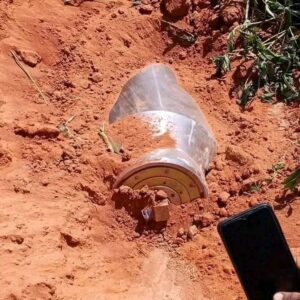
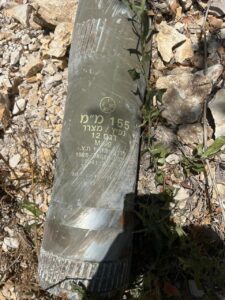
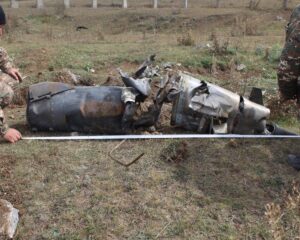
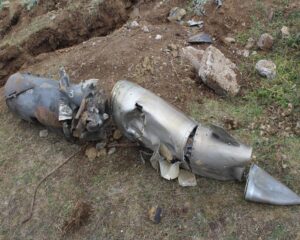
This image depicts remnants from a M999 (‘Barak Eitan’) 155 mm cluster munition. Reports indicate that the M999 artillery projectile carries nine M99 Dual-Purpose Improved Conventional Munition (DPICM) submunitions. (ARES)
Analyst Note
28 November 2025
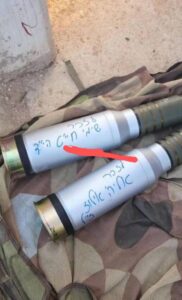
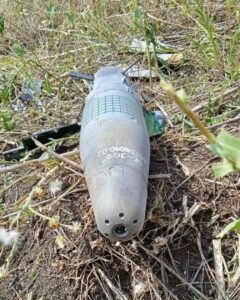
Markings on the forward section of this small, air-delivered bomb suggest that the designation is ‘BK-3OF’ (“БК-3ОФ”). The physical features of the munition suggest that it is laser-guided and likely carries a high explosive fragmentation (HE-FRAG) payload. This image shows the only known example, which was allegedly captured by Russian forces in conjunction with a Ukrainian UAV. (ARES)
Analyst Note
9 January 2026
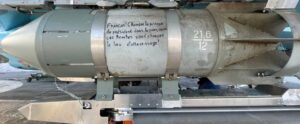
This Russian air-delivered cluster bomb is marked with a threatening message directed at the French people: «Français! Changer la politique du président dans le pays, sinon ces bombes vont changer le lieu d'atterrissage!» (“French people! Change the president’s policy in the country, otherwise these bombs will change their landing site!”). (ARES)



Analyst Note
28 November 2025
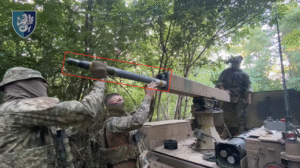
This image shows a Hydra-70 rocket fitted with an Advanced Precision Kill Weapon System (APKWS) guidance kit, converting it into a guided missile. In this case, the missile features an M151 high explosive (HE) warhead fitted with either an M427 or M423 point-detonating (PD) fuze. The rocket motor model cannot be determined from this source alone, but it is most likely to be a MK 66-series motor. The launcher appears to be a LAND-LGR4 model produced by Arnold Defense. (ARES)
Analyst Note
28 November 2025
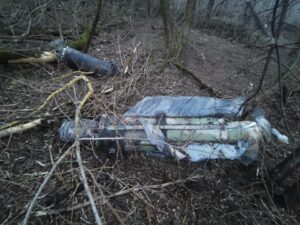
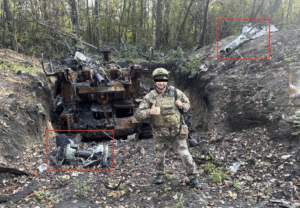
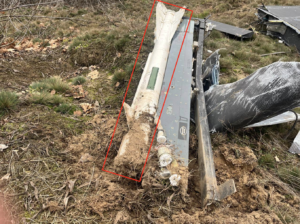
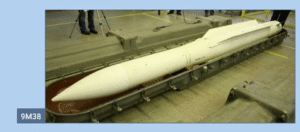
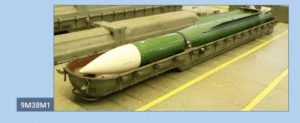
Positive identification of this surface-to-air missile cannot be made based on the imagery in the source. The items highlighted in this image are most likely the remains of either a 9M38- or 9M317-series missile, based on fin construction and their size relative to the individual posing in the foreground. These two missiles are close in design and function, and are predominantly fired from the Buk series of SAM systems. (ARES)
Analyst Note
8 December 2025
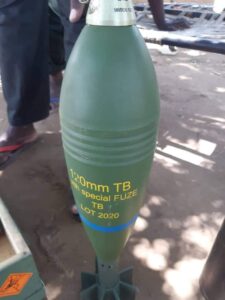
This image shows a ‘120mm TB’ air-delivered bomb that has been adapted from a 120 mm mortar projectile. It is claimed by the manufacturer that this thermobaric munition offers improved fragmentation and blast effects when compared with standard (high explosive) 120 mm mortar projectiles. The “with special FUZE” marking refers to the use of the UT M18 impact fuze. Note that this munition cannot be fired from a mortar, despite the munition body showing features consistent with this use (e.g., gas-check bands). Instead of a standard mortar projectile tailboom which would contain an ignition cartridge and be perforated by flash holes, this munition is fitted with a simplified, plastic tailfin assembly that is designed to stabilise the munition as it falls after being released by a UAV. (ARES)
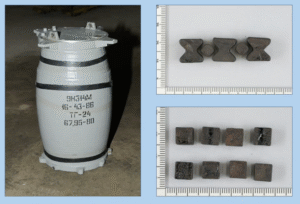
Analyst Note
28 November 2025
The 9N314M warhead shown here can be used in both 9M38- and 9M317-series missiles. In this particular case, according to the source, it was taken from a 9M38M1 missile. (ARES)
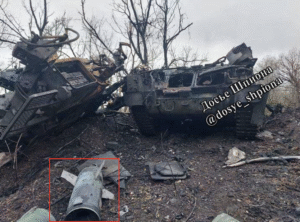
Analyst Note
28 November 2025
Although the source claims that this image shows a Buk-M3 surface-to-air missile system, this imagery is not sufficient to determine whether the remnants highlighted are from a 9M38-or 9M317-series guided missile. (ARES)
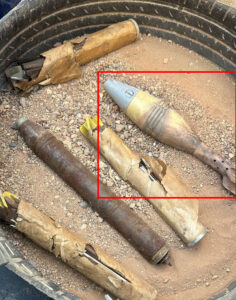
Analyst Note
28 November 2025
The physical features of this munition indicate that it is most likely an Iranian 60 mm ‘high explosive, long-range’ (“H.E. L.R.”) mortar projectile fitted with an AZ111A2 impact fuze. However, positive identification cannot be made based on the source imagery. (ARES)
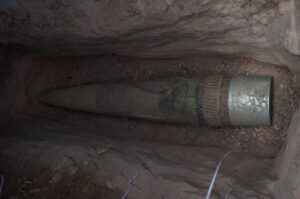
Analyst Note
28 November 2025
The munition depicted in this image is a type of aerodynamically optimised artillery projectile, in this case 155 mm in calibre, known as an ‘Extended Range Full-Bore (ERFB)’ design. This example is a cargo projectile fitted with a base-bleed (BB) base unit to further extend its range. This configuration is designated NR269, and reportedly contains 56 M46 dual-purpose (anti-personnel/anti-armour) submunitions. (ARES)
Analyst Note
28 November 2025
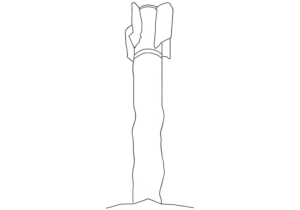
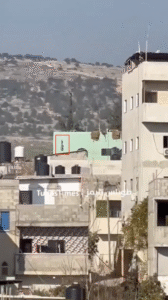
In this case, the tentative identification of this munition is possible based on an analysis of its silhouette, particularly the distinctive detachable warhead compartment that can be seen hanging from the base of the munition's body. In many cases, such an identification technique would not be possible to apply with confidence. (ARES)
Analyst Note
2 December 2025
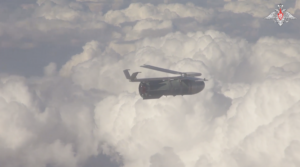
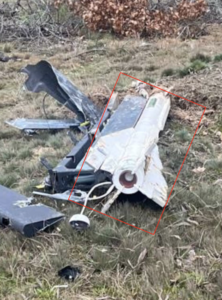
This image represents the first documented instance of a Shahed-series UAV carrying an R-60 air-to-air missile. This appears to add a new capability to the Shahed, enabling it to target enemy aircraft. Arming UAVs to counter interception and engage alternative targets is an emergent trend. Previously, unmanned surface vessels (USVs) employed by the Ukrainian Armed Forces have been observed carrying R-73 air-to-air missiles, for example. (ARES)
Analyst Note
28 November 2025
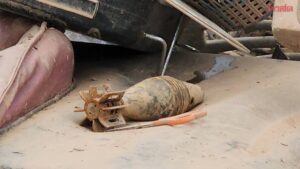
This image shows an M49-series 60 mm high explosive (HE) mortar projectile, or a copy thereof. Due to the state of the round the available imagery, the specific model or variant cannot be determined. The fuze is also not clearly visible. Most M49 mortar projectiles use an M525, M717, M935, or similar point-detonating (PD) fuze. (ARES)
Analyst Note
28 November 2025
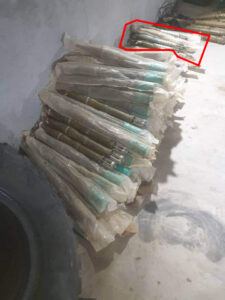
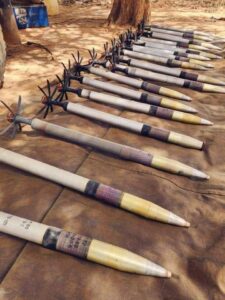
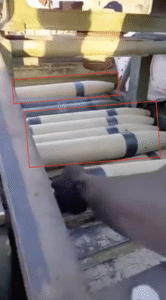
This image shows several 107 mm rockets of the Type 63 pattern. Whilst developed by China, munitions of this design are now produced by several countries around the world, including Iran, North Korea, and Sudan. The state-owned Military Industry Corporation (MIC) of Sudan produces a copy of the Type 63 known as the TAKA-01, TAKA-1, or TAKA-107. (ARES)
2 Analyst Notes
28 November 2025
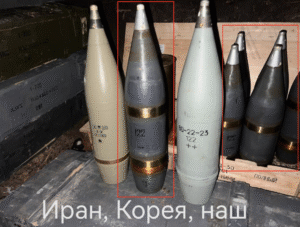
This image shows 122 mm high explosive (HE) artillery gun projectiles manufactured in three different states, L–R: Iran, North Korea, and Russia. Whilst these examples are distinct from one another—particularly in coloration, as well as the presence or absence of paint over the driving band and bourrelet—this is not always the case, and a combination of physical features and markings should be assessed before identification is made. (ARES)
2 Analyst Notes
25 November 2025
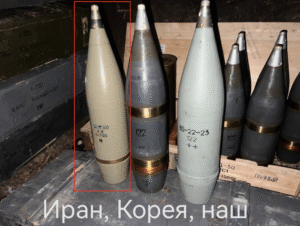
This image shows 122 mm high explosive (HE) artillery gun projectiles manufactured in three different states, L–R: Iran, North Korea, and Russia. Whilst these examples are distinct from one another—particularly in coloration, as well as the presence or absence of paint over the driving band and bourrelet—this is not always the case, and a combination of physical features and markings should be assessed before identification is made. (ARES)

Analyst Note
15 September 2025
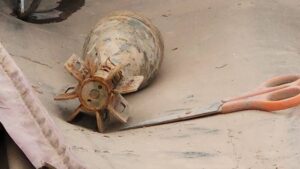
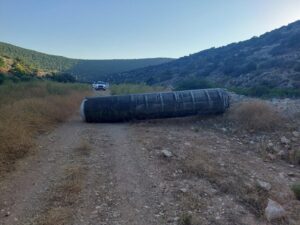
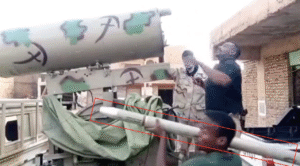
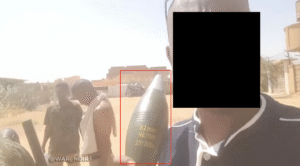
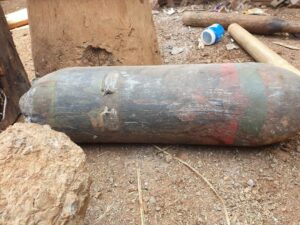
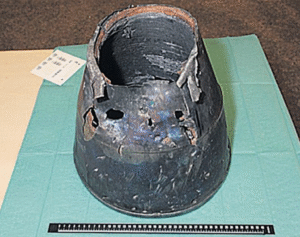
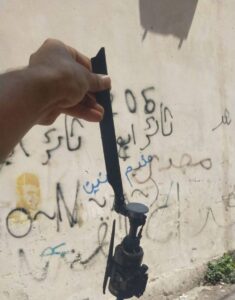
This image shows the damaged rocket motor section of a ballistic missile that was fired by the Houthis in Yemen towards Israel and likely intercepted. The Houthis employ ballistic missiles that are supplied by Iran, and given different names. In Houthi service, the Iranian Kheibar Shekan missile is known as the Hatem-2. (ARES)




Analyst Note
15 September 2025
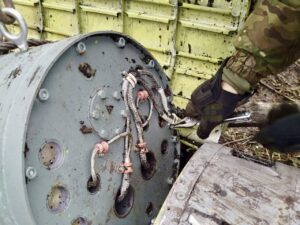
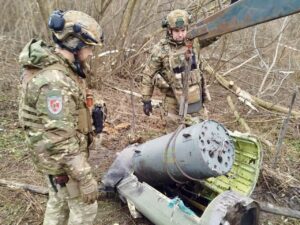
This image shows the second warhead present in some variants of the Kh-101 cruise missile. The inclusion of this additional warhead requires a smaller fuel tank in the missile, offering increased explosive weight in exchange for a reduced maximum range. (ARES)
Analyst Note
19 September 2025
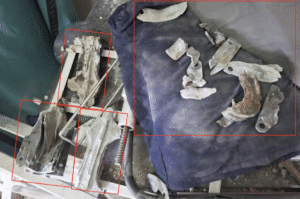
This image shows parts from at least three fin-stabilised tank gun projectiles, including the tail assemblies and several folding fins. These are components that often survive relatively intact following the functioning of such munitions. The specific morphology of the remnants pictured is consistent with Israeli 120 mm tank gun projectiles. Contextual information suggests that the remnants are most likely to be from M339 high explosive ‘multi-purpose’ projectiles. (ARES)