


401–500 of 759
Current Filter
Ukraine
A large eastern European country that faced a full-scale Russian invasion in February 2022. Since then the Ukrainian military has fought a major war with Russian forces, with tens of thousands believed to have been killed.
Current Filter
Russia
A large country in Eastern Europe and North Asia. The Russian military began a full-scale invasion of Ukraine in 2022 and has since been engaged in heavy combat with the Ukrainian Armed Forces. Russia was also directly involved in Syria between 2015 and 2024, militarily aiding the country's former President Bashar al-Assad.

Analyst Note
24 October 2024
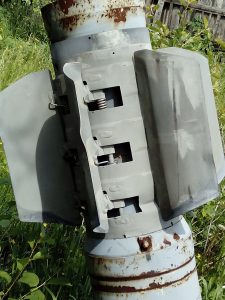
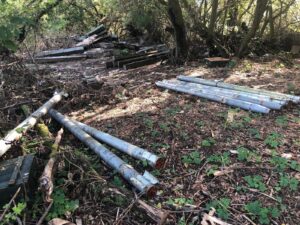
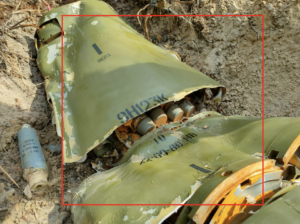
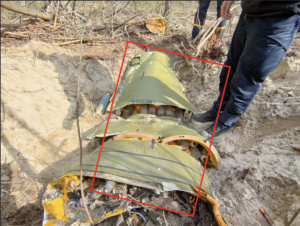
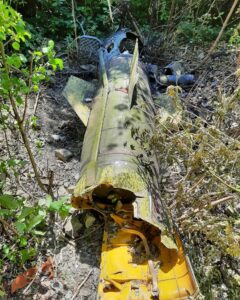
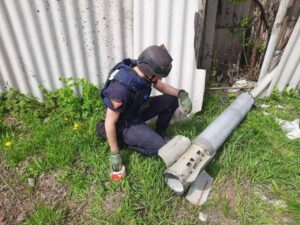
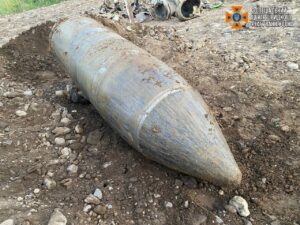
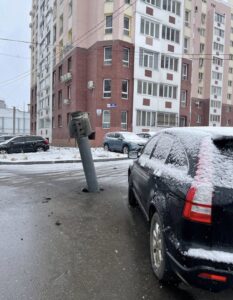
The 9M22S is essentially the ‘full-sized’ version of the shorter 9M28S surface-to-surface rocket previously recorded in the OSMP. Both rockets carry the same 9N510 incendiary warhead, but differ in the length of their rocket motor sections, and thus range. (ARES)
Analyst Note
14 October 2024
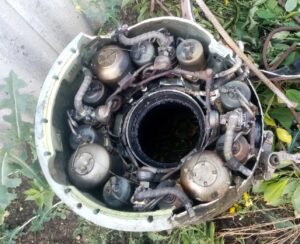
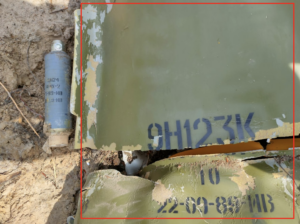
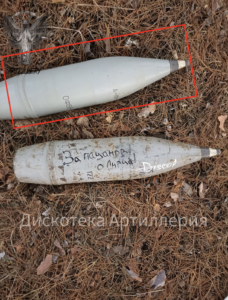
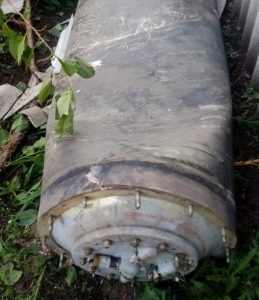
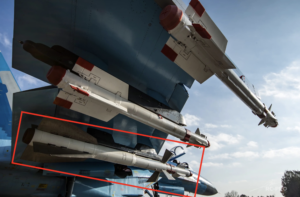
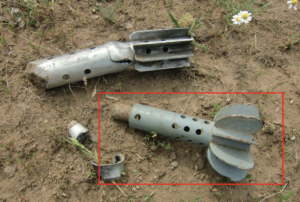
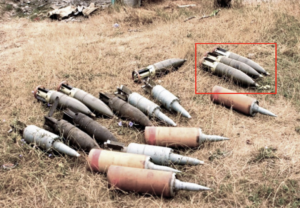
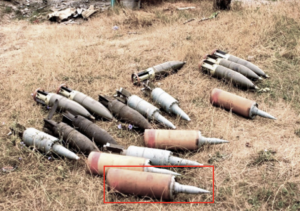
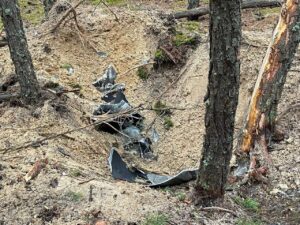
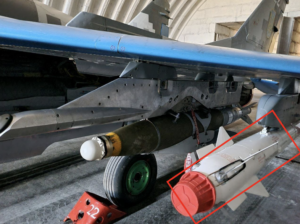
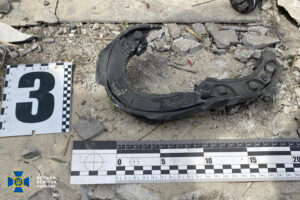
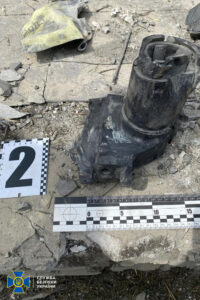
The 9Н123К (9N123K) cargo warhead is delivered by a 9М79К (9M79K) series surface-to-surface guided missile. This cluster munition carries fifty 9Н24 (9N24) high explosive fragmentation (HE-FRAG) submunitions, and is launched from the 9К79 Tochka series of tactical ballistic missile launchers. (ARES)
Analyst Note
14 October 2024
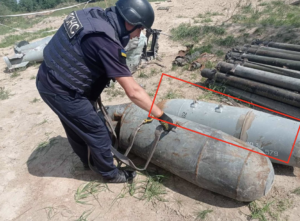
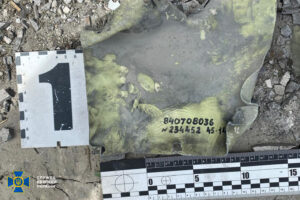
A 9N24 submunition is visible to the left of the 9N123K warhead in this image. This high explosive fragmentation (HE-FRAG) submunition is marked to indicate it was produced in 1989 and filled with A-IX-2 explosive composition. (ARES)

Analyst Note
14 October 2024
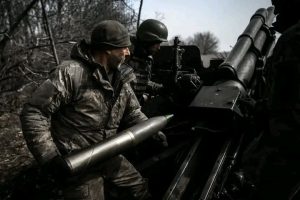
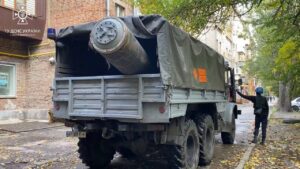
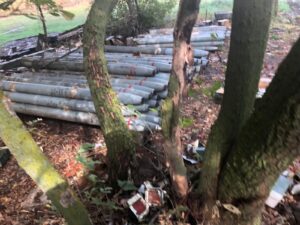
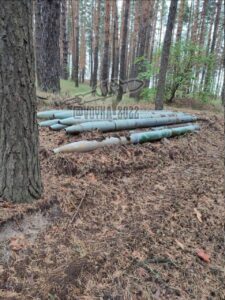
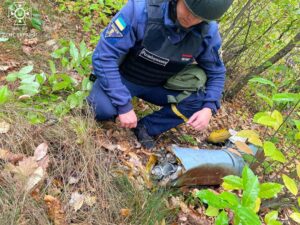
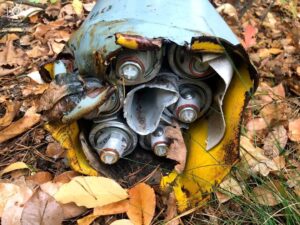
The 9M28S surface-to-surface unguided rocket carries the 9N510 warhead, which disperses burning thermite-type incendiary elements over a wide area upon functioning. This munition is designed to start fires in target areas vulnerable to incendiary attack, including forests, ammunition dumps, and fuel storage sites. (ARES)

Analyst Note
14 October 2024
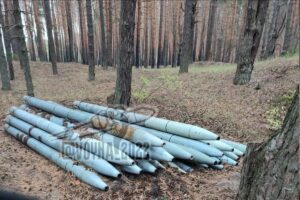
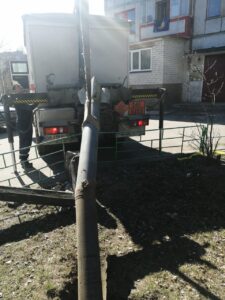
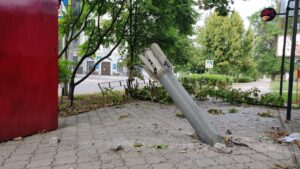
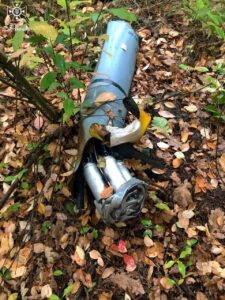
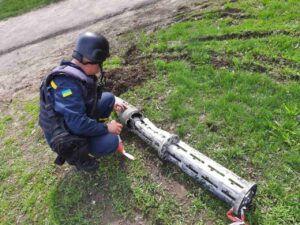
This 9M27K-series surface-to-surface cargo rocket is carrying a payload of 9N210 or 9N235 high explosive fragmentation (HE-FRAG) submunitions. These submunitions are difficult to distinguish unless their external markings are visible, or a close examination is made. (ARES)
2 Analyst Notes
2 October 2024
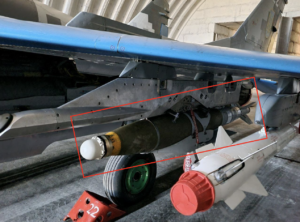
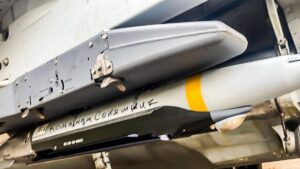
The JDAM-ER in this photograph is affixed to an unusual pylon thought to be of Ukrainian design, which allows the Western munition to be carried by the Soviet-designed Mikoyan MiG-29 and Sukhoi Su-27 fighter aircraft in service with the Ukrainian Air Force (a MiG-29 is pictured here). (ARES)
Analyst Note
18 November 2024
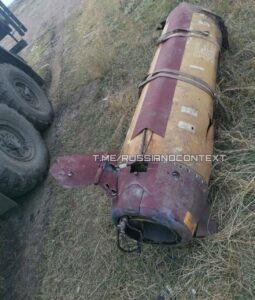
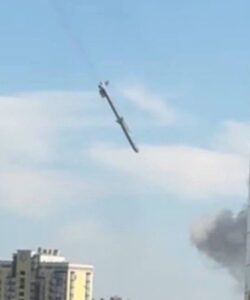
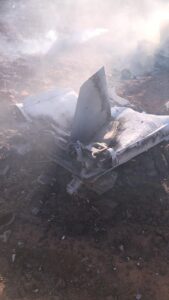
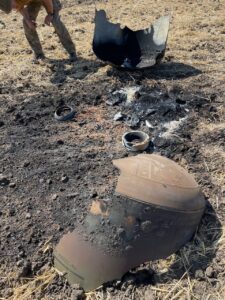
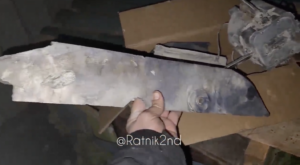
The MGM-140 Army Tactical Missile System (ATACMS) series includes variants with a variety of different payloads, including submunitions and unitary high explosive (HE) warheads. The number of submunitions carried and effective ranges also vary.
Ukraine has reportedly received the MGM-140A and MGM-140B variants, which are externally visually identical and must usually be distinguished by markings. The MGM-140A carries 950 M74 submunitions, with an effective range of 165 km, while the MGM-140B carries only 300 M74 submunitions but has a longer effective range of 300 km. (ARES)
Analyst Note
11 September 2024
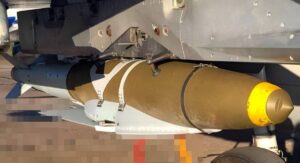
The Joint Direct Attack Munition – Extended Range (JDAM-ER) marries the JDAM guidance kit to a ‘glide bomb’ wing kit developed by the Australian Defence Force, offering a munition with at least three times the range of a standard GBU-38 500-pound-class guided aerial bomb. (ARES)
Analyst Note
11 September 2024
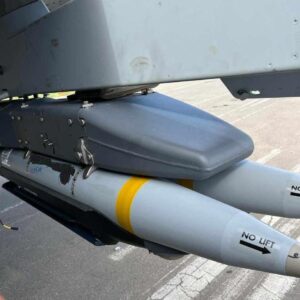
In this image, two GBU-39 Small Diameter Bombs are attached to a BRU-61/A bomb rack. The Ukrainian Air Force adapted this American-designed bomb rack to fit their Soviet-designed Mikoyan MiG-29 fighter aircraft. The BRU-61/A can carry up to four GBU-39 air-delivered bombs. (ARES)


Analyst Note
29 July 2024
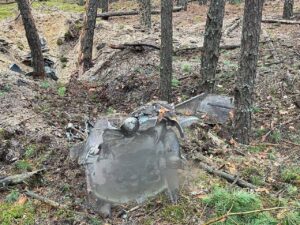
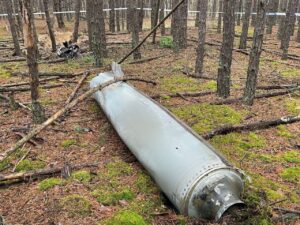
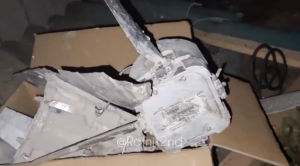
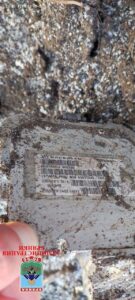
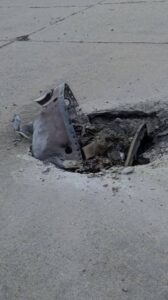
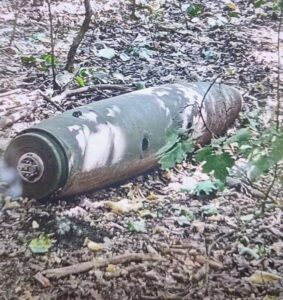
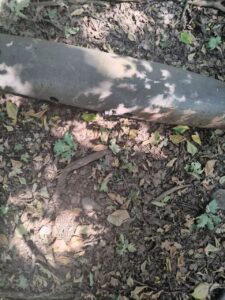
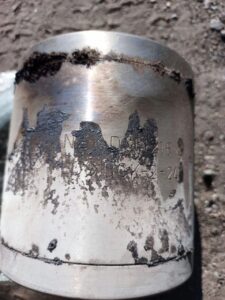
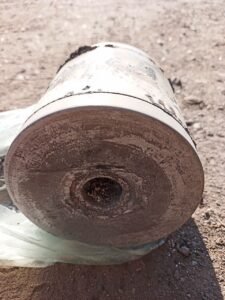
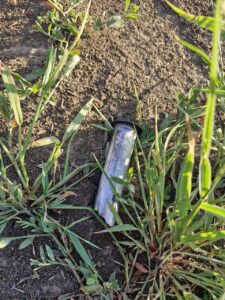
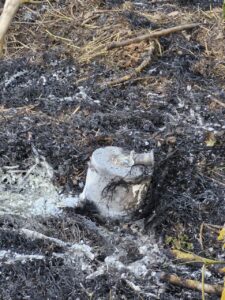
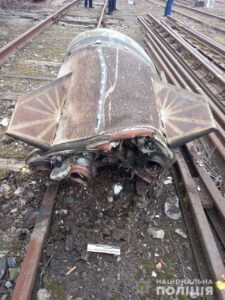
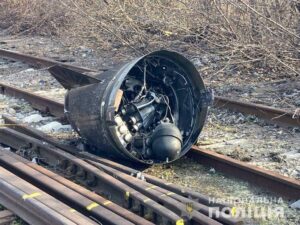
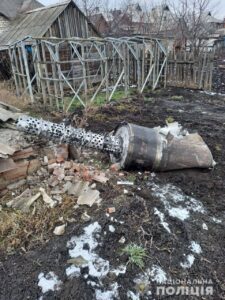
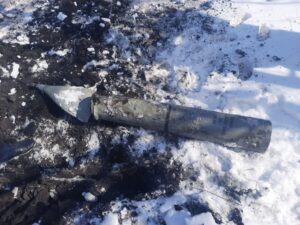
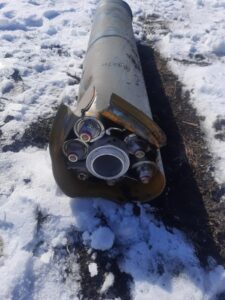
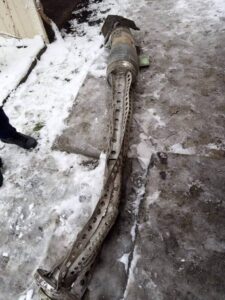
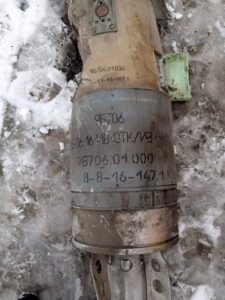
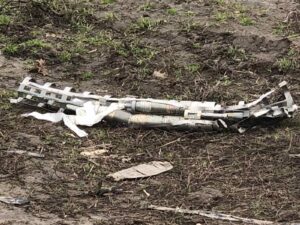
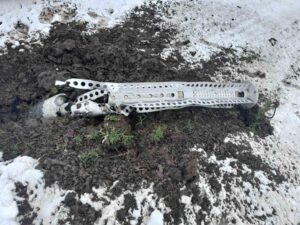
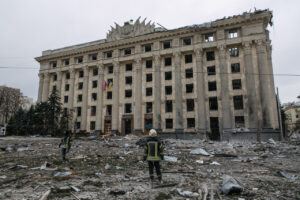
The remnants shown in these linked images have been falsely identified in Russian sources as chemical munitions. This image clearly exhibits the marking “NBK DM 1216”—the ‘NBK’ standing for the German Nebelkörper (‘smoke element’)—identifying this as one of four DM 1216 hexachloroethane/zinc (HC) smoke elements dispensed by the German DM 105 155 mm artillery gun projectile. Video of the incident shows all four elements being ejected from the base of the projectile in flight. (ARES)
Collection
Ukraine and Russia 2022–2026
On February 24, 2022, Russia launched a full-scale invasion of Ukraine, involving military forces aimed at capturing most major cities, including the capital, Kyiv. It became the largest conflict in Europe since World War II, and about a quarter of Ukraine’s territory came under Russian control. But Russian troops were eventually pushed back from Kyiv. […]
Analyst Note
30 May 2024
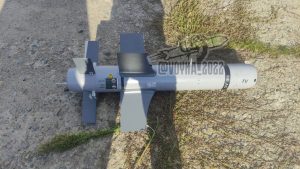
The various Iranian Qaem-series guided air-delivered bombs can be difficult to differentiate from one another. In this case, the wing (forward fin) assembly distinguishes this Qaem-5 from the visually similar Qaem-1. Note also that the name 'Qaem' has applied by Iran to other, unrelated munitions. (ARES)

Analyst Note
3 June 2024
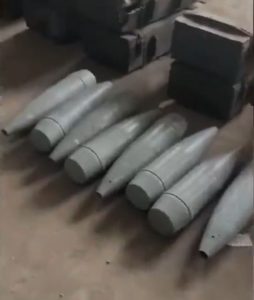
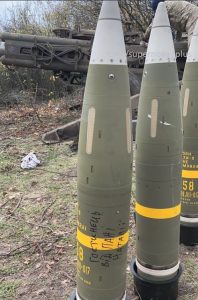
Once fired, four canards will deploy from the forward (ogival) section of these M982 Excalibur guided artillery projectiles. The narrow-shaped ports through which the canards deploy are a good indicator of a guided or extended-range artillery projectile. (ARES)

Analyst Note
30 May 2024
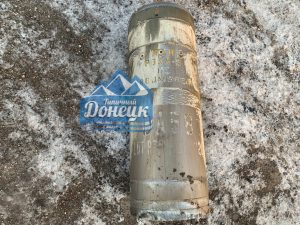
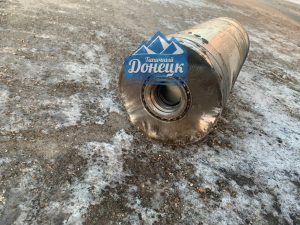
Many guided (or otherwise complex) munitions like this one are marked with additional information on individual assemblies or components. This can include information on sub-contractors that produced or integrated specific parts of a munition. (ARES)

Analyst Note
30 May 2024
In this image, a Ukrainian soldier is using an M1155 Enhanced Portable Inductive Artillery Fuze Setter (EPIAFS) to input the target coordinates and set functioning parameters for an M982 Excalibur guided artillery projectile. (ARES)
Analyst Note
31 May 2024
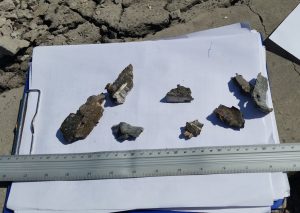
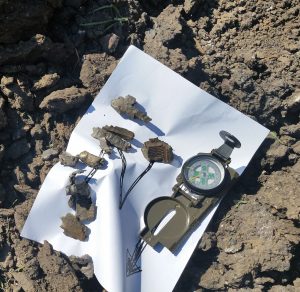
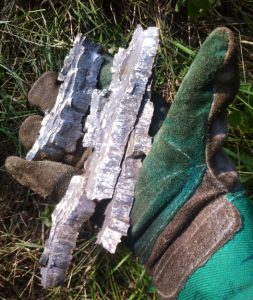
The large fragments in this image are typical of 'natural' fragmentation resulting from the rupturing of a thick-walled munition (in this case, an artillery projectile) by the functioning of its explosive payload. (ARES)

Analyst Note
21 April 2026
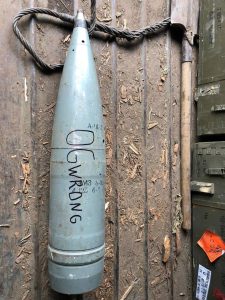
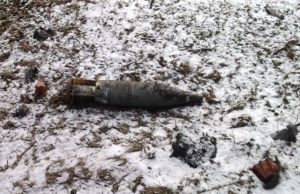
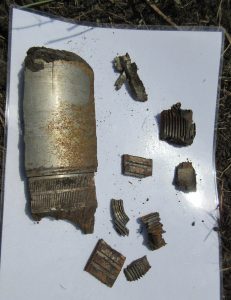
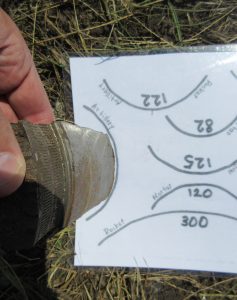
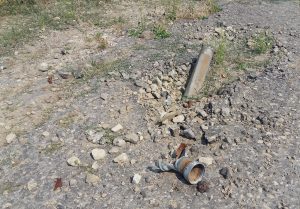
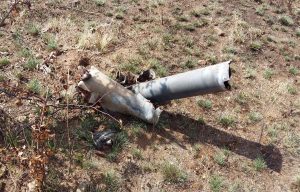
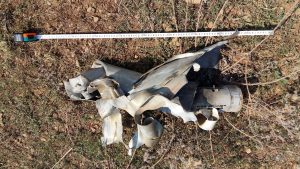
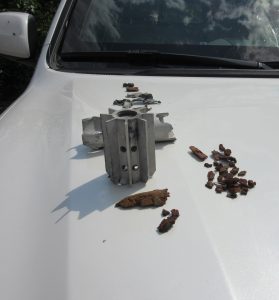
The munition remnants pictured here are likely to be from either a Russian OG-9 or a Bulgarian RHEF-9MA/GHEF-9MA recoilless gun projectile. However, based on the available information, positive identification cannot be not be made. (ARES)