Classification groups of key explosive munitions used in conflicts
Munition Category (8)
The impact or effect the munition is intended to have
Functional use (10)
The specific model of munition pictured
Tentative Model (293)
Search
The external organisation that documented the munition
Research Organisation (6)
Colour of the munition pictured
Base Colour (12)
Colour of all, or some, of the markings on the munition
Marking Colour (11)
Language or script of the marking on a munition
Marking Script (10)
Condition of the munition pictured
Condition (6)
Key features defining the operation mechanisms of a projectile
Mechanical Feature (10)
Whether a munition is guided or unguided
Guidance (2)
Where the munition is launched from and what it targets
Domain (7)
The type of fins visible on the munition
Fins Characteristic (6)
The nominal diameter of a projectile. For most modern munitions, this is expressed in millimetres (e.g. 82 mm mortar projectile), but older artillery gun projectiles may be described in inches.
A large eastern European country that faced a full-scale Russian invasion in February 2022. Since then the Ukrainian military has fought a major war with Russian forces, with tens of thousands believed to have been killed.
Current Filter
Russia
A large country in Eastern Europe and North Asia. The Russian military began a full-scale invasion of Ukraine in 2022 and has since been engaged in heavy combat with the Ukrainian Armed Forces. Russia was also directly involved in Syria between 2015 and 2024, militarily aiding the country's former President Bashar al-Assad.
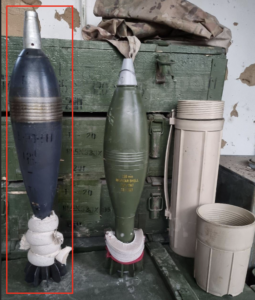
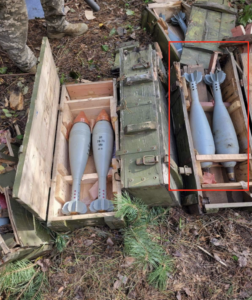
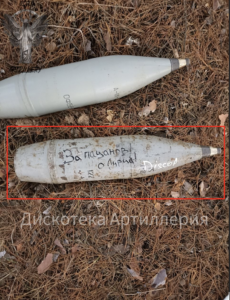
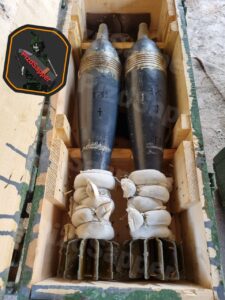
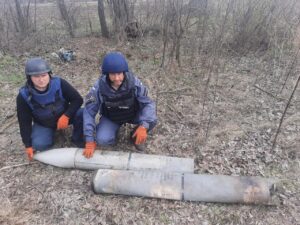
This image shows a North Korean 120 mm high explosive (HE) mortar projectile next to an Iranian 120 mm HE mortar projectile. Despite both being the same calibre, the overall shapes and dimensions of the two projectiles are noticeably different. Factors such as payload weight and range can be affected significantly by projectile shape. (ARES)
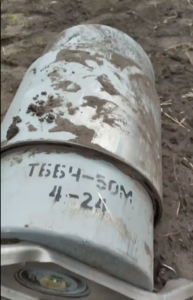
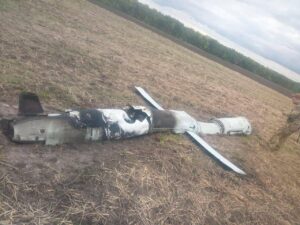
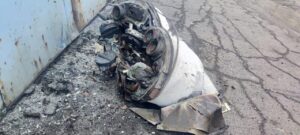
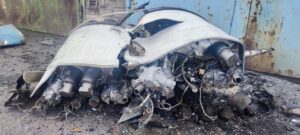
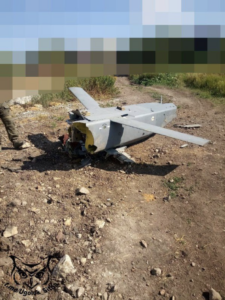
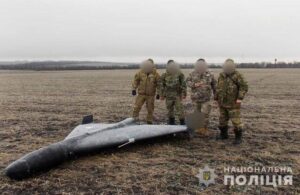
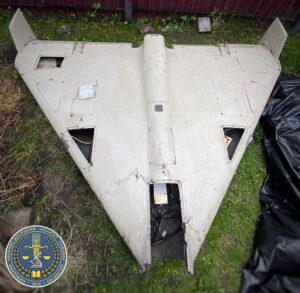
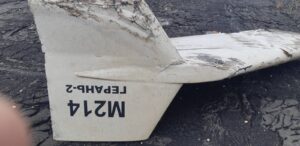
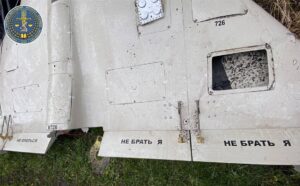
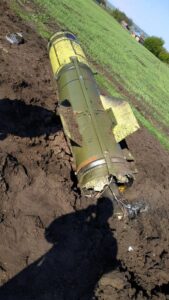
This image shows one of several possible warhead variants that can be carried by the Shahed-136/Geran-2 one-way attack (OWA) UAV. The Shahed-136/Geran-2 (and the smaller Shahed-131/Geran-1) has been documented carrying shaped-charge warheads, penetrator warheads, and multi-function warheads. Due to the various warheads that can be carried by a Shahed/Geran drone, the functional use cannot be determined without the warhead being visible. In this case, the munition was fitted with a TBBCh-50M warhead that contains a thermobaric explosive composition with an additional fragmentation effect. (ARES)
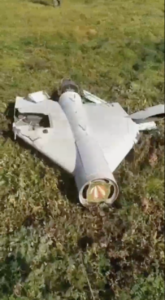
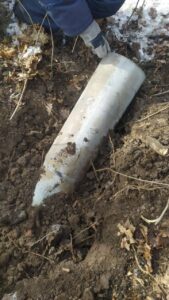
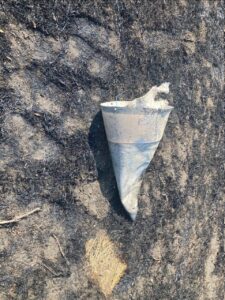
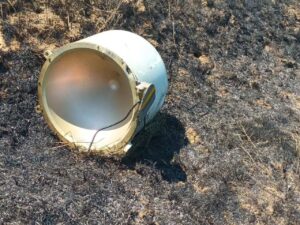
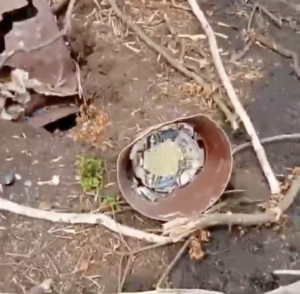
Shahed-131/Geran-1 and Shahed-136/Geran-2 one-way-attack (OWA) UAVs can be fitted with on of a variety of warheads with different functional uses. The specific type carried by each UAV cannot be determined unless the munition has been damaged in such a way as to reveal the warhead, such as in this case. This image shows the cone of the shaped charge, indicating that this Shahed-1/Geran-1 carries a warhead with a penetrating or anti-armour effect. This warhead has been documented with 18 additional liners for enhanced anti-armour effect, and in some cases has been fitted with fragmentation liners for an enhanced anti-personnel effect. (ARES)
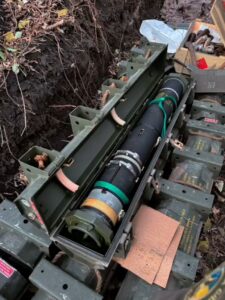
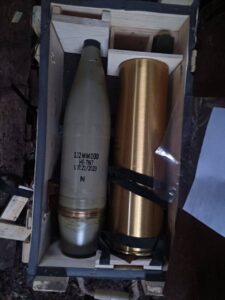
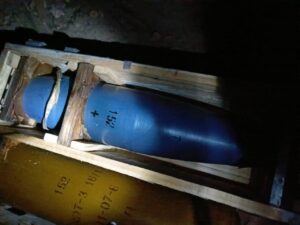
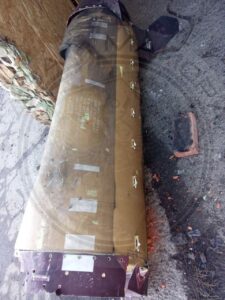
The M712 ‘Copperhead’ is a laser-guided 155 mm artillery gun projectile carrying a high explosive anti-tank (HEAT) warhead designed to engage armoured vehicles. The Copperhead was developed in the United States in the 1970s, and saw limited use during Operation Desert Storm. The M712 is is pictured here inside its shipping container, and the slots for the enclosed, deployable (‘pop-out’) wings and fins are visible. The M712 has two operational modes: a ballistic mode that follows a gun’s ballistic trajectory like a traditional artillery projectile, and a glide mode, which follows a longer and flatter trajectory. The preferred mode is set by the artillery crew before firing. (ARES)
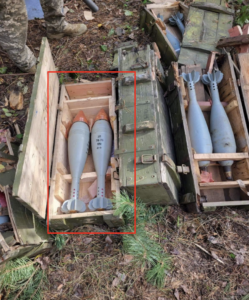
The two North Korean 120 mm high explosive (HE) mortar projectiles in this image are each fitted with five cloth bags affixed above the tailfins. These are incremental propellant charges (sometimes known as augmenting, auxiliary, or supplemental charges), the number of which can be varied along with a mortar’s elevation to adjust the trajectory and range of the munition when fired. (ARES)
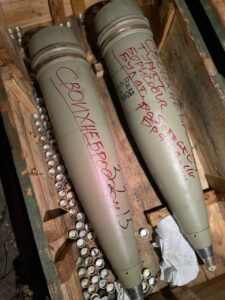
This image shows two Iranian 130 mm high explosive (HE) artillery gun projectiles. Calibre (“130MM”) and functional type (“HE - TNT”) markings are visible on the right-hand example, whilst a lot marking (“LOT:10/202[…]”) is partially obscured. The “TNT” marking indicates that this munition uses a trinitrotoluene composition as its explosive fill. (ARES)
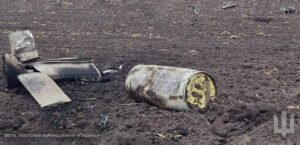
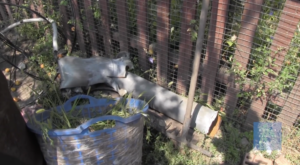
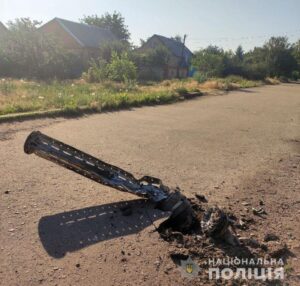
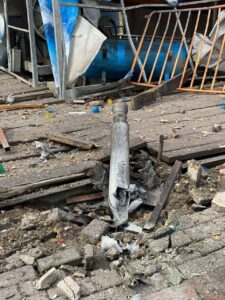
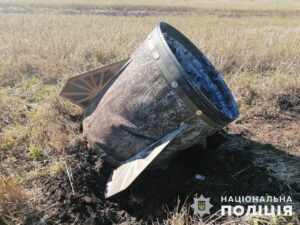
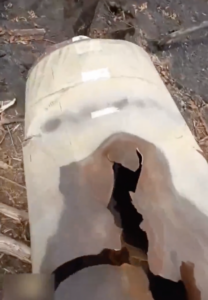
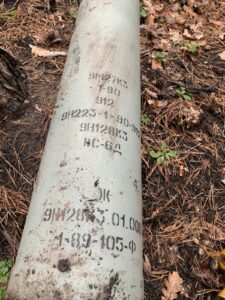
This 9M27K-series surface-to-surface cargo rocket is loaded with either 9N210 or 9N235 high explosive fragmentation (HE-FRAG) submunitions. These models are nearly identical in construction, differing primarily in the nature of the pre-formed fragments they carry. (ARES)
This image shows an Iranian 122 mm high explosive (HE) artillery gun projectile. Like several other munitions, it is described in Iranian sources—and, in this case, on the munition itself—only by reference to the weapon with which it is most often associated: the Soviet-designed 122 mm D-30 howitzer (often rendered ‘D30’, without the hyphen, in Iranian service). This munition is also marked to indicate it was produced in 2023. Interpreting munitions markings in this way, especially where they indicate recent manufacture, may provide evidence of ongoing supply during a conflict. (ARES)
The munition indicated in this image as a 152 mm high explosive (HE) artillery gun projectile manufactured in the Democratic People’s Republic of Korea (DPRK). (ARES)
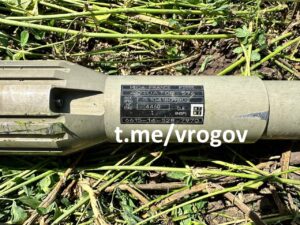
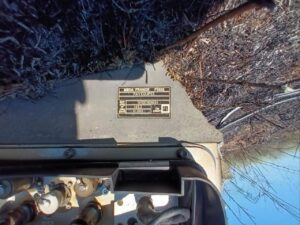
This image shows part of the warhead section of an MGM-140 Army Tactical Missile System (ATACMS) series tactical ballistic missile. This is the top of the warhead section, where it connects to the guidance section. A data plate is visible, giving information about the manufacturer (“Lockheed Martin Vought Systems”) and identifying this specific part (“WARHEAD, GUIDED MISSILE. HIGH EXPLOSIVE”. (ARES)
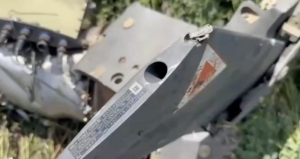
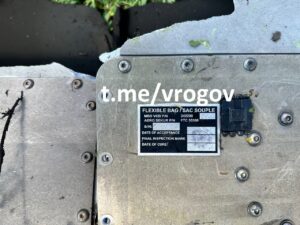
The internal components of large, complex munitions often feature markings to aid in assembly, supply chain oversight, and quality assurance. In this case, a data plate marked with the name of the manufacturer (“MBDA FRANCE”) has been affixed to one of the rear control fins (“EQ, VENTRAL, FIN TIP”) of the missile. The NATO Stock Number (NSN) is also visible. (ARES)
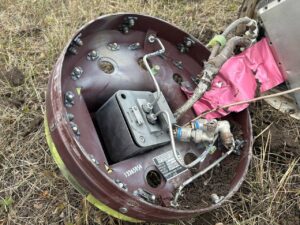
This image shows an actuator from a Storm Shadow-series missile. Actuators are components of guided munitions that are most often used to move control surfaces (e.g., fins and wings), enabling the munition to adjust its course in-flight in response to guidance commands. In this case, the component is fitted with a ‘data plate’ that indicates it was manufactured by MBDA France. (ARES)
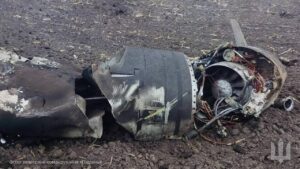
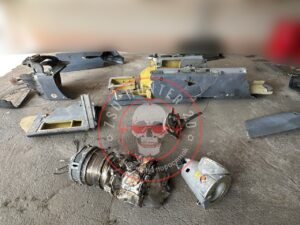
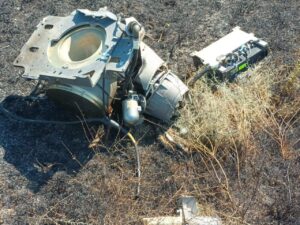
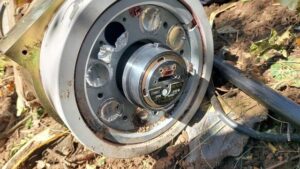
This image shows a Microturbo TRI 60-30 turbojet engine from a Storm Shadow-series air-launched cruise missile. Further remnants of the rear of the missile are also visible, including one of the rear control fins. The Storm Shadow has a range of more than 250 kilometres. (ARES)
This image shows the rear of the second stage of the penetrator warhead (also called a ‘follow-through’ warhead) of the Bomb Royal Ordnance Augmented Charge (BROACH) multi-stage warhead system present in the Storm Shadow/SCALP-EG missile. The cylindrical object in the centre of the warhead (with a data plate marked “THALES”) is the fuze. (ARES)
This image shows the first stage of the Bomb Royal Ordnance Augmented Charge (BROACH) multi-stage warhead used by the Storm Shadow/SCALP-EG missile. The BROACH uses a shaped-charge warhead (seen here) as its first stage, to help penetrate hardened targets, whilst the second stage comprises a conventional high explosive penetrator warhead (also called a ‘follow-through’ warhead) (ARES).
The remnant at left in this image is the second stage, or penetrator warhead, of the Bomb Royal Ordnance Augmented Charge (BROACH) multi-stage warhead as used in the Storm Shadow/SCALP-EG air-launched cruise missile. In this case, it has failed to function as intended. (ARES)
In this image, two GBU-39 guided air-delivered bombs can be seen in their shipping containers, with only the nose and the tail actuation section of the munitions clearly visible. Distinctive packaging such as this can sometimes be used as contextual evidence for the presence of specific munitions. (ARES)
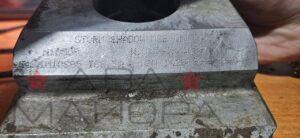
This image shows part of a heavy-duty suspension lug associated with the Storm Shadow air-launched cruise missile. This is made clear from dot-peened markings which include “STORM SHADOW USE ONLY” and identifiers such as a NATO Stock Number (NSN). (ARES)
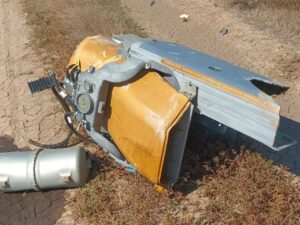
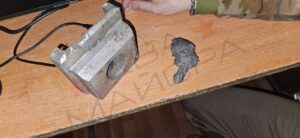
The munitions remnant on the left of this image is part of a suspension lug associated with the Storm Shadow air-launched cruise missile, which is used to attach the munition to an aircraft. This component is of heavy construction, and as such often survives the missile’s functioning intact. This photograph purports to show remnants recovered from a Storm Shadow missile that was fired by Ukrainian forces into Russian territory, but this claim cannot be verified from the image alone. (ARES)
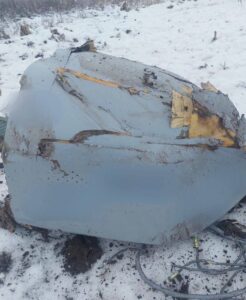
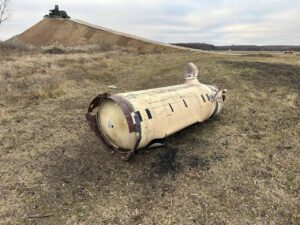
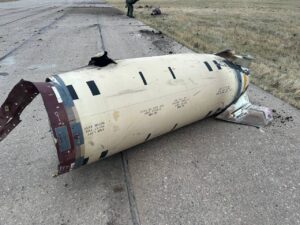
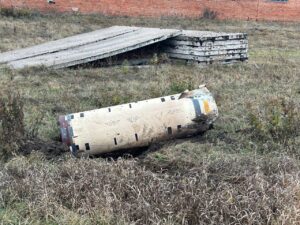
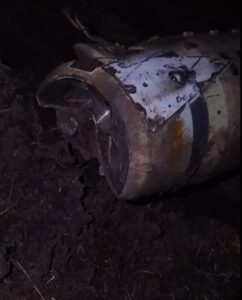
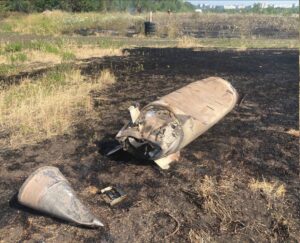
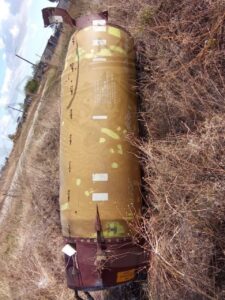
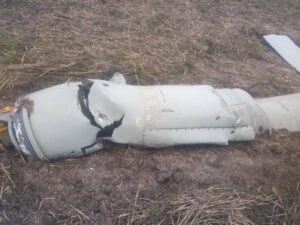
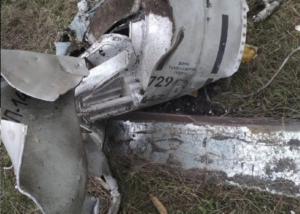
This image shows a rocket motor section from an MGM-140 ATACMS series surface-to-surface ballistic missile. The warhead section of the MGM-140 series missiles separate from the rocket motor before functioning, resulting in the rocket motor often being found relatively intact near the target. The MGM-140 series missiles use the same rocket motor, preventing a positive identification of the variant based off the rocket motor alone, unless the variant markings are visible. (ARES)
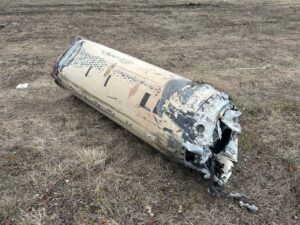
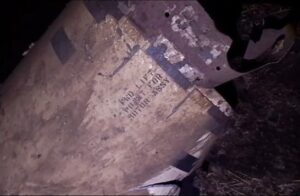
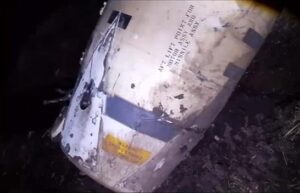
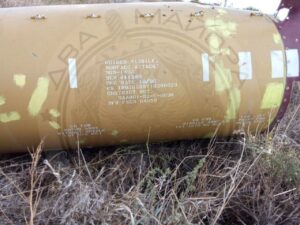
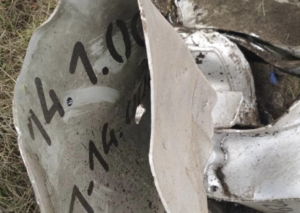
This remnant of an MGM-140 Army Tactical Missile System (ATACMS) surface-to-surface ballistic missile is marked to indicate it is the MGM-140A variant, a cluster munition which carries 950 M74 multi-purpose submunitions. Submunitions of this type are sometimes referred to by the acronym ‘anti-personnel and anti‑materiel (APAM)’. Additional markings indicate a manufacturing date (“10/96”; October 1996), a serial number (“411240”), and other information. (ARES)
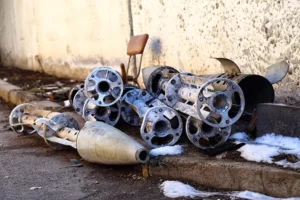
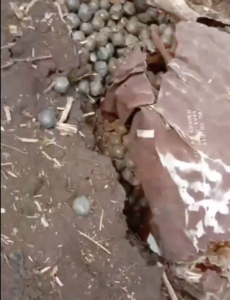
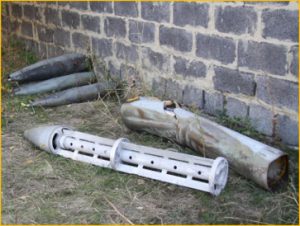
Almost all cluster munitions, including this example, expel their submunitions during flight. The submunitions are often held in an internal frame, such as that visible here, prior to being expelled. Depending on the munition, these internal frames may be diagnostic for identification. They usually do not carry a significant explosive payload in their own right, and therefore often withstand the functioning of the munition relatively intact. (ARES)
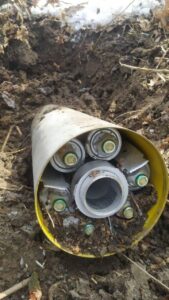
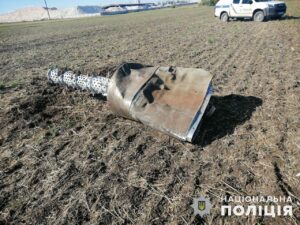
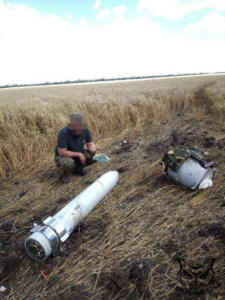
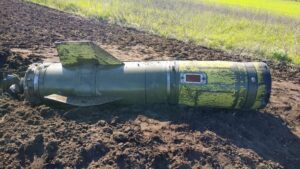
The 9M27K3 surface-to-surface rocket is fitted with the 9N128K3 cargo warhead (seen here). This warhead carries a payload of 312 PFM-1 or PFM-1S scatterable anti-personnel landmines. (ARES)


 A large country in Eastern Europe and North Asia.
  A large eastern European country invaded by Russia in February 2022