





Featured Materials
A curated selection of images, terms and collections to help understand modern conflict.
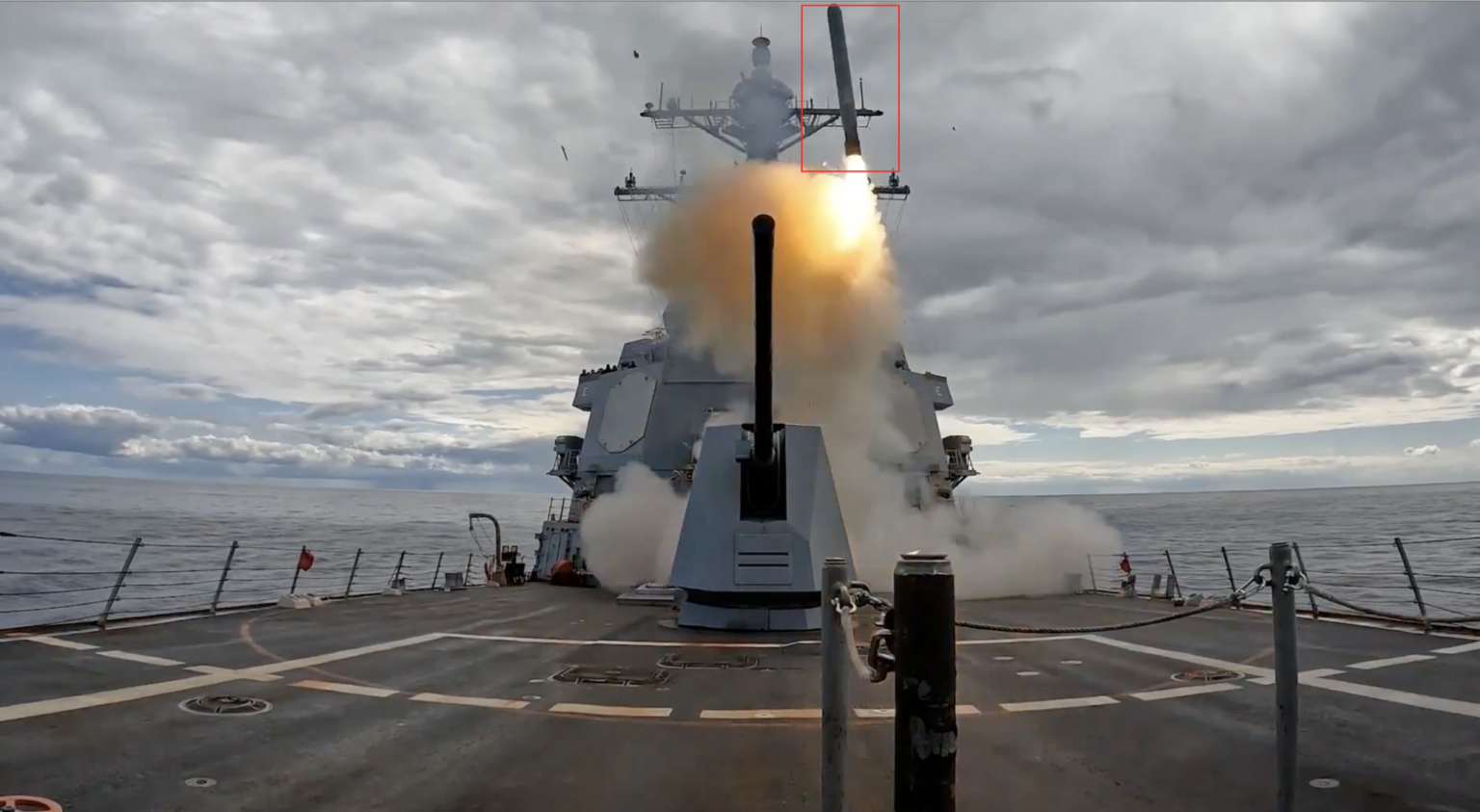
Iran War 2026
Munition images from the ongoing Middle East conflict
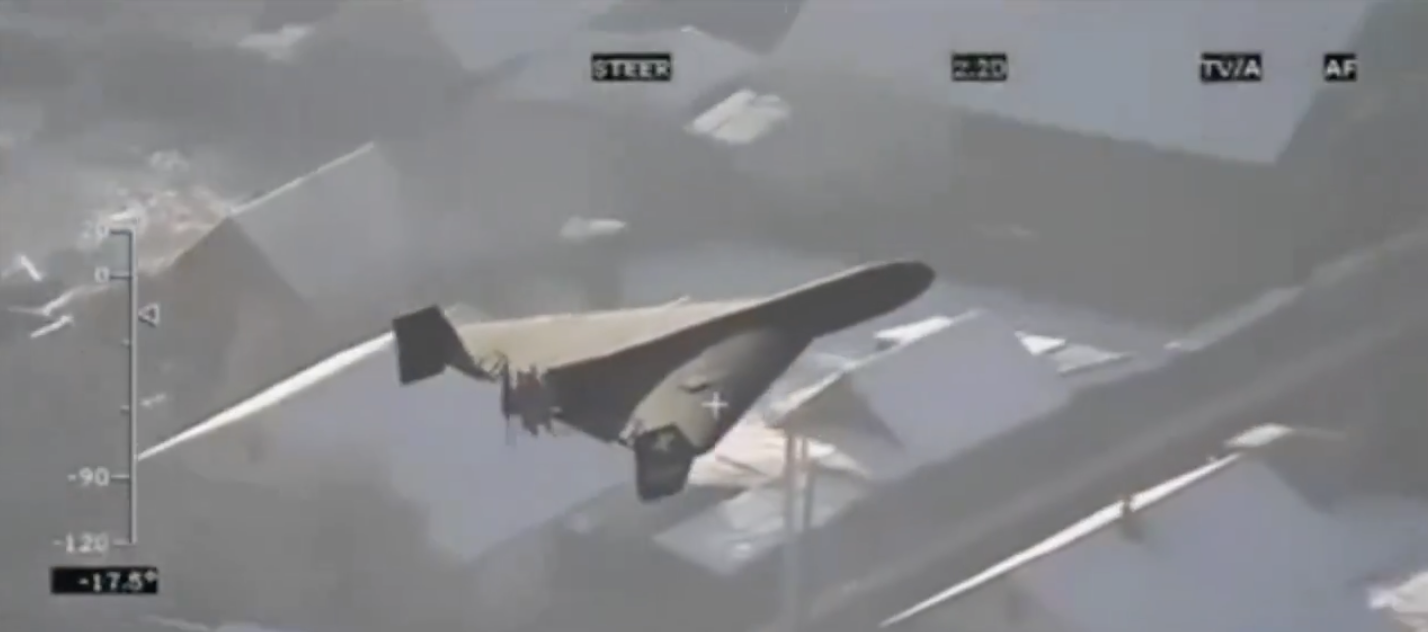
Shahed-131 & -136 UAV
3D models explain the best-known 'kamikaze drones'

Collection
Munition images from the Gaza war
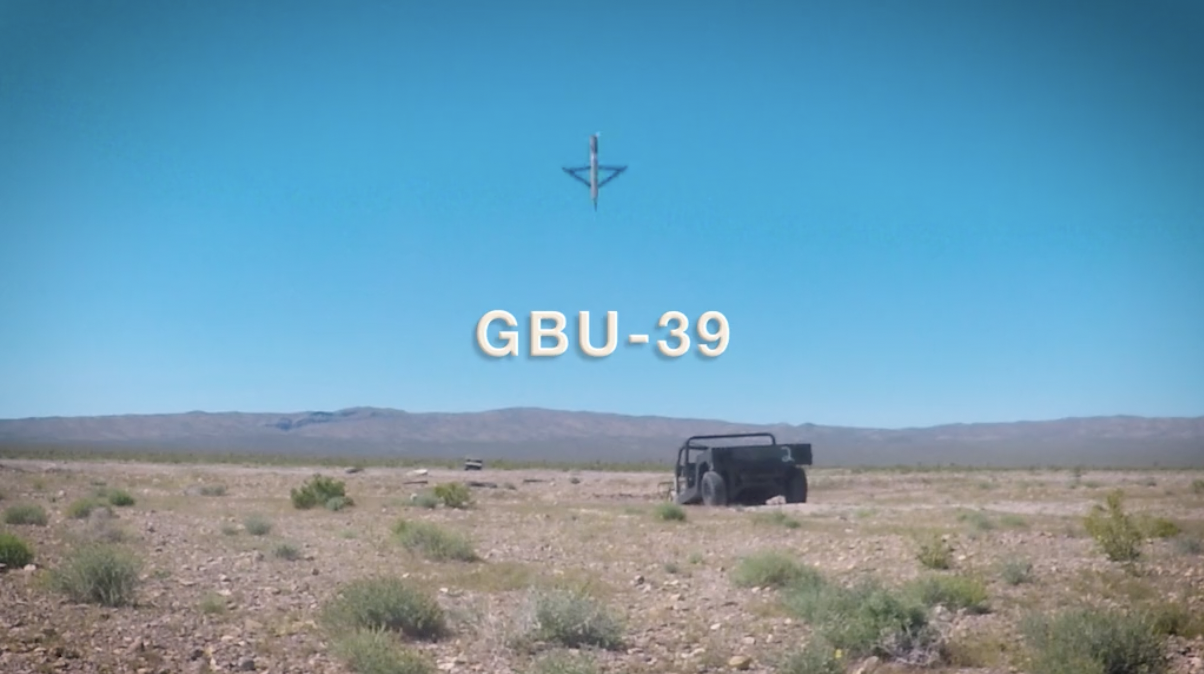
GBU-39 bomb
3D model explaining Israel's 'weapon of choice' in Gaza

Research organisation
Images from the Human Rights Watch archives

Collection
Munition images from the Ukraine war
Follow
Keep up to date with newly added munitions
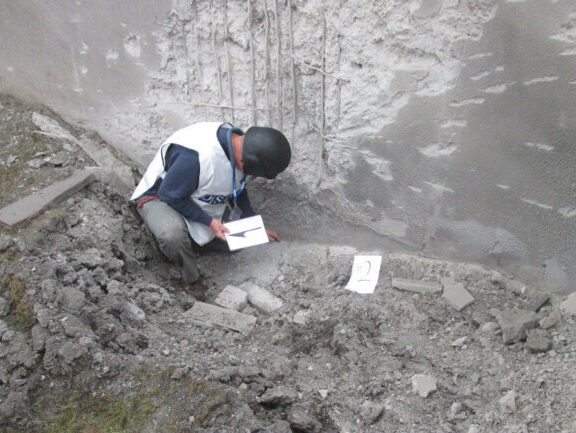
Contribute
Submit images to the OSMP
OSMP referenced in media and research
View all →
NYT uses OSMP to identify Iran wedding munition

BBC uses OSMP to investigate new U.S. missile

AP highlights images of Iranian submunitions

The Incendiary Bomb Never Seen in Israel Before

UN report highlights OSMP importance

GIJN’s Top Investigative Tools of 2024
NYT uses OSMP to identify Iran school munition
1,001–1,100 of 1,837



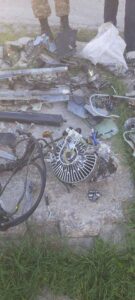

Analyst Note
24 February 2025
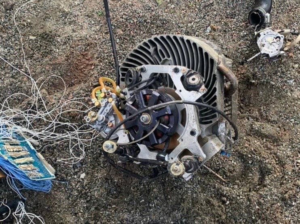
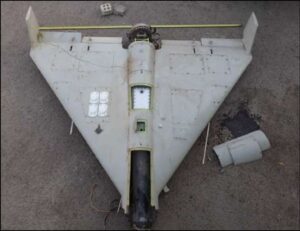
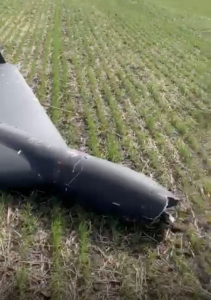
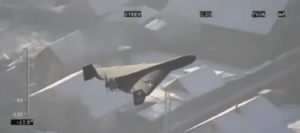
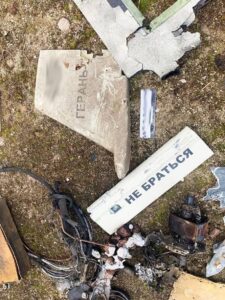
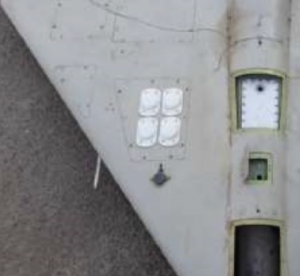
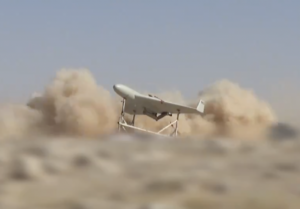
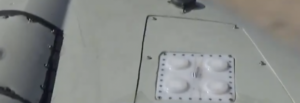
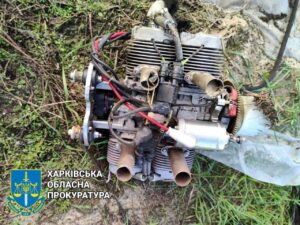
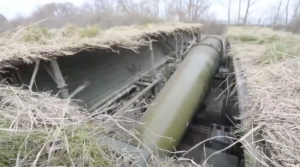
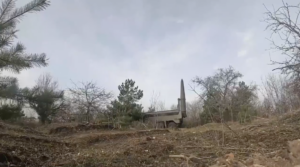
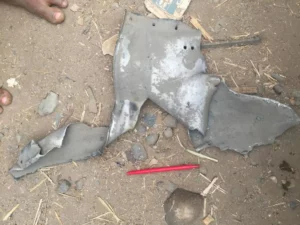
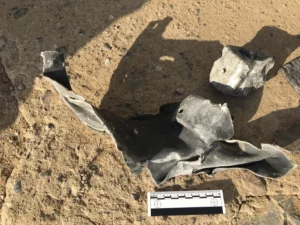
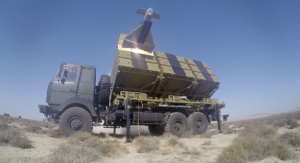
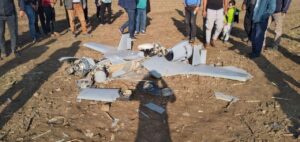
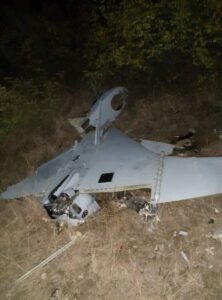
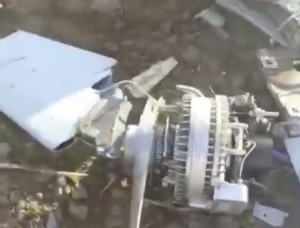
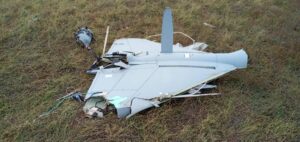
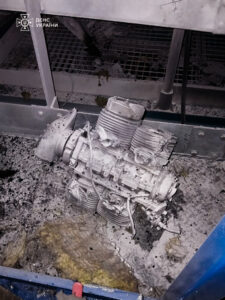
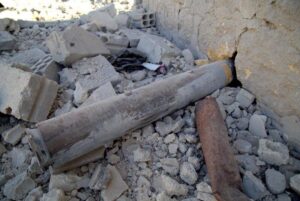
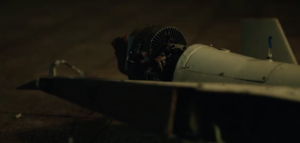
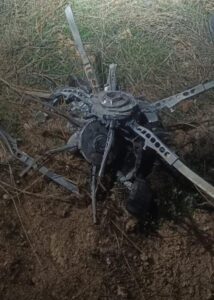
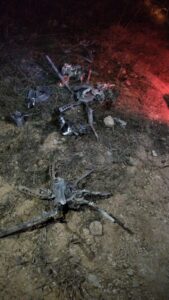
These images show a damaged Serat-01 engine which powers the Shahed-131 drone after its rocket-assisted launch. The Serat-01 is a copy of the MDR 208 engine, and is noticeably smaller than the MD550 which powers the larger Shahed-136. (ARES)


Analyst Note
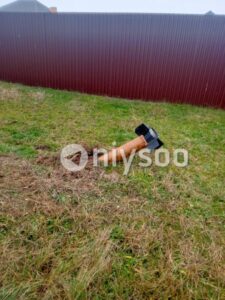
24 February 2025
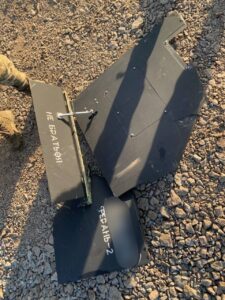
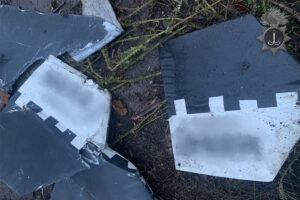
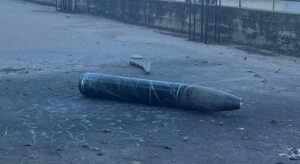
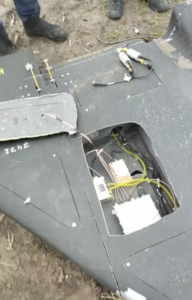
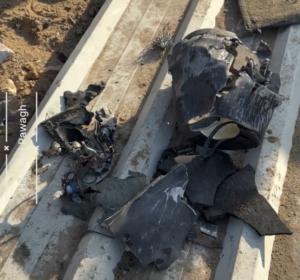
This image shows the BSF-50, one of several warheads developed by Russia for the Shahed-136/Geran-2 to replace the original Shahed-136 warhead designed by Iran. The BSF-50 is a high explosive warhead with a fragmentation effect. (ARES)
Analyst Note
24 February 2025
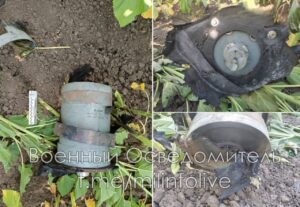
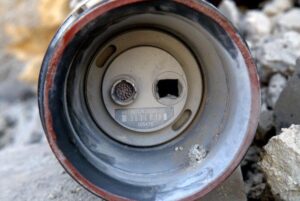
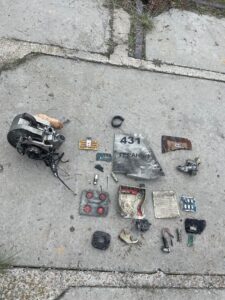
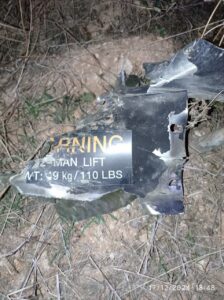
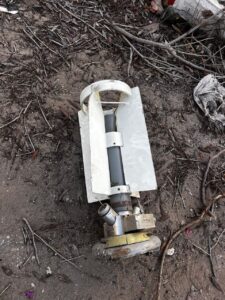
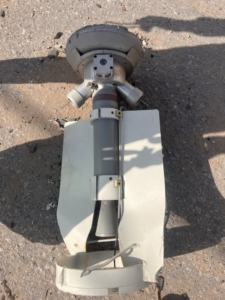
This image shows the fuzewell in the base of the warhead of a GBU-39 air-delivered bomb. The innermost cylinder is the electronic fuze; this is held in place by the closure ring. (ARES)
Analyst Note
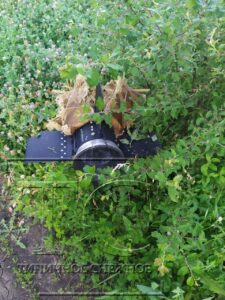
24 February 2025
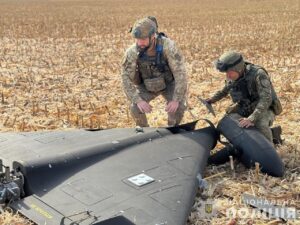
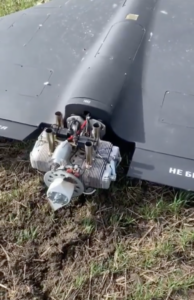
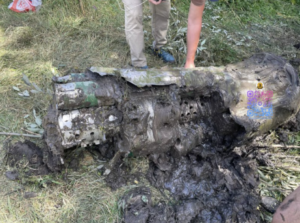
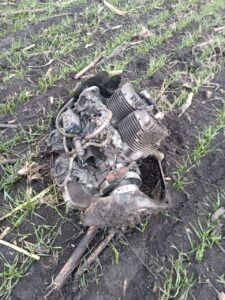
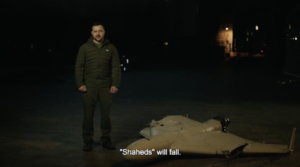
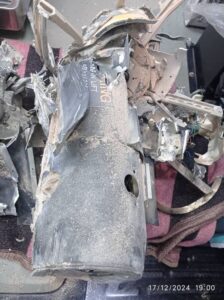
Depicted here is the MD-550 motor of a Shahed-136/Geran-2. This image was presented by Ukrainian President Zelenskyy as a fragment of the drone that reportedly hit the Chernobyl Nuclear Power Plant’s New Safe Confinement shelter. (ARES)



Analyst Note
29 January 2025
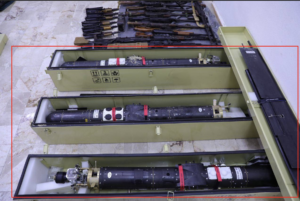
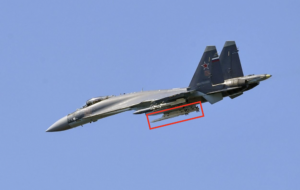
Two R-77 air-to-air missiles (NATO reporting name: AA-12 Adder) are carried in this photograph by a Russian Aerospace Forces Sukhoi Su-35 fighter aircraft. Key markings, including the aircraft’s bort number (a coloured numeral that acts as a unit or base identifier), have been digitally obscured. (ARES)


Analyst Note
29 January 2025
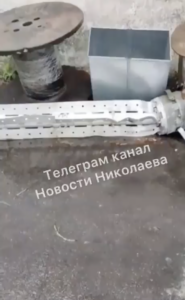
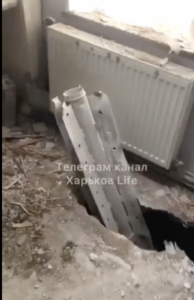
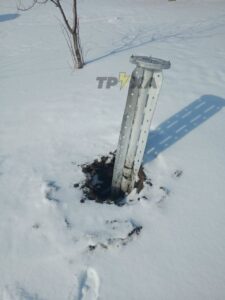
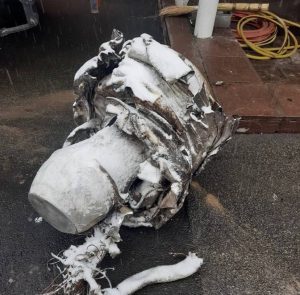
This image shows the functioned rocket motor of an Israeli Carpet rocket. The Carpet uses a fuel-air explosive (FAE) warhead which is designed to function mines and improvised explosive devices (IEDs), clearing a target area for the advance of friendly forces. These rockets are fired from the Carpet rocket launcher, which is loaded with up to 20 rockets and can be fitted to a variety of vehicles. (ARES)
Analyst Note
30 January 2025
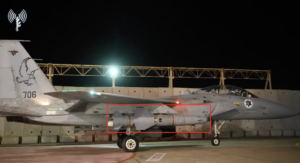
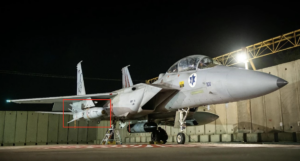
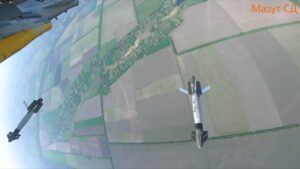
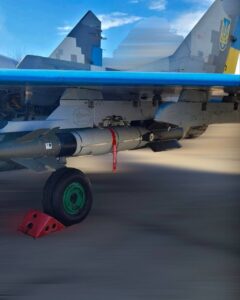
The Armement Air-Sol Modulaire (AASM; ‘Modular Air-to-Ground Armament’) family of French bolt-on guidance kits are fitted to air-delivered bombs of various sizes in a similar fashion to American JDAM kits. In some marketing materials, the acronym HAMMER is used, standing for ‘Highly Agile Modular Munition Extended Range’. This refers, in part, to the rocket boosters fitted to munitions in the family to extend their effective range. (ARES)

Analyst Note
30 January 2025
In this photo, a Ukrainian Sukhoi Su-25 ground-attack aircraft from the 299th Tactical Aviation Brigade, with the bort number ‘Blue 28’, is seen carrying an AASM-250 guided air-delivered bomb under its left wing. Available imagery shows that the AASM-250 has also been fitted to Mikoyan MiG-29 fighter aircraft, and can likely be carried by the Sukhoi Su-27 as well. (ARES)
Analyst Note
14 January 2025
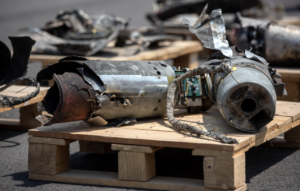
This image shows the rear portions of two different two different Spike Non-Line-of-Sight (NLOS) missiles, which each include the control section and part of the rocket motor.
The Spike NLOS has been in service with Israel since 1987, and is currently in its sixth generation, or iteration, which comprises an unknown number of variants. At least three different warhead configurations are reported: high explosive fragmentation (HE-FRAG), high explosive anti-tank (HEAT), and a ‘multipurpose’ or anti-structure variant with a penetrating blast and fragmentation warhead. (ARES)
Analyst Note
16 January 2025
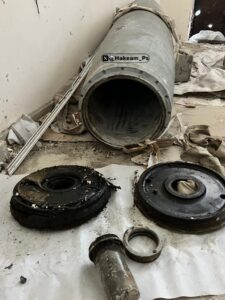
This image shows a MK 84 2,000-pound bomb that has had its fuze and baseplate removed in order to access the explosive filler. The fuze, fuze retaining ring, and baseplate can be seen on the white sheet.
The explosive material used to fill the bomb has been removed, possibly to be repurposed in improvised explosive devices or craft-produced munitions. Unexploded ordnance is often ‘harvested’ for these purposes. (ARES)
Analyst Note
9 January 2025
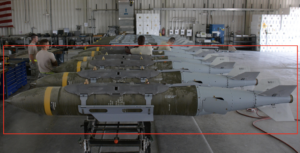
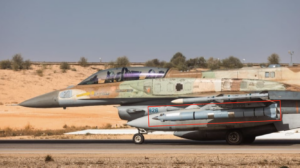
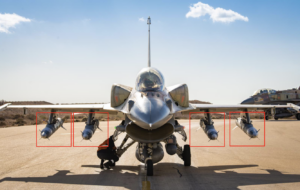
This image shows an Israeli Air Force F-16 carrying four Rampage air-to-ground missiles. The Rampage is a 580 kg (1,278 lb) missile with GPS and INS guidance. It carries a multi-purpose warhead that is designed for engaging a range of targets in the open as well as offering some degree of penetration. (ARES)
Analyst Note
9 January 2025
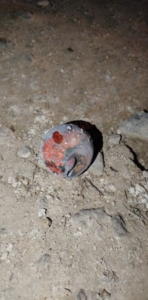
This image shows the pneumatic accumulator, or ‘accumulator bottle’, of the AGM-114R9X missile. The accumulator bottle stores gas that is used to actuate the fins, adjusting the trajectory of the missile in flight. All AGM-114 Hellfire-series missiles have an accumulator bottle. The accumulator bottle is a fragment that often survives intact, even in Hellfire missile variants that carry an explosive payload. (ARES)
Analyst Note
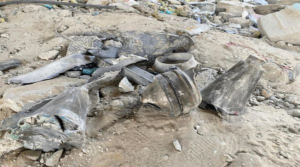
13 March 2025
This image shows various munitions remnants, including a fuzewell and two nosecone fragments from GBU-39 Small Diameter Bombs. The presence of two different nosecones indicates that these remnants are from at least two distinct munitions. (ARES)
Analyst Note
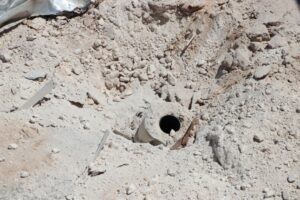
5 October 2025
Contextual images of the damage caused by this munition indicate the remnant pictured is from the AGM-114R9X variant of the Hellfire missile, a kinetic munition which does not carry an explosive warhead. This remnant cannot be differentiated from either other AGM-114 or the AGM-179 JAGM variants based off this image alone. (ARES)
Analyst Note
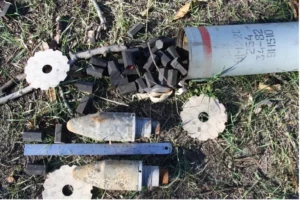
17 December 2024
This image shows a 9M22S rocket with some of its unfunctioned payload of 180 ML-5 incendiary elements. Each ML-5 is a hexagonal prism formed from a hollow shell of magnesium that is filled with an incendiary composition. These elements are ignited by the ejection charge of the rocket’s warhead upon functioning. Two fuzes are also visible at the bottom of the image, immediately above and below the ruler. (ARES)
Analyst Note
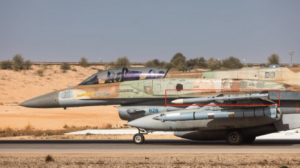
31 December 2024
This F-16I fighter aircraft from the Israeli Air Force is carrying a CATM-120 inert missile simulant (indicated). These devices are used for training purposes, being designed to replicate the weight and centre of gravity of a live munition. They lack any means of propulsion and are not released from the aircraft. The CATM-120 can be differentiated from the AIM-120 missile series by the presence of only blue bands on the missile, denoting both an inert rocket motor and an inert payload. A ‘live’ AIM-120 will have two brown bands on the rear section of the missile (the rocket motor), and a yellow band on the forward, or warhead, section. An AIM-120 with an inert warhead, but a live rocket motor, will have a blue band on the warhead and two brown bands on the rocket motor. (ARES)

Analyst Note
9 January 2025
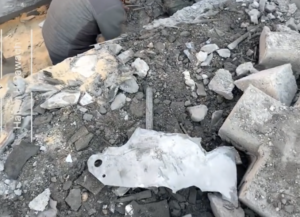
This image shows a wing fragment from a SPICE-1000 bomb guidance kit. While there are no remnants of the bomb body visible, it can be determined that a MK 83-series 1,000-pound bomb or similar was used, as MK-83 series bombs are paired with the SPICE-1000 bomb guidance kit to form a complete munition. (ARES)
Analyst Note
9 January 2025
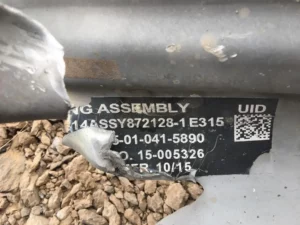
This image shows a fragment of the wing assembly of a Paveway bomb guidance kit. The data plate, though damaged, provides additional information about the munition. A partial Commercial and Government Entity code (CAGE; “ …14”), manufacturing part number (MFG SKU; “872127-1”), National Stock Number (NSN; “...5-01-141-5890”), serial number (Serial NO; 15-005326), and date of manufacture (“…MFR. 10/15”) are visible. This data can be used to look-up the component and determine that this specific fragment is from a Paveway II guidance kit intended for use with a MK 82-series 500-pound-class air-delivered bomb. This bomb and guidance kit combination is referred to as the GBU-12. The CAGE code, although partial, is enough to determine that this specific kit was produced by Raytheon, rather than the other known manufacturer of the Paveway kits, Lockheed Martin. (ARES)
Analyst Note
9 January 2025
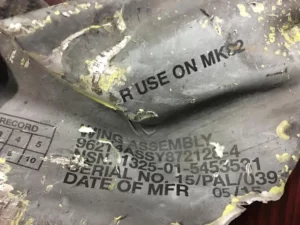
This image shows a fragment of the wing assembly of a Paveway kit, compatible with a MK 82 500-pound-class air-delivered bomb. (“..R USE ON MK82”). The National Stock Number (NSN; “1325-01-5453531”) indicates that this is a Paveway IV bomb guidance kit. There are variants of Paveway guidance kits compatible with all MK 80-series bombs, as well as other bombs such as the 5,000-pound-class BLU-113 penetrator. Paveway bomb guidance kits use laser guidance, and are more precise than JDAM guidance kits. Some variants of the Paveway kit, such as the ‘Enhanced’ series feature GPS and INS guidance in addition to laser guidance. (ARES)
Analyst Note
9 January 2025
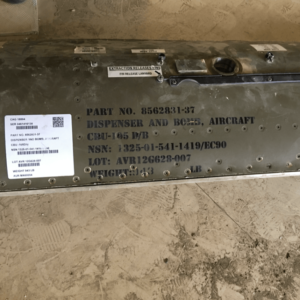
This image shows part of the SUU-66 dispenser (sometimes called a ‘shell’) that forms part of a CBU-105 D/B cluster bomb unit. In U.S. service, a ‘cluster bomb unit’ designation includes both the dispenser or shell, as well as the payload.
The CBU-105 series of cluster munitions consists of CBU-97-series munitions that are modified with a WCMD (Wind Corrected Munitions Dispenser) guidance kit. Both CBU-97 and CBU-105 series munitions are made-up of an SUU-66 dispenser filled with 10 BLU-108 submunitions. Each BLU-108 submunition contains 4 ‘skeet’ warheads that are ejected mid-air and independently seek out targets using an infrared sensor. A single skeet weighs 7.5 lb (3.4 kg) and contains a copper explosively formed penetrator (EFP) for armour penetration that is surrounded by a fragmentation ring offering some anti-personnel effect. (ARES)
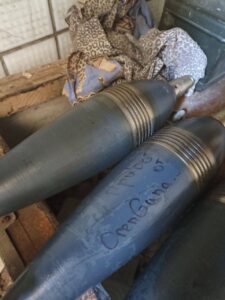
Analyst Note
9 January 2025
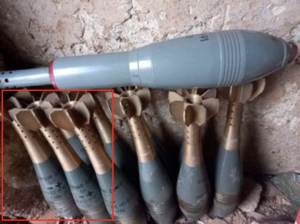
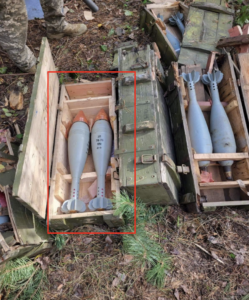
This image shows three North Korean 120 mm high explosive (HE) mortar projectiles. (ARES).
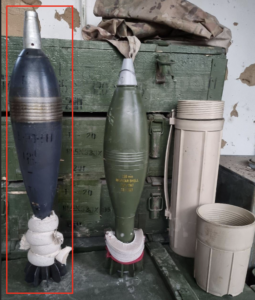
Analyst Note
9 January 2025
This image shows a North Korean 120 mm high explosive (HE) mortar projectile next to an Iranian 120 mm HE mortar projectile. Despite both being the same calibre, the overall shapes and dimensions of the two projectiles are noticeably different. Factors such as payload weight and range can be affected significantly by projectile shape. (ARES)

Analyst Note
12 January 2025
The ZAB-250-200 (ЗАБ-250-200) unguided air-delivered bomb is loaded with 48 kg of a napalm-like thickened incendiary mixture, 8 kg of cotton scraps soaked in kerosene (paraffin), and 4 kg of pyrotechnic composition to aid with ignition. (ARES)
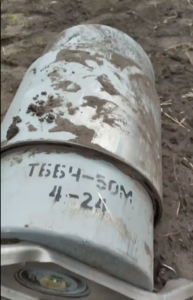
2 Analyst Notes
17 December 2024
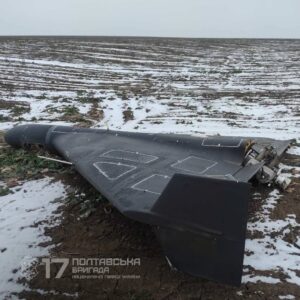
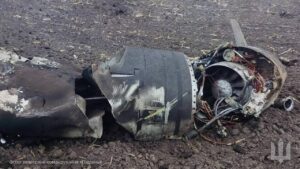
This image shows one of several possible warhead variants that can be carried by the Shahed-136/Geran-2 one-way attack (OWA) UAV. The Shahed-136/Geran-2 (and the smaller Shahed-131/Geran-1) has been documented carrying shaped-charge warheads, penetrator warheads, and multi-function warheads. Due to the various warheads that can be carried by a Shahed/Geran drone, the functional use cannot be determined without the warhead being visible. In this case, the munition was fitted with a TBBCh-50M warhead that contains a thermobaric explosive composition with an additional fragmentation effect. (ARES)
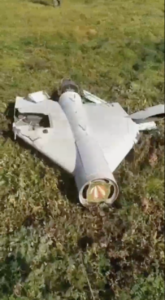
Analyst Note
17 December 2024
Shahed-131/Geran-1 and Shahed-136/Geran-2 one-way-attack (OWA) UAVs can be fitted with on of a variety of warheads with different functional uses. The specific type carried by each UAV cannot be determined unless the munition has been damaged in such a way as to reveal the warhead, such as in this case. This image shows the cone of the shaped charge, indicating that this Shahed-1/Geran-1 carries a warhead with a penetrating or anti-armour effect. This warhead has been documented with 18 additional liners for enhanced anti-armour effect, and in some cases has been fitted with fragmentation liners for an enhanced anti-personnel effect. (ARES)
Analyst Note
17 December 2024
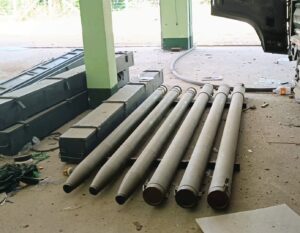
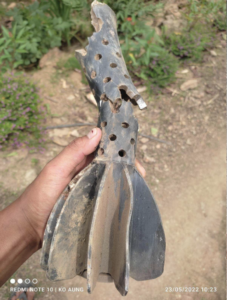
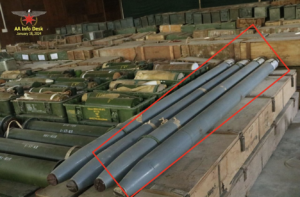
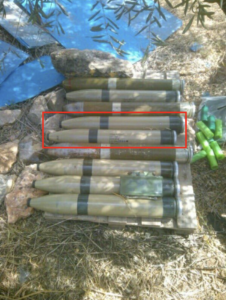
Whilst there are no visible markings explicitly identifying the model of the 122 mm rockets in this image, they are sitting atop a box marked “R-122” and exhibit physical features consistent with North Korean R-122 rockets. It should be noted that rockets marked with the generic “R-122” model name have been observed in both ‘long’ and ‘short’ overall lengths and painted in different colours. (ARES)
Analyst Note
17 December 2024
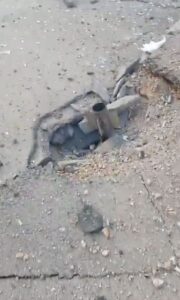
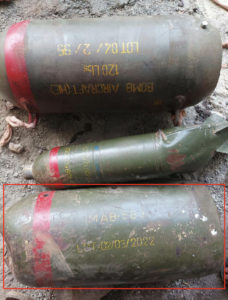
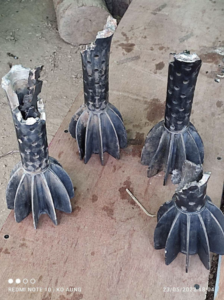
Whilst relatively little is known about Burmese air-delivered bombs from publicly available sources, researchers (including those at ARES and Myanmar Witness) have been collecting evidence based on munitions’ physical features and markings. Combined with information from confidential sources, this has allowed for the tentative identification of several models. (ARES)
Analyst Note
26 November 2024
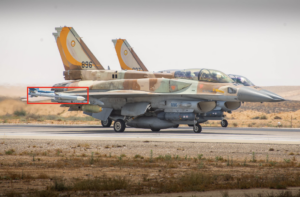
This F-16I fighter aircraft from 107 Squadron Israeli Air Force is carrying a CATM-120 inert missile simulant (indicated). These devices are used for training purposes, being designed to replicate the weight and centre of gravity of a live munition. They lack any means of propulsion and are not released from the aircraft. The CATM-120 can be differentiated from the AIM-120 missile series by the presence of only blue bands on the missile, denoting both an inert rocket motor and an inert payload. A ‘live’ AIM-120 will have two brown bands on the rear section of the missile (the rocket motor), and a yellow band on the forward, or warhead, section. An AIM-120 with an inert warhead, but a live rocket motor, will have a blue band on the warhead and two brown bands on the rocket motor. (ARES)