Key features defining the operation mechanisms of a projectile
Mechanical Feature (10)
Whether a munition is guided or unguided
Guidance (2)
Where the munition is launched from and what it targets
Domain (7)
The type of fins visible on the munition
Fins Characteristic (6)
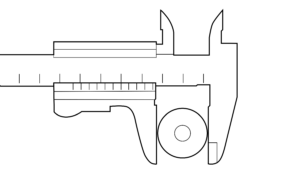
The nominal diameter of a projectile. For most modern munitions, this is expressed in millimetres (e.g. 82 mm mortar projectile), but older artillery gun projectiles may be described in inches.
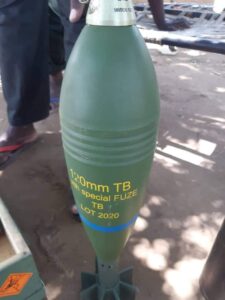
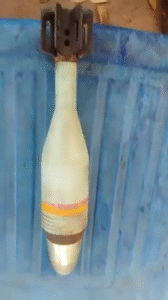
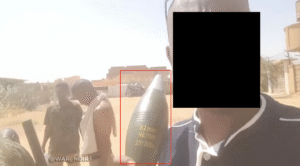
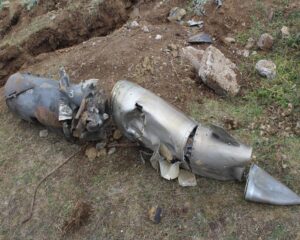
This image shows a ‘120mm TB’ air-delivered bomb that has been adapted from a 120 mm mortar projectile. It is claimed by the manufacturer that this thermobaric munition offers improved fragmentation and blast effects when compared with standard (high explosive) 120 mm mortar projectiles. The “with special FUZE” marking refers to the use of the UT M18 impact fuze. Note that this munition cannot be fired from a mortar, despite the munition body showing features consistent with this use (e.g., gas-check bands). Instead of a standard mortar projectile tailboom which would contain an ignition cartridge and be perforated by flash holes, this munition is fitted with a simplified, plastic tailfin assembly that is designed to stabilise the munition as it falls after being released by a UAV. (ARES)
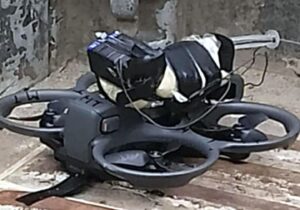
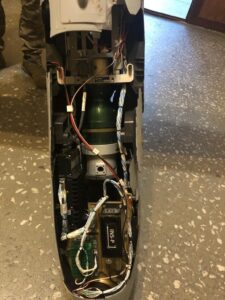
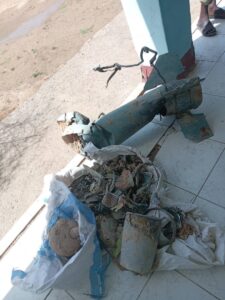
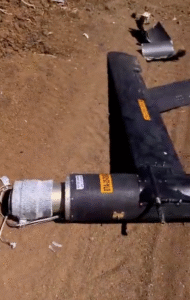
This guided munition is built around a sacrificial DJI Avata-series UAV that has been fitted with an improvised explosive device (IED). From front to back, it consists of an impact switch made from a syringe, the main charge (yellow/white material in a plastic bag), and a battery that acts as the power source. While crudely made, it is probably still functional. (ARES)
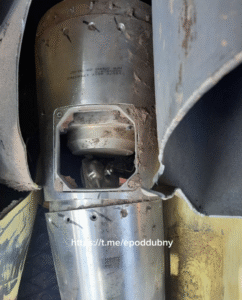
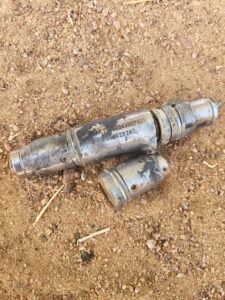
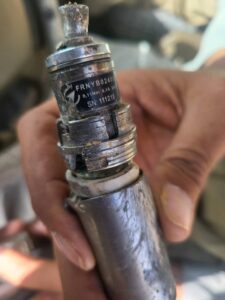
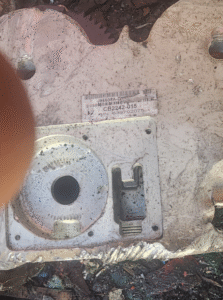
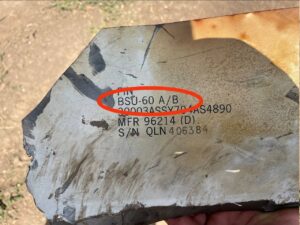
This munition remnant is marked with a manufacturer’s CAGE Code (“MFR-05DN8”) which indicates it was produced by Klune Industries. Klune Industries is a sub-contractor on the GMLRS contract. (ARES)
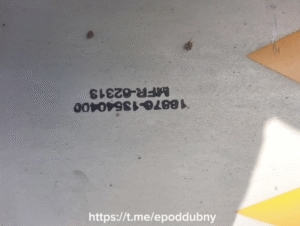
This munition remnant is marked with a manufacturer’s CAGE Code (“MFR-62313”) which indicates it was produced by Lockheed Martin. Lockheed Martin is the primary contractor that makes GMLRS missiles. (ARES)
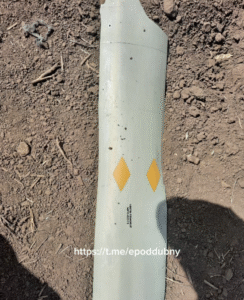
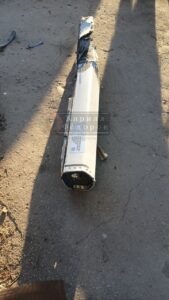
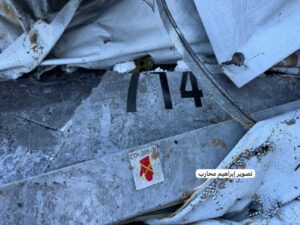
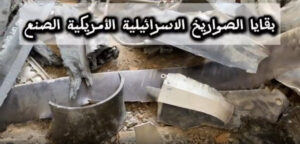
This image shows a remnant from an American M30 Guided Multiple Launch Rocket System(GMLRS) missile, which carries M77/M101 submunitions. The yellow diamond markings indicate a payload of explosive submunitions. (ARES)
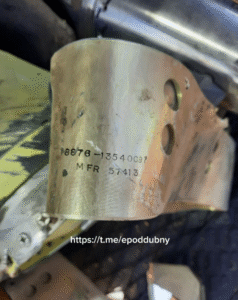
This munition remnant is marked with a manufacturer’s CAGE Code (“MFR-57413”) which indicates it was produced by the Maine Machine Products Company, a sub-contractor on the GMLRS contract. (ARES)
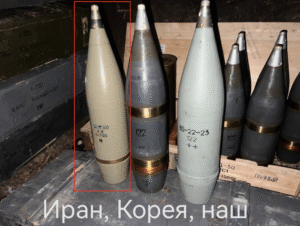
This image shows 122 mm high explosive (HE) artillery gun projectiles manufactured in three different states, L–R: Iran, North Korea, and Russia. Whilst these examples are distinct from one another—particularly in coloration, as well as the presence or absence of paint over the driving band and bourrelet—this is not always the case, and a combination of physical features and markings should be assessed before identification is made. (ARES)
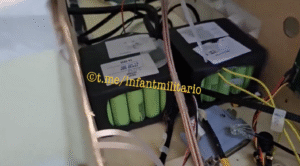
This photo shows some of the lithium-ion power banks found within a Gerbera UAV. These are used to power the onboard avionics, control surfaces, communications hardware, camera, and other components. The quantity and type of batteries fitted to the Gerbera will often vary based on the role for which the UAV has been configured—one-way attack (OWA; i.e., a ‘sacrificial’ munition), reconnaissance, signal relay, or decoy—and which specific hardware has been installed to effect this mission. (ARES)
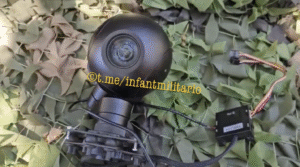
This image shows an A40 Pro camera, manufactured by the Chinese company Viewpro UAV and design specifically for use in UAVs. The black box to the right of the camera is the control box which manages video output, camera control, and power. The manufacturer claims this model has a 40× optical zoom, AI detection and tracking, and 3-axis gyro-stabilisation. The company further claims that it can customise the onboard AI recognition based on “target characteristics” provided by the client. Numerous Gerberas fitted with this model of camera are known to have been recovered by Ukrainian forces, although it is by no means the only camera model in use. (ARES)
This image shows the back surface of a wireless communications module contained within a downed Gerbera UAV. Although labeled as an HX-50 model designed for fixed locations, Ukrainian military analysis indicates this is an XK-F358 mesh-network module more suitable for use in UAVs. See OSMP1646 for further details. (ARES)
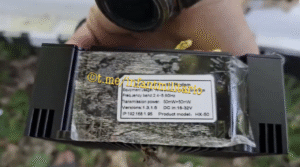
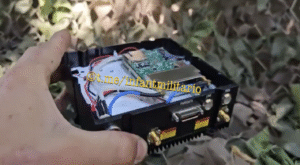
This image shows the front and interior surfaces of a wireless communications module recovered from a downed Gerbera UAV. Although labelled as an HX-50 industrial wireless modem (compatible with WiFi and 5G/4G networks and designed for fixed locations), analysis by Ukrainian military sources indicates that this component is, in fact, an XK-F358 mesh-network module which offers significantly more capabilities. Manufactured and sold by Shenzhen Xingkai Technology Co., Ltd., these modules are designed for, amongst other things, use in robots and unmanned vehicles. Gerbera UAVs have been found operating on a wide variety of frequencies and networks, and this type of module is well-suited to this use. (ARES)
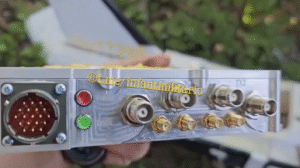
Pictured is a navigation/GPS module recovered from a downed Gerbera UAV. This particular model is used with the 4-antenna CRPA module seen in OSMP1648. The four RX ports on the bottom are normally directly connected to the CRPA (antenna) module, with other connections made to the UAV’s flight controller and power sources. Some Gerberas have been recovered with CRPA modules bearing a different number of antennas; different navigation modules have been observed on these. (ARES)
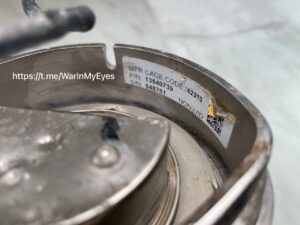
This munition remnant is marked with a manufacturer’s CAGE Code (“MFR CAGE CODE: 62313”) which indicates it was produced by Lockheed Martin. Lockheed Martin is the primary contractor that makes GMLRS missiles. (ARES)
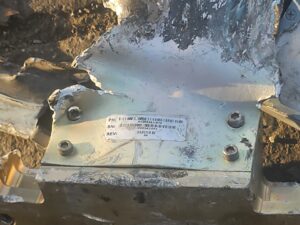
This remnant shows a munition component marked with the CAGE Code for a sub-contractor who produced part of a larger munition. “64344” is the code for Unique Electronics Inc., a known sub-contractor working on Lockheed Martin’s GMLRS contract. One of the parts they make is the “CABLE ASSEMBLY W459“, as seen in this image. (ARES)
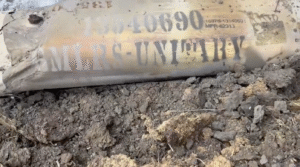
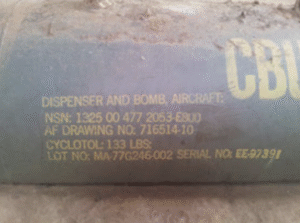
This image shows markings on an SUU-30H/B dispenser which comprises part of a CBU-52B/B Cluster Bomb Unit, including a National Stock Number (“NSN 1325 00 477 2053-E800”), design reference (“AF DRAWING NO: 716514-10”), total explosive weight of the submunitions (“CYCLOTOL: 133 LBS:”), lot number (“LOT NO: MA-77G246-002”), and serial number (“SERIAL NO: EE-97391”). This lot number indicates that this CBU-52B/B was manufactured at the Milan Army Ammunition Plant in the U.S. in July 1977. (ARES)
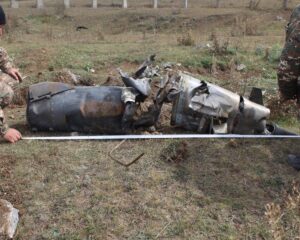
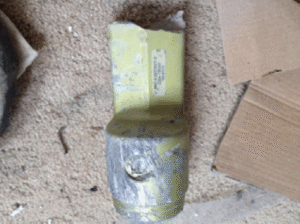
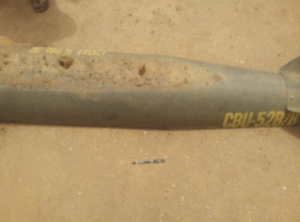
This image shows part of an SUU-30H/B dispenser (cargo munition) that comprises part of the CBU-52B/B ‘Cluster Bomb Unit’. A CBU-52B/B comprises a SUU-30H/B dispenser that is loaded with 217 BLU-61A/B anti-personnel submunitions. (ARES)
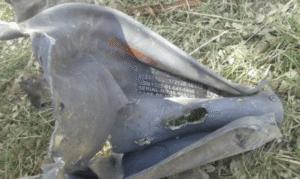
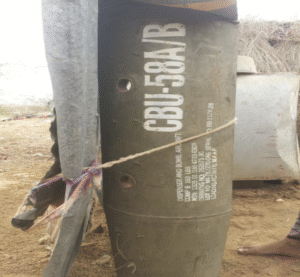
This image shows a remnant of an SUU-30H/B air-delivered dispenser (cargo munition), that comprised a CBU-58A/B ‘Cluster Bomb Unit’ (CBU). The CBU-58A/B carries 650 BLU-63A/B anti-personnel submunitions, that have a total explosive weight of 163 lbs (~74 kg) of COMP B explosive; this is reflected in the visible markings. (ARES)
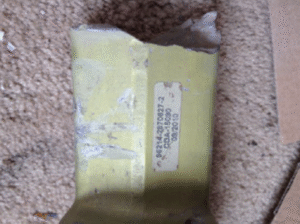
This image shows a remnant of a control actuator shaft from a Paveway guidance kit control section, found after a strike in Yemen in 2015. Markings giving the CAGE code for Raytheon (“96214”) and the part number (“2870627-2”) are both visible. The complete remnant can be seen in related entry 1559. (ARES)
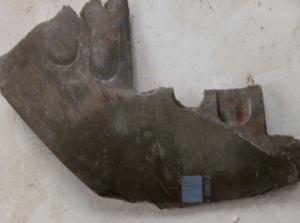
This image shows a remnant of the control fin of a GBU-24 (as seen partially marked), the designation for the combination of a Paveway III guidance kit paired with a 2,000-pound-class air-delivered bomb. This remnant is not enough to determine which model of bomb the kit was originally paired with. (ARES)
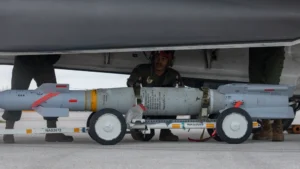
This image shows a BLU-111 500-pound-class bomb paired with a Paveway II guidance kit, and an MXU-650 series airfoil group, or tail kit. This combination is designated the GBU-12 series in U.S. service. (ARES)
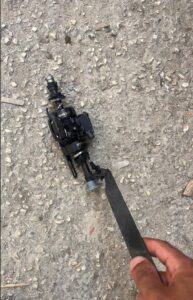
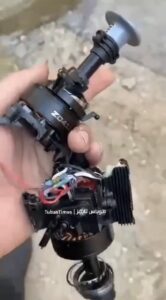
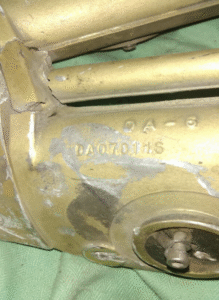
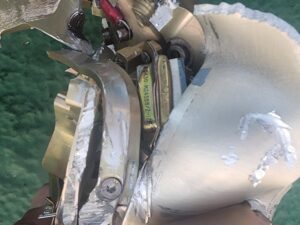
This image shows a close up view of an actuator assembly from an AGM-114 ‘Hellfire’ series missile. This assembly is what actuates the control fins, and the attachment point for one of the control fins is visible at the bottom right of the image. This assembly belongs to the control section, which is the rearmost section of the missile. (ARES)
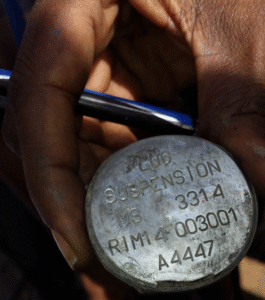
This image shows the bottom of an MS 3314 suspension lug, which is installed on the MK 81 250-pound-class, MK 82 500-pound-class, and MK 83 1,000-pound-class air-delivered bombs. The remnants of the guidance kit in the related entry indicate that, in this case, the lug was fitted to a MK 83 1,000-pound-class bomb. “A4447” is the CAGE code for the manufacturer of the suspension lug, RWM Italia. (ARES)
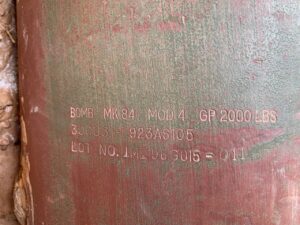
This image shows some of the markings on a MK 84 2000-pound-class air-delivered bomb, including model designation (“BOMB MK 84 MOD 4”), weight class (“2000 LBS”), part number (“PART NO 30…03 923AS105”), and production lot (“LOT NO GDT 17 …00…”). Many countries produce MK 80-series bombs, so markings such as lot numbers can determine the country of production. “GDT 17” in the lot number indicates that this munition was produced by General Dynamics Ordnance and Tactical Systems, an American company, in 2017. The Israeli Air Force announced they carried out the specific strike associated with this image, which indicates that this specific bomb was transferred to the Israeli Air Force. (ARES)
This image shows a remnant of a JDAM tail kit that was paired with a MK 84 2,000-pound-class air-delivered bomb. The CAGE code (“OUVG2”) for Aeroantenna Technology, an American manufacturer of GPS components for guidance systems, is visible on the wiring. (ARES)
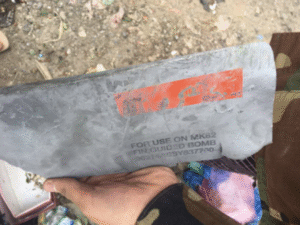
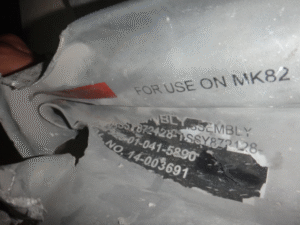
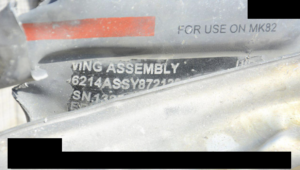
This image shows a remnant of the guidance control unit from a Paveway- or Lizard-series bomb guidance kit. The guidance control fins are marked “FOR USE ON MK82” indicating that this guidance control unit was paired with a MK 82-series 500-pound-class bomb. (ARES)
This image shows remnants of two different rocket motors from AGM-114 series Hellfire missiles. While it cannot be determined by these entries alone, images of the damage from the strike associated with this image, gathered by Mwatana, indicate that both of these AGM-114 missiles were the kinetic AGM-114R9X variant. (ARES)
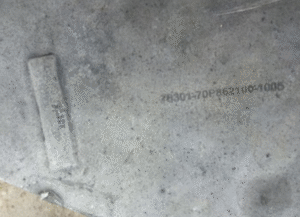
This image shows one of the actuated fins of a Joint Direct Attack Munition (JDAM) tail kit. The manufacturer CAGE code (“76301”) and the part number (“70P862100-1005”) are visible. This CAGE code corresponds to Boeing, the manufacturer of the JDAM guidance kit, while the part number corresponds to a fin of a JDAM kit compatible with MK-84 and BLU-109 2,000-pound-class air-delivered bombs. (ARES).
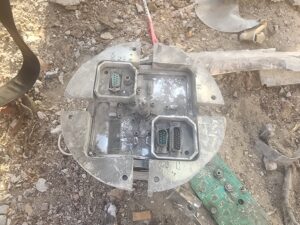
This image shows a variety of remnants from an Israeli SPICE 250 guided bomb. One of the bomb’s four control fins is visible at the bottom-left of the image. (ARES)
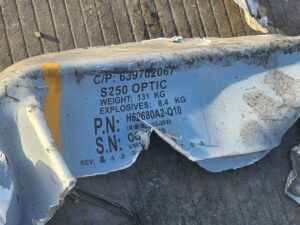
This image shows a remnant of the outer casing of the “S250 OPTIC” or SPICE 250 guided bomb, with the markings relatively intact. The markings on this remnant show that, while classified as a 250-pound bomb, the actual weight of this SPICE 250 variant is 288 pounds (131 kg) with only 18.5 pounds (8.4 kg) of explosive material. (ARES)
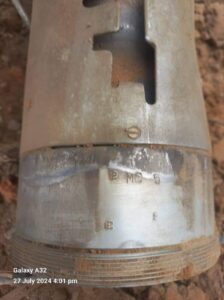
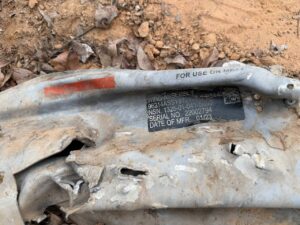
This image shows the top of the booster of an Arrow 3 interceptor missile, where it connects to the kill vehicle. The Arrow 3 was jointly developed by the United States and Israel, and first entered service in 2017. The date of manufacture marking (“DATE OF MFG: 05/2018”) indicates that this booster was produced in the year after the Arrow 3 first entered service. (ARES)
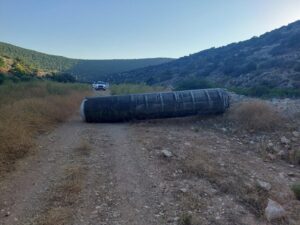
This image shows the booster of an Israeli Arrow 3 interceptor missile. The Arrow 3 is designed to engage ballistic missiles and is capable of exo-atmospheric interceptions. Once the booster is expended, it separates from the ‘kill vehicle’. The kill vehicle has a sustainer motor that propels it towards the incoming ballistic missile, and uses kinetic impact, rather than an explosive warhead, to disable or destroy its target. This is sometimes called the ‘hit-to-kill’ principle. (ARES)
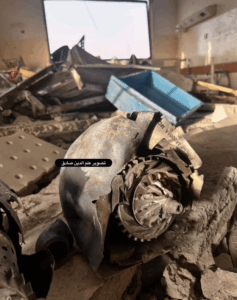
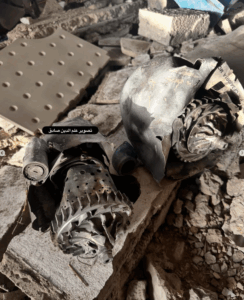
This image shows the rocket motor of an AGM-114 "Hellfire" series guided missile found in Jordan during the 12 day conflict between Israel and Iran. This specific Hellfire missile is likely an air-to-air "C-UAS" variant used to intercept one-way attack drones, such as those launched by Iran towards Israel, rather than the more common air-to-surface Hellfire missile variants. (ARES)
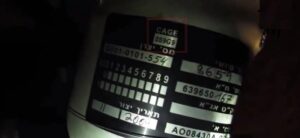
The Commercial and Government Entity (CAGE) code marked on this data plate (“0S9G9”) is a now-obsolete code assigned to Israel Aerospace Industries (IAI), the manufacturer of the Mikholit air-delivered bomb. (ARES)
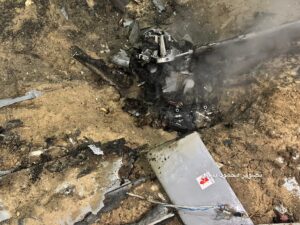
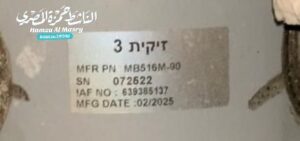
This is the data plate fitted to an Israeli Air Force bomb guidance kit. It reads “3 זִקִית” (‘Zikit 3’, or ‘Chameleon 3’ in English). As of May 2025, there is no public information available about this model of bomb guidance kit, but it appears to be a derivative or variant of the Israeli Lizard series, which are derived from the American Paveway bomb guidance kit. (ARES)
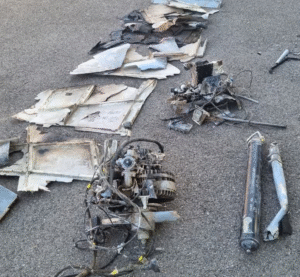
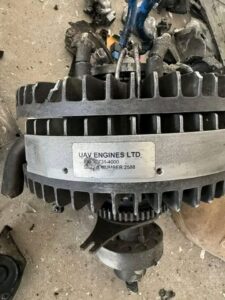
This image shows an AR731-4000 Wankel-type engine produced by UAV Engines Ltd. of the United Kingdom, used in an Israeli Harop munition. Variants of the Harop used in the 2020 Nagorno-Karabakh War featured a similar Wankel engine, but were marked to indicate a different manufacturer and model name: “MBT ENGINE” and “H2251-5100-503”, respectively. (ARES)
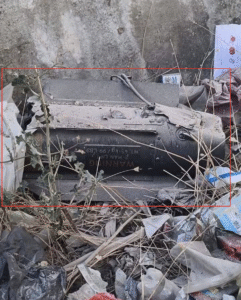
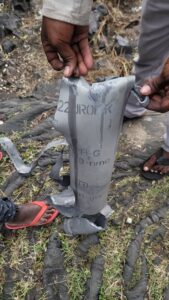
The JROF and JROF-K are Czech derivatives of the Soviet 122 mm ‘Grad’ series of surface-to-surface rockets. The JROF-K is the shorter, reduced-range variant, broadly analogous to the Soviet 9M22M. (ARES)
This image shows a fragment of the “inner petal assembly” of a Terminal High Altitude Area Defense (THAAD) system’s ‘Talon’ interceptor missile. The part number for the assembly (“23917ASSY1A62803-101 REV.E / E”), Commercial and Government Entity (CAGE) code (“07554”), manufacturer abbreviation (“CTL”), and serial number (“S/N DDLKD”) are visible. This CAGE code and manufacturer abbreviation are associated with CTL Aerospace Inc, a subcontractor for Lockheed Martin, the manufacturer of the THAAD system. It is not uncommon for complex munitions to be made by several different manufacturers, and thus multiple CAGE codes may be present as a result of the various subcontractors. (ARES)