



401–500 of 620
Analyst Note
11 November 2024
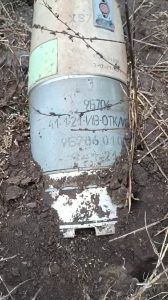
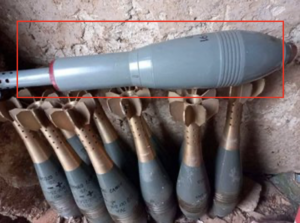
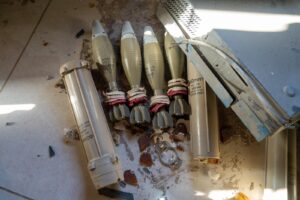
This Iranian 60 mm mortar projectile is of the ‘Long Range’ type described without a specific model name in various Iranian export catalogues and other sources. The designation as marked on projectiles and packaging is variable, with observed formulations including “60mm H.E. L.R.”, “60mm H.E L.R”, and “60mm HE L.R”. Sometimes, as here, “60mm L.R” is followed by “HE / TNT”. (ARES)
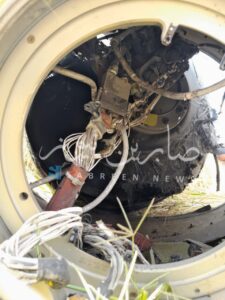

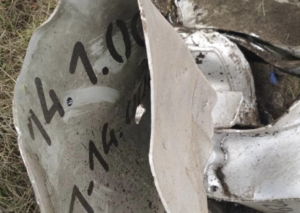

Analyst Note
2 November 2024
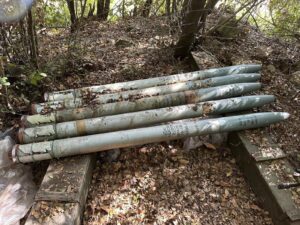
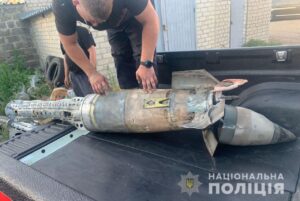
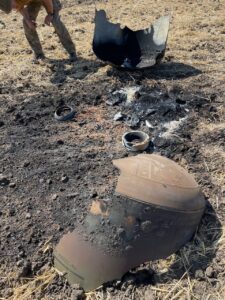
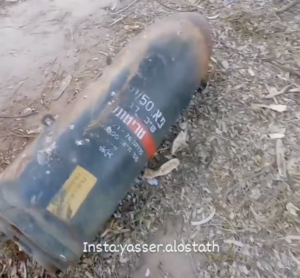
This image shows what is probably just the body of an Israeli 155 mm smoke artillery projectile. Israel predominantly uses two varieties of 155 mm smoke munition: the M825 white phosphorous (WP) series of munitions, and the M150 hexachloroethane/zinc mixture (HC) munition. These munitions are externally near-identical, save for their markings. In this case, the markings are insufficient to determine whether the image shows an M825-series WP munition or an M150 HC munition. (ARES)
Analyst Note
24 October 2024
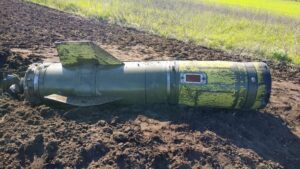
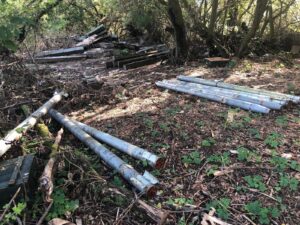
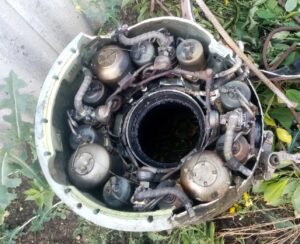
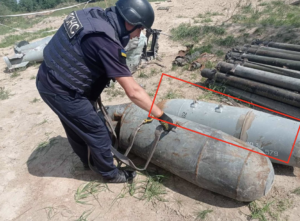
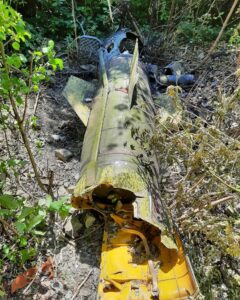
The 9M22S is essentially the ‘full-sized’ version of the shorter 9M28S surface-to-surface rocket previously recorded in the OSMP. Both rockets carry the same 9N510 incendiary warhead, but differ in the length of their rocket motor sections, and thus range. (ARES)
Analyst Note
14 October 2024
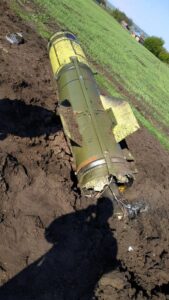
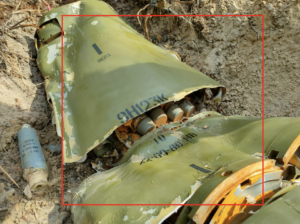
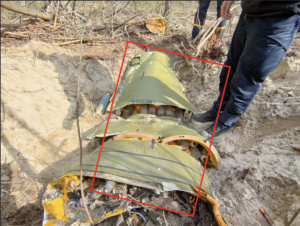
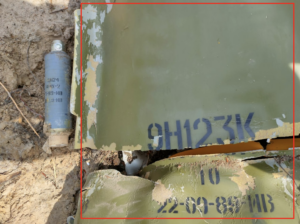
The 9Н123К (9N123K) cargo warhead is delivered by a 9М79К (9M79K) series surface-to-surface guided missile. This cluster munition carries fifty 9Н24 (9N24) high explosive fragmentation (HE-FRAG) submunitions, and is launched from the 9К79 Tochka series of tactical ballistic missile launchers. (ARES)
Analyst Note
14 October 2024
A 9N24 submunition is visible to the left of the 9N123K warhead in this image. This high explosive fragmentation (HE-FRAG) submunition is marked to indicate it was produced in 1989 and filled with A-IX-2 explosive composition. (ARES)
Analyst Note
24 October 2024
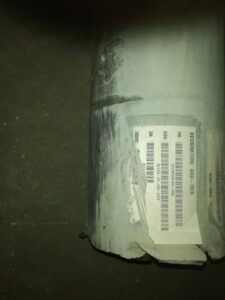
Labels on munition remnants can provide a host of useful data, including the model designation (in this case, “GBU-39/B”), part number (PN; (“70P998100-1003”), National Stock Number (NSN; “1325-01-526-8728”), serial number (SN; illegible), and Department of Defense Identification Code (DODIC; “EC53”). These codes, and others like them, can often be searched for in databases or provided to technical specialists for further interpretation. (ARES)


Analyst Note
14 October 2024
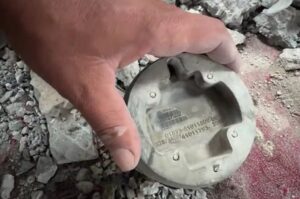
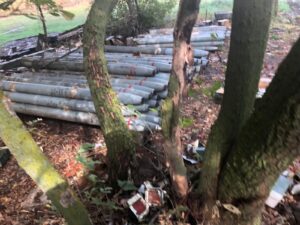
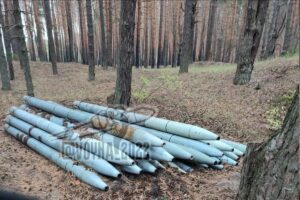
The 9M28S surface-to-surface unguided rocket carries the 9N510 warhead, which disperses burning thermite-type incendiary elements over a wide area upon functioning. This munition is designed to start fires in target areas vulnerable to incendiary attack, including forests, ammunition dumps, and fuel storage sites. (ARES)

Analyst Note
14 October 2024
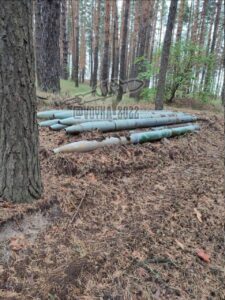
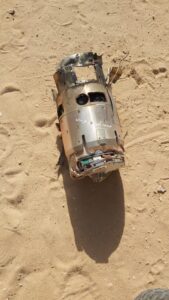
This 9M27K-series surface-to-surface cargo rocket is carrying a payload of 9N210 or 9N235 high explosive fragmentation (HE-FRAG) submunitions. These submunitions are difficult to distinguish unless their external markings are visible, or a close examination is made. (ARES)

Analyst Note
14 October 2024
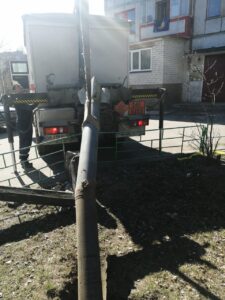
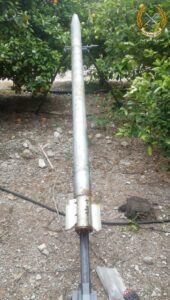
The crude launch arrangement depicted in this photograph shows the ease with which many simple rocket designs can be launched. Weapons such as this are used where precision fire is not a requirement; i.e., where the target might be a whole compound, neighbourhood, or settlement, rather than a specific building or vehicle. (ARES)
Analyst Note
11 September 2024
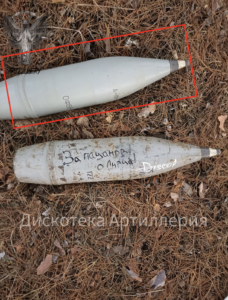
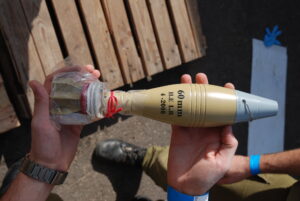
This is an Iranian 60 mm mortar projectile, marked to indicate it is of the ‘high explosive, long-range’ type (“H.E L.R”). Both the munition body and fuze are marked to with the year of production (“2008”). Whilst the tan colouring is often indicative of Iranian-made munitions (especially where the fins are also painted), this is not diagnostic, and a combination of physical features and markings should be assessed to reach a positive identification. (ARES)
Analyst Note
1 August 2024
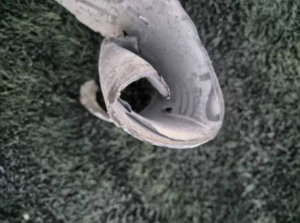
These are munition debris images released by the Israel Defence Forces and are not necessarily in situ. (Airwars)
Analyst Note
1 August 2024
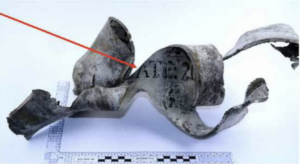
These are munition debris images released by the Israel Defence Forces and are not necessarily in situ. (Airwars)
Analyst Note
1 August 2024
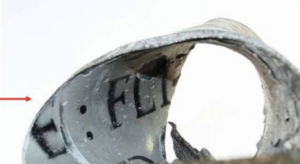
These are munition debris images released by the Israel Defence Forces and are not necessarily in situ. (Airwars)
Analyst Note
11 September 2024
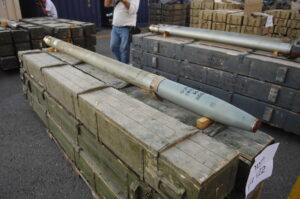
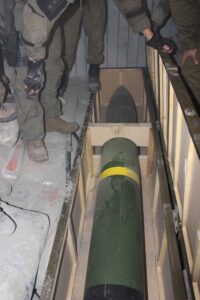
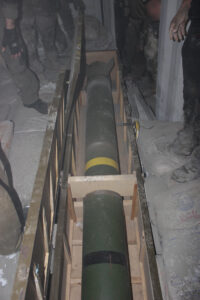
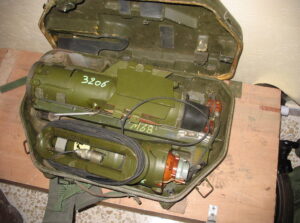
The 9M14 Malyutka anti-tank guided missile was designed and fielded by the Soviet Union in the 1960s. It uses an outdated guidance principle known as manual command to line-of-sight (MCLOS), in which the operator must manually adjust the course of the missile in flight. Nonetheless, this munition has been seen in several 21st-century conflicts. (ARES)
Analyst Note
26 September 2024
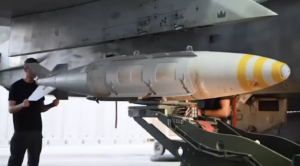
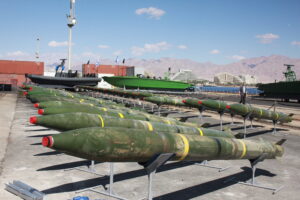
‘Khaibar-1’ is a designation given to a series of 302 mm rockets produced in Syria, possibly derived from the Chinese WS-1/WS-1B. The Khaibar-1 is also referred to as the M-302 or M302. (ARES)
Analyst Note
14 October 2024
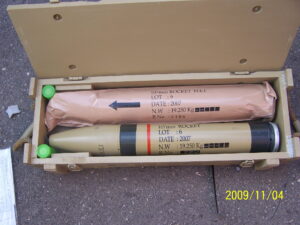
This Iranian copy of the Chinese Type 63 107 mm rocket is marked with a red stripe and text to indicate it is of the high explosive incendiary (“H.E.I”) type. Markings also show that it was produced in 2007. (ARES)
Analyst Note
16 September 2024
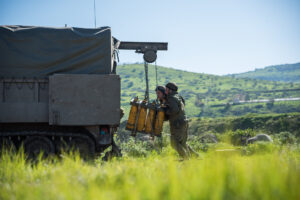
These M485 series 155 mm artillery gun projectiles are painted yellow to indicate their functional type: illumination rounds. The M485 series of illumination projectiles are base-eject munitions that expel a parachute-retarded illuminant canister which casts light over the battlefield as it descends. (ARES)


Analyst Note
11 September 2024
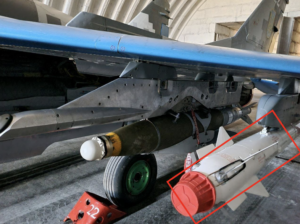
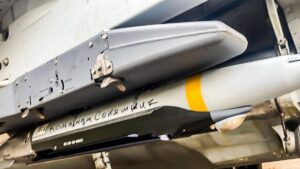
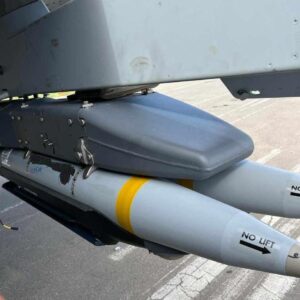
In this image, two GBU-39 Small Diameter Bombs are attached to a BRU-61/A bomb rack. The Ukrainian Air Force adapted this American-designed bomb rack to fit their Soviet-designed Mikoyan MiG-29 fighter aircraft. The BRU-61/A can carry up to four GBU-39 air-delivered bombs. (ARES)





Analyst Note
29 July 2024
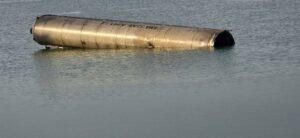
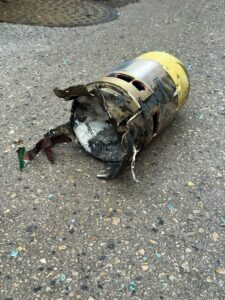
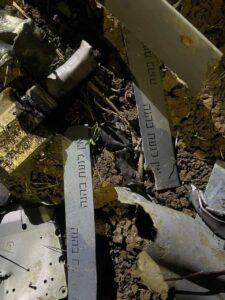
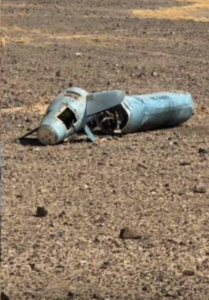
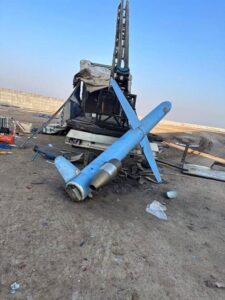
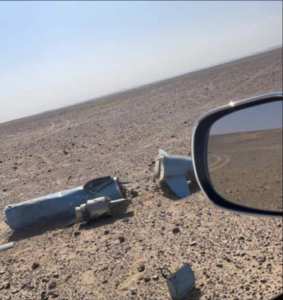
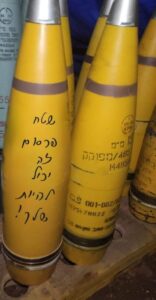
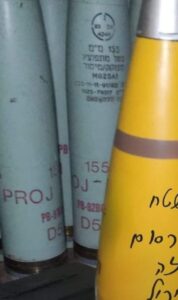
Israeli illumination munitions—often finished in a distinctive yellow—are sometimes mistaken for high explosive munitions by observers more familiar with the NATO or U.S. marking systems. This image shows an M485-pattern illumination projectile, a base-eject type that uses a parachute-retarded canister containing a powerful candle to illuminate the battlefield.
Analyst Note
25 June 2024
The M825A1 155 mm smoke projectile makes use of white phosphorus (WP) to generate a brilliant white smoke. Whilst WP does have incendiary effects, the method of dispersal in the case of the M825A1 is optimised for screening and marking purposes. (ARES)
Analyst Note
29 July 2024
This image depicts an M117-series unguided aerial bomb. Belonging to a class of weapons referred to as ‘demolition bombs’—which use Tritonal or similar explosive compounds to generate a more powerful blast effect than TNT or Composition B—the M117 is an American design which dates to the Korean War era and is rarely seen in service with modern armed forces. (ARES)
2 Analyst Notes
30 May 2024
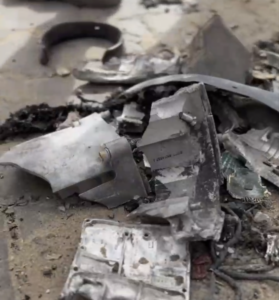
This munition is assessed to be one of the Small Diameter Bomb (SDB) I variants (GBU-39 series), rather than one of the SDB II 'StormBreaker' (GBU-53 series) munitions, on the basis of contextual information. 'Small Diameter Bomb' is the manufacturer's terminology, whilst 'GBU-39' is the U.S. Air Force designation (also used by many other operators). (ARES)
Analyst Note
30 May 2024
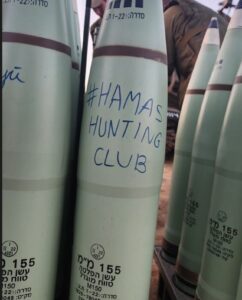
Some artillery projectiles, such as this M150 type, use a hexachloroethane-based composition (HC) to generate smoke for screening or marking purposes. In many armed forces, HC smoke munitions have partially replaced those relying on white phosphorus for similar effects. (ARES)
Analyst Note
3 June 2024
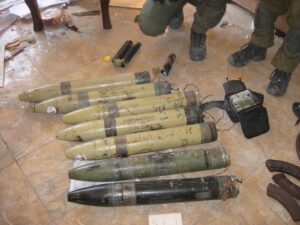
107mm spin-stabilized rockets of this design are often utilized by non-state actors in an indirect fire role. Like the original Chinese models that they are copied from, they do not require more than a simple electric power source and a rudimentary launch platform to achieve an acceptable level of accuracy. (ARES)
Analyst Note
30 May 2024
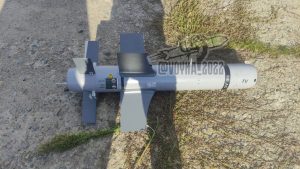
The various Iranian Qaem-series guided air-delivered bombs can be difficult to differentiate from one another. In this case, the wing (forward fin) assembly distinguishes this Qaem-5 from the visually similar Qaem-1. Note also that the name 'Qaem' has applied by Iran to other, unrelated munitions. (ARES)



Analyst Note
30 May 2024
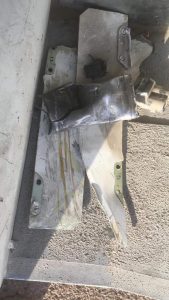
Many guided (or otherwise complex) munitions like this one are marked with additional information on individual assemblies or components. This can include information on sub-contractors that produced or integrated specific parts of a munition. (ARES)
Analyst Note
6 June 2024
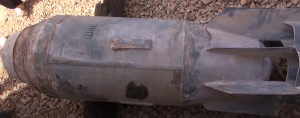
The M-54 ‘high-drag’ series of Soviet/Russian air-delivered bombs can be distinguished by two key identification features: 1.) the ballistic ring located in the forward portion of the bomb (missing in this example); and 2.) the presence of two or four rectangular, longitudinal ‘levelling bars’ (two can be seen in this example). (ARES)

Analyst Note
30 May 2024
Russian air-delivered cluster bombs, such as this one, are often named using a designation that is a compound of the names of the cargo (carrier) bomb and the submunition it carries. For example, this RBK-500 unguided, air-delivered cluster bomb carries 268 PTAB-1M HEAT submunitions, and is thus designated the 'RBK-500 PTAB-1M'. (ARES)
Analyst Note
30 May 2024
This component is one of four pneumatically controlled canards from the guidance section of a Paveway II precision guided munition (PGM) conversion kit. When a Paveway II conversion kit is fitted to a MK 82 series unguided air-delivered bomb (note markings), the munition receives a GBU-12 series designation. (ARES)


Analyst Note
23 May 2024
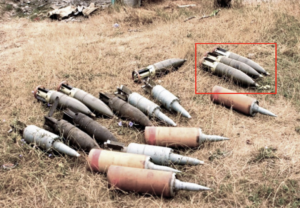
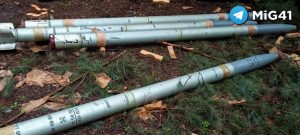
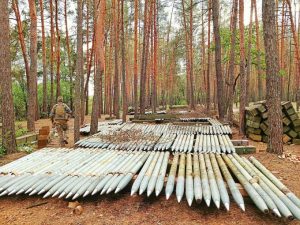
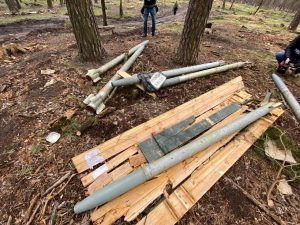
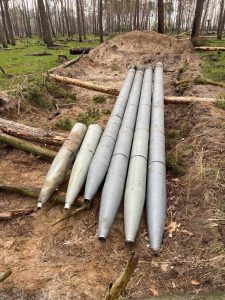
This image features both delivered (the two left-most munitions) and undelivered munitions of the same model.