



701–800 of 1,163
Current Filter
Fragmentation Munition
Fragmentation munitions use the detonation of an explosive to propel small fragments of material (‘fragmentation’) from the body of the munition at high velocity. A fragmentation munition typically affects a wider area than a simple blast munition of the same size, and is effective against personnel and unarmoured vehicles. Fragmentation is the primary mechanism of lethality for many common explosive munitions, but these munitions almost invariably also affect their environment through blast and other mechanisms (e.g., a high explosive fragmentation munition).



Analyst Note
17 December 2024
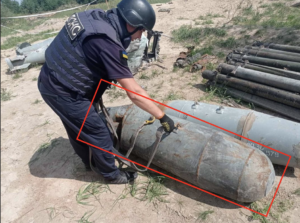
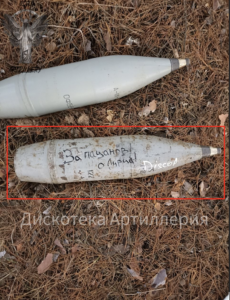
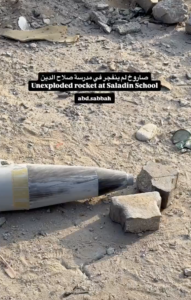
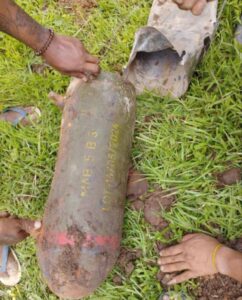
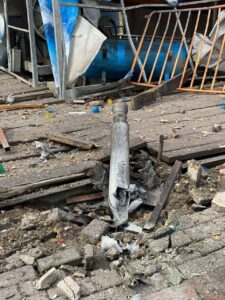
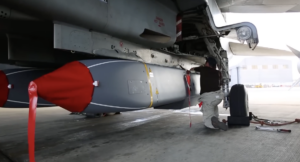
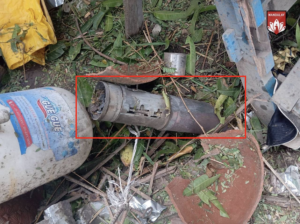
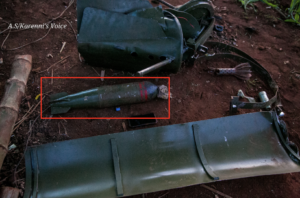
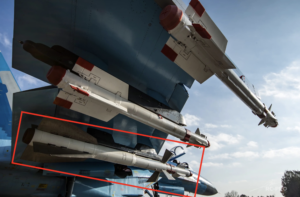
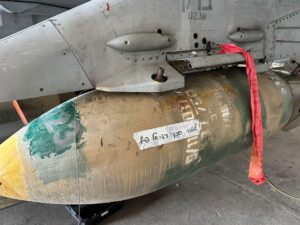
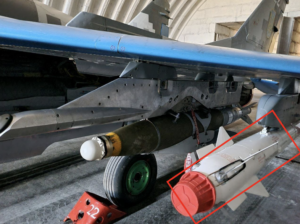
As with several other images in the OSMP database, the text on this image was added by a social media user prior to its inclusion herein. Rather than a “rocket” as described in the annotation, this image actually shows an air-delivered bomb. (ARES)
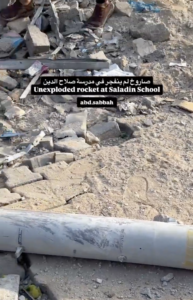



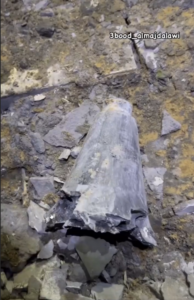
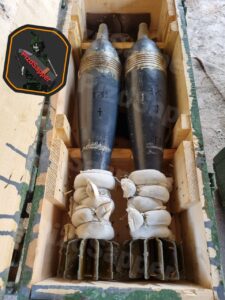
Analyst Note
26 November 2024
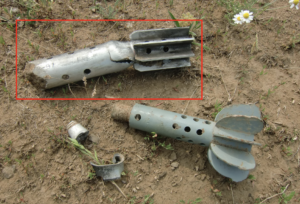
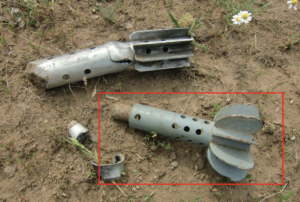
The two North Korean 120 mm high explosive (HE) mortar projectiles in this image are each fitted with five cloth bags affixed above the tailfins. These are incremental propellant charges (sometimes known as augmenting, auxiliary, or supplemental charges), the number of which can be varied along with a mortar’s elevation to adjust the trajectory and range of the munition when fired. (ARES)
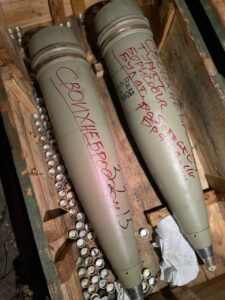
Analyst Note
26 November 2024
This image shows two Iranian 130 mm high explosive (HE) artillery gun projectiles. Calibre (“130MM”) and functional type (“HE - TNT”) markings are visible on the right-hand example, whilst a lot marking (“LOT:10/202[…]”) is partially obscured. The “TNT” marking indicates that this munition uses a trinitrotoluene composition as its explosive fill. (ARES)


Analyst Note
14 October 2024
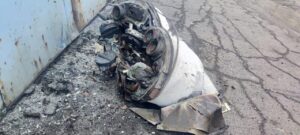
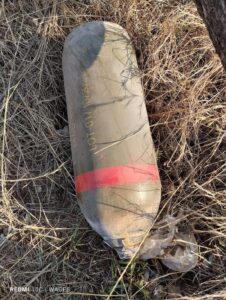
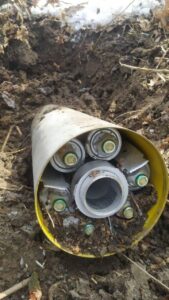
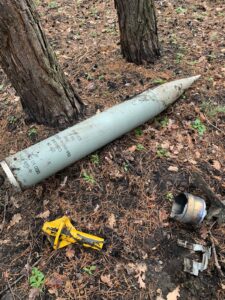
This 9M27K-series surface-to-surface cargo rocket is loaded with either 9N210 or 9N235 high explosive fragmentation (HE-FRAG) submunitions. These models are nearly identical in construction, differing primarily in the nature of the pre-formed fragments they carry. (ARES)
Analyst Note
26 November 2024
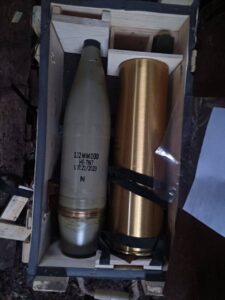
This image shows an Iranian 122 mm high explosive (HE) artillery gun projectile. Like several other munitions, it is described in Iranian sources—and, in this case, on the munition itself—only by reference to the weapon with which it is most often associated: the Soviet-designed 122 mm D-30 howitzer (often rendered ‘D30’, without the hyphen, in Iranian service). This munition is also marked to indicate it was produced in 2023. Interpreting munitions markings in this way, especially where they indicate recent manufacture, may provide evidence of ongoing supply during a conflict. (ARES)
Analyst Note
26 November 2024
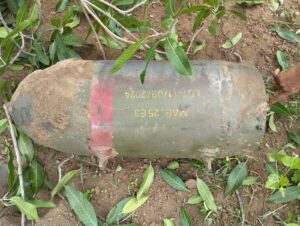
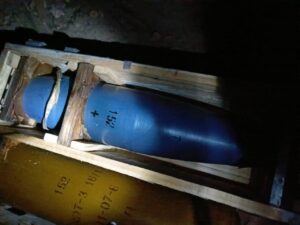
The munition indicated in this image as a 152 mm high explosive (HE) artillery gun projectile manufactured in the Democratic People’s Republic of Korea (DPRK). (ARES)
Analyst Note
26 November 2024
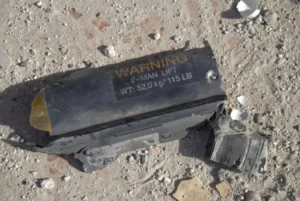
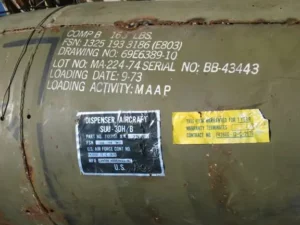
This image shows an SUU-30H/B, an air-delivered dispenser which can be configured to carry different submunition payloads. These can include 217 BLU-61 A/B, 650 BLU-63/B, or 650 BLU-86/B or BLU-86 A/B. The munition can also carry inert payloads. The specific combination of payload and dispenser determines the ‘Cluster Bomb Unit’ (CBU) designation, with SUU-30H/B dispensers being paired with different payloads to form the CBU-58 and CBU-71 series. Contextual information suggests that this dispenser was part of a CBU-58/B cluster munition, but this cannot be established from an assessment of this image alone. (ARES)
Analyst Note
25 November 2024
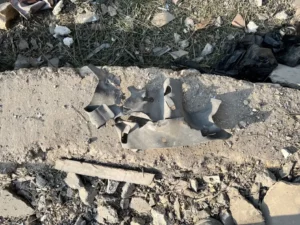
This image shows an aerosurface or ‘strake’ from a Joint Direct Attack Munition (JDAM) bomb guidance kit of the type fitted to MK 82-series 500-pound air-delivered bombs. The JDAM kits compatible with MK 82 bombs have aerosurfaces that are affixed near the nose of the bomb—rather than around the widest part of the bomb body, as seen in JDAM kits that are compatible with the larger MK 83 or MK 84 bombs. (ARES)

Analyst Note
14 November 2024
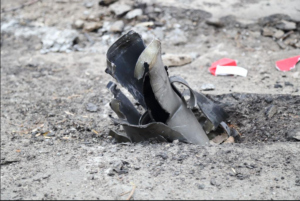
MK 84 unguided air-delivered bombs can be fitted with a variety of tail kits, or with guidance kits which convert them into precision guided munitions (PGMs). When an air-delivered bomb impacts a building or the ground without functioning, the tail or guidance kit may be sheared off. With these separated from the munition—and in the absence of other identifying features, such as a seeker fitted to the nose of the weapon—it becomes very difficult to determine whether the bomb was guided or unguided. (ARES)
Analyst Note
25 November 2024
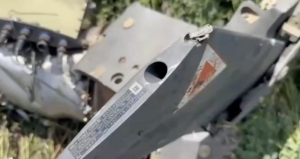
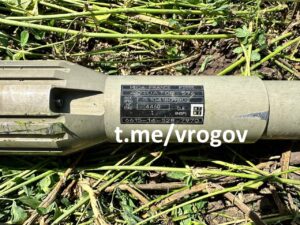
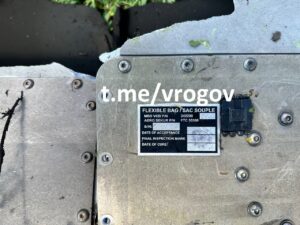
The internal components of large, complex munitions often feature markings to aid in assembly, supply chain oversight, and quality assurance. In this case, a data plate marked with the name of the manufacturer (“MBDA FRANCE”) has been affixed to one of the rear control fins (“EQ, VENTRAL, FIN TIP”) of the missile. The NATO Stock Number (NSN) is also visible. (ARES)
Analyst Note
25 November 2024
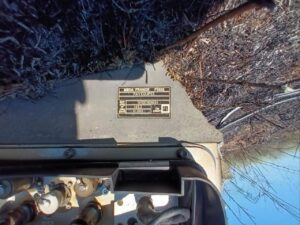
This image shows an actuator from a Storm Shadow-series missile. Actuators are components of guided munitions that are most often used to move control surfaces (e.g., fins and wings), enabling the munition to adjust its course in-flight in response to guidance commands. In this case, the component is fitted with a ‘data plate’ that indicates it was manufactured by MBDA France. (ARES)

Analyst Note
25 November 2024
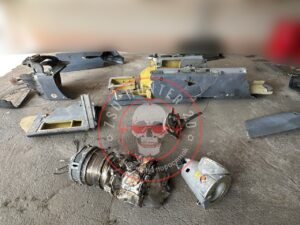
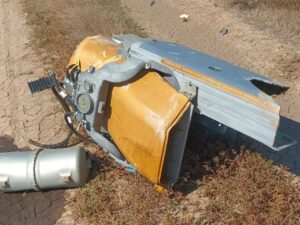
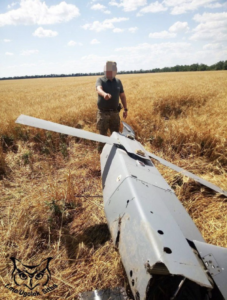
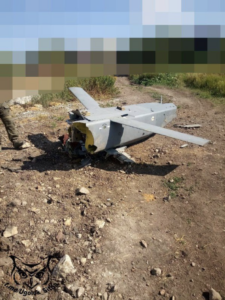
This image shows a Microturbo TRI 60-30 turbojet engine from a Storm Shadow-series air-launched cruise missile. Further remnants of the rear of the missile are also visible, including one of the rear control fins. The Storm Shadow has a range of more than 250 kilometres. (ARES)

Analyst Note
26 November 2024
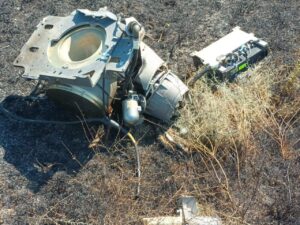
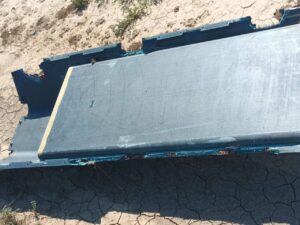
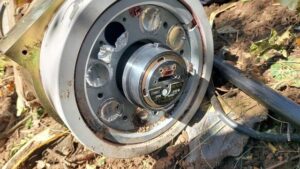
This image shows the rear of the second stage of the penetrator warhead (also called a ‘follow-through’ warhead) of the Bomb Royal Ordnance Augmented Charge (BROACH) multi-stage warhead system present in the Storm Shadow/SCALP-EG missile. The cylindrical object in the centre of the warhead (with a data plate marked “THALES”) is the fuze. (ARES)
Analyst Note
26 November 2024
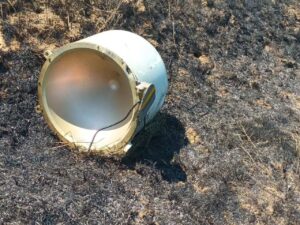
This image shows the first stage of the Bomb Royal Ordnance Augmented Charge (BROACH) multi-stage warhead used by the Storm Shadow/SCALP-EG missile. The BROACH uses a shaped-charge warhead (seen here) as its first stage, to help penetrate hardened targets, whilst the second stage comprises a conventional high explosive penetrator warhead (also called a ‘follow-through’ warhead) (ARES).
Analyst Note
26 November 2024
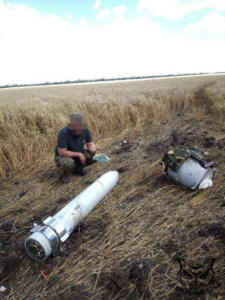
The remnant at left in this image is the second stage, or penetrator warhead, of the Bomb Royal Ordnance Augmented Charge (BROACH) multi-stage warhead as used in the Storm Shadow/SCALP-EG air-launched cruise missile. In this case, it has failed to function as intended. (ARES)

Analyst Note
11 November 2024
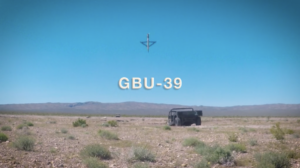
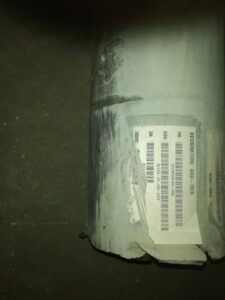
In this image, two GBU-39 guided air-delivered bombs can be seen in their shipping containers, with only the nose and the tail actuation section of the munitions clearly visible. Distinctive packaging such as this can sometimes be used as contextual evidence for the presence of specific munitions. (ARES)

Analyst Note
20 November 2024
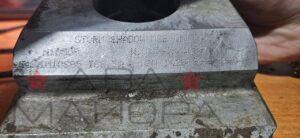
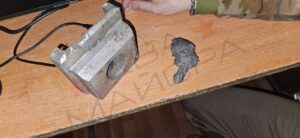
This image shows part of a heavy-duty suspension lug associated with the Storm Shadow air-launched cruise missile. This is made clear from dot-peened markings which include “STORM SHADOW USE ONLY” and identifiers such as a NATO Stock Number (NSN). (ARES)
Analyst Note
20 November 2024
The munitions remnant on the left of this image is part of a suspension lug associated with the Storm Shadow air-launched cruise missile, which is used to attach the munition to an aircraft. This component is of heavy construction, and as such often survives the missile’s functioning intact. This photograph purports to show remnants recovered from a Storm Shadow missile that was fired by Ukrainian forces into Russian territory, but this claim cannot be verified from the image alone. (ARES)

Analyst Note
19 November 2024
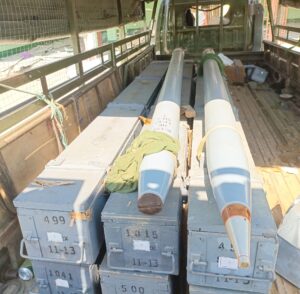
These R-122 ‘Grad’-type 122 mm surface-to-surface rockets were produced in North Korea. The example to the right is fitted with an F-122 impact fuze. Whilst a two-tone colour scheme is more common amongst those North Korean Grad rockets thus far identified in the context of the Ukraine conflict (these typically featuring a black forward section), uniformly coloured examples like this have also been identified previously. (ARES)
Analyst Note
14 October 2024
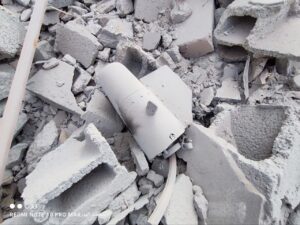
The 9M27K3 surface-to-surface rocket is fitted with the 9N128K3 cargo warhead (seen here). This warhead carries a payload of 312 PFM-1 or PFM-1S scatterable anti-personnel landmines. (ARES)


Analyst Note
2 November 2024
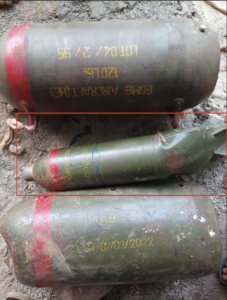
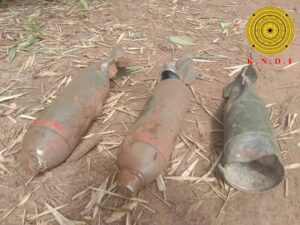
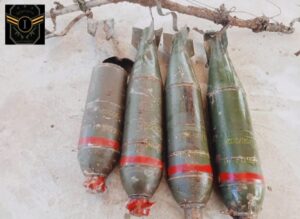
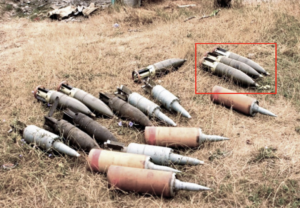
The arming vane for a nose fuze (painted red) is visible on each of the two leftmost MAB-10B6 air-delivered bombs in this image. As the bomb falls, air passing over the arming vane causes it to spin, arming the fuze. (ARES)
Analyst Note
2 November 2024
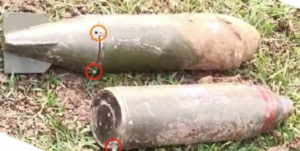
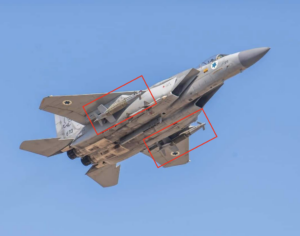
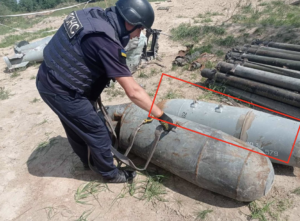
The circles in this image indicate where the fixed fin assembly is connected to the bomb body. Fin assemblies such as this help stabilise the bomb as it falls, improving the predictability of the trajectory and thus precision. Fins also orient the bomb as it falls so that munition travels nose-down. Orientation of the bomb on impact can play a role in fuze functioning, as well as the distribution of explosive or other effects. (ARES)
Analyst Note
11 November 2024
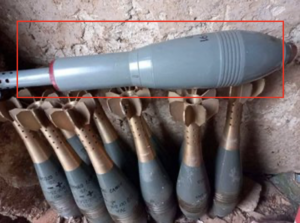
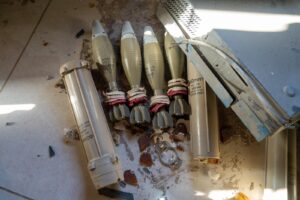
This Iranian 60 mm mortar projectile is of the ‘Long Range’ type described without a specific model name in various Iranian export catalogues and other sources. The designation as marked on projectiles and packaging is variable, with observed formulations including “60mm H.E. L.R.”, “60mm H.E L.R”, and “60mm HE L.R”. Sometimes, as here, “60mm L.R” is followed by “HE / TNT”. (ARES)

Analyst Note
14 October 2024
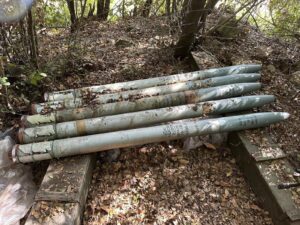
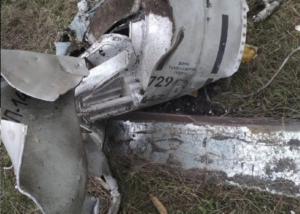
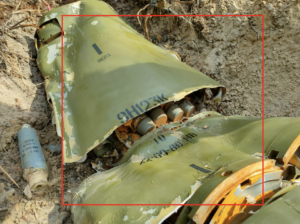
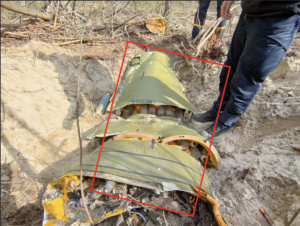
The 9Н123К (9N123K) cargo warhead is delivered by a 9М79К (9M79K) series surface-to-surface guided missile. This cluster munition carries fifty 9Н24 (9N24) high explosive fragmentation (HE-FRAG) submunitions, and is launched from the 9К79 Tochka series of tactical ballistic missile launchers. (ARES)
Analyst Note
14 October 2024
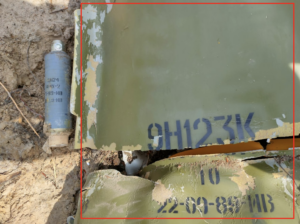
A 9N24 submunition is visible to the left of the 9N123K warhead in this image. This high explosive fragmentation (HE-FRAG) submunition is marked to indicate it was produced in 1989 and filled with A-IX-2 explosive composition. (ARES)

Analyst Note
24 October 2024
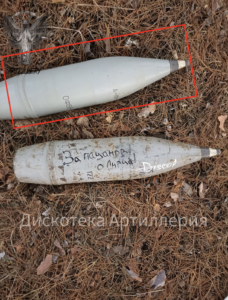
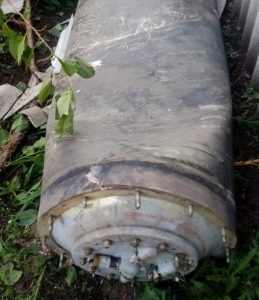
Labels on munition remnants can provide a host of useful data, including the model designation (in this case, “GBU-39/B”), part number (PN; (“70P998100-1003”), National Stock Number (NSN; “1325-01-526-8728”), serial number (SN; illegible), and Department of Defense Identification Code (DODIC; “EC53”). These codes, and others like them, can often be searched for in databases or provided to technical specialists for further interpretation. (ARES)

Analyst Note
15 October 2024
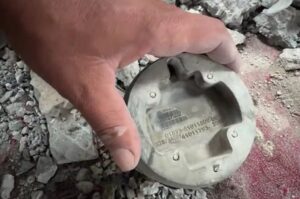
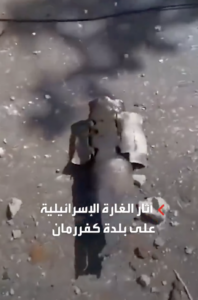
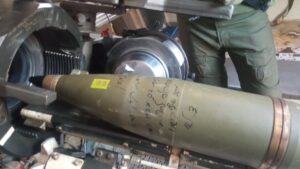
This M107 high explosive (HE) artillery gun projectile is fitted with an RT180 multi-function fuze. The RT180 can be set to operate in point-detonating or proximity modes. The factory setting for the proximity fuze detonates the warheads an average of 9 metres above the target. (ARES)