The external organisation that documented the munition
Research Organisation (6)
Colour of the munition pictured
Base Colour (12)
Colour of all, or some, of the markings on the munition
Marking Colour (11)
Language or script of the marking on a munition
Marking Script (10)
Condition of the munition pictured
Condition (6)
Key features defining the operation mechanisms of a projectile
Mechanical Feature (10)
Whether a munition is guided or unguided
Guidance (2)
Where the munition is launched from and what it targets
Domain (7)
The type of fins visible on the munition
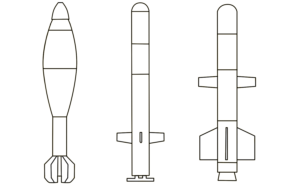
Fins Characteristic (6)
The nominal diameter of a projectile. For most modern munitions, this is expressed in millimetres (e.g. 82 mm mortar projectile), but older artillery gun projectiles may be described in inches.
Fragmentation munitions use the detonation of an explosive to propel small fragments of material (‘fragmentation’) from the body of the munition at high velocity. A fragmentation munition typically affects a wider area than a simple blast munition of the same size, and is effective against personnel and unarmoured vehicles. Fragmentation is the primary mechanism of lethality for many common explosive munitions, but these munitions almost invariably also affect their environment through blast and other mechanisms (e.g., a high explosive fragmentation munition).
The M329 is a multi-purpose tank gun projectile designed to engage a range of targets other than tanks. It is one of the few cluster munitions that takes the form of a tank gun projectile, dispensing six explosive submunitions over a relatively small area. It has also been referred to as the ‘APAM 120’, describing its functional role (‘anti-personnel/anti-materiel’) and calibre (120 mm). (ARES)
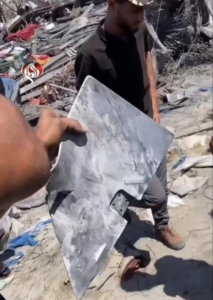
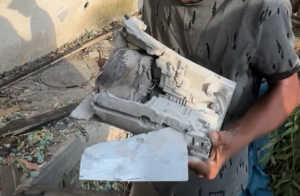
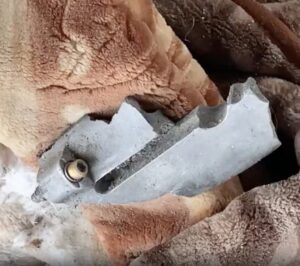
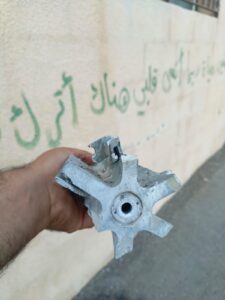
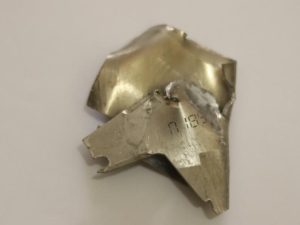
This image shows a distinctively shaped component of MBDA’s ‘Diamond Back’ joined tandem wing assembly as fitted to the GBU-39 Small Diameter Bomb (SDB). (ARES)
The SPICE family of munitions, manufactured by Israeli aerospace and defence company Rafael, includes two models which use ‘bolt-on’ guidance kits. The SPICE 1000 and SPICE 2000 models convert 1,000- and 2,000-pound unguided aerial bombs, respectively, to precision guided munitions. (ARES)
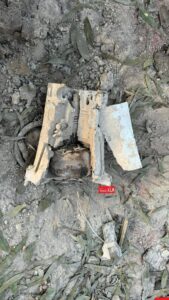
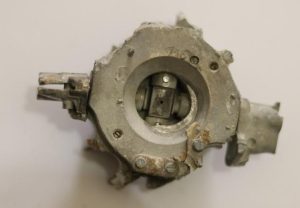
The remnant pictured here is part of a Small Diameter Bomb actuator assembly (‘Tail Actuation Section’), which moves the four tail-fin control surfaces which alter the course of the munition in flight. (ARES)
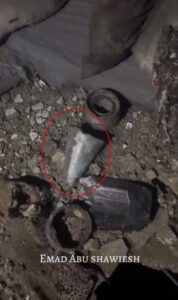
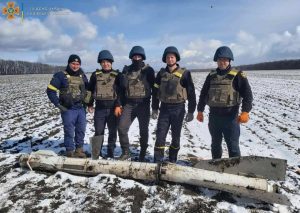
The circled remnant is the hardened steel nosecone of the GBU-39, which renders the munition capable of penetrating more than 3 feet (approx. 1 metre) of steel-reinforced concrete. It is one of several components that often survives the detonation of the munition. (ARES)
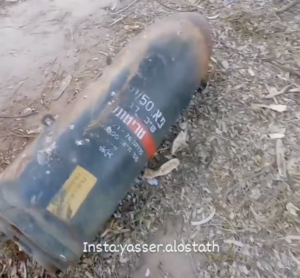
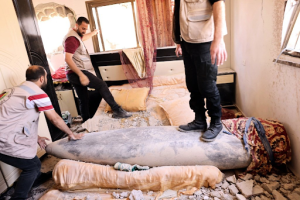
This image depicts an M117-series unguided aerial bomb. Belonging to a class of weapons referred to as ‘demolition bombs’—which use Tritonal or similar explosive compounds to generate a more powerful blast effect than TNT or Composition B—the M117 is an American design which dates to the Korean War era and is rarely seen in service with modern armed forces. (ARES)
This munition is assessed to be one of the Small Diameter Bomb (SDB) I variants (GBU-39 series), rather than one of the SDB II 'StormBreaker' (GBU-53 series) munitions, on the basis of contextual information. 'Small Diameter Bomb' is the manufacturer's terminology, whilst 'GBU-39' is the U.S. Air Force designation (also used by many other operators). (ARES)
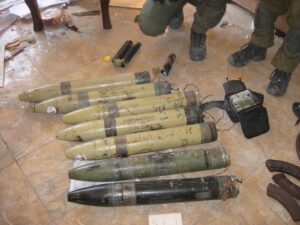
107mm spin-stabilized rockets of this design are often utilized by non-state actors in an indirect fire role. Like the original Chinese models that they are copied from, they do not require more than a simple electric power source and a rudimentary launch platform to achieve an acceptable level of accuracy. (ARES)
The various Iranian Qaem-series guided air-delivered bombs can be difficult to differentiate from one another. In this case, the wing (forward fin) assembly distinguishes this Qaem-5 from the visually similar Qaem-1. Note also that the name 'Qaem' has applied by Iran to other, unrelated munitions. (ARES)
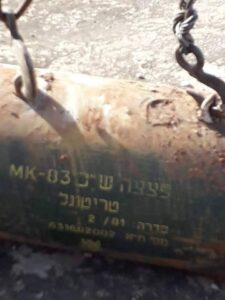
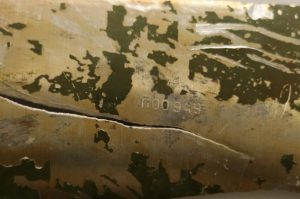
The MK 84 series of unguided air-delivered bombs can be converted to precision guided munitions by being fitted with guidance kits such as the Joint Direct Attack Munition (JDAM), SPICE 2000, or Paveway series. This MK 84 is also marked with a variant designation “MOD 4”. (ARES)
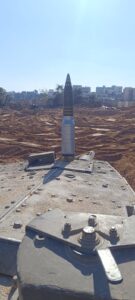
The image is of "a high-velocity shell fired from the main armament of a battle tank," Desmond Travers, former director of the Institute for International Criminal Investigations, told Airwars and AFP. "The calibre appears to be 120 mm, and the shell is fin-stabilised. The maximum effective range is five kilometers, but a skilled tank crew member should be able to hit a target the size of a car." (Airwars)
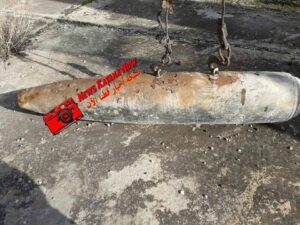
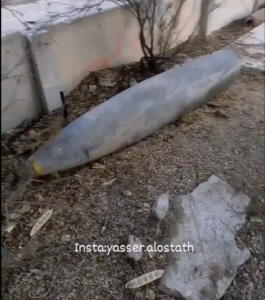
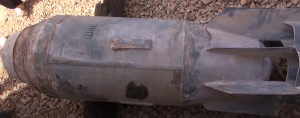
The M-54 ‘high-drag’ series of Soviet/Russian air-delivered bombs can be distinguished by two key identification features: 1.) the ballistic ring located in the forward portion of the bomb (missing in this example); and 2.) the presence of two or four rectangular, longitudinal ‘levelling bars’ (two can be seen in this example). (ARES)
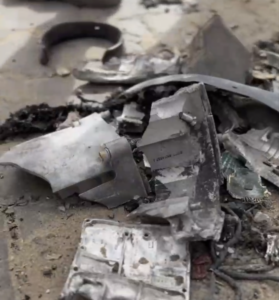
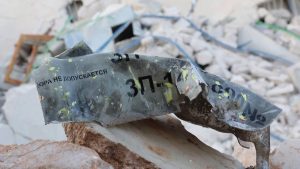
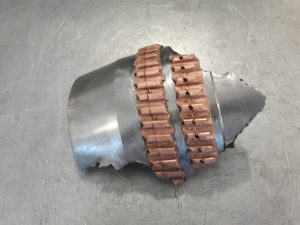
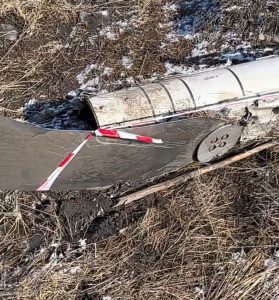
The 57E6 series of missiles fired from the 96K6 Pantsir system use a two-stage design that is unusual for surface-to-air missiles of this type. The remnant seen in this image is part of the missile’s booster section, which accelerates the second stage to a high velocity before separating. The booster section uses a distinctive toffee-brown, filament-wound composite body. (ARES)
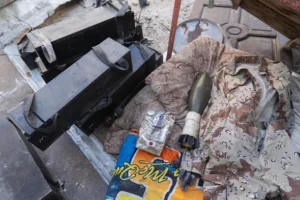
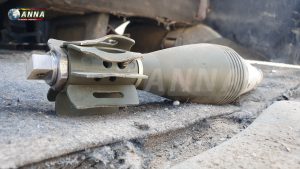
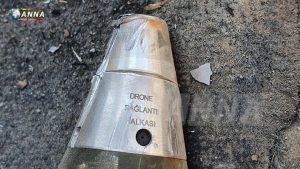
Although this munition started out life as a mortar projectile of the M492-pattern, it has been modified to be dropped from an unmanned aerial vehicle (UAV) and, in its present state, could not be fired from a conventional mortar. As such, it is correctly classified here as an air-delivered bomb. (ARES)
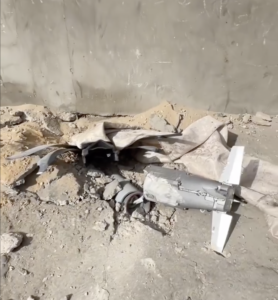
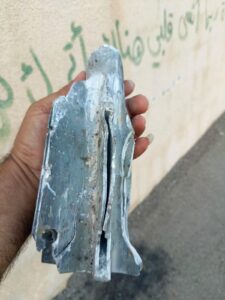
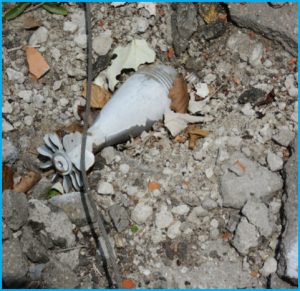
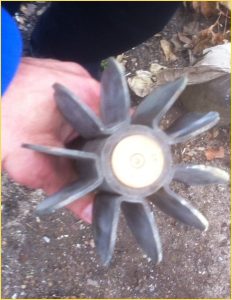
The fin assembly in the image bears a strong resemblance to those of other munitions employed in the same incident that have been identified as M49A2 mortar projectiles modified to be delivered by UAV. (ARES)
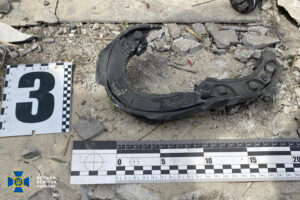
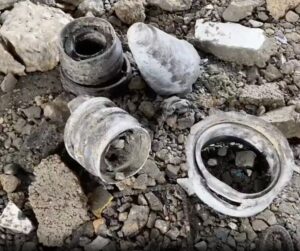
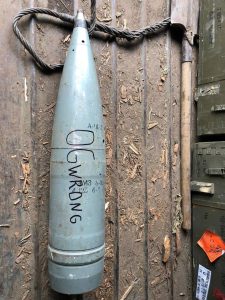
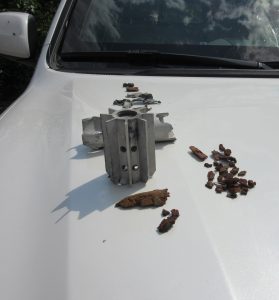
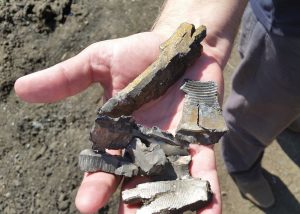
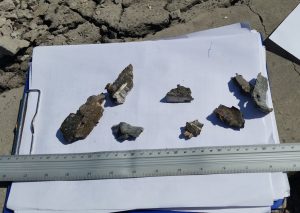
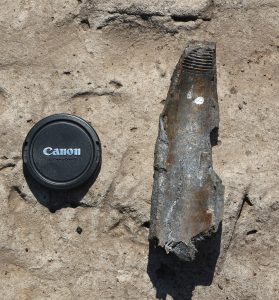
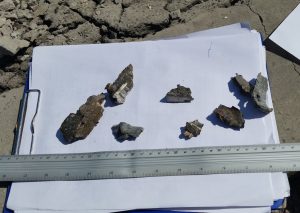
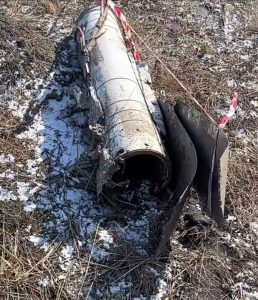
The munition remnants pictured here are likely to be from either a Russian OG-9 or a Bulgarian RHEF-9MA/GHEF-9MA recoilless gun projectile. However, based on the available information, positive identification cannot be not be made. (ARES)
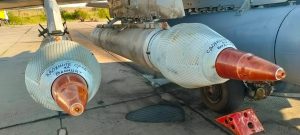
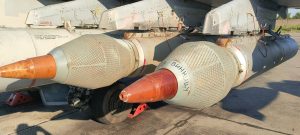
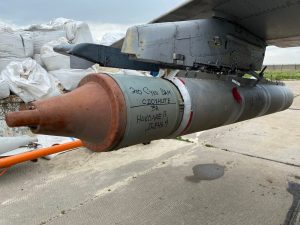
These S-25-O air-to-surface rockets are each loaded into a single-barrelled O-25 rocket launcher (sometimes called a 'launch tube' or 'rocket pod') that is affixed to an aircraft hardpoint. The over-calibre high explosive fragmentation warhead (of 420 mm in diameter) protrudes from the front of the tube. (ARES)


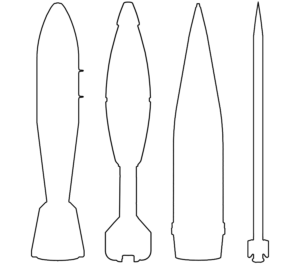
 Use the detonation of an explosive to propel small fragments of material from the body of the munition at high velocity