


601–700 of 933
Current Filter
Surface-to-Surface
Munitions launched from a ground-based weapons platform, whether on land or at sea, and designed to strike other surface targets.



Analyst Note
14 October 2024
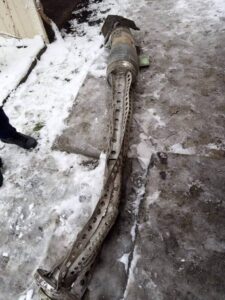
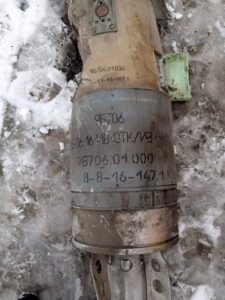
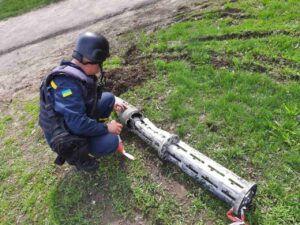
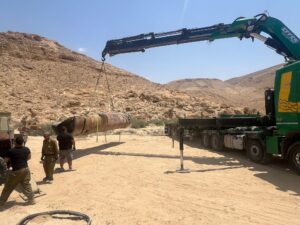
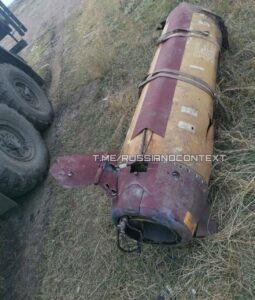
This 9M27K-series surface-to-surface cargo rocket is carrying a payload of 9N210 or 9N235 high explosive fragmentation (HE-FRAG) submunitions. These submunitions are difficult to distinguish unless their external markings are visible, or a close examination is made. (ARES)

Analyst Note
18 November 2024
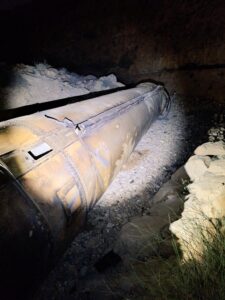
The MGM-140 Army Tactical Missile System (ATACMS) series includes variants with a variety of different payloads, including submunitions and unitary high explosive (HE) warheads. The number of submunitions carried and effective ranges also vary.
Ukraine has reportedly received the MGM-140A and MGM-140B variants, which are externally visually identical and must usually be distinguished by markings. The MGM-140A carries 950 M74 submunitions, with an effective range of 165 km, while the MGM-140B carries only 300 M74 submunitions but has a longer effective range of 300 km. (ARES)
Analyst Note
14 October 2024
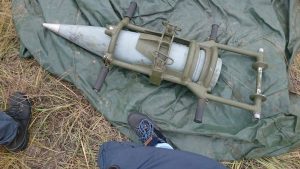
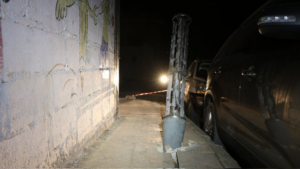
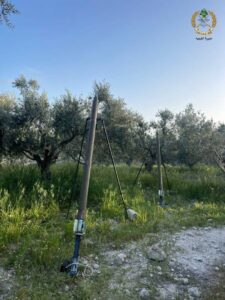
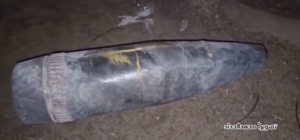
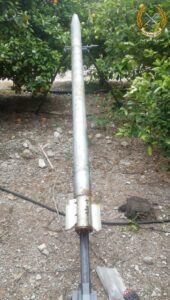
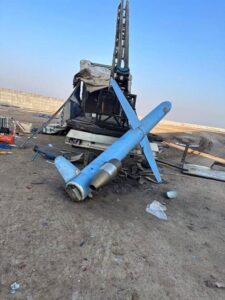
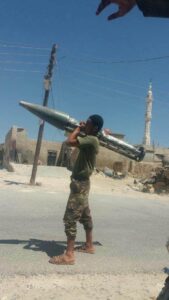
The crude launch arrangement depicted in this photograph shows the ease with which many simple rocket designs can be launched. Weapons such as this are used where precision fire is not a requirement; i.e., where the target might be a whole compound, neighbourhood, or settlement, rather than a specific building or vehicle. (ARES)
Analyst Note
14 October 2024
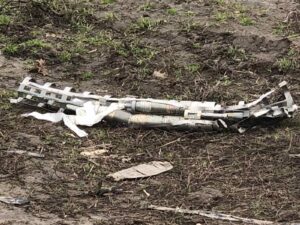
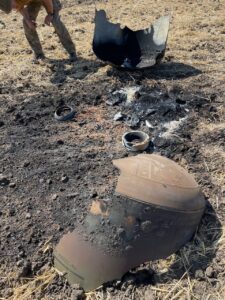
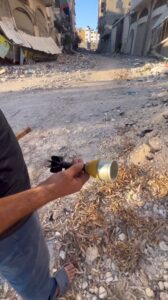
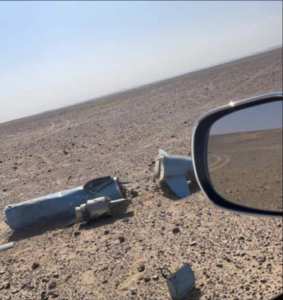
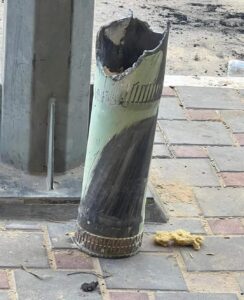
The M824 60 mm mortar projectile dispenses a parachute-retarded illumination flare which burns for 35 seconds. The tail portion of the munition (seen here) separates from the forward (body) portion and is sometimes found along the line of fire. (ARES)
Analyst Note
11 September 2024
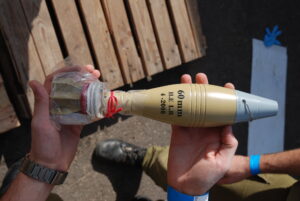
This is an Iranian 60 mm mortar projectile, marked to indicate it is of the ‘high explosive, long-range’ type (“H.E L.R”). Both the munition body and fuze are marked to with the year of production (“2008”). Whilst the tan colouring is often indicative of Iranian-made munitions (especially where the fins are also painted), this is not diagnostic, and a combination of physical features and markings should be assessed to reach a positive identification. (ARES)
Analyst Note
1 August 2024
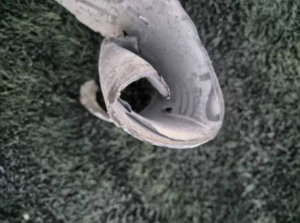
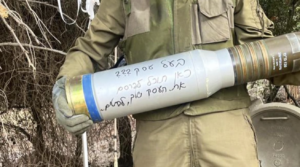
These are munition debris images released by the Israel Defence Forces and are not necessarily in situ. (Airwars)
Analyst Note
1 August 2024
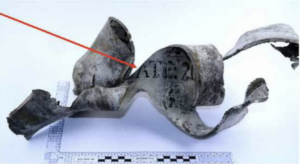
These are munition debris images released by the Israel Defence Forces and are not necessarily in situ. (Airwars)
Analyst Note
1 August 2024
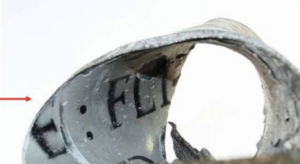
These are munition debris images released by the Israel Defence Forces and are not necessarily in situ. (Airwars)
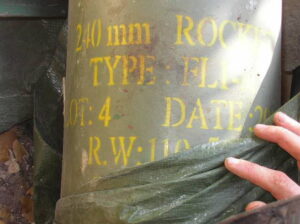
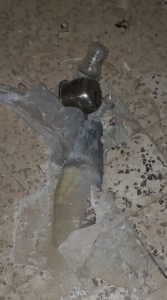
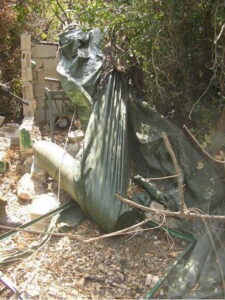
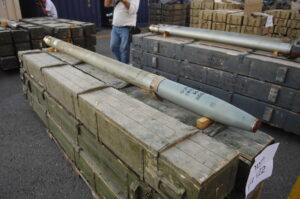
Analyst Note
14 October 2024
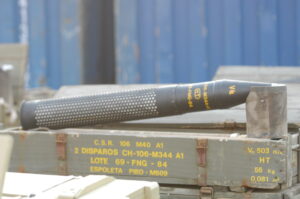
Markings on this 106 mm recoilless gun projectile indicate it is a M344A1 high explosive anti-tank (HEAT) round (“CH-106-M344-A1”) produced by Fábrica Nacional de Granada (“FNG”), Spain, in 1984 (“84”). The packing crate identifies the intended weapon as an M40A1 Cañón sin retroceso, or ‘recoilless rifle’ (“C.S.R. 106 M40 A1”). Other markings show that the round is fitted with an M509-type point-impact, base initiating (PIBD) fuze (“Espoleta PIBD M509”), and give additional details such as the expected muzzle velocity (“V₀”) of 503 m/s. (ARES)
Analyst Note
14 October 2024
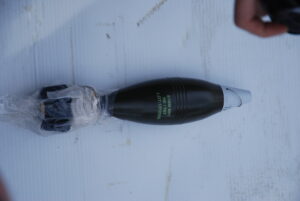
This Iranian M91 81 mm mortar projectile is marked to indicate it was produced in 2009. The AZ111A2 fuze fitted to the projectile is also marked with the same year of manufacture. (ARES)
Analyst Note
11 September 2024
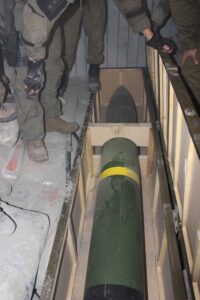
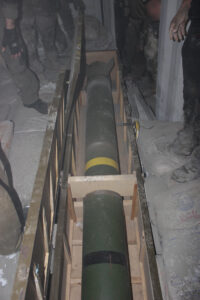
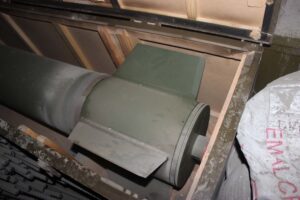
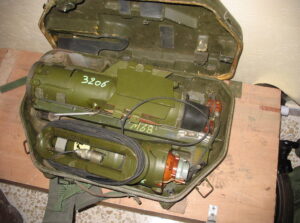
The 9M14 Malyutka anti-tank guided missile was designed and fielded by the Soviet Union in the 1960s. It uses an outdated guidance principle known as manual command to line-of-sight (MCLOS), in which the operator must manually adjust the course of the missile in flight. Nonetheless, this munition has been seen in several 21st-century conflicts. (ARES)
Analyst Note
26 September 2024
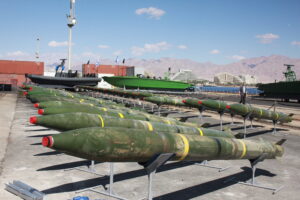
‘Khaibar-1’ is a designation given to a series of 302 mm rockets produced in Syria, possibly derived from the Chinese WS-1/WS-1B. The Khaibar-1 is also referred to as the M-302 or M302. (ARES)
Analyst Note
14 October 2024
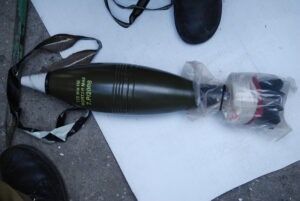
This Iranian M48 120 mm mortar projectile is marked to indicate it was manufactured in 2008. A plastic bag cable-tied to the tail of the munition protects the auxiliary, or supplemental, propellant charges fitted to the round. (ARES)
Analyst Note
16 September 2024
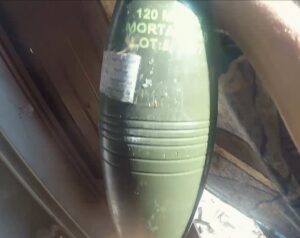
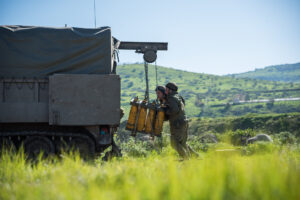
These M485 series 155 mm artillery gun projectiles are painted yellow to indicate their functional type: illumination rounds. The M485 series of illumination projectiles are base-eject munitions that expel a parachute-retarded illuminant canister which casts light over the battlefield as it descends. (ARES)
Analyst Note
14 October 2024
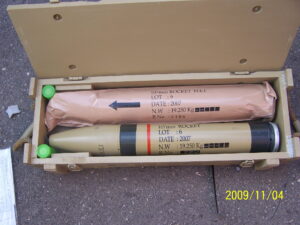
This Iranian copy of the Chinese Type 63 107 mm rocket is marked with a red stripe and text to indicate it is of the high explosive incendiary (“H.E.I”) type. Markings also show that it was produced in 2007. (ARES)
Analyst Note
14 October 2024
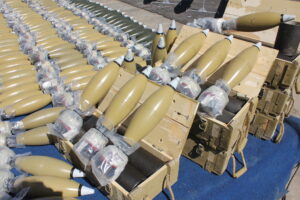
The physical features, colour scheme, and packaging of these 120 mm mortar projectiles are all consistent with Iranian manufacture, but the markings are mostly obscured in this image. (ARES)


Analyst Note
10 September 2024
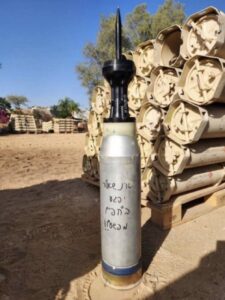
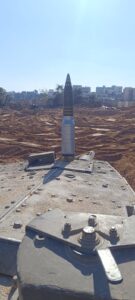
This is an Israeli 120 mm tank gun round, of the ‘armour-piercing, fin-stabilised discarding sabot – tracer’ (APFSDS-T) type. The physical features identify it as either the M322 or M338.
The projectile (penetrator) of this round has no explosive content and relies on kinetic energy to penetrate armoured targets. When a projectile is of a smaller calibre than the gun’s bore, a sabot is sometimes used to ensure the projectile is centred in the bore and to trap the gas from the propellant of the cartridge and propel the projectile. In flight, the sabot separates into two or more pieces, sometimes called ‘petals’, often found along the line of fire before the impact point. (ARES)


Analyst Note
11 September 2024
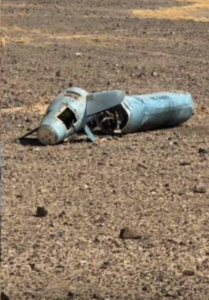
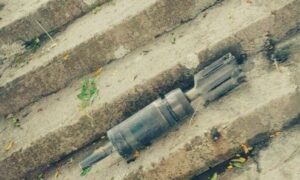
Some tank gun projectiles may have fins affixed to an extended ‘tail boom’, in a similar manner to a mortar projectile. Note, however, that the cylindrical tail assembly is not perforated as it would be for most mortar projectiles. Tank gun projectiles are also more likely to be generally cylindrical, rather than lachrymiform (teardrop-shaped). (ARES)
Analyst Note
29 July 2024
The M329 is a multi-purpose tank gun projectile designed to engage a range of targets other than tanks. It is one of the few cluster munitions that takes the form of a tank gun projectile, dispensing six explosive submunitions over a relatively small area. It has also been referred to as the ‘APAM 120’, describing its functional role (‘anti-personnel/anti-materiel’) and calibre (120 mm). (ARES)
Analyst Note
14 October 2024
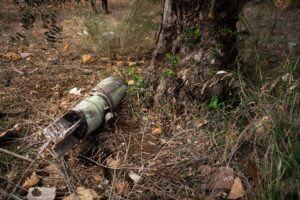
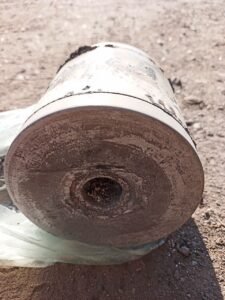
In this image, part of the distinctive internal 'X-rib' arrangement is visible protruding from the base of an M825-series white phosphorus smoke projectile. This is a useful diagnostic feature that can be used to distinguish remnants of these munitions from those of similar projectiles (such as those using a hexachloroethane/zinc smoke composition) if markings are not visible (ARES)

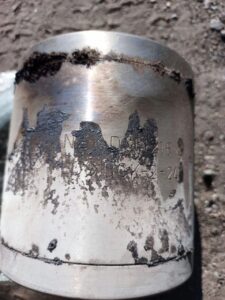
Analyst Note
29 July 2024
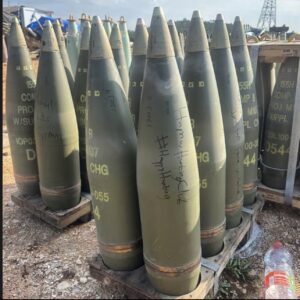
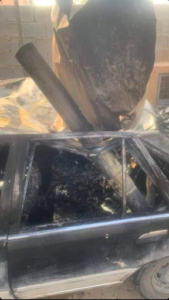
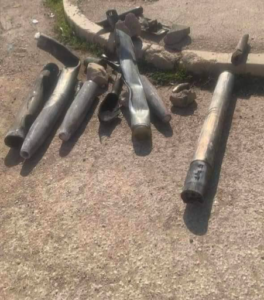
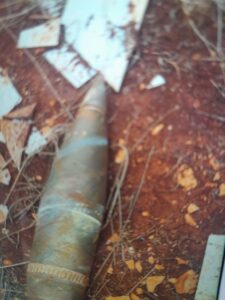
The remnants shown in these linked images have been falsely identified in Russian sources as chemical munitions. This image clearly exhibits the marking “NBK DM 1216”—the ‘NBK’ standing for the German Nebelkörper (‘smoke element’)—identifying this as one of four DM 1216 hexachloroethane/zinc (HC) smoke elements dispensed by the German DM 105 155 mm artillery gun projectile. Video of the incident shows all four elements being ejected from the base of the projectile in flight. (ARES)




Analyst Note
29 July 2024
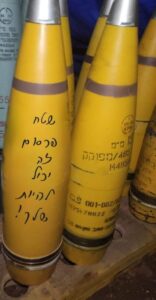
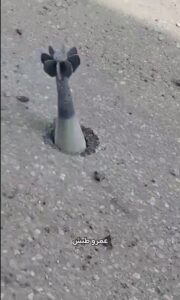
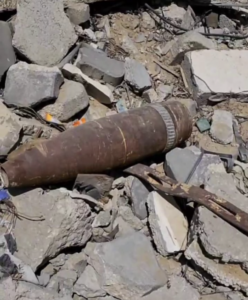
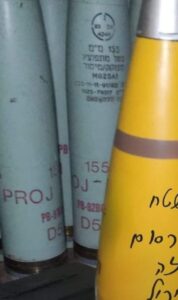
Israeli illumination munitions—often finished in a distinctive yellow—are sometimes mistaken for high explosive munitions by observers more familiar with the NATO or U.S. marking systems. This image shows an M485-pattern illumination projectile, a base-eject type that uses a parachute-retarded canister containing a powerful candle to illuminate the battlefield.

Analyst Note
25 June 2024
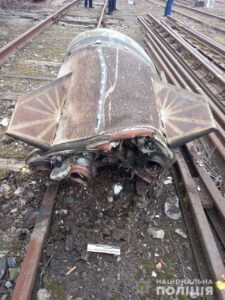
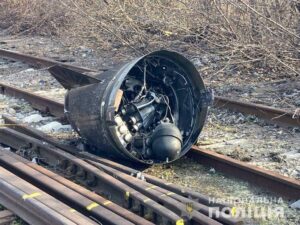
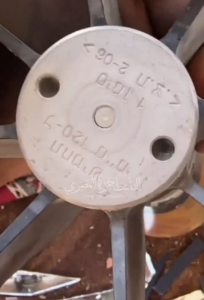
The M825A1 155 mm smoke projectile makes use of white phosphorus (WP) to generate a brilliant white smoke. Whilst WP does have incendiary effects, the method of dispersal in the case of the M825A1 is optimised for screening and marking purposes. (ARES)
Analyst Note
13 June 2024
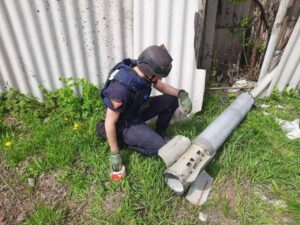
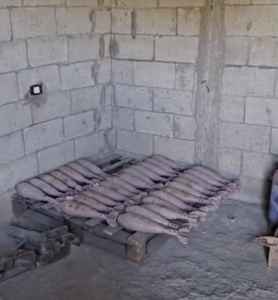
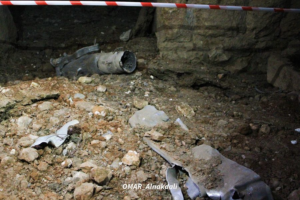
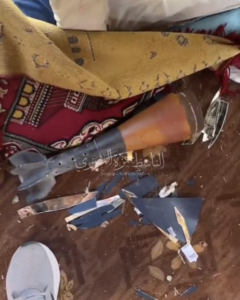
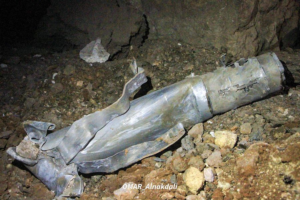
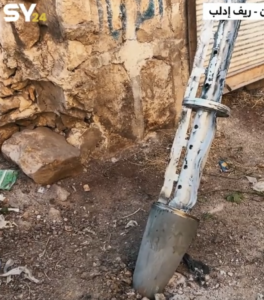
This image depicts either a 9M27K or 9M27K1 cargo rocket (cluster munition). The 9M27K carries the 9N210 high explosive fragmentation (HE-FRAG) submunition, whilst the 9M27K1 carries the 9N235 HE-FRAG submunition (ARES).
Analyst Note
31 May 2024
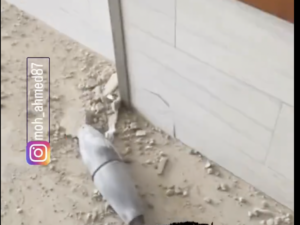
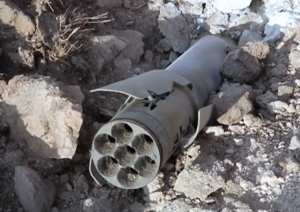
Contextual information suggests that this is likely a 9M22S unguided incendiary rocket (see External Research section), but this cannot be confirmed on the basis of this image alone. (ARES)
Analyst Note
30 May 2024
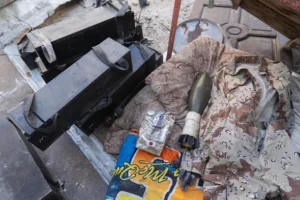
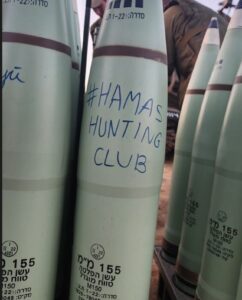
Some artillery projectiles, such as this M150 type, use a hexachloroethane-based composition (HC) to generate smoke for screening or marking purposes. In many armed forces, HC smoke munitions have partially replaced those relying on white phosphorus for similar effects. (ARES)
Analyst Note
3 June 2024
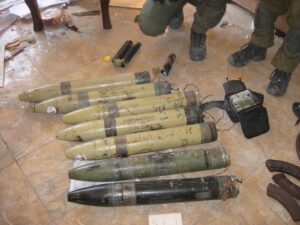
107mm spin-stabilized rockets of this design are often utilized by non-state actors in an indirect fire role. Like the original Chinese models that they are copied from, they do not require more than a simple electric power source and a rudimentary launch platform to achieve an acceptable level of accuracy. (ARES)