

901–1,000 of 1,218
Current Filter
Guided Munition
Munitions capable of altering their flight path in response to internal or external inputs, making them more precise. There are a range of ways munitions can be guided, including GPS, radar, and satellite, and guidance systems can be located in different parts of a munition.

Analyst Note:
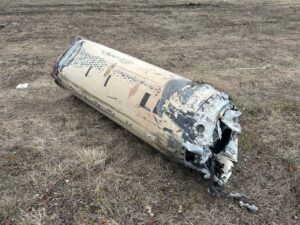
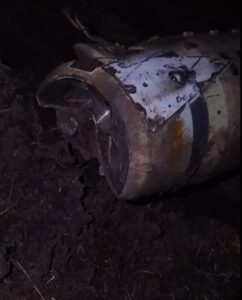
This image shows an aerosurface or ‘strake’ from a Joint Direct Attack Munition (JDAM) bomb guidance kit of the type fitted to MK 82-series 500-pound air-delivered bombs. The JDAM kits compatible with MK 82 bombs have aerosurfaces that are affixed near the nose of the bomb—rather than around the widest part of the bomb body, as seen in JDAM kits that are compatible with the larger MK 83 or MK 84 bombs. (ARES)
Analyst Note:
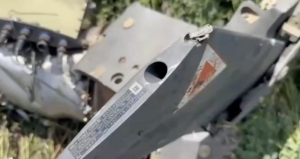
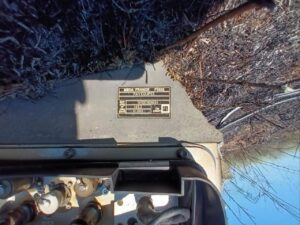
The internal components of large, complex munitions often feature markings to aid in assembly, supply chain oversight, and quality assurance. In this case, a data plate marked with the name of the manufacturer (“MBDA FRANCE”) has been affixed to one of the rear control fins (“EQ, VENTRAL, FIN TIP”) of the missile. The NATO Stock Number (NSN) is also visible. (ARES)
Analyst Note:
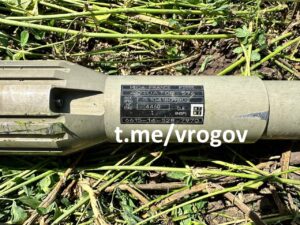
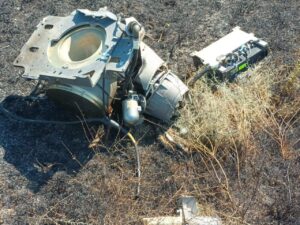
This image shows an actuator from a Storm Shadow-series missile. Actuators are components of guided munitions that are most often used to move control surfaces (e.g., fins and wings), enabling the munition to adjust its course in-flight in response to guidance commands. In this case, the component is fitted with a ‘data plate’ that indicates it was manufactured by MBDA France. (ARES)

Analyst Note:
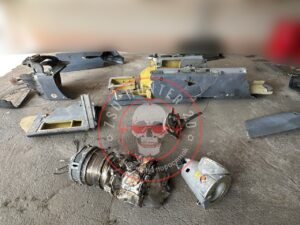
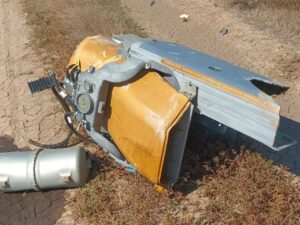
This image shows a Microturbo TRI 60-30 turbojet engine from a Storm Shadow-series air-launched cruise missile. Further remnants of the rear of the missile are also visible, including one of the rear control fins. The Storm Shadow has a range of more than 250 kilometres. (ARES)
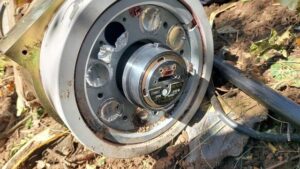
Analyst Note:
This image shows the rear of the second stage of the penetrator warhead (also called a ‘follow-through’ warhead) of the Bomb Royal Ordnance Augmented Charge (BROACH) multi-stage warhead system present in the Storm Shadow/SCALP-EG missile. The cylindrical object in the centre of the warhead (with a data plate marked “THALES”) is the fuze. (ARES)
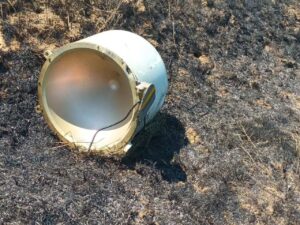
Analyst Note:
This image shows the first stage of the Bomb Royal Ordnance Augmented Charge (BROACH) multi-stage warhead used by the Storm Shadow/SCALP-EG missile. The BROACH uses a shaped-charge warhead (seen here) as its first stage, to help penetrate hardened targets, whilst the second stage comprises a conventional high explosive penetrator warhead (also called a ‘follow-through’ warhead) (ARES).
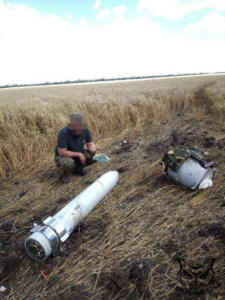
Analyst Note:
The remnant at left in this image is the second stage, or penetrator warhead, of the Bomb Royal Ordnance Augmented Charge (BROACH) multi-stage warhead as used in the Storm Shadow/SCALP-EG air-launched cruise missile. In this case, it has failed to function as intended. (ARES)
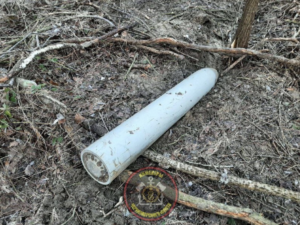
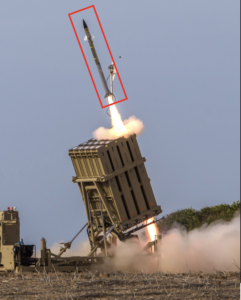

Analyst Note:
In this image, two GBU-39 guided air-delivered bombs can be seen in their shipping containers, with only the nose and the tail actuation section of the munitions clearly visible. Distinctive packaging such as this can sometimes be used as contextual evidence for the presence of specific munitions. (ARES)
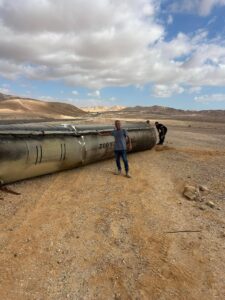
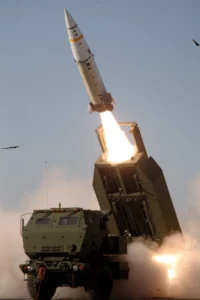
Analyst Note:
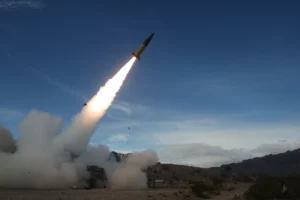
This U.S. Department of Defense file photo shows an M142 High Mobility Artillery Rocket System (HIMARS) launching an MGM-140 Army Tactical Missile System (ATACMS) series tactical ballistic missile. (ARES)

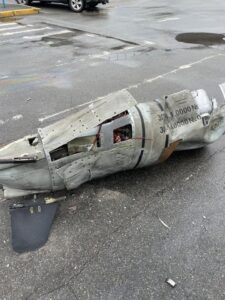
Analyst Note:
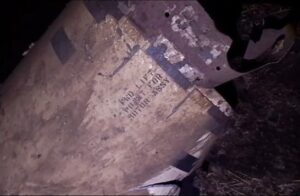
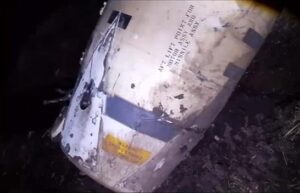
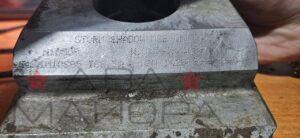
This image shows part of a heavy-duty suspension lug associated with the Storm Shadow air-launched cruise missile. This is made clear from dot-peened markings which include “STORM SHADOW USE ONLY” and identifiers such as a NATO Stock Number (NSN). (ARES)
Analyst Note:
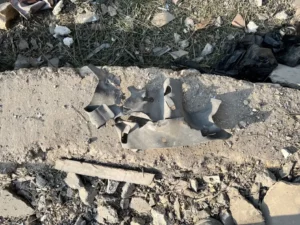
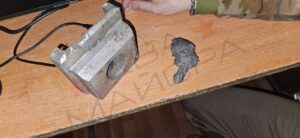
The munitions remnant on the left of this image is part of a suspension lug associated with the Storm Shadow air-launched cruise missile, which is used to attach the munition to an aircraft. This component is of heavy construction, and as such often survives the missile’s functioning intact. This photograph purports to show remnants recovered from a Storm Shadow missile that was fired by Ukrainian forces into Russian territory, but this claim cannot be verified from the image alone. (ARES)

Analyst Note:
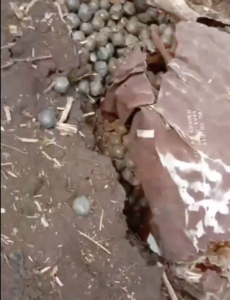
This MGM-140 cluster munition has failed to function as intended, and its payload of M74 submunitions is seen here spilling out of the warhead. (ARES)
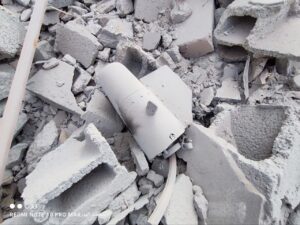
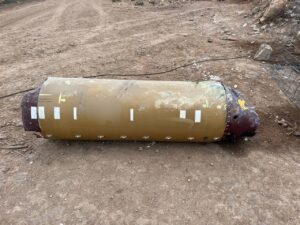
Analyst Note:
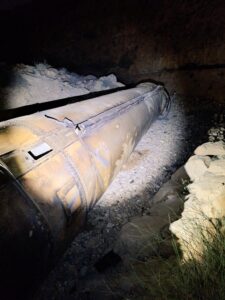
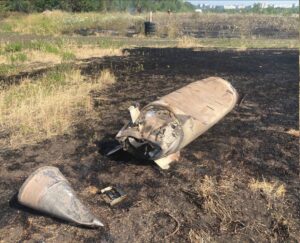
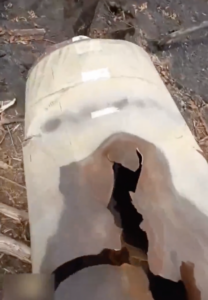
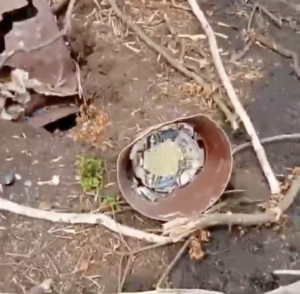
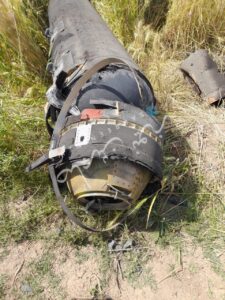
This image shows a rocket motor section from an MGM-140 ATACMS series surface-to-surface ballistic missile. The warhead section of the MGM-140 series missiles separate from the rocket motor before functioning, resulting in the rocket motor often being found relatively intact near the target. The MGM-140 series missiles use the same rocket motor, preventing a positive identification of the variant based off the rocket motor alone, unless the variant markings are visible. (ARES)
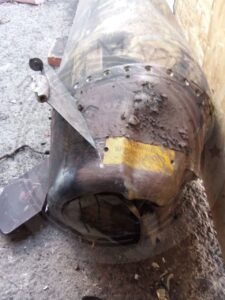
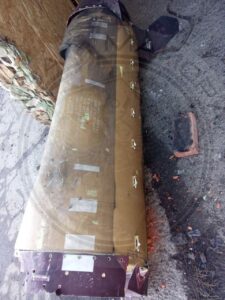
Analyst Note:
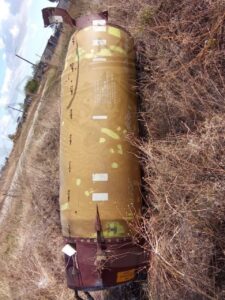
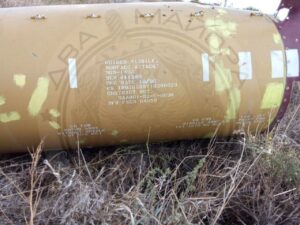
This remnant of an MGM-140 Army Tactical Missile System (ATACMS) surface-to-surface ballistic missile is marked to indicate it is the MGM-140A variant, a cluster munition which carries 950 M74 multi-purpose submunitions. Submunitions of this type are sometimes referred to by the acronym ‘anti-personnel and anti‑materiel (APAM)’. Additional markings indicate a manufacturing date (“10/96”; October 1996), a serial number (“411240”), and other information. (ARES)
Analyst Note:
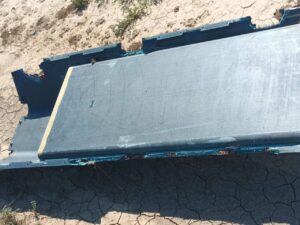
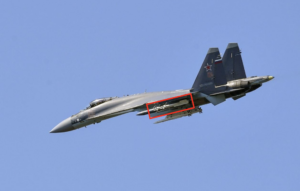
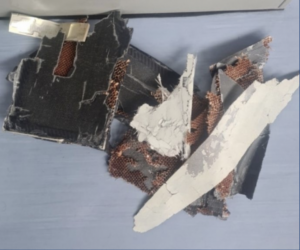
Honeycomb-like internal structures are often used in aerospace applications to provide rigidity with reduced weight, and are sometimes constructed using materials which reduce radar cross-section by absorbing or scattering electromagnetic waves. (ARES)


Analyst Note:
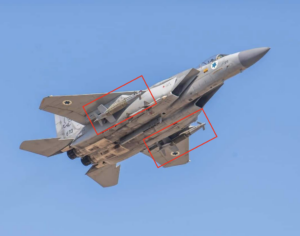
This Blue Sparrow-series air-launched ballistic missile is being carried by an F-15C fighter aircraft from 106 Squadron Israeli Air Force. The missile is marked with the logos of three organisations involved in its development—the U.S. Missile Defense Agency, the Directorate of Defence Research & Development, and the Israel Missile Defense Organization—and the Blue Sparrow programme logo of the manufacturer (Rafael Advanced Defense Systems). The booster section also features bright-orange fins and markings consistent with its use as a target missile, here modified to accept a high explosive warhead. (ARES)
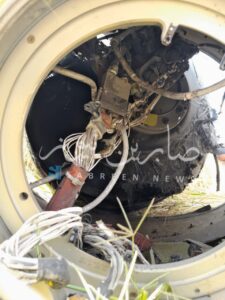
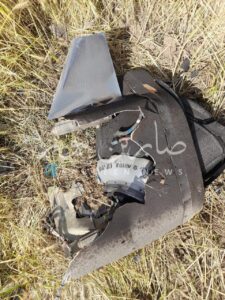

Analyst Note:
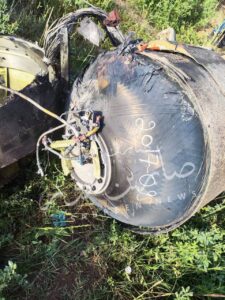
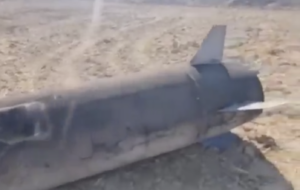
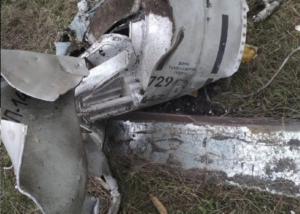
The Blue Sparrow is one of a series of three of air-launched missiles originally designed by Rafael as targets to test ballistic missile defence systems. Blue Sparrow missiles can be fitted with either inert or high explosive (HE) warheads. The recovery of Sparrow-series boosters following a reported Israeli strike on an Iranian air-defence system could suggest that a derivative variant of the Blue Sparrow missile was further developed for engaging surface targets. (ARES)
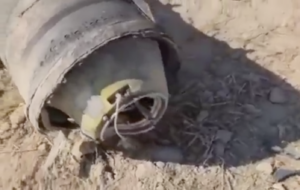
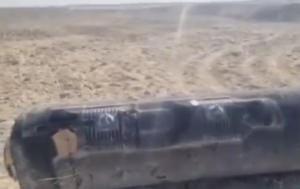


Analyst Note:
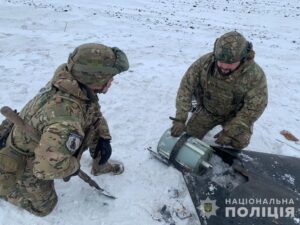
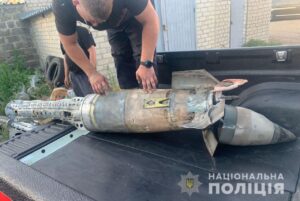
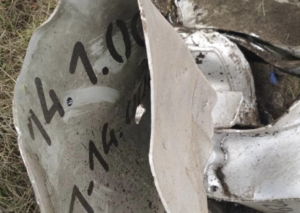
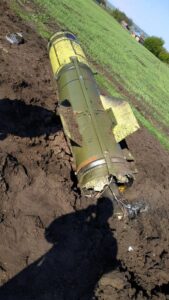
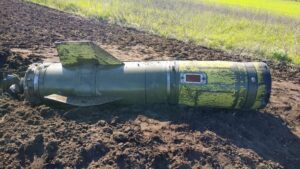
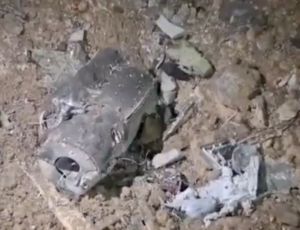
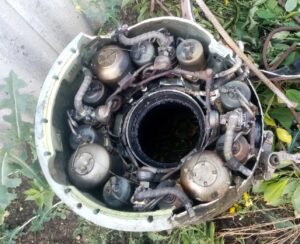
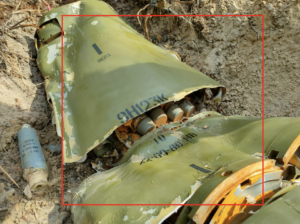
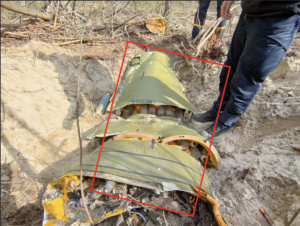
The 9Н123К (9N123K) cargo warhead is delivered by a 9М79К (9M79K) series surface-to-surface guided missile. This cluster munition carries fifty 9Н24 (9N24) high explosive fragmentation (HE-FRAG) submunitions, and is launched from the 9К79 Tochka series of tactical ballistic missile launchers. (ARES)
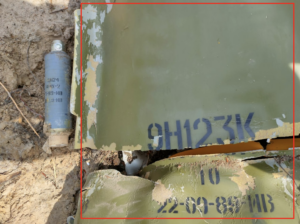
Analyst Note:
A 9N24 submunition is visible to the left of the 9N123K warhead in this image. This high explosive fragmentation (HE-FRAG) submunition is marked to indicate it was produced in 1989 and filled with A-IX-2 explosive composition. (ARES)

Analyst Note:
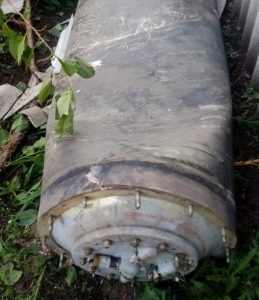
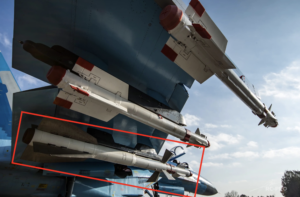
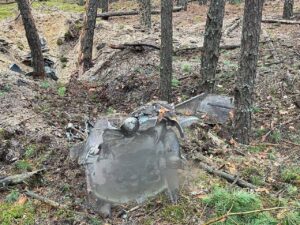
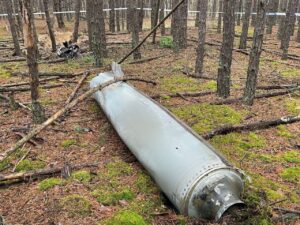
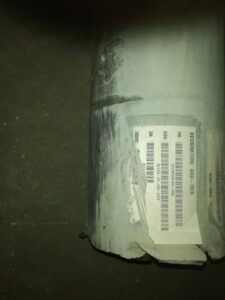
Labels on munition remnants can provide a host of useful data, including the model designation (in this case, “GBU-39/B”), part number (PN; (“70P998100-1003”), National Stock Number (NSN; “1325-01-526-8728”), serial number (SN; illegible), and Department of Defense Identification Code (DODIC; “EC53”). These codes, and others like them, can often be searched for in databases or provided to technical specialists for further interpretation. (ARES)


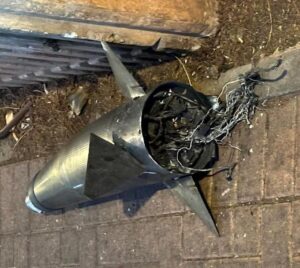
Analyst Note:
The Stunner missile is the surface-to-air interceptor missile fired by the David’s Sling weapon system to defeat short-range ballistic missiles, cruise missiles, drones, and rockets. The Stunner does not carry an explosive warhead, instead relying on kinetic impact (also called the ‘hit-to-kill’ principle) to intercept ballistic missiles and other targets. (ARES)
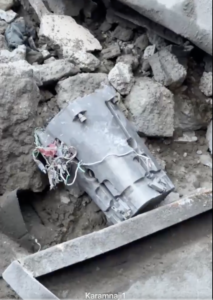
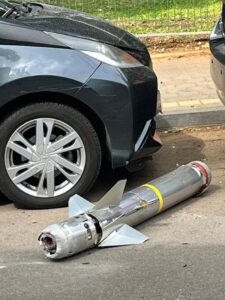
Analyst Note:
This image shows most of the forward half of a Tamir surface-to-air missile, including the guidance section and warhead, as fired by launchers in the Iron Dome system. These interceptor missiles are fast and manoeuvrable with a relatively small explosive payload. Their construction and low yield means that remnants are often recovered largely intact. (ARES)

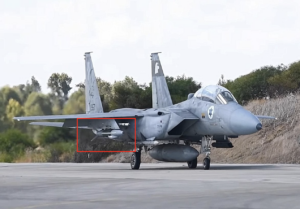
Analyst Note:
The RAFAEL Advanced Defense Systems SPICE 1000 guidance kit is fitted to MK 83-series 1,000-pound unguided air-delivered bombs to convert them to precision guided munitions. Like the JDAM-ER, it has a deployable wings to provide a ‘gliding’ attack trajectory. (ARES)
Analyst Note:
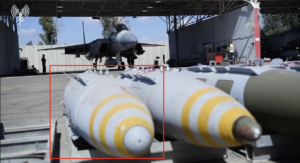
The BLU-117 air-delivered bomb is nearly identical in format to the more common MK 84, but uses the PBXN-109 explosive filler which is more insensitive than the typical explosive compositions found in MK 80-series bombs. The BLU-117 is also coated with a grey, thermally resistant paint, and marked with three yellow bands (as opposed to the green paint with two yellow bands found on standard MK 80-series bombs). These changes were requested by the U.S. Navy for safer storage of these munitions aboard ships. (ARES)
Analyst Note:
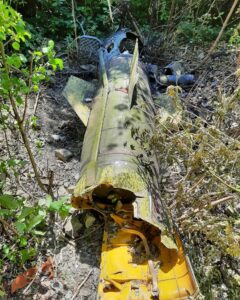
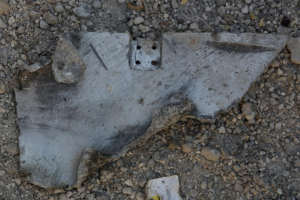
The visible component is part of a Joint Direct Attack Munition (JDAM) guidance kit, an accessory package that is fitted to unguided air-delivered bombs to convert them to precision guided munitions. Specifically, this image shows a control fin from the tail assembly. Whilst the JDAM kit would not constitute a munition in its own right, this remnant is included in the OSMP as contextual information strongly suggests it formed part of a complete munition that functioned. (ARES)
2 Analyst Notes:
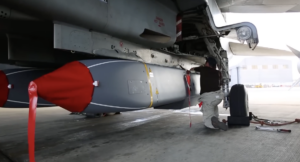
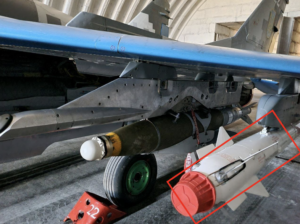
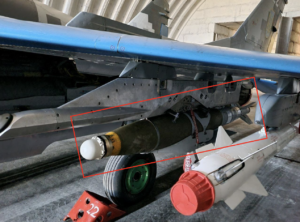
The JDAM-ER in this photograph is affixed to an unusual pylon thought to be of Ukrainian design, which allows the Western munition to be carried by the Soviet-designed Mikoyan MiG-29 and Sukhoi Su-27 fighter aircraft in service with the Ukrainian Air Force (a MiG-29 is pictured here). (ARES)