



101–200 of 458
Current Filter
Undelivered Munition
Munitions that have not been employed from their delivery vehicles. This could mean they remains stored, unfired, or are about to be fired.
Analyst Note
28 November 2025
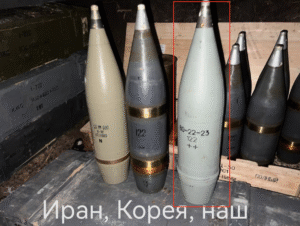
This image shows 122 mm high explosive (HE) artillery gun projectiles manufactured in three different states, L–R: Iran, North Korea, and Russia. Whilst these examples are distinct from one another—particularly in coloration, as well as the presence or absence of paint over the driving band and bourrelet—this is not always the case, and a combination of physical features and markings should be assessed before identification is made. (ARES)


Analyst Note
5 February 2026
Pictured here are a pair of 106 mm M344A1 High Explosive Anti-Tank (HEAT) projectiles fitted with M509A1 point-initiating, base-detonating (PIBD) fuzes. These are designed to be fired from M40-series 106 mm recoilless rifles. Note that, despite the nominal 106 mm designations, the M40 has a bore diameter of 105 mm. (ARES)

Analyst Note
31 December 2025
This PG-7VR recoilless gun projectile is painted in a tan colour often associated with Iranian production, but also used by other manufacturers. Iranian munitions have been seen and reported in Sudan with regularity. (ARES)
Analyst Note
31 December 2025
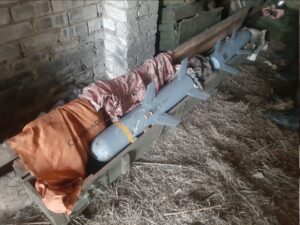
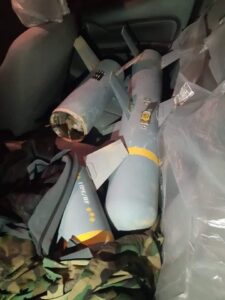
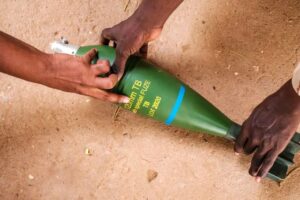
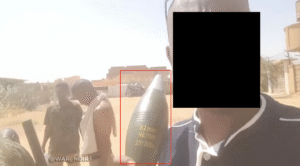
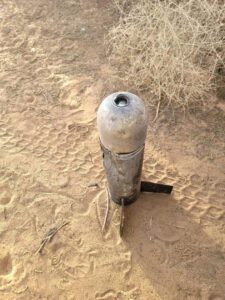
This munition, despite being adapated from the design of a 120 mm mortar projectile and closely resembling such, is actually a small air-delivered bomb intended to be dropped by UAV. The manufacturer clearly states that the munition should not be fired from a mortar. Additional data from the manufacturer states that it uses a UT M18 “special impact fuze”. (ARES)

Analyst Note
31 December 2025
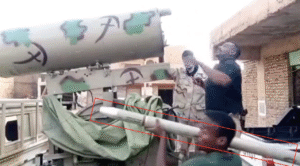
This image shows an FN-6-series man-portable air-defence system (MANPADS) being fired. In Sudan, this weapon is referred to as the ‘Nayzak’. The Nayzak is most likely a Chinese FN-6 re-marked for domestic use. (ARES)
Analyst Note
31 December 2025
The munition indicated is a one-way-attack (OWA) UAV fitted with a PG-7-series high explosive anti-tank (HEAT) warhead. Not enough of the warhead is visible to provide a positive ID on which model of PG-7-series projectile it was harvested from. (ARES)
Analyst Note
31 December 2025
This image shows a North Korean 170 mm artillery projectile, as fired by the M-1978 Koksan self-propelled artillery gun. Very little is known of the M-1978 Koksan due to the secretive nature of North Korean arms development, but both high explosive and rocket-assisted high explosive projectiles are believed to be available. The designations ‘M-1978’ and ‘Koksan’ were applied by American military analysts identified the system in Koksan, North Korea, in 1978. (ARES)

Analyst Note
9 January 2026
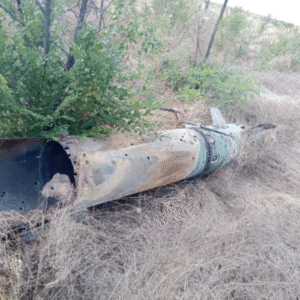
This image appears to show a remnant from either a 9M38- or 9M317-series surface-to-air missile. Positive identification of this munition cannot be made based on the imagery in this source alone; a rear control fin is visible in image but the 9M38- and 9M317-series missiles use indistinguishable rear fins. (ARES)
Analyst Note
9 January 2026
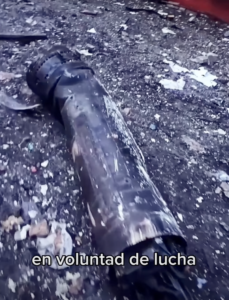
This image appears to shows the remnants of either a 9M38- or 9M317-series missile, however positive identification of this surface-to-air missile cannot be made based solely on the imagery in this source. The 9M38- and 9M317-series missiles are close in design and function, and are predominantly fired from the Buk family of surface-to-air missile (SAM) systems. The Buk-M2E SAM system is known to be in service in Venezuela, having been delivered under a Russian contract beginning in 2015. The source video for this entry shows the destroyed remains of a Buk-M2E launch vehicle, known as the 9A316E. (ARES)
Analyst Note
31 December 2025
This image shows a one-way-attack (‘sacrificial’) UAV with the apparent warhead broken off. It is believed to have been attached to the grey mechanism located at the rear of the UAV, likely separating when the UAV was downed. (ARES)
Analyst Note
9 January 2026
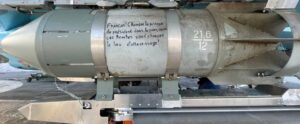
This Russian air-delivered cluster bomb is marked with a threatening message directed at the French people: «Français! Changer la politique du président dans le pays, sinon ces bombes vont changer le lieu d'atterrissage!» (“French people! Change the president’s policy in the country, otherwise these bombs will change their landing site!”). (ARES)




Analyst Note
28 November 2025
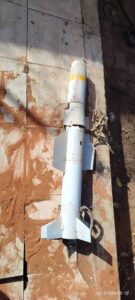
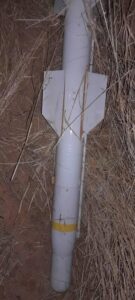
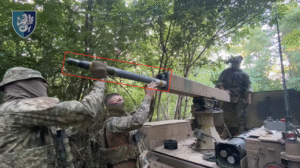
This image shows a Hydra-70 rocket fitted with an Advanced Precision Kill Weapon System (APKWS) guidance kit, converting it into a guided missile. In this case, the missile features an M151 high explosive (HE) warhead fitted with either an M427 or M423 point-detonating (PD) fuze. The rocket motor model cannot be determined from this source alone, but it is most likely to be a MK 66-series motor. The launcher appears to be a LAND-LGR4 model produced by Arnold Defense. (ARES)
Analyst Note
28 November 2025
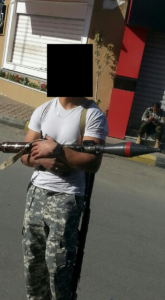
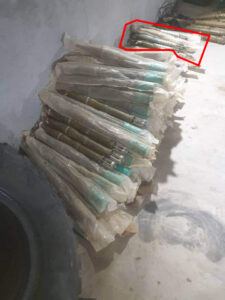
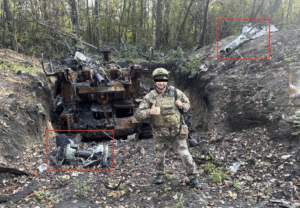
Positive identification of this surface-to-air missile cannot be made based on the imagery in the source. The items highlighted in this image are most likely the remains of either a 9M38- or 9M317-series missile, based on fin construction and their size relative to the individual posing in the foreground. These two missiles are close in design and function, and are predominantly fired from the Buk series of SAM systems. (ARES)
Analyst Note
8 December 2025
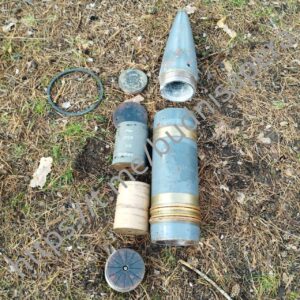
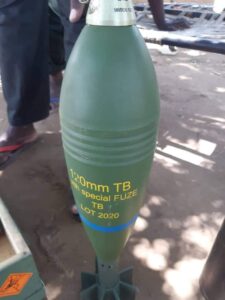
This image shows a ‘120mm TB’ air-delivered bomb that has been adapted from a 120 mm mortar projectile. It is claimed by the manufacturer that this thermobaric munition offers improved fragmentation and blast effects when compared with standard (high explosive) 120 mm mortar projectiles. The “with special FUZE” marking refers to the use of the UT M18 impact fuze. Note that this munition cannot be fired from a mortar, despite the munition body showing features consistent with this use (e.g., gas-check bands). Instead of a standard mortar projectile tailboom which would contain an ignition cartridge and be perforated by flash holes, this munition is fitted with a simplified, plastic tailfin assembly that is designed to stabilise the munition as it falls after being released by a UAV. (ARES)
Analyst Note
28 November 2025
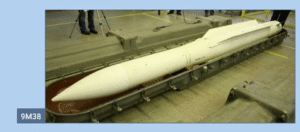
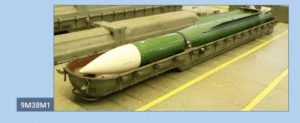
The 9N314M warhead shown here can be used in both 9M38- and 9M317-series missiles. In this particular case, according to the source, it was taken from a 9M38M1 missile. (ARES)
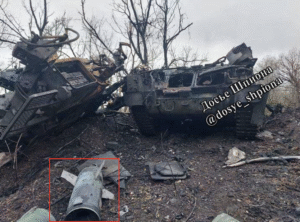
Analyst Note
28 November 2025
Although the source claims that this image shows a Buk-M3 surface-to-air missile system, this imagery is not sufficient to determine whether the remnants highlighted are from a 9M38-or 9M317-series guided missile. (ARES)
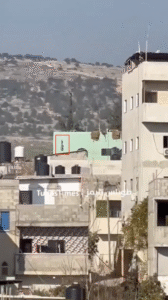
Analyst Note
28 November 2025
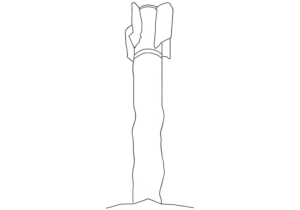
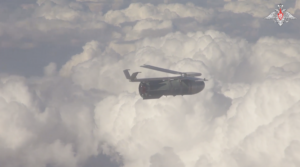
In this case, the tentative identification of this munition is possible based on an analysis of its silhouette, particularly the distinctive detachable warhead compartment that can be seen hanging from the base of the munition's body. In many cases, such an identification technique would not be possible to apply with confidence. (ARES)
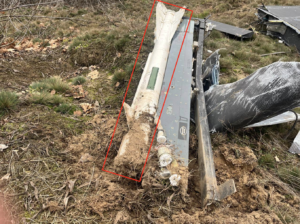
Analyst Note
2 December 2025
This image represents the first documented instance of a Shahed-series UAV carrying an R-60 air-to-air missile. This appears to add a new capability to the Shahed, enabling it to target enemy aircraft. Arming UAVs to counter interception and engage alternative targets is an emergent trend. Previously, unmanned surface vessels (USVs) employed by the Ukrainian Armed Forces have been observed carrying R-73 air-to-air missiles, for example. (ARES)
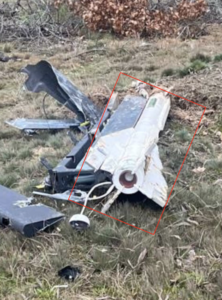
Analyst Note
28 November 2025
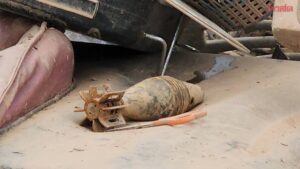
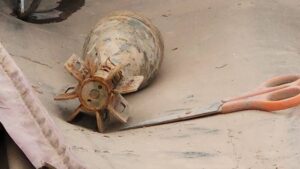
This image shows an M49-series 60 mm high explosive (HE) mortar projectile, or a copy thereof. Due to the state of the round the available imagery, the specific model or variant cannot be determined. The fuze is also not clearly visible. Most M49 mortar projectiles use an M525, M717, M935, or similar point-detonating (PD) fuze. (ARES)
Analyst Note
28 November 2025
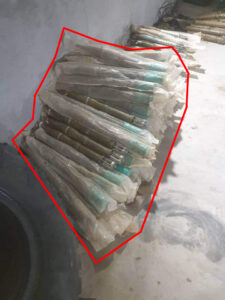
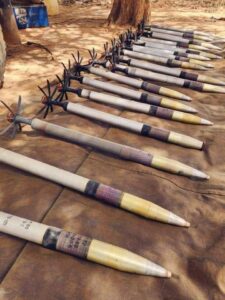
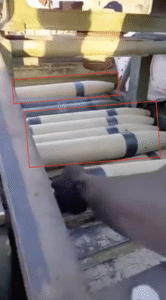
This image shows several 107 mm rockets of the Type 63 pattern. Whilst developed by China, munitions of this design are now produced by several countries around the world, including Iran, North Korea, and Sudan. The state-owned Military Industry Corporation (MIC) of Sudan produces a copy of the Type 63 known as the TAKA-01, TAKA-1, or TAKA-107. (ARES)
2 Analyst Notes
28 November 2025
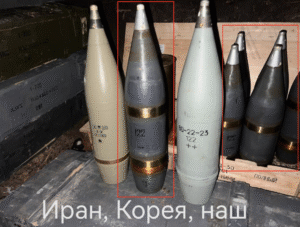
This image shows 122 mm high explosive (HE) artillery gun projectiles manufactured in three different states, L–R: Iran, North Korea, and Russia. Whilst these examples are distinct from one another—particularly in coloration, as well as the presence or absence of paint over the driving band and bourrelet—this is not always the case, and a combination of physical features and markings should be assessed before identification is made. (ARES)
2 Analyst Notes
25 November 2025
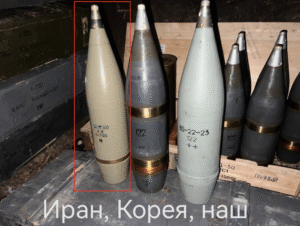
This image shows 122 mm high explosive (HE) artillery gun projectiles manufactured in three different states, L–R: Iran, North Korea, and Russia. Whilst these examples are distinct from one another—particularly in coloration, as well as the presence or absence of paint over the driving band and bourrelet—this is not always the case, and a combination of physical features and markings should be assessed before identification is made. (ARES)


Analyst Note
15 September 2025
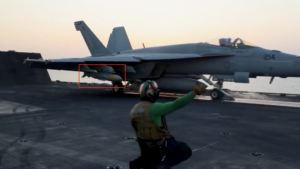
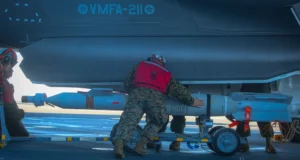
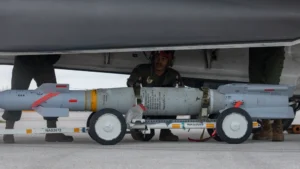
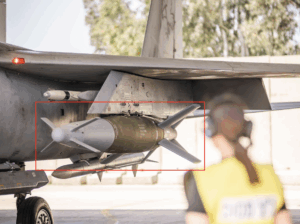
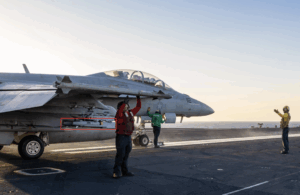
This image shows a GBU-12 series guided bomb being loaded onto a F-35B belonging to Marine Fighter Attack Squadron 211. Two of the control fins have not yet been installed in the Paveway’s guidance control section. (ARES)
Analyst Note
15 September 2025
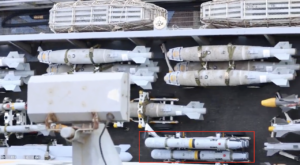
This image shows a BLU-111 500-pound-class bomb paired with a Paveway II guidance kit, and an MXU-650 series airfoil group, or tail kit. This combination is designated the GBU-12 series in U.S. service. (ARES)
Analyst Note
15 September 2025
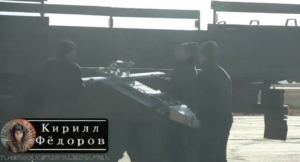
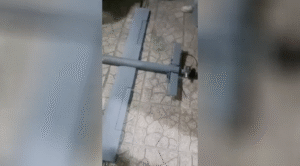
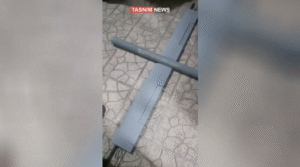
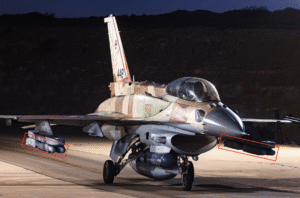
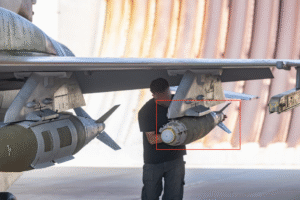
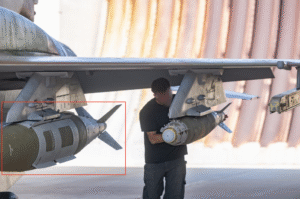
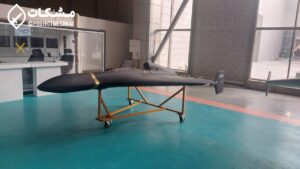
This still taken from a video released by Iranian state media, shows a one-way-attack UAV purportedly manufactured by Israeli forces operating inside Iran. This UAV was found alongside manufacturing equipment, and additional UAV components, strongly suggesting that it was manufactured or assembled inside Iranian borders. (ARES)
Analyst Note
26 May 2025
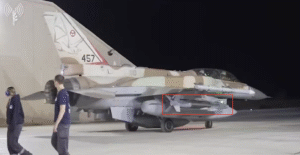
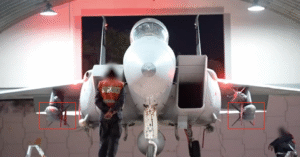
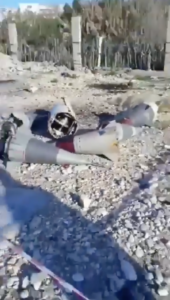
The source for this entry reports that these remnants were left behind after the missiles were “recycled“. Explosive remnants of war (ERW) are often recycled for the value of their scrap metal, or ‘harvested’ by militant groups for the explosive material. These recycling attempts may result in the ERW exploding, potentially killing or injuring people. (ARES)
Analyst Note
3 June 2025
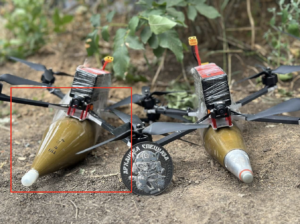
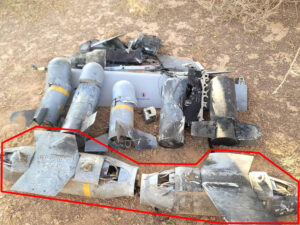
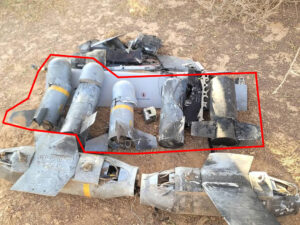
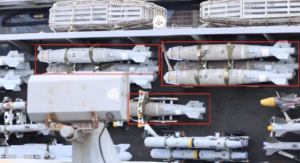
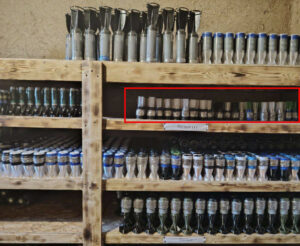
This image shows a variety of small air-delivered munitions that have been developed specifically for deployment via UAV. Some of these appear to be original designs, whilst others have been made by modifying existing munitions. This entry reflects those munitions outlined with the red box, but all of the munitions are generally of similar in size and format, and all have tailfin assemblies intended to orient the munition as it falls, just like more traditional air-delivered bombs. (ARES)
Analyst Note
3 June 2025
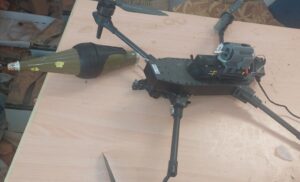
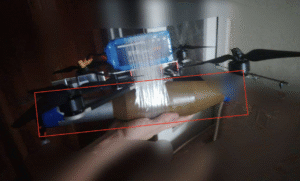
The munition in this image has been integrated into a commercial off-the-shelf (COTS) small UAV. This UAV (‘drone’) adds powered and guided delivery and converts the munition into a guided missile—regardless of the original, intended delivery method. (ARES)
Analyst Note
14 July 2025
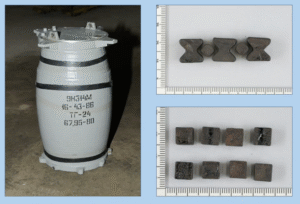
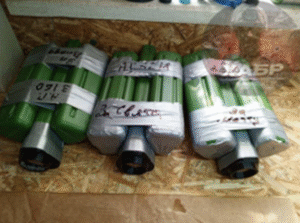
This image shows three sets of three PTM-1 series scatterable anti-vehicle mines taped together. While these mines have likely been repurposed from their original delivery munition to be delivered via UAV, this cannot be confirmed based off this image alone. (ARES)
Analyst Note
21 April 2026
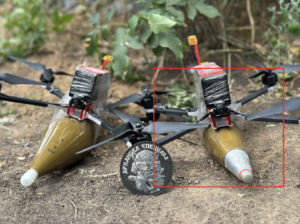
The warhead of the OWA UAV indicated in this image cannot be positively identified from this photograph alone. It appears to be the warhead section of either an OG-9 series or OG-15 series high explosive fragmentation (HE-FRAG) projectile, with a GO-2 or similar impact fuze fitted in the nose. (ARES)
Analyst Note
3 June 2025
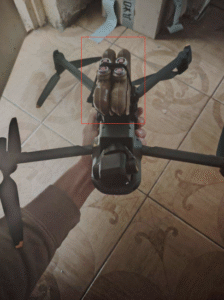
This image shows four PFM-1 series anti-personnel landmines retained by a release mechanism to enable deployment via UAV. Ordinarily, PFM-1 series and other ‘scatterable mines’ are deployed via carrier munitions or dedicated mine-dispensing devices. In Ukraine and other conflicts, these mines have often been removed from their original carrier munitions in order that they may be delivered via UAV. (ARES)

Analyst Note
18 July 2025
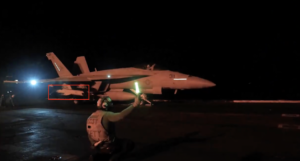
This image shows several GBU-53/B bombs photographed from above while on a munitions transport cart. GBU-53/B bombs are transported and loaded onto the aircraft with the wing assembly on the bottom. When the GBU-53/B is released from the aircraft, the bomb rotates, with the wing assembly side orienting as the top as the bomb glides to its target. (ARES)
Analyst Note
30 April 2025
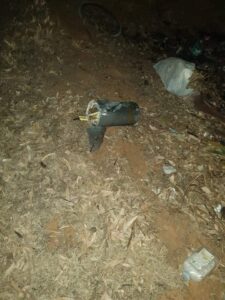
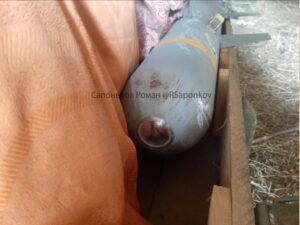
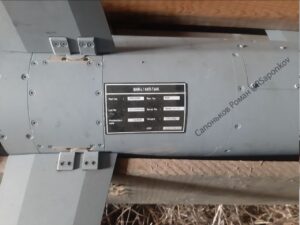
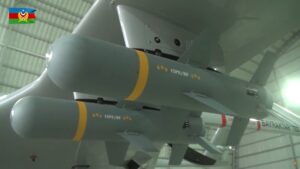
This image shows two MAM-L guided air-delivered bombs affixed to the wing of a Bayraktar TB2 drone. The MAM-L and TB2 are both produced in Türkiye by Roketsan and Baykar respectively. The MAM-L can have one of three different warheads: blast fragmentation, anti-tank, or thermobaric. The warhead section of each MAM-L in this image has “YIPE/BF” visible. ‘YIPE’ is the abbreviation of the warhead type in Turkish: Yüksek Infilaklı Parçacık Etkili (‘high explosive fragmentation’, in English). The ‘BF’ also indicates that these MAM-L munitions are of the blast-fragmentation variant. The warhead of a MAM-L cannot be determined from an external assessment without viewing markings such as these (or a clear view of the data plate, which can be seen on the aft portion of the MAM-L). (ARES)