Key features defining the operation mechanisms of a projectile
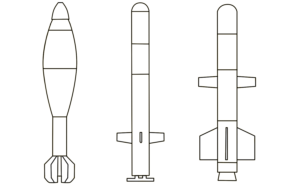
Mechanical Feature (10)
Whether a munition is guided or unguided
Guidance (2)
Where the munition is launched from and what it targets
Domain (7)
The type of fins visible on the munition
Fins Characteristic (6)
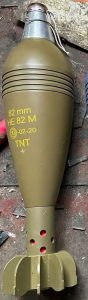
The nominal diameter of a projectile. For most modern munitions, this is expressed in millimetres (e.g. 82 mm mortar projectile), but older artillery gun projectiles may be described in inches.
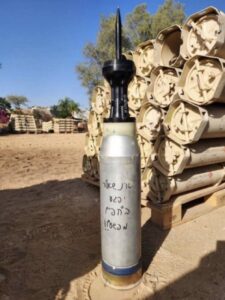
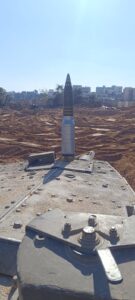
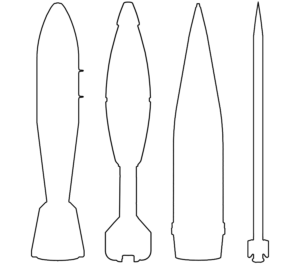
This is an Israeli 120 mm tank gun round, of the ‘armour-piercing, fin-stabilised discarding sabot – tracer’ (APFSDS-T) type. The physical features identify it as either the M322 or M338.
The projectile (penetrator) of this round has no explosive content and relies on kinetic energy to penetrate armoured targets. When a projectile is of a smaller calibre than the gun’s bore, a sabot is sometimes used to ensure the projectile is centred in the bore and to trap the gas from the propellant of the cartridge and propel the projectile. In flight, the sabot separates into two or more pieces, sometimes called ‘petals’, often found along the line of fire before the impact point. (ARES)
The M329 is a multi-purpose tank gun projectile designed to engage a range of targets other than tanks. It is one of the few cluster munitions that takes the form of a tank gun projectile, dispensing six explosive submunitions over a relatively small area. It has also been referred to as the ‘APAM 120’, describing its functional role (‘anti-personnel/anti-materiel’) and calibre (120 mm). (ARES)
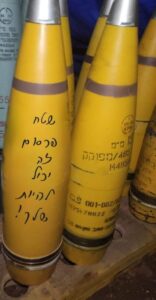
Israeli illumination munitions—often finished in a distinctive yellow—are sometimes mistaken for high explosive munitions by observers more familiar with the NATO or U.S. marking systems. This image shows an M485-pattern illumination projectile, a base-eject type that uses a parachute-retarded canister containing a powerful candle to illuminate the battlefield.
The M825A1 155 mm smoke projectile makes use of white phosphorus (WP) to generate a brilliant white smoke. Whilst WP does have incendiary effects, the method of dispersal in the case of the M825A1 is optimised for screening and marking purposes. (ARES)
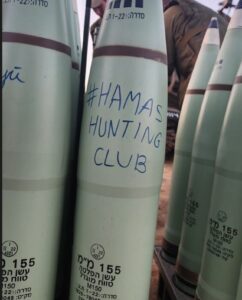
Some artillery projectiles, such as this M150 type, use a hexachloroethane-based composition (HC) to generate smoke for screening or marking purposes. In many armed forces, HC smoke munitions have partially replaced those relying on white phosphorus for similar effects. (ARES)
107mm spin-stabilized rockets of this design are often utilized by non-state actors in an indirect fire role. Like the original Chinese models that they are copied from, they do not require more than a simple electric power source and a rudimentary launch platform to achieve an acceptable level of accuracy. (ARES)
The various Iranian Qaem-series guided air-delivered bombs can be difficult to differentiate from one another. In this case, the wing (forward fin) assembly distinguishes this Qaem-5 from the visually similar Qaem-1. Note also that the name 'Qaem' has applied by Iran to other, unrelated munitions. (ARES)
Once fired, four canards will deploy from the forward (ogival) section of these M982 Excalibur guided artillery projectiles. The narrow-shaped ports through which the canards deploy are a good indicator of a guided or extended-range artillery projectile. (ARES)
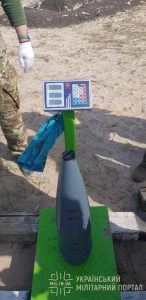
In this image, a Ukrainian soldier is using an M1155 Enhanced Portable Inductive Artillery Fuze Setter (EPIAFS) to input the target coordinates and set functioning parameters for an M982 Excalibur guided artillery projectile. (ARES)
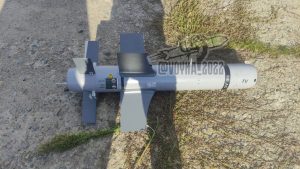
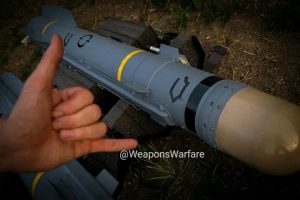
The Brimstone is a series of British-designed guided missiles that can be launched from air, land, or sea platforms. The United Kingdom first provided Ukraine with the Brimstone I missile in 2022 and exports have continued since, more recently believed to include the Brimstone II model. In Ukraine, Brimstone-series missiles have been exclusively launched from ground-based and sea-based platforms as of May 2024. (ARES)
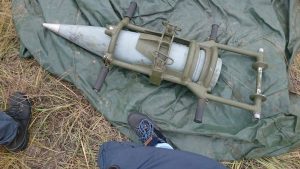
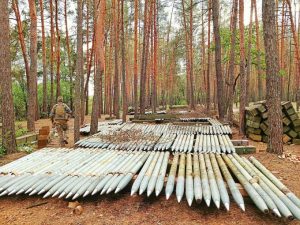
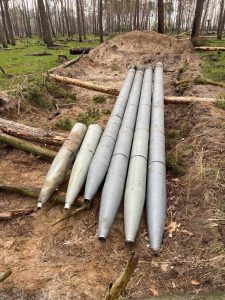
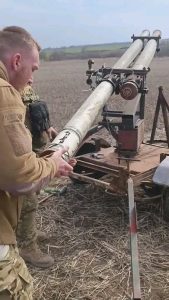
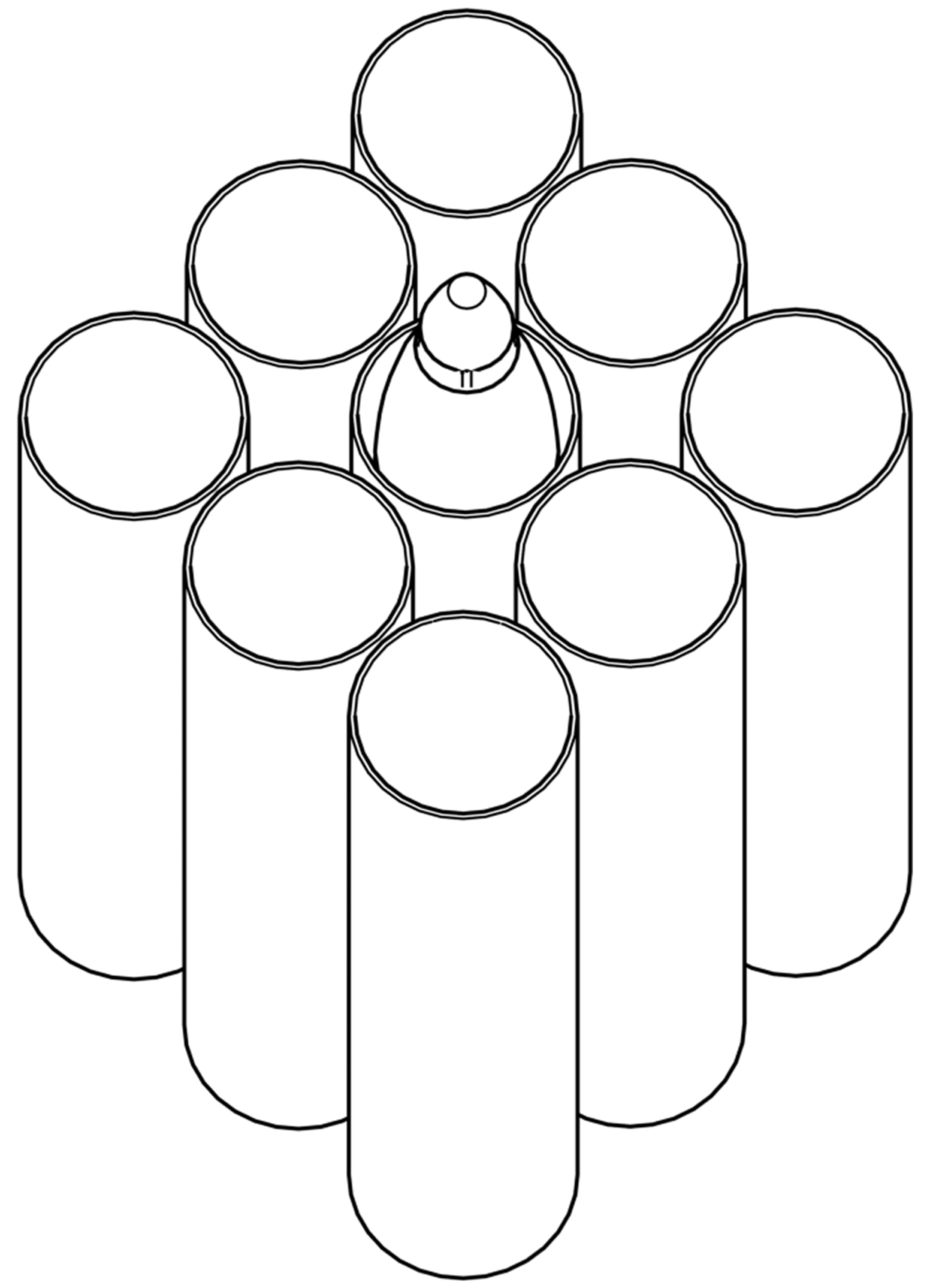
122 mm ‘Grad’ rockets can be fired from a variety of launchers and even in improvised ways. The most common is the BM-21 launcher and its later derivatives, but many other portable or vehicle-mounted launchers have been used around the world. Craft-produced examples—ranging from simple rails to more complex designs comparable to factory made launchers—are also common. In some cases, Grad rockets are even fired whilst supported by a crude arrangement of logs, bricks, or rocks. (ARES)
Like the more common 9M22S rocket, the 9M28S carries the 9N510 warhead, which dispenses 180 individual incendiary elements composed of a magnesium alloy shell filled with a thermite-like incendiary composition. (ARES)
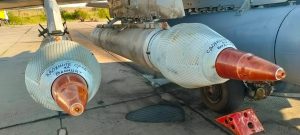
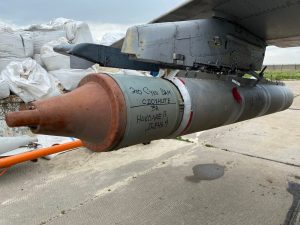
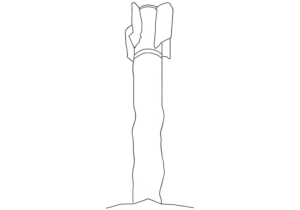
These S-25-O air-to-surface rockets are each loaded into a single-barrelled O-25 rocket launcher (sometimes called a 'launch tube' or 'rocket pod') that is affixed to an aircraft hardpoint. The over-calibre high explosive fragmentation warhead (of 420 mm in diameter) protrudes from the front of the tube. (ARES)
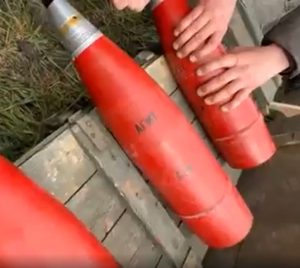
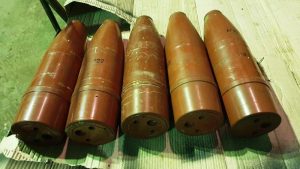
This artillery projectile is a non-lethal type designed to carry propaganda leaflets. Externally, it strongly resembles other variants carrying lethal payloads, although this particular model has a distinctive all-red colour. The leaflets are expelled from the base of the munition by the action of a small explosive charge, after a set amount of time has elapsed after firing (determined by the fuze). (ARES)
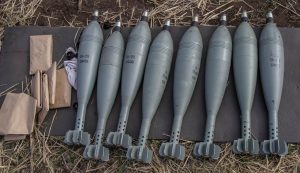
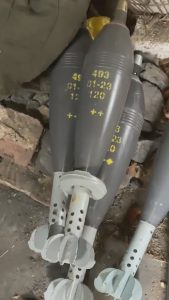
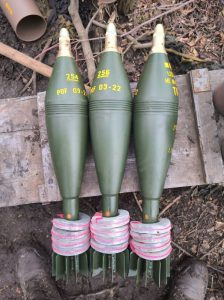
Whilst most mortars are smoothbore guns, some have a rifled bore. These M1101 120 mm mortar projectiles feature a 'pre-rifled' driving band—that is, a driving band with grooves cut at the factory to fit the mortar's rifling. (ARES)
Not all munitions have a lethal purpose. This is a type of ‘carrier’ or ‘cargo’ munition designed to carry and dispense a non-lethal payload—in this case, propaganda leaflets. (ARES)
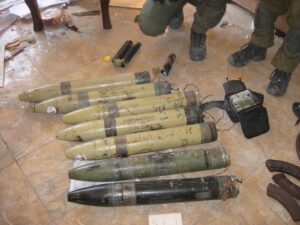
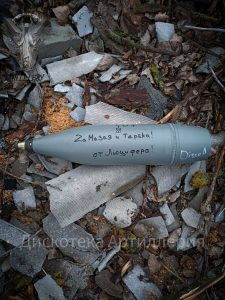
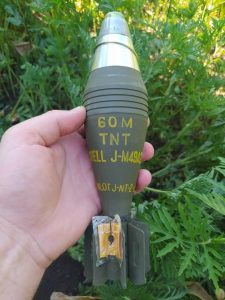
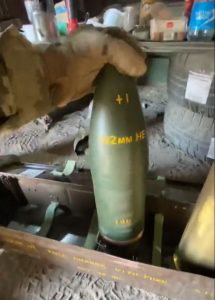
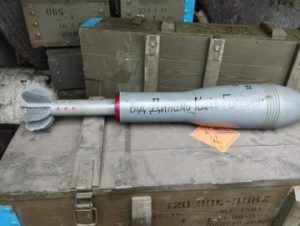
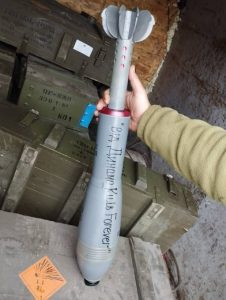
As a result of the rapid introduction of new models and variants during ongoing conflicts, sometimes a munition is issued with a provisional designation, or with no designation at all. In other cases, the designation is not yet known to researchers. (ARES)
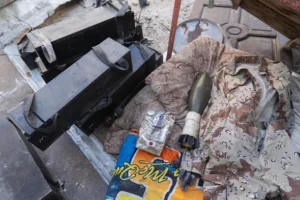
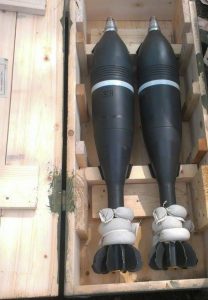
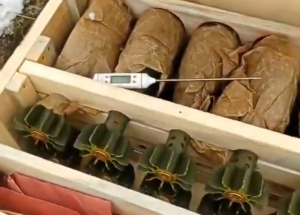
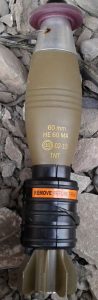
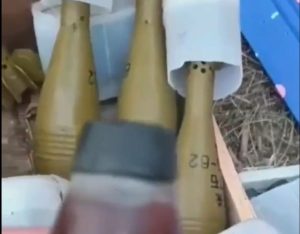
The plum-coloured plastic ring at the nose of this mortar projectile (placed over its fuze) and the black plastic propellant cover (placed over its tail) are both fitted for transport and storage, before the projectile is loaded into a cardboard tube, and then packed into an outer crate. The propellant cover obscures the perforated cylindrical tail assembly in this image. (ARES)
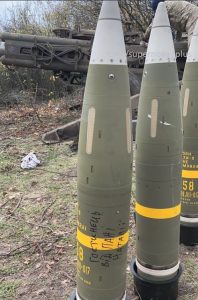
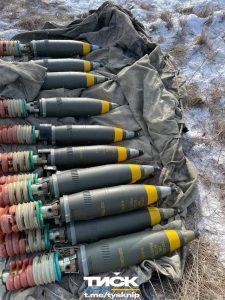
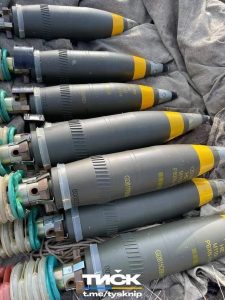
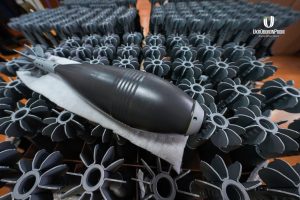
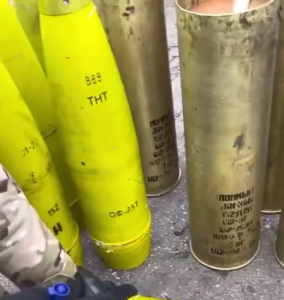
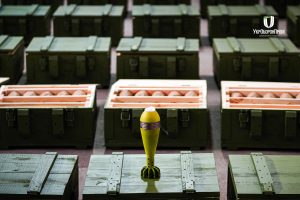
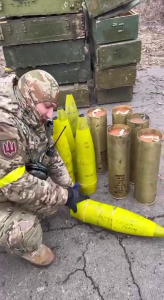
This image depicts a Ukrainian-made version of the Soviet-era OF-25 152 mm artillery projectile, the designation of which is not publicly known at this time (May 2024). The yellow base colour was commonly found in batches produced by Ukroboronprom in late 2022. Later batches returned to a grey base colour. (ARES)
The OF-NMR is a rocket-assisted mortar projectile, which uses a solid-fuel rocket motor located in the cylindrical portion of the body, below the ogive, to extend its range. Rocket-assisted mortar projectiles are rarely encountered. (ARES)



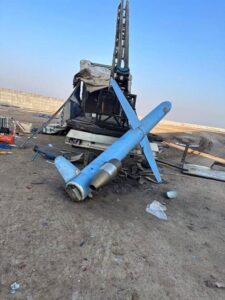
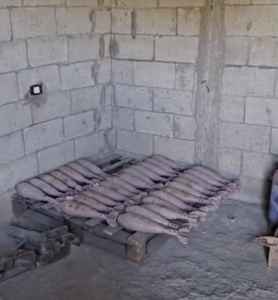
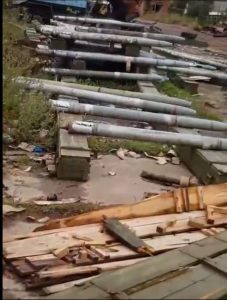
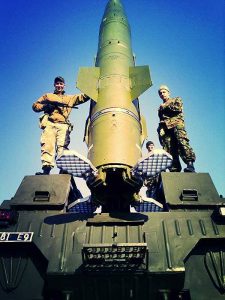
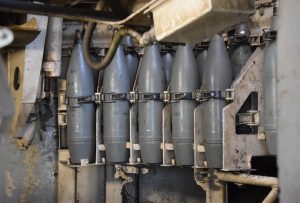
 Munitions that have not been employed from their delivery vehicles. This could mean they remains stored, unfired, or are about to be fired