





1–100 of 474
Current Filter
Whole
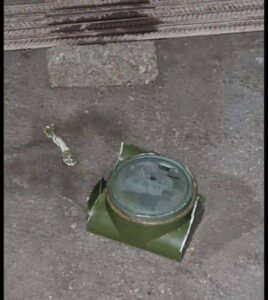
Image includes a whole munition

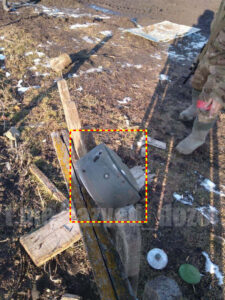



Analyst Note:
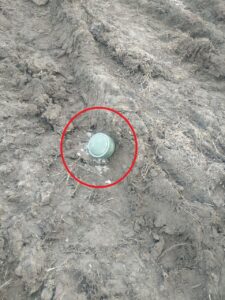
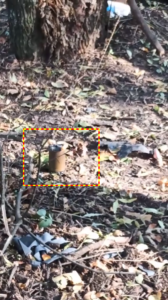
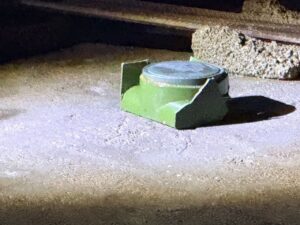
A BLU-91/B GATOR anti-vehicle landmine is seen in this image, with the remains of an aeroballistic adaptor visible. BLU-91/B mines can be deployed from cluster bombs or from vehicle-mounted dispensers, however the presence of the square aeroballistic adaptor here indicates that this example was deployed from an air-delivered cluster bomb. (ARES)

Analyst Note:
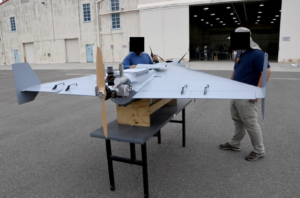
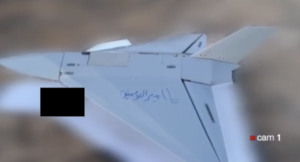
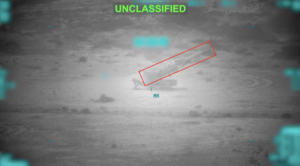
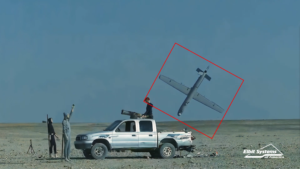
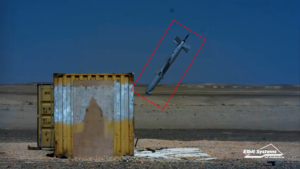
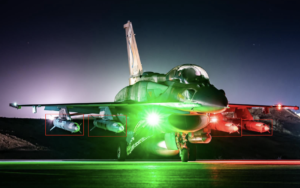
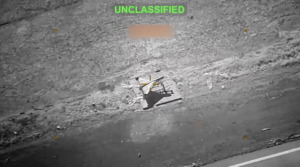
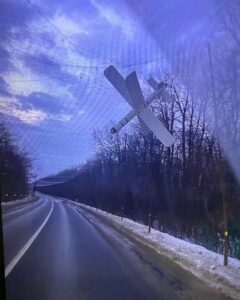
This image shows a Lancet-series one-way attack (OWA) UAV. It strongly resembles the Z-51E made by Zala Aerospace, a Russian manufacturer, although this cannot be confirmed from the available image. The Lancet series of drones can carry a variety of different warheads, including blast, fragmentation, thermobaric, and High Explosive Anti-Tank (HEAT). (ARES)
Analyst Note:
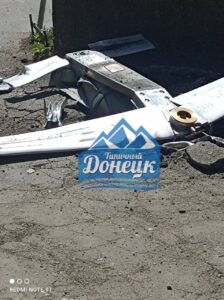
Positive identification of the model of air-delivered bomb to which the UMPK kit is fitted cannot be made from the source imagery. Based on the size of the UMPK and historical use in the area, it is likely an OFAB-250-270 model. (ARES)

Analyst Note:
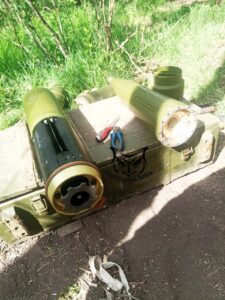
The 3OF39 Krasnopol is a laser-guided, rocket-assisted 152 mm tank gun projectile carrying a high explosive fragmentation (HE-FRAG) warhead. The round is built and shipped with a cover over the optical sensor. This protective cover is fitted with a T-90 mechanical time delay fuze. Once fired, the T-90 fuze will initiate after a pre-selected time and will jettison the protective cover, exposing the optical sensor in the nose. The internal impact fuze, which can be set for immediate or delayed initiation, is then responsible for detonating the projectile. (ARES)
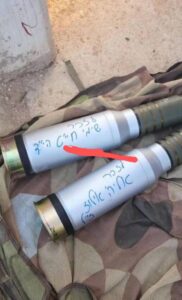
Analyst Note:
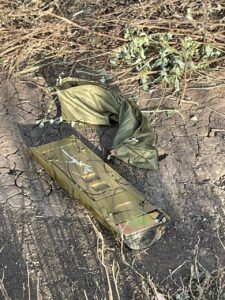
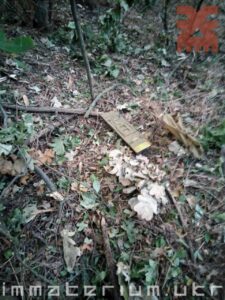
3OF39 Krasnopol rounds are shipped in two parts as seen in this image. They are then assembled prior to employment. (ARES)

Analyst Note:
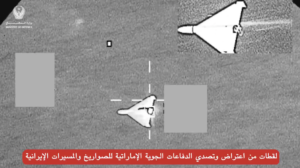
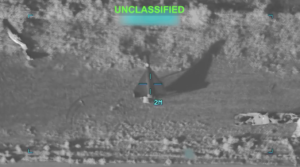
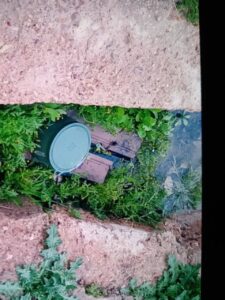
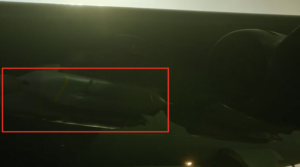
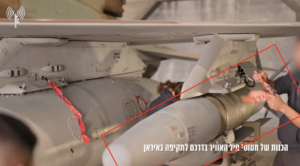
This image is a composite assembled from several screen captures taken from an IDF video. Due to camera movement and other factors, there may be some minor misalignment. (ARES)
Analyst Note:
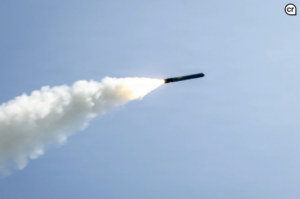
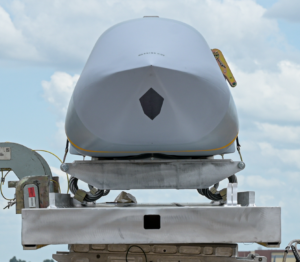
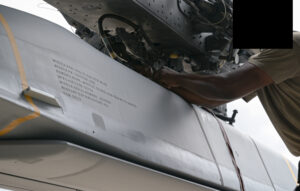
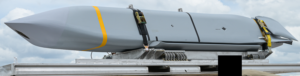
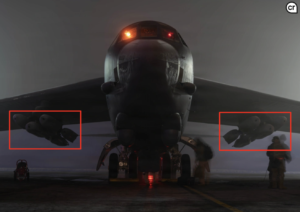
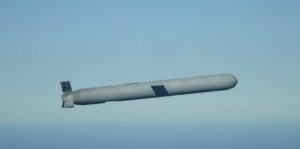
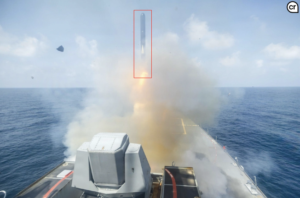
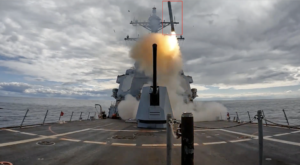
This Tomahawk missile features a distinctive black coating that suggests it is an RGM-109E Block Va variant, also known as the Maritime Strike Tomahawk (MST). A similar coating is seen on the U.S. Navy’s AGM-158C Long-Range Anti-Ship Missile (LRASM). MST incorporates a new multi-mode seeker optimised for the anti-shipping role, but remains capable of striking land-based targets. (ARES)
Analyst Note:
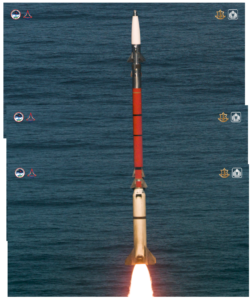
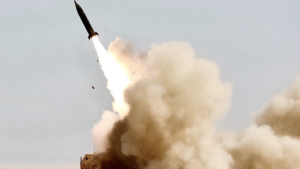
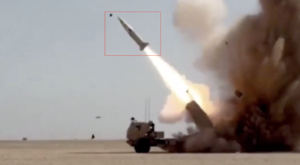
This image shows what is believed to be one of the first combat uses of the Precision Strike Missile (PrSM), following its entry into U.S. Army service in late 2023. PrSM is the successor to the ATACMS short-range ballistic missile that has become well known due to its use in the Russo–Ukrainian War. The Increment One version of PrSM has a range of approximately 500 km. The missile is seen here being fired from an M142 High Mobility Artillery Rocket System (HIMARS). (ARES)
Analyst Note:
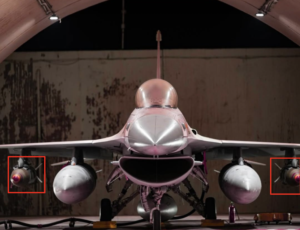
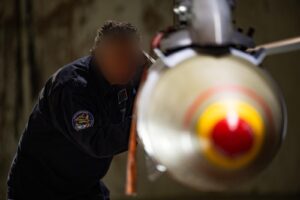
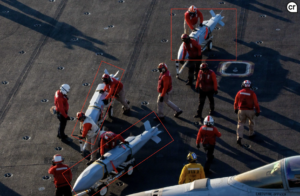
Photos released by the Israeli Air Force show an F-16 aircraft carrying two 2,000-pound-class air-delivered bombs fitted with Joint Direct Attack Munition (JDAM) guidance kits. Whilst the bomb body is visually similar to a MK 84 general-purpose aerial bomb, the marking scheme is distinctly different. The combination of yellow and red bands most likely indicates both a high explosive and incendiary payload. This is consistent with the marking scheme applied to specialised U.S. munitions intended for use against chemical and biological weapons targets. The best known of these is the BLU-119/B CrashPAD ('Prompt Agent Defeat'), which uses a MK 84 bomb body and contains 170 lbs of PBX-109 and 420 lbs of white phosphorus. It is not clear if agent defeat weapons were ever exported to Israel, or if a local analogue was developed. Capabilities of this type often remain classified. (ARES)

Analyst Note:
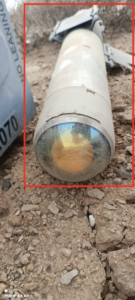
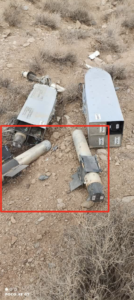
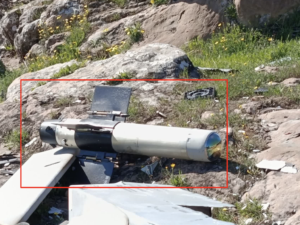
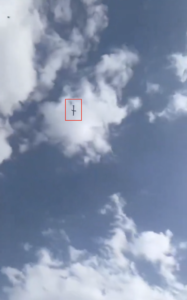
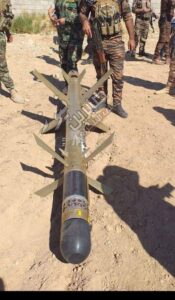
The Iranian 358 surface-to-air missile is reportedly a ‘loitering munition’, designed for engaging drones and rotary-wing aircraft. It employs a combination of ground-based and onboard thermal cameras to scan a designated area, and then uses an infrared imaging seeker in the nose to locate and lock onto targets. The missile carries a 10 kg fragmentation warhead, which is functioned by a 360-degree laser proximity sensor. (ARES)

Analyst Note:
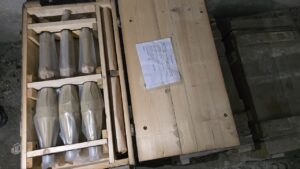
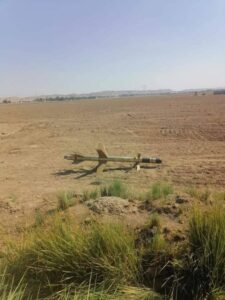
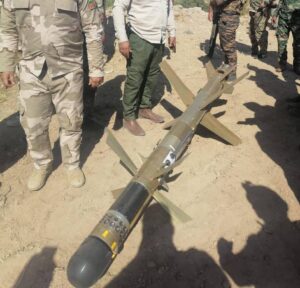
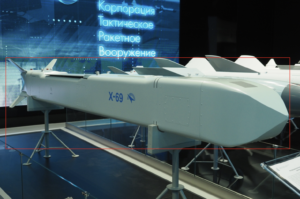
Shown is the Russian Kh-69 (marked in Cyrillic: “Х-69”) cruise missile which was debuted at a Russian arms show in August 2022, and entered into active military service the following year. The Kh-69 was reportedly first used in combat in February 2024, engaging Ukrainian targets. The more compact design when compared with previous Russian missiles results in a smaller radar signature, which is further reduced by the trapezoidal form factor. The Kh-69 is classed by the Russian military as a ‘stealth cruise missile’ and carries either a penetrator or cluster (submunitions) warhead. (ARES)
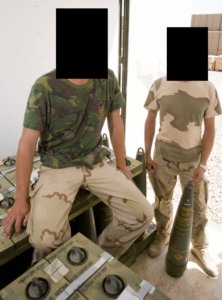
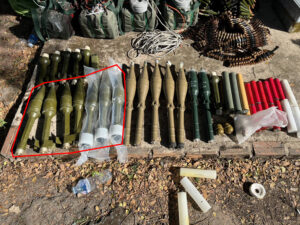
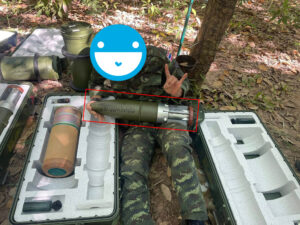
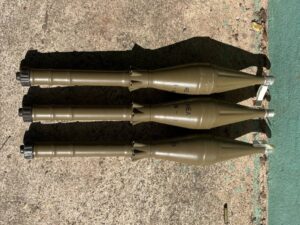



Analyst Note:
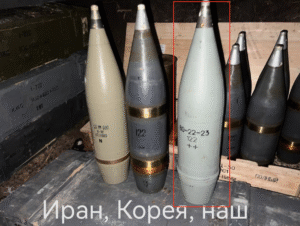
This image shows 122 mm high explosive (HE) artillery gun projectiles manufactured in three different states, L–R: Iran, North Korea, and Russia. Whilst these examples are distinct from one another—particularly in coloration, as well as the presence or absence of paint over the driving band and bourrelet—this is not always the case, and a combination of physical features and markings should be assessed before identification is made. (ARES)

Analyst Note:
Pictured here are a pair of 106 mm M344A1 High Explosive Anti-Tank (HEAT) projectiles fitted with M509A1 point-initiating, base-detonating (PIBD) fuzes. These are designed to be fired from M40-series 106 mm recoilless rifles. Note that, despite the nominal 106 mm designations, the M40 has a bore diameter of 105 mm. (ARES)

Analyst Note:
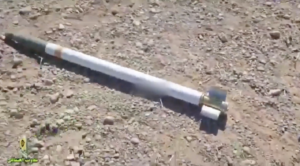
This PG-7VR recoilless gun projectile is painted in a tan colour often associated with Iranian production, but also used by other manufacturers. Iranian munitions have been seen and reported in Sudan with regularity. (ARES)
Analyst Note:
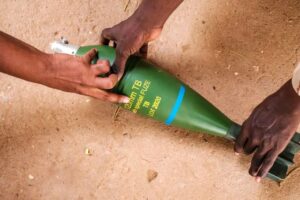
This munition, despite being adapated from the design of a 120 mm mortar projectile and closely resembling such, is actually a small air-delivered bomb intended to be dropped by UAV. The manufacturer clearly states that the munition should not be fired from a mortar. Additional data from the manufacturer states that it uses a UT M18 “special impact fuze”. (ARES)

Analyst Note:
This image shows an FN-6-series man-portable air-defence system (MANPADS) being fired. In Sudan, this weapon is referred to as the ‘Nayzak’. The Nayzak is most likely a Chinese FN-6 re-marked for domestic use. (ARES)
Analyst Note:
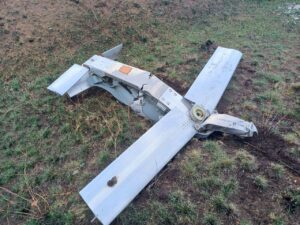
This image shows a russian air-delivered bomb fitted with a UMPK guidance kit. Not enough of the bomb is visible to positively identify the model, but it is most likely an OFAB-250-270 based on what can be seen of the tail section. (ARES)
Analyst Note:
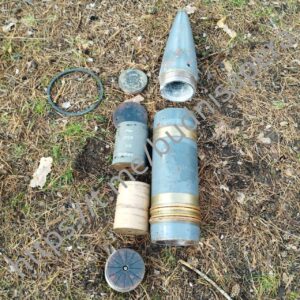
This image shows a North Korean 170 mm artillery projectile, as fired by the M-1978 Koksan self-propelled artillery gun. Very little is known of the M-1978 Koksan due to the secretive nature of North Korean arms development, but both high explosive and rocket-assisted high explosive projectiles are believed to be available. The designations ‘M-1978’ and ‘Koksan’ were applied by American military analysts identified the system in Koksan, North Korea, in 1978. (ARES)

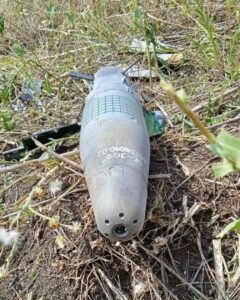
Analyst Note:
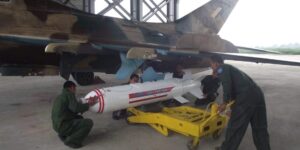
Markings on the forward section of this small, air-delivered bomb suggest that the designation is ‘BK-3OF’ (“БК-3ОФ”). The physical features of the munition suggest that it is laser-guided and likely carries a high explosive fragmentation (HE-FRAG) payload. This image shows the only known example, which was allegedly captured by Russian forces in conjunction with a Ukrainian UAV. (ARES)
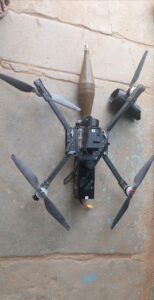
Analyst Note:
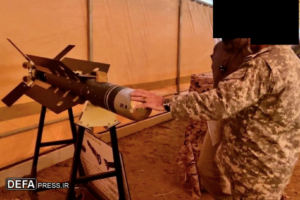
This image shows a one-way attack (OWA) UAV fitted with a high explosive anti-tank (HEAT) warhead adapted from a PG-7 series recoilless gun projectile. (ARES)


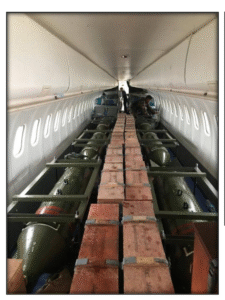
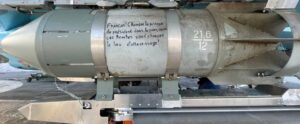
Analyst Note:
This Russian air-delivered cluster bomb is marked with a threatening message directed at the French people: «Français! Changer la politique du président dans le pays, sinon ces bombes vont changer le lieu d'atterrissage!» (“French people! Change the president’s policy in the country, otherwise these bombs will change their landing site!”). (ARES)
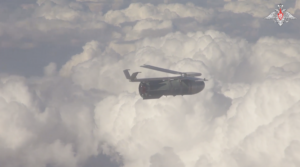
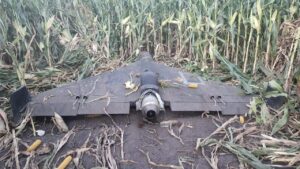

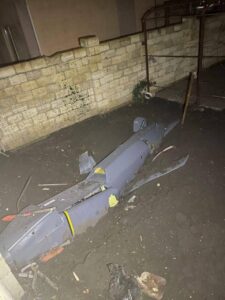
Analyst Note:
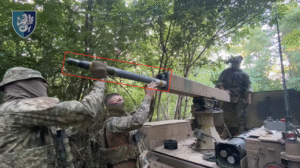
This image shows a Hydra-70 rocket fitted with an Advanced Precision Kill Weapon System (APKWS) guidance kit, converting it into a guided missile. In this case, the missile features an M151 high explosive (HE) warhead fitted with either an M427 or M423 point-detonating (PD) fuze. The rocket motor model cannot be determined from this source alone, but it is most likely to be a MK 66-series motor. The launcher appears to be a LAND-LGR4 model produced by Arnold Defense. (ARES)
Analyst Note:
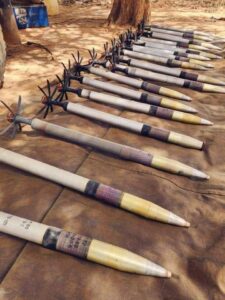
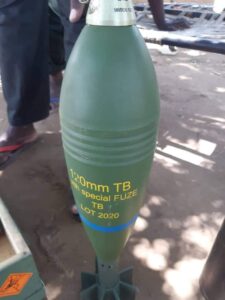
This image shows a ‘120mm TB’ air-delivered bomb that has been adapted from a 120 mm mortar projectile. It is claimed by the manufacturer that this thermobaric munition offers improved fragmentation and blast effects when compared with standard (high explosive) 120 mm mortar projectiles. The “with special FUZE” marking refers to the use of the UT M18 impact fuze. Note that this munition cannot be fired from a mortar, despite the munition body showing features consistent with this use (e.g., gas-check bands). Instead of a standard mortar projectile tailboom which would contain an ignition cartridge and be perforated by flash holes, this munition is fitted with a simplified, plastic tailfin assembly that is designed to stabilise the munition as it falls after being released by a UAV. (ARES)