


101–200 of 222
Analyst Note
26 November 2024
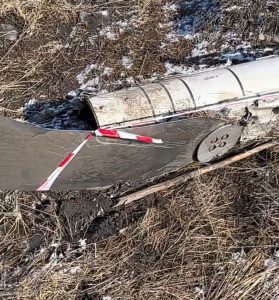
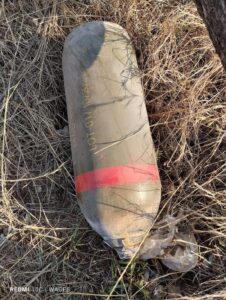
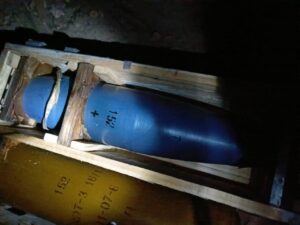
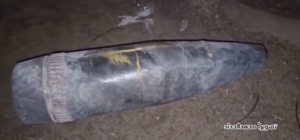
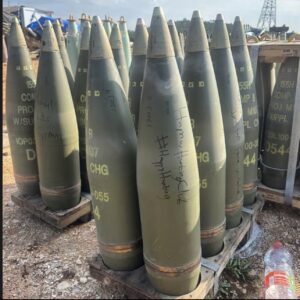
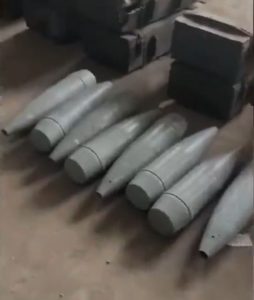
The munition indicated in this image as a 152 mm high explosive (HE) artillery gun projectile manufactured in the Democratic People’s Republic of Korea (DPRK). (ARES)
Analyst Note
25 November 2024
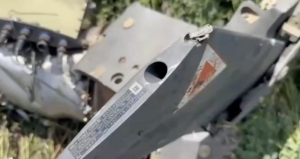
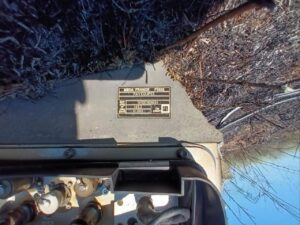
The internal components of large, complex munitions often feature markings to aid in assembly, supply chain oversight, and quality assurance. In this case, a data plate marked with the name of the manufacturer (“MBDA FRANCE”) has been affixed to one of the rear control fins (“EQ, VENTRAL, FIN TIP”) of the missile. The NATO Stock Number (NSN) is also visible. (ARES)

Analyst Note
25 November 2024
This image shows an actuator from a Storm Shadow-series missile. Actuators are components of guided munitions that are most often used to move control surfaces (e.g., fins and wings), enabling the munition to adjust its course in-flight in response to guidance commands. In this case, the component is fitted with a ‘data plate’ that indicates it was manufactured by MBDA France. (ARES)

Analyst Note
25 November 2024
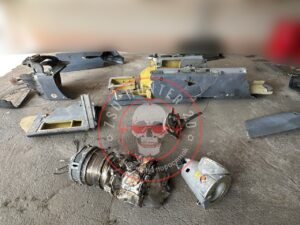
This image shows a Microturbo TRI 60-30 turbojet engine from a Storm Shadow-series air-launched cruise missile. Further remnants of the rear of the missile are also visible, including one of the rear control fins. The Storm Shadow has a range of more than 250 kilometres. (ARES)


Analyst Note
26 November 2024
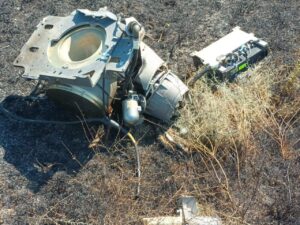
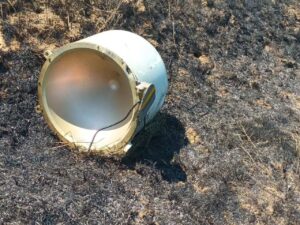
This image shows the rear of the second stage of the penetrator warhead (also called a ‘follow-through’ warhead) of the Bomb Royal Ordnance Augmented Charge (BROACH) multi-stage warhead system present in the Storm Shadow/SCALP-EG missile. The cylindrical object in the centre of the warhead (with a data plate marked “THALES”) is the fuze. (ARES)
Analyst Note
26 November 2024
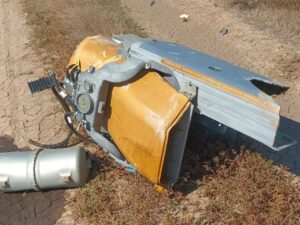
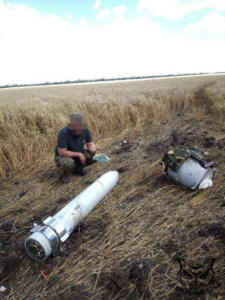
This image shows the first stage of the Bomb Royal Ordnance Augmented Charge (BROACH) multi-stage warhead used by the Storm Shadow/SCALP-EG missile. The BROACH uses a shaped-charge warhead (seen here) as its first stage, to help penetrate hardened targets, whilst the second stage comprises a conventional high explosive penetrator warhead (also called a ‘follow-through’ warhead) (ARES).
Analyst Note
26 November 2024
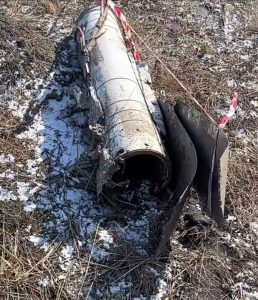
The remnant at left in this image is the second stage, or penetrator warhead, of the Bomb Royal Ordnance Augmented Charge (BROACH) multi-stage warhead as used in the Storm Shadow/SCALP-EG air-launched cruise missile. In this case, it has failed to function as intended. (ARES)


Analyst Note
19 November 2024
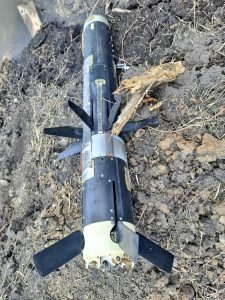
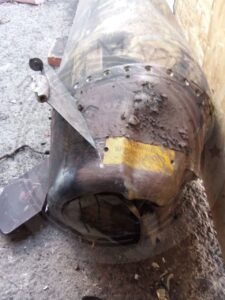
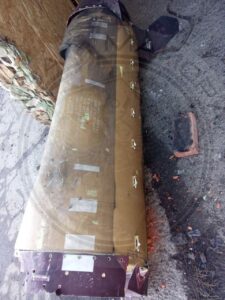
Two of the distinctive, black tailfins used on S8-series air-to-surface rockets are visible to front and left of the remnant material. (ARES)

Analyst Note
18 November 2024
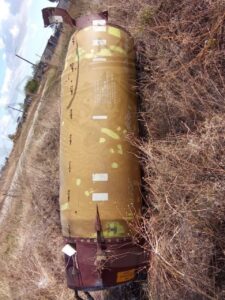
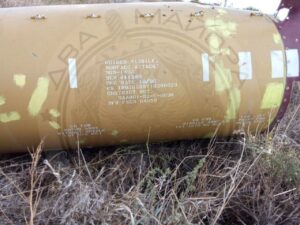
This remnant of an MGM-140 Army Tactical Missile System (ATACMS) surface-to-surface ballistic missile is marked to indicate it is the MGM-140A variant, a cluster munition which carries 950 M74 multi-purpose submunitions. Submunitions of this type are sometimes referred to by the acronym ‘anti-personnel and anti‑materiel (APAM)’. Additional markings indicate a manufacturing date (“10/96”; October 1996), a serial number (“411240”), and other information. (ARES)
Analyst Note
2 November 2024
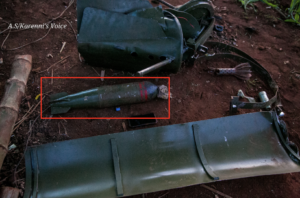
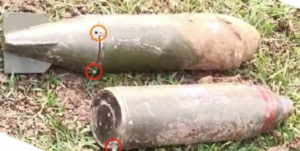
The circles in this image indicate where the fixed fin assembly is connected to the bomb body. Fin assemblies such as this help stabilise the bomb as it falls, improving the predictability of the trajectory and thus precision. Fins also orient the bomb as it falls so that munition travels nose-down. Orientation of the bomb on impact can play a role in fuze functioning, as well as the distribution of explosive or other effects. (ARES)

Analyst Note
15 October 2024
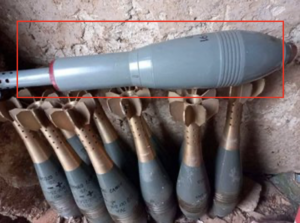
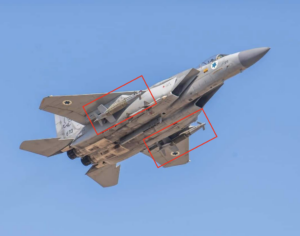
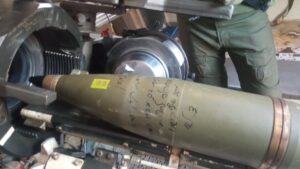
This M107 high explosive (HE) artillery gun projectile is fitted with an RT180 multi-function fuze. The RT180 can be set to operate in point-detonating or proximity modes. The factory setting for the proximity fuze detonates the warheads an average of 9 metres above the target. (ARES)


2 Analyst Notes
2 October 2024
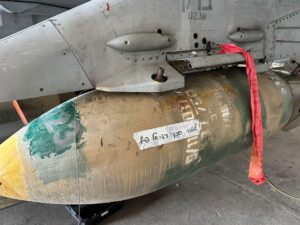
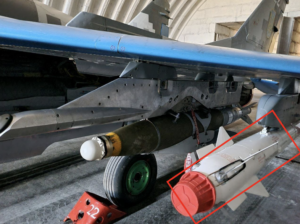
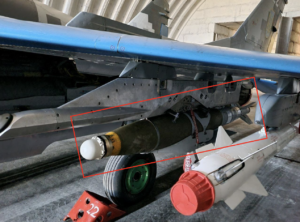
The JDAM-ER in this photograph is affixed to an unusual pylon thought to be of Ukrainian design, which allows the Western munition to be carried by the Soviet-designed Mikoyan MiG-29 and Sukhoi Su-27 fighter aircraft in service with the Ukrainian Air Force (a MiG-29 is pictured here). (ARES)

Analyst Note
16 September 2024
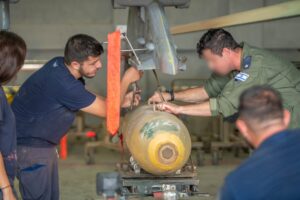
The M117 series of air-delivered bombs were historically referred to as ‘demolition bombs’, due to the more substantial blast effect they offer in comparison with so-called ‘general-purpose bombs’. This is achieved through the use of more energetic explosive compositions, such as Tritonal or Minol, which incorporate an oxidiser (typically aluminium powder). Today, munitions using such compositions are sometimes considered in the loose category of ‘enhanced blast munitions’, but the distinction between demolition and general-purpose bombs has largely disappeared. (ARES)

Analyst Note
14 October 2024
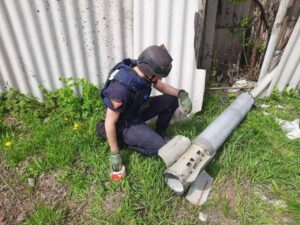
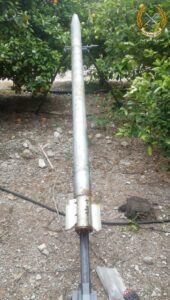
The crude launch arrangement depicted in this photograph shows the ease with which many simple rocket designs can be launched. Weapons such as this are used where precision fire is not a requirement; i.e., where the target might be a whole compound, neighbourhood, or settlement, rather than a specific building or vehicle. (ARES)
Analyst Note
19 March 2025
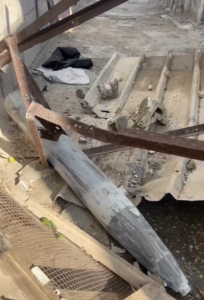
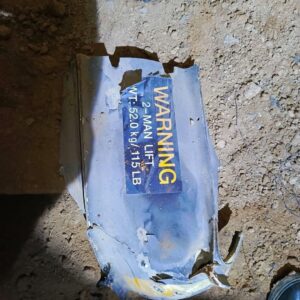
The AGM-179 Joint Air-to-Ground Missile (JAGM) is derived from the AGM-114 Hellfire series of air-to-surface missiles—and thus shares physical characteristics in terms of general construction, including rear fin placement. The marked weight of 52.0 kg (115 lbs) is generally believed to be an indicator that the rocket motor is from a JAGM; however, remnants marked with this weight have been observed from several years before the JAGM was initially fielded. (ARES)

Analyst Note
11 September 2024
In this image, four AGM-114 Hellfire-series missiles can be seen fitted to an M299-series missile launcher, itself attached to the stub wings of this Israeli AH-64 Apache helicopter. In theory, the Apache could be armed with up to sixteen Hellfire missiles, but fewer are carried in practice to allow for other weapons and sensor payloads (ARES).

Analyst Note
10 September 2024
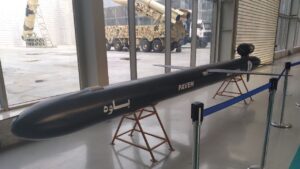
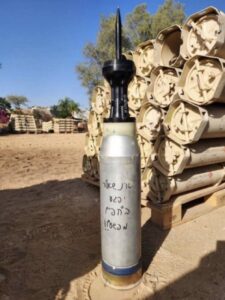
This is an Israeli 120 mm tank gun round, of the ‘armour-piercing, fin-stabilised discarding sabot – tracer’ (APFSDS-T) type. The physical features identify it as either the M322 or M338.
The projectile (penetrator) of this round has no explosive content and relies on kinetic energy to penetrate armoured targets. When a projectile is of a smaller calibre than the gun’s bore, a sabot is sometimes used to ensure the projectile is centred in the bore and to trap the gas from the propellant of the cartridge and propel the projectile. In flight, the sabot separates into two or more pieces, sometimes called ‘petals’, often found along the line of fire before the impact point. (ARES)

Analyst Note
11 September 2024
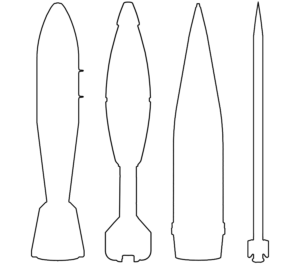
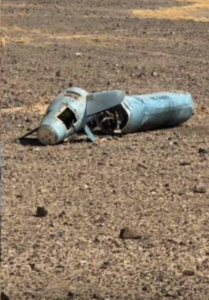
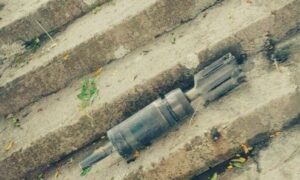
Some tank gun projectiles may have fins affixed to an extended ‘tail boom’, in a similar manner to a mortar projectile. Note, however, that the cylindrical tail assembly is not perforated as it would be for most mortar projectiles. Tank gun projectiles are also more likely to be generally cylindrical, rather than lachrymiform (teardrop-shaped). (ARES)


Analyst Note
29 July 2024
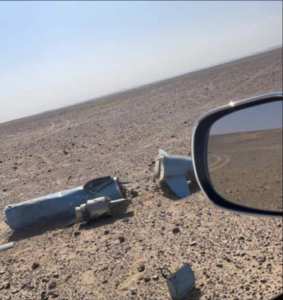
This image shows a distinctively shaped component of MBDA’s ‘Diamond Back’ joined tandem wing assembly as fitted to the GBU-39 Small Diameter Bomb (SDB). (ARES)

Analyst Note
29 July 2024
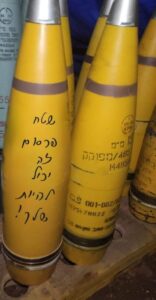
Israeli illumination munitions—often finished in a distinctive yellow—are sometimes mistaken for high explosive munitions by observers more familiar with the NATO or U.S. marking systems. This image shows an M485-pattern illumination projectile, a base-eject type that uses a parachute-retarded canister containing a powerful candle to illuminate the battlefield.
Analyst Note
25 June 2024
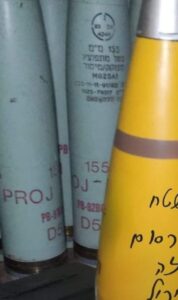
The M825A1 155 mm smoke projectile makes use of white phosphorus (WP) to generate a brilliant white smoke. Whilst WP does have incendiary effects, the method of dispersal in the case of the M825A1 is optimised for screening and marking purposes. (ARES)
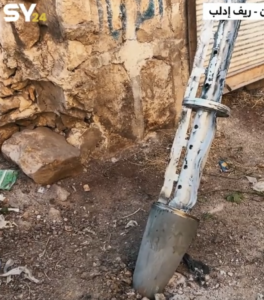
Analyst Note
13 June 2024
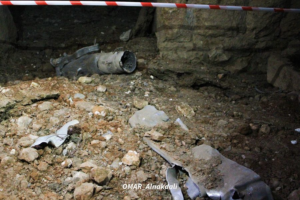
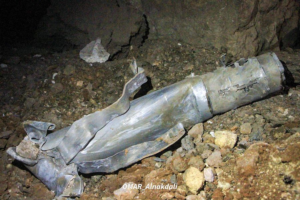
This image depicts either a 9M27K or 9M27K1 cargo rocket (cluster munition). The 9M27K carries the 9N210 high explosive fragmentation (HE-FRAG) submunition, whilst the 9M27K1 carries the 9N235 HE-FRAG submunition (ARES).
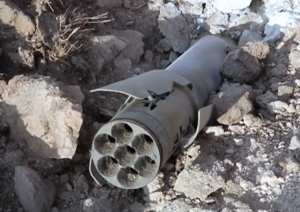
Analyst Note
31 May 2024
Contextual information suggests that this is likely a 9M22S unguided incendiary rocket (see External Research section), but this cannot be confirmed on the basis of this image alone. (ARES)
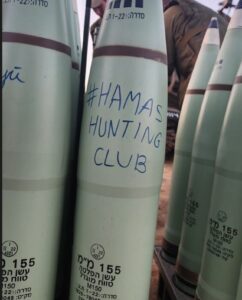
Analyst Note
30 May 2024
Some artillery projectiles, such as this M150 type, use a hexachloroethane-based composition (HC) to generate smoke for screening or marking purposes. In many armed forces, HC smoke munitions have partially replaced those relying on white phosphorus for similar effects. (ARES)
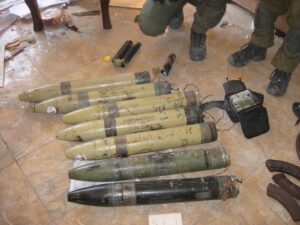
Analyst Note
3 June 2024
107mm spin-stabilized rockets of this design are often utilized by non-state actors in an indirect fire role. Like the original Chinese models that they are copied from, they do not require more than a simple electric power source and a rudimentary launch platform to achieve an acceptable level of accuracy. (ARES)


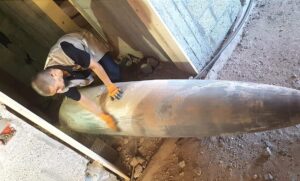

Collection
Ukraine and Russia 2022–2026
On February 24, 2022, Russia launched a full-scale invasion of Ukraine, involving military forces aimed at capturing most major cities, including the capital, Kyiv. It became the largest conflict in Europe since World War II, and about a quarter of Ukraine’s territory came under Russian control. But Russian troops were eventually pushed back from Kyiv. […]
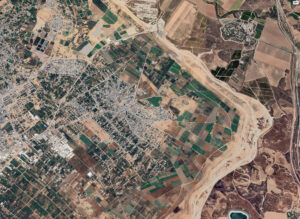
Collection
Israel and Gaza 2023 – 2026
On 7 October 2023, Hamas militants breached the heavily-fortified border separating Israel and the Gaza Strip, attacking numerous towns and villages. More than 1,000 people in Israel were reported killed, with more than 250 taken hostage and moved to Gaza. In response, Israel has launched one of its largest military operations of recent decades, seeking […]

Analyst Note
30 May 2024
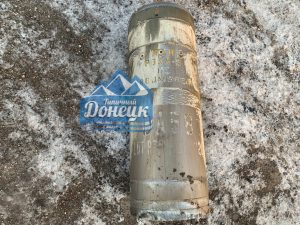
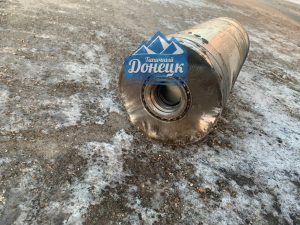
Many guided (or otherwise complex) munitions like this one are marked with additional information on individual assemblies or components. This can include information on sub-contractors that produced or integrated specific parts of a munition. (ARES)

Analyst Note
8 October 2024
The MK 84 series of unguided air-delivered bombs can be converted to precision guided munitions by being fitted with guidance kits such as the Joint Direct Attack Munition (JDAM), SPICE 2000, or Paveway series. This MK 84 is also marked with a variant designation “MOD 4”. (ARES)

Analyst Note
1 June 2024
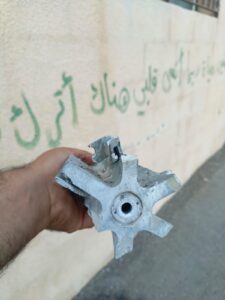
The image is of "a high-velocity shell fired from the main armament of a battle tank," Desmond Travers, former director of the Institute for International Criminal Investigations, told Airwars and AFP. "The calibre appears to be 120 mm, and the shell is fin-stabilised. The maximum effective range is five kilometers, but a skilled tank crew member should be able to hit a target the size of a car." (Airwars)






Analyst Note
3 June 2024
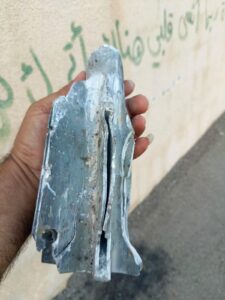
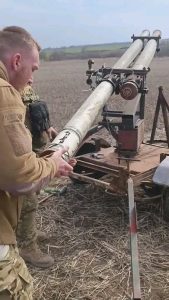
122 mm ‘Grad’ rockets can be fired from a variety of launchers and even in improvised ways. The most common is the BM-21 launcher and its later derivatives, but many other portable or vehicle-mounted launchers have been used around the world. Craft-produced examples—ranging from simple rails to more complex designs comparable to factory made launchers—are also common. In some cases, Grad rockets are even fired whilst supported by a crude arrangement of logs, bricks, or rocks. (ARES)