The external organisation that documented the munition
Research Organisation (6)
Colour of the munition pictured
Base Colour (12)
Colour of all, or some, of the markings on the munition
Marking Colour (11)
Language or script of the marking on a munition
Marking Script (10)
Condition of the munition pictured
Condition (6)
Key features defining the operation mechanisms of a projectile
Mechanical Feature (10)
Whether a munition is guided or unguided
Guidance (2)
Where the munition is launched from and what it targets
Domain (7)
The type of fins visible on the munition
Fins Characteristic (6)
The nominal diameter of a projectile. For most modern munitions, this is expressed in millimetres (e.g. 82 mm mortar projectile), but older artillery gun projectiles may be described in inches.
Carrier munitions which contain and dispense submunitions (smaller munitions, sometimes called ‘'bomblets’'). Cluster munitions generally scatter their payload over a wide area, either to increase hit probability or for area-denial purposes. They can take the form of multiple munition categories. Some submunitions - especially older models, or those stored or employed incorrectly - can have a high dud rate, resulting in an enduring explosive hazard. More than 100 states have signed an international convention banning the use of cluster munitions - but not Russia, the United States, China, or Israel.
Current Filter
Fragmentation Munition
Fragmentation munitions use the detonation of an explosive to propel small fragments of material (‘fragmentation’) from the body of the munition at high velocity. A fragmentation munition typically affects a wider area than a simple blast munition of the same size, and is effective against personnel and unarmoured vehicles. Fragmentation is the primary mechanism of lethality for many common explosive munitions, but these munitions almost invariably also affect their environment through blast and other mechanisms (e.g., a high explosive fragmentation munition).
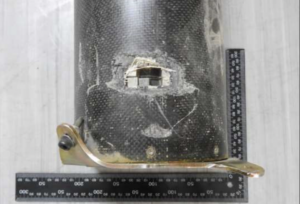
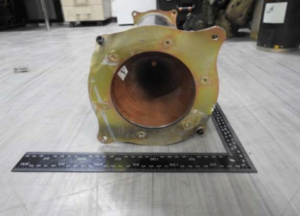
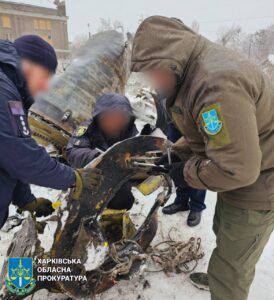
This image shows the copper cone of the shaped charge located at the front of the warhead fitted to a Shahed-131. The Ukrainian armed forces have recorded that the cone measures 111 mm in diameter and 162 mm in depth. The warhead is lined with cubic pre-formed fragments of 7 mm in diameter. The explosive content of the warhead is estimated to be between 10 and 15 kg. (ARES)
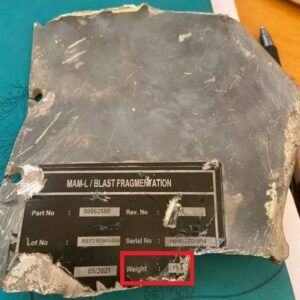
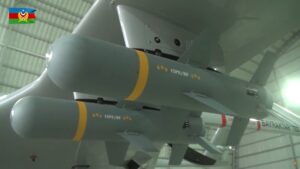
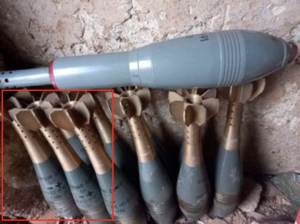
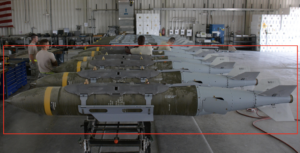
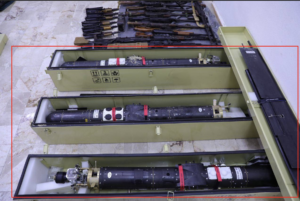
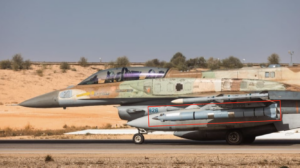
This image shows two MAM-L guided air-delivered bombs affixed to the wing of a Bayraktar TB2 drone. The MAM-L and TB2 are both produced in Türkiye by Roketsan and Baykar respectively. The MAM-L can have one of three different warheads: blast fragmentation, anti-tank, or thermobaric. The warhead section of each MAM-L in this image has “YIPE/BF” visible. ‘YIPE’ is the abbreviation of the warhead type in Turkish: Yüksek Infilaklı Parçacık Etkili (‘high explosive fragmentation’, in English). The ‘BF’ also indicates that these MAM-L munitions are of the blast-fragmentation variant. The warhead of a MAM-L cannot be determined from an external assessment without viewing markings such as these (or a clear view of the data plate, which can be seen on the aft portion of the MAM-L). (ARES)
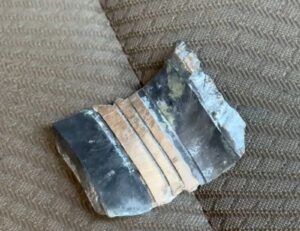
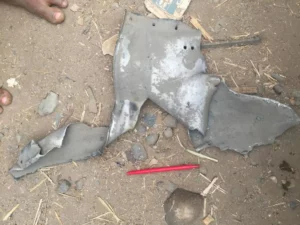
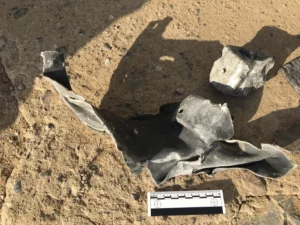
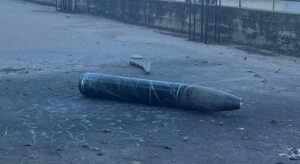
This image shows a fragment of an Israeli 120 mm tank gun projectile, with its distinctive obturating band configuration. The additional remnants shown in the related OSMP entry permit distinguishing this projectile from other potential Israeli models, identifying it as the M339 tank gun projectile. (ARES)
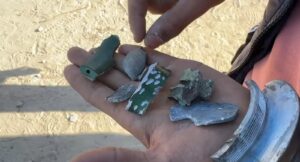
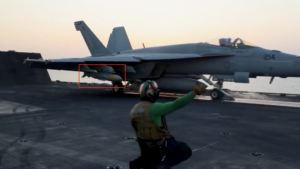
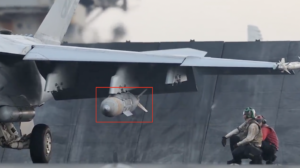
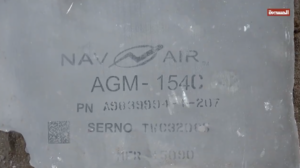
This image shows an unexploded WDU-45/B, the second stage or penetrator warhead (also called a ‘follow-through’ warhead), of the Bomb Royal Ordnance Augmented Charge (BROACH) multi-stage warhead system used in the AGM-154C variant of the Joint Standoff Weapon (JSOW) air-delivered bomb. The first stage is a shaped-charge warhead designed help the second stage penetrate hardened targets before detonating. The Shadow/SCALP-EG missile also uses a multi-stage BROACH system, but with larger warheads. (ARES)
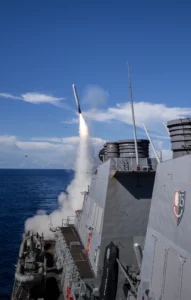
This image shows an RGM-109-series Tomahawk Land Attack Missile (TLAM) being launched from the USS Curtis Wilbur (DDG 54), an Arleigh Burke-class guided missile destroyer. The RGM-/UGM-109 TLAM series are surface-to-surface cruise missiles fired from various platforms. The ‘R’ and ‘U’ in RGM and UGM, respectively, denote the intended launch platform, with ‘R’ denoting surface platforms, such as ships, and ‘U’ denoting subsurface platforms, such as submarines. (ARES)
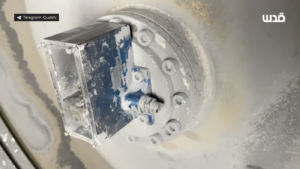
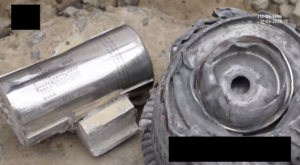
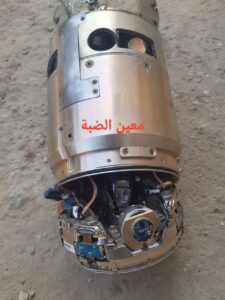
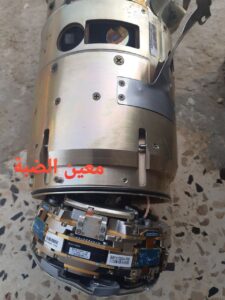
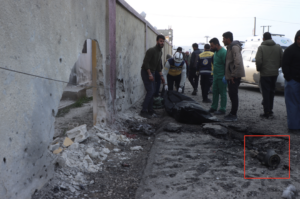
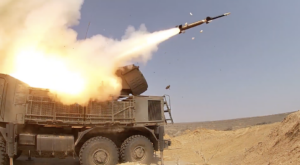
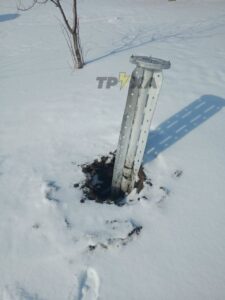
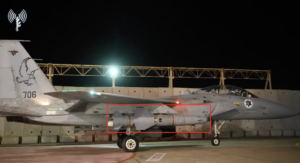
This image shows the section just forward of the Tamir missile’s forward fins and appears to incorporate the base of the active radar seeker (open end) and the laser proximity sensor part of the warhead fuzing system (mirrors/glass & opening in the casing). While the Tamir has been reported to physically impact some targets, the proximity fuze is designed to closely pass by the target, then detonate the high explosive fragmentation warhead thereby destroying the target. ‘Tamir’ is a Hebrew acronym for Til Meyaret, or ‘interceptor missile’. (ARES)
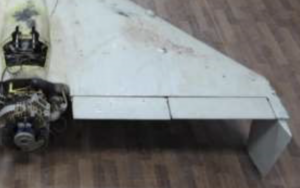
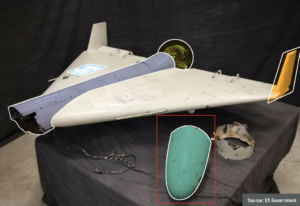
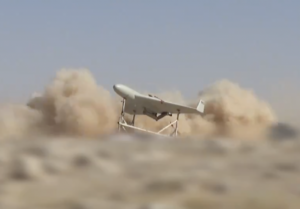
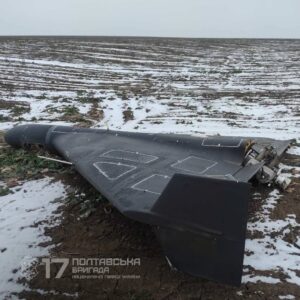
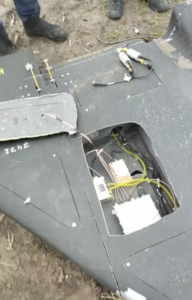
This image shows a relatively intact Shahed-131 one-way-attack (OWA) UAV with various components highlighted, including the GPS antenna array (light blue), fuselage (light purple), engine (yellow), wing stabiliser (orange), and nose cone (cyan, inside the red box). The nose cone attaches to the front of the fuselage and covers the warhead. (ARES)
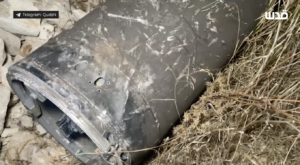
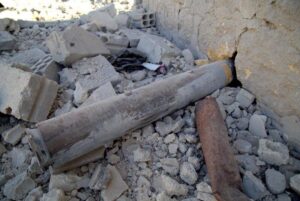
This image shows a remnant of the aft motor section, which includes the venturi nozzle, of a North Korean KN-23/KN-24/Hwasong-11 series missile. The KN-23/KN-24/Hwasong-11 has a generally similar appearance to the Russian 9M7 ‘Iskander’ series of ballistic missiles, but has differences in performance and in some aspects of the construction. (ARES)
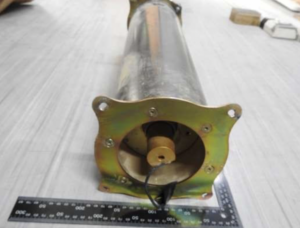
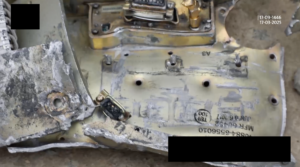
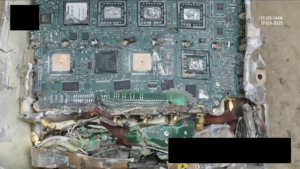
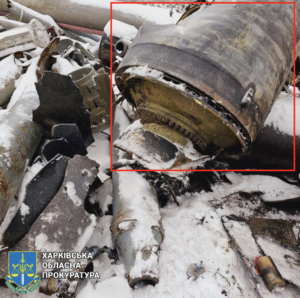
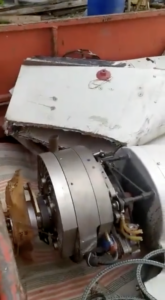
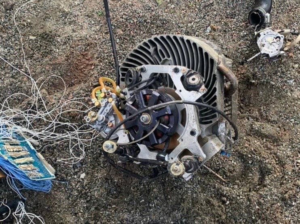
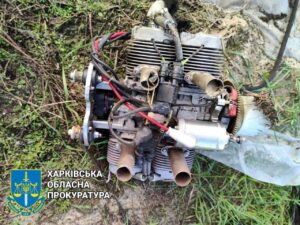
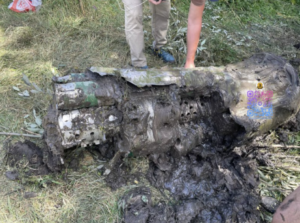
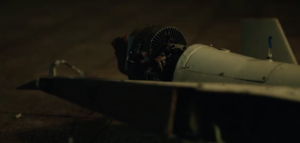
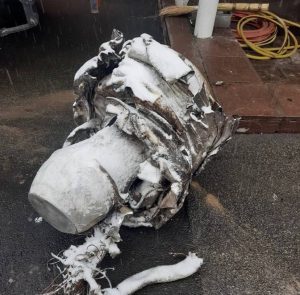
These images show a damaged Serat-01 engine which powers the Shahed-131 drone after its rocket-assisted launch. The Serat-01 is a copy of the MDR 208 engine, and is noticeably smaller than the MD550 which powers the larger Shahed-136. (ARES)
This image shows the BSF-50, one of several warheads developed by Russia for the Shahed-136/Geran-2 to replace the original Shahed-136 warhead designed by Iran. The BSF-50 is a high explosive warhead with a fragmentation effect. (ARES)
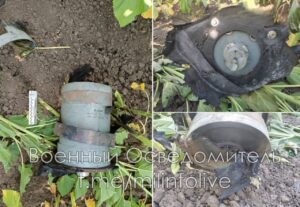
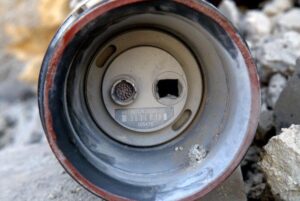
This image shows the fuzewell in the base of the warhead of a GBU-39 air-delivered bomb. The innermost cylinder is the electronic fuze; this is held in place by the closure ring. (ARES)
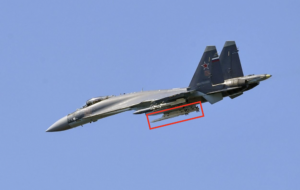
Two R-77 air-to-air missiles (NATO reporting name: AA-12 Adder) are carried in this photograph by a Russian Aerospace Forces Sukhoi Su-35 fighter aircraft. Key markings, including the aircraft’s bort number (a coloured numeral that acts as a unit or base identifier), have been digitally obscured. (ARES)