



801–900 of 1,261
Current Filter
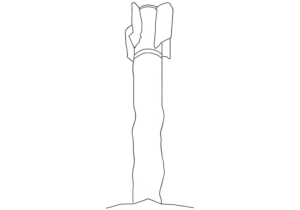
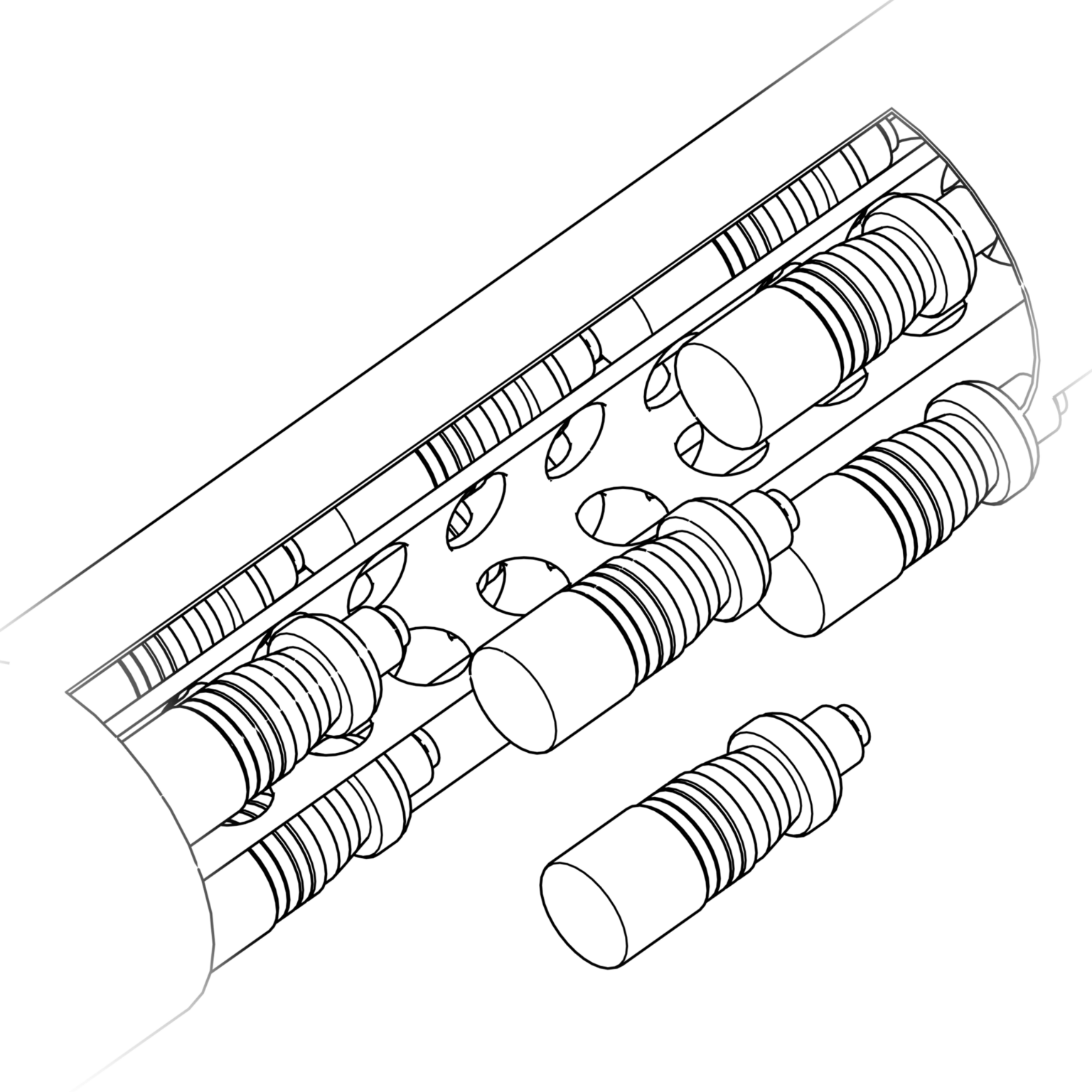
Cluster Munition
Carrier munitions which contain and dispense submunitions (smaller munitions, sometimes called ‘'bomblets’'). Cluster munitions generally scatter their payload over a wide area, either to increase hit probability or for area-denial purposes. They can take the form of multiple munition categories. Some submunitions - especially older models, or those stored or employed incorrectly - can have a high dud rate, resulting in an enduring explosive hazard. More than 100 states have signed an international convention banning the use of cluster munitions - but not Russia, the United States, China, or Israel.
Current Filter
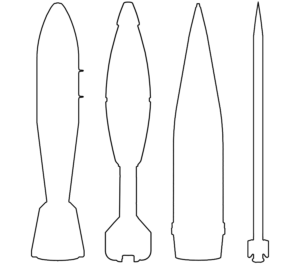
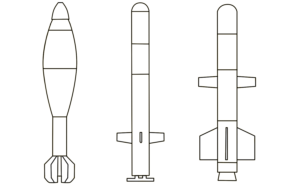
Fragmentation Munition
Fragmentation munitions use the detonation of an explosive to propel small fragments of material (‘fragmentation’) from the body of the munition at high velocity. A fragmentation munition typically affects a wider area than a simple blast munition of the same size, and is effective against personnel and unarmoured vehicles. Fragmentation is the primary mechanism of lethality for many common explosive munitions, but these munitions almost invariably also affect their environment through blast and other mechanisms (e.g., a high explosive fragmentation munition).
Analyst Note
19 November 2024
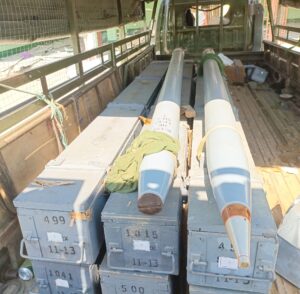
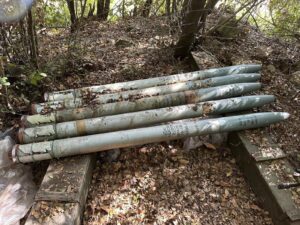
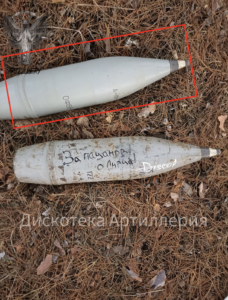
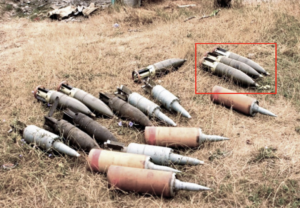
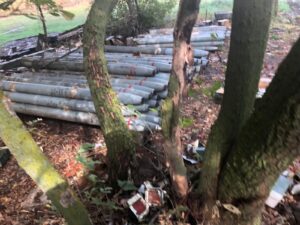
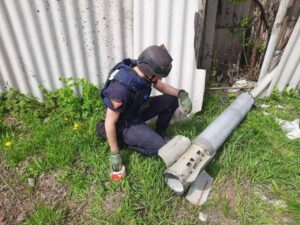
These R-122 ‘Grad’-type 122 mm surface-to-surface rockets were produced in North Korea. The example to the right is fitted with an F-122 impact fuze. Whilst a two-tone colour scheme is more common amongst those North Korean Grad rockets thus far identified in the context of the Ukraine conflict (these typically featuring a black forward section), uniformly coloured examples like this have also been identified previously. (ARES)
Analyst Note
18 November 2024
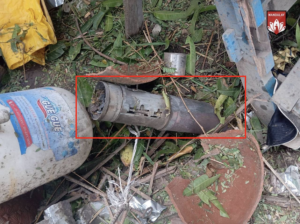
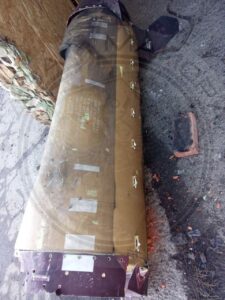
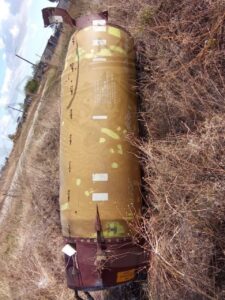
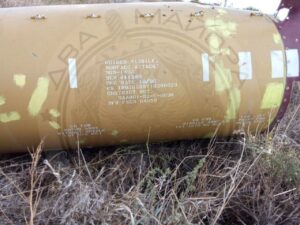
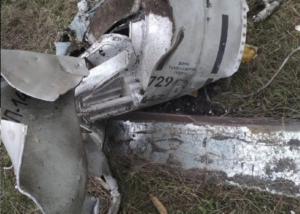
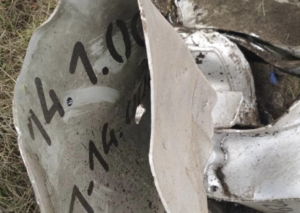
This remnant of an MGM-140 Army Tactical Missile System (ATACMS) surface-to-surface ballistic missile is marked to indicate it is the MGM-140A variant, a cluster munition which carries 950 M74 multi-purpose submunitions. Submunitions of this type are sometimes referred to by the acronym ‘anti-personnel and anti‑materiel (APAM)’. Additional markings indicate a manufacturing date (“10/96”; October 1996), a serial number (“411240”), and other information. (ARES)
Analyst Note
7 November 2024
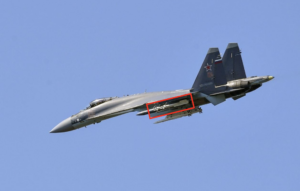
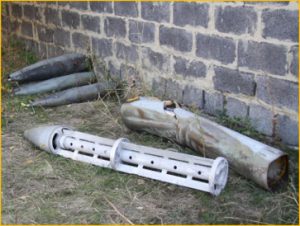
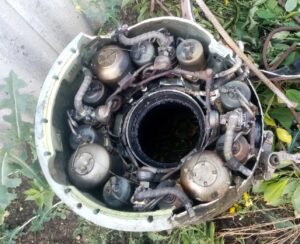
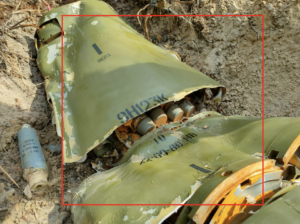
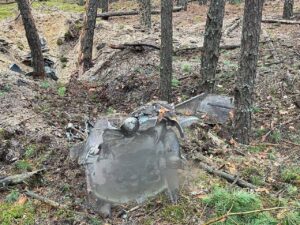
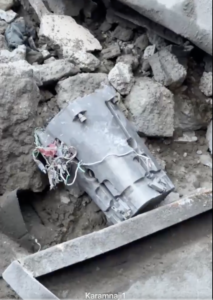
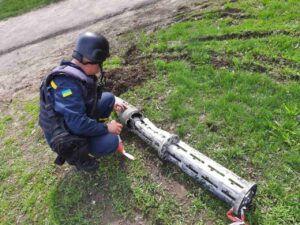
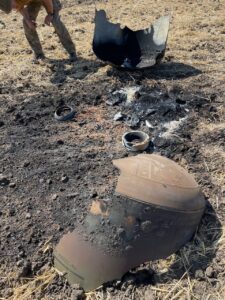
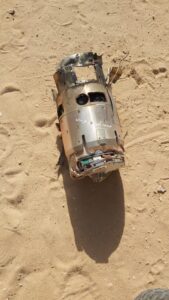
Almost all cluster munitions, including this example, expel their submunitions during flight. The submunitions are often held in an internal frame, such as that visible here, prior to being expelled. Depending on the munition, these internal frames may be diagnostic for identification. They usually do not carry a significant explosive payload in their own right, and therefore often withstand the functioning of the munition relatively intact. (ARES)
Analyst Note
14 October 2024
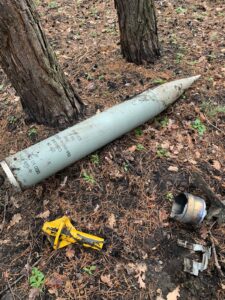
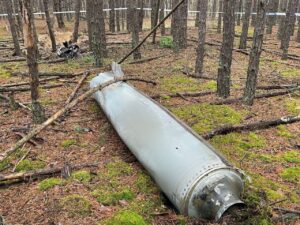
The 9M27K3 surface-to-surface rocket is fitted with the 9N128K3 cargo warhead (seen here). This warhead carries a payload of 312 PFM-1 or PFM-1S scatterable anti-personnel landmines. (ARES)
Analyst Note
14 October 2024
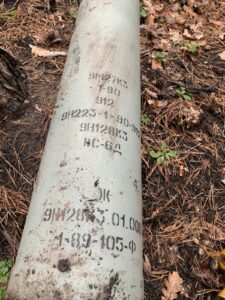
The markings on this 9N128K3 cargo warhead indicate that it was produced in 1989 and fitted to a 9M27K3 rocket in 1990. (ARES)


Analyst Note
2 November 2024
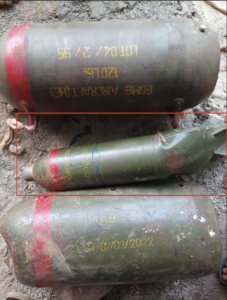
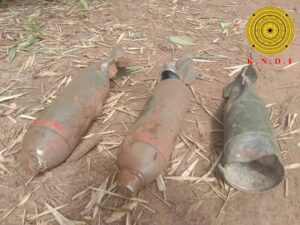
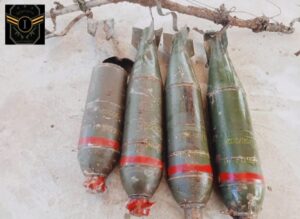
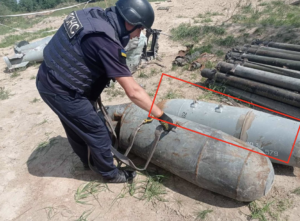
The arming vane for a nose fuze (painted red) is visible on each of the two leftmost MAB-10B6 air-delivered bombs in this image. As the bomb falls, air passing over the arming vane causes it to spin, arming the fuze. (ARES)
Analyst Note
2 November 2024
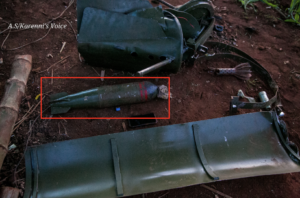
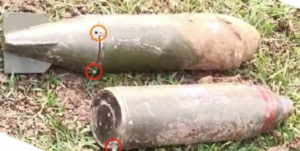
The circles in this image indicate where the fixed fin assembly is connected to the bomb body. Fin assemblies such as this help stabilise the bomb as it falls, improving the predictability of the trajectory and thus precision. Fins also orient the bomb as it falls so that munition travels nose-down. Orientation of the bomb on impact can play a role in fuze functioning, as well as the distribution of explosive or other effects. (ARES)
Analyst Note
11 November 2024
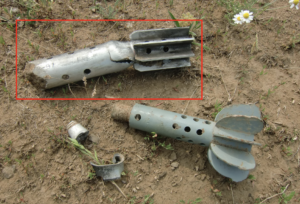
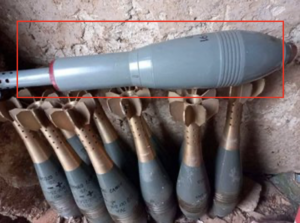
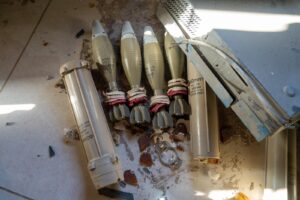
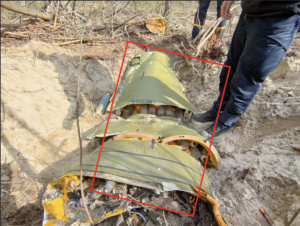
This Iranian 60 mm mortar projectile is of the ‘Long Range’ type described without a specific model name in various Iranian export catalogues and other sources. The designation as marked on projectiles and packaging is variable, with observed formulations including “60mm H.E. L.R.”, “60mm H.E L.R”, and “60mm HE L.R”. Sometimes, as here, “60mm L.R” is followed by “HE / TNT”. (ARES)

Analyst Note
14 October 2024
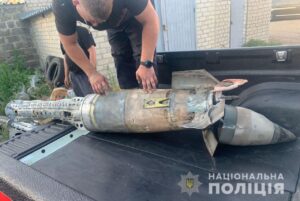
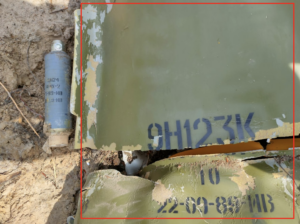
The 9Н123К (9N123K) cargo warhead is delivered by a 9М79К (9M79K) series surface-to-surface guided missile. This cluster munition carries fifty 9Н24 (9N24) high explosive fragmentation (HE-FRAG) submunitions, and is launched from the 9К79 Tochka series of tactical ballistic missile launchers. (ARES)
Analyst Note
14 October 2024
A 9N24 submunition is visible to the left of the 9N123K warhead in this image. This high explosive fragmentation (HE-FRAG) submunition is marked to indicate it was produced in 1989 and filled with A-IX-2 explosive composition. (ARES)


Analyst Note
24 October 2024
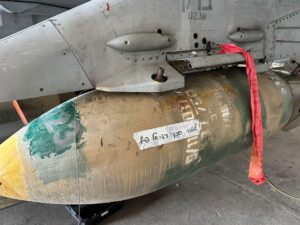
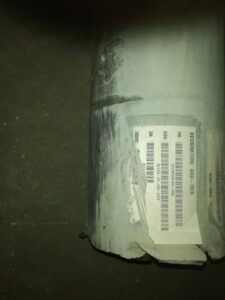
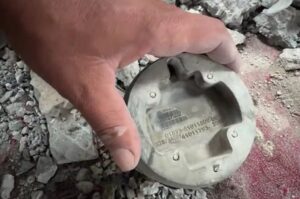
Labels on munition remnants can provide a host of useful data, including the model designation (in this case, “GBU-39/B”), part number (PN; (“70P998100-1003”), National Stock Number (NSN; “1325-01-526-8728”), serial number (SN; illegible), and Department of Defense Identification Code (DODIC; “EC53”). These codes, and others like them, can often be searched for in databases or provided to technical specialists for further interpretation. (ARES)


Analyst Note
14 October 2024
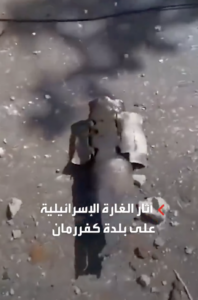
The 9M28S surface-to-surface unguided rocket carries the 9N510 warhead, which disperses burning thermite-type incendiary elements over a wide area upon functioning. This munition is designed to start fires in target areas vulnerable to incendiary attack, including forests, ammunition dumps, and fuel storage sites. (ARES)
Analyst Note
15 October 2024
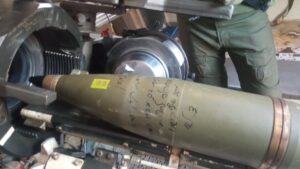
This M107 high explosive (HE) artillery gun projectile is fitted with an RT180 multi-function fuze. The RT180 can be set to operate in point-detonating or proximity modes. The factory setting for the proximity fuze detonates the warheads an average of 9 metres above the target. (ARES)

Analyst Note
16 October 2024
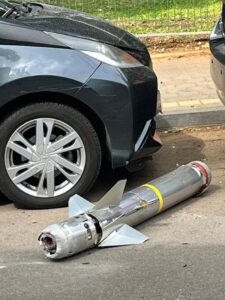
This image shows most of the forward half of a Tamir surface-to-air missile, including the guidance section and warhead, as fired by launchers in the Iron Dome system. These interceptor missiles are fast and manoeuvrable with a relatively small explosive payload. Their construction and low yield means that remnants are often recovered largely intact. (ARES)

Analyst Note
14 October 2024
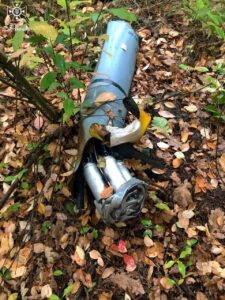
The RAFAEL Advanced Defense Systems SPICE 1000 guidance kit is fitted to MK 83-series 1,000-pound unguided air-delivered bombs to convert them to precision guided munitions. Like the JDAM-ER, it has a deployable wings to provide a ‘gliding’ attack trajectory. (ARES)
Analyst Note
21 October 2024
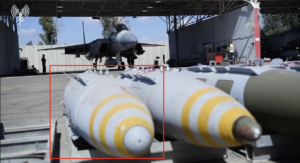
The BLU-117 air-delivered bomb is nearly identical in format to the more common MK 84, but uses the PBXN-109 explosive filler which is more insensitive than the typical explosive compositions found in MK 80-series bombs. The BLU-117 is also coated with a grey, thermally resistant paint, and marked with three yellow bands (as opposed to the green paint with two yellow bands found on standard MK 80-series bombs). These changes were requested by the U.S. Navy for safer storage of these munitions aboard ships. (ARES)


Analyst Note
14 October 2024
This 9M27K-series surface-to-surface cargo rocket is carrying a payload of 9N210 or 9N235 high explosive fragmentation (HE-FRAG) submunitions. These submunitions are difficult to distinguish unless their external markings are visible, or a close examination is made. (ARES)
2 Analyst Notes
2 October 2024
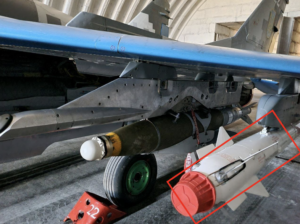
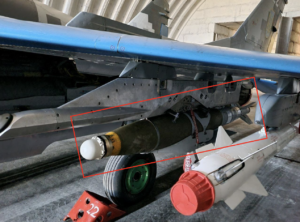
The JDAM-ER in this photograph is affixed to an unusual pylon thought to be of Ukrainian design, which allows the Western munition to be carried by the Soviet-designed Mikoyan MiG-29 and Sukhoi Su-27 fighter aircraft in service with the Ukrainian Air Force (a MiG-29 is pictured here). (ARES)
3 Analyst Notes
3 October 2024
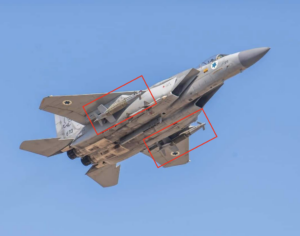
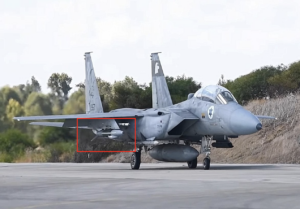
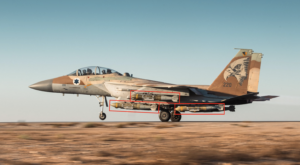
This is an image released by the Israeli Defense Forces that shows an F-15I of 69 Squadron Israeli Air Force preparing to take part in a high-profile airstrike on 27 September 2024, in which the leader of Hezbollah, Hassan Nasrallah, was killed.
Analyst Note
18 November 2024
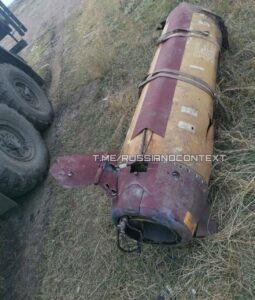
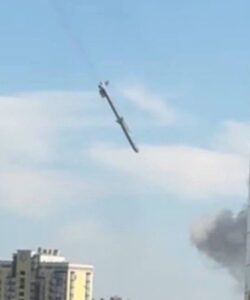
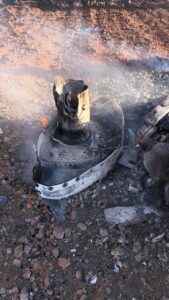
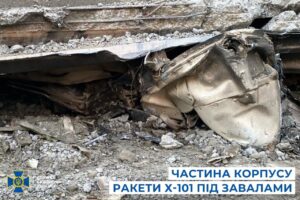
The MGM-140 Army Tactical Missile System (ATACMS) series includes variants with a variety of different payloads, including submunitions and unitary high explosive (HE) warheads. The number of submunitions carried and effective ranges also vary.
Ukraine has reportedly received the MGM-140A and MGM-140B variants, which are externally visually identical and must usually be distinguished by markings. The MGM-140A carries 950 M74 submunitions, with an effective range of 165 km, while the MGM-140B carries only 300 M74 submunitions but has a longer effective range of 300 km. (ARES)
Analyst Note
16 September 2024
The M117 series of air-delivered bombs were historically referred to as ‘demolition bombs’, due to the more substantial blast effect they offer in comparison with so-called ‘general-purpose bombs’. This is achieved through the use of more energetic explosive compositions, such as Tritonal or Minol, which incorporate an oxidiser (typically aluminium powder). Today, munitions using such compositions are sometimes considered in the loose category of ‘enhanced blast munitions’, but the distinction between demolition and general-purpose bombs has largely disappeared. (ARES)
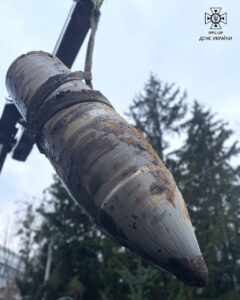

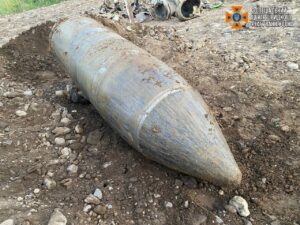
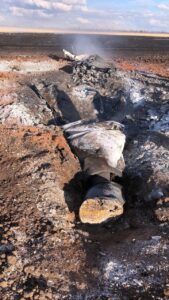
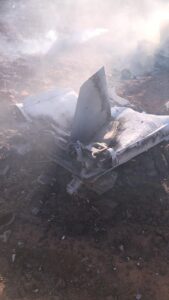


Analyst Note
14 October 2024
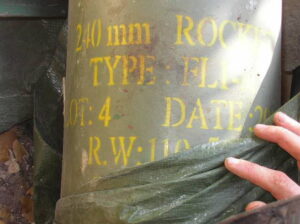
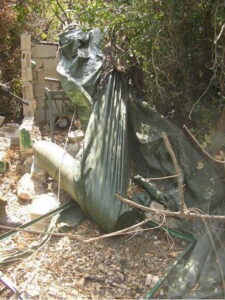
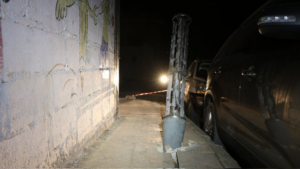
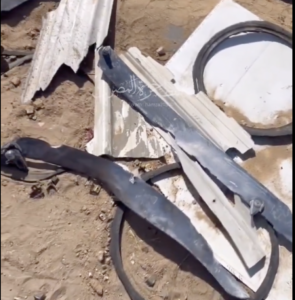
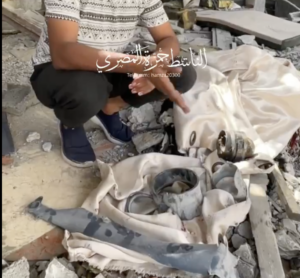
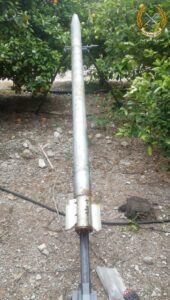
The crude launch arrangement depicted in this photograph shows the ease with which many simple rocket designs can be launched. Weapons such as this are used where precision fire is not a requirement; i.e., where the target might be a whole compound, neighbourhood, or settlement, rather than a specific building or vehicle. (ARES)
Analyst Note
11 September 2024
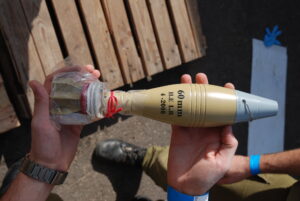
This is an Iranian 60 mm mortar projectile, marked to indicate it is of the ‘high explosive, long-range’ type (“H.E L.R”). Both the munition body and fuze are marked to with the year of production (“2008”). Whilst the tan colouring is often indicative of Iranian-made munitions (especially where the fins are also painted), this is not diagnostic, and a combination of physical features and markings should be assessed to reach a positive identification. (ARES)
Analyst Note
11 September 2024
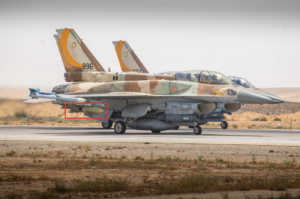
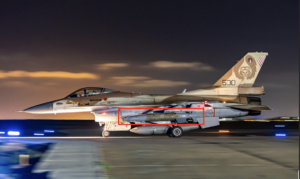
This image shows an Israeli Air Force F-16C fighter aircraft from 101 Squadron carrying a MK 84-series 2,000-pound-class air-delivered bomb fitted with a SPICE 2000 ‘bolt-on’ guidance kit. (ARES)
Analyst Note
1 August 2024
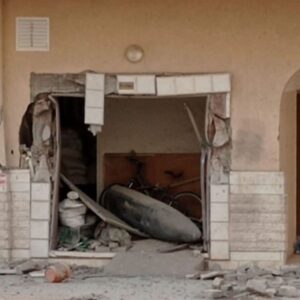
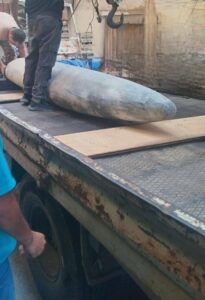
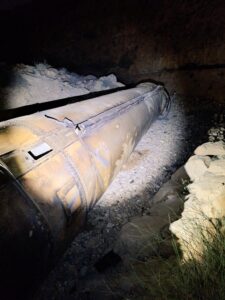
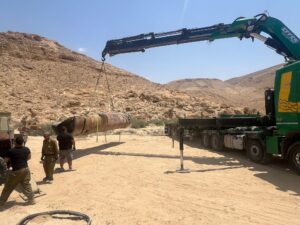
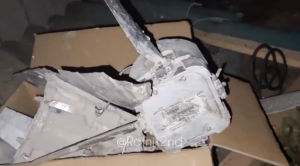
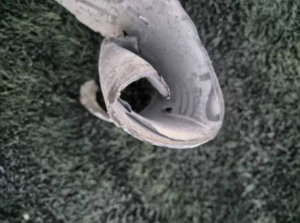
These are munition debris images released by the Israel Defence Forces and are not necessarily in situ. (Airwars)
Analyst Note
1 August 2024
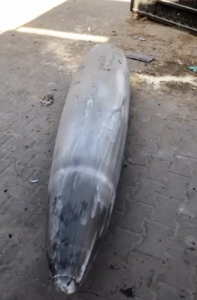
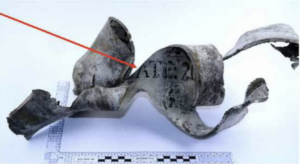
These are munition debris images released by the Israel Defence Forces and are not necessarily in situ. (Airwars)
Analyst Note
1 August 2024
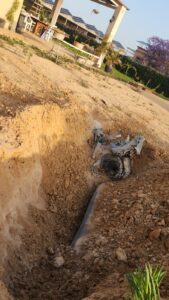
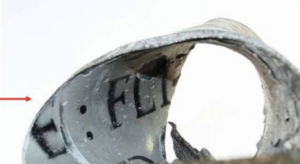
These are munition debris images released by the Israel Defence Forces and are not necessarily in situ. (Airwars)