



201–300 of 712
Analyst Note
15 September 2025
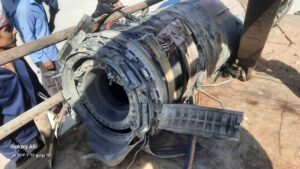
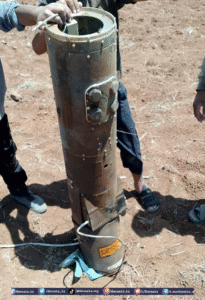
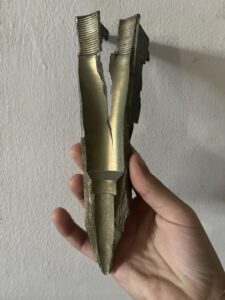
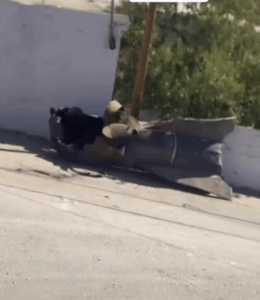
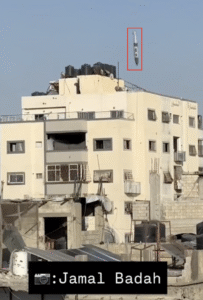
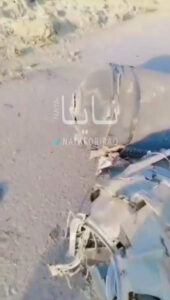
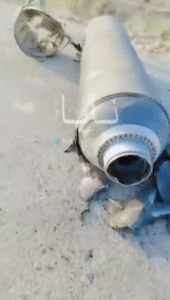
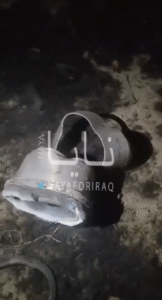
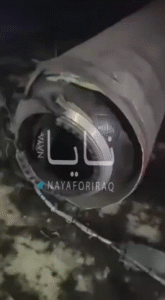
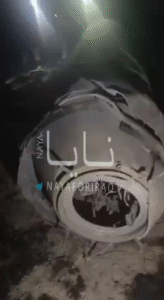
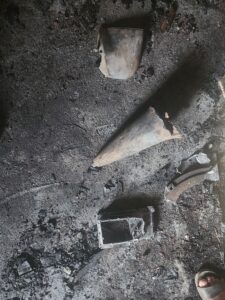
This image shows the damaged rocket motor section of a ballistic missile that was fired by the Houthis in Yemen towards Israel and likely intercepted. The Houthis employ ballistic missiles that are supplied by Iran, and given different names. In Houthi service, the Iranian Kheibar Shekan missile is known as the Hatem-2. (ARES)

Analyst Note
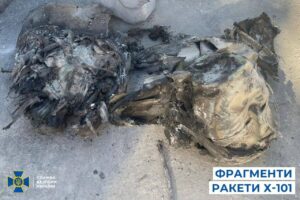
29 July 2025
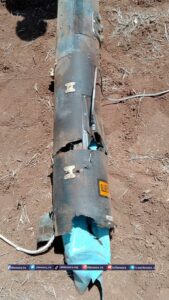
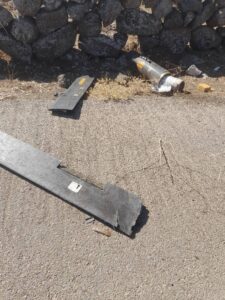
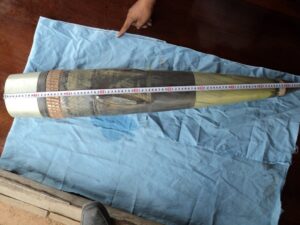
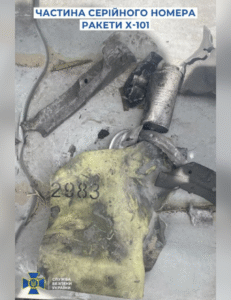
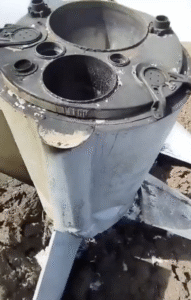
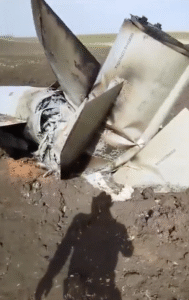
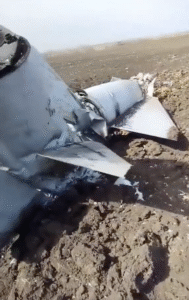
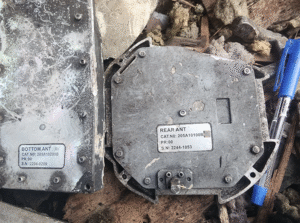
This image shows remnants of a Russian Kh-101 air-launched cruise missile. The remnant on the right is the rearmost tail section of the missile. (ARES)
Analyst Note
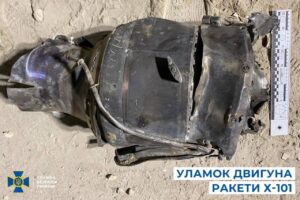
15 September 2025
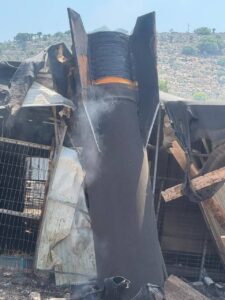
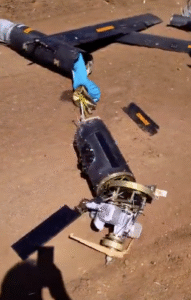
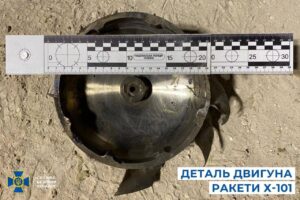
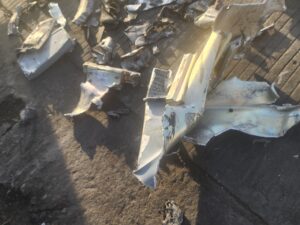
This image shows a remnant of the TRDD-50A(M) (ТРДД-50А(M)) turbojet engine, which powers Kh-101 and Kh-59M missiles. Other models of Russian cruise missiles are known to use other variants of the TRDD-50. (ARES)
Analyst Note
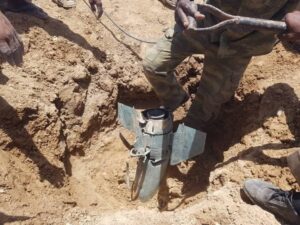
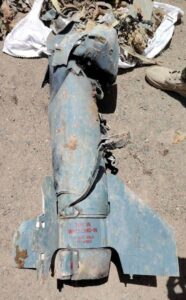
5 October 2025
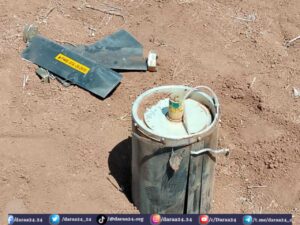
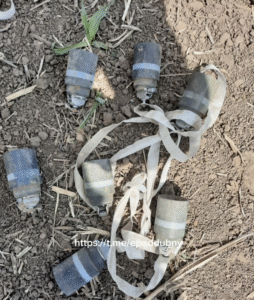
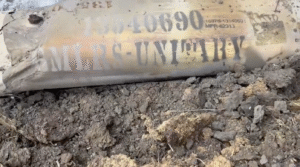
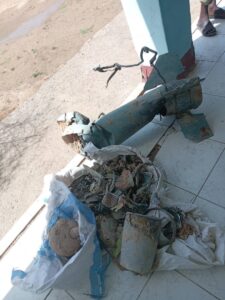
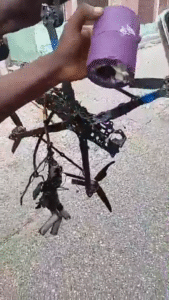
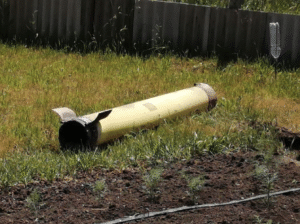
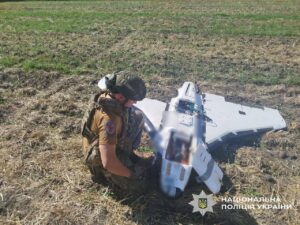
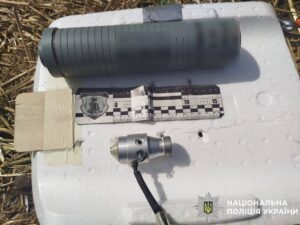
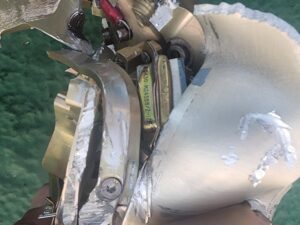
The image shows a one-way-attack (OWA) UAV that appears to have crashed, but failed to function. It consists of an FPV chassis, as well as some of the essential components required for flight and the explosive charge (purple container). The initiator and other parts relevant to both flight and the munition’s function are not visible. This appears to be craft-produced ‘sacrificial’ UAV. (ARES)

Analyst Note
29 September 2025
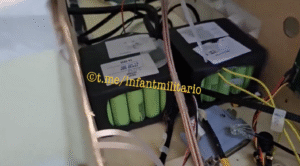
This photo shows some of the lithium-ion power banks found within a Gerbera UAV. These are used to power the onboard avionics, control surfaces, communications hardware, camera, and other components. The quantity and type of batteries fitted to the Gerbera will often vary based on the role for which the UAV has been configured—one-way attack (OWA; i.e., a ‘sacrificial’ munition), reconnaissance, signal relay, or decoy—and which specific hardware has been installed to effect this mission. (ARES)

Analyst Note
29 September 2025
This photo shows the fuel bladder of a Gerbera UAV, which still contains some fuel. It is likely that a bladder is used—rather than a rigid tank—to save on both weight and cost. Some variants of the Gerbera have been observed to be fitted with a second bladder in the forward section of the fuselage, serving to extend the UAV’s range. (ARES)
Analyst Note
29 September 2025
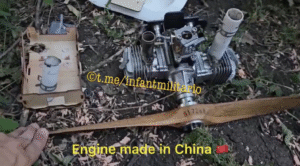
The DLE60 two-stroke petrol (gasoline) engine pictured here is the standard engine found on Gerbera UAVs. It is produced by the Chinese company Mile Haoxiang Technology Co., Ltd. and marketed specifically for use in UAVs. Although the Gerbera is manufactured in Russia, the engine and many other key components continue to be supplied from Chinese sources. (ARES)

Analyst Note
29 September 2025
This image shows a Controlled Reception Pattern Antennas (CRPA) unit installed on a Gerbera-series UAV. CRPAs are specialised antenna arrays that help protect GPS receivers from interference, spoofing, and jamming. This particular model, featuring four antennas, was first observed on the Shahed-136 UAV and has since been routinely seen fitted to Gerbera-series UAVs. An alternative array, with six antenna elements, has also been observed, reflecting the varied and ever-evolving state of electronic warfare in Ukraine. (ARES)
Analyst Note
29 September 2025
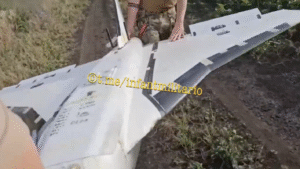
A Gerbera-series UAV is pictured here being carried by just two Ukrainian soldiers. This highlights the Gerbera’s lightweight design—the airframe is mostly constructed from Styrofoam and wood, which saves on both weight and cost. This particular example does not bear signs of significant damage, suggesting that it either malfunctioned or was brought down by EW and crashed. (ARES)
Analyst Note
29 September 2025
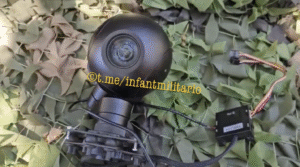
This image shows an A40 Pro camera, manufactured by the Chinese company Viewpro UAV and design specifically for use in UAVs. The black box to the right of the camera is the control box which manages video output, camera control, and power. The manufacturer claims this model has a 40× optical zoom, AI detection and tracking, and 3-axis gyro-stabilisation. The company further claims that it can customise the onboard AI recognition based on “target characteristics” provided by the client. Numerous Gerberas fitted with this model of camera are known to have been recovered by Ukrainian forces, although it is by no means the only camera model in use. (ARES)
Analyst Note
29 September 2025
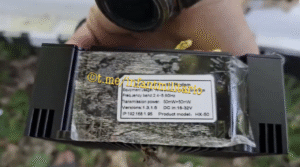
This image shows the back surface of a wireless communications module contained within a downed Gerbera UAV. Although labeled as an HX-50 model designed for fixed locations, Ukrainian military analysis indicates this is an XK-F358 mesh-network module more suitable for use in UAVs. See OSMP1646 for further details. (ARES)

Analyst Note
29 September 2025
This image shows the front and interior surfaces of a wireless communications module recovered from a downed Gerbera UAV. Although labelled as an HX-50 industrial wireless modem (compatible with WiFi and 5G/4G networks and designed for fixed locations), analysis by Ukrainian military sources indicates that this component is, in fact, an XK-F358 mesh-network module which offers significantly more capabilities. Manufactured and sold by Shenzhen Xingkai Technology Co., Ltd., these modules are designed for, amongst other things, use in robots and unmanned vehicles. Gerbera UAVs have been found operating on a wide variety of frequencies and networks, and this type of module is well-suited to this use. (ARES)
Analyst Note
29 September 2025
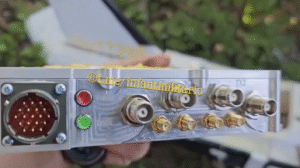
Pictured is a navigation/GPS module recovered from a downed Gerbera UAV. This particular model is used with the 4-antenna CRPA module seen in OSMP1648. The four RX ports on the bottom are normally directly connected to the CRPA (antenna) module, with other connections made to the UAV’s flight controller and power sources. Some Gerberas have been recovered with CRPA modules bearing a different number of antennas; different navigation modules have been observed on these. (ARES)

Analyst Note
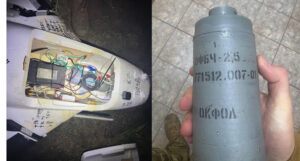
15 September 2025
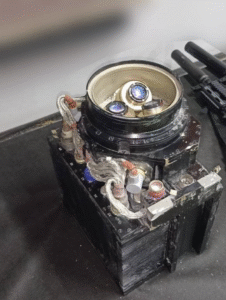
This image shows the three lenses that form the new version of the Kh-101 Digital Scene Matching Area Correlator (DSMAC) system. (The older version only had a single lens.) DSMAC systems take digital images of the ground as the missile passes overhead, and then compare those images to pre-captured images stored in the onboard memory. The DSMAC corrects the flight path as needed based on differences between the two sets of images. (ARES)

Analyst Note
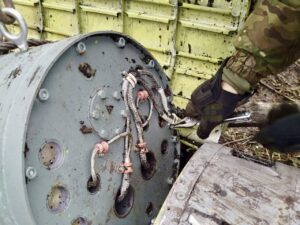
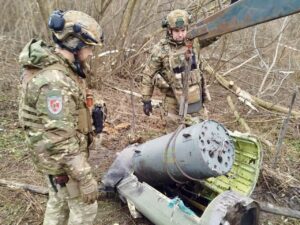
15 September 2025
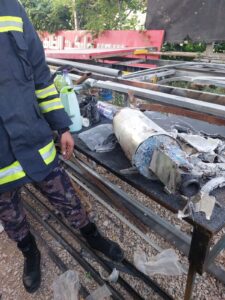
This image shows the second warhead present in some variants of the Kh-101 cruise missile. The inclusion of this additional warhead requires a smaller fuel tank in the missile, offering increased explosive weight in exchange for a reduced maximum range. (ARES)
Analyst Note
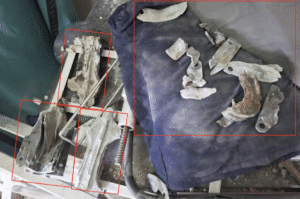
19 September 2025
This image shows parts from at least three fin-stabilised tank gun projectiles, including the tail assemblies and several folding fins. These are components that often survive relatively intact following the functioning of such munitions. The specific morphology of the remnants pictured is consistent with Israeli 120 mm tank gun projectiles. Contextual information suggests that the remnants are most likely to be from M339 high explosive ‘multi-purpose’ projectiles. (ARES)
Analyst Note
15 September 2025
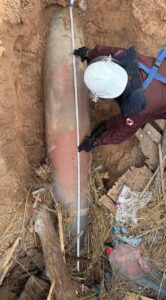
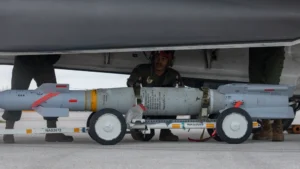
This image shows a BLU-111 500-pound-class bomb paired with a Paveway II guidance kit, and an MXU-650 series airfoil group, or tail kit. This combination is designated the GBU-12 series in U.S. service. (ARES)
Analyst Note
24 August 2025
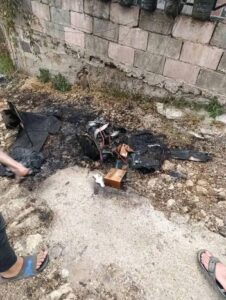
This image shows a remnant of the Mado MD550 engine which is used to power the Shahed-136 series one-way attack drone. (ARES)

Analyst Note
15 September 2025
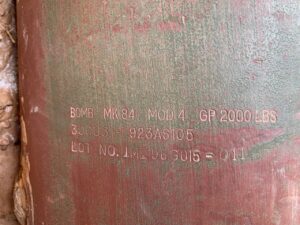
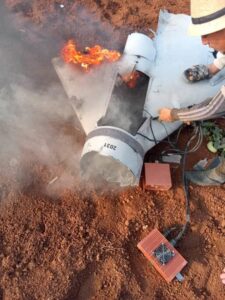
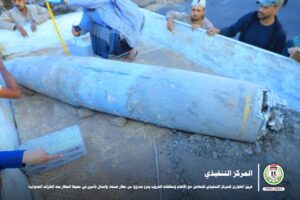
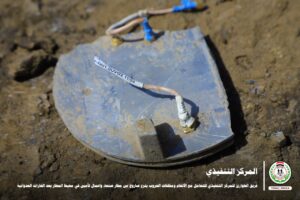
This image shows some of the markings on a MK 84 2000-pound-class air-delivered bomb, including model designation (“BOMB MK 84 MOD 4”), weight class (“2000 LBS”), part number (“PART NO 30…03 923AS105”), and production lot (“LOT NO GDT 17 …00…”). Many countries produce MK 80-series bombs, so markings such as lot numbers can determine the country of production. “GDT 17” in the lot number indicates that this munition was produced by General Dynamics Ordnance and Tactical Systems, an American company, in 2017. The Israeli Air Force announced they carried out the specific strike associated with this image, which indicates that this specific bomb was transferred to the Israeli Air Force. (ARES)
Analyst Note
15 September 2025
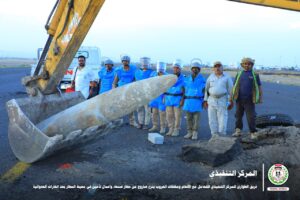
This image shows a remnant of a JDAM tail kit that was paired with a MK 84 2,000-pound-class air-delivered bomb. The CAGE code (“OUVG2”) for Aeroantenna Technology, an American manufacturer of GPS components for guidance systems, is visible on the wiring. (ARES)
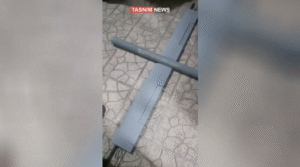
Analyst Note
15 September 2025
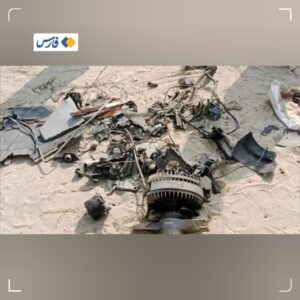
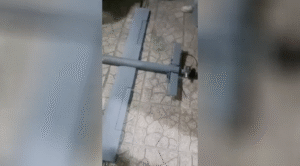
This still taken from a video released by Iranian state media, shows a one-way-attack UAV purportedly manufactured by Israeli forces operating inside Iran. This UAV was found alongside manufacturing equipment, and additional UAV components, strongly suggesting that it was manufactured or assembled inside Iranian borders. (ARES)
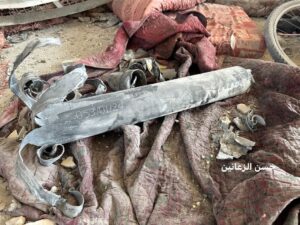
Analyst Note
15 September 2025
This image shows an Israeli-made 122 mm rocket motor found following a strike on Amr School in Gaza City. Although it is not possible to be definitive from this image alone, it is likely that this rocket motor was part of an Israeli ‘Bar’ missile, a guided munition designed for precision strikes in urban areas that uses a 122 mm rocket motor. (ARES)
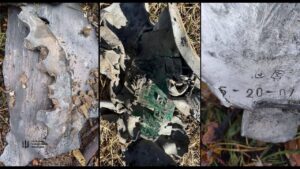
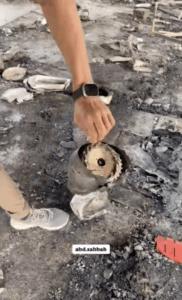
Analyst Note
26 April 2026
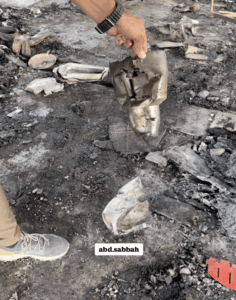
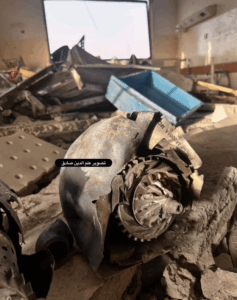
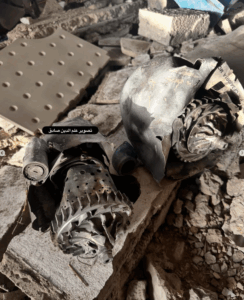
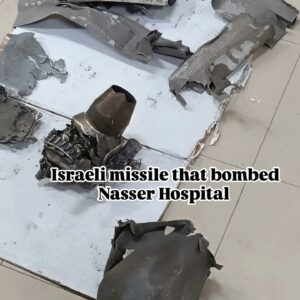
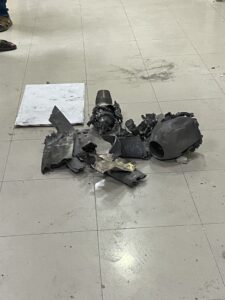
This image shows the remnants of an unknown Israeli munition that was used in a strike on Nasser hospital. Reporting on these strikes often refers to this munition as a ‘drone’. The turbojet engine, along with possible wing remnants, indicate that this could be a one-way-attack (OWA) UAV or ‘loitering munition’ missile, consistent with reporting. This same model of munition has been used multiple times in strikes in Gaza, as well as Lebanon and Syria. There is no publicly acknowledged Israeli munition that closely fits these remnants. Entries 1384, 1385, 1386, and 1389 capture other incidents in which this munition was used. (ARES)
Analyst Note
27 May 2025
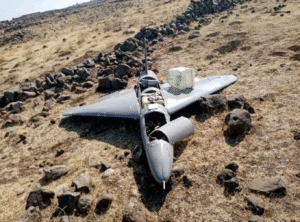
This image shows the remnants of an unknown Israeli munition that was used in a strike that hit the Nasser hospital in Gaza. The turbojet engine, along with possible wing remnants indicate that this could be a one-way attack UAV or ‘loitering munition’, consistent with some reporting on the strikes. This same model of munition has been used in multiple strikes in Gaza, as well as in Lebanon and Syria. There is no publicly disclosed Israeli munition that neatly matches these remnants. OSMP entries 1384, 1385, 1386, and 1389 show other incidents in which this munition appears to have been used. (ARES)
Analyst Note
14 July 2025
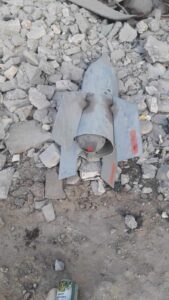
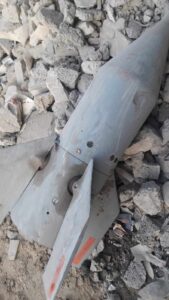
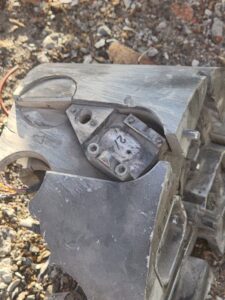
This image shows a remnant of the guidance control unit from a Paveway- or Lizard-series bomb guidance kit. The guidance control fins are marked “FOR USE ON MK82” indicating that this guidance control unit was paired with a MK 82-series 500-pound-class bomb. (ARES)
Analyst Note
12 July 2025
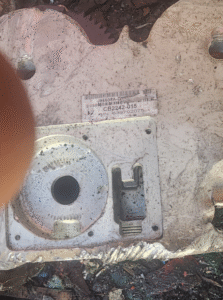
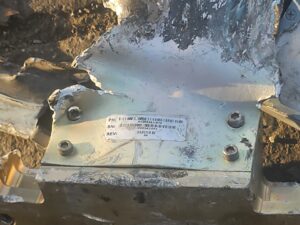
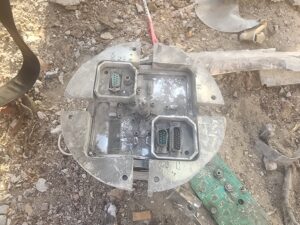
This image shows a remnant of the tail actuation section of a SPICE 250 guided bomb. The control fins are normally attached to this section, and the attachment point for one control fin is visible. (ARES)
Analyst Note
14 July 2025
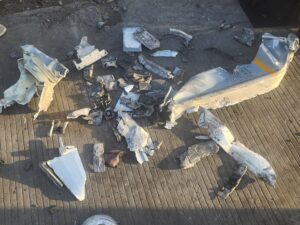
This image shows a variety of remnants from an Israeli SPICE 250 guided bomb. One of the bomb’s four control fins is visible at the bottom-left of the image. (ARES)
Analyst Note
14 July 2025
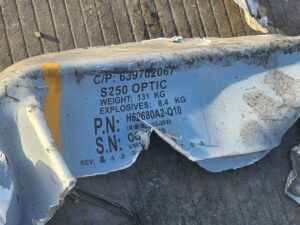
This image shows a remnant of the outer casing of the “S250 OPTIC” or SPICE 250 guided bomb, with the markings relatively intact. The markings on this remnant show that, while classified as a 250-pound bomb, the actual weight of this SPICE 250 variant is 288 pounds (131 kg) with only 18.5 pounds (8.4 kg) of explosive material. (ARES)
Collection
Iran-Israel conflict June 2025
Dozens of verified images of munitions used by Iran and Israel during the June 2025 Israel-Iran conflict
Analyst Note
14 July 2025
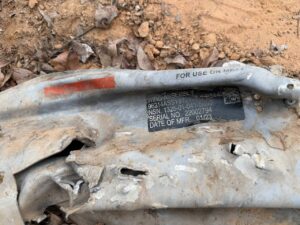
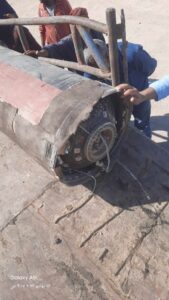
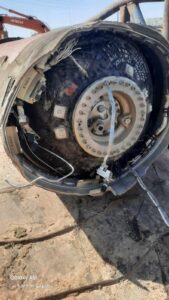
This image shows the top of the booster of an Arrow 3 interceptor missile, where it connects to the kill vehicle. The Arrow 3 was jointly developed by the United States and Israel, and first entered service in 2017. The date of manufacture marking (“DATE OF MFG: 05/2018”) indicates that this booster was produced in the year after the Arrow 3 first entered service. (ARES)
Analyst Note
19 July 2025
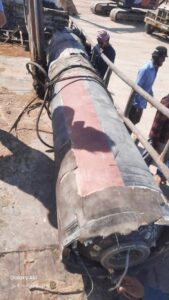
This image shows the booster of an Israeli Arrow 3 interceptor missile. The Arrow 3 is designed to engage ballistic missiles and is capable of exo-atmospheric interceptions. Once the booster is expended, it separates from the ‘kill vehicle’. The kill vehicle has a sustainer motor that propels it towards the incoming ballistic missile, and uses kinetic impact, rather than an explosive warhead, to disable or destroy its target. This is sometimes called the ‘hit-to-kill’ principle. (ARES)