The external organisation that documented the munition
Research Organisation (6)
Colour of the munition pictured
Base Colour (12)
Colour of all, or some, of the markings on the munition
Marking Colour (11)
Language or script of the marking on a munition
Marking Script (9)
Condition of the munition pictured
Condition (6)
Key features defining the operation mechanisms of a projectile
Mechanical Feature (10)
Whether a munition is guided or unguided
Guidance (2)
Where the munition is launched from and what it targets
Domain (7)
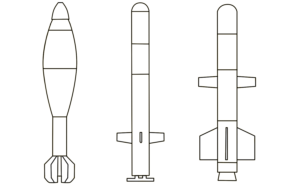
The type of fins visible on the munition
Fins Characteristic (6)
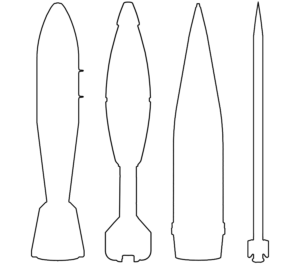
The nominal diameter of a projectile. For most modern munitions, this is expressed in millimetres (e.g. 82 mm mortar projectile), but older artillery gun projectiles may be described in inches.
Use the rapid expansion of gases released by a detonating high explosive compound inside the munition to generate explosive power. Blast munitions are often considered general-purpose munitions and large examples can have powerful and widespread effects on targets such as structures and personnel.
Current Filter
Chemical Munition
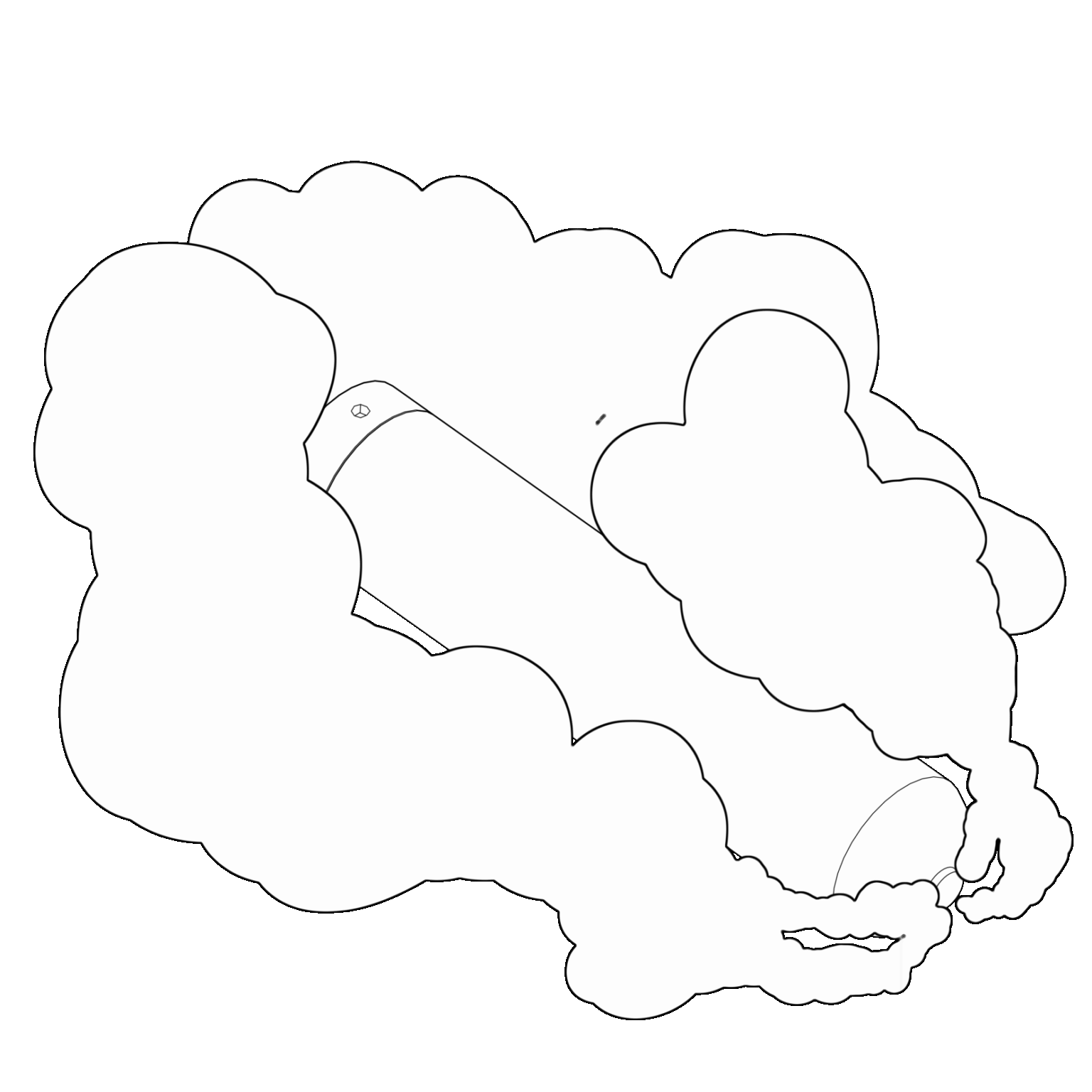
Chemical weapons are munitions which deliver a chemical agent. These agents can be in gaseous, liquid, or solid form and can be deployed using a variety of munition types sometimes repurposed for chemical dispersion, including air-delivered bombs, rockets/missiles, mortar projectiles, and artillery projectiles. The use of these munitions can often result in widespread effects, and many are considered inherently indiscriminate. The 1997 Chemical Weapons Convention banned the development, production and use of chemical weapons. 193 countries have so far committed to the convention, including the United States, Russia, and China.
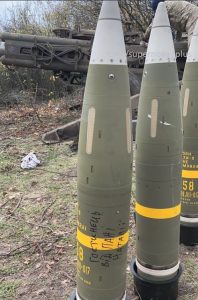
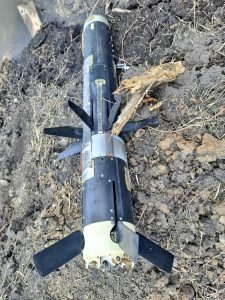
Once fired, four canards will deploy from the forward (ogival) section of these M982 Excalibur guided artillery projectiles. The narrow-shaped ports through which the canards deploy are a good indicator of a guided or extended-range artillery projectile. (ARES)
Many guided (or otherwise complex) munitions like this one are marked with additional information on individual assemblies or components. This can include information on sub-contractors that produced or integrated specific parts of a munition. (ARES)
In this image, a Ukrainian soldier is using an M1155 Enhanced Portable Inductive Artillery Fuze Setter (EPIAFS) to input the target coordinates and set functioning parameters for an M982 Excalibur guided artillery projectile. (ARES)
The MK 84 series of unguided air-delivered bombs can be converted to precision guided munitions by being fitted with guidance kits such as the Joint Direct Attack Munition (JDAM), SPICE 2000, or Paveway series. This MK 84 is also marked with a variant designation “MOD 4”. (ARES)
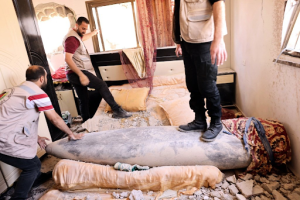
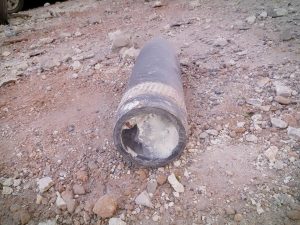
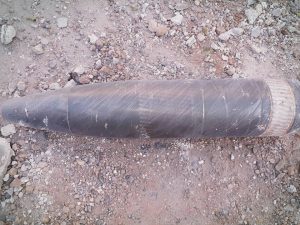
The image is of "a high-velocity shell fired from the main armament of a battle tank," Desmond Travers, former director of the Institute for International Criminal Investigations, told Airwars and AFP. "The calibre appears to be 120 mm, and the shell is fin-stabilised. The maximum effective range is five kilometers, but a skilled tank crew member should be able to hit a target the size of a car." (Airwars)
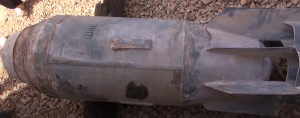
The M-54 ‘high-drag’ series of Soviet/Russian air-delivered bombs can be distinguished by two key identification features: 1.) the ballistic ring located in the forward portion of the bomb (missing in this example); and 2.) the presence of two or four rectangular, longitudinal ‘levelling bars’ (two can be seen in this example). (ARES)
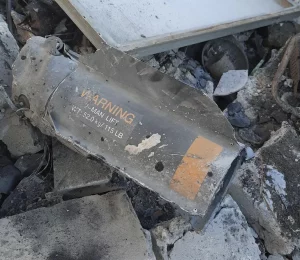
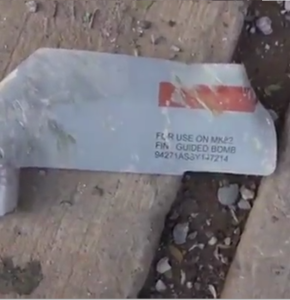
This component is one of four pneumatically controlled canards from the guidance section of a Paveway II precision guided munition (PGM) conversion kit. When a Paveway II conversion kit is fitted to a MK 82 series unguided air-delivered bomb (note markings), the munition receives a GBU-12 series designation. (ARES)
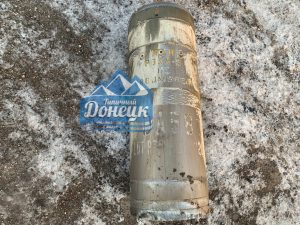
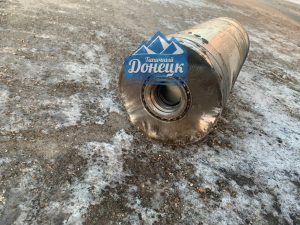
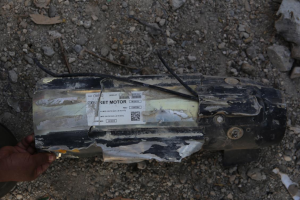
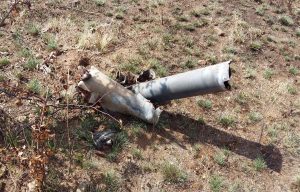
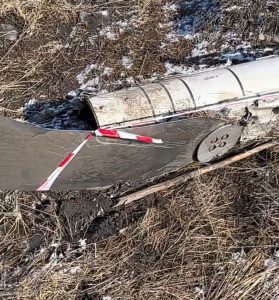
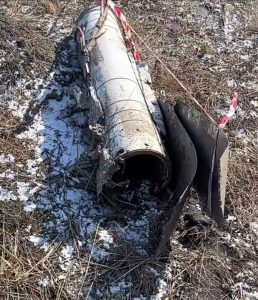
The 57E6 series of missiles fired from the 96K6 Pantsir system use a two-stage design that is unusual for surface-to-air missiles of this type. The remnant seen in this image is part of the missile’s booster section, which accelerates the second stage to a high velocity before separating. The booster section uses a distinctive toffee-brown, filament-wound composite body. (ARES)
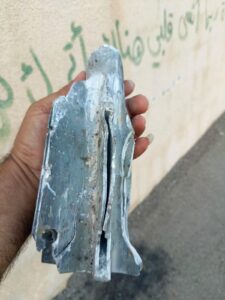
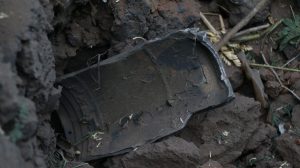
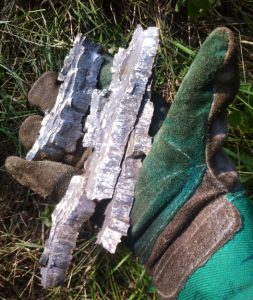
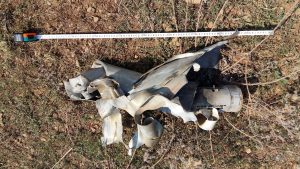
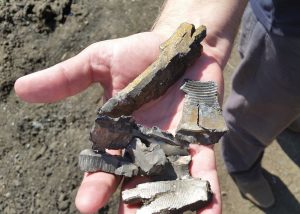
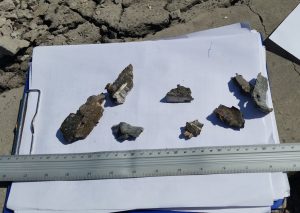
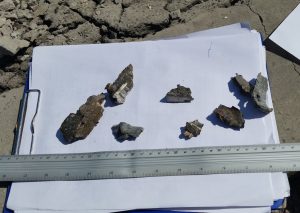
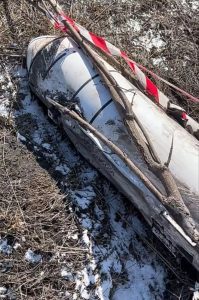
The large fragments in this image are typical of 'natural' fragmentation resulting from the rupturing of a thick-walled munition (in this case, an artillery projectile) by the functioning of its explosive payload. (ARES)
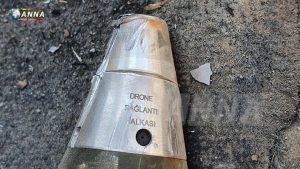
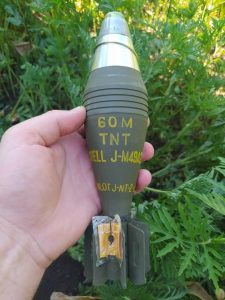
Although this munition started out life as a mortar projectile of the M492-pattern, it has been modified to be dropped from an unmanned aerial vehicle (UAV) and, in its present state, could not be fired from a conventional mortar. As such, it is correctly classified here as an air-delivered bomb. (ARES)
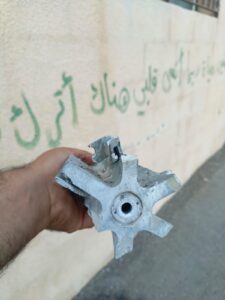
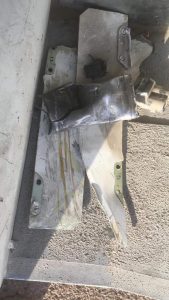
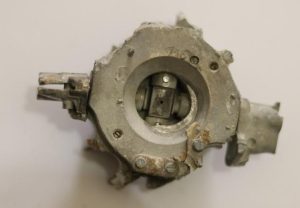
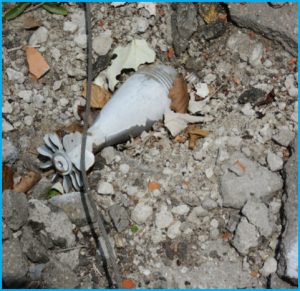
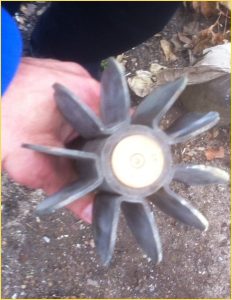
The fin assembly in the image bears a strong resemblance to those of other munitions employed in the same incident that have been identified as M49A2 mortar projectiles modified to be delivered by UAV. (ARES)
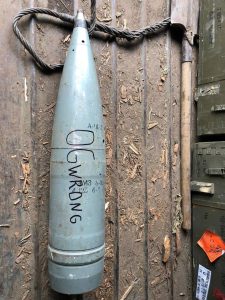
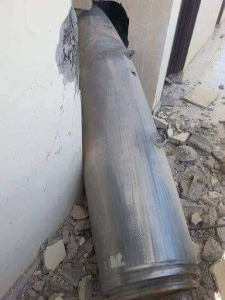
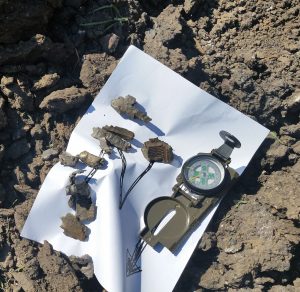
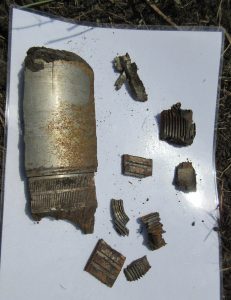
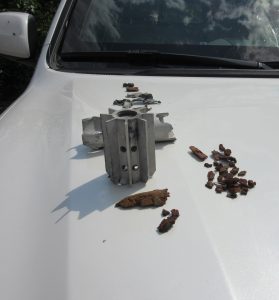
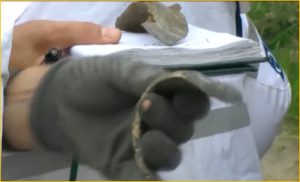
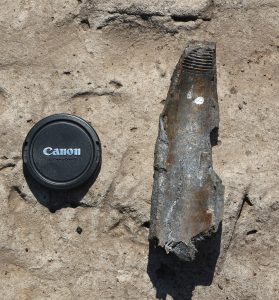
The munition remnants pictured here are likely to be from either a Russian OG-9 or a Bulgarian RHEF-9MA/GHEF-9MA recoilless gun projectile. However, based on the available information, positive identification cannot be not be made. (ARES)
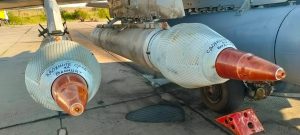
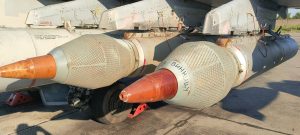
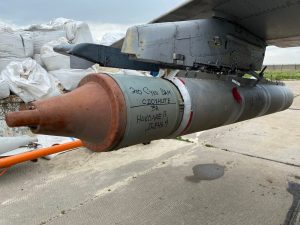
These S-25-O air-to-surface rockets are each loaded into a single-barrelled O-25 rocket launcher (sometimes called a 'launch tube' or 'rocket pod') that is affixed to an aircraft hardpoint. The over-calibre high explosive fragmentation warhead (of 420 mm in diameter) protrudes from the front of the tube. (ARES)
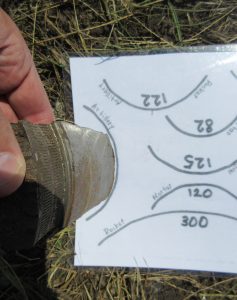
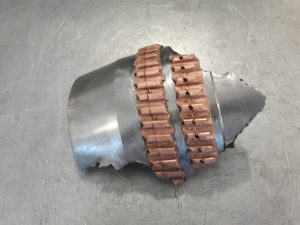
Whilst most mortars are smoothbore guns, some have a rifled bore. These M1101 120 mm mortar projectiles feature a 'pre-rifled' driving band—that is, a driving band with grooves cut at the factory to fit the mortar's rifling. (ARES)
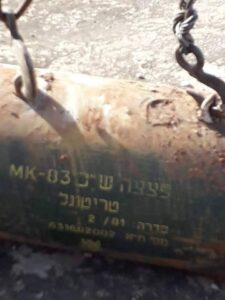
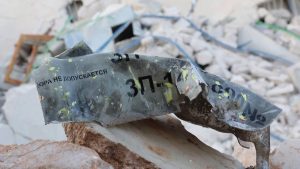
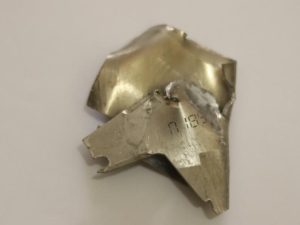
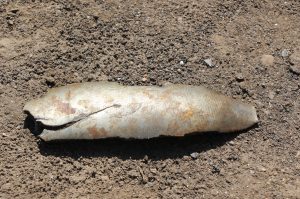
As a result of the rapid introduction of new models and variants during ongoing conflicts, sometimes a munition is issued with a provisional designation, or with no designation at all. In other cases, the designation is not yet known to researchers. (ARES)