

901–1,000 of 1,470
Current Filter
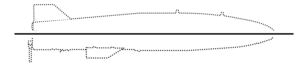
Blast Munition
Use the rapid expansion of gases released by a detonating high explosive compound inside the munition to generate explosive power. Blast munitions are often considered general-purpose munitions and large examples can have powerful and widespread effects on targets such as structures and personnel.

Current Filter
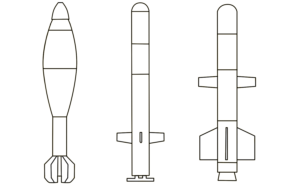
Chemical Munition
Chemical weapons are munitions which deliver a chemical agent. These agents can be in gaseous, liquid, or solid form and can be deployed using a variety of munition types sometimes repurposed for chemical dispersion, including air-delivered bombs, rockets/missiles, mortar projectiles, and artillery projectiles. The use of these munitions can often result in widespread effects, and many are considered inherently indiscriminate. The 1997 Chemical Weapons Convention banned the development, production and use of chemical weapons. 193 countries have so far committed to the convention, including the United States, Russia, and China.
Analyst Note:
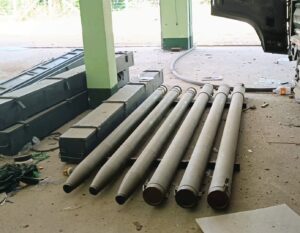
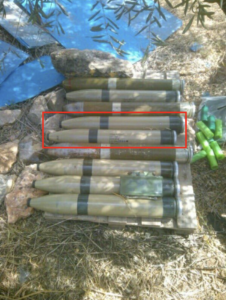
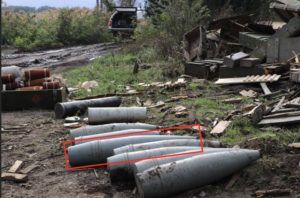
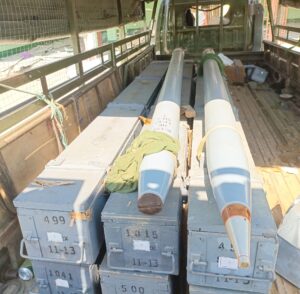
Whilst there are no visible markings explicitly identifying the model of the 122 mm rockets in this image, they are sitting atop a box marked “R-122” and exhibit physical features consistent with North Korean R-122 rockets. It should be noted that rockets marked with the generic “R-122” model name have been observed in both ‘long’ and ‘short’ overall lengths and painted in different colours. (ARES)
Analyst Note:
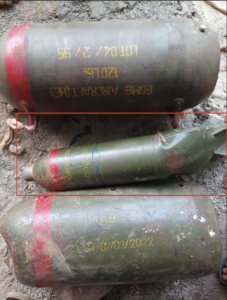
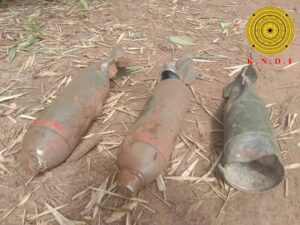
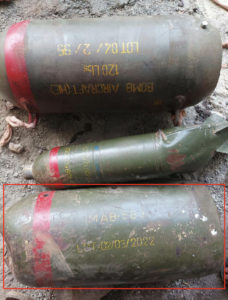
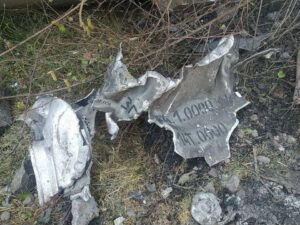
Whilst relatively little is known about Burmese air-delivered bombs from publicly available sources, researchers (including those at ARES and Myanmar Witness) have been collecting evidence based on munitions’ physical features and markings. Combined with information from confidential sources, this has allowed for the tentative identification of several models. (ARES)
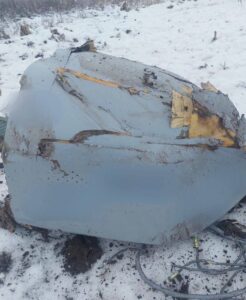
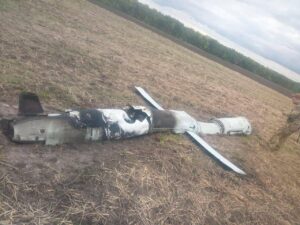
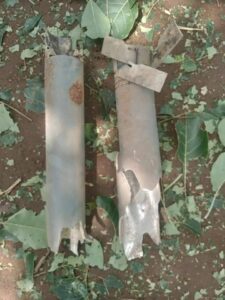


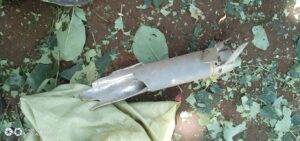


Analyst Note:
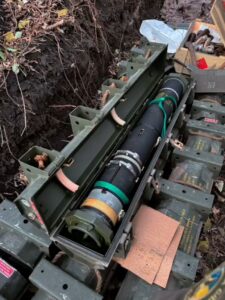
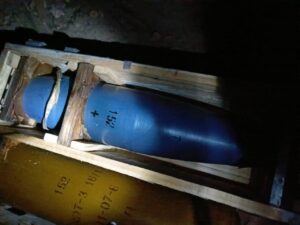
The M712 ‘Copperhead’ is a laser-guided 155 mm artillery gun projectile carrying a high explosive anti-tank (HEAT) warhead designed to engage armoured vehicles. The Copperhead was developed in the United States in the 1970s, and saw limited use during Operation Desert Storm. The M712 is is pictured here inside its shipping container, and the slots for the enclosed, deployable (‘pop-out’) wings and fins are visible. The M712 has two operational modes: a ballistic mode that follows a gun’s ballistic trajectory like a traditional artillery projectile, and a glide mode, which follows a longer and flatter trajectory. The preferred mode is set by the artillery crew before firing. (ARES)
Analyst Note:
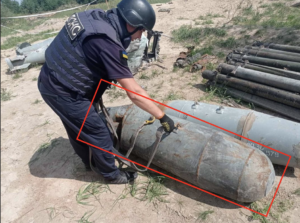
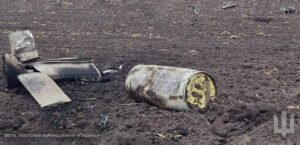
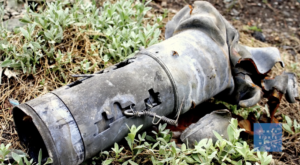
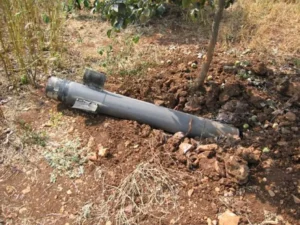
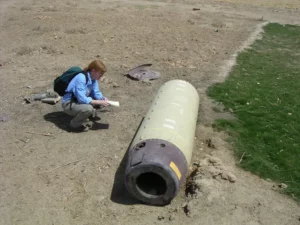
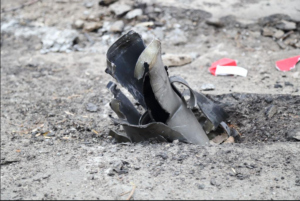
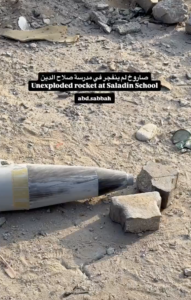
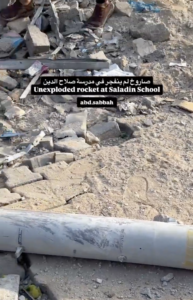
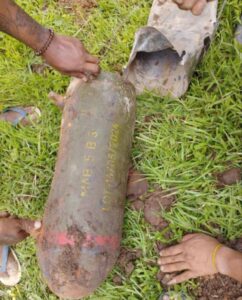
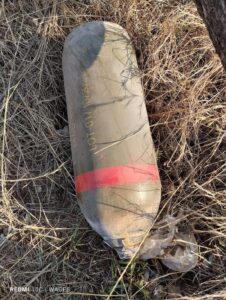
As with several other images in the OSMP database, the text on this image was added by a social media user prior to its inclusion herein. Rather than a “rocket” as described in the annotation, this image actually shows an air-delivered bomb. (ARES)



Analyst Note:
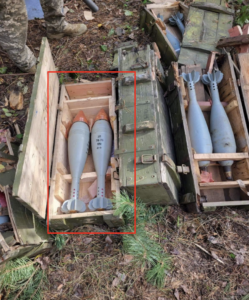
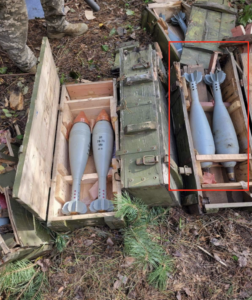
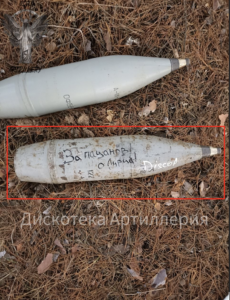
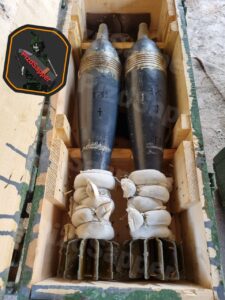
The two North Korean 120 mm high explosive (HE) mortar projectiles in this image are each fitted with five cloth bags affixed above the tailfins. These are incremental propellant charges (sometimes known as augmenting, auxiliary, or supplemental charges), the number of which can be varied along with a mortar’s elevation to adjust the trajectory and range of the munition when fired. (ARES)
Analyst Note:
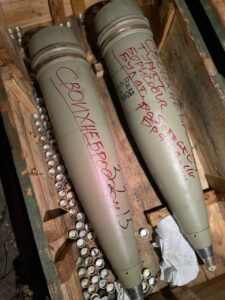
This image shows two Iranian 130 mm high explosive (HE) artillery gun projectiles. Calibre (“130MM”) and functional type (“HE - TNT”) markings are visible on the right-hand example, whilst a lot marking (“LOT:10/202[…]”) is partially obscured. The “TNT” marking indicates that this munition uses a trinitrotoluene composition as its explosive fill. (ARES)


Analyst Note:
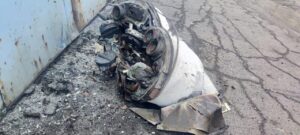
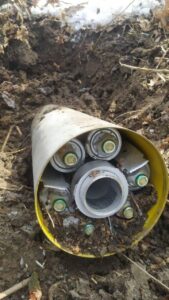
This 9M27K-series surface-to-surface cargo rocket is loaded with either 9N210 or 9N235 high explosive fragmentation (HE-FRAG) submunitions. These models are nearly identical in construction, differing primarily in the nature of the pre-formed fragments they carry. (ARES)
Analyst Note:
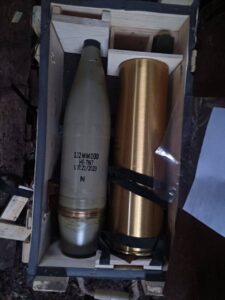
This image shows an Iranian 122 mm high explosive (HE) artillery gun projectile. Like several other munitions, it is described in Iranian sources—and, in this case, on the munition itself—only by reference to the weapon with which it is most often associated: the Soviet-designed 122 mm D-30 howitzer (often rendered ‘D30’, without the hyphen, in Iranian service). This munition is also marked to indicate it was produced in 2023. Interpreting munitions markings in this way, especially where they indicate recent manufacture, may provide evidence of ongoing supply during a conflict. (ARES)
Analyst Note:
The munition indicated in this image as a 152 mm high explosive (HE) artillery gun projectile manufactured in the Democratic People’s Republic of Korea (DPRK). (ARES)
Analyst Note:
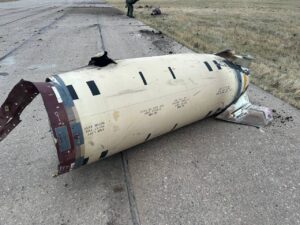
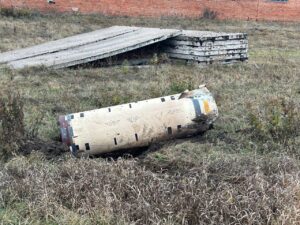
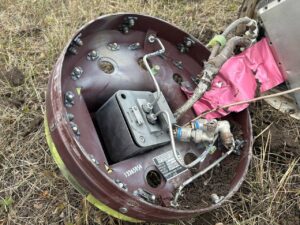
This image shows part of the warhead section of an MGM-140 Army Tactical Missile System (ATACMS) series tactical ballistic missile. This is the top of the warhead section, where it connects to the guidance section. A data plate is visible, giving information about the manufacturer (“Lockheed Martin Vought Systems”) and identifying this specific part (“WARHEAD, GUIDED MISSILE. HIGH EXPLOSIVE”. (ARES)
Analyst Note:
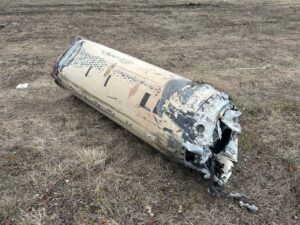
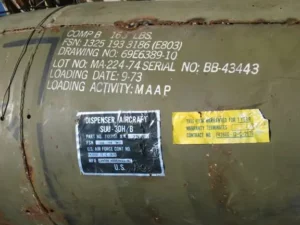
This image shows an SUU-30H/B, an air-delivered dispenser which can be configured to carry different submunition payloads. These can include 217 BLU-61 A/B, 650 BLU-63/B, or 650 BLU-86/B or BLU-86 A/B. The munition can also carry inert payloads. The specific combination of payload and dispenser determines the ‘Cluster Bomb Unit’ (CBU) designation, with SUU-30H/B dispensers being paired with different payloads to form the CBU-58 and CBU-71 series. Contextual information suggests that this dispenser was part of a CBU-58/B cluster munition, but this cannot be established from an assessment of this image alone. (ARES)
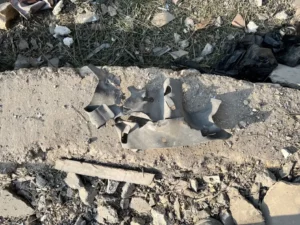
Analyst Note:
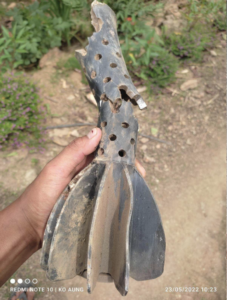
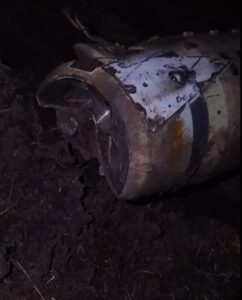
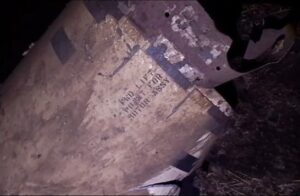
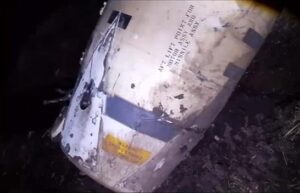
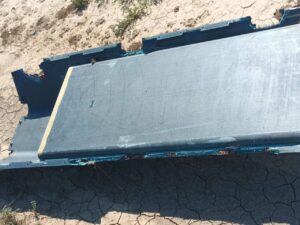
This image shows an aerosurface or ‘strake’ from a Joint Direct Attack Munition (JDAM) bomb guidance kit of the type fitted to MK 82-series 500-pound air-delivered bombs. The JDAM kits compatible with MK 82 bombs have aerosurfaces that are affixed near the nose of the bomb—rather than around the widest part of the bomb body, as seen in JDAM kits that are compatible with the larger MK 83 or MK 84 bombs. (ARES)
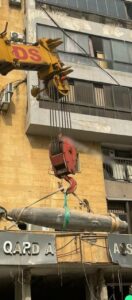
Analyst Note:
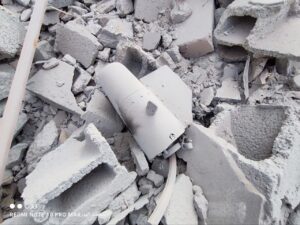
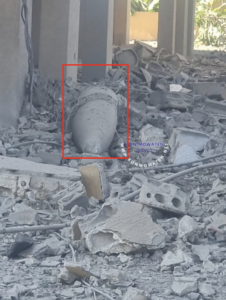
MK 84 unguided air-delivered bombs can be fitted with a variety of tail kits, or with guidance kits which convert them into precision guided munitions (PGMs). When an air-delivered bomb impacts a building or the ground without functioning, the tail or guidance kit may be sheared off. With these separated from the munition—and in the absence of other identifying features, such as a seeker fitted to the nose of the weapon—it becomes very difficult to determine whether the bomb was guided or unguided. (ARES)
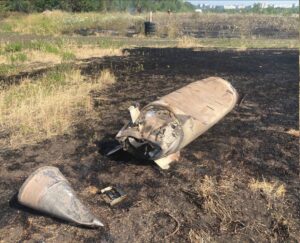
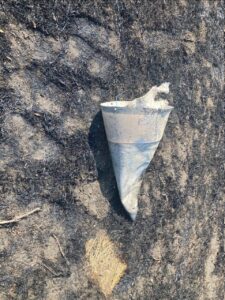
Analyst Note:
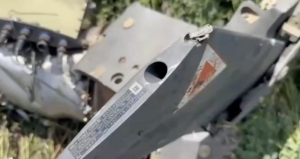
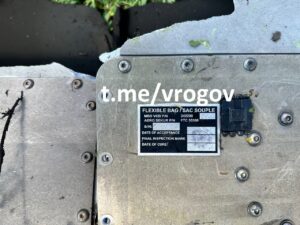
The internal components of large, complex munitions often feature markings to aid in assembly, supply chain oversight, and quality assurance. In this case, a data plate marked with the name of the manufacturer (“MBDA FRANCE”) has been affixed to one of the rear control fins (“EQ, VENTRAL, FIN TIP”) of the missile. The NATO Stock Number (NSN) is also visible. (ARES)
Analyst Note:
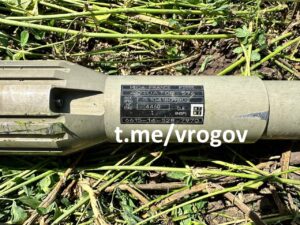
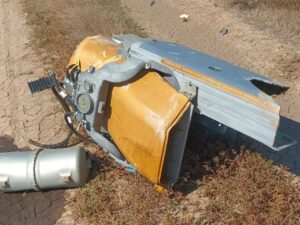
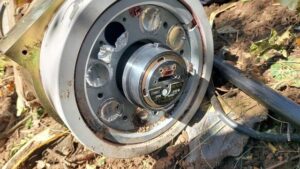
This image shows an actuator from a Storm Shadow-series missile. Actuators are components of guided munitions that are most often used to move control surfaces (e.g., fins and wings), enabling the munition to adjust its course in-flight in response to guidance commands. In this case, the component is fitted with a ‘data plate’ that indicates it was manufactured by MBDA France. (ARES)

Analyst Note:
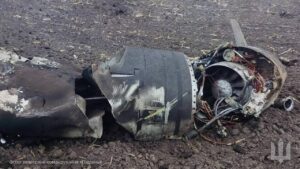
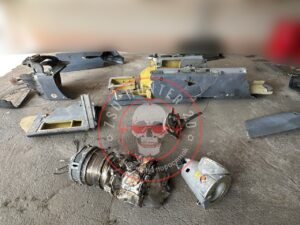
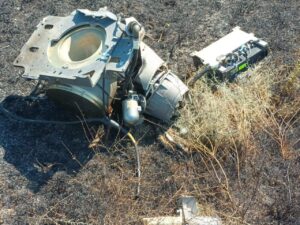
This image shows a Microturbo TRI 60-30 turbojet engine from a Storm Shadow-series air-launched cruise missile. Further remnants of the rear of the missile are also visible, including one of the rear control fins. The Storm Shadow has a range of more than 250 kilometres. (ARES)
Analyst Note:
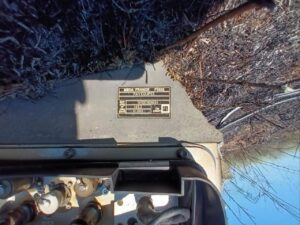
This image shows the rear of the second stage of the penetrator warhead (also called a ‘follow-through’ warhead) of the Bomb Royal Ordnance Augmented Charge (BROACH) multi-stage warhead system present in the Storm Shadow/SCALP-EG missile. The cylindrical object in the centre of the warhead (with a data plate marked “THALES”) is the fuze. (ARES)
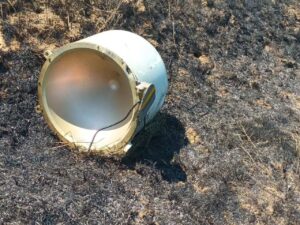
Analyst Note:
This image shows the first stage of the Bomb Royal Ordnance Augmented Charge (BROACH) multi-stage warhead used by the Storm Shadow/SCALP-EG missile. The BROACH uses a shaped-charge warhead (seen here) as its first stage, to help penetrate hardened targets, whilst the second stage comprises a conventional high explosive penetrator warhead (also called a ‘follow-through’ warhead) (ARES).
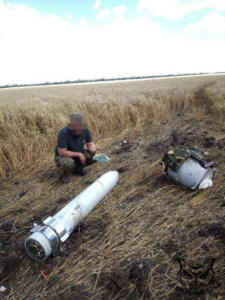
Analyst Note:
The remnant at left in this image is the second stage, or penetrator warhead, of the Bomb Royal Ordnance Augmented Charge (BROACH) multi-stage warhead as used in the Storm Shadow/SCALP-EG air-launched cruise missile. In this case, it has failed to function as intended. (ARES)
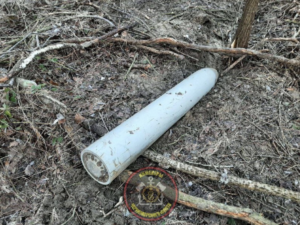
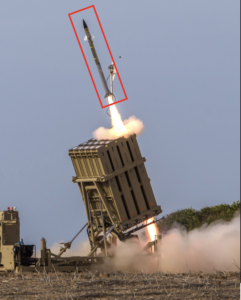

Analyst Note:
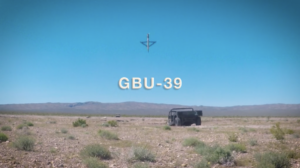
In this image, two GBU-39 guided air-delivered bombs can be seen in their shipping containers, with only the nose and the tail actuation section of the munitions clearly visible. Distinctive packaging such as this can sometimes be used as contextual evidence for the presence of specific munitions. (ARES)
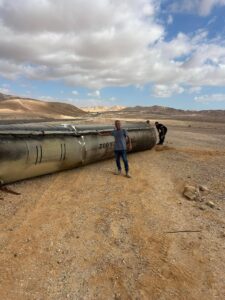
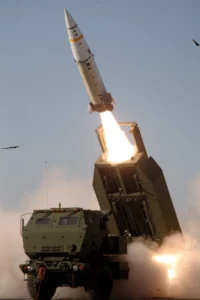
Analyst Note:
This U.S. Department of Defense file photo shows an M142 High Mobility Artillery Rocket System (HIMARS) launching an MGM-140 Army Tactical Missile System (ATACMS) series tactical ballistic missile. (ARES)
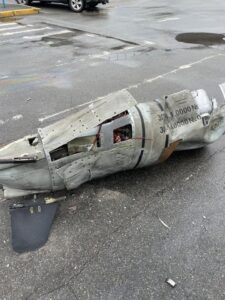
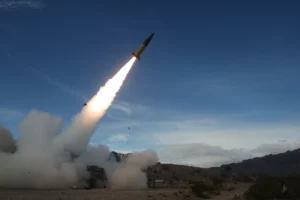
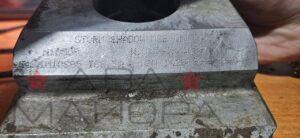
Analyst Note:
This image shows part of a heavy-duty suspension lug associated with the Storm Shadow air-launched cruise missile. This is made clear from dot-peened markings which include “STORM SHADOW USE ONLY” and identifiers such as a NATO Stock Number (NSN). (ARES)
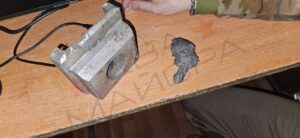
Analyst Note:
The munitions remnant on the left of this image is part of a suspension lug associated with the Storm Shadow air-launched cruise missile, which is used to attach the munition to an aircraft. This component is of heavy construction, and as such often survives the missile’s functioning intact. This photograph purports to show remnants recovered from a Storm Shadow missile that was fired by Ukrainian forces into Russian territory, but this claim cannot be verified from the image alone. (ARES)
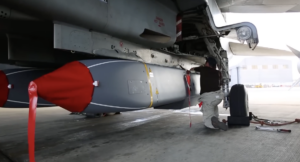

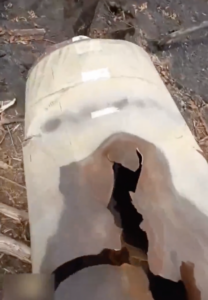
Analyst Note:
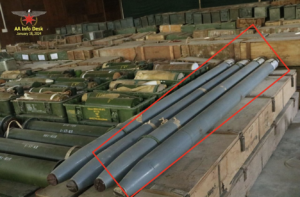
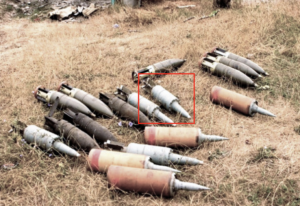
These R-122 ‘Grad’-type 122 mm surface-to-surface rockets were produced in North Korea. The example to the right is fitted with an F-122 impact fuze. Whilst a two-tone colour scheme is more common amongst those North Korean Grad rockets thus far identified in the context of the Ukraine conflict (these typically featuring a black forward section), uniformly coloured examples like this have also been identified previously. (ARES)
Analyst Note:
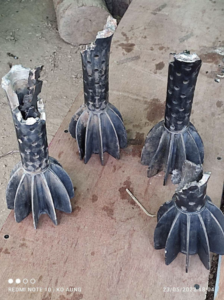
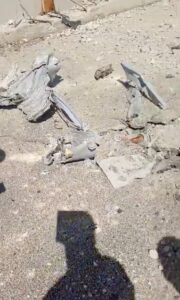
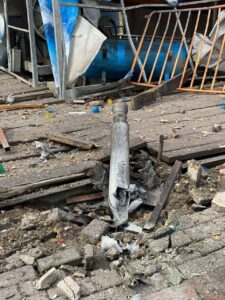
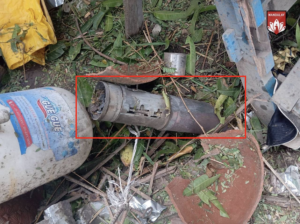
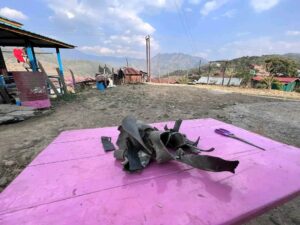
Two of the distinctive, black tailfins used on S8-series air-to-surface rockets are visible to front and left of the remnant material. (ARES)