

701–800 of 1,069
Current Filter
Rocket or Missile
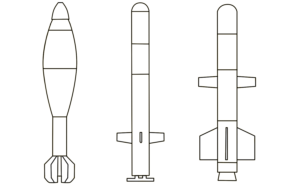
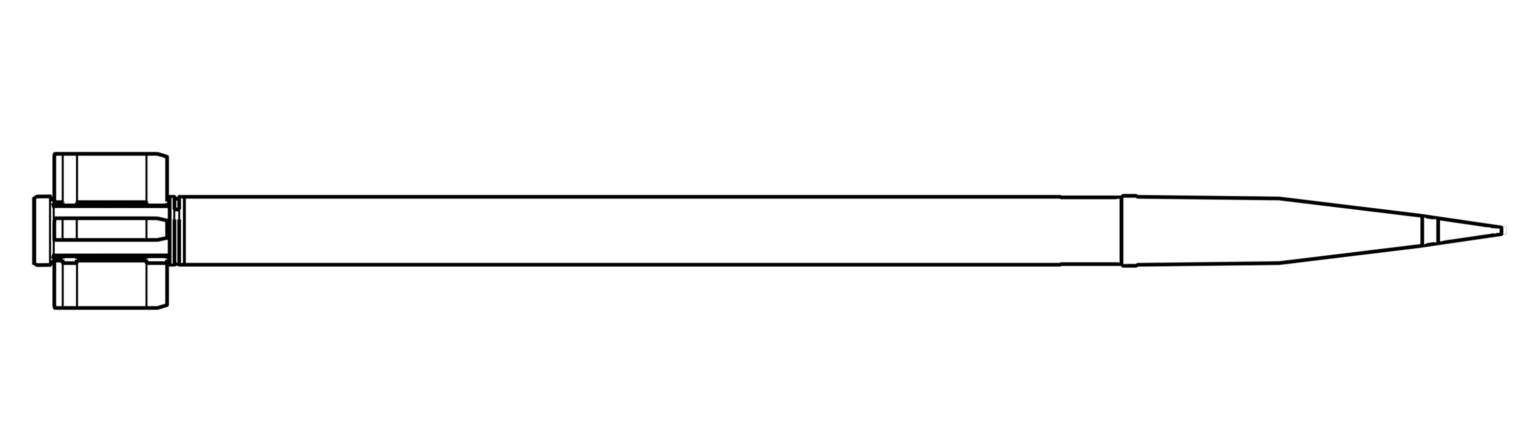
Rockets and missiles are two closely related types of powered munitions which utilise an internal propulsion method, typically a rocket motor, to maintain their rate of travel after launch. Rockets and missiles are typically relatively long and thin—with lengths ranging from 50 centimetres to 6.5 metres. Rockets are unguided those fitted with guidance systems are usually referred to as missiles. Missiles sometimes use propulsion methods other than rocket motors, such as turbojets. The effective range of rockets varies from as little as one kilometre to more than 40 kilometres, while missiles typically have a longer range — some more than 250 kilometres.
Read more →



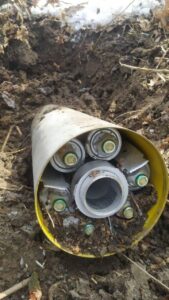
Analyst Note:
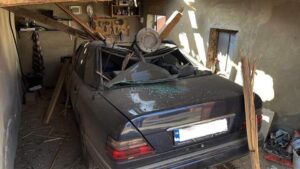
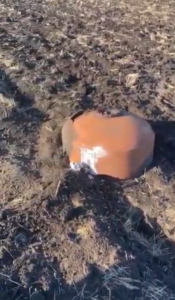
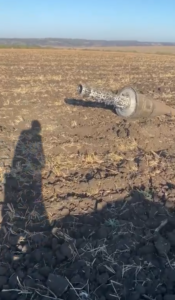
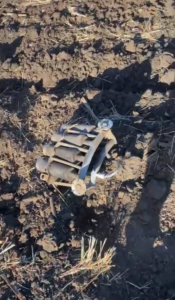
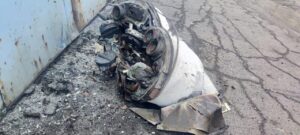
This 9M27K-series surface-to-surface cargo rocket is loaded with either 9N210 or 9N235 high explosive fragmentation (HE-FRAG) submunitions. These models are nearly identical in construction, differing primarily in the nature of the pre-formed fragments they carry. (ARES)
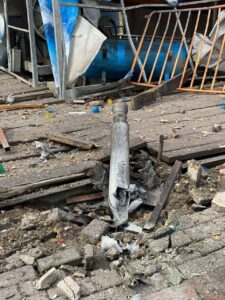
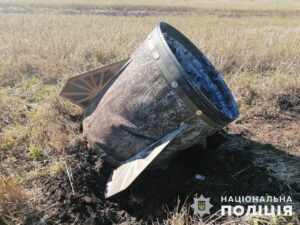
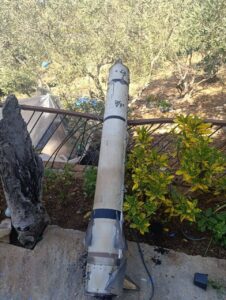
Analyst Note:
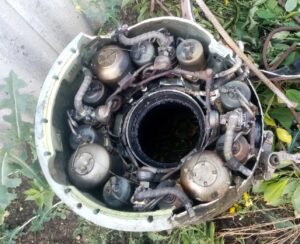
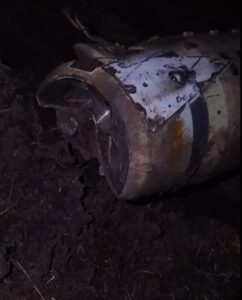
The Stunner surface-to-air missile fired by the David’s Sling air defence system is a two-stage interceptor, meaning that the munition contains two separate rocket motors for launch and propulsion. The first stage, or launch motor, detaches from the munition after a short time, before the second stage, or flight motor, ignites. The second stage motor, visible here, was found relatively intact. (ARES)
Analyst Note:
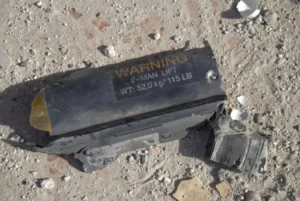
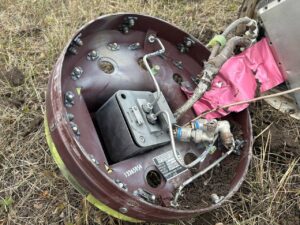
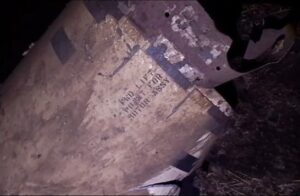
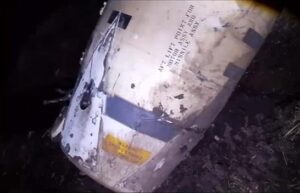
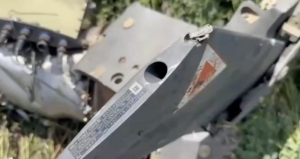
This image shows part of the warhead section of an MGM-140 Army Tactical Missile System (ATACMS) series tactical ballistic missile. This is the top of the warhead section, where it connects to the guidance section. A data plate is visible, giving information about the manufacturer (“Lockheed Martin Vought Systems”) and identifying this specific part (“WARHEAD, GUIDED MISSILE. HIGH EXPLOSIVE”. (ARES)
Analyst Note:
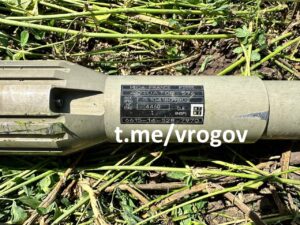
The internal components of large, complex munitions often feature markings to aid in assembly, supply chain oversight, and quality assurance. In this case, a data plate marked with the name of the manufacturer (“MBDA FRANCE”) has been affixed to one of the rear control fins (“EQ, VENTRAL, FIN TIP”) of the missile. The NATO Stock Number (NSN) is also visible. (ARES)
Analyst Note:
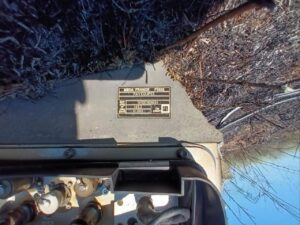
This image shows an actuator from a Storm Shadow-series missile. Actuators are components of guided munitions that are most often used to move control surfaces (e.g., fins and wings), enabling the munition to adjust its course in-flight in response to guidance commands. In this case, the component is fitted with a ‘data plate’ that indicates it was manufactured by MBDA France. (ARES)

Analyst Note:
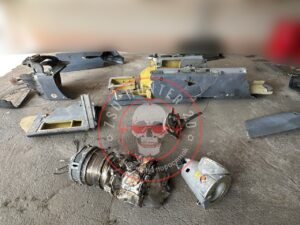
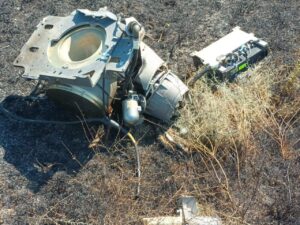
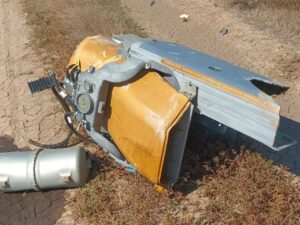
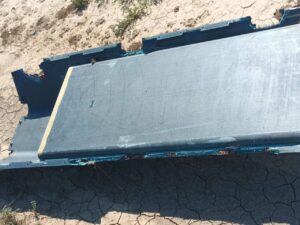
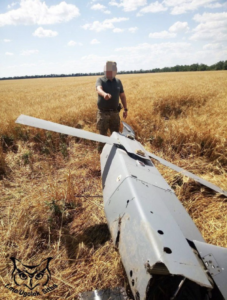
This image shows a Microturbo TRI 60-30 turbojet engine from a Storm Shadow-series air-launched cruise missile. Further remnants of the rear of the missile are also visible, including one of the rear control fins. The Storm Shadow has a range of more than 250 kilometres. (ARES)

Analyst Note:
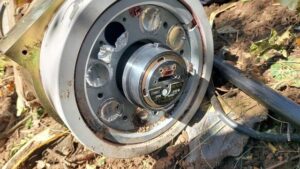
This image shows the rear of the second stage of the penetrator warhead (also called a ‘follow-through’ warhead) of the Bomb Royal Ordnance Augmented Charge (BROACH) multi-stage warhead system present in the Storm Shadow/SCALP-EG missile. The cylindrical object in the centre of the warhead (with a data plate marked “THALES”) is the fuze. (ARES)
Analyst Note:
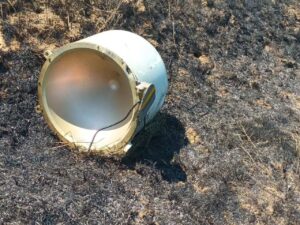
This image shows the first stage of the Bomb Royal Ordnance Augmented Charge (BROACH) multi-stage warhead used by the Storm Shadow/SCALP-EG missile. The BROACH uses a shaped-charge warhead (seen here) as its first stage, to help penetrate hardened targets, whilst the second stage comprises a conventional high explosive penetrator warhead (also called a ‘follow-through’ warhead) (ARES).
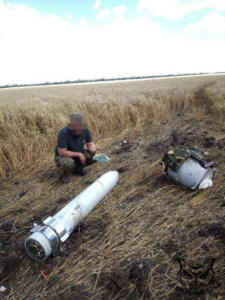
Analyst Note:
The remnant at left in this image is the second stage, or penetrator warhead, of the Bomb Royal Ordnance Augmented Charge (BROACH) multi-stage warhead as used in the Storm Shadow/SCALP-EG air-launched cruise missile. In this case, it has failed to function as intended. (ARES)
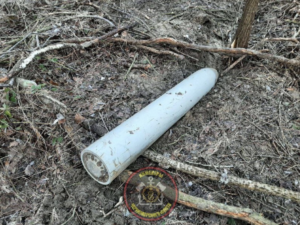
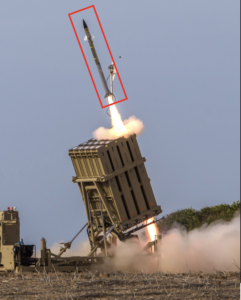
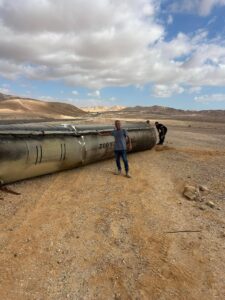
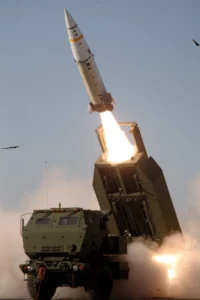
Analyst Note:
This U.S. Department of Defense file photo shows an M142 High Mobility Artillery Rocket System (HIMARS) launching an MGM-140 Army Tactical Missile System (ATACMS) series tactical ballistic missile. (ARES)

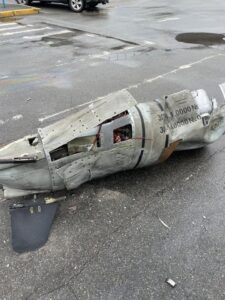
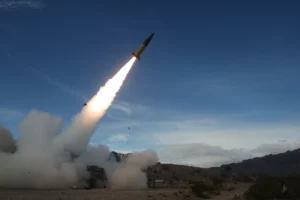
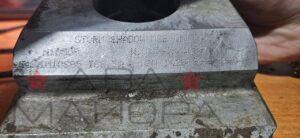
Analyst Note:
This image shows part of a heavy-duty suspension lug associated with the Storm Shadow air-launched cruise missile. This is made clear from dot-peened markings which include “STORM SHADOW USE ONLY” and identifiers such as a NATO Stock Number (NSN). (ARES)
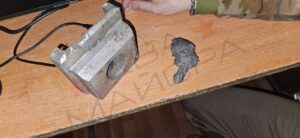
Analyst Note:
The munitions remnant on the left of this image is part of a suspension lug associated with the Storm Shadow air-launched cruise missile, which is used to attach the munition to an aircraft. This component is of heavy construction, and as such often survives the missile’s functioning intact. This photograph purports to show remnants recovered from a Storm Shadow missile that was fired by Ukrainian forces into Russian territory, but this claim cannot be verified from the image alone. (ARES)
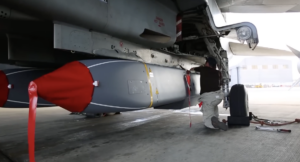

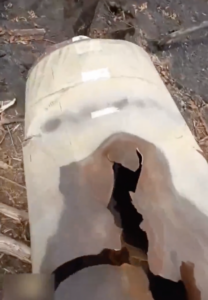
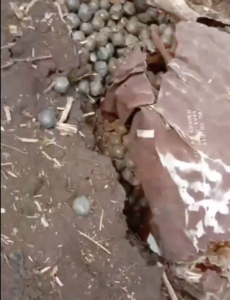
Analyst Note:
This MGM-140 cluster munition has failed to function as intended, and its payload of M74 submunitions is seen here spilling out of the warhead. (ARES)
Analyst Note:
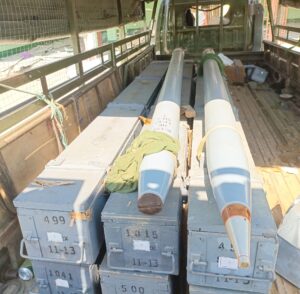
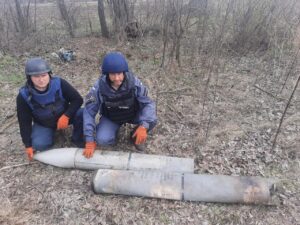
These R-122 ‘Grad’-type 122 mm surface-to-surface rockets were produced in North Korea. The example to the right is fitted with an F-122 impact fuze. Whilst a two-tone colour scheme is more common amongst those North Korean Grad rockets thus far identified in the context of the Ukraine conflict (these typically featuring a black forward section), uniformly coloured examples like this have also been identified previously. (ARES)
Analyst Note:
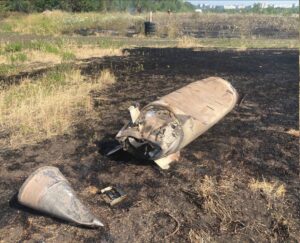
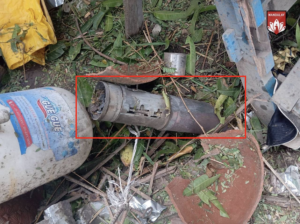
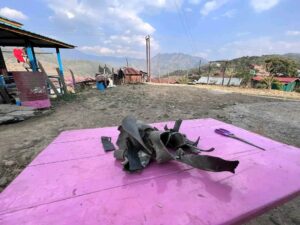
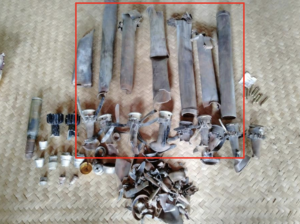
Two of the distinctive, black tailfins used on S8-series air-to-surface rockets are visible to front and left of the remnant material. (ARES)
Analyst Note:
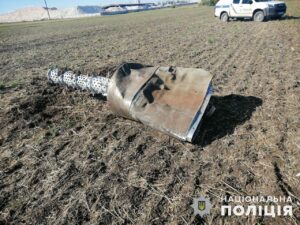
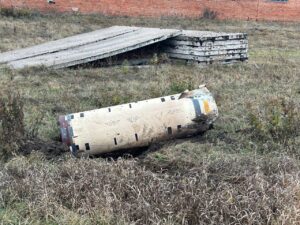
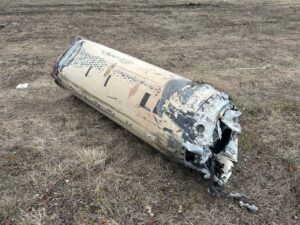
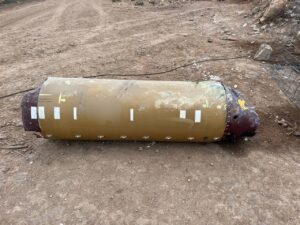
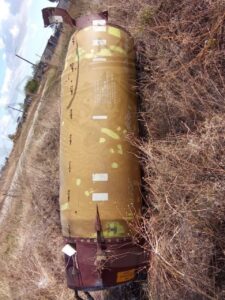
This image shows a rocket motor section from an MGM-140 ATACMS series surface-to-surface ballistic missile. The warhead section of the MGM-140 series missiles separate from the rocket motor before functioning, resulting in the rocket motor often being found relatively intact near the target. The MGM-140 series missiles use the same rocket motor, preventing a positive identification of the variant based off the rocket motor alone, unless the variant markings are visible. (ARES)
Analyst Note:
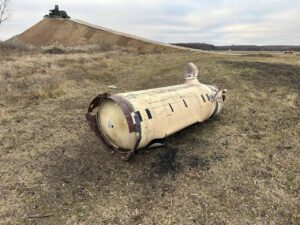
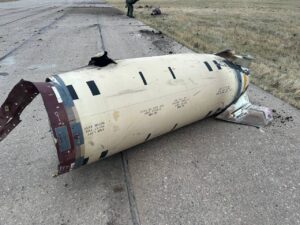
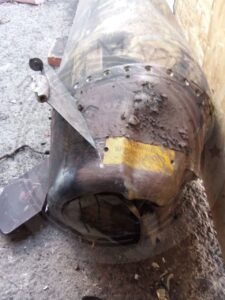
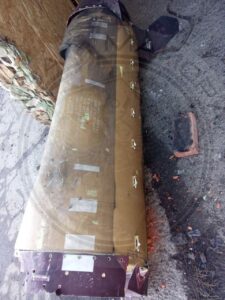
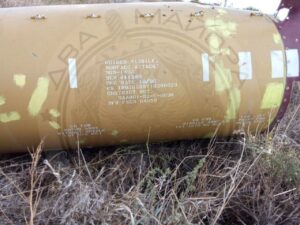
This remnant of an MGM-140 Army Tactical Missile System (ATACMS) surface-to-surface ballistic missile is marked to indicate it is the MGM-140A variant, a cluster munition which carries 950 M74 multi-purpose submunitions. Submunitions of this type are sometimes referred to by the acronym ‘anti-personnel and anti‑materiel (APAM)’. Additional markings indicate a manufacturing date (“10/96”; October 1996), a serial number (“411240”), and other information. (ARES)
Analyst Note:
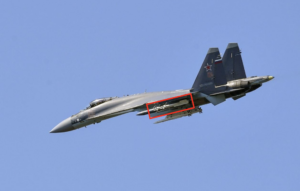
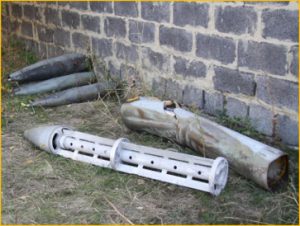
Almost all cluster munitions, including this example, expel their submunitions during flight. The submunitions are often held in an internal frame, such as that visible here, prior to being expelled. Depending on the munition, these internal frames may be diagnostic for identification. They usually do not carry a significant explosive payload in their own right, and therefore often withstand the functioning of the munition relatively intact. (ARES)
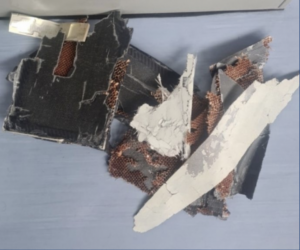
Analyst Note:
Honeycomb-like internal structures are often used in aerospace applications to provide rigidity with reduced weight, and are sometimes constructed using materials which reduce radar cross-section by absorbing or scattering electromagnetic waves. (ARES)
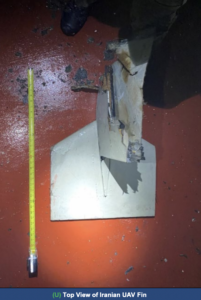
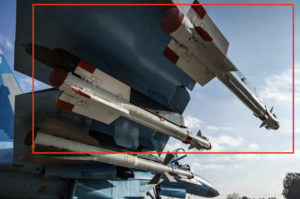
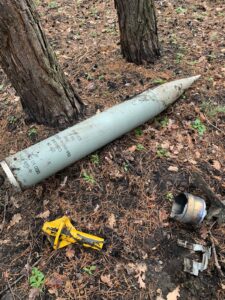
Analyst Note:
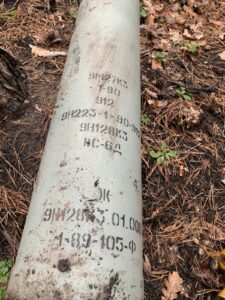
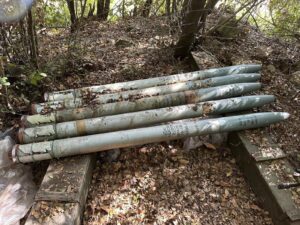
The 9M27K3 surface-to-surface rocket is fitted with the 9N128K3 cargo warhead (seen here). This warhead carries a payload of 312 PFM-1 or PFM-1S scatterable anti-personnel landmines. (ARES)
Analyst Note:
The markings on this 9N128K3 cargo warhead indicate that it was produced in 1989 and fitted to a 9M27K3 rocket in 1990. (ARES)


Analyst Note:
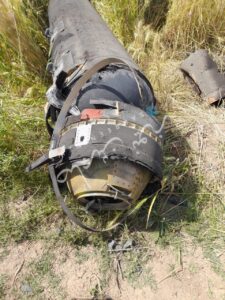
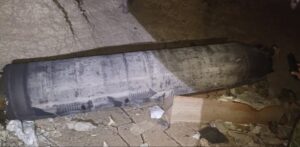
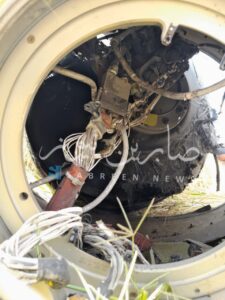
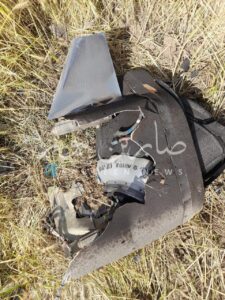
This Blue Sparrow-series air-launched ballistic missile is being carried by an F-15C fighter aircraft from 106 Squadron Israeli Air Force. The missile is marked with the logos of three organisations involved in its development—the U.S. Missile Defense Agency, the Directorate of Defence Research & Development, and the Israel Missile Defense Organization—and the Blue Sparrow programme logo of the manufacturer (Rafael Advanced Defense Systems). The booster section also features bright-orange fins and markings consistent with its use as a target missile, here modified to accept a high explosive warhead. (ARES)

Analyst Note:
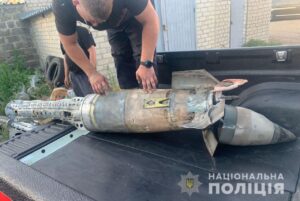
The Blue Sparrow is one of a series of three of air-launched missiles originally designed by Rafael as targets to test ballistic missile defence systems. Blue Sparrow missiles can be fitted with either inert or high explosive (HE) warheads. The recovery of Sparrow-series boosters following a reported Israeli strike on an Iranian air-defence system could suggest that a derivative variant of the Blue Sparrow missile was further developed for engaging surface targets. (ARES)


Analyst Note:
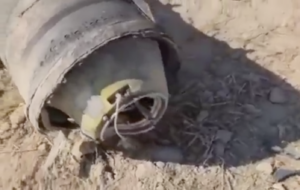
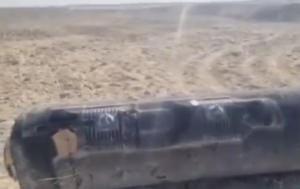
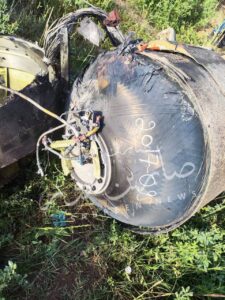
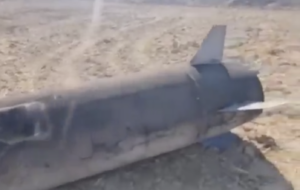
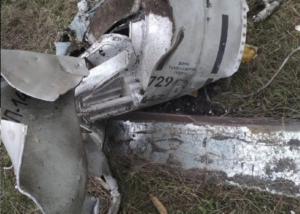
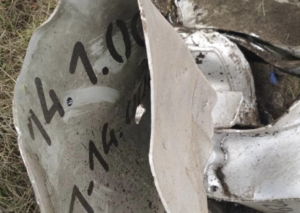
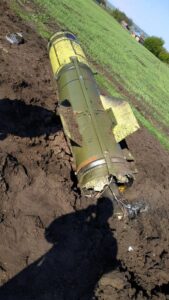
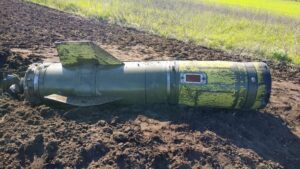
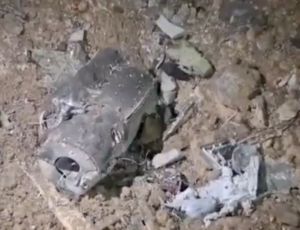
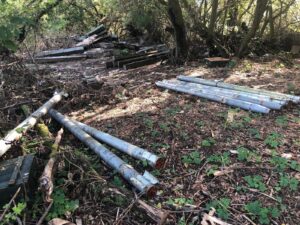
The 9M22S is essentially the ‘full-sized’ version of the shorter 9M28S surface-to-surface rocket previously recorded in the OSMP. Both rockets carry the same 9N510 incendiary warhead, but differ in the length of their rocket motor sections, and thus range. (ARES)