The impact or effect the munition is intended to have
Functional use (10)
The specific model of munition pictured
Tentative Model (340)
Search
The external organisation that documented the munition
Research Organisation (6)
Colour of the munition pictured
Base Colour (12)
Colour of all, or some, of the markings on the munition
Marking Colour (11)
Language or script of the marking on a munition
Marking Script (10)
Condition of the munition pictured
Condition (6)
Key features defining the operation mechanisms of a projectile
Mechanical Feature (10)
Whether a munition is guided or unguided
Guidance (2)
Where the munition is launched from and what it targets
Domain (7)
The type of fins visible on the munition
Fins Characteristic (6)
The nominal diameter of a projectile. For most modern munitions, this is expressed in millimetres (e.g. 82 mm mortar projectile), but older artillery gun projectiles may be described in inches.
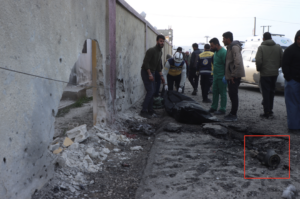
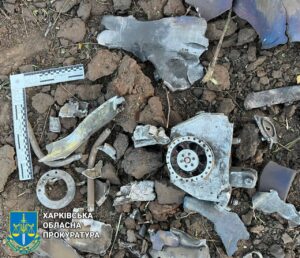
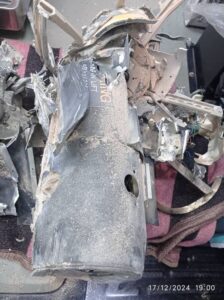
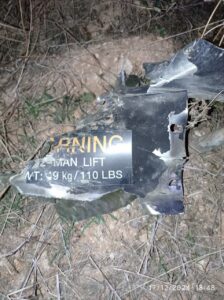
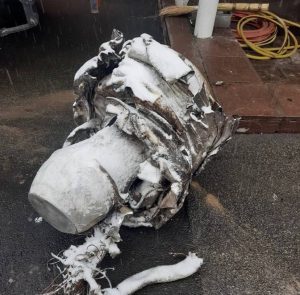
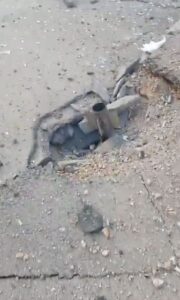
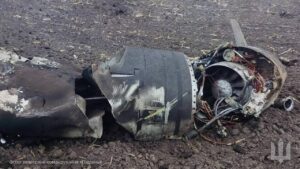
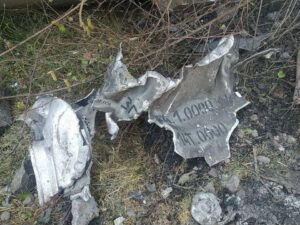
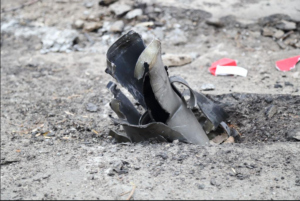
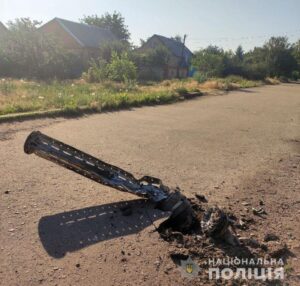
This image shows a remnant of the aft motor section, which includes the venturi nozzle, of a North Korean KN-23/KN-24/Hwasong-11 series missile. The KN-23/KN-24/Hwasong-11 has a generally similar appearance to the Russian 9M7 ‘Iskander’ series of ballistic missiles, but has differences in performance and in some aspects of the construction. (ARES)
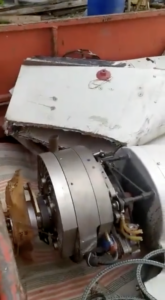
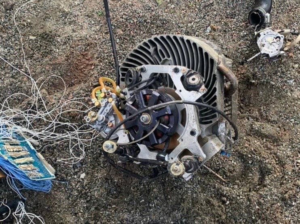
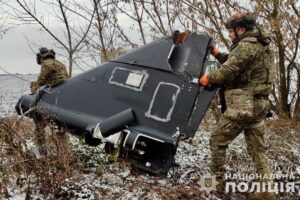
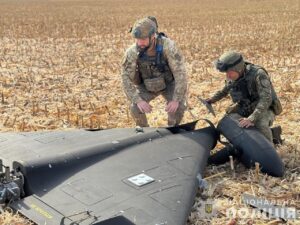
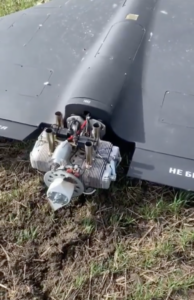
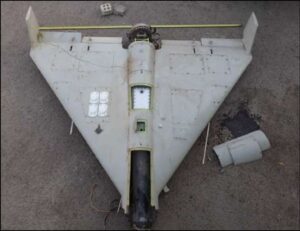
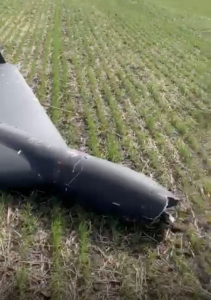
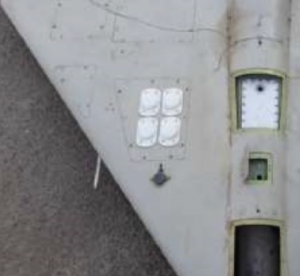
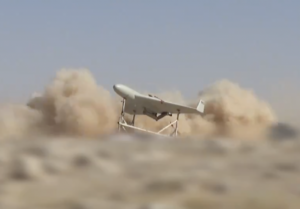
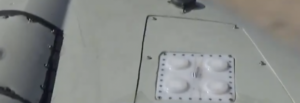
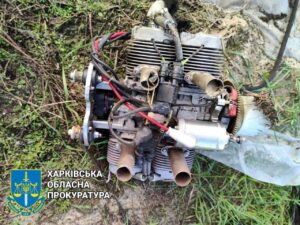
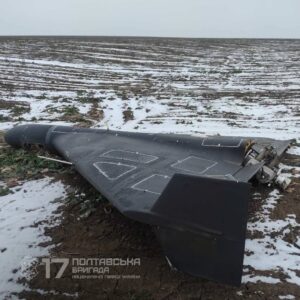
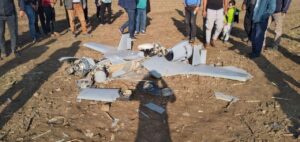
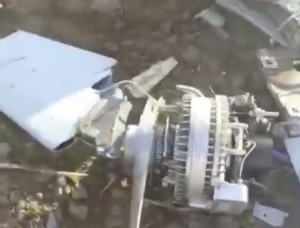
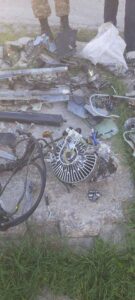
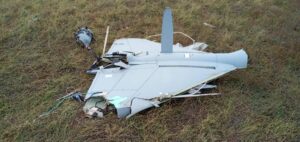
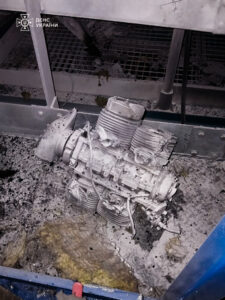
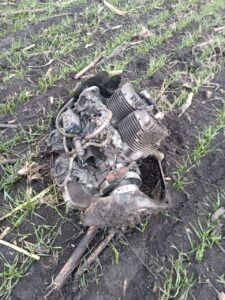
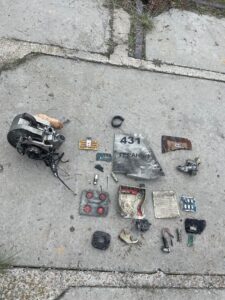
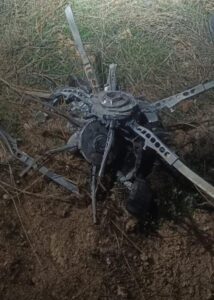
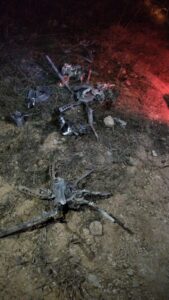
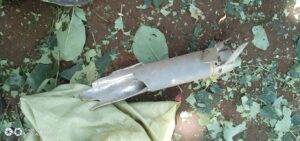
These images show a damaged Serat-01 engine which powers the Shahed-131 drone after its rocket-assisted launch. The Serat-01 is a copy of the MDR 208 engine, and is noticeably smaller than the MD550 which powers the larger Shahed-136. (ARES)
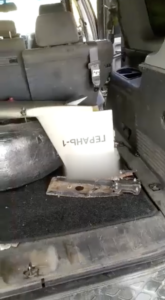
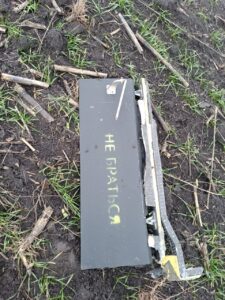
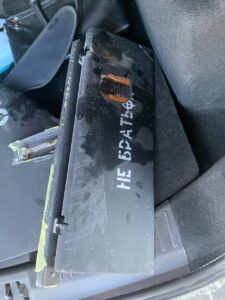
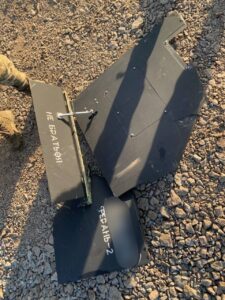
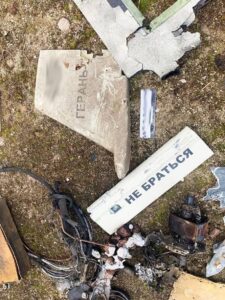
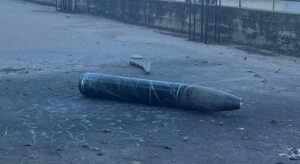
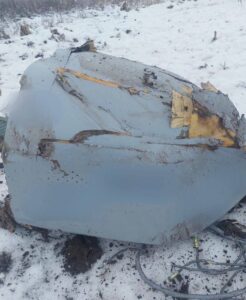
This image shows the BSF-50, one of several warheads developed by Russia for the Shahed-136/Geran-2 to replace the original Shahed-136 warhead designed by Iran. The BSF-50 is a high explosive warhead with a fragmentation effect. (ARES)
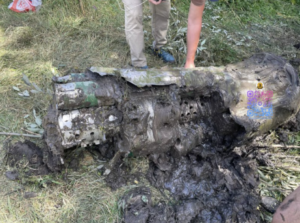
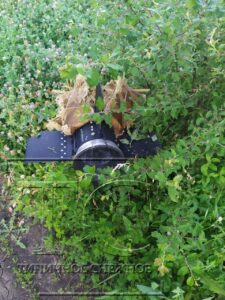
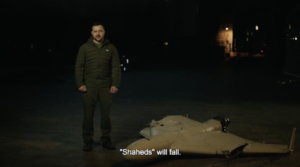
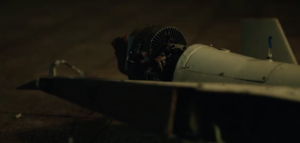
Depicted here is the MD-550 motor of a Shahed-136/Geran-2. This image was presented by Ukrainian President Zelenskyy as a fragment of the drone that reportedly hit the Chernobyl Nuclear Power Plant’s New Safe Confinement shelter. (ARES)
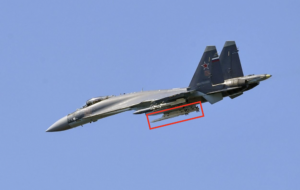
Two R-77 air-to-air missiles (NATO reporting name: AA-12 Adder) are carried in this photograph by a Russian Aerospace Forces Sukhoi Su-35 fighter aircraft. Key markings, including the aircraft’s bort number (a coloured numeral that acts as a unit or base identifier), have been digitally obscured. (ARES)
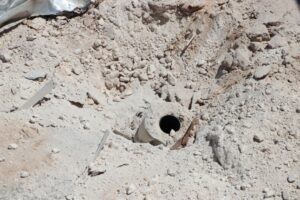
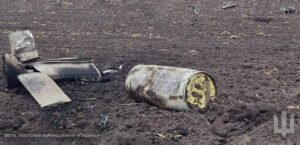
This image shows the functioned rocket motor of an Israeli Carpet rocket. The Carpet uses a fuel-air explosive (FAE) warhead which is designed to function mines and improvised explosive devices (IEDs), clearing a target area for the advance of friendly forces. These rockets are fired from the Carpet rocket launcher, which is loaded with up to 20 rockets and can be fitted to a variety of vehicles. (ARES)
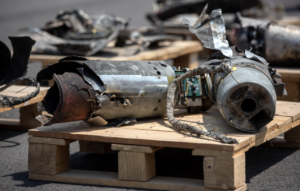
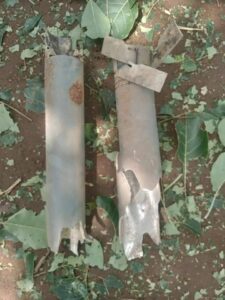
This image shows the rear portions of two different two different Spike Non-Line-of-Sight (NLOS) missiles, which each include the control section and part of the rocket motor.
The Spike NLOS has been in service with Israel since 1987, and is currently in its sixth generation, or iteration, which comprises an unknown number of variants. At least three different warhead configurations are reported: high explosive fragmentation (HE-FRAG), high explosive anti-tank (HEAT), and a ‘multipurpose’ or anti-structure variant with a penetrating blast and fragmentation warhead. (ARES)
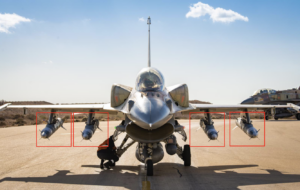
This image shows an Israeli Air Force F-16 carrying four Rampage air-to-ground missiles. The Rampage is a 580 kg (1,278 lb) missile with GPS and INS guidance. It carries a multi-purpose warhead that is designed for engaging a range of targets in the open as well as offering some degree of penetration. (ARES)
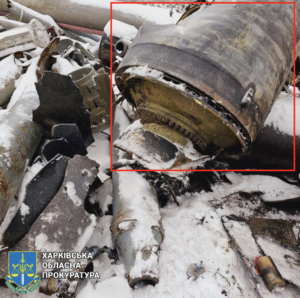
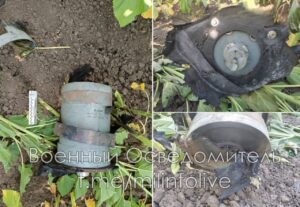
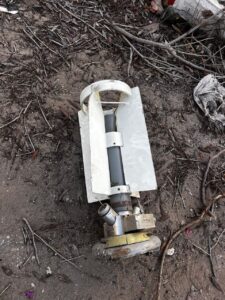
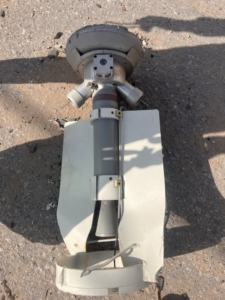
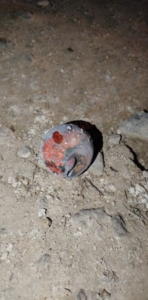
This image shows the pneumatic accumulator, or ‘accumulator bottle’, of the AGM-114R9X missile. The accumulator bottle stores gas that is used to actuate the fins, adjusting the trajectory of the missile in flight. All AGM-114 Hellfire-series missiles have an accumulator bottle. The accumulator bottle is a fragment that often survives intact, even in Hellfire missile variants that carry an explosive payload. (ARES)
Contextual images of the damage caused by this munition indicate the remnant pictured is from the AGM-114R9X variant of the Hellfire missile, a kinetic munition which does not carry an explosive warhead. This remnant cannot be differentiated from either other AGM-114 or the AGM-179 JAGM variants based off this image alone. (ARES)
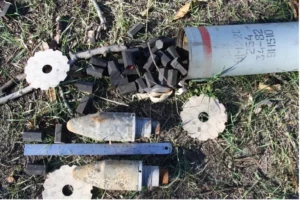
This image shows a 9M22S rocket with some of its unfunctioned payload of 180 ML-5 incendiary elements. Each ML-5 is a hexagonal prism formed from a hollow shell of magnesium that is filled with an incendiary composition. These elements are ignited by the ejection charge of the rocket’s warhead upon functioning. Two fuzes are also visible at the bottom of the image, immediately above and below the ruler. (ARES)
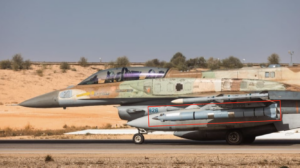
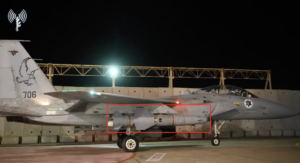
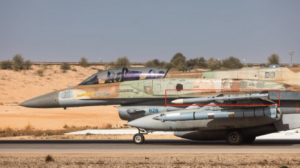
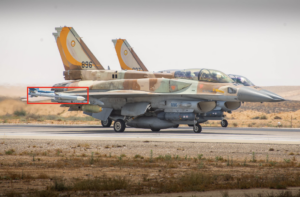
This F-16I fighter aircraft from the Israeli Air Force is carrying a CATM-120 inert missile simulant (indicated). These devices are used for training purposes, being designed to replicate the weight and centre of gravity of a live munition. They lack any means of propulsion and are not released from the aircraft. The CATM-120 can be differentiated from the AIM-120 missile series by the presence of only blue bands on the missile, denoting both an inert rocket motor and an inert payload. A ‘live’ AIM-120 will have two brown bands on the rear section of the missile (the rocket motor), and a yellow band on the forward, or warhead, section. An AIM-120 with an inert warhead, but a live rocket motor, will have a blue band on the warhead and two brown bands on the rocket motor. (ARES)
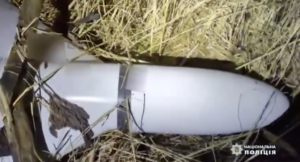
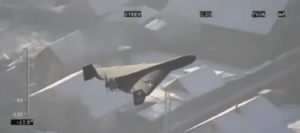
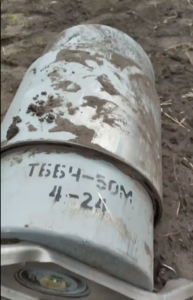
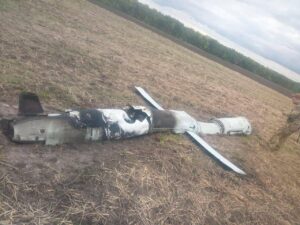
This image shows one of several possible warhead variants that can be carried by the Shahed-136/Geran-2 one-way attack (OWA) UAV. The Shahed-136/Geran-2 (and the smaller Shahed-131/Geran-1) has been documented carrying shaped-charge warheads, penetrator warheads, and multi-function warheads. Due to the various warheads that can be carried by a Shahed/Geran drone, the functional use cannot be determined without the warhead being visible. In this case, the munition was fitted with a TBBCh-50M warhead that contains a thermobaric explosive composition with an additional fragmentation effect. (ARES)
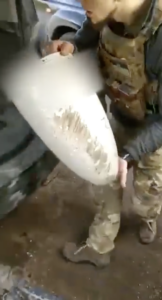
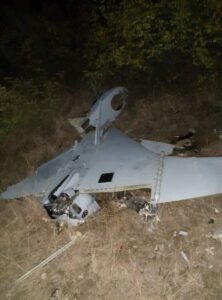
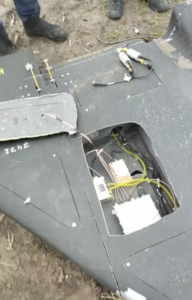
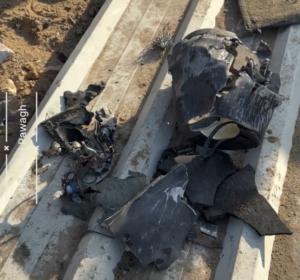
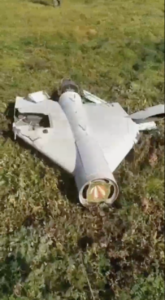
Shahed-131/Geran-1 and Shahed-136/Geran-2 one-way-attack (OWA) UAVs can be fitted with on of a variety of warheads with different functional uses. The specific type carried by each UAV cannot be determined unless the munition has been damaged in such a way as to reveal the warhead, such as in this case. This image shows the cone of the shaped charge, indicating that this Shahed-1/Geran-1 carries a warhead with a penetrating or anti-armour effect. This warhead has been documented with 18 additional liners for enhanced anti-armour effect, and in some cases has been fitted with fragmentation liners for an enhanced anti-personnel effect. (ARES)
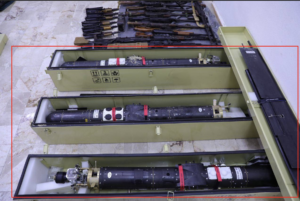
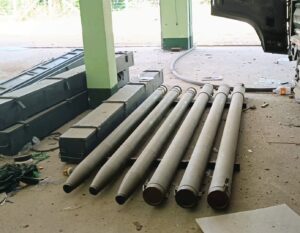
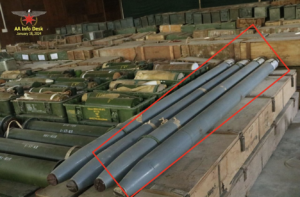
Whilst there are no visible markings explicitly identifying the model of the 122 mm rockets in this image, they are sitting atop a box marked “R-122” and exhibit physical features consistent with North Korean R-122 rockets. It should be noted that rockets marked with the generic “R-122” model name have been observed in both ‘long’ and ‘short’ overall lengths and painted in different colours. (ARES)
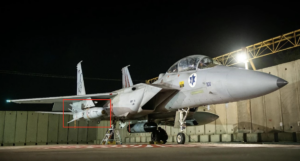
This F-16I fighter aircraft from 107 Squadron Israeli Air Force is carrying a CATM-120 inert missile simulant (indicated). These devices are used for training purposes, being designed to replicate the weight and centre of gravity of a live munition. They lack any means of propulsion and are not released from the aircraft. The CATM-120 can be differentiated from the AIM-120 missile series by the presence of only blue bands on the missile, denoting both an inert rocket motor and an inert payload. A ‘live’ AIM-120 will have two brown bands on the rear section of the missile (the rocket motor), and a yellow band on the forward, or warhead, section. An AIM-120 with an inert warhead, but a live rocket motor, will have a blue band on the warhead and two brown bands on the rocket motor. (ARES)