



101–200 of 252
Analyst Note
15 September 2025
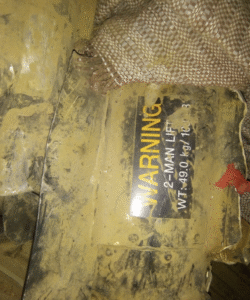
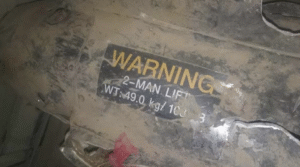
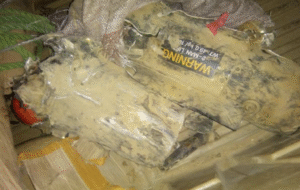
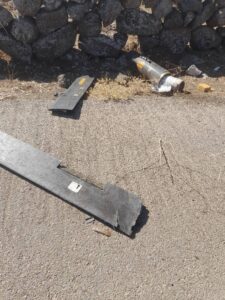
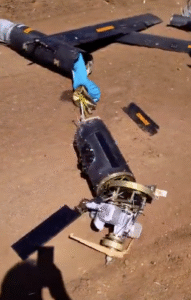
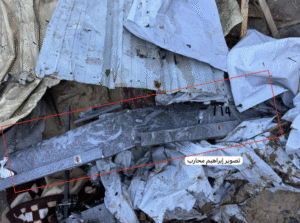
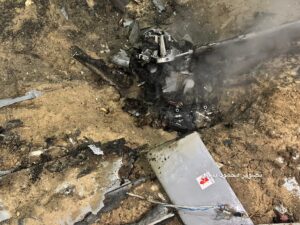
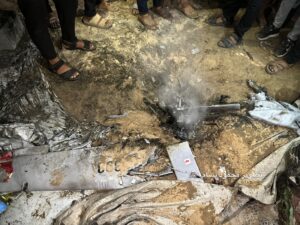
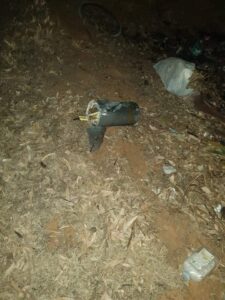
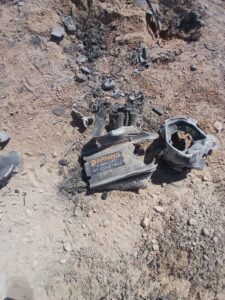
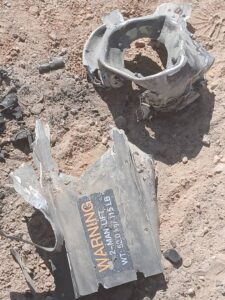
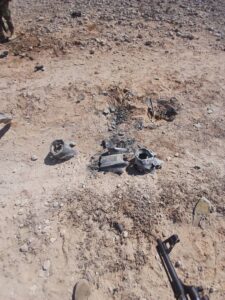
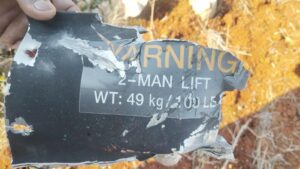
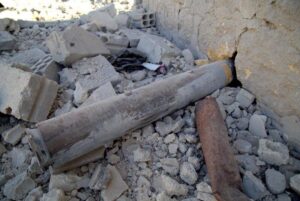
This image shows remnants of two different rocket motors from AGM-114 series Hellfire missiles. While it cannot be determined by these entries alone, images of the damage from the strike associated with this image, gathered by Mwatana, indicate that both of these AGM-114 missiles were the kinetic AGM-114R9X variant. (ARES)

Analyst Note
14 July 2025
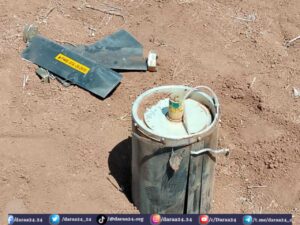
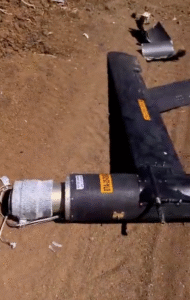
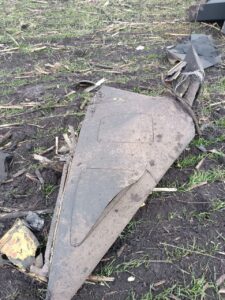
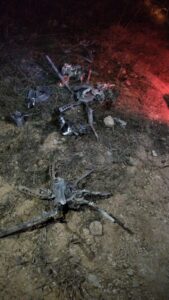
This image shows a variety of remnants from an Israeli SPICE 250 guided bomb. One of the bomb’s four control fins is visible at the bottom-left of the image. (ARES)
Analyst Note
14 July 2025
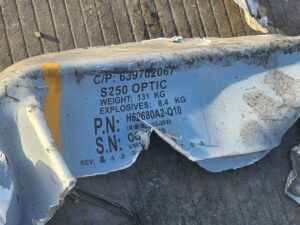
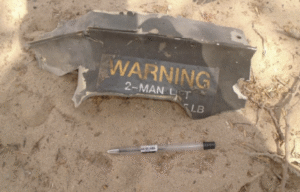
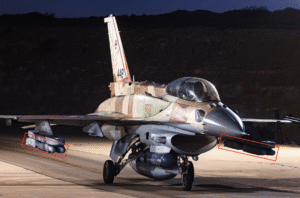
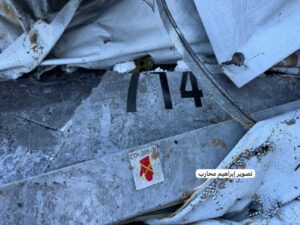
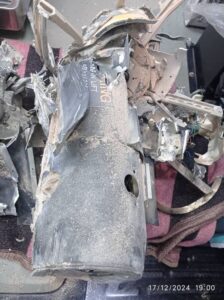
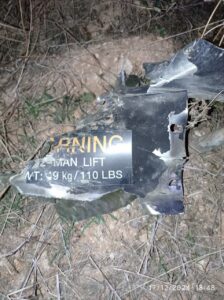
This image shows a remnant of the outer casing of the “S250 OPTIC” or SPICE 250 guided bomb, with the markings relatively intact. The markings on this remnant show that, while classified as a 250-pound bomb, the actual weight of this SPICE 250 variant is 288 pounds (131 kg) with only 18.5 pounds (8.4 kg) of explosive material. (ARES)
Analyst Note
21 July 2025
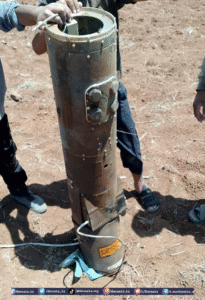
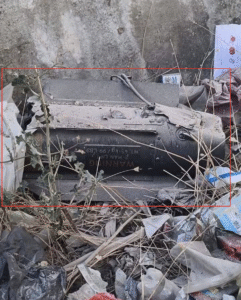
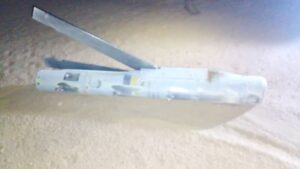
This image shows the rocket motor of an AGM-114 "Hellfire" series guided missile found in Jordan during the 12 day conflict between Israel and Iran. This specific Hellfire missile is likely an air-to-air "C-UAS" variant used to intercept one-way attack drones, such as those launched by Iran towards Israel, rather than the more common air-to-surface Hellfire missile variants. (ARES)



Analyst Note
30 April 2025
This image shows two Mikholit air-delivered bombs (‘glide bombs’), and four Mikholit warheads. There are at least two different variants of warheads available for the Mikholit glide bomb. The green cylinder on the left is a blast (high explosive) warhead, whilst the other three warheads are shaped charge warheads which incorporate additional fragmentation. Blast warheads of this type have also been seen with red markings, while the shaped charge warheads have been seen with yellow markings. (ARES)
Analyst Note
18 July 2025
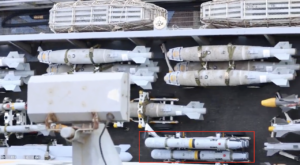
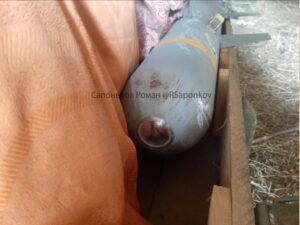
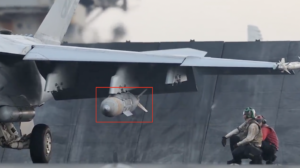
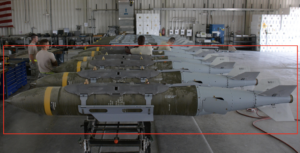
This image shows several GBU-53/B bombs photographed from above while on a munitions transport cart. GBU-53/B bombs are transported and loaded onto the aircraft with the wing assembly on the bottom. When the GBU-53/B is released from the aircraft, the bomb rotates, with the wing assembly side orienting as the top as the bomb glides to its target. (ARES)
Analyst Note
30 April 2025
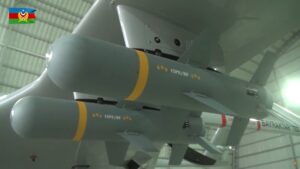
This image shows two MAM-L guided air-delivered bombs affixed to the wing of a Bayraktar TB2 drone. The MAM-L and TB2 are both produced in Türkiye by Roketsan and Baykar respectively. The MAM-L can have one of three different warheads: blast fragmentation, anti-tank, or thermobaric. The warhead section of each MAM-L in this image has “YIPE/BF” visible. ‘YIPE’ is the abbreviation of the warhead type in Turkish: Yüksek Infilaklı Parçacık Etkili (‘high explosive fragmentation’, in English). The ‘BF’ also indicates that these MAM-L munitions are of the blast-fragmentation variant. The warhead of a MAM-L cannot be determined from an external assessment without viewing markings such as these (or a clear view of the data plate, which can be seen on the aft portion of the MAM-L). (ARES)

Analyst Note
9 January 2025
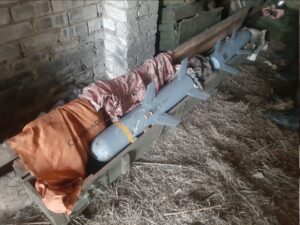
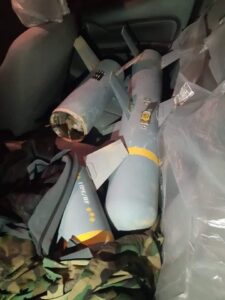
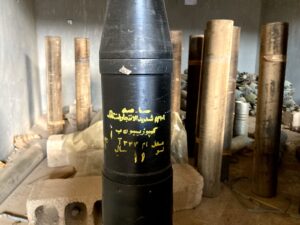
This image shows an Iranian M344 106 mm recoilless gun projectile. The M344 is a high explosive anti-tank (HEAT) munition, containing a shaped charge that is designed to penetrate armour. (ARES)
Analyst Note
17 December 2024
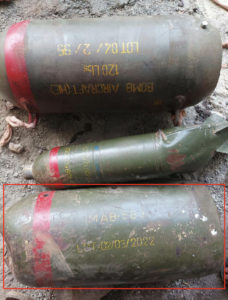
Whilst relatively little is known about Burmese air-delivered bombs from publicly available sources, researchers (including those at ARES and Myanmar Witness) have been collecting evidence based on munitions’ physical features and markings. Combined with information from confidential sources, this has allowed for the tentative identification of several models. (ARES)
Analyst Note
14 November 2024
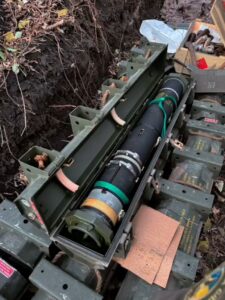
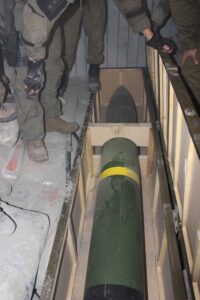
The M712 ‘Copperhead’ is a laser-guided 155 mm artillery gun projectile carrying a high explosive anti-tank (HEAT) warhead designed to engage armoured vehicles. The Copperhead was developed in the United States in the 1970s, and saw limited use during Operation Desert Storm. The M712 is is pictured here inside its shipping container, and the slots for the enclosed, deployable (‘pop-out’) wings and fins are visible. The M712 has two operational modes: a ballistic mode that follows a gun’s ballistic trajectory like a traditional artillery projectile, and a glide mode, which follows a longer and flatter trajectory. The preferred mode is set by the artillery crew before firing. (ARES)

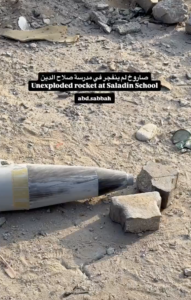
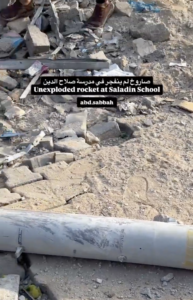
Analyst Note
17 December 2024
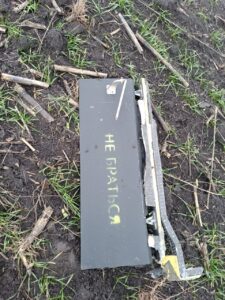
As with several other images in the OSMP database, the text on this image was added by a social media user prior to its inclusion herein. Rather than a “rocket” as described in the annotation, this image actually shows an air-delivered bomb. (ARES)
Analyst Note
26 November 2024
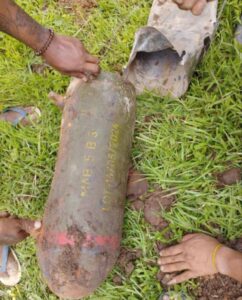
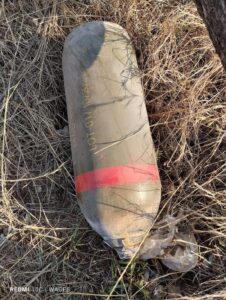
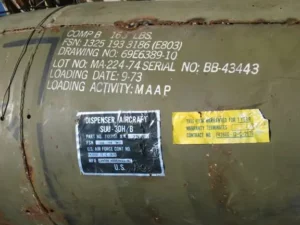
This image shows an SUU-30H/B, an air-delivered dispenser which can be configured to carry different submunition payloads. These can include 217 BLU-61 A/B, 650 BLU-63/B, or 650 BLU-86/B or BLU-86 A/B. The munition can also carry inert payloads. The specific combination of payload and dispenser determines the ‘Cluster Bomb Unit’ (CBU) designation, with SUU-30H/B dispensers being paired with different payloads to form the CBU-58 and CBU-71 series. Contextual information suggests that this dispenser was part of a CBU-58/B cluster munition, but this cannot be established from an assessment of this image alone. (ARES)
Analyst Note
26 November 2024
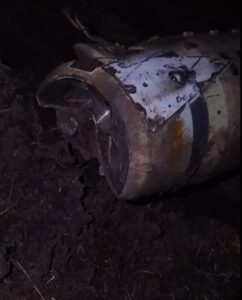
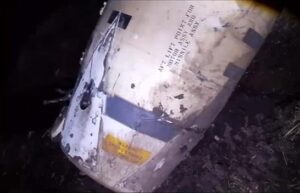
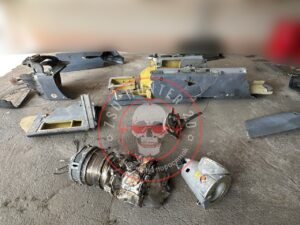
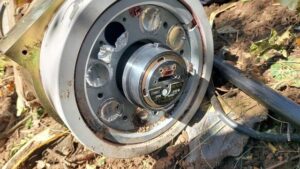
This image shows the rear of the second stage of the penetrator warhead (also called a ‘follow-through’ warhead) of the Bomb Royal Ordnance Augmented Charge (BROACH) multi-stage warhead system present in the Storm Shadow/SCALP-EG missile. The cylindrical object in the centre of the warhead (with a data plate marked “THALES”) is the fuze. (ARES)
Analyst Note
26 November 2024
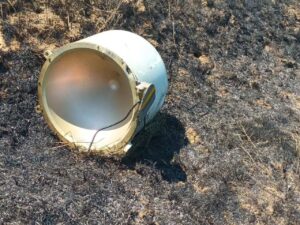
This image shows the first stage of the Bomb Royal Ordnance Augmented Charge (BROACH) multi-stage warhead used by the Storm Shadow/SCALP-EG missile. The BROACH uses a shaped-charge warhead (seen here) as its first stage, to help penetrate hardened targets, whilst the second stage comprises a conventional high explosive penetrator warhead (also called a ‘follow-through’ warhead) (ARES).

Analyst Note
11 November 2024
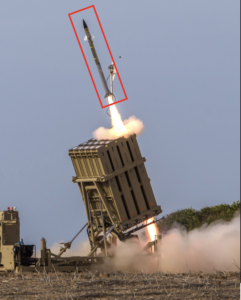
In this image, two GBU-39 guided air-delivered bombs can be seen in their shipping containers, with only the nose and the tail actuation section of the munitions clearly visible. Distinctive packaging such as this can sometimes be used as contextual evidence for the presence of specific munitions. (ARES)
Analyst Note
20 November 2024
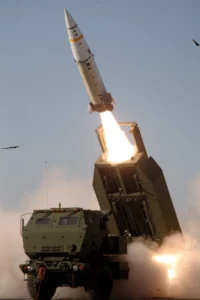
This U.S. Department of Defense file photo shows an M142 High Mobility Artillery Rocket System (HIMARS) launching an MGM-140 Army Tactical Missile System (ATACMS) series tactical ballistic missile. (ARES)
Analyst Note
2 November 2024
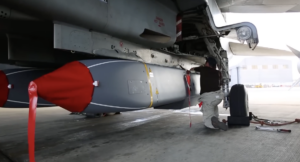
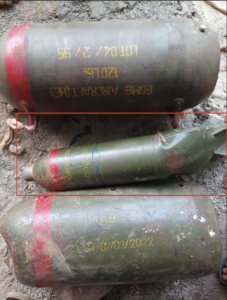
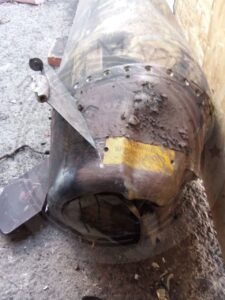
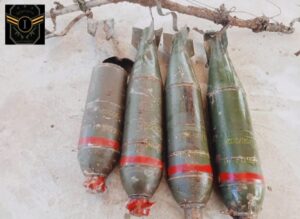
The arming vane for a nose fuze (painted red) is visible on each of the two leftmost MAB-10B6 air-delivered bombs in this image. As the bomb falls, air passing over the arming vane causes it to spin, arming the fuze. (ARES)
Analyst Note
16 October 2024
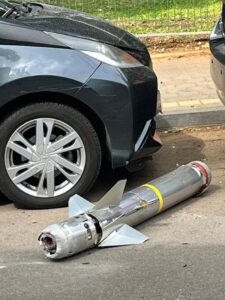
This image shows most of the forward half of a Tamir surface-to-air missile, including the guidance section and warhead, as fired by launchers in the Iron Dome system. These interceptor missiles are fast and manoeuvrable with a relatively small explosive payload. Their construction and low yield means that remnants are often recovered largely intact. (ARES)
Analyst Note
21 October 2024
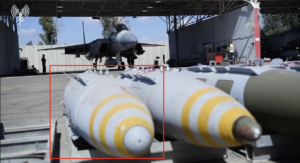
The BLU-117 air-delivered bomb is nearly identical in format to the more common MK 84, but uses the PBXN-109 explosive filler which is more insensitive than the typical explosive compositions found in MK 80-series bombs. The BLU-117 is also coated with a grey, thermally resistant paint, and marked with three yellow bands (as opposed to the green paint with two yellow bands found on standard MK 80-series bombs). These changes were requested by the U.S. Navy for safer storage of these munitions aboard ships. (ARES)
2 Analyst Notes
2 October 2024
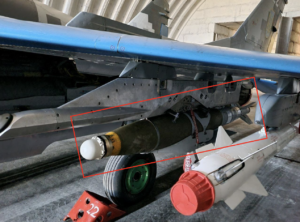
The JDAM-ER in this photograph is affixed to an unusual pylon thought to be of Ukrainian design, which allows the Western munition to be carried by the Soviet-designed Mikoyan MiG-29 and Sukhoi Su-27 fighter aircraft in service with the Ukrainian Air Force (a MiG-29 is pictured here). (ARES)
3 Analyst Notes
3 October 2024
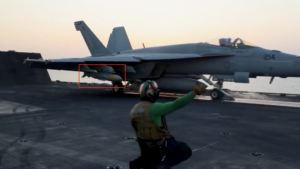
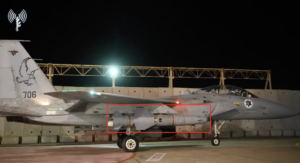
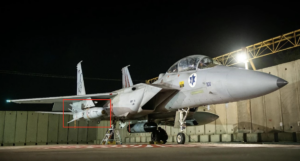
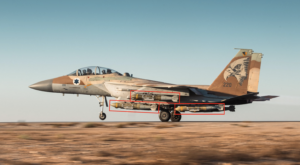
This is an image released by the Israeli Defense Forces that shows an F-15I of 69 Squadron Israeli Air Force preparing to take part in a high-profile airstrike on 27 September 2024, in which the leader of Hezbollah, Hassan Nasrallah, was killed.
Analyst Note
18 November 2024
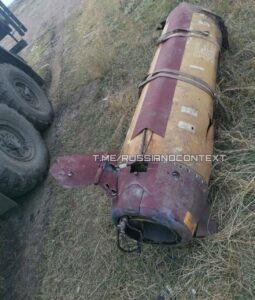
The MGM-140 Army Tactical Missile System (ATACMS) series includes variants with a variety of different payloads, including submunitions and unitary high explosive (HE) warheads. The number of submunitions carried and effective ranges also vary.
Ukraine has reportedly received the MGM-140A and MGM-140B variants, which are externally visually identical and must usually be distinguished by markings. The MGM-140A carries 950 M74 submunitions, with an effective range of 165 km, while the MGM-140B carries only 300 M74 submunitions but has a longer effective range of 300 km. (ARES)
Analyst Note
16 September 2024
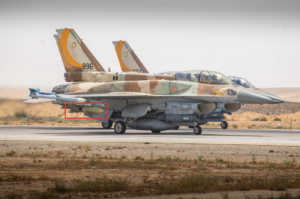
The M117 series of air-delivered bombs were historically referred to as ‘demolition bombs’, due to the more substantial blast effect they offer in comparison with so-called ‘general-purpose bombs’. This is achieved through the use of more energetic explosive compositions, such as Tritonal or Minol, which incorporate an oxidiser (typically aluminium powder). Today, munitions using such compositions are sometimes considered in the loose category of ‘enhanced blast munitions’, but the distinction between demolition and general-purpose bombs has largely disappeared. (ARES)

Analyst Note
11 September 2024
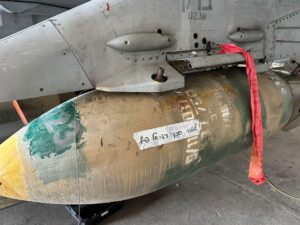
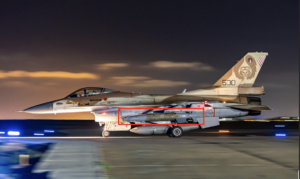
This image shows an Israeli Air Force F-16C fighter aircraft from 101 Squadron carrying a MK 84-series 2,000-pound-class air-delivered bomb fitted with a SPICE 2000 ‘bolt-on’ guidance kit. (ARES)
Analyst Note
14 October 2024
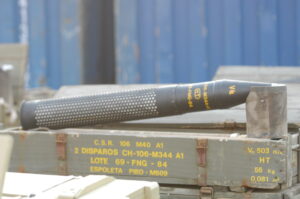
Markings on this 106 mm recoilless gun projectile indicate it is a M344A1 high explosive anti-tank (HEAT) round (“CH-106-M344-A1”) produced by Fábrica Nacional de Granada (“FNG”), Spain, in 1984 (“84”). The packing crate identifies the intended weapon as an M40A1 Cañón sin retroceso, or ‘recoilless rifle’ (“C.S.R. 106 M40 A1”). Other markings show that the round is fitted with an M509-type point-impact, base initiating (PIBD) fuze (“Espoleta PIBD M509”), and give additional details such as the expected muzzle velocity (“V₀”) of 503 m/s. (ARES)
Analyst Note
14 October 2024
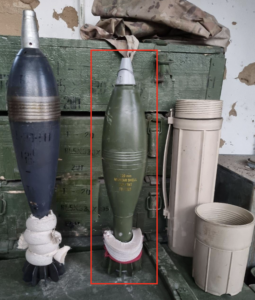
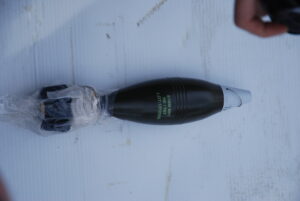
This Iranian M91 81 mm mortar projectile is marked to indicate it was produced in 2009. The AZ111A2 fuze fitted to the projectile is also marked with the same year of manufacture. (ARES)
Analyst Note
19 March 2025
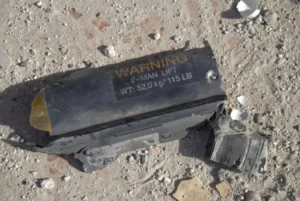
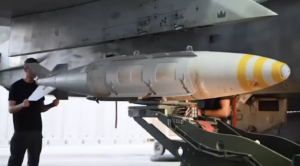
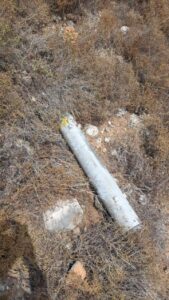
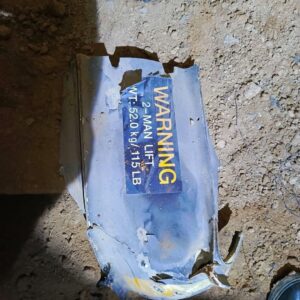
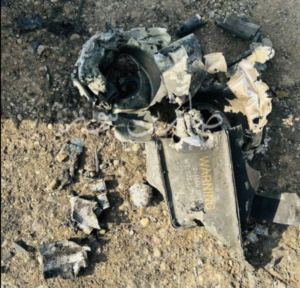
The AGM-179 Joint Air-to-Ground Missile (JAGM) is derived from the AGM-114 Hellfire series of air-to-surface missiles—and thus shares physical characteristics in terms of general construction, including rear fin placement. The marked weight of 52.0 kg (115 lbs) is generally believed to be an indicator that the rocket motor is from a JAGM; however, remnants marked with this weight have been observed from several years before the JAGM was initially fielded. (ARES)

Analyst Note
11 September 2024
In this image, four AGM-114 Hellfire-series missiles can be seen fitted to an M299-series missile launcher, itself attached to the stub wings of this Israeli AH-64 Apache helicopter. In theory, the Apache could be armed with up to sixteen Hellfire missiles, but fewer are carried in practice to allow for other weapons and sensor payloads (ARES).
Analyst Note
26 September 2024
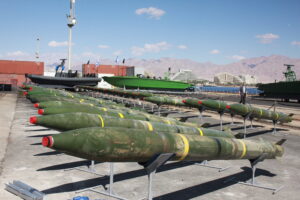
‘Khaibar-1’ is a designation given to a series of 302 mm rockets produced in Syria, possibly derived from the Chinese WS-1/WS-1B. The Khaibar-1 is also referred to as the M-302 or M302. (ARES)