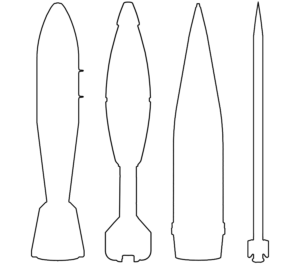
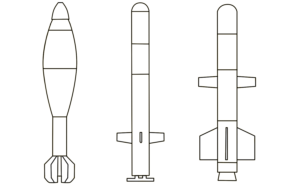
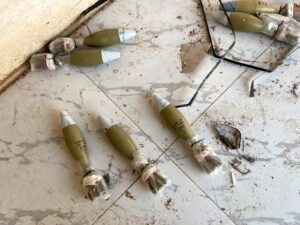
The nominal diameter of a projectile. For most modern munitions, this is expressed in millimetres (e.g. 82 mm mortar projectile), but older artillery gun projectiles may be described in inches.
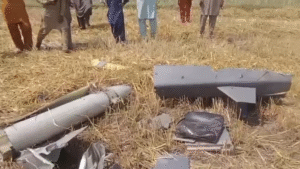
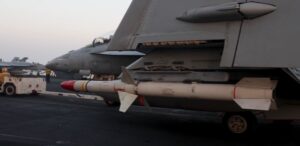
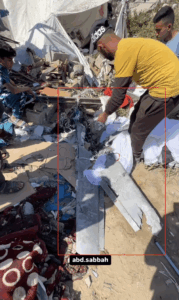
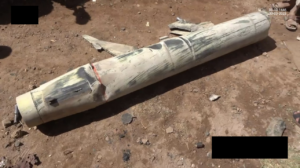
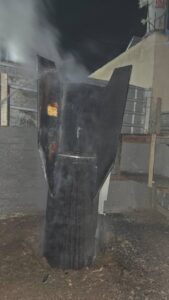
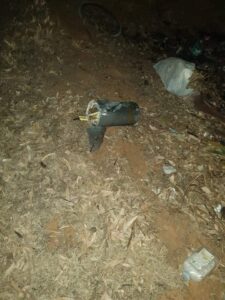
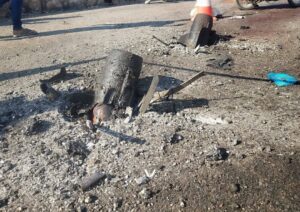
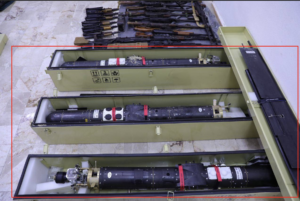
This image shows the rocket motor of an AGM-114 "Hellfire" series guided missile found in Jordan during the 12 day conflict between Israel and Iran. This specific Hellfire missile is likely an air-to-air "C-UAS" variant used to intercept one-way attack drones, such as those launched by Iran towards Israel, rather than the more common air-to-surface Hellfire missile variants. (ARES)
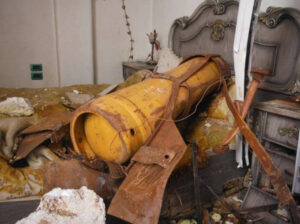
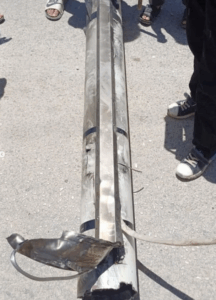
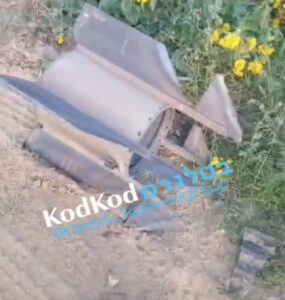
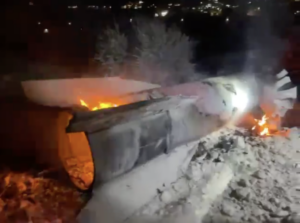
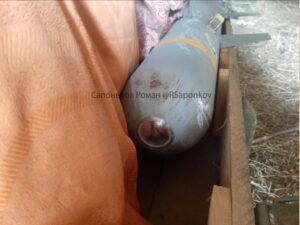
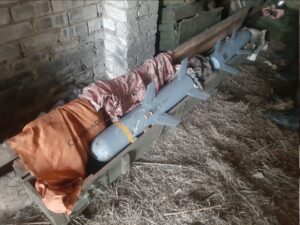
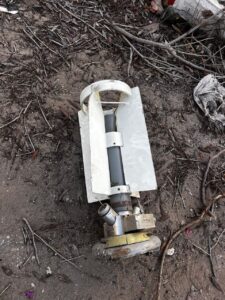
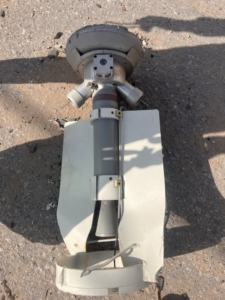
This image shows one of the two improvised air-delivered munitions (IADMs) containing a chemical payload used in an attack by the Syrian Arab Air Force on 7 April 2018 in Douma, Syria. This image shows how the IADM comprises a cradle surrounding an industrial gas cylinder. These cradles typically incorporate fins, wheels, and lifting lugs. The fins and the wheels of the cradle can be seen in this image (ARES)
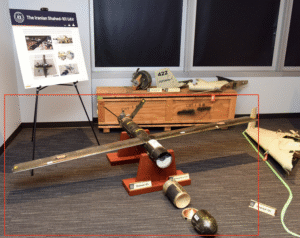
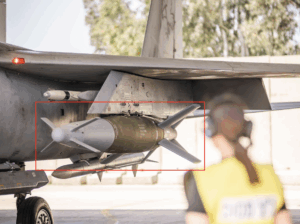
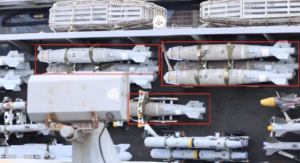
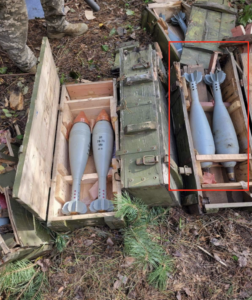
This image shows a variety of small air-delivered munitions that have been developed specifically for deployment via UAV. Some of these appear to be original designs, whilst others have been made by modifying existing munitions. This entry reflects those munitions outlined with the red box, but all of the munitions are generally of similar in size and format, and all have tailfin assemblies intended to orient the munition as it falls, just like more traditional air-delivered bombs. (ARES)
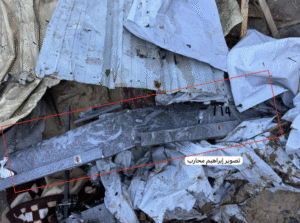
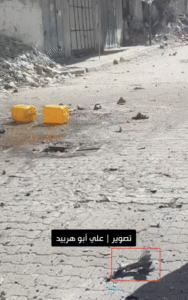
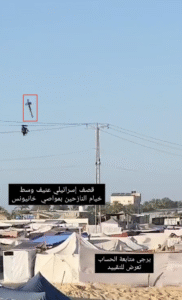
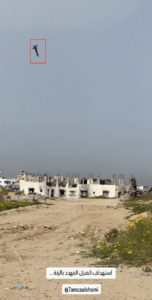
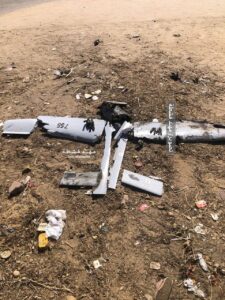
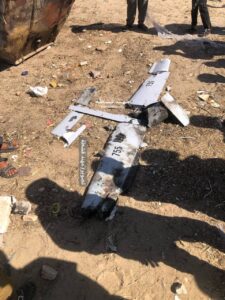
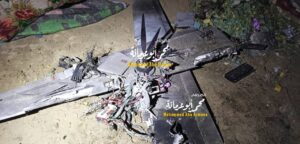
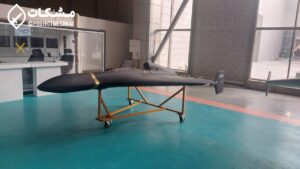
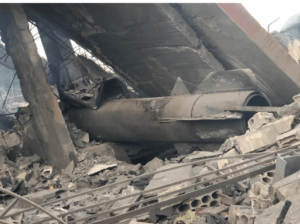
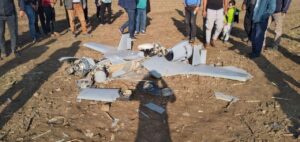
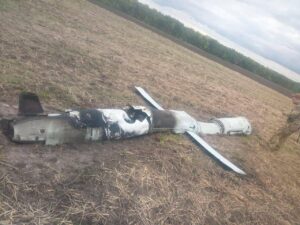
This image shows the remnants of a SkyStriker one-way attack UAV, manufactured by Elbit Systems of Israel. The SkyStriker can be fitted with various warhead options, including dual-purpose warheads weighing 5 or 10 kilograms. While it appears that a reconstruction was attempted with the remnants, the placement of the various components does not accurately represent an intact SkyStriker. (ARES)
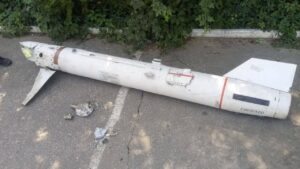
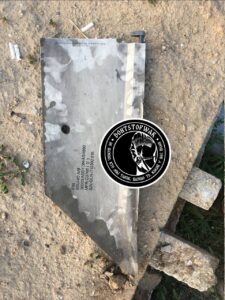
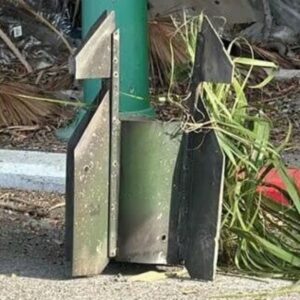
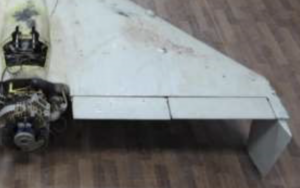
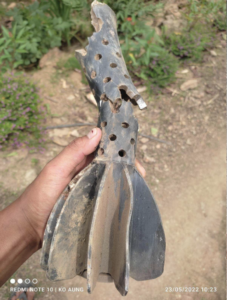
This image shows the rear fin section that is attached to a M-302/Khaibar-1/Fadi series rockets to add guidance capabilities. This rear fin section is installed, along with a forward control section between the warhead and the rocket motor. The guided munition, now classified as a missile, is referred to as a Nasr-1/Nasr-2. A similar, but larger, rear fin section is fitted to Zelzal rockets to convert them to guided munitions. (ARES).
This image shows the rocket motor of a Kheibar Shekan or Fattah-1 medium-range ballistic missile (MRBM). The Fattah-1 was publicly unveiled by Iran in June 2023, with very few images surfacing since that time. Due to the lack of available reference material, differentially identifying the Kheibar Shekan and Fattah-1 is difficult. The missile components displayed at unveilings and public displays are also often different from those used in production models. (ARES).
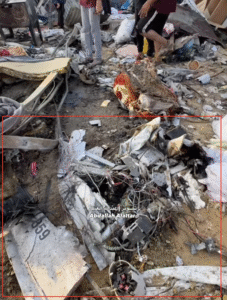
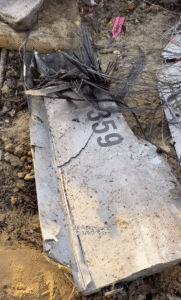
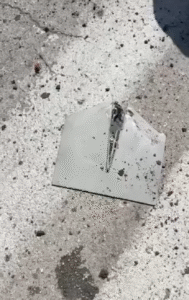
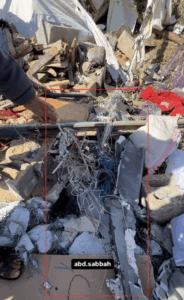
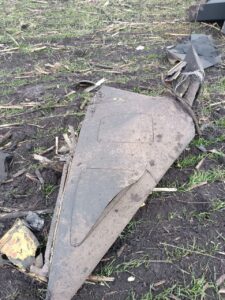
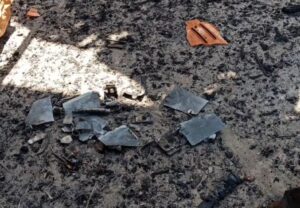
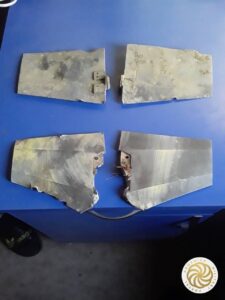
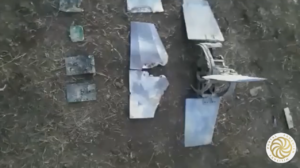
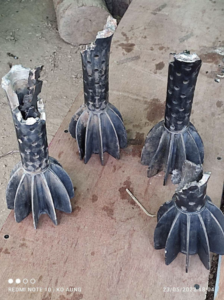
This image shows several remnants of a MAM-L bomb that are typically found after functioning. The actuated fins, as well as the fixed fins, are visible, along with various components of the control section that actuate the fins. The actuated fins attach to the control section, at the rear of the bomb, while the fixed fins attach to the middle of the bomb body. (ARES)
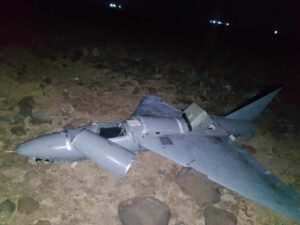
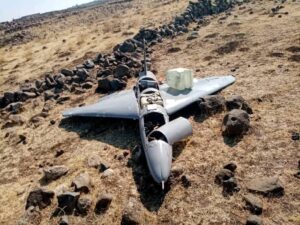
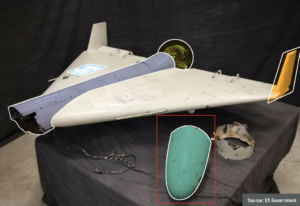
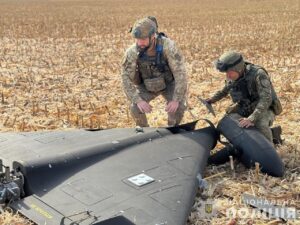
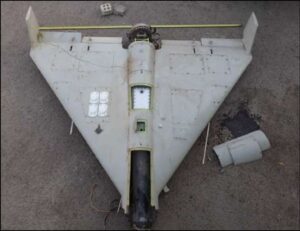
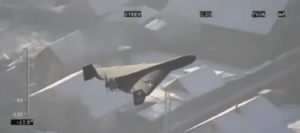
This image shows a relatively intact Shahed-131 one-way-attack (OWA) UAV with various components highlighted, including the GPS antenna array (light blue), fuselage (light purple), engine (yellow), wing stabiliser (orange), and nose cone (cyan, inside the red box). The nose cone attaches to the front of the fuselage and covers the warhead. (ARES)
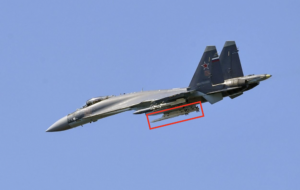
Two R-77 air-to-air missiles (NATO reporting name: AA-12 Adder) are carried in this photograph by a Russian Aerospace Forces Sukhoi Su-35 fighter aircraft. Key markings, including the aircraft’s bort number (a coloured numeral that acts as a unit or base identifier), have been digitally obscured. (ARES)
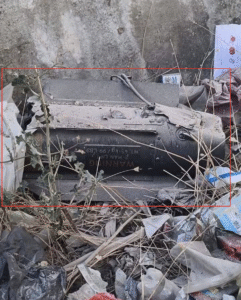
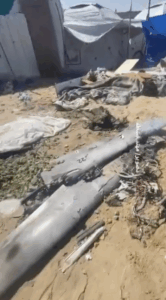
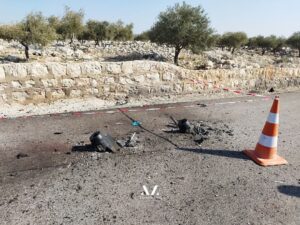
This image shows the functioned rocket motor of an Israeli Carpet rocket. The Carpet uses a fuel-air explosive (FAE) warhead which is designed to function mines and improvised explosive devices (IEDs), clearing a target area for the advance of friendly forces. These rockets are fired from the Carpet rocket launcher, which is loaded with up to 20 rockets and can be fitted to a variety of vehicles. (ARES)
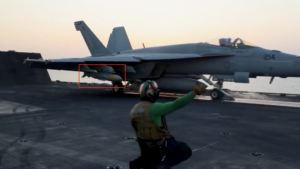
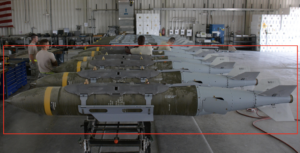
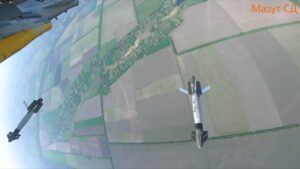
The Armement Air-Sol Modulaire (AASM; ‘Modular Air-to-Ground Armament’) family of French bolt-on guidance kits are fitted to air-delivered bombs of various sizes in a similar fashion to American JDAM kits. In some marketing materials, the acronym HAMMER is used, standing for ‘Highly Agile Modular Munition Extended Range’. This refers, in part, to the rocket boosters fitted to munitions in the family to extend their effective range. (ARES)
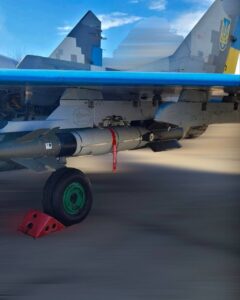
In this photo, a Ukrainian Sukhoi Su-25 ground-attack aircraft from the 299th Tactical Aviation Brigade, with the bort number ‘Blue 28’, is seen carrying an AASM-250 guided air-delivered bomb under its left wing. Available imagery shows that the AASM-250 has also been fitted to Mikoyan MiG-29 fighter aircraft, and can likely be carried by the Sukhoi Su-27 as well. (ARES)
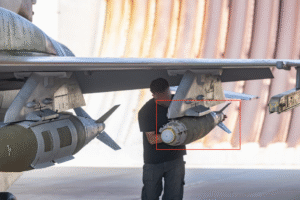
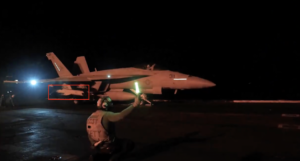
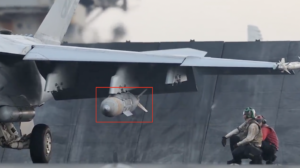
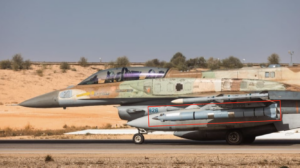
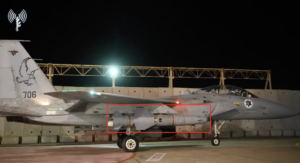
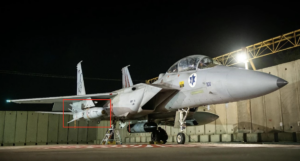
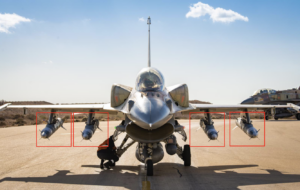
This image shows an Israeli Air Force F-16 carrying four Rampage air-to-ground missiles. The Rampage is a 580 kg (1,278 lb) missile with GPS and INS guidance. It carries a multi-purpose warhead that is designed for engaging a range of targets in the open as well as offering some degree of penetration. (ARES)
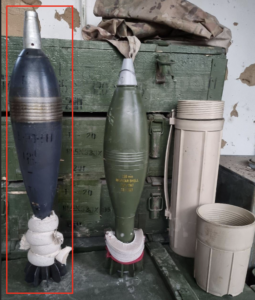
This image shows a North Korean 120 mm high explosive (HE) mortar projectile next to an Iranian 120 mm HE mortar projectile. Despite both being the same calibre, the overall shapes and dimensions of the two projectiles are noticeably different. Factors such as payload weight and range can be affected significantly by projectile shape. (ARES)
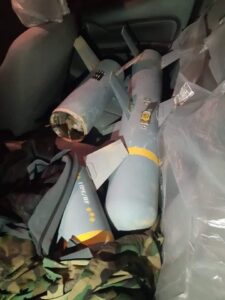
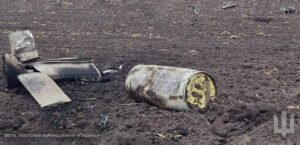
The ZAB-250-200 (ЗАБ-250-200) unguided air-delivered bomb is loaded with 48 kg of a napalm-like thickened incendiary mixture, 8 kg of cotton scraps soaked in kerosene (paraffin), and 4 kg of pyrotechnic composition to aid with ignition. (ARES)