





101–200 of 698
Current Filter
Air-to-Surface
Munitions that are delivered from above the surface of the earth, typically from an aerial vehicle, and designed to strike surface-based targets — whether on land or at sea.





Analyst Note
27 April 2026
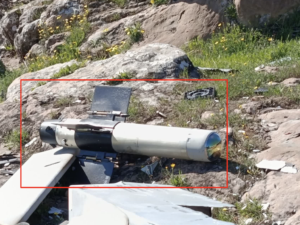
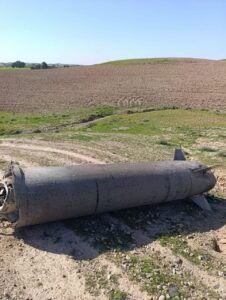
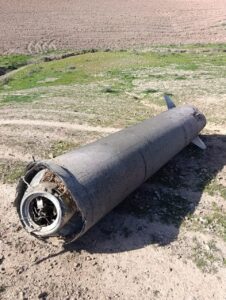
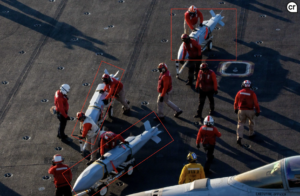
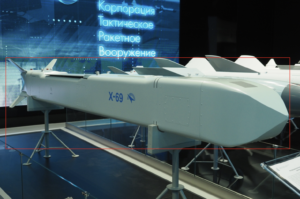
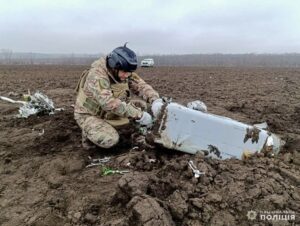
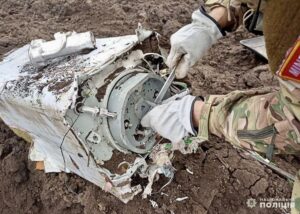
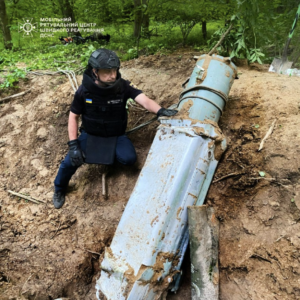
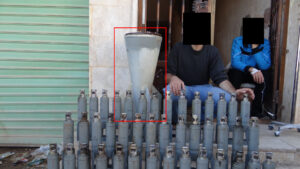
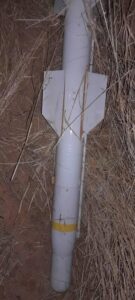
Shown is the Russian Kh-69 (marked in Cyrillic: “Х-69”) cruise missile which was debuted at a Russian arms show in August 2022, and entered into active military service the following year. The Kh-69 was reportedly first used in combat in February 2024, engaging Ukrainian targets. The more compact design when compared with previous Russian missiles results in a smaller radar signature, which is further reduced by the trapezoidal form factor. The Kh-69 is classed by the Russian military as a ‘stealth cruise missile’ and carries either a penetrator or cluster (submunitions) warhead. (ARES)








Analyst Note
31 December 2025
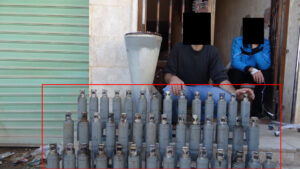
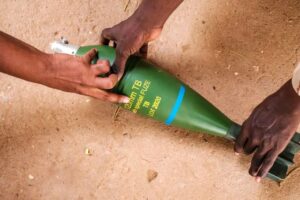
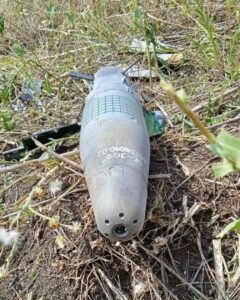
This munition, despite being adapated from the design of a 120 mm mortar projectile and closely resembling such, is actually a small air-delivered bomb intended to be dropped by UAV. The manufacturer clearly states that the munition should not be fired from a mortar. Additional data from the manufacturer states that it uses a UT M18 “special impact fuze”. (ARES)
Analyst Note
31 December 2025
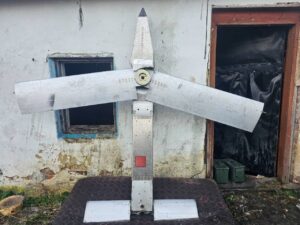
The UMPK guidance package is a ‘bolt-on’ kit that can be fitted to unguided air-delivered bombs to convert them to guided munitions. The UMPK kit also greatly extends the range of the munition to which it is fitted, allowing aircraft to strike from beyond the range of many air-defence systems. Currently only Russia manufacturers and uses these kits. (ARES)
Analyst Note
31 December 2025
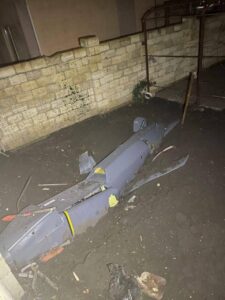
This image shows a russian air-delivered bomb fitted with a UMPK guidance kit. Not enough of the bomb is visible to positively identify the model, but it is most likely an OFAB-250-270 based on what can be seen of the tail section. (ARES)
Analyst Note
31 December 2025
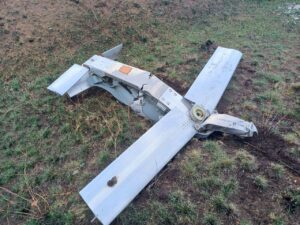
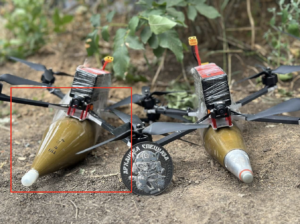
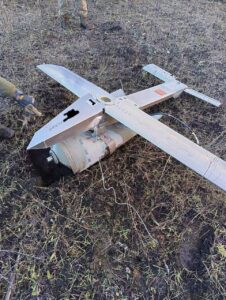
The munition indicated is a one-way-attack (OWA) UAV fitted with a PG-7-series high explosive anti-tank (HEAT) warhead. Not enough of the warhead is visible to provide a positive ID on which model of PG-7-series projectile it was harvested from. (ARES)
Analyst Note
9 January 2026
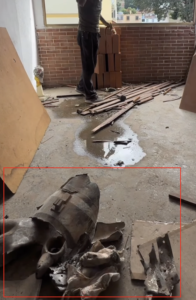
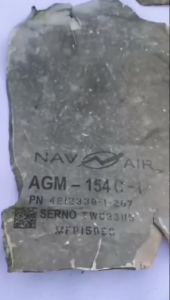
The AGM-154 Joint Standoff Weapon (JSOW) is a guided air-delivered ‘glide bomb’ that allows for long-range strikes using an unpowered munition. The AGM-154C and AGM-154C-1 variants (a remnant of the latter pictured here) carry a Bomb Royal Ordnance Augmented Charge (BROACH) multi-stage warhead which uses a WDU-44 shaped-charge warhead as its first stage, to help penetrate hardened targets, whilst the WDU-45 second stage comprises a conventional high explosive penetrator warhead (also called a ‘follow-through’ warhead). The AGM-154C-1 is described by the U.S. Navy as their “first air-to-ground Network-Enabled Weapon (NEW) capable of attacking stationary land and moving maritime targets. It includes GPS/INS guidance, terminal IR seeker and a Link 16 weapon data link. Integration of the Link-16 weapon data link and updated seeker software algorithms provide a capability against at-sea moving/relocatable targets.” (ARES)

Analyst Note
28 November 2025
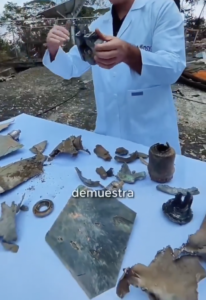
Markings on the forward section of this small, air-delivered bomb suggest that the designation is ‘BK-3OF’ (“БК-3ОФ”). The physical features of the munition suggest that it is laser-guided and likely carries a high explosive fragmentation (HE-FRAG) payload. This image shows the only known example, which was allegedly captured by Russian forces in conjunction with a Ukrainian UAV. (ARES)
Analyst Note
9 January 2026
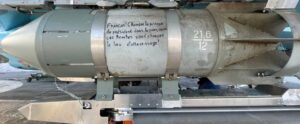
This Russian air-delivered cluster bomb is marked with a threatening message directed at the French people: «Français! Changer la politique du président dans le pays, sinon ces bombes vont changer le lieu d'atterrissage!» (“French people! Change the president’s policy in the country, otherwise these bombs will change their landing site!”). (ARES)

Analyst Note
28 November 2025
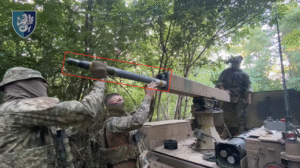
This image shows a Hydra-70 rocket fitted with an Advanced Precision Kill Weapon System (APKWS) guidance kit, converting it into a guided missile. In this case, the missile features an M151 high explosive (HE) warhead fitted with either an M427 or M423 point-detonating (PD) fuze. The rocket motor model cannot be determined from this source alone, but it is most likely to be a MK 66-series motor. The launcher appears to be a LAND-LGR4 model produced by Arnold Defense. (ARES)
Analyst Note
8 December 2025
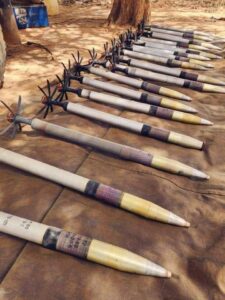
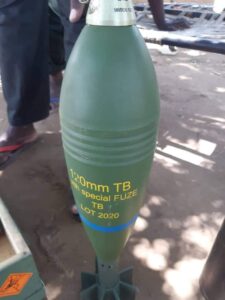
This image shows a ‘120mm TB’ air-delivered bomb that has been adapted from a 120 mm mortar projectile. It is claimed by the manufacturer that this thermobaric munition offers improved fragmentation and blast effects when compared with standard (high explosive) 120 mm mortar projectiles. The “with special FUZE” marking refers to the use of the UT M18 impact fuze. Note that this munition cannot be fired from a mortar, despite the munition body showing features consistent with this use (e.g., gas-check bands). Instead of a standard mortar projectile tailboom which would contain an ignition cartridge and be perforated by flash holes, this munition is fitted with a simplified, plastic tailfin assembly that is designed to stabilise the munition as it falls after being released by a UAV. (ARES)
Analyst Note
28 November 2025
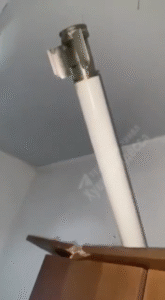
This image shows the rear section of a Hydra-70 rocket. The Hydra-70 uses the MK 66 series of rocket motors, visible here, but can be fitted with at least 11 different warheads. They can also be fitted with the Advanced Precision Kill Weapon System (APKWS) ‘bolt-on’ guidance kit, converting an unguided rocket into a guided missile. From the available imagery, it is not clear with which warhead or guidance section this munition may have been fitted. (ARES)
Analyst Note
28 November 2025
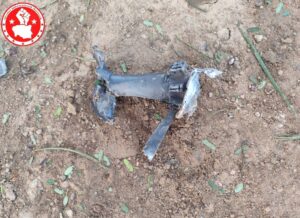
This image shows the venturi and tailfin assembly from a 57 mm S-5 series rocket. The S-5 series of rockets are commonly used around the world in a variety of roles, including air-to-surface and surface-to-surface. Unfortunately, from this image alone the specific model and country of origin cannot be determined. (ARES)

Analyst Note
29 July 2025
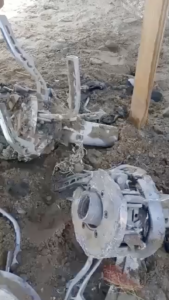
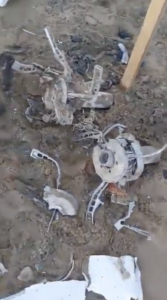
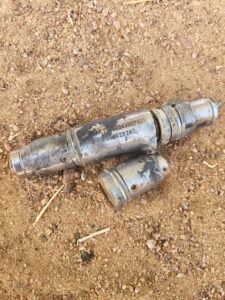
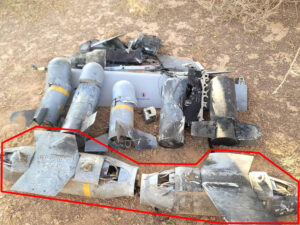
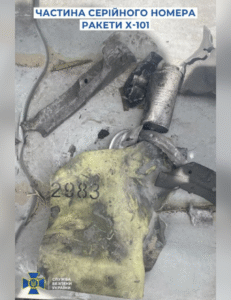
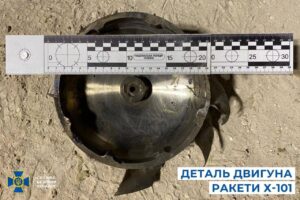
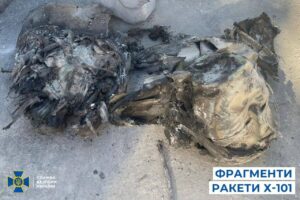
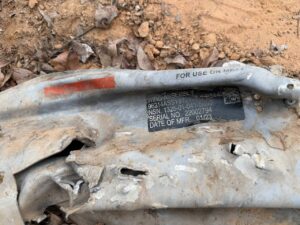
This image shows remnants of a Russian Kh-101 air-launched cruise missile. The remnant on the right is the rearmost tail section of the missile. (ARES)
Analyst Note
15 September 2025
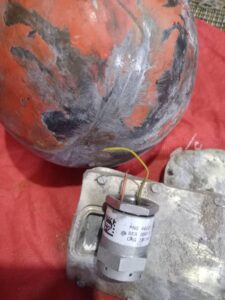
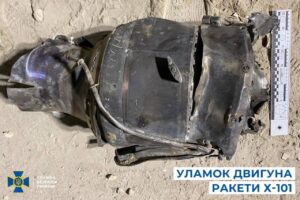
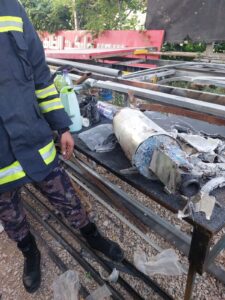
This image shows a remnant of the TRDD-50A(M) (ТРДД-50А(M)) turbojet engine, which powers Kh-101 and Kh-59M missiles. Other models of Russian cruise missiles are known to use other variants of the TRDD-50. (ARES)

Analyst Note
15 September 2025
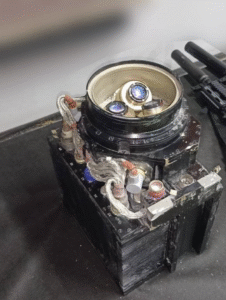
This image shows the three lenses that form the new version of the Kh-101 Digital Scene Matching Area Correlator (DSMAC) system. (The older version only had a single lens.) DSMAC systems take digital images of the ground as the missile passes overhead, and then compare those images to pre-captured images stored in the onboard memory. The DSMAC corrects the flight path as needed based on differences between the two sets of images. (ARES)

Analyst Note
15 September 2025
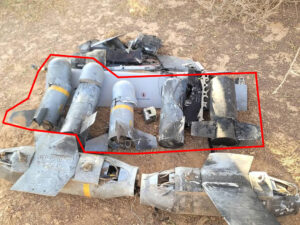
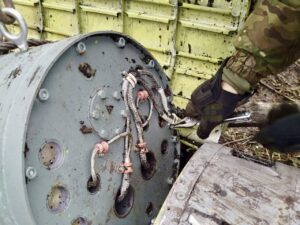
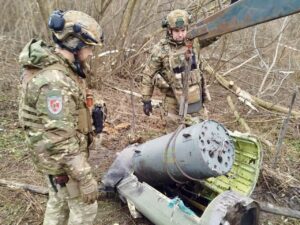
This image shows the second warhead present in some variants of the Kh-101 cruise missile. The inclusion of this additional warhead requires a smaller fuel tank in the missile, offering increased explosive weight in exchange for a reduced maximum range. (ARES)