




501–600 of 1,037
Current Filter
Unfunctioned Munition
The munition has not operated and the intended effect has not occurred.
Analyst Note
11 May 2025
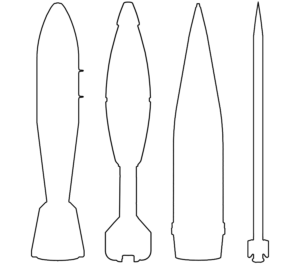
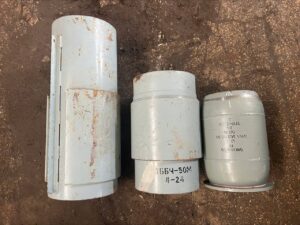
This image shows three different warheads developed by Russia for the Shahed-136/Geran-2 one-way attack (OWA) unmanned aerial vehicle (UAV), each of which differ from the original warhead designed by Iran for the Shahed-136. Left: A thermobaric explosive warhead; Middle: TBBCh-50M, a thermobaric explosive warhead; Right: OFZBCh-50, a high explosive warhead with an incendiary effect. Each of these warheads is also fitted with a fragmentation liner to increase the fragmentation effect generated when the warhead detonates. Some of the fragmentation liners may contain zirconium, a metal which is ignited when the warhead detonates, providing an additional incendiary effect. (ARES)


Analyst Note
30 April 2025
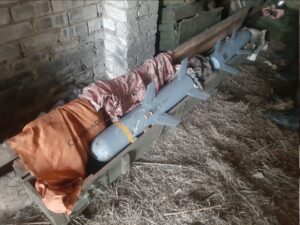
This image shows a Mikholit glide bomb, with its warhead removed (green cylinder on the left side of the box). The fins that spring outward when deploye have been taped down. This Mikholit was reportedly recovered by the Israeli Defense Forces (IDF) from Hamas, who had captured the bomb after it failed to function when originally deployed by the IDF. (ARES)

Analyst Note
30 April 2025
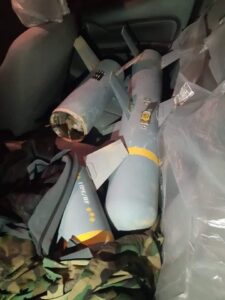
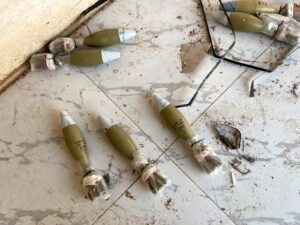
This image shows two Mikholit air-delivered bombs (‘glide bombs’), and four Mikholit warheads. There are at least two different variants of warheads available for the Mikholit glide bomb. The green cylinder on the left is a blast (high explosive) warhead, whilst the other three warheads are shaped charge warheads which incorporate additional fragmentation. Blast warheads of this type have also been seen with red markings, while the shaped charge warheads have been seen with yellow markings. (ARES)
Analyst Note
26 April 2025
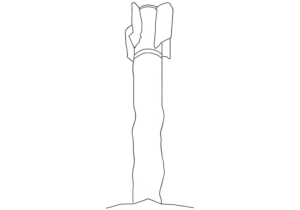
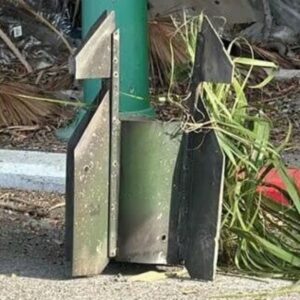
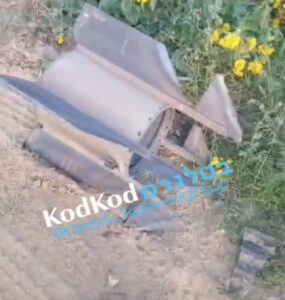
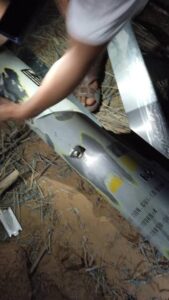
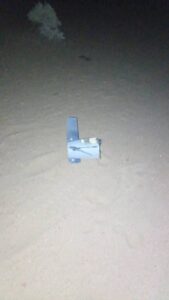
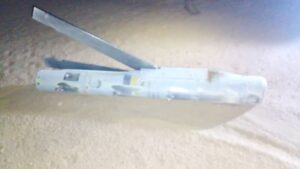
This image shows the rear fin section that is attached to a M-302/Khaibar-1/Fadi series rockets to add guidance capabilities. This rear fin section is installed, along with a forward control section between the warhead and the rocket motor. The guided munition, now classified as a missile, is referred to as a Nasr-1/Nasr-2. A similar, but larger, rear fin section is fitted to Zelzal rockets to convert them to guided munitions. (ARES).
Analyst Note
18 July 2025
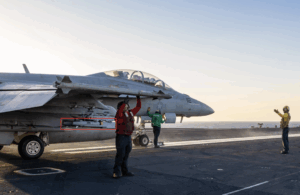
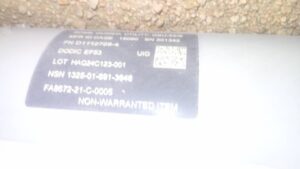
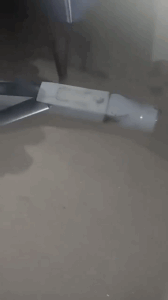
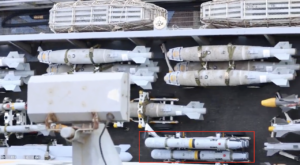
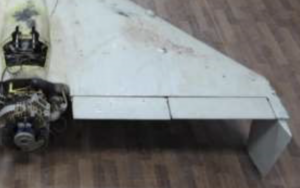
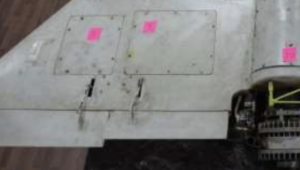
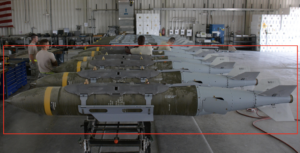
This image shows several GBU-53/B bombs photographed from above while on a munitions transport cart. GBU-53/B bombs are transported and loaded onto the aircraft with the wing assembly on the bottom. When the GBU-53/B is released from the aircraft, the bomb rotates, with the wing assembly side orienting as the top as the bomb glides to its target. (ARES)
Analyst Note
30 April 2025
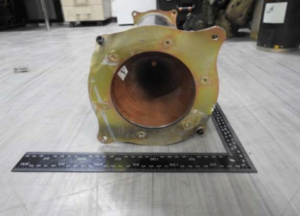
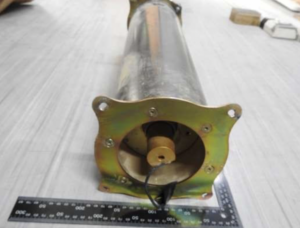
This image shows the copper cone of the shaped charge located at the front of the warhead fitted to a Shahed-131. The Ukrainian armed forces have recorded that the cone measures 111 mm in diameter and 162 mm in depth. The warhead is lined with cubic pre-formed fragments of 7 mm in diameter. The explosive content of the warhead is estimated to be between 10 and 15 kg. (ARES)
Analyst Note
30 April 2025
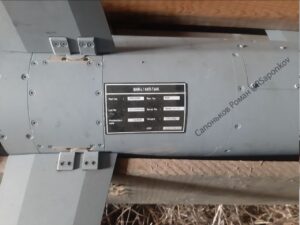
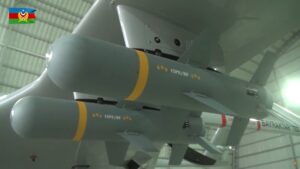
This image shows two MAM-L guided air-delivered bombs affixed to the wing of a Bayraktar TB2 drone. The MAM-L and TB2 are both produced in Türkiye by Roketsan and Baykar respectively. The MAM-L can have one of three different warheads: blast fragmentation, anti-tank, or thermobaric. The warhead section of each MAM-L in this image has “YIPE/BF” visible. ‘YIPE’ is the abbreviation of the warhead type in Turkish: Yüksek Infilaklı Parçacık Etkili (‘high explosive fragmentation’, in English). The ‘BF’ also indicates that these MAM-L munitions are of the blast-fragmentation variant. The warhead of a MAM-L cannot be determined from an external assessment without viewing markings such as these (or a clear view of the data plate, which can be seen on the aft portion of the MAM-L). (ARES)
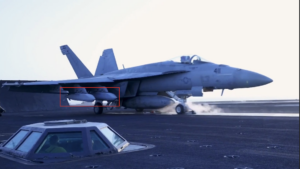
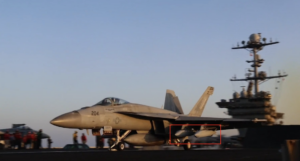
Analyst Note
19 March 2025
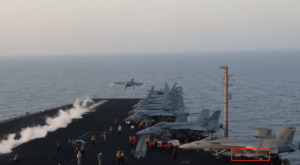
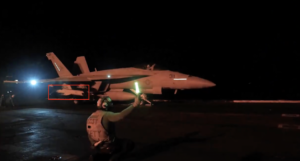
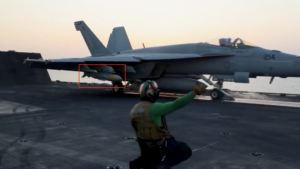
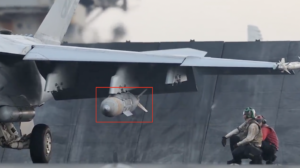
This image shows an American F/A-18 fighter aircraft armed with two AGM-154 Joint Standoff Weapon (JSOW) air-delivered bombs taking off to conduct strikes against Houthi forces in Yemen. The F/A-18 likely has two more AGM-154-series munitions carried on the opposite side of the aircraft, for a total of four bombs. The JSOW has multiple variants which are fitted with different warheads, including a submunition payload (AGM-154A and AGM-154B models), BLU-111 500-pound bomb (AGM-154A-1), and a Bomb Royal Ordnance Augmented Charge (BROACH) multi-stage penetrator warhead (AGM-154C or AGM-154C-1). All variants are externally identical without markings, with the exception that the AGM-154C and C-1 have a small reflective window on the bottom of the nose for the terminal infrared (IR) seeker. The munitions in the image are most likely AGM-154A-1 or AGM-154C-series bombs, due to the lack of reported submunitions following the strikes. (ARES)
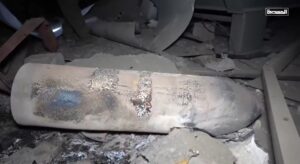
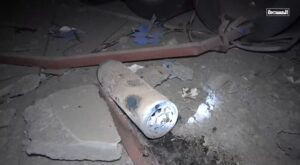
Analyst Note
19 March 2025
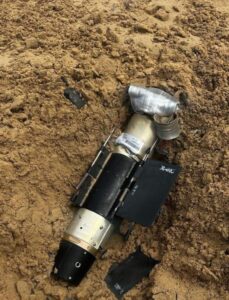
This image shows an unexploded WDU-45/B, the second stage or penetrator warhead (also called a ‘follow-through’ warhead), of the Bomb Royal Ordnance Augmented Charge (BROACH) multi-stage warhead system used in the AGM-154C variant of the Joint Standoff Weapon (JSOW) air-delivered bomb. The first stage is a shaped-charge warhead designed help the second stage penetrate hardened targets before detonating. The Shadow/SCALP-EG missile also uses a multi-stage BROACH system, but with larger warheads. (ARES)
Analyst Note
9 January 2026
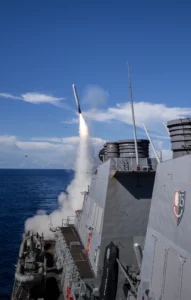
This image shows an RGM-109-series Tomahawk Land Attack Missile (TLAM) being launched from the USS Curtis Wilbur (DDG 54), an Arleigh Burke-class guided missile destroyer. The RGM-/UGM-109 TLAM series are surface-to-surface cruise missiles fired from various platforms. The ‘R’ and ‘U’ in RGM and UGM, respectively, denote the intended launch platform, with ‘R’ denoting surface platforms, such as ships, and ‘U’ denoting subsurface platforms, such as submarines. (ARES)
Analyst Note
6 March 2025
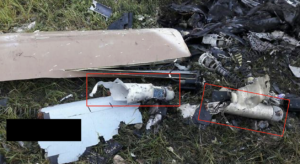
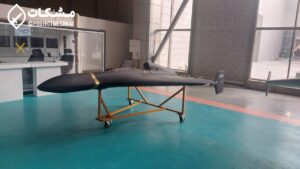
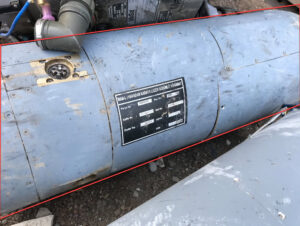
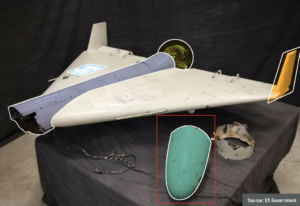
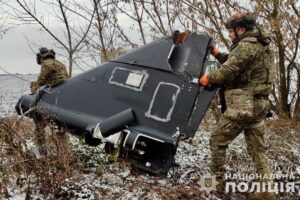
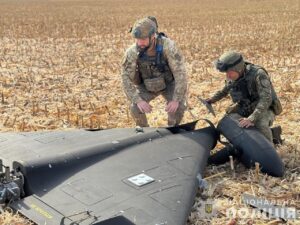
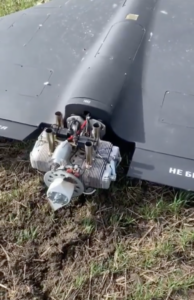
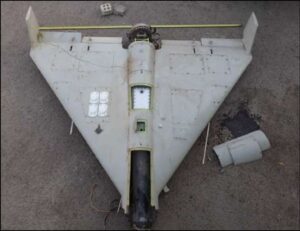
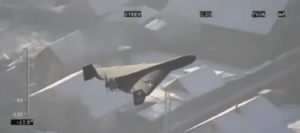
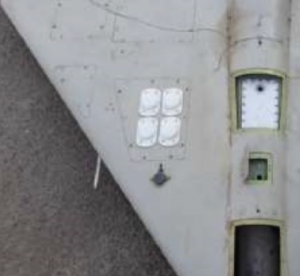
This image shows a relatively intact Shahed-131 one-way-attack (OWA) UAV with various components highlighted, including the GPS antenna array (light blue), fuselage (light purple), engine (yellow), wing stabiliser (orange), and nose cone (cyan, inside the red box). The nose cone attaches to the front of the fuselage and covers the warhead. (ARES)

Analyst Note
9 January 2025
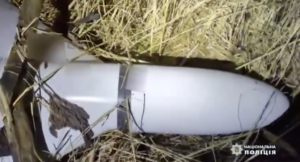
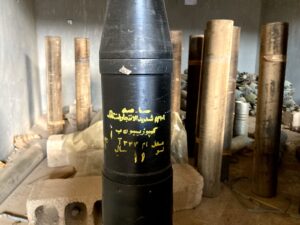
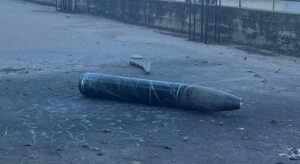
This image shows an Iranian M344 106 mm recoilless gun projectile. The M344 is a high explosive anti-tank (HEAT) munition, containing a shaped charge that is designed to penetrate armour. (ARES)

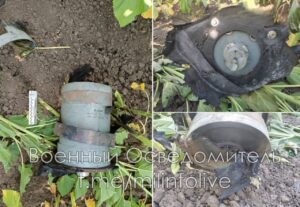
Analyst Note
24 February 2025
This image shows the BSF-50, one of several warheads developed by Russia for the Shahed-136/Geran-2 to replace the original Shahed-136 warhead designed by Iran. The BSF-50 is a high explosive warhead with a fragmentation effect. (ARES)
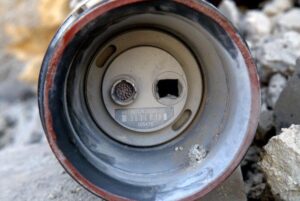
Analyst Note
24 February 2025
This image shows the fuzewell in the base of the warhead of a GBU-39 air-delivered bomb. The innermost cylinder is the electronic fuze; this is held in place by the closure ring. (ARES)
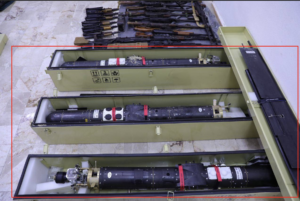
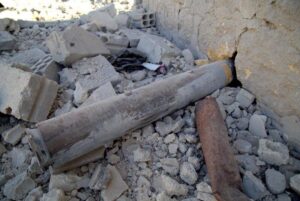


Analyst Note
29 January 2025
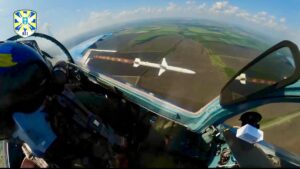
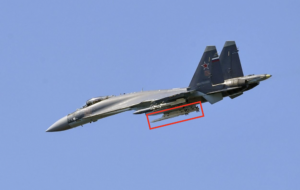
Two R-77 air-to-air missiles (NATO reporting name: AA-12 Adder) are carried in this photograph by a Russian Aerospace Forces Sukhoi Su-35 fighter aircraft. Key markings, including the aircraft’s bort number (a coloured numeral that acts as a unit or base identifier), have been digitally obscured. (ARES)
Analyst Note
30 January 2025
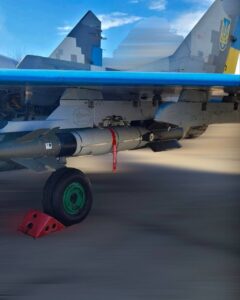
The Armement Air-Sol Modulaire (AASM; ‘Modular Air-to-Ground Armament’) family of French bolt-on guidance kits are fitted to air-delivered bombs of various sizes in a similar fashion to American JDAM kits. In some marketing materials, the acronym HAMMER is used, standing for ‘Highly Agile Modular Munition Extended Range’. This refers, in part, to the rocket boosters fitted to munitions in the family to extend their effective range. (ARES)
Analyst Note
30 January 2025
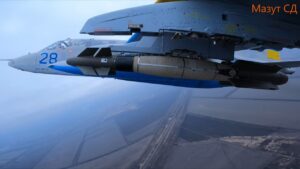
In this photo, a Ukrainian Sukhoi Su-25 ground-attack aircraft from the 299th Tactical Aviation Brigade, with the bort number ‘Blue 28’, is seen carrying an AASM-250 guided air-delivered bomb under its left wing. Available imagery shows that the AASM-250 has also been fitted to Mikoyan MiG-29 fighter aircraft, and can likely be carried by the Sukhoi Su-27 as well. (ARES)
Analyst Note
16 January 2025
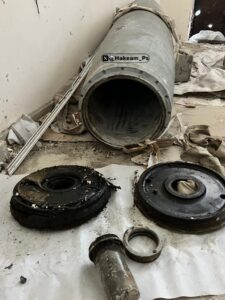
This image shows a MK 84 2,000-pound bomb that has had its fuze and baseplate removed in order to access the explosive filler. The fuze, fuze retaining ring, and baseplate can be seen on the white sheet.
The explosive material used to fill the bomb has been removed, possibly to be repurposed in improvised explosive devices or craft-produced munitions. Unexploded ordnance is often ‘harvested’ for these purposes. (ARES)