Key features defining the operation mechanisms of a projectile
Mechanical Feature (10)
Whether a munition is guided or unguided
Guidance (2)
Where the munition is launched from and what it targets
Domain (7)
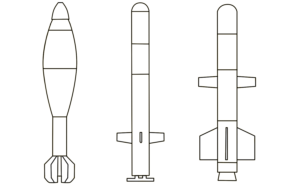
The type of fins visible on the munition
Fins Characteristic (6)
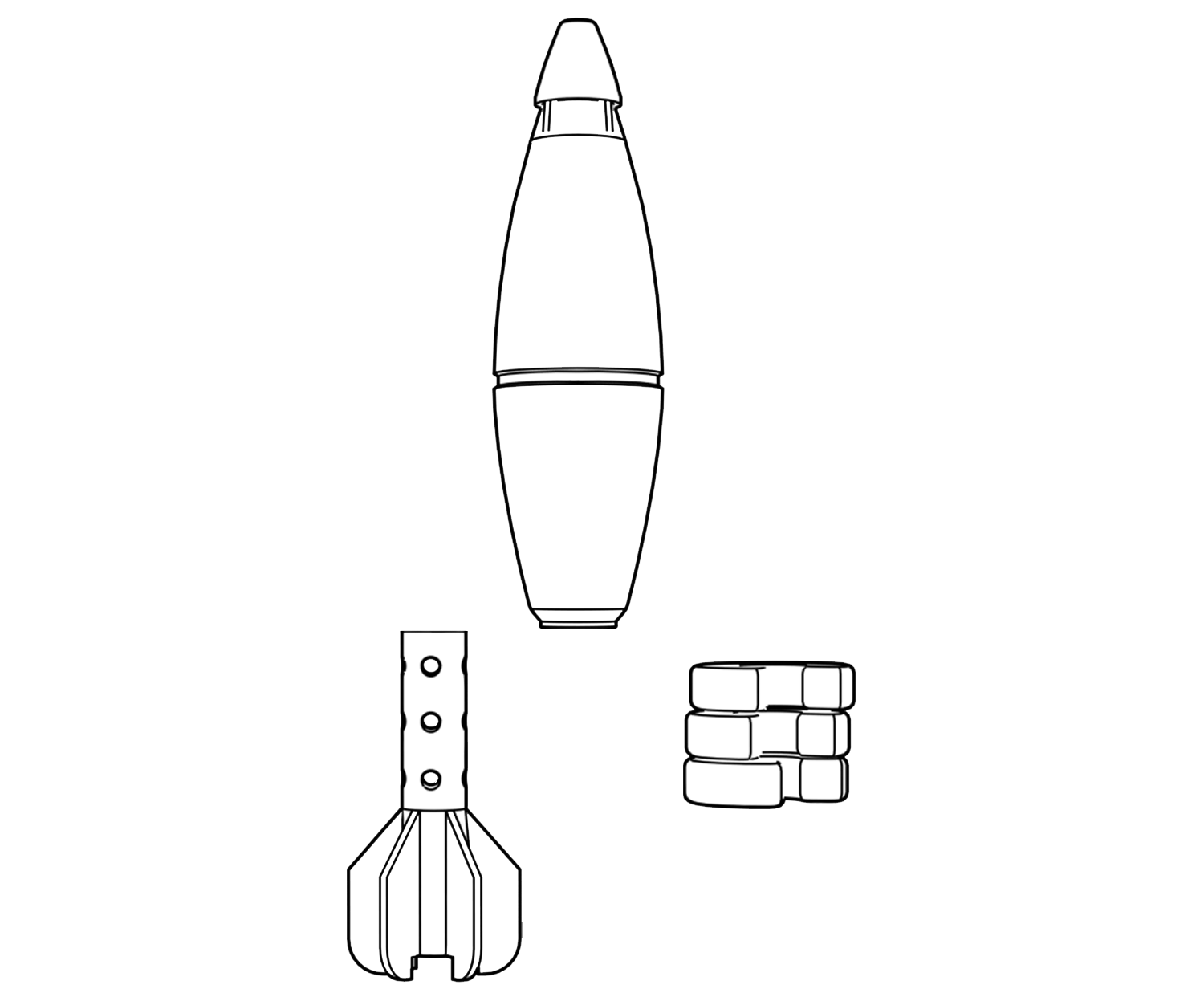
The nominal diameter of a projectile. For most modern munitions, this is expressed in millimetres (e.g. 82 mm mortar projectile), but older artillery gun projectiles may be described in inches.
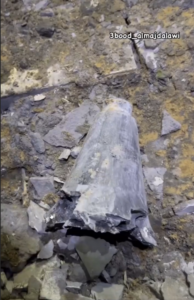
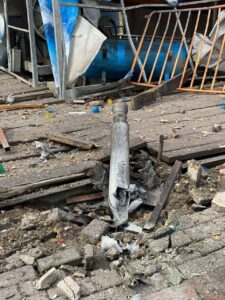
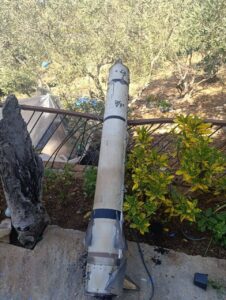
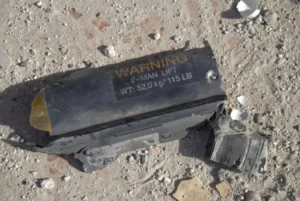
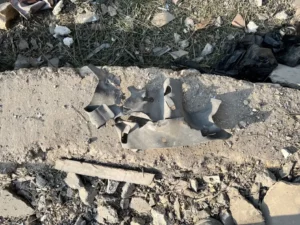
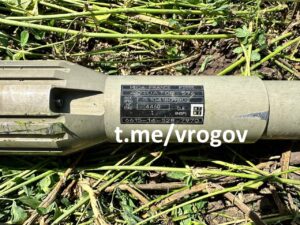
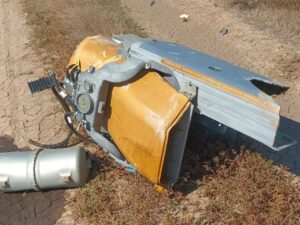
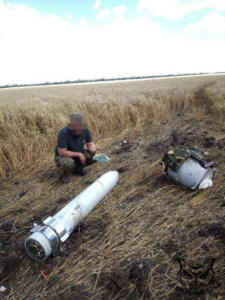
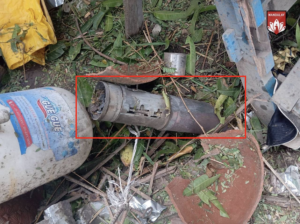
Contextual images of the damage caused by this munition indicate the remnant pictured is from the AGM-114R9X variant of the Hellfire missile, a kinetic munition which does not carry an explosive warhead. This remnant cannot be differentiated from either other AGM-114 or the AGM-179 JAGM variants based off this image alone. (ARES)
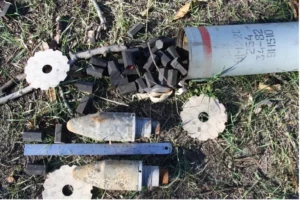
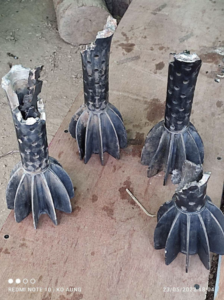
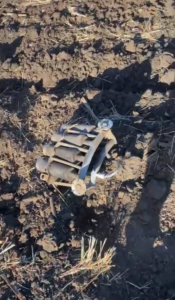
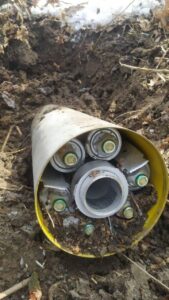
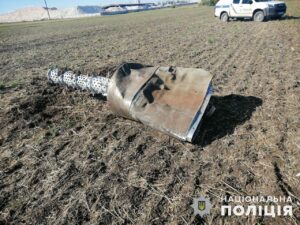
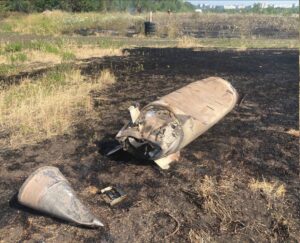
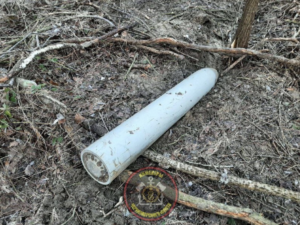
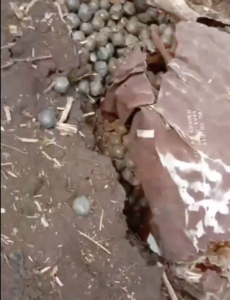
This image shows a 9M22S rocket with some of its unfunctioned payload of 180 ML-5 incendiary elements. Each ML-5 is a hexagonal prism formed from a hollow shell of magnesium that is filled with an incendiary composition. These elements are ignited by the ejection charge of the rocket’s warhead upon functioning. Two fuzes are also visible at the bottom of the image, immediately above and below the ruler. (ARES)
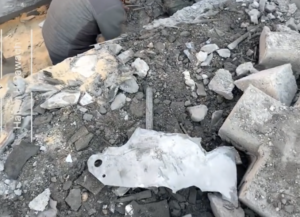
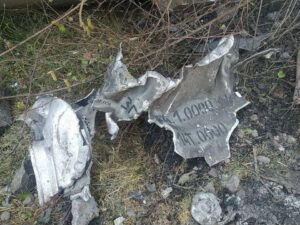
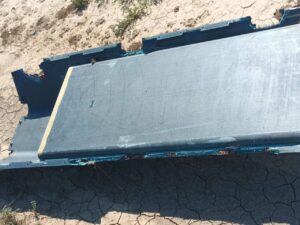
This image shows a wing fragment from a SPICE-1000 bomb guidance kit. While there are no remnants of the bomb body visible, it can be determined that a MK 83-series 1,000-pound bomb or similar was used, as MK-83 series bombs are paired with the SPICE-1000 bomb guidance kit to form a complete munition. (ARES)
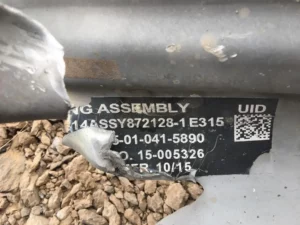
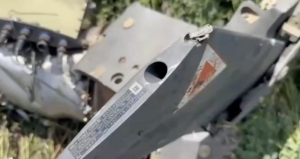
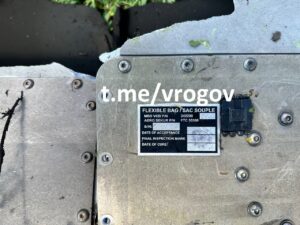
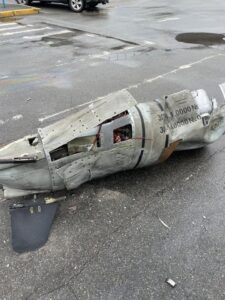
This image shows a fragment of the wing assembly of a Paveway bomb guidance kit. The data plate, though damaged, provides additional information about the munition. A partial Commercial and Government Entity code (CAGE; “ …14”), manufacturing part number (MFG SKU; “872127-1”), National Stock Number (NSN; “...5-01-141-5890”), serial number (Serial NO; 15-005326), and date of manufacture (“…MFR. 10/15”) are visible. This data can be used to look-up the component and determine that this specific fragment is from a Paveway II guidance kit intended for use with a MK 82-series 500-pound-class air-delivered bomb. This bomb and guidance kit combination is referred to as the GBU-12. The CAGE code, although partial, is enough to determine that this specific kit was produced by Raytheon, rather than the other known manufacturer of the Paveway kits, Lockheed Martin. (ARES)
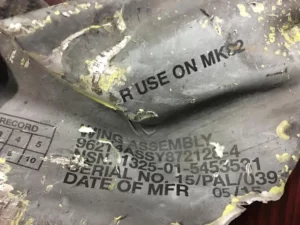
This image shows a fragment of the wing assembly of a Paveway kit, compatible with a MK 82 500-pound-class air-delivered bomb. (“..R USE ON MK82”). The National Stock Number (NSN; “1325-01-5453531”) indicates that this is a Paveway IV bomb guidance kit. There are variants of Paveway guidance kits compatible with all MK 80-series bombs, as well as other bombs such as the 5,000-pound-class BLU-113 penetrator. Paveway bomb guidance kits use laser guidance, and are more precise than JDAM guidance kits. Some variants of the Paveway kit, such as the ‘Enhanced’ series feature GPS and INS guidance in addition to laser guidance. (ARES)
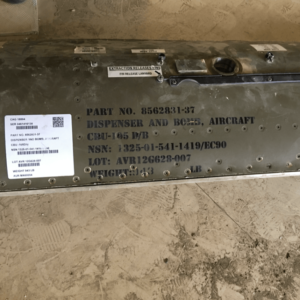
This image shows part of the SUU-66 dispenser (sometimes called a ‘shell’) that forms part of a CBU-105 D/B cluster bomb unit. In U.S. service, a ‘cluster bomb unit’ designation includes both the dispenser or shell, as well as the payload.
The CBU-105 series of cluster munitions consists of CBU-97-series munitions that are modified with a WCMD (Wind Corrected Munitions Dispenser) guidance kit. Both CBU-97 and CBU-105 series munitions are made-up of an SUU-66 dispenser filled with 10 BLU-108 submunitions. Each BLU-108 submunition contains 4 ‘skeet’ warheads that are ejected mid-air and independently seek out targets using an infrared sensor. A single skeet weighs 7.5 lb (3.4 kg) and contains a copper explosively formed penetrator (EFP) for armour penetration that is surrounded by a fragmentation ring offering some anti-personnel effect. (ARES)
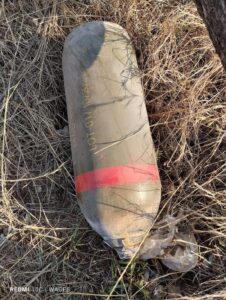
The ZAB-250-200 (ЗАБ-250-200) unguided air-delivered bomb is loaded with 48 kg of a napalm-like thickened incendiary mixture, 8 kg of cotton scraps soaked in kerosene (paraffin), and 4 kg of pyrotechnic composition to aid with ignition. (ARES)
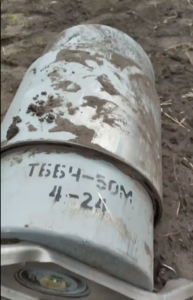
This image shows one of several possible warhead variants that can be carried by the Shahed-136/Geran-2 one-way attack (OWA) UAV. The Shahed-136/Geran-2 (and the smaller Shahed-131/Geran-1) has been documented carrying shaped-charge warheads, penetrator warheads, and multi-function warheads. Due to the various warheads that can be carried by a Shahed/Geran drone, the functional use cannot be determined without the warhead being visible. In this case, the munition was fitted with a TBBCh-50M warhead that contains a thermobaric explosive composition with an additional fragmentation effect. (ARES)
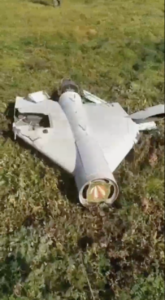
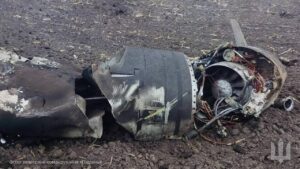
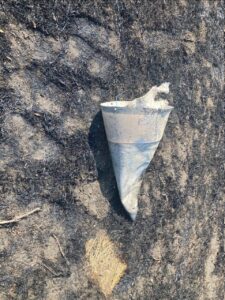
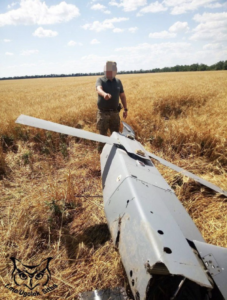
Shahed-131/Geran-1 and Shahed-136/Geran-2 one-way-attack (OWA) UAVs can be fitted with on of a variety of warheads with different functional uses. The specific type carried by each UAV cannot be determined unless the munition has been damaged in such a way as to reveal the warhead, such as in this case. This image shows the cone of the shaped charge, indicating that this Shahed-1/Geran-1 carries a warhead with a penetrating or anti-armour effect. This warhead has been documented with 18 additional liners for enhanced anti-armour effect, and in some cases has been fitted with fragmentation liners for an enhanced anti-personnel effect. (ARES)
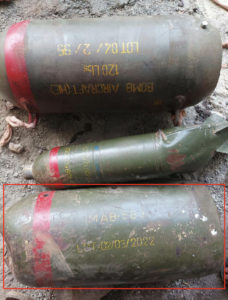
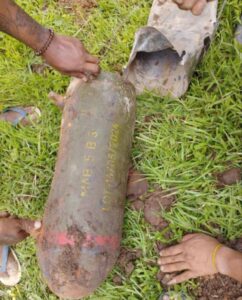
Whilst relatively little is known about Burmese air-delivered bombs from publicly available sources, researchers (including those at ARES and Myanmar Witness) have been collecting evidence based on munitions’ physical features and markings. Combined with information from confidential sources, this has allowed for the tentative identification of several models. (ARES)
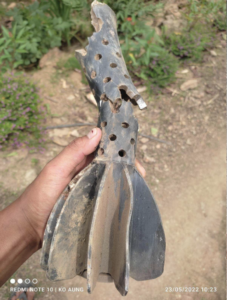
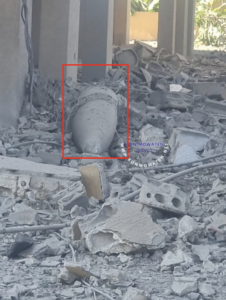
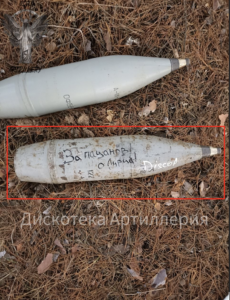
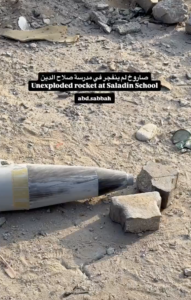
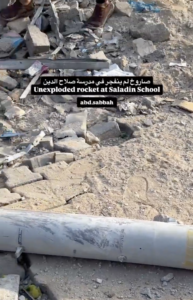
As with several other images in the OSMP database, the text on this image was added by a social media user prior to its inclusion herein. Rather than a “rocket” as described in the annotation, this image actually shows an air-delivered bomb. (ARES)
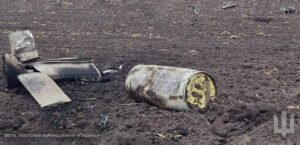
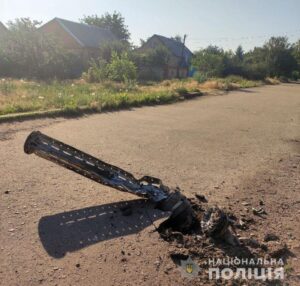
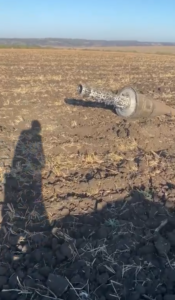
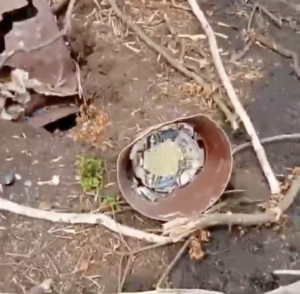
This 9M27K-series surface-to-surface cargo rocket is loaded with either 9N210 or 9N235 high explosive fragmentation (HE-FRAG) submunitions. These models are nearly identical in construction, differing primarily in the nature of the pre-formed fragments they carry. (ARES)
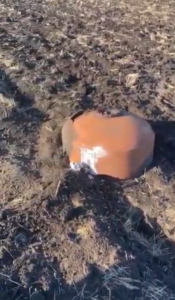
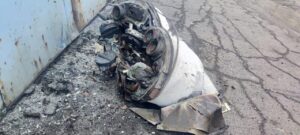
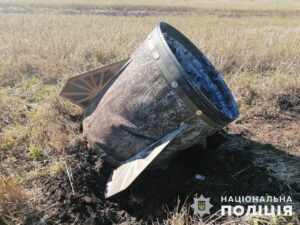
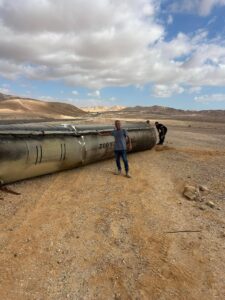
The Stunner surface-to-air missile fired by the David’s Sling air defence system is a two-stage interceptor, meaning that the munition contains two separate rocket motors for launch and propulsion. The first stage, or launch motor, detaches from the munition after a short time, before the second stage, or flight motor, ignites. The second stage motor, visible here, was found relatively intact. (ARES)
This image shows part of the warhead section of an MGM-140 Army Tactical Missile System (ATACMS) series tactical ballistic missile. This is the top of the warhead section, where it connects to the guidance section. A data plate is visible, giving information about the manufacturer (“Lockheed Martin Vought Systems”) and identifying this specific part (“WARHEAD, GUIDED MISSILE. HIGH EXPLOSIVE”. (ARES)
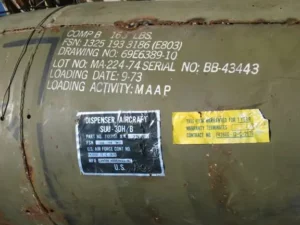
This image shows an SUU-30H/B, an air-delivered dispenser which can be configured to carry different submunition payloads. These can include 217 BLU-61 A/B, 650 BLU-63/B, or 650 BLU-86/B or BLU-86 A/B. The munition can also carry inert payloads. The specific combination of payload and dispenser determines the ‘Cluster Bomb Unit’ (CBU) designation, with SUU-30H/B dispensers being paired with different payloads to form the CBU-58 and CBU-71 series. Contextual information suggests that this dispenser was part of a CBU-58/B cluster munition, but this cannot be established from an assessment of this image alone. (ARES)
This image shows an aerosurface or ‘strake’ from a Joint Direct Attack Munition (JDAM) bomb guidance kit of the type fitted to MK 82-series 500-pound air-delivered bombs. The JDAM kits compatible with MK 82 bombs have aerosurfaces that are affixed near the nose of the bomb—rather than around the widest part of the bomb body, as seen in JDAM kits that are compatible with the larger MK 83 or MK 84 bombs. (ARES)
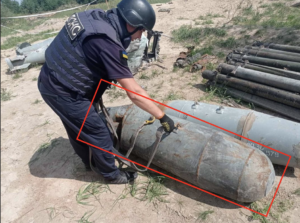
MK 84 unguided air-delivered bombs can be fitted with a variety of tail kits, or with guidance kits which convert them into precision guided munitions (PGMs). When an air-delivered bomb impacts a building or the ground without functioning, the tail or guidance kit may be sheared off. With these separated from the munition—and in the absence of other identifying features, such as a seeker fitted to the nose of the weapon—it becomes very difficult to determine whether the bomb was guided or unguided. (ARES)
The internal components of large, complex munitions often feature markings to aid in assembly, supply chain oversight, and quality assurance. In this case, a data plate marked with the name of the manufacturer (“MBDA FRANCE”) has been affixed to one of the rear control fins (“EQ, VENTRAL, FIN TIP”) of the missile. The NATO Stock Number (NSN) is also visible. (ARES)
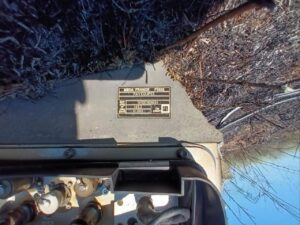
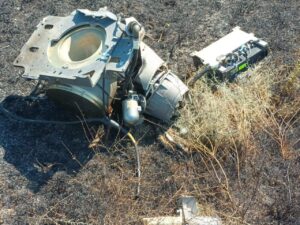
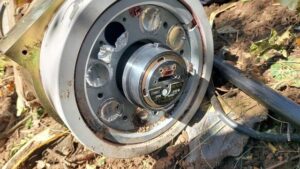
This image shows an actuator from a Storm Shadow-series missile. Actuators are components of guided munitions that are most often used to move control surfaces (e.g., fins and wings), enabling the munition to adjust its course in-flight in response to guidance commands. In this case, the component is fitted with a ‘data plate’ that indicates it was manufactured by MBDA France. (ARES)
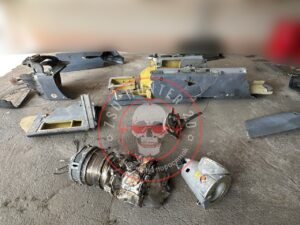
This image shows a Microturbo TRI 60-30 turbojet engine from a Storm Shadow-series air-launched cruise missile. Further remnants of the rear of the missile are also visible, including one of the rear control fins. The Storm Shadow has a range of more than 250 kilometres. (ARES)
This image shows the rear of the second stage of the penetrator warhead (also called a ‘follow-through’ warhead) of the Bomb Royal Ordnance Augmented Charge (BROACH) multi-stage warhead system present in the Storm Shadow/SCALP-EG missile. The cylindrical object in the centre of the warhead (with a data plate marked “THALES”) is the fuze. (ARES)
This image shows the first stage of the Bomb Royal Ordnance Augmented Charge (BROACH) multi-stage warhead used by the Storm Shadow/SCALP-EG missile. The BROACH uses a shaped-charge warhead (seen here) as its first stage, to help penetrate hardened targets, whilst the second stage comprises a conventional high explosive penetrator warhead (also called a ‘follow-through’ warhead) (ARES).
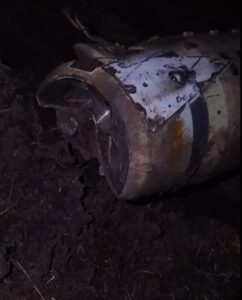
The remnant at left in this image is the second stage, or penetrator warhead, of the Bomb Royal Ordnance Augmented Charge (BROACH) multi-stage warhead as used in the Storm Shadow/SCALP-EG air-launched cruise missile. In this case, it has failed to function as intended. (ARES)
In this image, two GBU-39 guided air-delivered bombs can be seen in their shipping containers, with only the nose and the tail actuation section of the munitions clearly visible. Distinctive packaging such as this can sometimes be used as contextual evidence for the presence of specific munitions. (ARES)
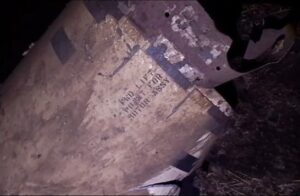
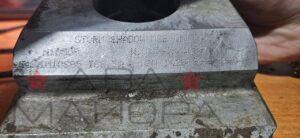
This image shows part of a heavy-duty suspension lug associated with the Storm Shadow air-launched cruise missile. This is made clear from dot-peened markings which include “STORM SHADOW USE ONLY” and identifiers such as a NATO Stock Number (NSN). (ARES)
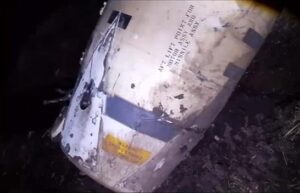
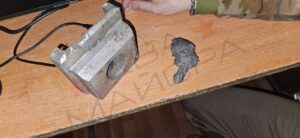
The munitions remnant on the left of this image is part of a suspension lug associated with the Storm Shadow air-launched cruise missile, which is used to attach the munition to an aircraft. This component is of heavy construction, and as such often survives the missile’s functioning intact. This photograph purports to show remnants recovered from a Storm Shadow missile that was fired by Ukrainian forces into Russian territory, but this claim cannot be verified from the image alone. (ARES)


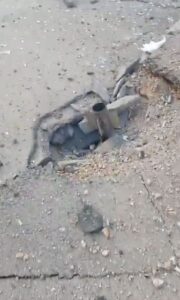
 The image includes part of a munition