


1–39 of 39
Analyst Note
2 March 2026
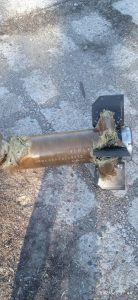
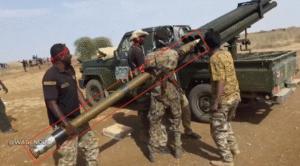
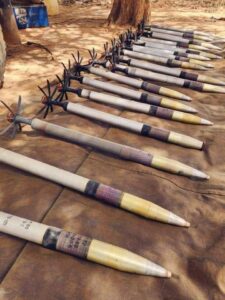
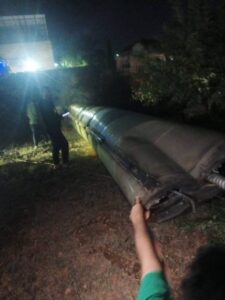
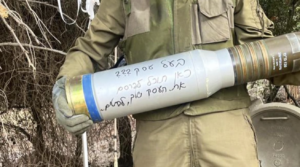
Based on design features and an estimation of the munition’s apparent size relative to the personnel handling it, this image appears to show a 122 mm surface-to-surface rocket fitted with a high explosive fragmentation (HE-FRAG) warhead, although the specific model and country of origin are unclear. In Sudan there have been reports of Russian, Chinese, and domestically produced (Taka-02) 122 mm rockets being used. (ARES)

Analyst Note
24 August 2026
Shown is a German DM 1399 (AT2) dispensed, anti-tank landmine which is high explosive with a Misznay-Schardin charge to penetrate the bottom of armored vehicles. The DM 1399 reportedly has magnetic and contact fuzing (model S3 fuze), along with an anti-disturbance feature to interfere with clearance operations and a self-destruct time delay of up to four days. The mines are dispensed from rockets (MLRS). Currently the mines are in use by Finland, German, Norway, United Kingdom and Ukraine (donated by Germany and Norway). Italy is a former user which destroyed their ~45,000 mine stockpile in 1997 as part of the Ottawa Treaty, due to the mine’s anti-disturbance feature which can be activated by personnel and not just vehicles. (ARES)

Analyst Note
2 March 2026
The tank visible in the background of the image appears to be a Chinese VT-4 (MBT-3000) model. The VT-4 is manufactured by Norinco and is intended primarily for export. (ARES)
Analyst Note
24 August 2026
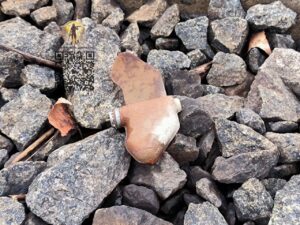
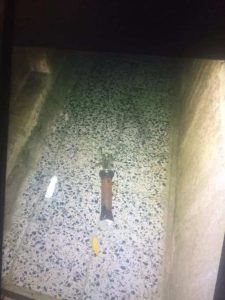
Pictured is a Russian PFM-1 or PFM-1S submunition which are small plastic (low density polythene), liquid high explosive, anti-personnel scatterable landmines with a pressure fuze and may be green, white, sand or brown (shown) in color. The only difference between the models is that the PFM-1S incorporates a nominal self-destruct of 40 hours, though they may remain active for far longer and are known to randomly self-destruct for weeks after deployment. They weigh approximately 70 grams (2.47 oz.) and are typically dispensed from cannisters, but the war in Ukraine has seen them dispensed from drones as well. (ARES)

Analyst Note
31 December 2025
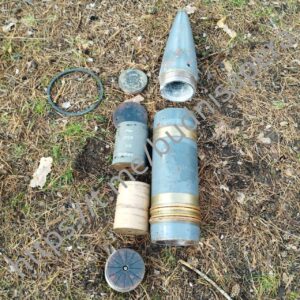
This image shows a North Korean 170 mm artillery projectile, as fired by the M-1978 Koksan self-propelled artillery gun. Very little is known of the M-1978 Koksan due to the secretive nature of North Korean arms development, but both high explosive and rocket-assisted high explosive projectiles are believed to be available. The designations ‘M-1978’ and ‘Koksan’ were applied by American military analysts identified the system in Koksan, North Korea, in 1978. (ARES)
Analyst Note
29 September 2025
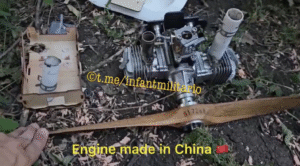
The DLE60 two-stroke petrol (gasoline) engine pictured here is the standard engine found on Gerbera UAVs. It is produced by the Chinese company Mile Haoxiang Technology Co., Ltd. and marketed specifically for use in UAVs. Although the Gerbera is manufactured in Russia, the engine and many other key components continue to be supplied from Chinese sources. (ARES)
Analyst Note
3 June 2025
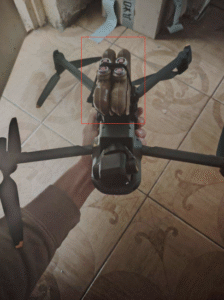
This image shows four PFM-1 series anti-personnel landmines retained by a release mechanism to enable deployment via UAV. Ordinarily, PFM-1 series and other ‘scatterable mines’ are deployed via carrier munitions or dedicated mine-dispensing devices. In Ukraine and other conflicts, these mines have often been removed from their original carrier munitions in order that they may be delivered via UAV. (ARES)
Analyst Note
30 April 2025
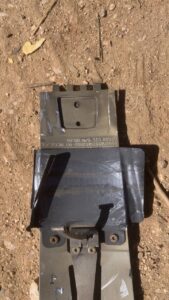
This image shows a fragment of the “inner petal assembly” of a Terminal High Altitude Area Defense (THAAD) system’s ‘Talon’ interceptor missile. The part number for the assembly (“23917ASSY1A62803-101 REV.E / E”), Commercial and Government Entity (CAGE) code (“07554”), manufacturer abbreviation (“CTL”), and serial number (“S/N DDLKD”) are visible. This CAGE code and manufacturer abbreviation are associated with CTL Aerospace Inc, a subcontractor for Lockheed Martin, the manufacturer of the THAAD system. It is not uncommon for complex munitions to be made by several different manufacturers, and thus multiple CAGE codes may be present as a result of the various subcontractors. (ARES)




Analyst Note
29 July 2024
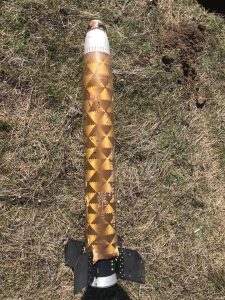
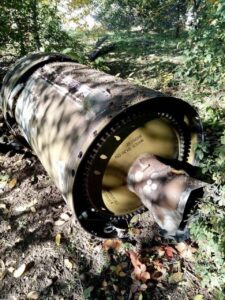
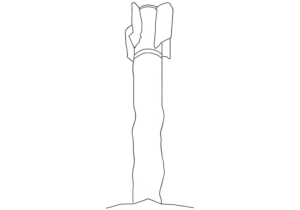
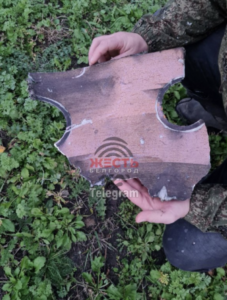
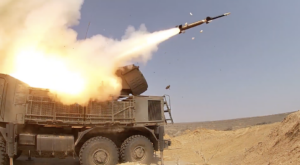
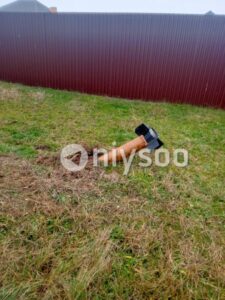
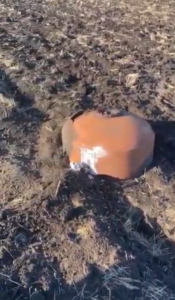
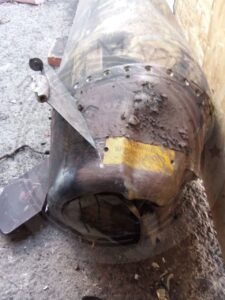
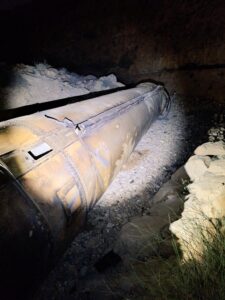
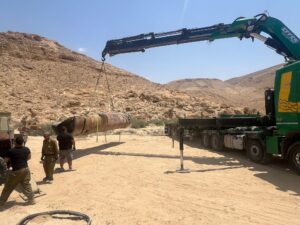
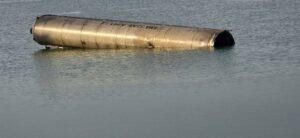
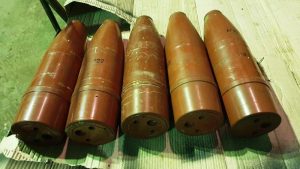
The 57E6 series of missiles fired from the 96K6 Pantsir system use a two-stage design that is unusual for surface-to-air missiles of this type. The remnant seen in this image is part of the missile’s booster section, which accelerates the second stage to a high velocity before separating. The booster section uses a distinctive toffee-brown, filament-wound composite body. (ARES)

2 Analyst Notes
30 May 2024
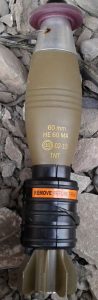
The plum-coloured plastic ring at the nose of this mortar projectile (placed over its fuze) and the black plastic propellant cover (placed over its tail) are both fitted for transport and storage, before the projectile is loaded into a cardboard tube, and then packed into an outer crate. The propellant cover obscures the perforated cylindrical tail assembly in this image. (ARES)