



Featured Materials
A curated selection of images, terms and collections to help understand modern conflict.
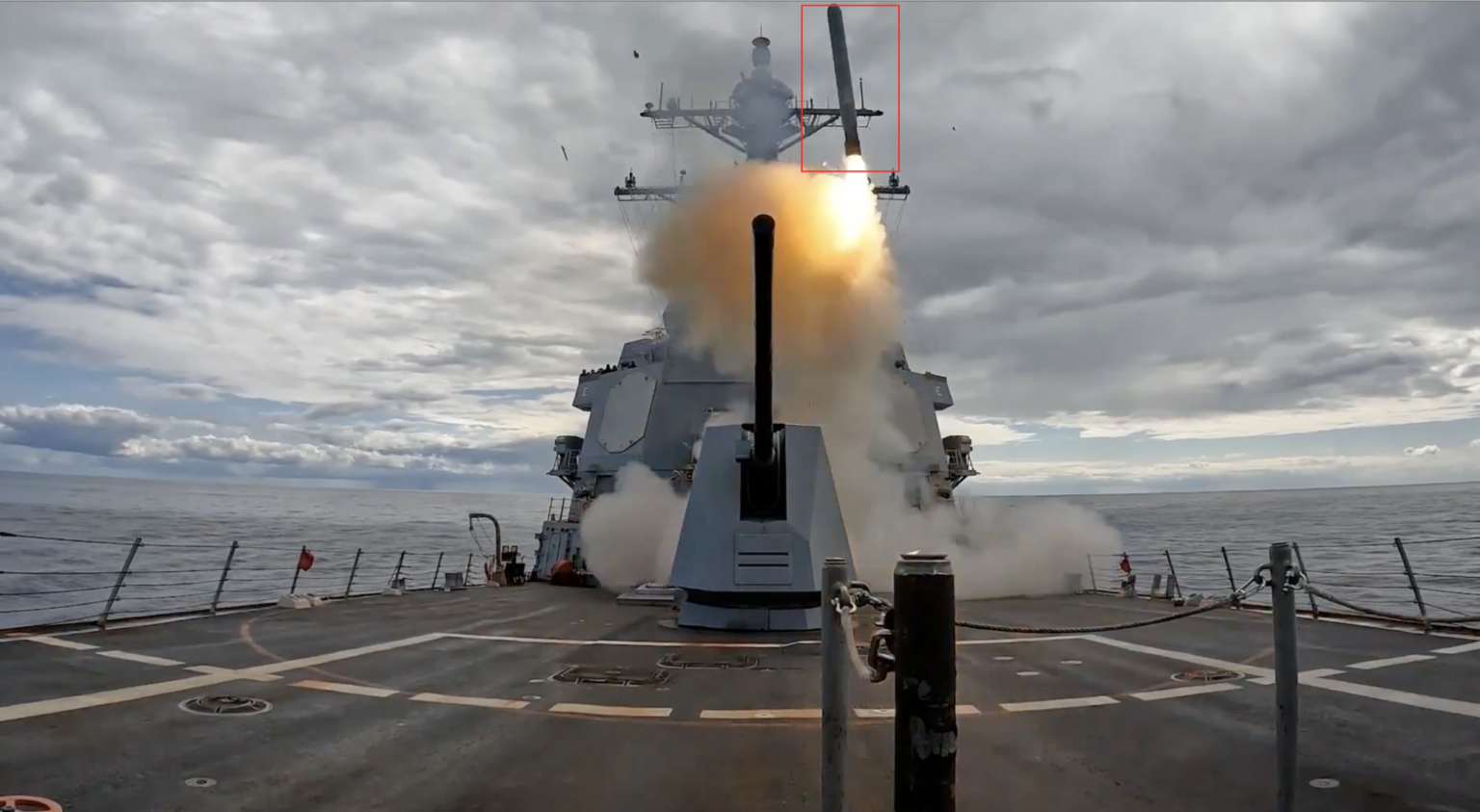
Iran War 2026
Munition images from the ongoing Middle East conflict
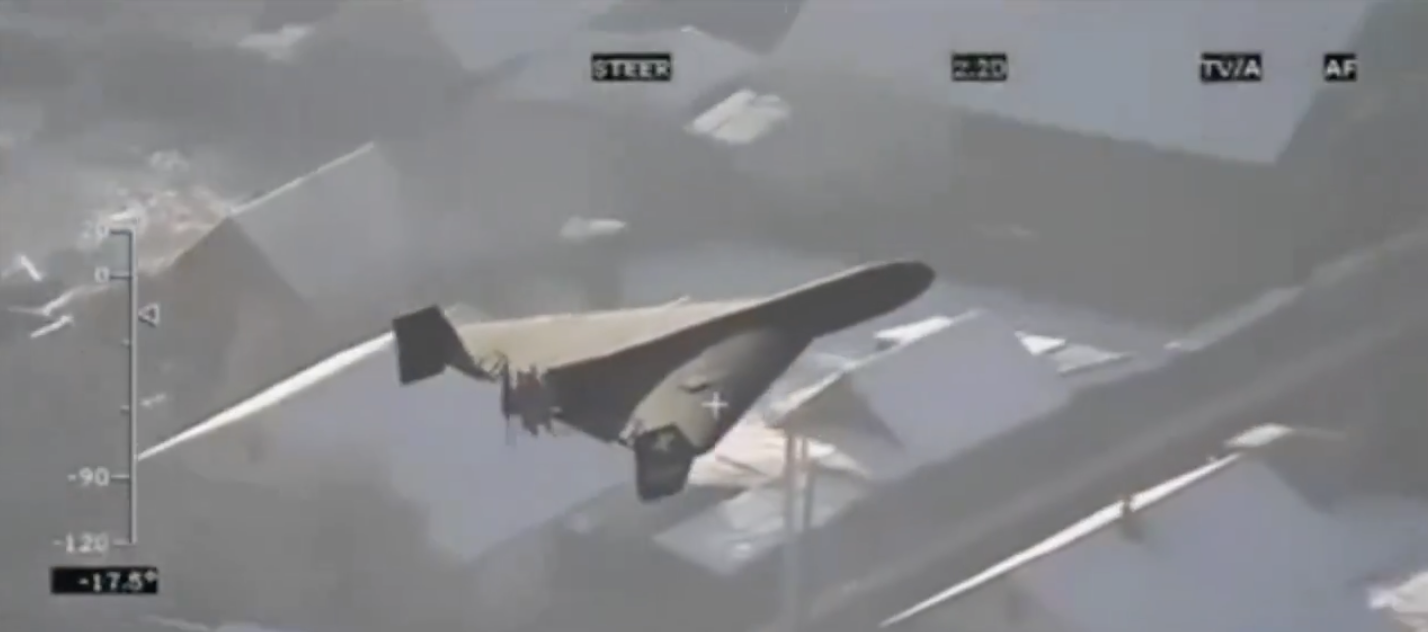
Shahed-131 & -136 UAV
3D models explain the best-known 'kamikaze drones'

Collection
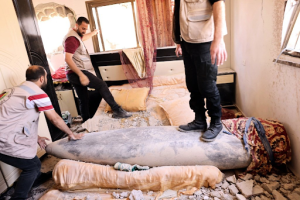
Munition images from the Gaza war
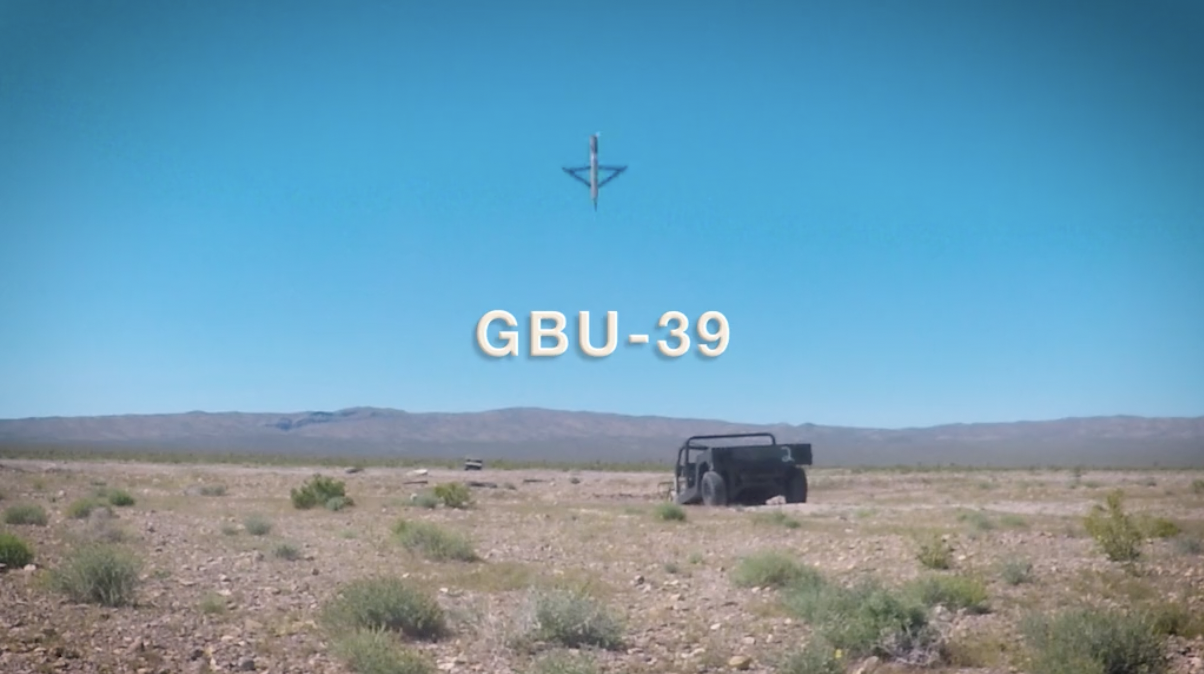
GBU-39 bomb
3D model explaining Israel's 'weapon of choice' in Gaza

Research organisation
Images from the Human Rights Watch archives

Collection
Munition images from the Ukraine war
Follow
Keep up to date with newly added munitions
Contribute
Submit images to the OSMP
OSMP referenced in media and research
View all →
BBC uses OSMP to investigate new U.S. missile

NYT uses OSMP to identify Iran school munition

AP highlights images of Iranian submunitions

The Incendiary Bomb Never Seen in Israel Before

UN report highlights OSMP importance

GIJN’s Top Investigative Tools of 2024

How GBU-39 bombs became Israel’s ‘weapon of choice’
101–200 of 406








Analyst Note:
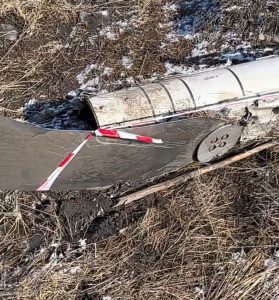
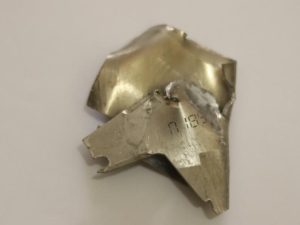
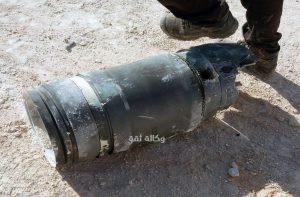
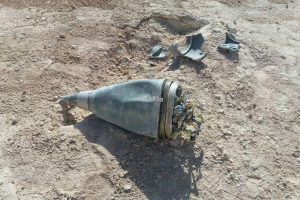
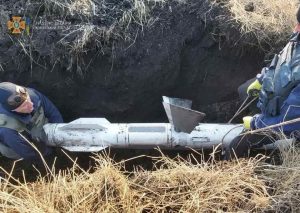
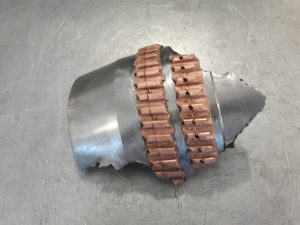
The 57E6 series of missiles fired from the 96K6 Pantsir system use a two-stage design that is unusual for surface-to-air missiles of this type. The remnant seen in this image is part of the missile’s booster section, which accelerates the second stage to a high velocity before separating. The booster section uses a distinctive toffee-brown, filament-wound composite body. (ARES)

Analyst Note:
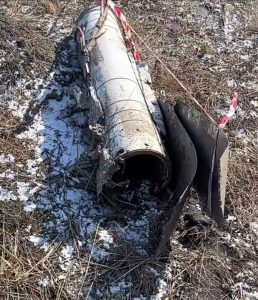
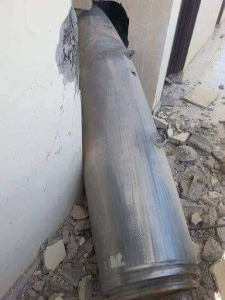
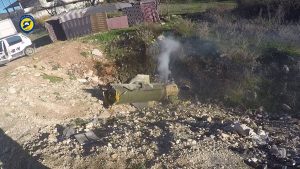
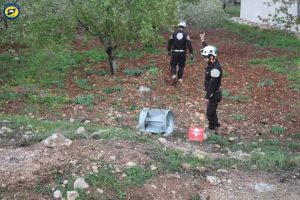
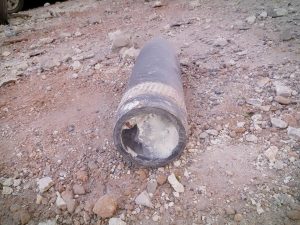
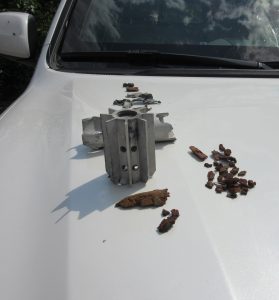
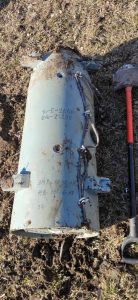
Cargo rockets often use an internal frame to manage the correct carriage and expulsion of submunitions. These internal frames frequently survive largely intact after the munition has functioned, and may be diagnostic in identifying a munition by type, series, or model. (ARES)


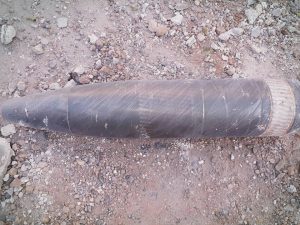

Analyst Note:
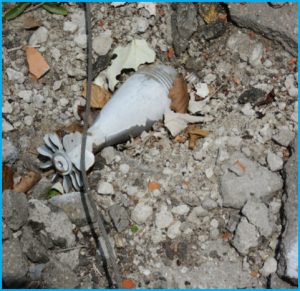
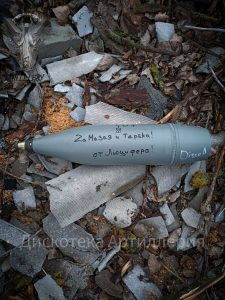
Although this munition started out life as a mortar projectile of the M492-pattern, it has been modified to be dropped from an unmanned aerial vehicle (UAV) and, in its present state, could not be fired from a conventional mortar. As such, it is correctly classified here as an air-delivered bomb. (ARES)

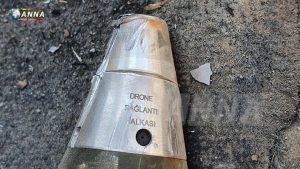
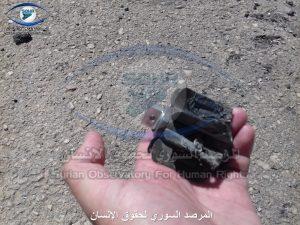
Analyst Note:
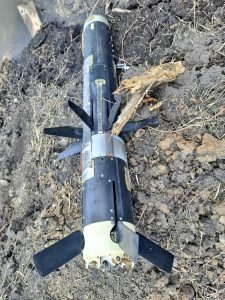
The fin assembly in the image bears a strong resemblance to those of other munitions employed in the same incident that have been identified as M49A2 mortar projectiles modified to be delivered by UAV. (ARES)
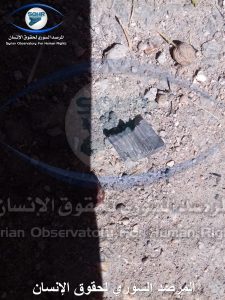
Analyst Note:
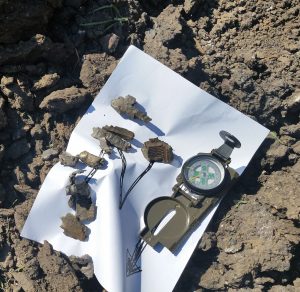
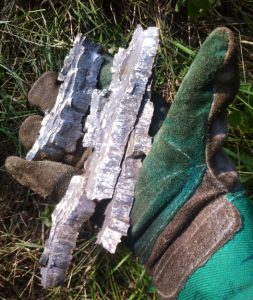
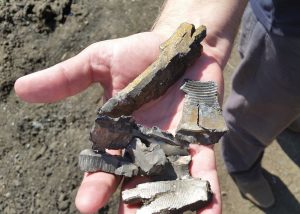
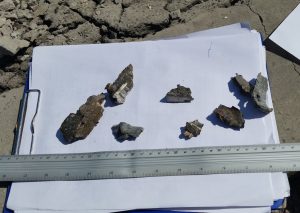
The large fragments in this image are typical of 'natural' fragmentation resulting from the rupturing of a thick-walled munition (in this case, an artillery projectile) by the functioning of its explosive payload. (ARES)

Analyst Note:
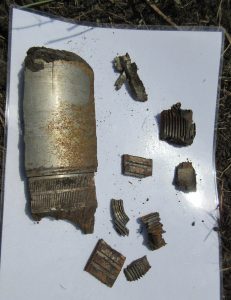
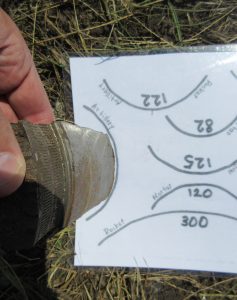
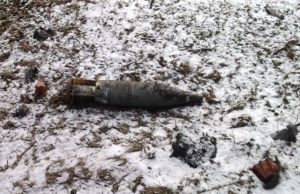
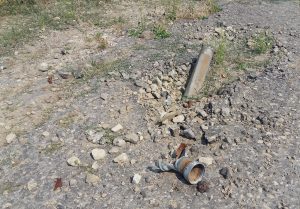
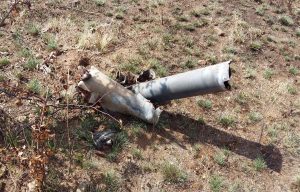
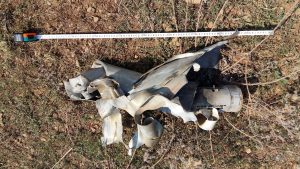
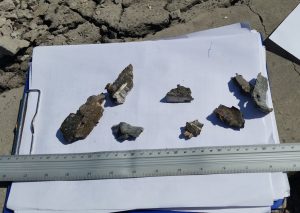
The munition remnants pictured here are likely to be from either a Russian OG-9 or a Bulgarian RHEF-9MA/GHEF-9MA recoilless gun projectile. However, based on the available information, positive identification cannot be not be made. (ARES)



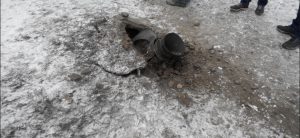
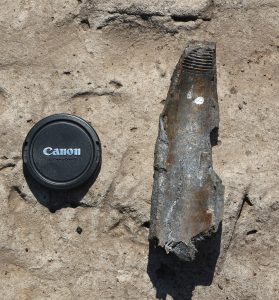
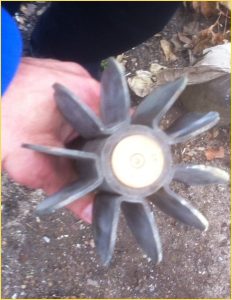
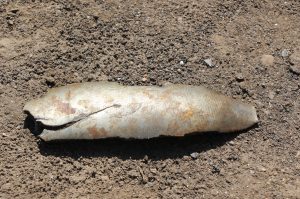


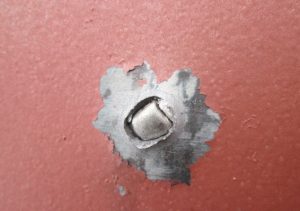
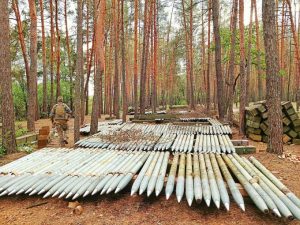

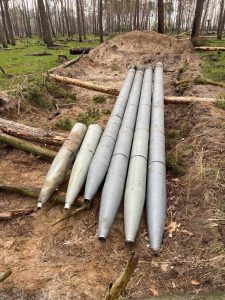
Analyst Note:
This image features both delivered (the two left-most munitions) and undelivered munitions of the same model.



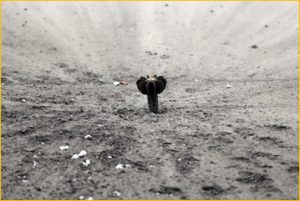












Analyst Note:
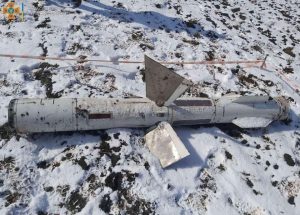
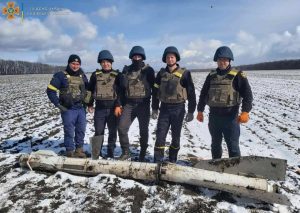
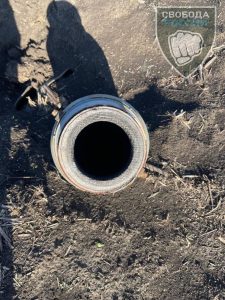
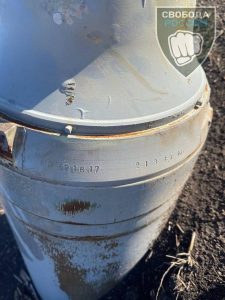
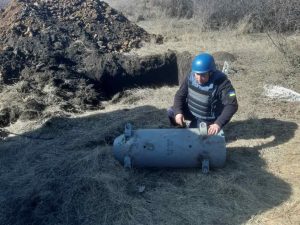
Like the more common 9M22S rocket, the 9M28S carries the 9N510 warhead, which dispenses 180 individual incendiary elements composed of a magnesium alloy shell filled with a thermite-like incendiary composition. (ARES)





Analyst Note:
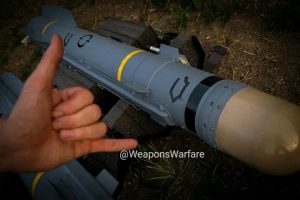
The Brimstone is a series of British-designed guided missiles that can be launched from air, land, or sea platforms. The United Kingdom first provided Ukraine with the Brimstone I missile in 2022 and exports have continued since, more recently believed to include the Brimstone II model. In Ukraine, Brimstone-series missiles have been exclusively launched from ground-based and sea-based platforms as of May 2024. (ARES)

Analyst Note:
122 mm ‘Grad’ rockets can be fired from a variety of launchers and even in improvised ways. The most common is the BM-21 launcher and its later derivatives, but many other portable or vehicle-mounted launchers have been used around the world. Craft-produced examples—ranging from simple rails to more complex designs comparable to factory made launchers—are also common. In some cases, Grad rockets are even fired whilst supported by a crude arrangement of logs, bricks, or rocks. (ARES)


Analyst Note:
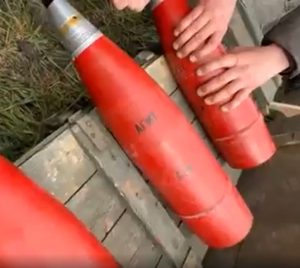
This artillery projectile is a non-lethal type designed to carry propaganda leaflets. Externally, it strongly resembles other variants carrying lethal payloads, although this particular model has a distinctive all-red colour. The leaflets are expelled from the base of the munition by the action of a small explosive charge, after a set amount of time has elapsed after firing (determined by the fuze). (ARES)


Analyst Note:
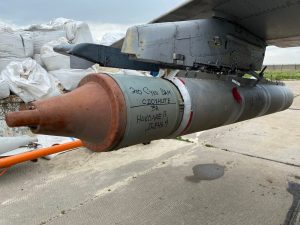
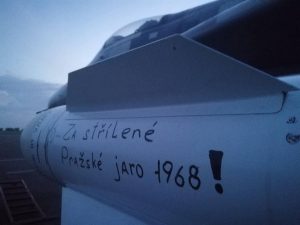
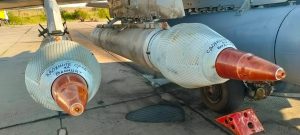
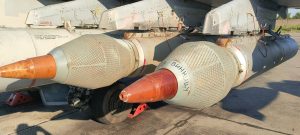
These S-25-O air-to-surface rockets are each loaded into a single-barrelled O-25 rocket launcher (sometimes called a 'launch tube' or 'rocket pod') that is affixed to an aircraft hardpoint. The over-calibre high explosive fragmentation warhead (of 420 mm in diameter) protrudes from the front of the tube. (ARES)