Classification groups of key explosive munitions used in conflicts
Munition Category (8)
The impact or effect the munition is intended to have
Functional use (10)
The specific model of munition pictured
Tentative Model (356)
Search
The external organisation that documented the munition
Research Organisation (6)
Colour of the munition pictured
Base Colour (12)
Colour of all, or some, of the markings on the munition
Marking Colour (11)
Language or script of the marking on a munition
Marking Script (10)
Condition of the munition pictured
Condition (6)
Key features defining the operation mechanisms of a projectile
Mechanical Feature (10)
Whether a munition is guided or unguided
Guidance (2)
Where the munition is launched from and what it targets
Domain (7)
The type of fins visible on the munition
Fins Characteristic (6)
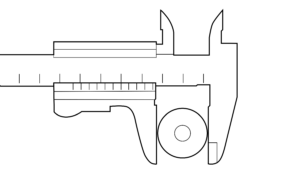
The nominal diameter of a projectile. For most modern munitions, this is expressed in millimetres (e.g. 82 mm mortar projectile), but older artillery gun projectiles may be described in inches.
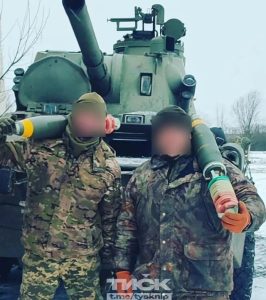
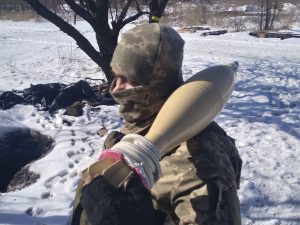
A large eastern European country that faced a full-scale Russian invasion in February 2022. Since then the Ukrainian military has fought a major war with Russian forces, with tens of thousands believed to have been killed.
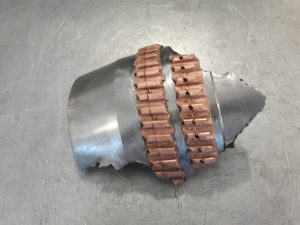
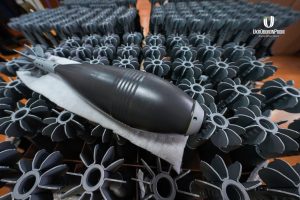
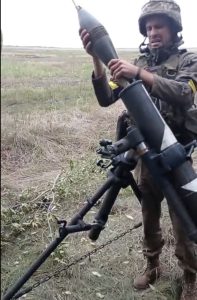
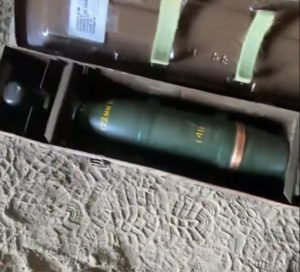
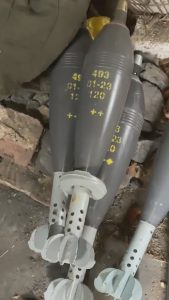
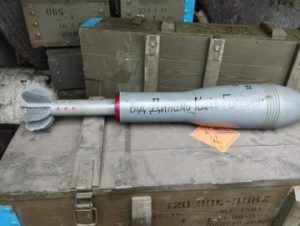
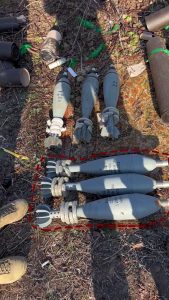
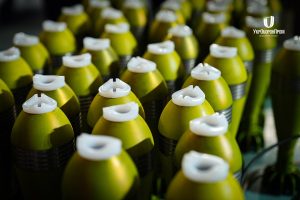
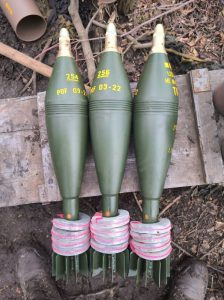
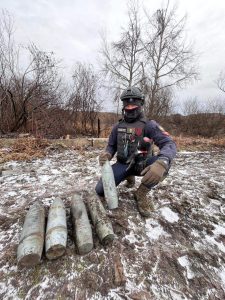
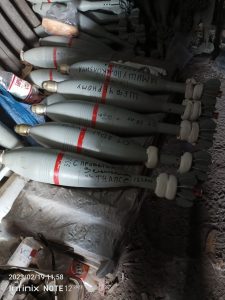
Whilst most mortars are smoothbore guns, some have a rifled bore. These M1101 120 mm mortar projectiles feature a 'pre-rifled' driving band—that is, a driving band with grooves cut at the factory to fit the mortar's rifling. (ARES)
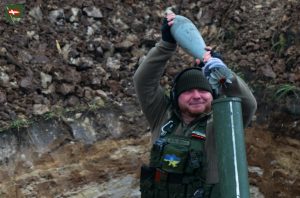
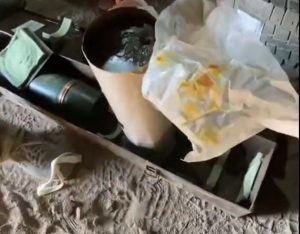
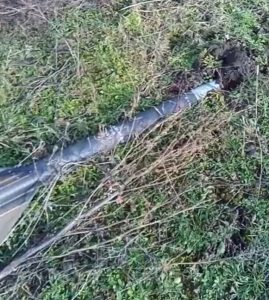
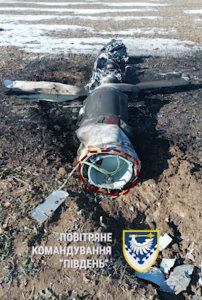
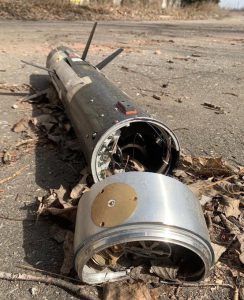
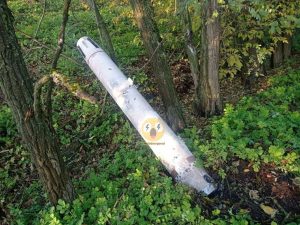
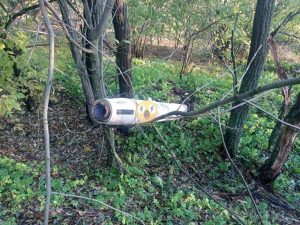
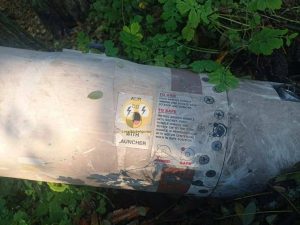
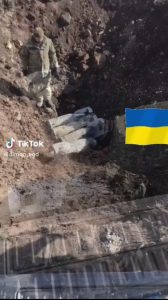
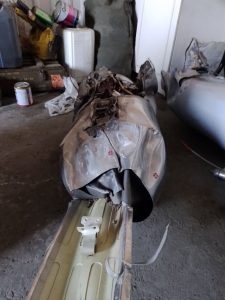
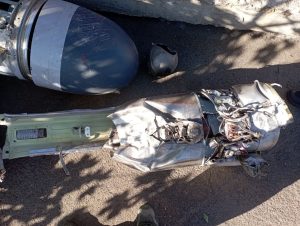
Not all munitions have a lethal purpose. This is a type of ‘carrier’ or ‘cargo’ munition designed to carry and dispense a non-lethal payload—in this case, propaganda leaflets. (ARES)
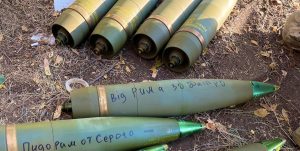
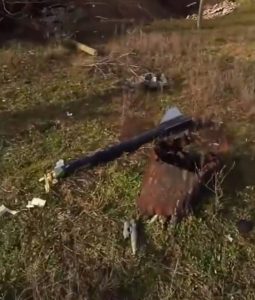
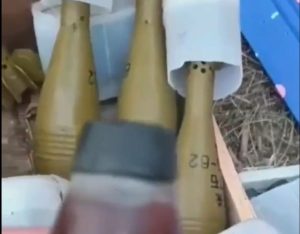
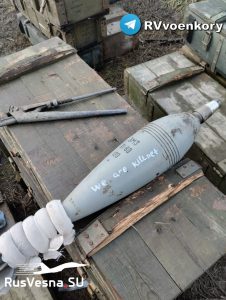
As a result of the rapid introduction of new models and variants during ongoing conflicts, sometimes a munition is issued with a provisional designation, or with no designation at all. In other cases, the designation is not yet known to researchers. (ARES)
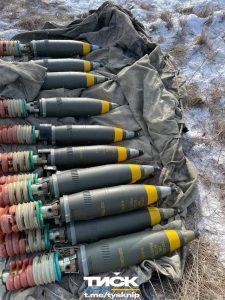
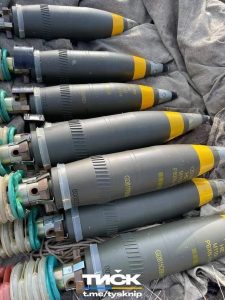
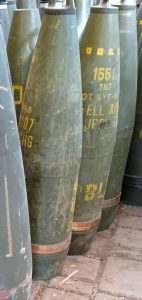
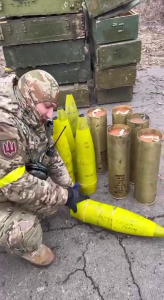
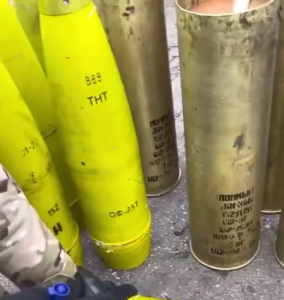
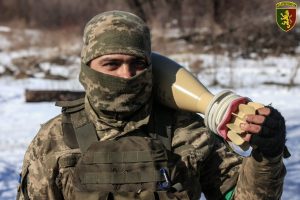
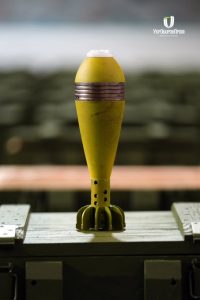
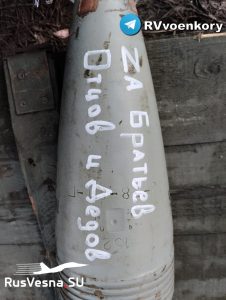
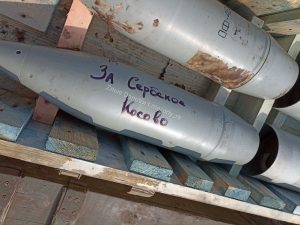
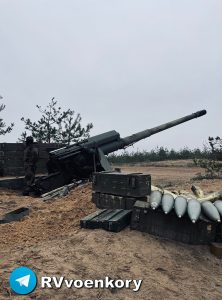
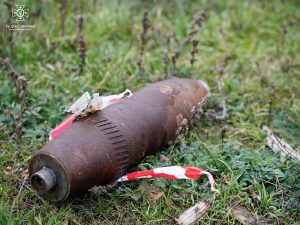
This image depicts a Ukrainian-made version of the Soviet-era OF-25 152 mm artillery projectile, the designation of which is not publicly known at this time (May 2024). The yellow base colour was commonly found in batches produced by Ukroboronprom in late 2022. Later batches returned to a grey base colour. (ARES)
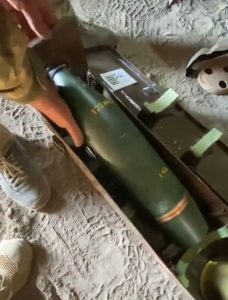
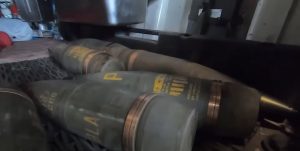
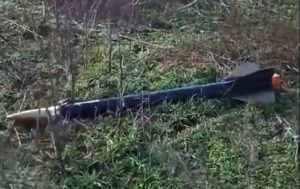
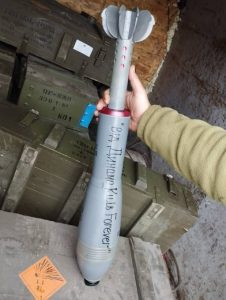
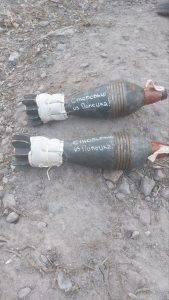
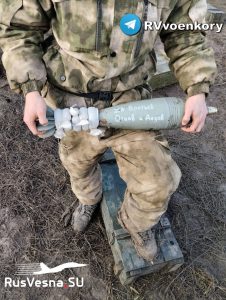
The OF-NMR is a rocket-assisted mortar projectile, which uses a solid-fuel rocket motor located in the cylindrical portion of the body, below the ogive, to extend its range. Rocket-assisted mortar projectiles are rarely encountered. (ARES)
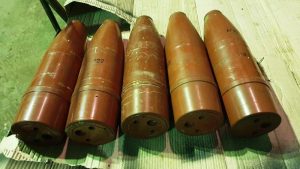
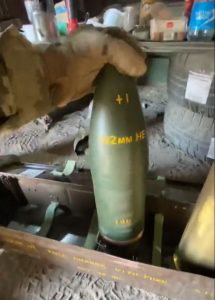
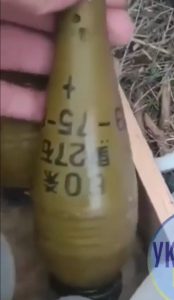
The “+” marking is a weight classification symbol which indicates standard deviation. One “+” sign indicates a deviation from 0.33% to 1.00% of the stated weight. (ARES)
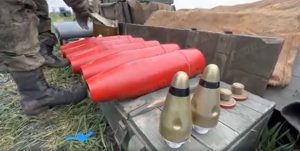
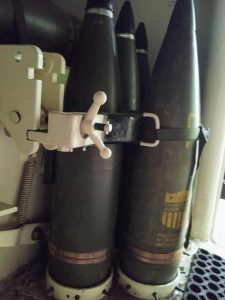
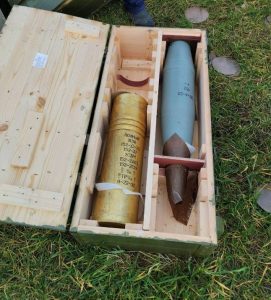
Whereas many cartridges are of the 'fixed' type—with the propellant charge contained entirely within the cartridge, and the cartridge case crimped around the projectile—the OF-540 artillery gun projectile is a type of 'semi-fixed' ammunition. A round of semi-fixed ammunition is separated into two groups of components: the projectile and fuze; and the cartridge case, primer, and one or more propellant charges. These two component groups are typically combined at the time of loading the gun, or shortly beforehand. The majority of ammunition fired by artillery systems is either semi-fixed or 'separate loading' (see Glossary). (ARES)
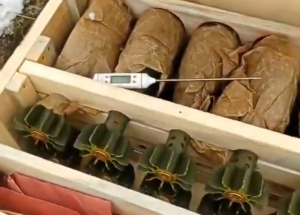
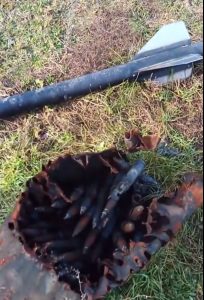
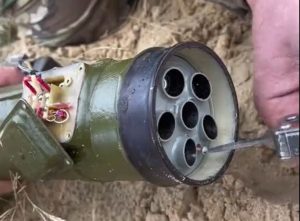
The 120 mm 3-Z-2 incendiary mortar projectile contains 6 incendiary elements, four large and two small. These are hollow steel ‘cups’ filled with an incendiary mixture of an unknown type, but understood to be comparable in effect to thermite. (ARES)