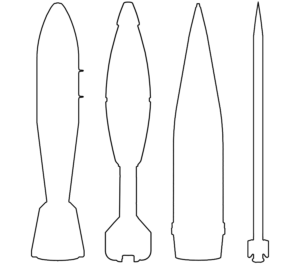
The nominal diameter of a projectile. For most modern munitions, this is expressed in millimetres (e.g. 82 mm mortar projectile), but older artillery gun projectiles may be described in inches.
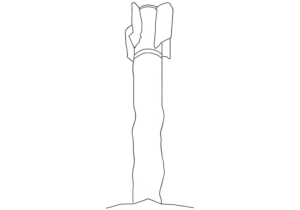
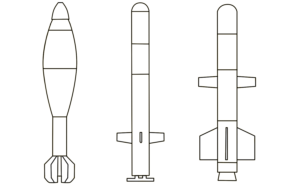
Fins that can be adjusted during flight to allow the alteration of a munition’s trajectory, or those that can be adjusted to reduce the size of a munition during transport and employment.
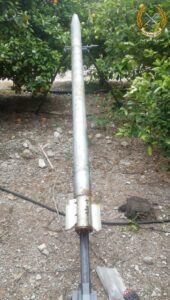
The crude launch arrangement depicted in this photograph shows the ease with which many simple rocket designs can be launched. Weapons such as this are used where precision fire is not a requirement; i.e., where the target might be a whole compound, neighbourhood, or settlement, rather than a specific building or vehicle. (ARES)
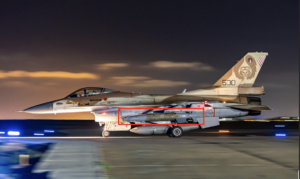
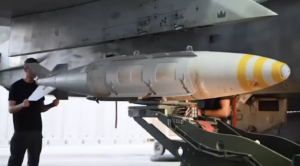
This image shows an Israeli Air Force F-16C fighter aircraft from 101 Squadron carrying a MK 84-series 2,000-pound-class air-delivered bomb fitted with a SPICE 2000 ‘bolt-on’ guidance kit. (ARES)
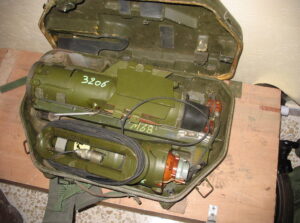
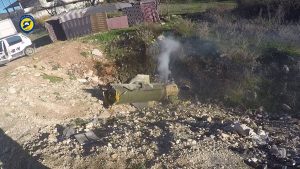
The 9M14 Malyutka anti-tank guided missile was designed and fielded by the Soviet Union in the 1960s. It uses an outdated guidance principle known as manual command to line-of-sight (MCLOS), in which the operator must manually adjust the course of the missile in flight. Nonetheless, this munition has been seen in several 21st-century conflicts. (ARES)
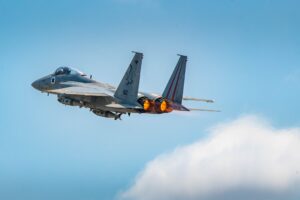
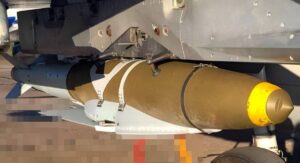
In this image, an F-15C fighter aircraft from 106 Squadron Israeli Air Force is seen carrying two MK 84-series 2,000-pound-class air-delivered bombs fitted with Joint Direct Attack Munition (JDAM) ‘bolt-on’ guidance kits. In U.S. service, this combination is known as the GBU-31. (ARES)
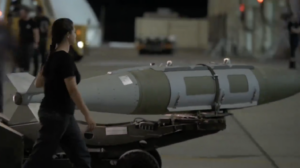
The Joint Direct Attack Munition – Extended Range (JDAM-ER) marries the JDAM guidance kit to a ‘glide bomb’ wing kit developed by the Australian Defence Force, offering a munition with at least three times the range of a standard GBU-38 500-pound-class guided aerial bomb. (ARES)
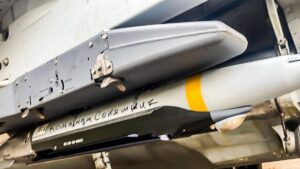
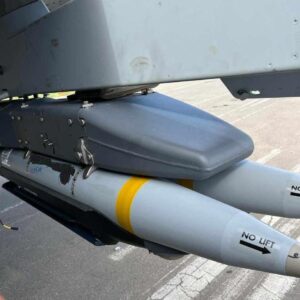
In this image, two GBU-39 Small Diameter Bombs are attached to a BRU-61/A bomb rack. The Ukrainian Air Force adapted this American-designed bomb rack to fit their Soviet-designed Mikoyan MiG-29 fighter aircraft. The BRU-61/A can carry up to four GBU-39 air-delivered bombs. (ARES)
The M329 is a multi-purpose tank gun projectile designed to engage a range of targets other than tanks. It is one of the few cluster munitions that takes the form of a tank gun projectile, dispensing six explosive submunitions over a relatively small area. It has also been referred to as the ‘APAM 120’, describing its functional role (‘anti-personnel/anti-materiel’) and calibre (120 mm). (ARES)
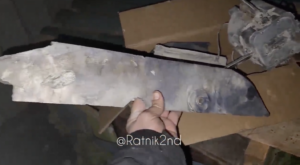
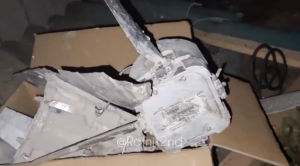
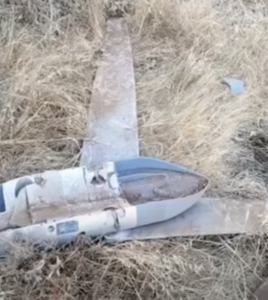
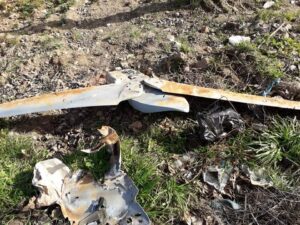
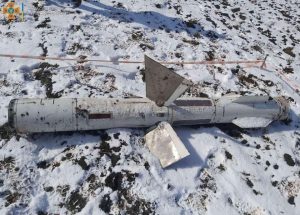
This image shows a distinctively shaped component of MBDA’s ‘Diamond Back’ joined tandem wing assembly as fitted to the GBU-39 Small Diameter Bomb (SDB). (ARES)
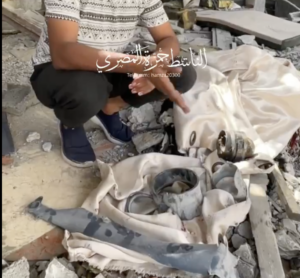
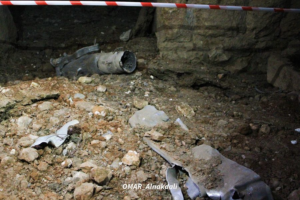
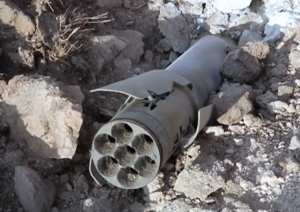
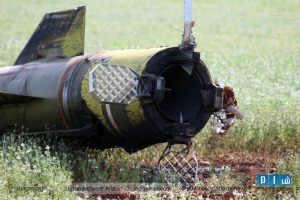
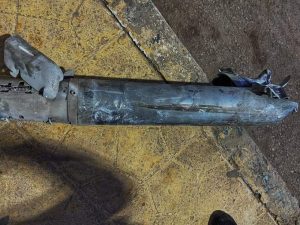
Contextual information suggests that this is likely a 9M22S unguided incendiary rocket (see External Research section), but this cannot be confirmed on the basis of this image alone. (ARES)
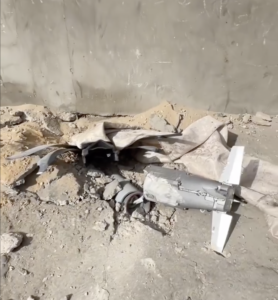
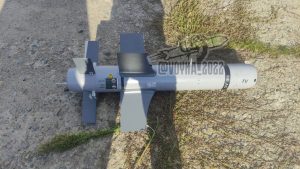
The various Iranian Qaem-series guided air-delivered bombs can be difficult to differentiate from one another. In this case, the wing (forward fin) assembly distinguishes this Qaem-5 from the visually similar Qaem-1. Note also that the name 'Qaem' has applied by Iran to other, unrelated munitions. (ARES)
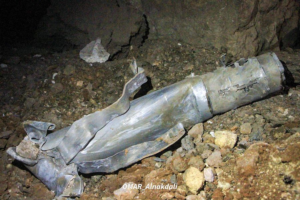
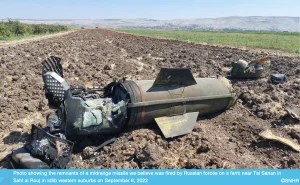
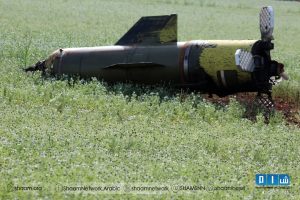
Like the more common 9M22S rocket, the 9M28S carries the 9N510 warhead, which dispenses 180 individual incendiary elements composed of a magnesium alloy shell filled with a thermite-like incendiary composition. (ARES)
122 mm ‘Grad’ rockets can be fired from a variety of launchers and even in improvised ways. The most common is the BM-21 launcher and its later derivatives, but many other portable or vehicle-mounted launchers have been used around the world. Craft-produced examples—ranging from simple rails to more complex designs comparable to factory made launchers—are also common. In some cases, Grad rockets are even fired whilst supported by a crude arrangement of logs, bricks, or rocks. (ARES)
The Next-generation Light Anti-tank Weapon (NLAW) uses an uncommon form of guidance known as predicted line-of-sight (PLOS). PLOS guidance calculates the anticipated position of a moving target prior to launch, with the munition using inertial guidance to fly to the projected impact point. This fire-and-forget technique allows the operator to move positions immediately after firing, and is generally cheaper than other fire-and-forget guidance types. (ARES)