Key features defining the operation mechanisms of a projectile
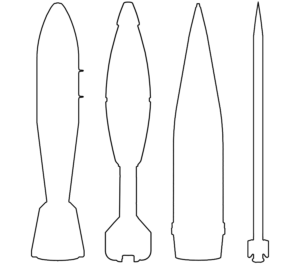
Mechanical Feature (10)
Whether a munition is guided or unguided
Guidance (2)
Where the munition is launched from and what it targets
Domain (7)
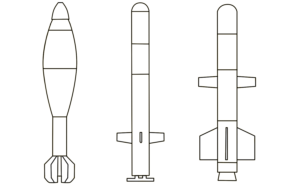
The type of fins visible on the munition
Fins Characteristic (6)
The nominal diameter of a projectile. For most modern munitions, this is expressed in millimetres (e.g. 82 mm mortar projectile), but older artillery gun projectiles may be described in inches.
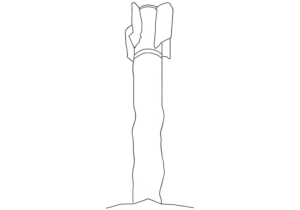
A munition that has been employed—e.g., fired, dropped, or launched—from a delivery platform. The munition may have either functioned or failed to function.
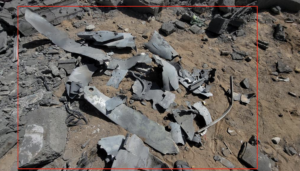
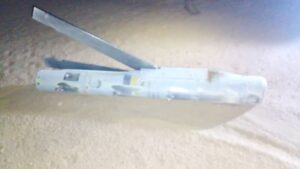
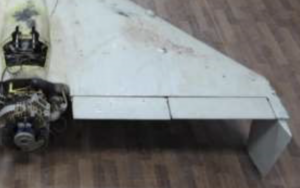
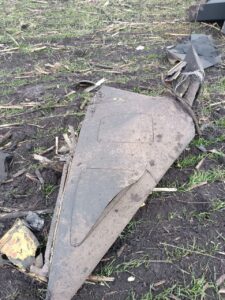
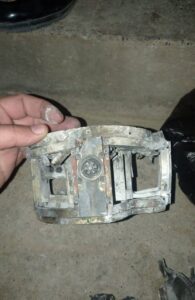
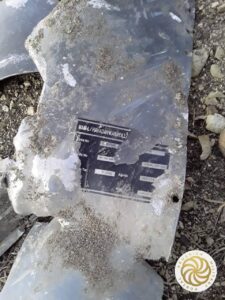
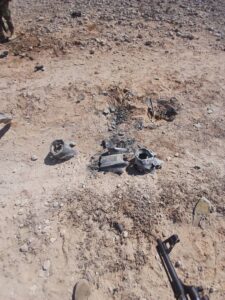
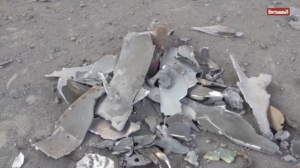
This image and the related entries show fragments of an AGM-84 Standoff Land Attack Missile-Expanded Response (SLAM-ER) series missile. AGM-84 SLAM-ER missiles are AGM-84E Standoff Land Attack Missiles (SLAM) that incorporate certain upgrades, including wings to increase the missile's range. The AGM-84 series include the anti-ship ‘Harpoon’ variants, from which the SLAM and SLAM-ER series are derived. As a result, many remnants will be similar or identical between variants. The wing remnant here is diagnostic, however. (ARES)
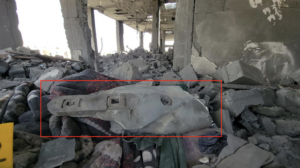
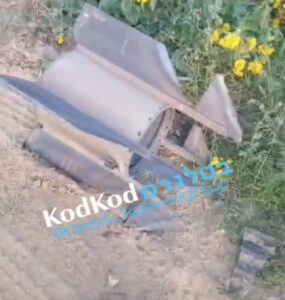
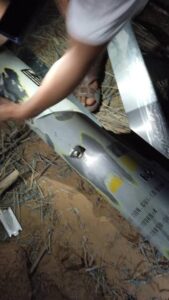
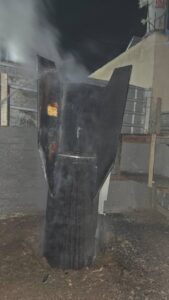
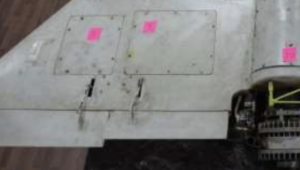
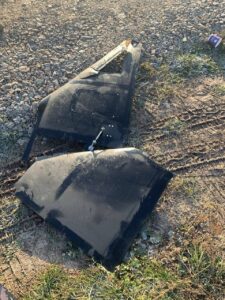
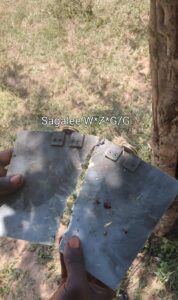
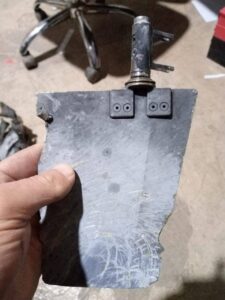
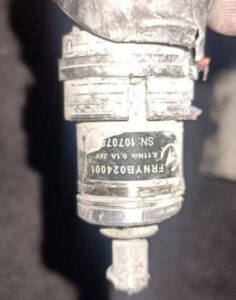
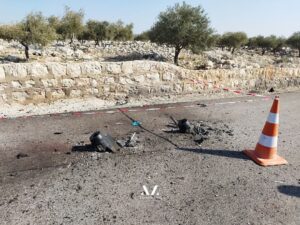
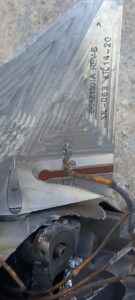
This image shows the rear fin section that is attached to a M-302/Khaibar-1/Fadi series rockets to add guidance capabilities. This rear fin section is installed, along with a forward control section between the warhead and the rocket motor. The guided munition, now classified as a missile, is referred to as a Nasr-1/Nasr-2. A similar, but larger, rear fin section is fitted to Zelzal rockets to convert them to guided munitions. (ARES).
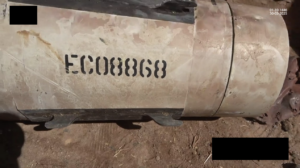
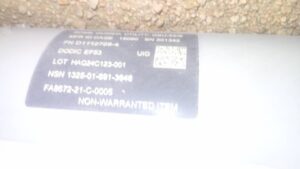
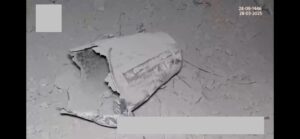
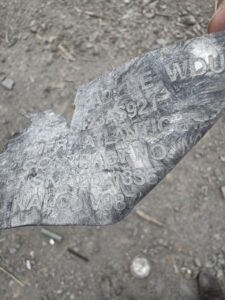
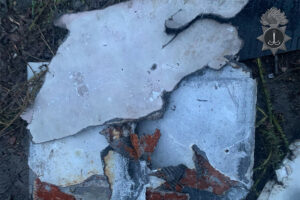
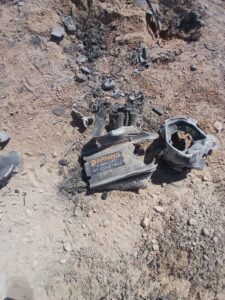
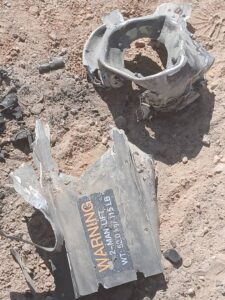
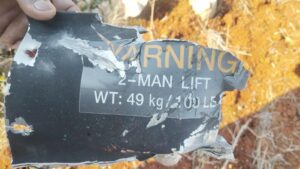
This image shows a fragment of a RGM/UGM-109 Tomahawk Land Attack Missile (TLAM) series missile's WDU-36/B warhead. The WDU-36/B warhead is a penetrator warhead for the TLAM, and is one of several available warhead options for TLAM series missiles. The complete "WDU" designation isn't visible, but the part number (3123AS921) is associated with the WDU-36/B. (ARES)
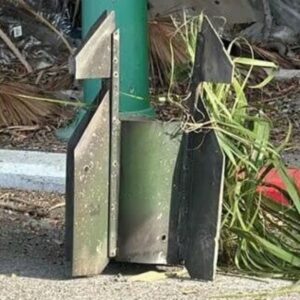
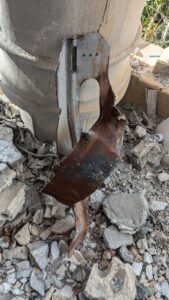
This image shows a strake from a Joint Direct Attack Munition (JDAM) guidance kit (KMU-557/558) as fitted to 2,000-pound BLU-109-series penetrator bombs. (ARES)
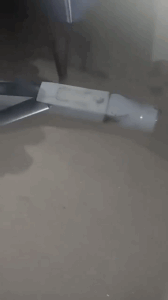
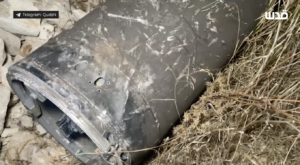
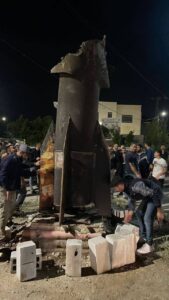
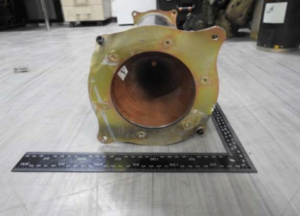
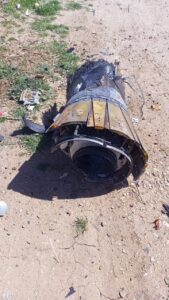
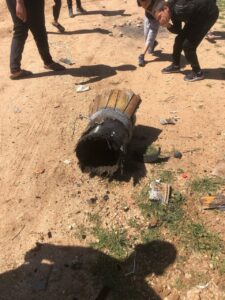
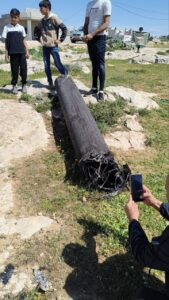
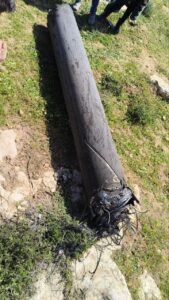
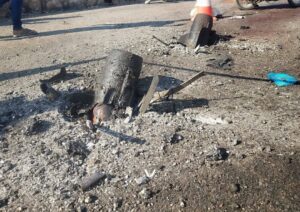
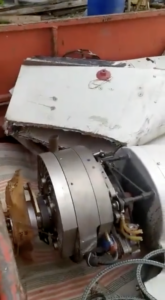
This image shows the rocket motor of a Kheibar Shekan or Fattah-1 medium-range ballistic missile (MRBM). The Fattah-1 was publicly unveiled by Iran in June 2023, with very few images surfacing since that time. Due to the lack of available reference material, differentially identifying the Kheibar Shekan and Fattah-1 is difficult. The missile components displayed at unveilings and public displays are also often different from those used in production models. (ARES).
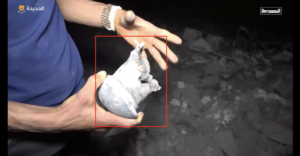
This image shows the copper cone of the shaped charge located at the front of the warhead fitted to a Shahed-131. The Ukrainian armed forces have recorded that the cone measures 111 mm in diameter and 162 mm in depth. The warhead is lined with cubic pre-formed fragments of 7 mm in diameter. The explosive content of the warhead is estimated to be between 10 and 15 kg. (ARES)
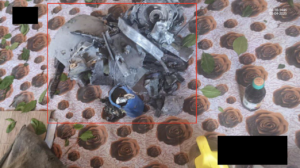
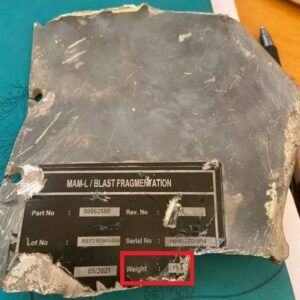
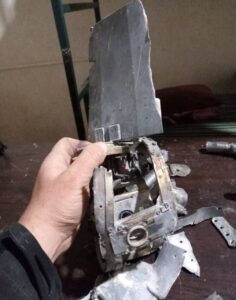
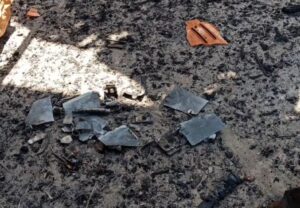
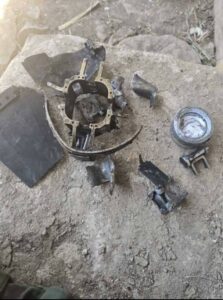
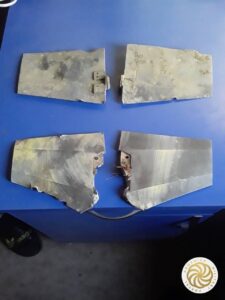
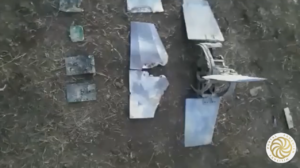
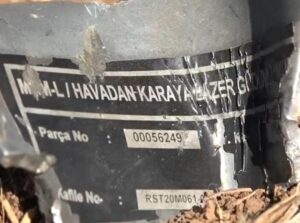
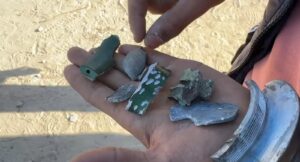
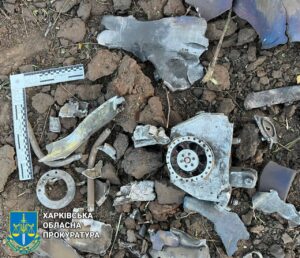
This image shows several remnants of a MAM-L bomb that are typically found after functioning. The actuated fins, as well as the fixed fins, are visible, along with various components of the control section that actuate the fins. The actuated fins attach to the control section, at the rear of the bomb, while the fixed fins attach to the middle of the bomb body. (ARES)
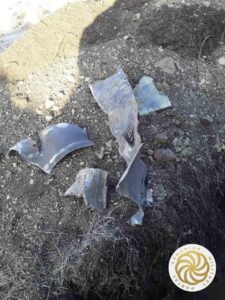
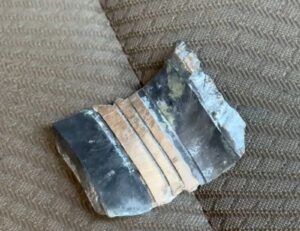
This image shows a fragment of an Israeli 120 mm tank gun projectile, with its distinctive obturating band configuration. The additional remnants shown in the related OSMP entry permit distinguishing this projectile from other potential Israeli models, identifying it as the M339 tank gun projectile. (ARES)
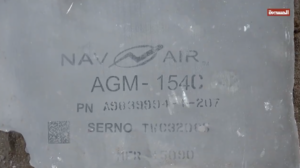
This image shows an unexploded WDU-45/B, the second stage or penetrator warhead (also called a ‘follow-through’ warhead), of the Bomb Royal Ordnance Augmented Charge (BROACH) multi-stage warhead system used in the AGM-154C variant of the Joint Standoff Weapon (JSOW) air-delivered bomb. The first stage is a shaped-charge warhead designed help the second stage penetrate hardened targets before detonating. The Shadow/SCALP-EG missile also uses a multi-stage BROACH system, but with larger warheads. (ARES)
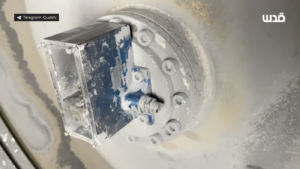
This image shows the section just forward of the Tamir missile’s forward fins and appears to incorporate the base of the active radar seeker (open end) and the laser proximity sensor part of the warhead fuzing system (mirrors/glass & opening in the casing). While the Tamir has been reported to physically impact some targets, the proximity fuze is designed to closely pass by the target, then detonate the high explosive fragmentation warhead thereby destroying the target. ‘Tamir’ is a Hebrew acronym for Til Meyaret, or ‘interceptor missile’. (ARES)
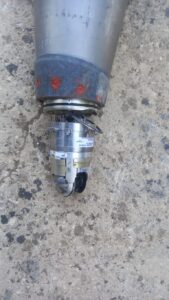
Pictured is the Stunner’s dual electro-optical/infrared nose sensors which, while in flight, identify and avoid decoys; identify the target; and guides the kinetic warhead on the final phase of its journey into the target. The sensors are housed in the unique ‘dolphin head’-shape of the missile, featuring a clear tip. The electro-optical sensor acquires the target during daylight operations, while the infrared sensor acquires the target in low-light conditions. The ground-based Battle Management and Control (BMC) system identifies the target’s flight path, calculates the point of interception, and transmits this information to the Stunner by encrypted datalink. The missiles utilise a vertical launch system to allow for a complete 360° response area. (ARES)
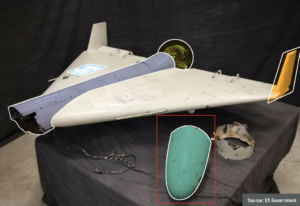
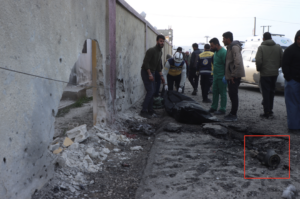
This image shows a relatively intact Shahed-131 one-way-attack (OWA) UAV with various components highlighted, including the GPS antenna array (light blue), fuselage (light purple), engine (yellow), wing stabiliser (orange), and nose cone (cyan, inside the red box). The nose cone attaches to the front of the fuselage and covers the warhead. (ARES)
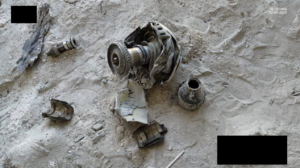
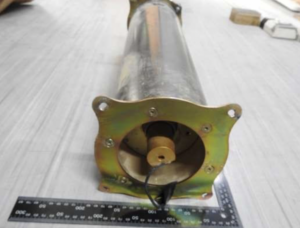
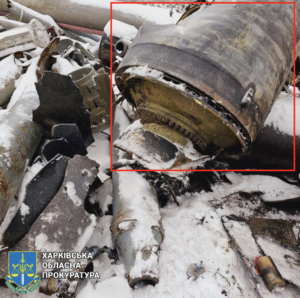
This image shows a remnant of the aft motor section, which includes the venturi nozzle, of a North Korean KN-23/KN-24/Hwasong-11 series missile. The KN-23/KN-24/Hwasong-11 has a generally similar appearance to the Russian 9M7 ‘Iskander’ series of ballistic missiles, but has differences in performance and in some aspects of the construction. (ARES)