Key features defining the operation mechanisms of a projectile
Mechanical Feature (10)
Whether a munition is guided or unguided
Guidance (2)
Where the munition is launched from and what it targets
Domain (7)
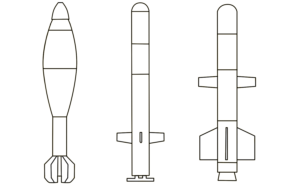
The type of fins visible on the munition
Fins Characteristic (6)
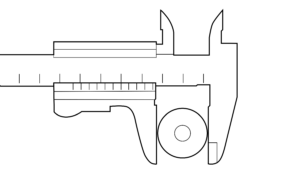
The nominal diameter of a projectile. For most modern munitions, this is expressed in millimetres (e.g. 82 mm mortar projectile), but older artillery gun projectiles may be described in inches.
A munition that has been employed—e.g., fired, dropped, or launched—from a delivery platform. The munition may have either functioned or failed to function.
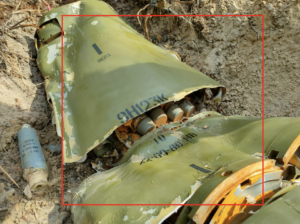
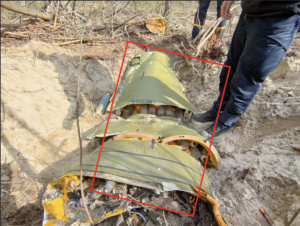
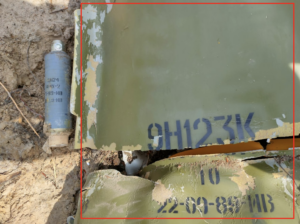
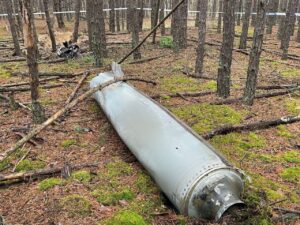
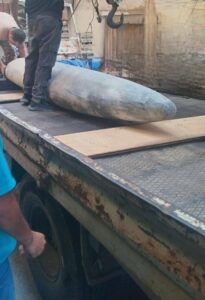
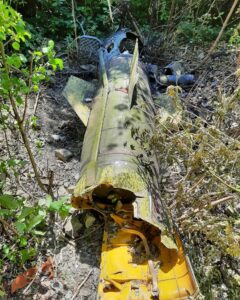
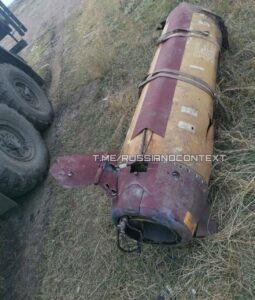
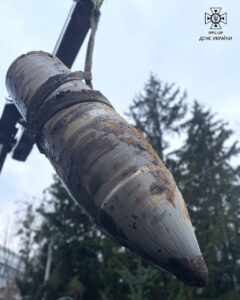
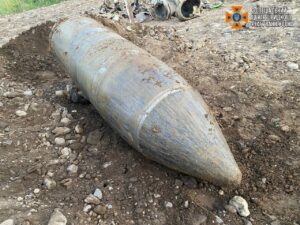
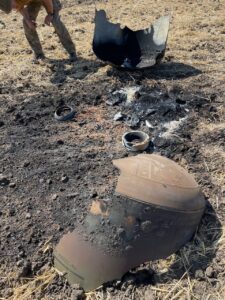
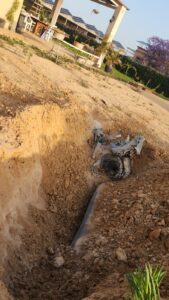
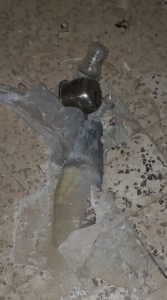
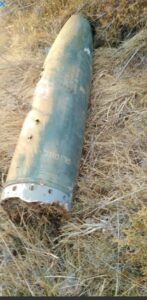
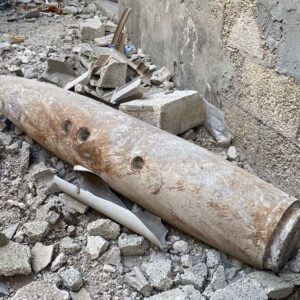
The 9Н123К (9N123K) cargo warhead is delivered by a 9М79К (9M79K) series surface-to-surface guided missile. This cluster munition carries fifty 9Н24 (9N24) high explosive fragmentation (HE-FRAG) submunitions, and is launched from the 9К79 Tochka series of tactical ballistic missile launchers. (ARES)
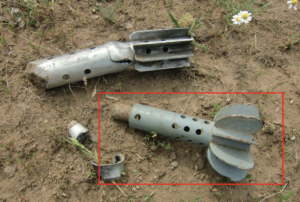
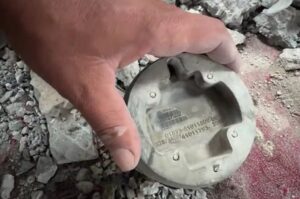
A 9N24 submunition is visible to the left of the 9N123K warhead in this image. This high explosive fragmentation (HE-FRAG) submunition is marked to indicate it was produced in 1989 and filled with A-IX-2 explosive composition. (ARES)
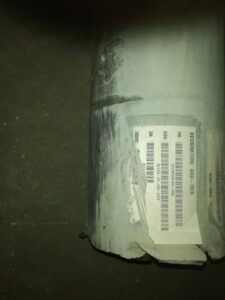
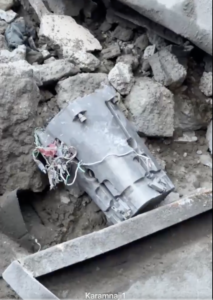
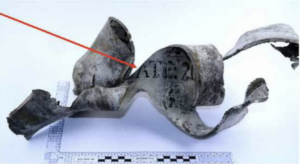
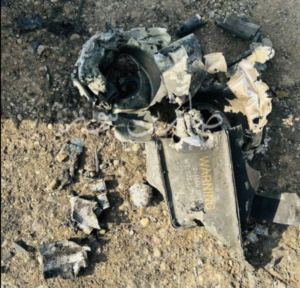
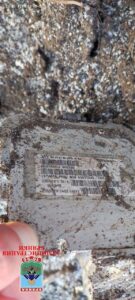
Labels on munition remnants can provide a host of useful data, including the model designation (in this case, “GBU-39/B”), part number (PN; (“70P998100-1003”), National Stock Number (NSN; “1325-01-526-8728”), serial number (SN; illegible), and Department of Defense Identification Code (DODIC; “EC53”). These codes, and others like them, can often be searched for in databases or provided to technical specialists for further interpretation. (ARES)
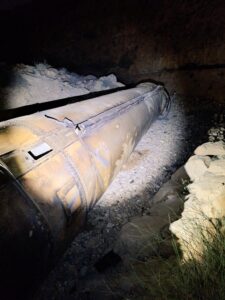
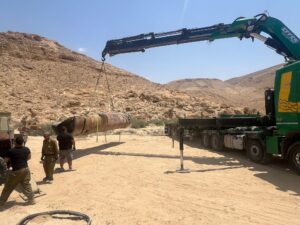
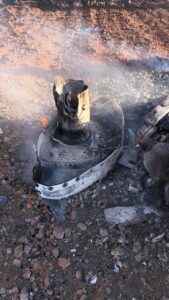
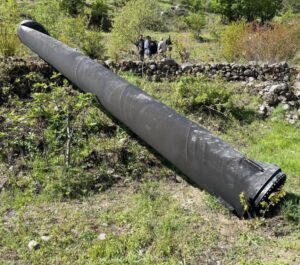
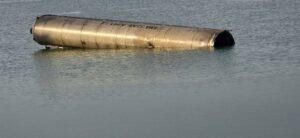
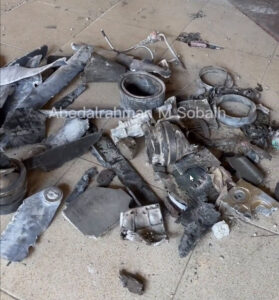
The Stunner missile is the surface-to-air interceptor missile fired by the David’s Sling weapon system to defeat short-range ballistic missiles, cruise missiles, drones, and rockets. The Stunner does not carry an explosive warhead, instead relying on kinetic impact (also called the ‘hit-to-kill’ principle) to intercept ballistic missiles and other targets. (ARES)
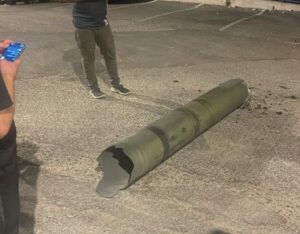
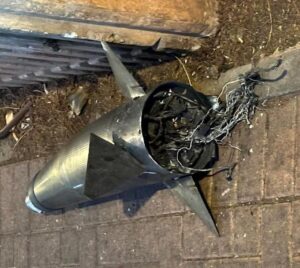
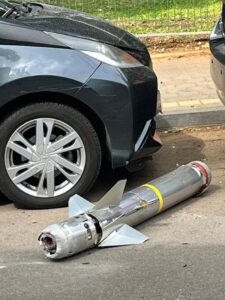
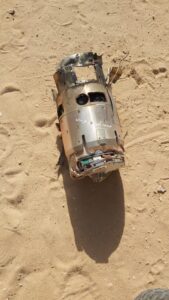
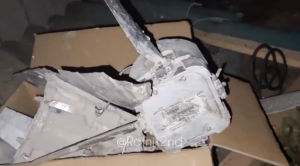
This image shows most of the forward half of a Tamir surface-to-air missile, including the guidance section and warhead, as fired by launchers in the Iron Dome system. These interceptor missiles are fast and manoeuvrable with a relatively small explosive payload. Their construction and low yield means that remnants are often recovered largely intact. (ARES)
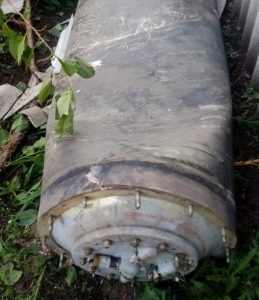
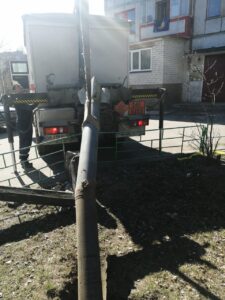
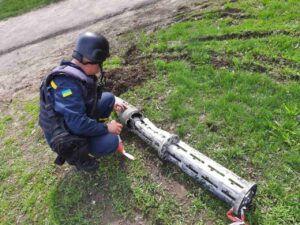
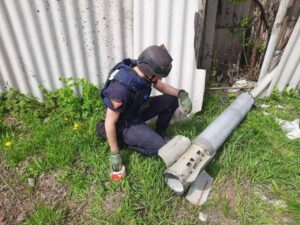
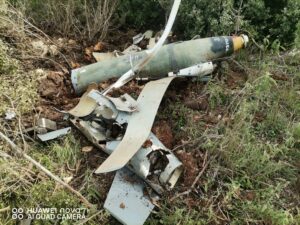
This 9M27K-series surface-to-surface cargo rocket is carrying a payload of 9N210 or 9N235 high explosive fragmentation (HE-FRAG) submunitions. These submunitions are difficult to distinguish unless their external markings are visible, or a close examination is made. (ARES)
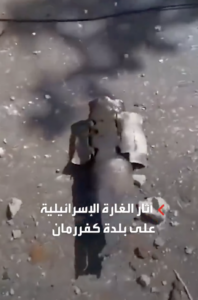
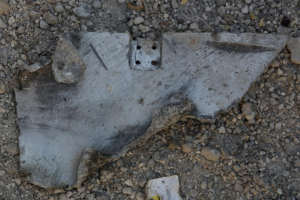
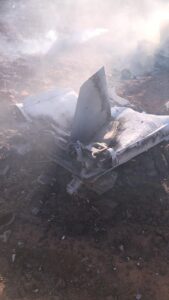
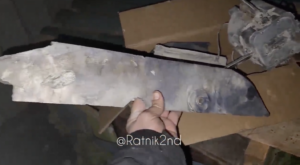
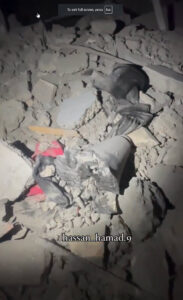
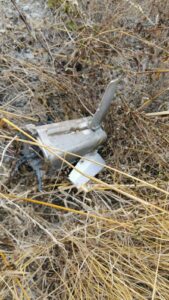
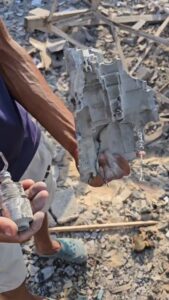
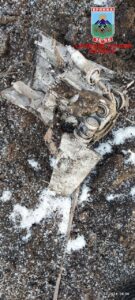
The visible component is part of a Joint Direct Attack Munition (JDAM) guidance kit, an accessory package that is fitted to unguided air-delivered bombs to convert them to precision guided munitions. Specifically, this image shows a control fin from the tail assembly. Whilst the JDAM kit would not constitute a munition in its own right, this remnant is included in the OSMP as contextual information strongly suggests it formed part of a complete munition that functioned. (ARES)
The MGM-140 Army Tactical Missile System (ATACMS) series includes variants with a variety of different payloads, including submunitions and unitary high explosive (HE) warheads. The number of submunitions carried and effective ranges also vary.
Ukraine has reportedly received the MGM-140A and MGM-140B variants, which are externally visually identical and must usually be distinguished by markings. The MGM-140A carries 950 M74 submunitions, with an effective range of 165 km, while the MGM-140B carries only 300 M74 submunitions but has a longer effective range of 300 km. (ARES)
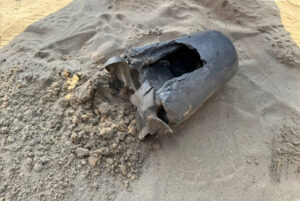
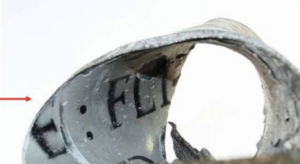
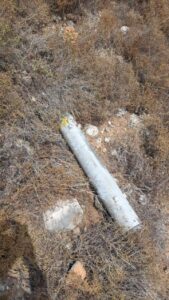
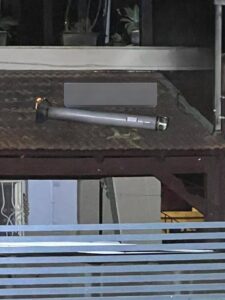
The M824 60 mm mortar projectile dispenses a parachute-retarded illumination flare which burns for 35 seconds. The tail portion of the munition (seen here) separates from the forward (body) portion and is sometimes found along the line of fire. (ARES)
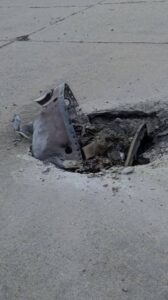
Contextual information, including an assessment of the crater which appears to be linked to this munition remnant, suggests that a 2,000-pound-class bomb fitted with a SPICE 2000 guidance kit was used in this airstrike. (ARES)
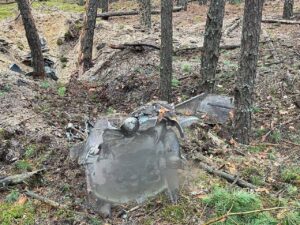
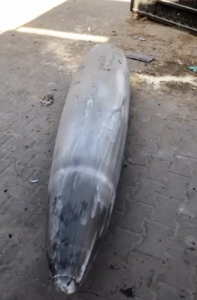
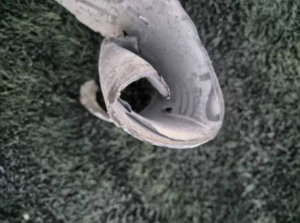
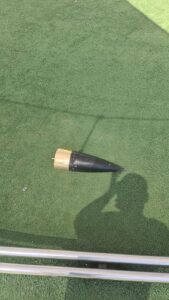
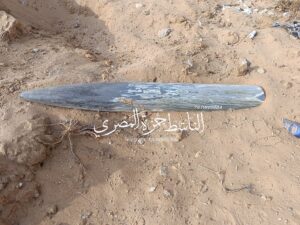
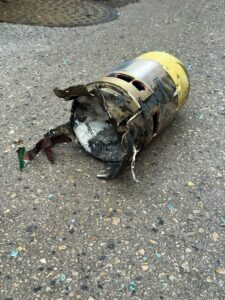
This image shows the nosecone from an Israeli Tamir surface-to-air missile. This component is often found as a remnant after the functioning of the missile. (ARES)
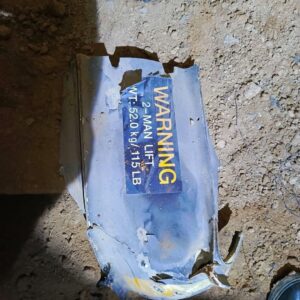
The AGM-179 Joint Air-to-Ground Missile (JAGM) is derived from the AGM-114 Hellfire series of air-to-surface missiles—and thus shares physical characteristics in terms of general construction, including rear fin placement. The marked weight of 52.0 kg (115 lbs) is generally believed to be an indicator that the rocket motor is from a JAGM; however, remnants marked with this weight have been observed from several years before the JAGM was initially fielded. (ARES)
The Tamir Interceptor is the missile fired from Israel’s Iron Dome defence system to intercept incoming rockets, missiles, projectiles, and unmanned aerial vehicles (‘drones’). The Tamir uses a warhead with a relatively small explosive yield, which typically results in the guidance section, nosecone, and (spent) rocket motor falling to the ground relatively intact after functioning. (ARES)