
1–100 of 179
Current Filter
Palestinian Territories
The areas internationally recognised as the basis of a future independent Palestinian state, primarily the West Bank, east Jerusalem and the Gaza Strip. Israel has fought multiple wars with the Hamas militant group, which controlled Gaza.

Collection
Ізраїль і Газа 2023 – 2026
7 жовтня 2023 року бойовики ХАМАС прорвали міцно укріплений кордон між Ізраїлем і Сектором Газа, атакувавши численні міста і села. За повідомленнями, в Ізраїлі загинуло понад 1000 осіб, а понад 250 було взято в заручники і перевезено до Гази
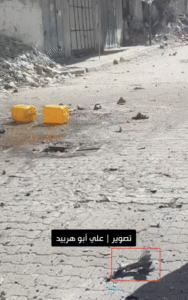
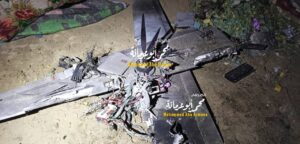
Analyst Note:
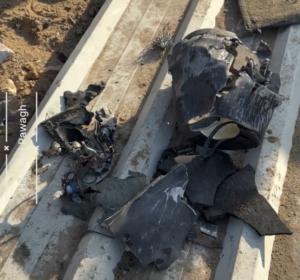
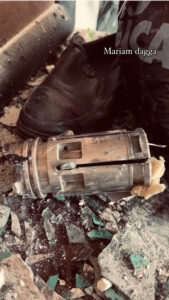
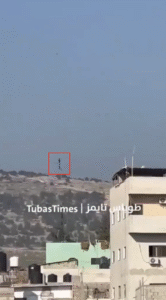
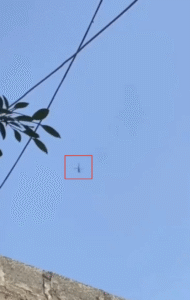
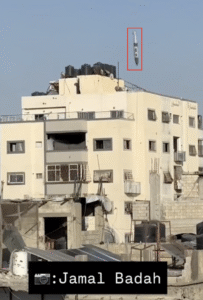
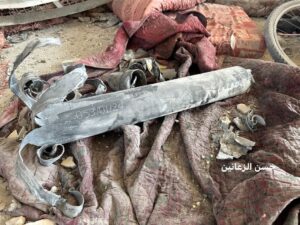
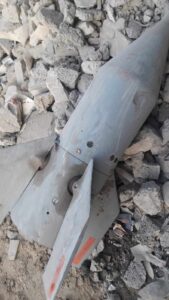
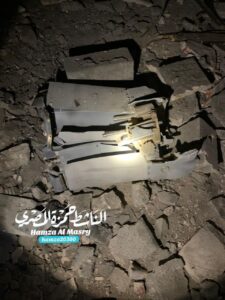
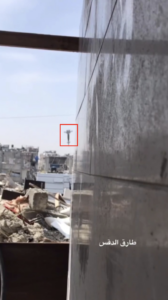
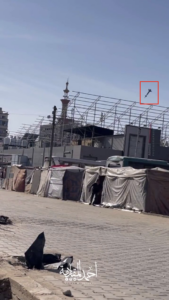
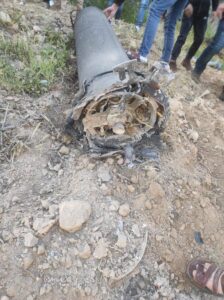
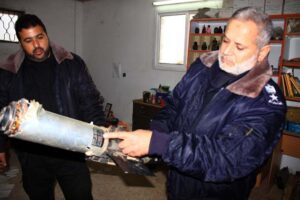
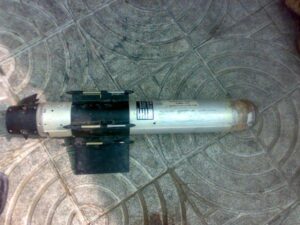
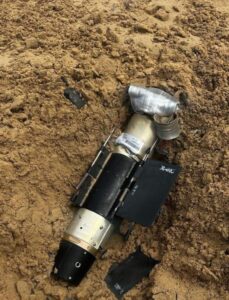
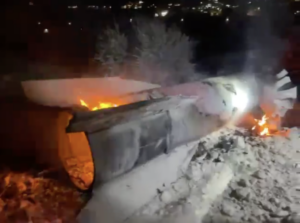
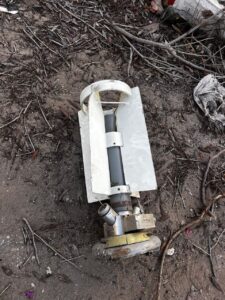
In this case, the tentative identification of this munition is possible based on an analysis of its silhouette, particularly the distinctive detachable warhead compartment that can be seen hanging from the base of the munition's body. In many cases, such an identification technique would not be possible to apply with confidence. (ARES)
Analyst Note:
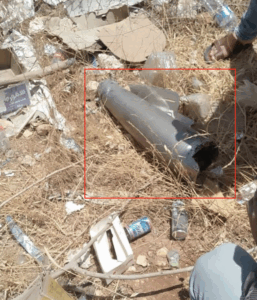
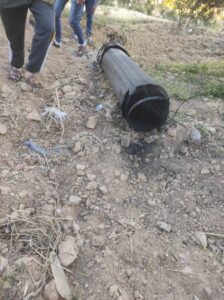
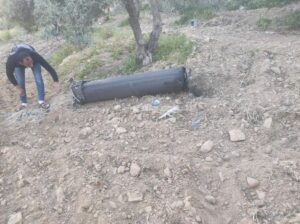
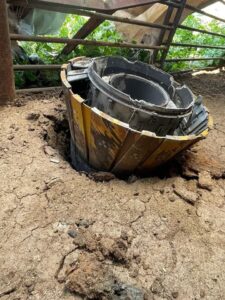
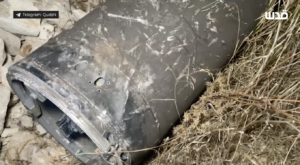
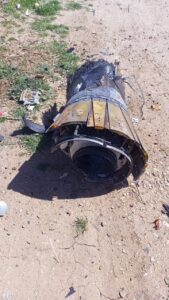
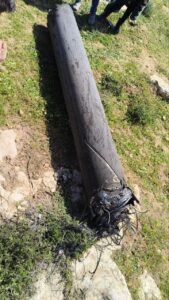
This image shows the damaged rocket motor section of a ballistic missile that was fired by the Houthis in Yemen towards Israel and likely intercepted. The Houthis employ ballistic missiles that are supplied by Iran, and given different names. In Houthi service, the Iranian Kheibar Shekan missile is known as the Hatem-2. (ARES)
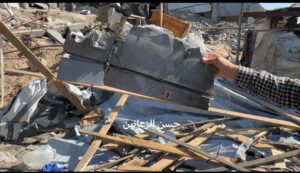
Analyst Note:
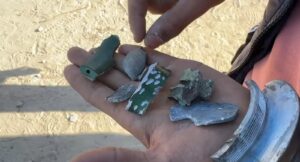
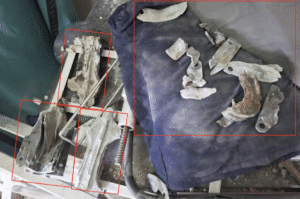
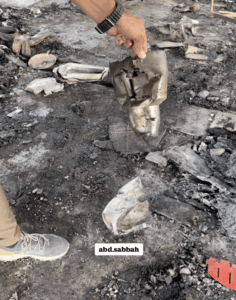
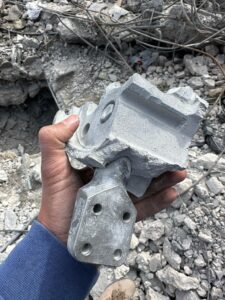
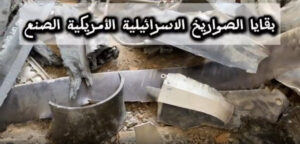
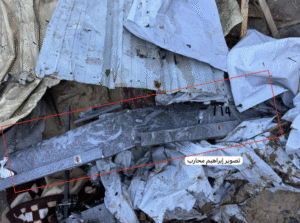
This image shows parts from at least three fin-stabilised tank gun projectiles, including the tail assemblies and several folding fins. These are components that often survive relatively intact following the functioning of such munitions. The specific morphology of the remnants pictured is consistent with Israeli 120 mm tank gun projectiles. Contextual information suggests that the remnants are most likely to be from M339 high explosive ‘multi-purpose’ projectiles. (ARES)
Analyst Note:
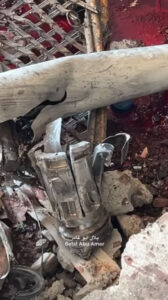
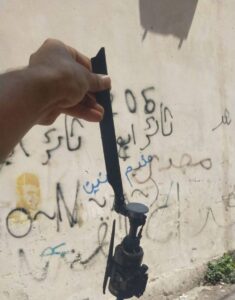
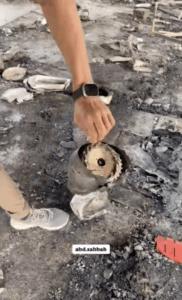
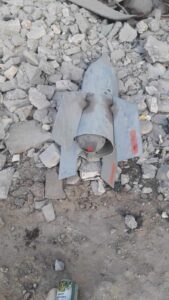
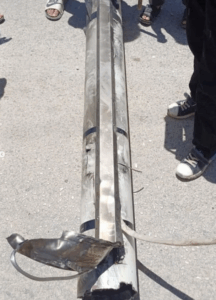
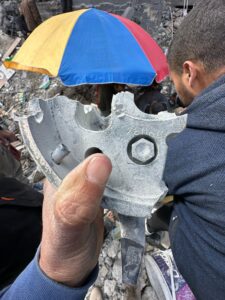
This image shows an Israeli-made 122 mm rocket motor found following a strike on Amr School in Gaza City. Although it is not possible to be definitive from this image alone, it is likely that this rocket motor was part of an Israeli ‘Bar’ missile, a guided munition designed for precision strikes in urban areas that uses a 122 mm rocket motor. (ARES)
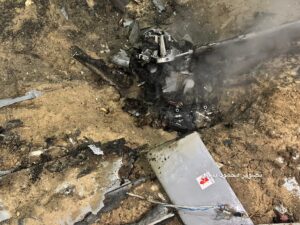
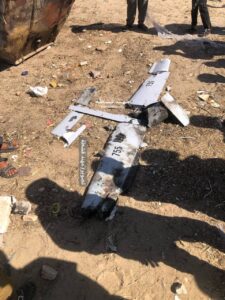
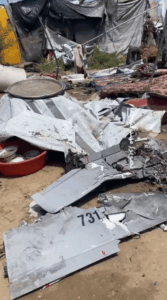
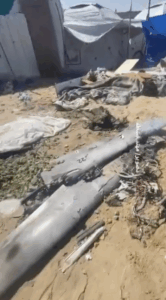
Analyst Note:
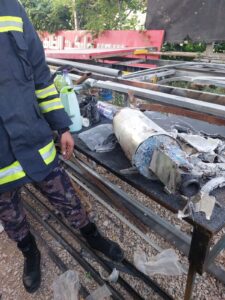
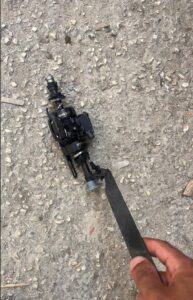
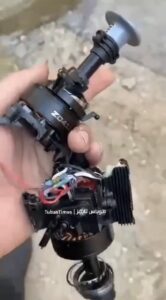
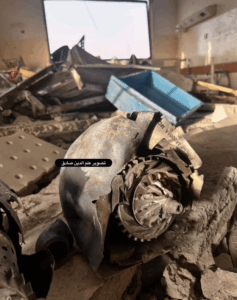
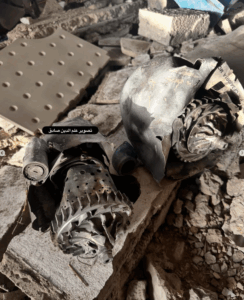
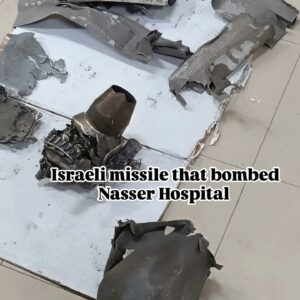
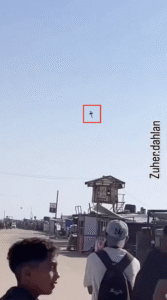
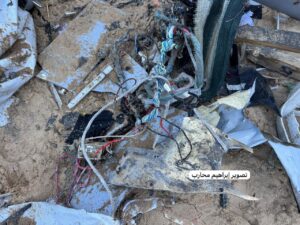
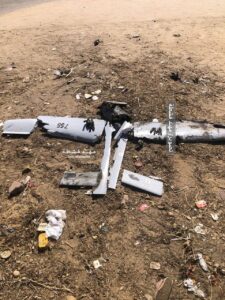
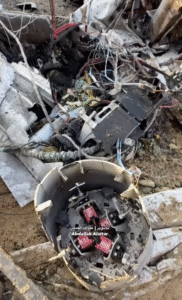
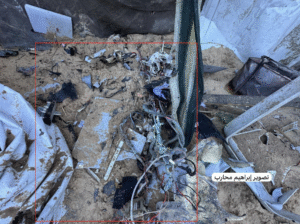
This image shows the remnants of an unknown Israeli munition that was used in a strike on Nasser hospital. Reporting on these strikes often refers to this munition as a ‘drone’. The turbojet engine, along with possible wing remnants, indicate that this could be a one-way-attack (OWA) UAV or ‘loitering munition’ missile, consistent with reporting. This same model of munition has been used multiple times in strikes in Gaza, as well as Lebanon and Syria. There is no publicly acknowledged Israeli munition that closely fits these remnants. Entries 1384, 1385, 1386, and 1389 capture other incidents in which this munition was used. (ARES)
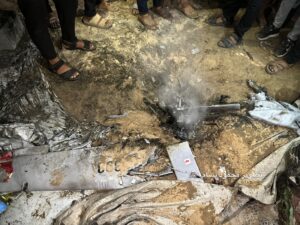
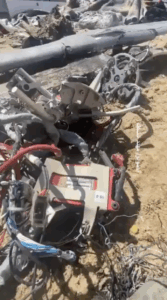
Analyst Note:
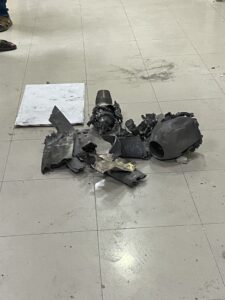
This image shows the remnants of an unknown Israeli munition that was used in a strike that hit the Nasser hospital in Gaza. The turbojet engine, along with possible wing remnants indicate that this could be a one-way attack UAV or ‘loitering munition’, consistent with some reporting on the strikes. This same model of munition has been used in multiple strikes in Gaza, as well as in Lebanon and Syria. There is no publicly disclosed Israeli munition that neatly matches these remnants. OSMP entries 1384, 1385, 1386, and 1389 show other incidents in which this munition appears to have been used. (ARES)
Analyst Note:
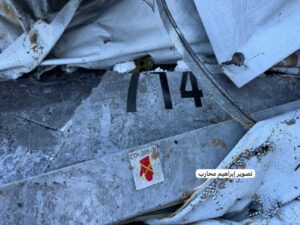
This image shows a remnant of the guidance control unit from a Paveway- or Lizard-series bomb guidance kit. The guidance control fins are marked “FOR USE ON MK82” indicating that this guidance control unit was paired with a MK 82-series 500-pound-class bomb. (ARES)
Analyst Note:
This image shows a remnant of the control section of the Arrow 2 ‘kill vehicle’, including the control fins. The blast-fragmentation warhead is located in the front section of the kill vehicle, forward of the control section, and is absent here due to the functioned state of the munition. (ARES)
Analyst Note:
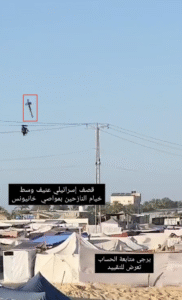
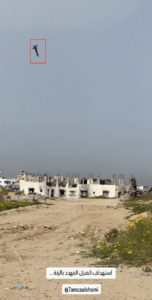
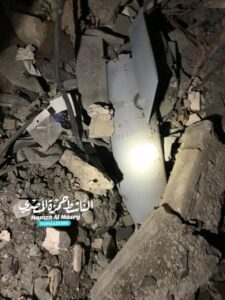
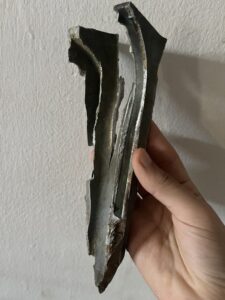
This image shows the guidance control unit from an Israeli 'Chameleon 3’ bomb guidance kit. This kit appears similar to those in the Israeli Lizard series of guidance kits, which are derived from the American-designed Paveway kit series. (ARES).
Analyst Note:
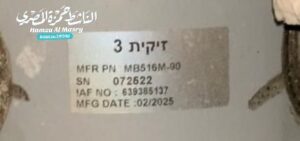
This is the data plate fitted to an Israeli Air Force bomb guidance kit. It reads “3 זִקִית” (‘Zikit 3’, or ‘Chameleon 3’ in English). As of May 2025, there is no public information available about this model of bomb guidance kit, but it appears to be a derivative or variant of the Israeli Lizard series, which are derived from the American Paveway bomb guidance kit. (ARES)
Analyst Note:
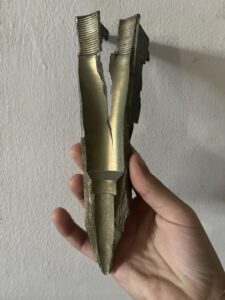
This image shows the damaged aerofoil group, or ‘tail kit’, found with a Chameleon 3 bomb guidance kit. The exact model of aerofoil group is unknown, but in US service similar component groups are given a designation in the ‘MXU-xxx’ range, and are interchangeable with different variants of the Paveway bomb guidance kit (within bomb weight classes). (ARES).
Analyst Note:
This image shows a remnant of the tail actuator subsystem of a Joint Direct Attack Munition (JDAM) bomb guidance kit. The size of this JDAM kit indicates that it is one of the kits compatible with 2,000-pound-class bombs, either the MK-84 or BLU-109. (ARES)
Analyst Note:
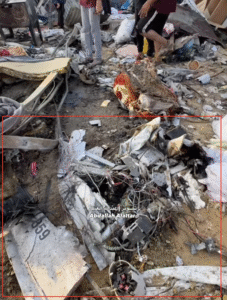
This image shows the remnants of a SkyStriker one-way attack UAV, manufactured by Elbit Systems of Israel. The SkyStriker can be fitted with various warhead options, including dual-purpose warheads weighing 5 or 10 kilograms. While it appears that a reconstruction was attempted with the remnants, the placement of the various components does not accurately represent an intact SkyStriker. (ARES)
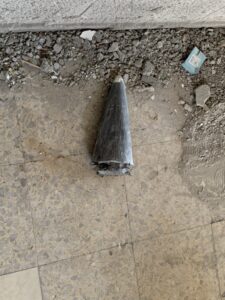
Analyst Note:
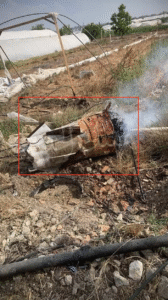
This image shows the nosecone from an Israeli SPICE 250 air-delivered bomb. Whilst generally similar in appearance to the nosecone of the GBU-39, the SPICE 250 nosecone is longer and narrower. (ARES)
Analyst Note:
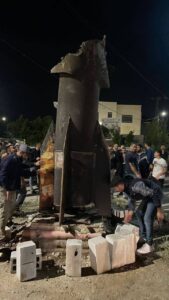
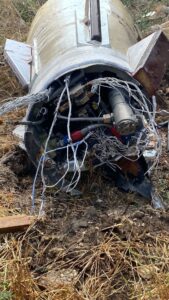
This image shows the flare from a Terminal High Altitude Area Defense (THAAD) system's ‘Talon’ kinetic interceptor missile. The flare is located at the aft end of the missile's booster engine. The ‘petals’ of the flare are initially flush, and are actuated into the deployed position, seen here, as part of the missile‘s functioning. (ARES)
Analyst Note:
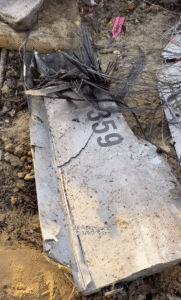
This image shows a fragment of the “inner petal assembly” of a Terminal High Altitude Area Defense (THAAD) system’s ‘Talon’ interceptor missile. The part number for the assembly (“23917ASSY1A62803-101 REV.E / E”), Commercial and Government Entity (CAGE) code (“07554”), manufacturer abbreviation (“CTL”), and serial number (“S/N DDLKD”) are visible. This CAGE code and manufacturer abbreviation are associated with CTL Aerospace Inc, a subcontractor for Lockheed Martin, the manufacturer of the THAAD system. It is not uncommon for complex munitions to be made by several different manufacturers, and thus multiple CAGE codes may be present as a result of the various subcontractors. (ARES)
Analyst Note:
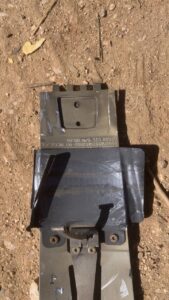
This image shows a Mikholit glide bomb, with its warhead removed (green cylinder on the left side of the box). The fins that spring outward when deploye have been taped down. This Mikholit was reportedly recovered by the Israeli Defense Forces (IDF) from Hamas, who had captured the bomb after it failed to function when originally deployed by the IDF. (ARES)
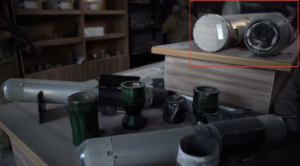
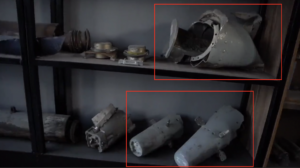
Analyst Note:
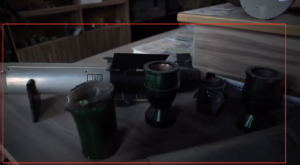
This image shows two Mikholit air-delivered bombs (‘glide bombs’), and four Mikholit warheads. There are at least two different variants of warheads available for the Mikholit glide bomb. The green cylinder on the left is a blast (high explosive) warhead, whilst the other three warheads are shaped charge warheads which incorporate additional fragmentation. Blast warheads of this type have also been seen with red markings, while the shaped charge warheads have been seen with yellow markings. (ARES)
Analyst Note:
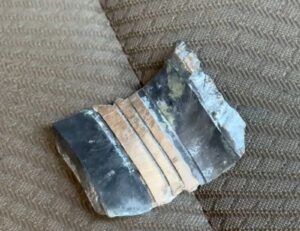
This image shows a fragment of an Israeli 120 mm tank gun projectile, with its distinctive obturating band configuration. The additional remnants shown in the related OSMP entry permit distinguishing this projectile from other potential Israeli models, identifying it as the M339 tank gun projectile. (ARES)
Analyst Note:
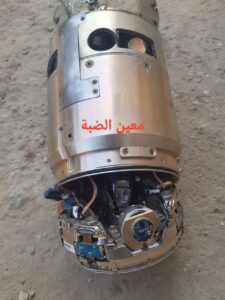
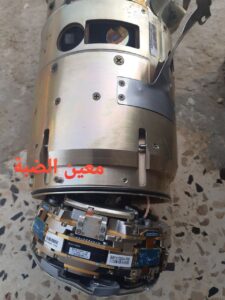
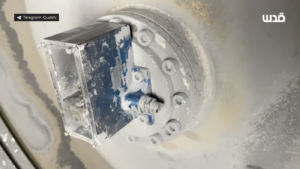
This image shows the section just forward of the Tamir missile’s forward fins and appears to incorporate the base of the active radar seeker (open end) and the laser proximity sensor part of the warhead fuzing system (mirrors/glass & opening in the casing). While the Tamir has been reported to physically impact some targets, the proximity fuze is designed to closely pass by the target, then detonate the high explosive fragmentation warhead thereby destroying the target. ‘Tamir’ is a Hebrew acronym for Til Meyaret, or ‘interceptor missile’. (ARES)
Analyst Note:
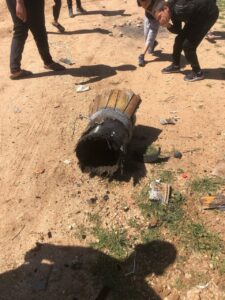
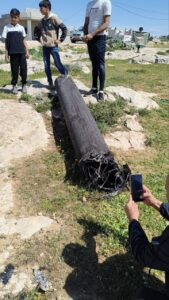
This image shows the functioned rocket motor of an Israeli Carpet rocket. The Carpet uses a fuel-air explosive (FAE) warhead which is designed to function mines and improvised explosive devices (IEDs), clearing a target area for the advance of friendly forces. These rockets are fired from the Carpet rocket launcher, which is loaded with up to 20 rockets and can be fitted to a variety of vehicles. (ARES)
Analyst Note:
This image shows a MK 84 2,000-pound bomb that has had its fuze and baseplate removed in order to access the explosive filler. The fuze, fuze retaining ring, and baseplate can be seen on the white sheet.
The explosive material used to fill the bomb has been removed, possibly to be repurposed in improvised explosive devices or craft-produced munitions. Unexploded ordnance is often ‘harvested’ for these purposes. (ARES)
Analyst Note:
This image shows various munitions remnants, including a fuzewell and two nosecone fragments from GBU-39 Small Diameter Bombs. The presence of two different nosecones indicates that these remnants are from at least two distinct munitions. (ARES)
Analyst Note:
This image shows a wing fragment from a SPICE-1000 bomb guidance kit. While there are no remnants of the bomb body visible, it can be determined that a MK 83-series 1,000-pound bomb or similar was used, as MK-83 series bombs are paired with the SPICE-1000 bomb guidance kit to form a complete munition. (ARES)