Classification groups of key explosive munitions used in conflicts
Munition Category (8)
The impact or effect the munition is intended to have
Functional use (10)
The specific model of munition pictured
Tentative Model (293)
Search
The external organisation that documented the munition
Research Organisation (6)
Colour of the munition pictured
Base Colour (12)
Colour of all, or some, of the markings on the munition
Marking Colour (11)
Language or script of the marking on a munition
Marking Script (10)
Condition of the munition pictured
Condition (6)
Key features defining the operation mechanisms of a projectile
Mechanical Feature (10)
Whether a munition is guided or unguided
Guidance (2)
Where the munition is launched from and what it targets
Domain (7)
The type of fins visible on the munition
Fins Characteristic (6)
The nominal diameter of a projectile. For most modern munitions, this is expressed in millimetres (e.g. 82 mm mortar projectile), but older artillery gun projectiles may be described in inches.
The areas internationally recognised as the basis of a future independent Palestinian state, primarily the West Bank, east Jerusalem and the Gaza Strip. Israel has fought multiple wars with the Hamas militant group, which controlled Gaza.
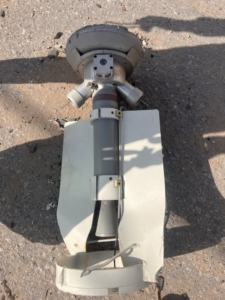
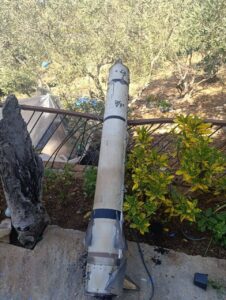
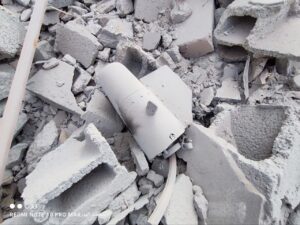
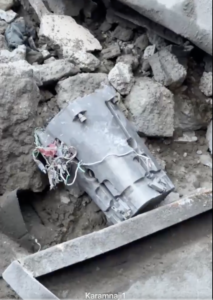
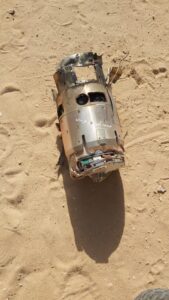
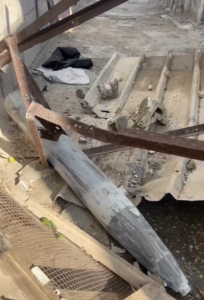
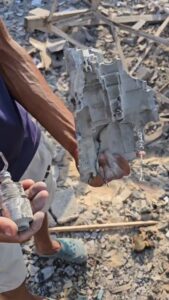
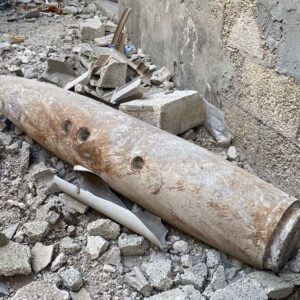
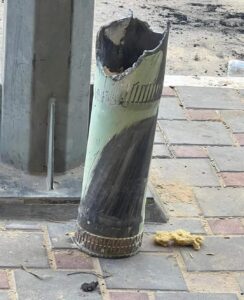
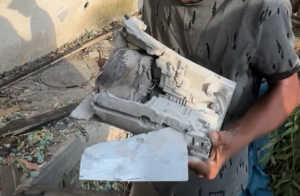
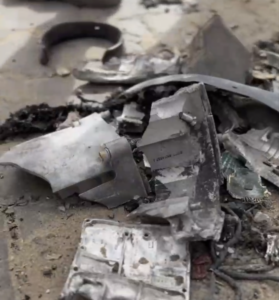
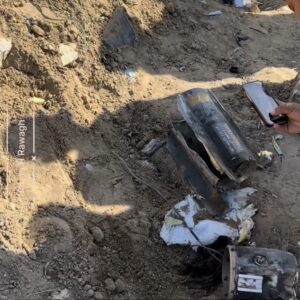
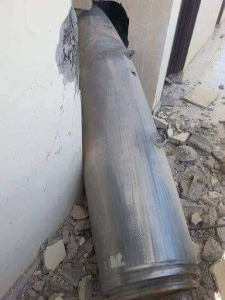
This image shows the functioned rocket motor of an Israeli Carpet rocket. The Carpet uses a fuel-air explosive (FAE) warhead which is designed to function mines and improvised explosive devices (IEDs), clearing a target area for the advance of friendly forces. These rockets are fired from the Carpet rocket launcher, which is loaded with up to 20 rockets and can be fitted to a variety of vehicles. (ARES)
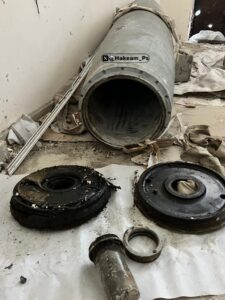
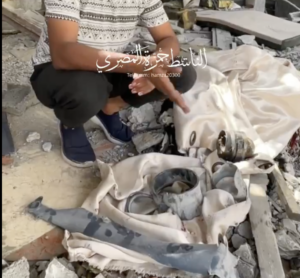
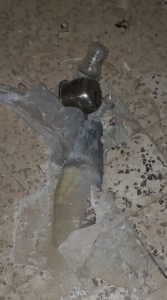
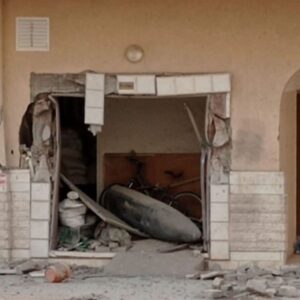
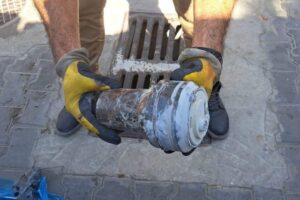
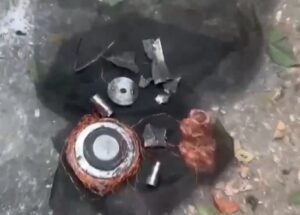
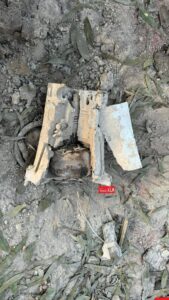
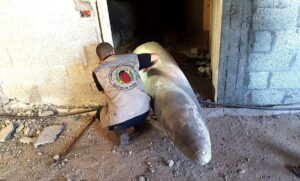
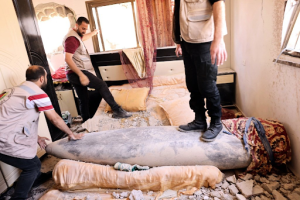
This image shows a MK 84 2,000-pound bomb that has had its fuze and baseplate removed in order to access the explosive filler. The fuze, fuze retaining ring, and baseplate can be seen on the white sheet.
The explosive material used to fill the bomb has been removed, possibly to be repurposed in improvised explosive devices or craft-produced munitions. Unexploded ordnance is often ‘harvested’ for these purposes. (ARES)
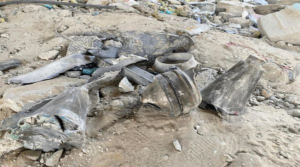
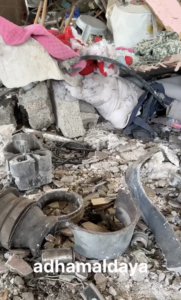
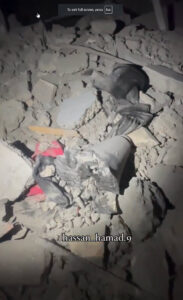
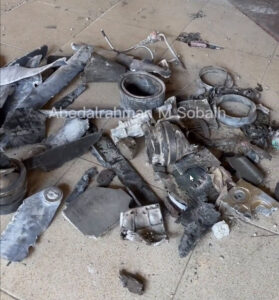
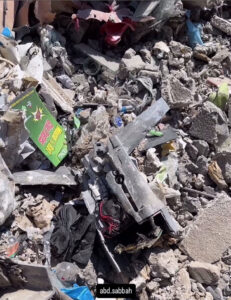
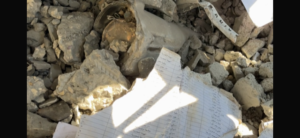
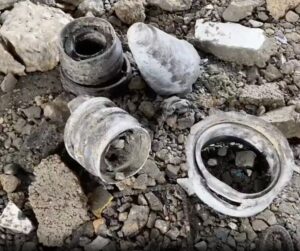
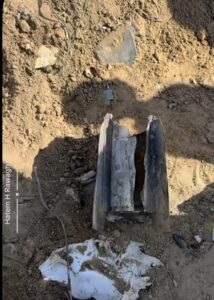
This image shows various munitions remnants, including a fuzewell and two nosecone fragments from GBU-39 Small Diameter Bombs. The presence of two different nosecones indicates that these remnants are from at least two distinct munitions. (ARES)
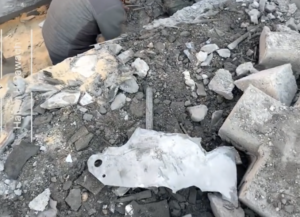
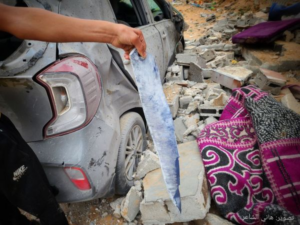
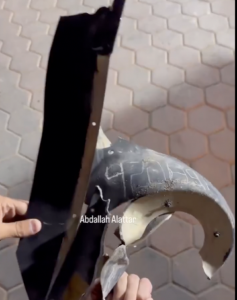
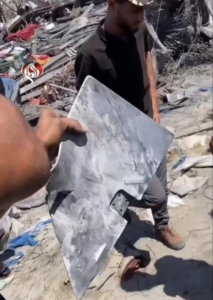
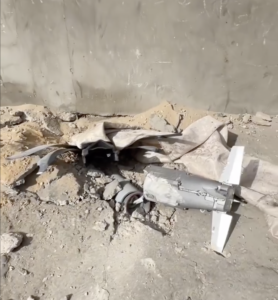
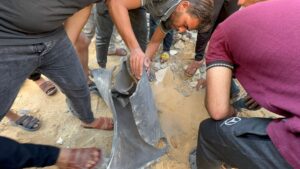
This image shows a wing fragment from a SPICE-1000 bomb guidance kit. While there are no remnants of the bomb body visible, it can be determined that a MK 83-series 1,000-pound bomb or similar was used, as MK-83 series bombs are paired with the SPICE-1000 bomb guidance kit to form a complete munition. (ARES)
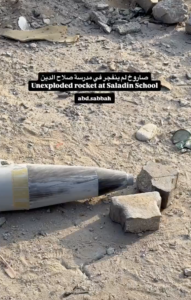
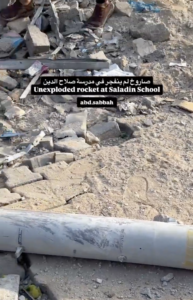
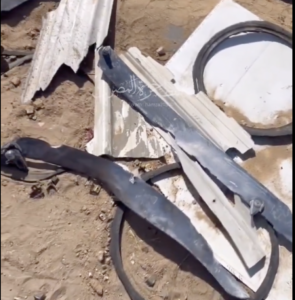
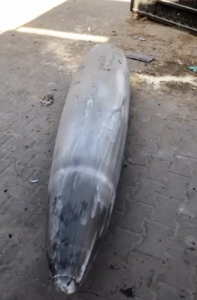
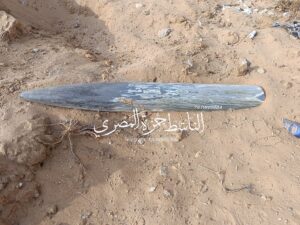
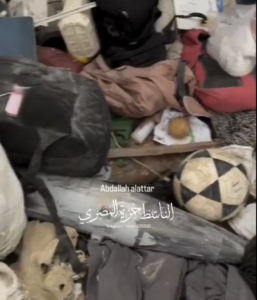
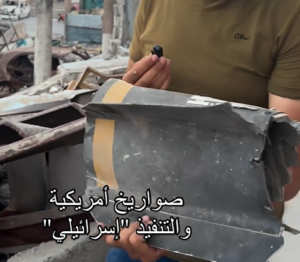
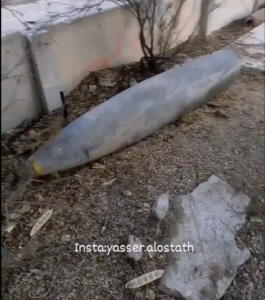
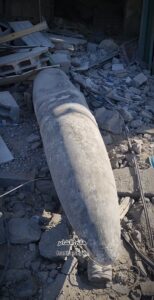
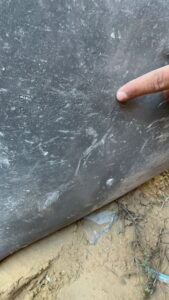
As with several other images in the OSMP database, the text on this image was added by a social media user prior to its inclusion herein. Rather than a “rocket” as described in the annotation, this image actually shows an air-delivered bomb. (ARES)
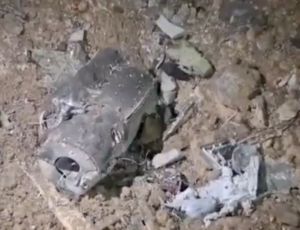
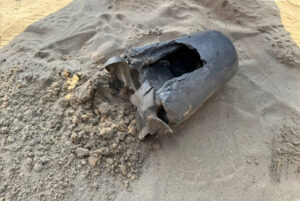
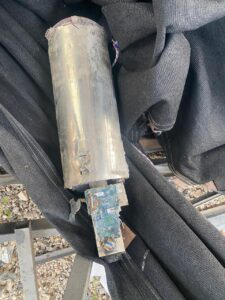
The Stunner surface-to-air missile fired by the David’s Sling air defence system is a two-stage interceptor, meaning that the munition contains two separate rocket motors for launch and propulsion. The first stage, or launch motor, detaches from the munition after a short time, before the second stage, or flight motor, ignites. The second stage motor, visible here, was found relatively intact. (ARES)
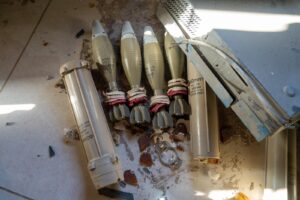
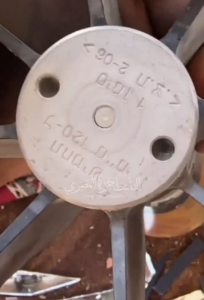
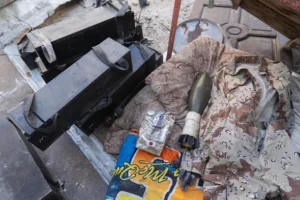
This Iranian 60 mm mortar projectile is of the ‘Long Range’ type described without a specific model name in various Iranian export catalogues and other sources. The designation as marked on projectiles and packaging is variable, with observed formulations including “60mm H.E. L.R.”, “60mm H.E L.R”, and “60mm HE L.R”. Sometimes, as here, “60mm L.R” is followed by “HE / TNT”. (ARES)
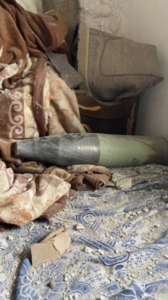
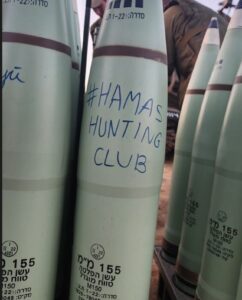
This image shows what is probably just the body of an Israeli 155 mm smoke artillery projectile. Israel predominantly uses two varieties of 155 mm smoke munition: the M825 white phosphorous (WP) series of munitions, and the M150 hexachloroethane/zinc mixture (HC) munition. These munitions are externally near-identical, save for their markings. In this case, the markings are insufficient to determine whether the image shows an M825-series WP munition or an M150 HC munition. (ARES)
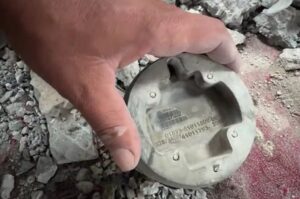
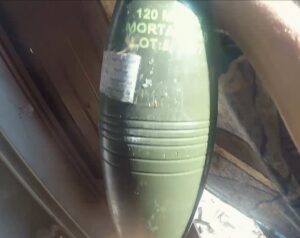
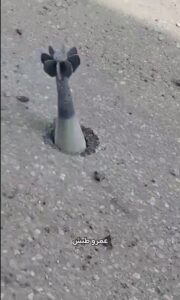
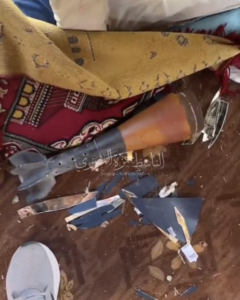
The M824 60 mm mortar projectile dispenses a parachute-retarded illumination flare which burns for 35 seconds. The tail portion of the munition (seen here) separates from the forward (body) portion and is sometimes found along the line of fire. (ARES)
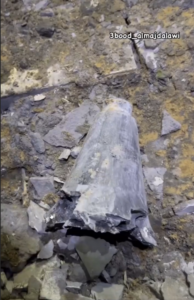
Contextual information, including an assessment of the crater which appears to be linked to this munition remnant, suggests that a 2,000-pound-class bomb fitted with a SPICE 2000 guidance kit was used in this airstrike. (ARES)
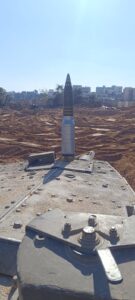
The M329 is a multi-purpose tank gun projectile designed to engage a range of targets other than tanks. It is one of the few cluster munitions that takes the form of a tank gun projectile, dispensing six explosive submunitions over a relatively small area. It has also been referred to as the ‘APAM 120’, describing its functional role (‘anti-personnel/anti-materiel’) and calibre (120 mm). (ARES)
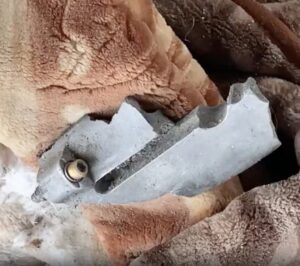
This image shows a distinctively shaped component of MBDA’s ‘Diamond Back’ joined tandem wing assembly as fitted to the GBU-39 Small Diameter Bomb (SDB). (ARES)
The remnant pictured here is part of a Small Diameter Bomb actuator assembly (‘Tail Actuation Section’), which moves the four tail-fin control surfaces which alter the course of the munition in flight. (ARES)
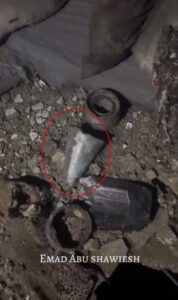
The circled remnant is the hardened steel nosecone of the GBU-39, which renders the munition capable of penetrating more than 3 feet (approx. 1 metre) of steel-reinforced concrete. It is one of several components that often survives the detonation of the munition. (ARES)
This image depicts an M117-series unguided aerial bomb. Belonging to a class of weapons referred to as ‘demolition bombs’—which use Tritonal or similar explosive compounds to generate a more powerful blast effect than TNT or Composition B—the M117 is an American design which dates to the Korean War era and is rarely seen in service with modern armed forces. (ARES)
This munition is assessed to be one of the Small Diameter Bomb (SDB) I variants (GBU-39 series), rather than one of the SDB II 'StormBreaker' (GBU-53 series) munitions, on the basis of contextual information. 'Small Diameter Bomb' is the manufacturer's terminology, whilst 'GBU-39' is the U.S. Air Force designation (also used by many other operators). (ARES)
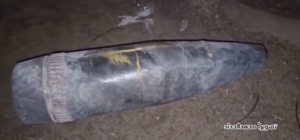
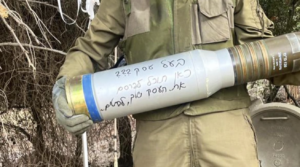
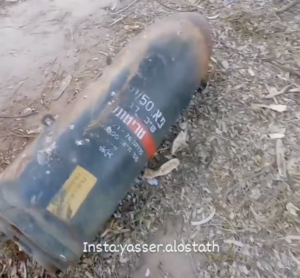
Some artillery projectiles, such as this M150 type, use a hexachloroethane-based composition (HC) to generate smoke for screening or marking purposes. In many armed forces, HC smoke munitions have partially replaced those relying on white phosphorus for similar effects. (ARES)
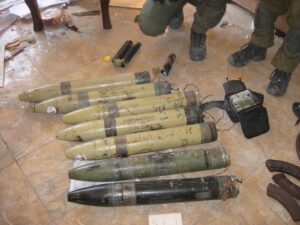
107mm spin-stabilized rockets of this design are often utilized by non-state actors in an indirect fire role. Like the original Chinese models that they are copied from, they do not require more than a simple electric power source and a rudimentary launch platform to achieve an acceptable level of accuracy. (ARES)
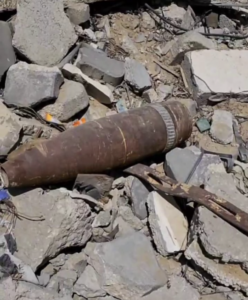
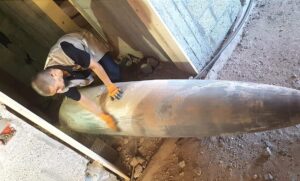
The MK 84 series of unguided air-delivered bombs can be converted to precision guided munitions by being fitted with guidance kits such as the Joint Direct Attack Munition (JDAM), SPICE 2000, or Paveway series. This MK 84 is also marked with a variant designation “MOD 4”. (ARES)


 The areas internationally recognised as the basis of a future independent Palestinian state